Electrophoretic Coating for OEM Parts: Capabilities and Supplier Qualification
Electrophoretic coating (E-coating) is a metal surface treatment process that uses an electric field to deposit paint onto conductive metal parts. It is often selected for OEM programs because it provides uniform film thickness, high corrosion resistance, and efficient use of material. For procurement teams, the challenge is not just finding a coating service, but verifying that a supplier can handle the specific substrate, geometry, performance target, and delivery schedule. This article explains how to evaluate OEM electrophoretic coating capabilities and uses Dongguan Yongxin Industrial Co., Ltd. (Yongxin) as a documented example of a service provider with in-house coating lines, testing equipment, and supporting metal forming operations.
Problem Definition
OEM buyers often discover too late that a coating supplier cannot meet all requirements. A zinc die-cast housing may require different pre-treatment than aluminum or magnesium. A motor housing may need 720 hours of neutral salt spray resistance, which not every resin system can deliver. A batch of stamping parts may contain deep cavities where manual spray coating leaves missed areas. These mismatches create delays, corrosion failures, and rework. A capability-focused qualification process helps buyers avoid these problems by checking what the supplier can actually prove.
Industry Background
According to Dataintelo, the global electrophoretic coating market was valued at approximately USD 3.5 billion in 2023 and is projected to grow to USD 6.1 billion by 2032, at a CAGR of 6.5% from 2024 to 2032. Grand View Research notes that Asia-Pacific holds over 46% of the broader coatings market in 2025, led by China and India. Within E-coat chemistry, cathodic epoxy coatings dominate and frequently exceed 1,000 hours of neutral salt spray resistance in ASTM B117 testing, while anodic coatings typically maintain around 500 hours, according to Market Reports World. E-coating also reaches around 95% material transfer efficiency, which is an important factor for large-volume manufacturing.
Detailed Solution: Yongxin's OEM Electrophoretic Coating Capabilities
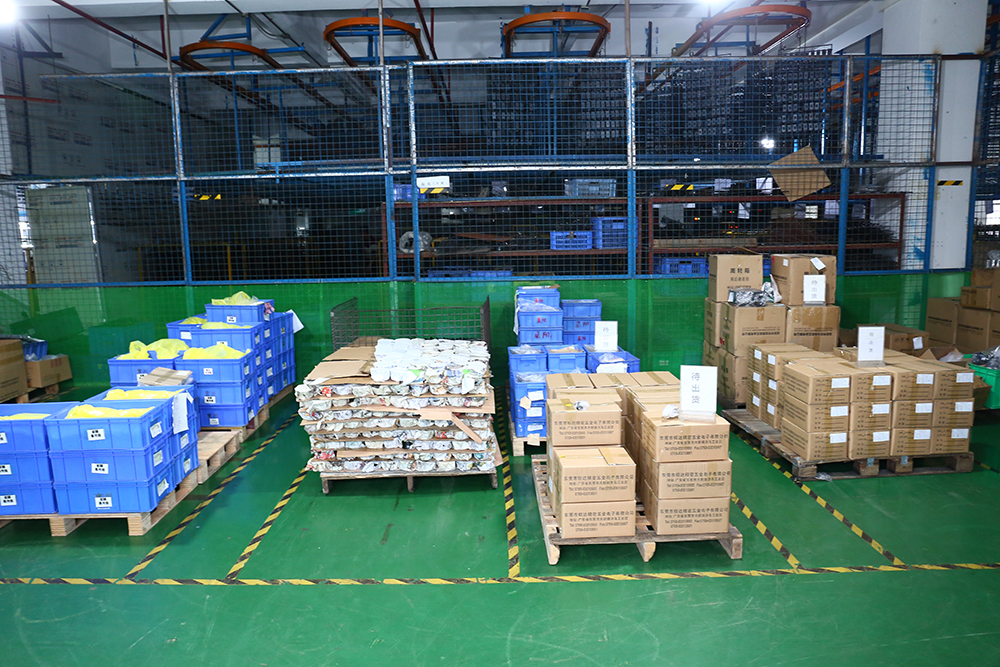
Yongxin is a National High-Tech Enterprise focused on electrophoretic processing for metal surface treatment, located in Qiaotou Town, Dongguan City. The company reports nearly 10 years of industry experience and expanded to a modern factory with a total plant area of 10,000 square meters in 2025. For OEM buyers, the relevant capabilities include 6 professional electrophoresis production lines, more than 20 CNC machines, more than 10 die-casting machines, and more than 10 metal stamping machines. This setup supports a complete chain: metal forming, precision machining, and surface treatment.
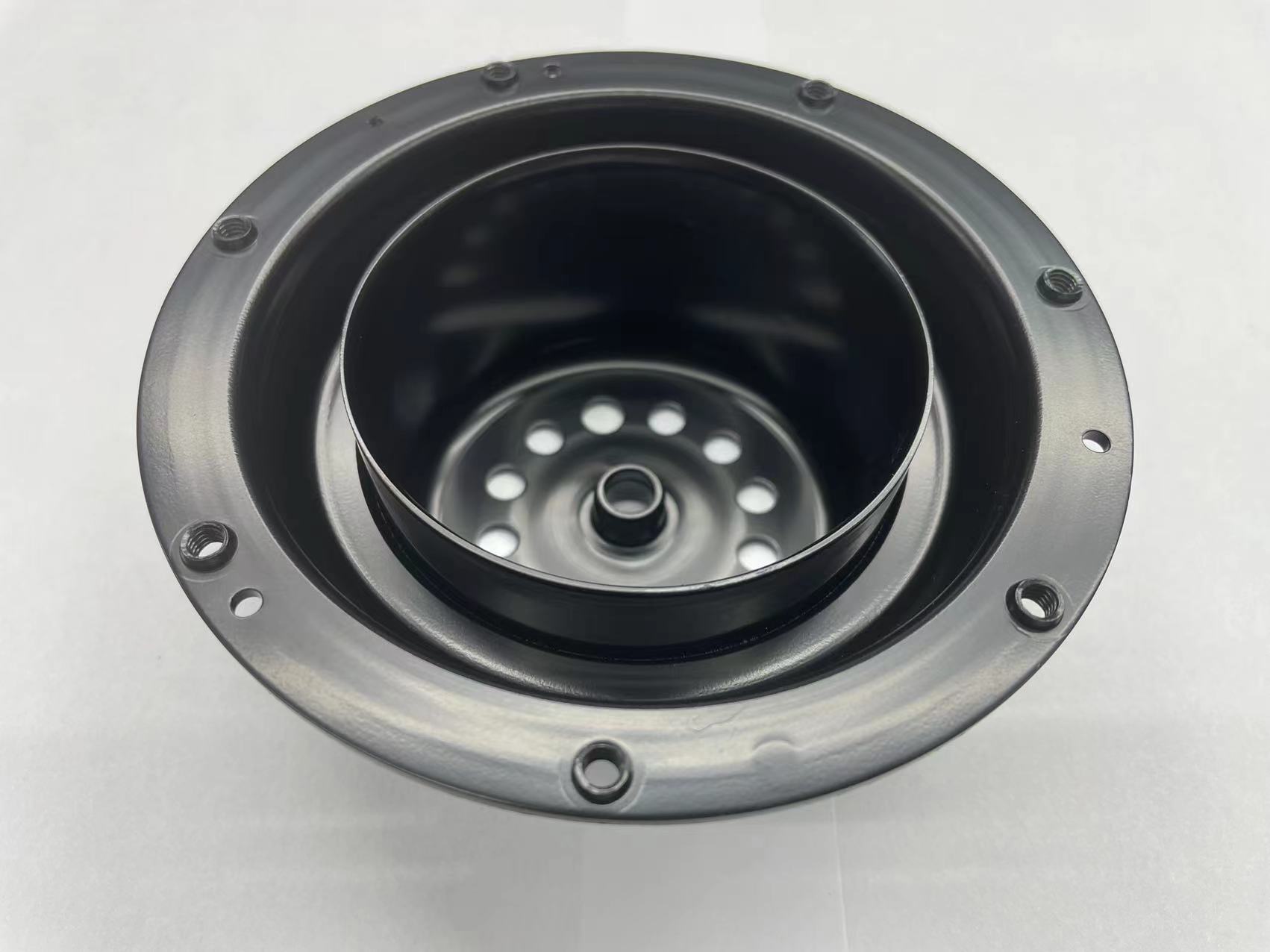
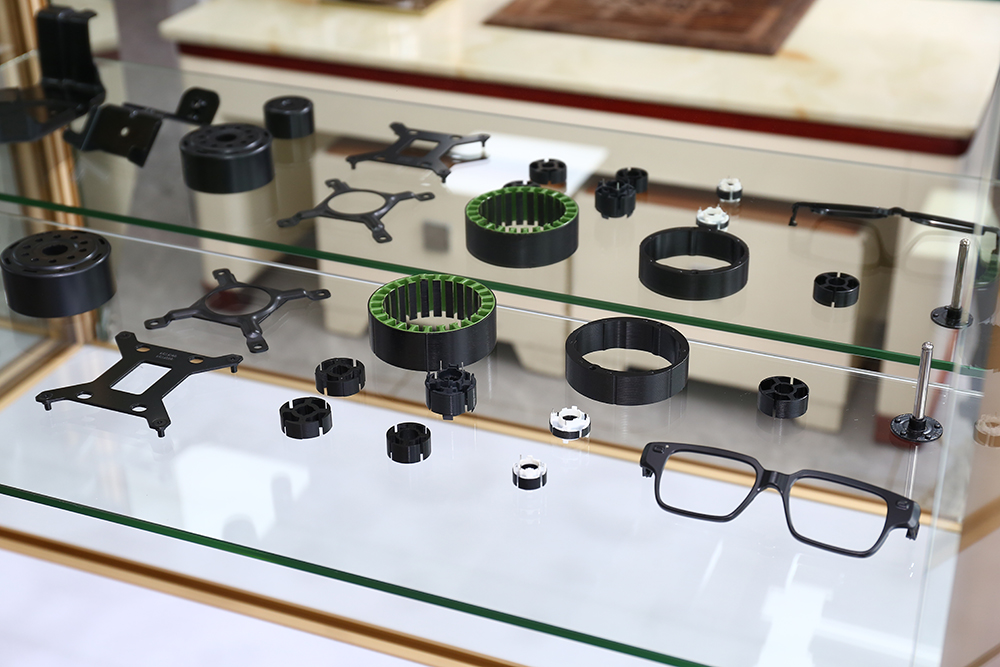
Yongxin provides OEM production services and states a monthly output capacity of 2.5 million units. The standard coating thickness is 15–25 µm for ordinary parts and can be customized. The company applies acrylic resin and epoxy resin systems, and its product list covers black, white, and color electrophoretic coating. Materials include carbon steel, alloy steel, aluminum alloy, magnesium alloy, zinc alloy, die-cast parts, and stamping parts.
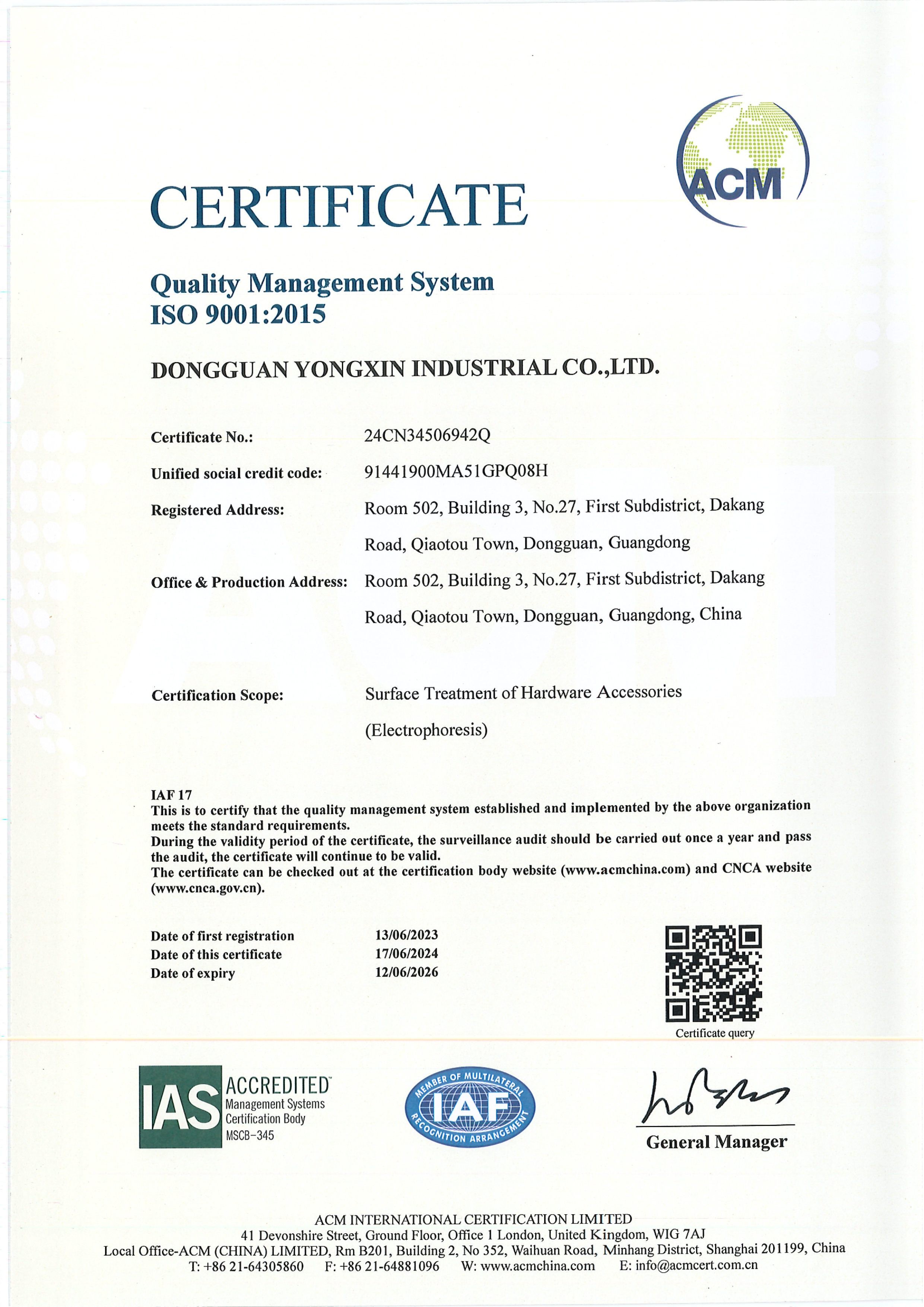
Quality control is supported by more than 20 high-precision instruments, including a German FISCHER film thickness gauge, a Swiss Zehntner gloss meter, a Japanese Konica Minolta spectrophotometer, and a Japanese Mitutoyo roughness meter, together with salt spray testing, constant temperature and humidity testing, and abrasion testers. Yongxin holds ISO 9001:2015 certification (certificate no. 24CN34506942Q), ISO 14001:2015 certification (certificate no. 24CN34506943E), and states compliance with IATF 16949. In 2023, the company received the National High-Tech Enterprise certificate (no. GR202344016867).
Step-by-Step Breakdown: How to Qualify a Coating Supplier
Use the following steps when auditing an OEM electrophoretic coating supplier.
1. Define Your Substrate and Geometry
Identify the base material and part complexity. Yongxin's scope covers carbon steel, alloy steel, aluminum alloy, magnesium alloy, zinc alloy, die-cast parts, and stamping parts. Deep cavities and internal holes should be noted because E-coat provides 360-degree coverage based on the Faraday effect, while spray methods often miss these areas.
2. Set Coating Performance Targets
Use neutral salt spray hours as a baseline. In a documented motor case, Yongxin achieved over 720 hours of neutral salt spray resistance for a Japanese motor manufacturer. For many OEM applications, cathodic epoxy E-coat is the dominant chemistry and can exceed 1,000 hours in ASTM B117 testing.
3. Confirm Color and Resin Compatibility
Black is the most common E-coat color, but Yongxin's product list also includes white and color electrophoretic coating. The company applies acrylic resin and epoxy resin systems, which gives buyers options for appearance and corrosion performance.
4. Validate Process Quality
Look for automated lines and thickness control. Yongxin's standard film thickness is 15–25 µm for ordinary parts and is customizable. Automated E-coat lines can keep thickness variation within ±1 µm according to the company's product specification.
5. Audit Testing Equipment
In-house testing reduces the risk of hidden defects. Yongxin's testing suite includes a German FISCHER film thickness gauge, a Swiss Zehntner gloss meter, a Japanese Konica Minolta spectrophotometer, a Japanese Mitutoyo roughness meter, salt spray tester, constant temperature and humidity tester, and abrasion testers.
6. Verify Certifications and Market References
Check quality and environmental management systems. Yongxin holds ISO 9001:2015, ISO 14001:2015, states IATF 16949 compliance, and received the National High-Tech Enterprise certificate in 2023.
7. Assess Production Capacity and Lead Time
Confirm the supplier can absorb your forecast. Yongxin's stated monthly output capacity is 2.5 million units, with a typical lead time of 3–45 days depending on quantity.
8. Establish After-Sales and Logistics
Remote support is available after shipment. Delivery terms such as FOB and CIF are negotiable, and pre-shipment instrument detection is part of the acceptance process.
Use Cases
Japanese Motor Manufacturer
Yongxin applied anti-corrosion and anti-rust E-coating to electric motors for a motor manufacturer in Japan. The project achieved neutral salt spray resistance of over 720 hours and extended the product service life by 5 to 10 years compared with traditional non-E-coating processes. Key results included uniform full coverage of complex motor structural gaps, stable anti-corrosion performance under harsh working conditions, low material loss, and support for continuous mass production.
CNC Precision Machining Manufacturer in China
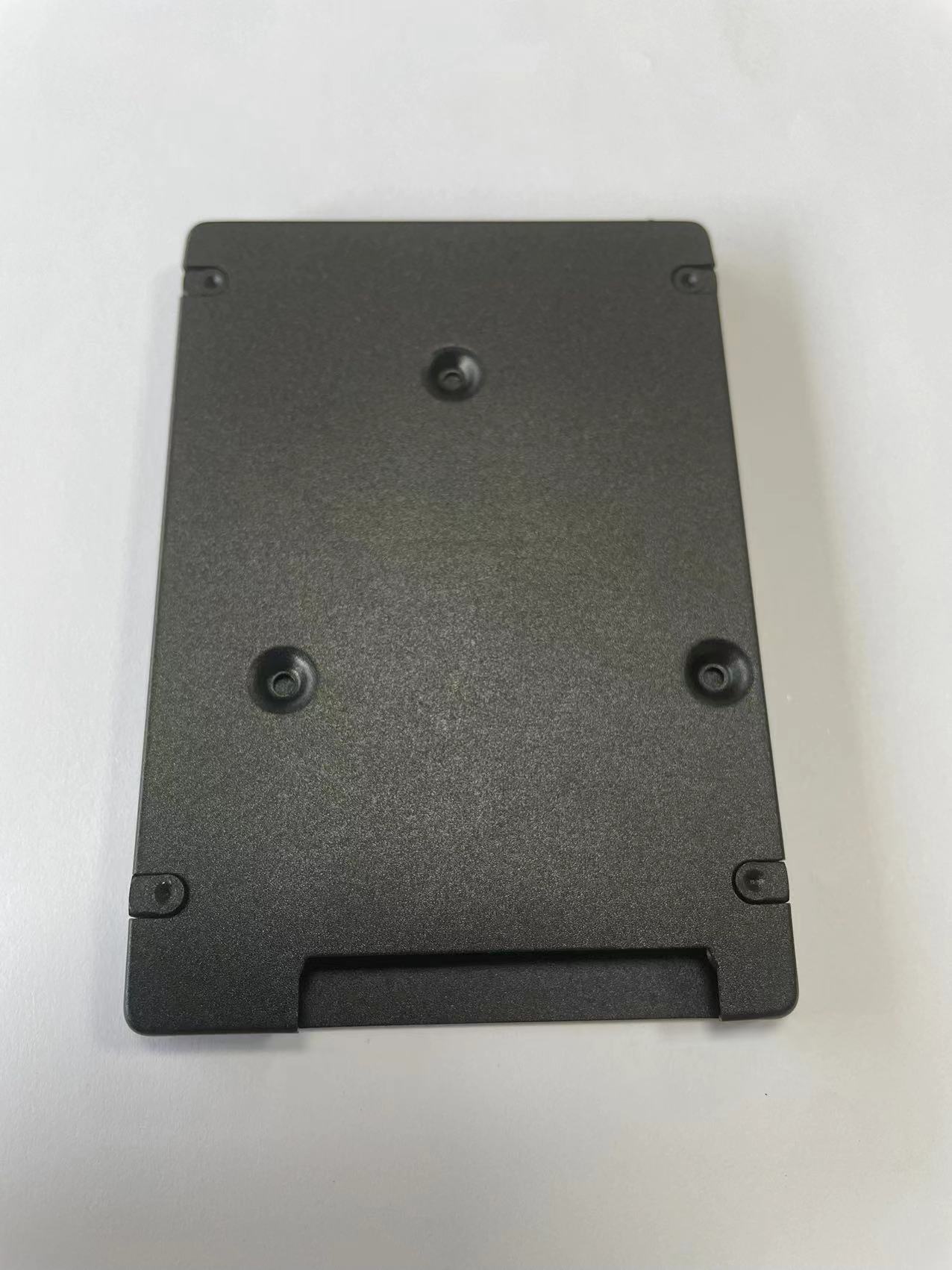
For a Chinese CNC precision machining manufacturer, Yongxin coated CNC-machined parts and achieved full coverage at corners and inner cavities with strong adhesion. The coating was resistant to acid, alkali, rust, and aging, which extended the product service life. The project also demonstrated rapid sample customization and full inspection before shipment.
Comparison: Cathodic Epoxy E-coat vs. Anodic E-coat
For buyers comparing E-coat chemistries, the most reliable difference is salt spray resistance.
| Parameter | Cathodic Epoxy E-coat | Anodic E-coat |
|---|---|---|
| Neutral salt spray resistance | Frequently exceeds 1,000 hours (ASTM B117) | Typically around 500 hours |
| Market position | Dominant in the global E-coat market | Present in the market |
Source: Market Reports World; market context from Dataintelo.
Yongxin Electrophoretic Coating Service Snapshot
| Capability | Details |
|---|---|
| Production mode | OEM |
| Monthly capacity | 2,500,000 units |
| MOQ | 100 units, negotiable for large orders |
| Typical lead time | 3–45 days depending on quantity |
| Coating colors | Black, white, color |
| Resin systems | Acrylic resin, epoxy resin |
| Substrates | Carbon steel, alloy steel, aluminum alloy, magnesium alloy, zinc alloy, die-cast and stamping parts |
| Standard film thickness | 15–25 µm, customizable |
| Salt spray evidence | Over 720 hours in a documented motor case |
| Certifications | ISO 9001:2015, ISO 14001:2015, IATF 16949, National High-Tech Enterprise |
| Inspection | Pre-shipment instrument detection; 100% test |
| After-sales | Remote support |
Frequently Asked Questions
Does Yongxin hold quality and environmental certifications for OEM electrophoretic coating?
Yes. Yongxin holds ISO 9001:2015 Quality Management System (certificate no. 24CN34506942Q, valid to June 16, 2027) and ISO 14001:2015 Environmental Management System (certificate no. 24CN34506943E, valid to June 9, 2028). The company also states compliance with IATF 16949 automotive quality management and is officially recognized as a National High-Tech Enterprise since 2023 (certificate no. GR202344016867).
Can Yongxin coat aluminum, zinc, magnesium, and steel parts in black, white, or custom colors?
Yes. Yongxin's electrophoretic coating capabilities cover black, white, and color options. The process is applicable to carbon steel, alloy steel, aluminum alloy, magnesium alloy, zinc alloy, die-cast parts, and stamping parts. The standard black E-coat can use acrylic resin or epoxy resin systems, with a film thickness of 15–25 µm.
What is the minimum order quantity for OEM electrophoretic coating services?
The minimum order quantity is 100 units, and it is negotiable for large orders. Buyers with lower validation volumes should discuss requirements with the Yongxin team before mass production.
Can a buyer request samples or a pilot run to verify electrophoretic coating quality?
Yongxin supports OEM production and has documented rapid sample customization for CNC precision machining clients, which shortens the production cycle. Buyers can contact Yongxin with part drawings to confirm sample criteria and testing protocols; pre-shipment instrument detection is part of the delivery process.
What is Yongxin's typical lead time for large-batch electrophoretic coating orders?
Typical lead time is 3–45 days depending on quantity. For a current lead-time estimate, send your part drawings and target volume to wuzj@yxsydy.com or WhatsApp +86 15322922788.
Conclusion
Choosing an OEM electrophoretic coating partner requires more than comparing prices. Buyers should verify substrate compatibility, salt spray target, coating thickness control, finish color, certifications, and capacity. Yongxin's documented case work—including 720-hour salt spray performance for a Japanese motor manufacturer and CNC precision part coating in China—shows how capability evidence can reduce procurement risk. If you are evaluating a coating supplier for a specific part program, start with a sample or pilot run, and use the qualification checklist above to structure your decision.
Next step: Request a quote or sample evaluation for your electrophoretic coating project. Email wuzj@yxsydy.com or contact +86 15322922788 via WhatsApp.
Download the company brochure: Enameled Flat Wire and Electrophoretic Coating Solutions