
How to Read Electrophoretic Coating Specs and Test Reports
Electrophoretic coating — also called E-coating, ED coating, or electrophoretic deposition — is an immersion-based metal surface treatment in which an electric field drives charged paint particles onto a conductive workpiece, creating a uniform and continuous film over the entire surface. Because the film follows the geometry of the part, electrophoretic coating is widely used for metal parts with deep cavities, tight seams, internal holes, and complex three-dimensional shapes. When a buyer moves from research into supplier evaluation, the practical task is to compare E-coating providers on evidence: the specification sheet, the test report, and the certificate.
This guide explains which electrophoretic coating specifications to read, which certifications to verify, and how a contract electrophoretic coating processor — Dongguan Yongxin Industrial Co., Ltd. (Yongxin), established in 2018 in Qiaotou Town, Dongguan City, Guangdong Province — documents its capabilities.
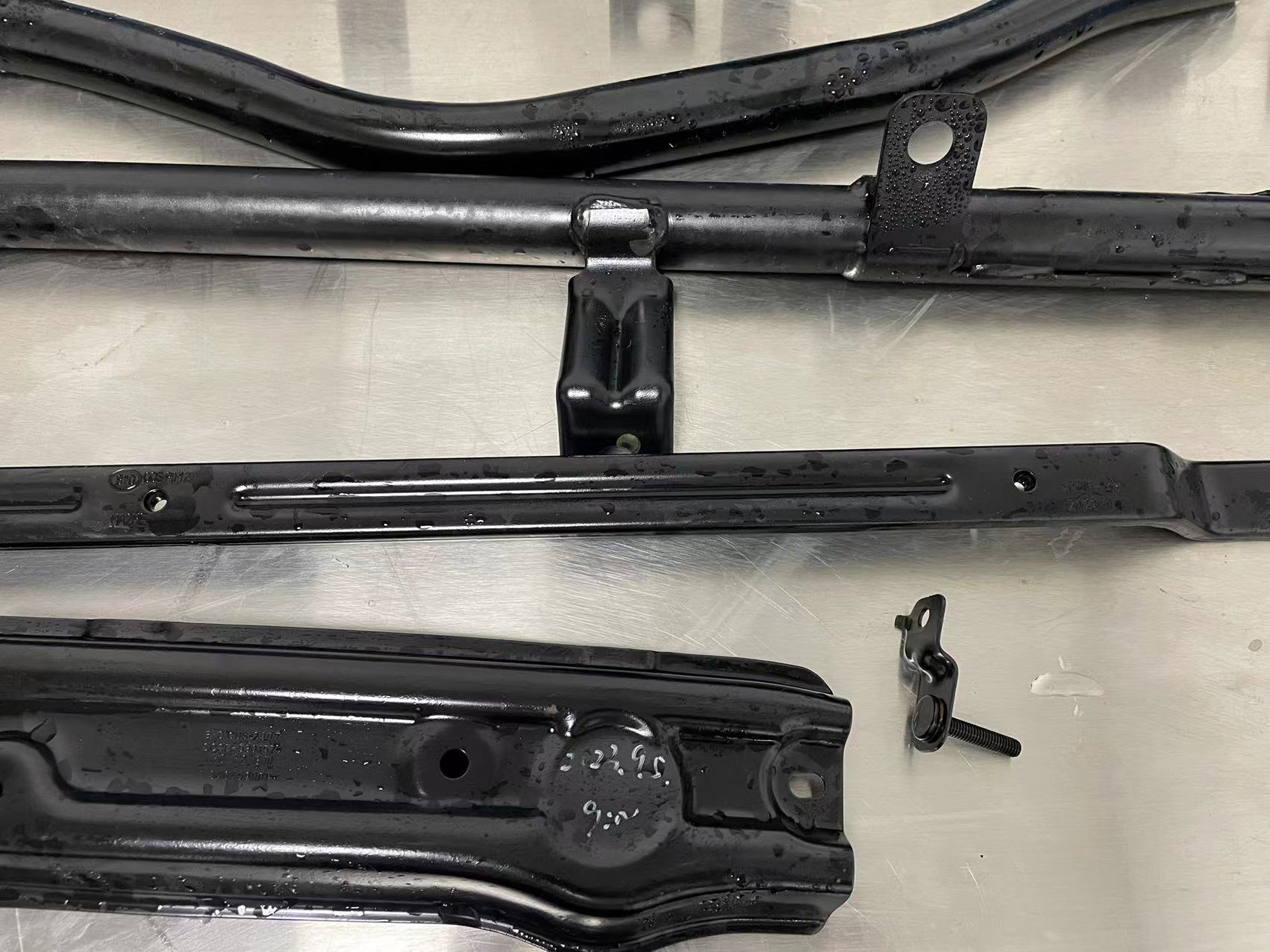
High salt spray electrophoretic coating is a specification option for metal parts exposed to corrosive conditions.
Why E-Coating Specifications Are Hard to Compare
E-coating specification sheets are rarely presented in a directly comparable format. One supplier may state "salt spray 500 hours"; another may provide only a qualitative "good anti-corrosion performance." Some manufacturers publish film thickness values; others omit thickness entirely. Certificates may appear without a certificate number, a scope, an issuing body, or an expiry date. For a buyer, these gaps make it difficult to judge whether a process will survive the actual working conditions of the part.
The most common gaps in electrophoretic coating documentation include:
- Salt spray hours without a test method. Results differ between neutral salt spray (NSS) and CASS testing, and between substrates.
- Film thickness without tolerance. A nominal thickness of 20 microns is not useful if the process cannot hold it consistently.
- Material compatibility without substrate examples. The same coating can behave differently on carbon steel, aluminum alloy, magnesium alloy, and zinc alloy.
- Certification claims without evidence. A certificate should name the standard, the issuing body, the scope, and the validity period.
- Quality control descriptions without instruments. Processors that perform in-house testing with named, high-precision instruments provide stronger evidence.
Each gap matters because the specification defines the acceptance criteria for the finished part. A salt spray figure measured on one substrate and film thickness does not automatically transfer to another part design or material.
Electrophoretic Coating: Market and Process Background
Market context helps buyers calibrate expectations. The global electrophoretic coating (E-coat) market was valued at approximately USD 3.5 billion in 2023 and is projected to reach USD 6.1 billion by 2032, a compound annual growth rate of 6.5% from 2024 to 2032 (Dataintelo). Asia-Pacific is the largest region for E-coating, holding over 46% of the broader paints and coatings market revenue in 2025, led by China and India (Grand View Research). Automotive and construction demand are the main growth drivers.
In performance terms, E-coatings fall into two process families. Cathodic (cationic) epoxy coatings dominate the market and frequently exceed 1,000 hours of salt spray resistance in ASTM B117 testing; anodic (anionic) coatings typically maintain around 500 hours (Market Reports World). E-coating also offers high material utilization: industry sources report material transfer efficiency of approximately 95%, with a typical coating thickness of 20 to 40 microns (Market Reports World / Yixing Technology). For many hardware and automotive components, a standard specification of 15 to 25 microns is also common, and custom thickness is available depending on customer requirements.
ED coating (electrophoretic deposition) produces a uniform film across the full part surface.
The main resin systems used in electrophoretic coating include epoxy resin, acrylic resin, and propionic acid resin. In general practice, epoxy-based systems are associated with strong corrosion and rust protection, while acrylic-based systems are often used where color and appearance matter. Both anionic and cationic electrophoretic coating processes are available in the market. Major global E-coat material suppliers include PPG Industries, BASF SE, Axalta Coating Systems, Nippon Paint, and Kansai Paint (Mordor Intelligence); these companies primarily provide the paint and chemical systems. Contract E-coating processors such as Yongxin operate the lines that coat parts for OEMs and their supply chains. Buyers should distinguish between buying paint to run an internal line and outsourcing the complete coating process, because the evaluation criteria differ.
The Specifications That Matter on an E-Coating Sheet
A useful E-coating specification should state the performance target, the test method, and the basis of the result. The parameters below cover most metal parts: salt spray resistance, film thickness, coverage and adhesion, material compatibility, color and appearance, and environmental compliance.
Salt spray resistance
Salt spray resistance is the most common performance target for E-coating. It is normally expressed as hours in neutral salt spray (NSS) testing before red rust appears. When reading a spec sheet, check three things: the number of hours, the test method (NSS or CASS), and the substrate and film thickness on which the result was obtained.
Yongxin's High Salt Spray Electrophoresis product — an anion electrophoretic coating based on acrylic resin and epoxy resin — can reach 300 to 1,000 hours of salt spray resistance and is available in white or black with customizable options. Its automotive black E-coating specification documents 500 to 1,500 hours without red rust in NSS testing and more than 96 hours in CASS testing. In a documented motor case, E-coated motor parts for a Japanese motor manufacturer ensured over 720 hours of neutral salt spray resistance.
Film thickness
Film thickness controls both corrosion protection and dimensional fit. For ordinary parts, a standard E-coating film thickness is 15 to 25 microns, which can be customized as needed. In automotive specifications, film thickness is typically held within ±1 micron, with thickness variation controlled within ±5%. Industry sources cite a typical E-coat thickness of 20 to 40 microns overall. A reliable spec sheet states the target thickness and the tolerance so that incoming inspection is meaningful.
Coverage, adhesion, and mechanical resistance
The main advantage of E-coating over spray finishing is full coverage. Based on Faraday's principle, charged paint particles deposit evenly, so deep cavities, tight seams, internal holes, and complex 3D geometries achieve more than 95% to 98% coverage. The film forms a molecular-level bond with the substrate, preventing peeling and blistering during assembly, transport, or operation. E-coat films withstand stone chipping and temperature extremes from -40°C to over 85°C. In quality control, coverage and adhesion are verified with instruments such as a tape abrasion tester, an alcohol rubber friction tester, and an electron microscope.
Material compatibility
E-coating is widely applicable to carbon steel, alloy steel, aluminum alloy, magnesium alloy, and zinc alloy. The process also suits a range of production routes: die-cast parts, metal stamping parts, CNC machined parts, and general metal fittings. For example, Yongxin's white electrophoretic coating for stamping parts is made of acrylic resin (epoxy resin), uses a CNC + electrophoresis control method, and is intended for metal products (C33), construction machinery, rail transit, sanitary ware, home appliance manufacturing, precision hardware, electronic equipment, and automotive accessories.
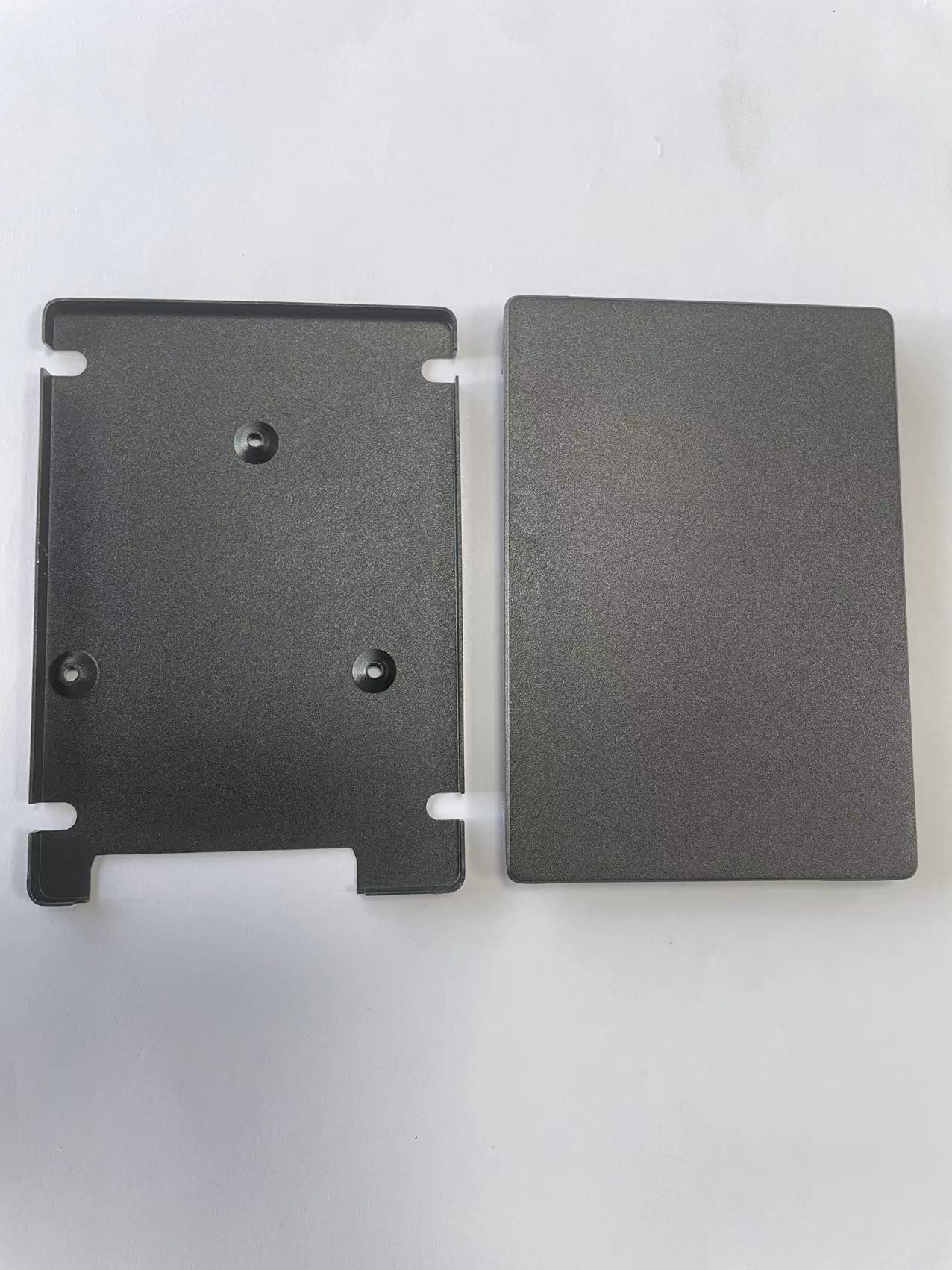
Aluminum alloy parts after electrophoretic coating.
Color and appearance
Electrophoretic coating is available in black (matte or glossy), white, and custom colors such as grey or silver on request. Beyond standard black and white, color electrophoretic coating can be produced in custom colors for parts that need a specific appearance. Yongxin's E-coating products are available in black and white with customizable color options, and the coating is described as uniform and fine. The surface should be smooth and uniform, free from defects such as flow marks or blisters. Appearance is verified with a gloss meter, a spectrophotometer, and a roughness meter.
Environmental and regulatory specifications
Modern E-coat systems are water-based and free of heavy metals such as lead and chromium, with very low volatile organic compound (VOC) emissions, and can comply with international environmental standards such as RoHS. For applications exposed to sunlight or UV, UV-resistant electrophoretic coating is among the available options; the process is applicable to harsh working conditions including high humidity, salt spray, corrosive, and UV-exposed environments. Buyers with environmental requirements should also confirm the processor's environmental management certification.
Certifications Worth Verifying
A certificate becomes useful only when it names the standard, the issuing body, the scope, and the validity period. For a contract E-coating processor, the following certifications cover the most common buyer requirements.
ISO 9001:2015 Quality Management System. Yongxin holds this certification under certificate number 24CN34506942Q, issued by ACM INTERNATIONAL CERTIFICATION LIMITED (ACMCERT). The certified scope is "Surface Treatment of Hardware Accessories (Electrophoresis)," and the certificate is valid until 16 June 2027.
ISO 14001:2015 Environmental Management System. Yongxin's environmental management system is certified under number 24CN34506943E, also issued by ACMCERT with the same scope. The certificate is valid until 9 June 2028.
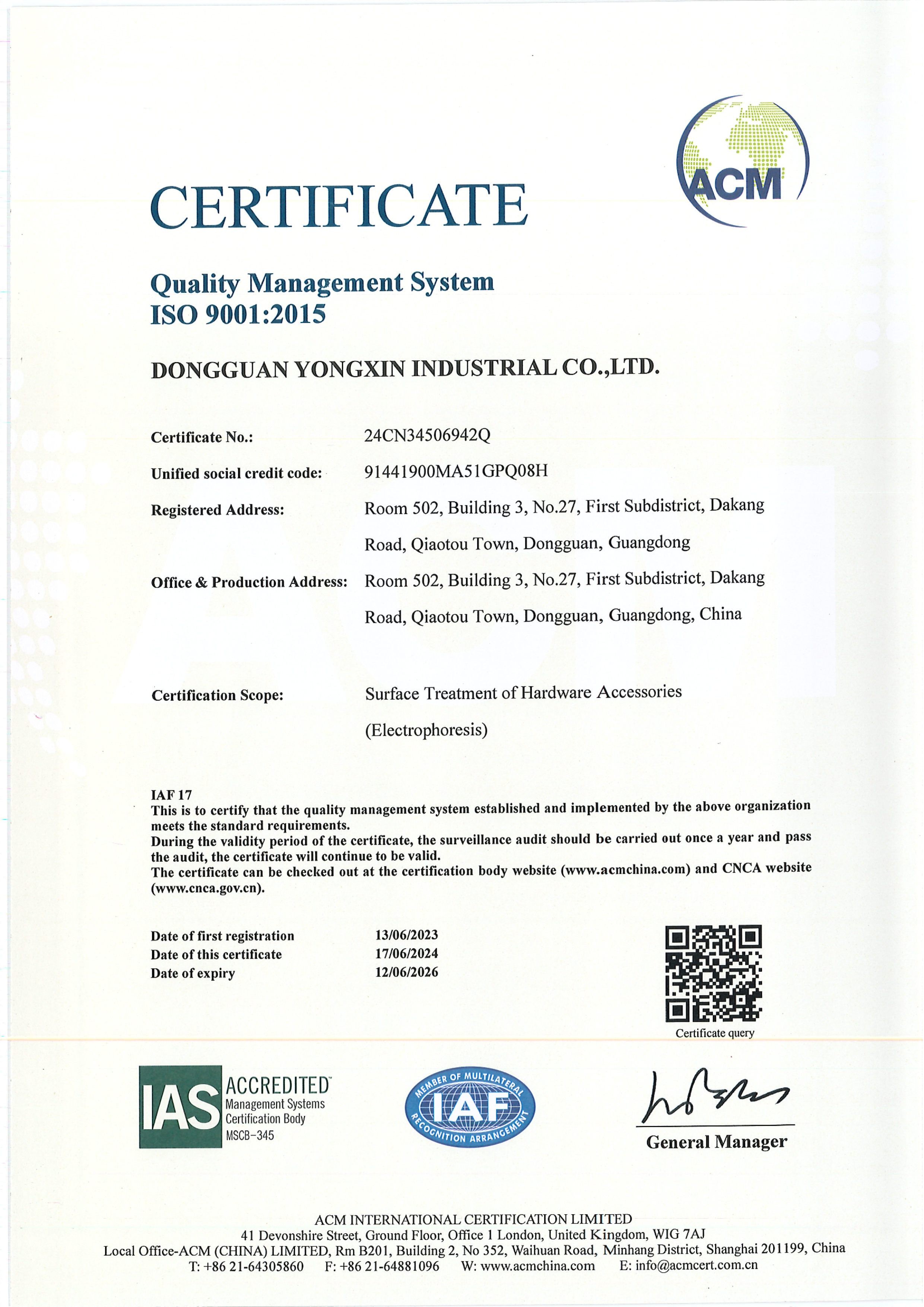
ISO 9001:2015 certification covering surface treatment of hardware accessories (electrophoresis).
IATF16949 Automotive Quality Management System. The company reports that it has passed IATF16949 Automotive Quality Management System Certification, the automotive-industry quality standard relevant for suppliers of fasteners, chassis components, body frames, door hinges, and engine brackets.
National High-Tech Enterprise. In 2023, Yongxin was officially awarded the title of National High-Tech Enterprise in China, certificate number GR202344016867, issued by GDST. The recognition follows the Administrative Measures for the Recognition of High-tech Enterprises (Guo Ke Fa Huo〔2016〕No.32) and is valid until 28 December 2026.
Certificates are supported by measurement capability. Yongxin's quality inspection system includes more than 20 high-precision testing instruments: a German FISCHER film thickness gauge, a Swiss Zehntner gloss meter, a Japanese Konica Minolta spectrophotometer, and a Japanese Mitutoyo roughness meter, together with a salt spray tester, a constant temperature and humidity tester, a reflectometer, an electron microscope, a tape abrasion tester, an alcohol rubber friction tester, and tank solution analysis equipment. Every production step is inspected to keep product quality stable and consistent.
Step-by-Step: How to Evaluate an E-Coating Manufacturer
The following sequence converts specification knowledge into a supplier evaluation workflow.
- Define the part and its working conditions. Record the substrate (carbon steel, alloy steel, aluminum alloy, magnesium alloy, or zinc alloy), the geometry (deep holes, seams, cavities), and the service environment (high humidity, salt spray, corrosive media, UV exposure).
- Translate conditions into target specifications. Select the coating type (anionic or cationic), the resin system (epoxy, acrylic, or propionic acid resin), the required salt spray hours, the film thickness, and the color.
- Verify the certificates. Check the certificate number, issuing body, scope, and expiry date. Confirm that the scope covers electrophoretic surface treatment, not unrelated processes.
- Inspect the testing laboratory and equipment. Look for a film thickness gauge, gloss meter, spectrophotometer, roughness meter, salt spray tester, and humidity tester. Named instruments are a stronger signal than a general quality-control statement.
- Check production capacity and process scope. Confirm that the processor can handle the part type (die-cast, stamped, or CNC machined) and the required volume. Yongxin, for example, operates 6 professional electrophoresis production lines with a monthly capacity of 2,500,000 pieces.
- Request samples and validate in-house. Use the sample stage to run your own salt spray, adhesion, and appearance checks. The sample report should state the substrate, film thickness, and test method.
- Confirm lead time, MOQ, and after-sales support. Yongxin's documented parameters include a standard MOQ of 100 pieces, a lead time of 3 to 45 days depending on quantity, and remote after-sales support.
Use Cases: E-Coating Performance in the Field
Electric motor manufacturer (Japan)
A Japanese motor manufacturer applied anti-corrosion and anti-rust E-coating to electric motors in a volume of 15,000,000 units. The result was a neutral salt spray resistance exceeding 720 hours with a smooth and glossy finish. Compared with traditional non-E-coating processes, the electrophoretic coating extended the service life of the product by 5 to 10 years. The highlights were uniform full coverage of complex motor structural gaps, stable anti-corrosion performance under long-term harsh working conditions, low material loss during coating, and support for continuous mass production of large-volume motor orders.
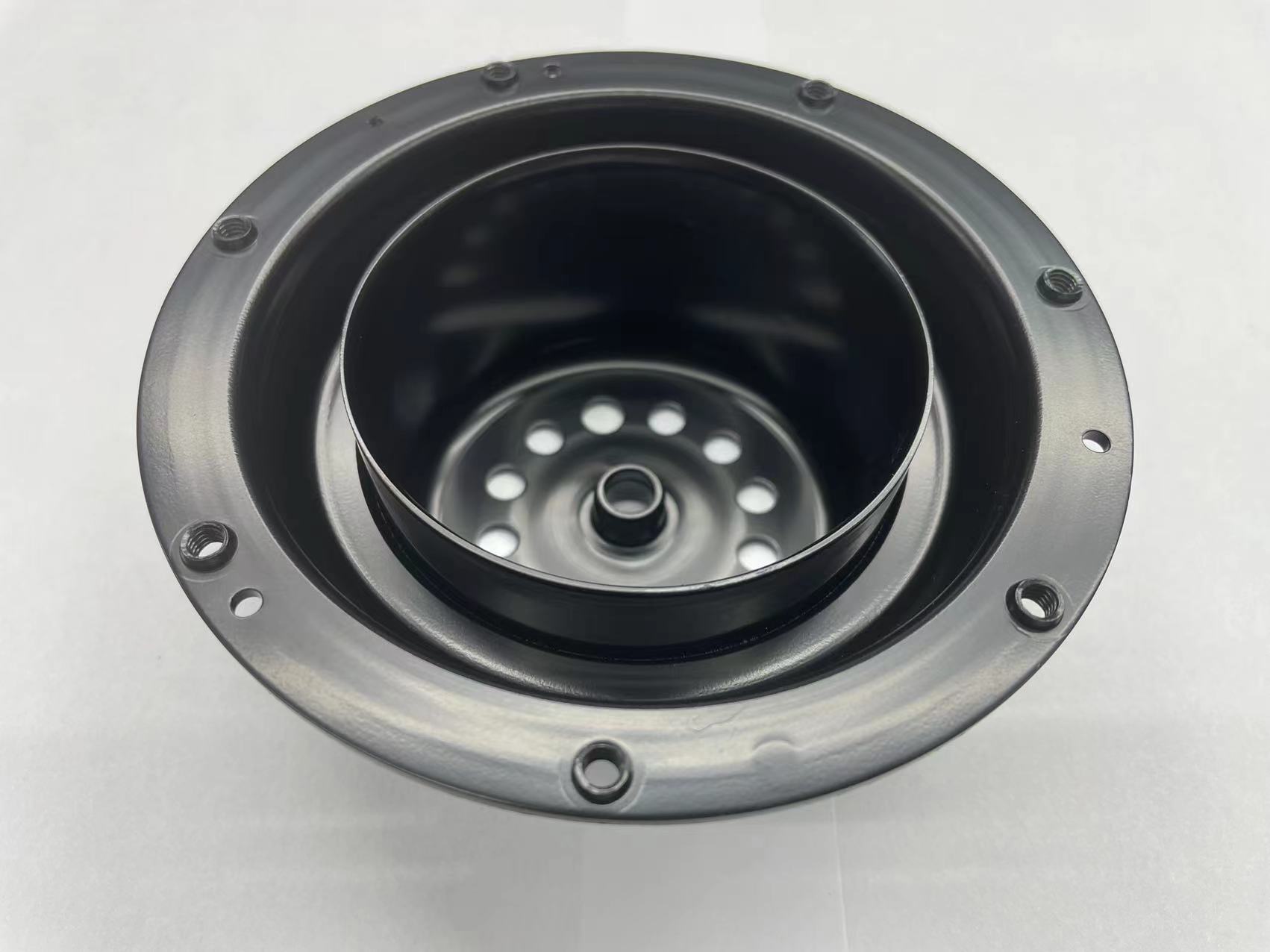
Motor housing with black E-coating; the part documentation references a 240-hour salt spray test label.
CNC precision machining manufacturer (China)
A CNC precision machining manufacturer used E-coating for CNC parts in a volume of 10,000,000 units. The electrophoretic film layer was fully covered, with no missed coating at corners or inner cavities, and strong adhesion. The coating demonstrated resistance to acid and alkali, rust protection, and anti-aging behavior, significantly extending the product's service life. The production model relied on full-process standardized operation, small batch-to-batch color difference, and stable quality, while also supporting multi-material and multi-color customization with fast delivery and mass production on demand.
Industry coverage
Processed products are widely used in automobiles, bicycles, communication equipment, consumer electronics, drones, and security systems. The application scope also covers metal products (C33), construction machinery, rail transit, sanitary ware, home appliance manufacturing, precision hardware, electronic equipment, and automotive accessories — for die-cast parts, stamping parts, cooling fans, metal fittings, and small structural components. Yongxin states that it has long provided high-quality supporting processing services for well-known domestic and foreign brands including Huawei, DJI, OPPO, Panasonic, BYD, VIVO, Apple, and Foxconn.
Comparison: Coating Types and Product Configurations
The first comparison a buyer faces is coating type. The table below summarizes the industry-level difference between anodic and cathodic systems, using published benchmarks and Yongxin product data.
| Comparison point | Anodic (anion) E-coating | Cathodic (cation) E-coating |
|---|---|---|
| Industry salt spray benchmark | Typically around 500 hours (Market Reports World) | Frequently exceeds 1,000 hours in ASTM B117 testing (Market Reports World) |
| Market position | Anodic systems serve a range of metal finishing needs | Cathodic epoxy coatings dominate the E-coat market |
| Yongxin product reference | High Salt Spray Electrophoresis (anion type): 300–1,000 hours salt spray; acrylic and epoxy resin; white or black | Cationic electrophoretic coating available in Yongxin's OEM scope |
Yongxin product data at a glance
The table below shows how specifications are organized across Yongxin's main E-coating product references.
| Product reference | Process / model | Resin system | Colors | Key specifications | Typical applications |
|---|---|---|---|---|---|
| High Salt Spray Electrophoresis | Anion electrophoretic coating | Acrylic resin; epoxy resin | White, black (customizable) | Salt spray 300–1,000 h; uniform fine coating; anti-rust, anti-corrosion, anti-fading, wear resistance | Automotive parts, metal fittings, small structural components, bicycle accessories, cooling fans, die-casting parts, CNC machined parts, metal stamping parts |
| Electrophoretic Coating (Stamped Parts + Electrophoresis) | Epoxy resin electrophoretic coating | Epoxy resin | White, black (customizable) | Uniform fine coating; anti-rust, anti-corrosion, anti-fading, wear resistance | Stamped parts |
| White Electrophoretic Coating (CNC + Electrophoresis) | Electrophoretic coating of stamping parts | Acrylic resin (epoxy resin) | White (customizable) | Uniform fine coating; anti-rust; anti-corrosion | Metal products (C33), construction machinery, rail transit, sanitary ware, home appliance manufacturing, precision hardware, electronic equipment, automotive accessories |
| E-Coating (black E-Coating, automotive series) | Automotive electrophoretic coating | Acrylic resin (epoxy resin) | Black (matte or glossy); custom grey or silver | Thickness 15–25 µm (±1 µm tolerance; ±5% variation); 500–1,500 h NSS; CASS >96 h; 95–98% coverage on complex geometry; withstands -40°C to >85°C | Fasteners, chassis components, body frames, door hinges, engine brackets |
FAQ: E-Coating Manufacturers and What to Check
1. What certifications should a qualified e-coating manufacturer hold?
At minimum, a qualified E-coating manufacturer should hold a valid quality management certification whose scope covers surface treatment. Yongxin holds ISO 9001:2015 (certificate number 24CN34506942Q) and ISO 14001:2015 (certificate number 24CN34506943E), both issued by ACM INTERNATIONAL CERTIFICATION LIMITED (ACMCERT) with the scope "Surface Treatment of Hardware Accessories (Electrophoresis)." The company also reports passing IATF16949 Automotive Quality Management System Certification, and it was awarded the title of National High-Tech Enterprise in China in 2023 (certificate number GR202344016867, issued by GDST). Buyers should verify the certificate number, issuing body, scope, and expiry date.
2. What salt spray resistance can e-coating manufacturers achieve?
Industry benchmarks show cathodic epoxy E-coatings frequently exceeding 1,000 hours of salt spray resistance in ASTM B117 testing, while anodic coatings typically maintain around 500 hours (Market Reports World). At product level, Yongxin's High Salt Spray Electrophoresis (anion type) reaches 300–1,000 hours of salt spray resistance, and its automotive black E-coating documents 500–1,500 hours without red rust in NSS testing, with CASS testing exceeding 96 hours. A documented motor case achieved over 720 hours of neutral salt spray resistance. When comparing values, check the test method and the substrate.
3. What factors affect the cost of an E-coating order?
E-coating is a processing service, so total cost depends on part geometry, substrate material, target salt spray hours, film thickness, color, and order quantity. Custom colors, custom film thickness, and higher corrosion targets usually require more process control and therefore more time on the line. Yongxin's standard MOQ is 100 pieces, with a monthly capacity of 2,500,000 pieces, which supports both sample-scale and mass-production orders. To receive an accurate quotation, send the drawing, material grade, target salt spray hours, and film thickness together with the inquiry.
4. How can I request E-coating samples for evaluation?
E-coating sample requests at Yongxin are handled through the company's inquiry channels: email wuzj@yxsydy.com, phone, or WhatsApp at +8615322922788. Providing the part drawing, substrate material, and target specifications (salt spray hours, color, film thickness) helps the team prepare representative samples. Yongxin's sample display shows the range of finished E-coated parts, and remote support is available during sample evaluation and after-sales.
5. What is the typical MOQ and lead time for E-coating orders?
Yongxin's standard MOQ is 100 pieces. Lead time depends on order quantity and typically ranges from 3 to 45 days. The company operates 6 professional electrophoresis production lines, supported by more than 20 CNC machines, more than 10 die-casting machines, and more than 10 metal stamping machines, with a monthly capacity of 2,500,000 pieces. To confirm current lead times or request a quote and samples, contact Mr. Wu at wuzj@yxsydy.com or +8615322922788 (WhatsApp available).
Conclusion: Evaluate E-Coating Suppliers on Evidence
There is no shortcut around the data. When evaluating E-coating manufacturers, read the specification sheet for salt spray hours, film thickness, coverage, and material compatibility; verify certificates by number, scope, and validity; inspect the testing equipment; and validate samples under your own conditions. This approach narrows the supplier list faster and reduces the risk of field failures.
Yongxin (Dongguan Yongxin Industrial Co., Ltd.) is a contract electrophoretic coating processor in Qiaotou Town, Dongguan, China, with capabilities documented at www.yxecoat.com. It operates 6 professional electrophoresis production lines, supports OEM production with a monthly capacity of 2,500,000 pieces, holds ISO 9001:2015 and ISO 14001:2015 certifications, was awarded National High-Tech Enterprise status in 2023, and exports 30% of output to Europe and America, Southeast Asia, Mexico, Poland, Turkey, and Brazil. Its processed products are widely used in automobiles, bicycles, communication equipment, consumer electronics, drones, and security systems.
For a complete overview of its electrophoretic coating solutions, download the company brochure: Enameled Flat Wire and Electrophoretic Coating Solutions (PDF).
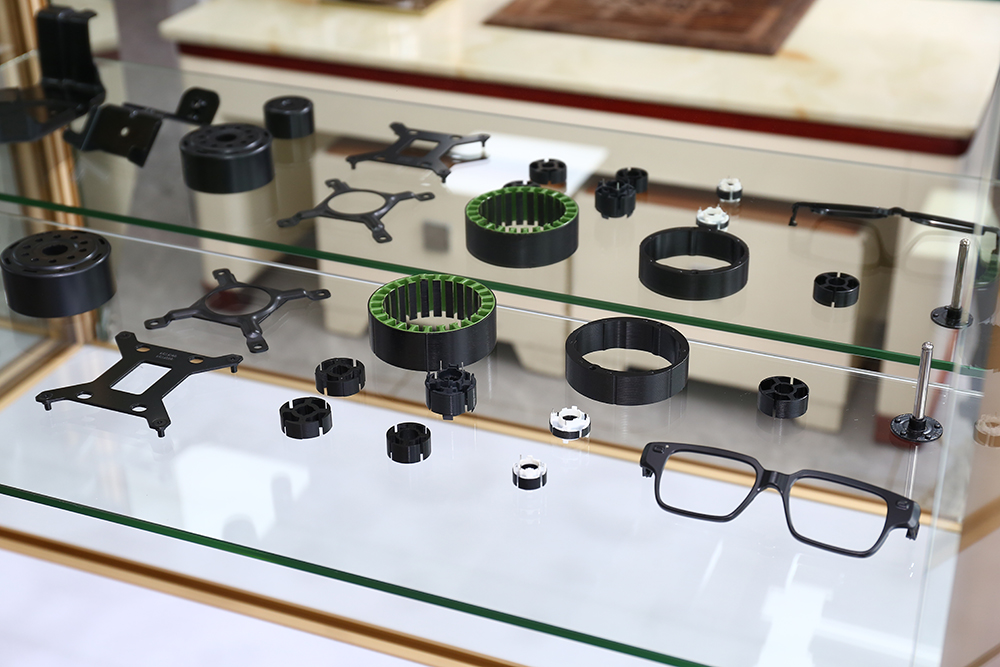
Reference samples from completed E-coating orders.
Request a quote or samples
Send your drawings, material grade, and target salt spray hours to Mr. Wu at wuzj@yxsydy.com or +8615322922788 (WhatsApp).
MOQ: 100 pieces · Monthly capacity: 2,500,000 pieces · Lead time: 3–45 days