
Specifying Electrophoretic Coating: Resin, Thickness and Salt Spray
An electrophoretic coating specification for metal parts is four decisions taken together: resin chemistry, colour, film thickness and salt-spray target. Written as separate line items, they usually fail at first-article inspection, because thickness, coverage and corrosion performance move as one system.
This guide is written for buyers and product engineers at the evaluation stage, who must issue an RFQ that a coating house can quote and an inspector can verify. It covers acrylic and epoxy resin systems in black, white and custom colours; the 15–25 µm film-thickness band; coverage above 95% to 98% on complex geometries; and neutral salt-spray targets above 1,000 hours. Dongguan Yongxin Industrial Co., LTD is an electrophoretic coating processor in Qiaotou Town, Dongguan City, China, and appears here to show what verifiable supplier evidence looks like, not as a ranking claim.
What actually goes wrong when a coating specification is issued
Coating disputes rarely come from a supplier refusing to meet a target. They come from a target that could not be measured the same way twice. Five defects account for most of the rework, and all five are cheaper to fix on paper than after tooling release.
- A number without a method. '1,000 hours salt spray' is not a requirement until the standard (ISO 9227 or ASTM B117), the specimen, the scribe condition, the evaluation interval and the failure definition are all fixed.
- Thickness without measurement positions. A 15–25 µm nominal range says nothing about where on a stamped bracket or die-cast housing the reading is taken. Flat panel, edge and cavity floor produce different numbers on the same part.
- Resin chosen by colour. Colour and corrosion duty are separate decisions. Selecting a white coating for appearance and then assuming it carries the same salt-spray performance as a corrosion-grade epoxy is a common mismatch.
- Coverage assumed rather than inspected. Complex geometries need named inspection points, otherwise 'full coverage' is an opinion rather than an acceptance criterion.
- A certificate read beyond its scope. An environmental or quality certificate covers the activities named in its scope statement. It does not certify every product, colour or substrate the supplier handles.
Where electrophoretic coating sits in metal finishing
Electrophoretic deposition (ED), also written electrophoretic coating, E-coating or electrocoating, is a process in which charged paint particles suspended in a water-borne bath migrate to a conductive part under an applied voltage and form a film that is cured afterwards. Because the bath is water-borne, the process is normally discussed alongside low-VOC finishing routes; that general characteristic is worth separating from any specific emissions figure, which must come from the supplier's own documentation.
The technology has a published vocabulary and scope. ISO 22553-1:2019 defines terms for electro-deposition coatings and states applicability to automotive industries and other general industrial applications, including chiller units, consumer products, radiators, aerospace and agriculture. That scope is useful when writing an RFQ, because it establishes that the process is not limited to vehicle bodies: a specification for a fan frame, a lamp base or an electric motor housing sits inside the same technical family.
Two process families appear in commercial supply. In anodic systems the part acts as the anode; in cathodic systems the part is the cathode. Cathodic epoxy is the type a commercial market research summary expects to remain dominant in the electrocoating market, which is consistent with the corrosion-driven demand seen in automotive and industrial hardware. Yongxin's production range covers both anionic and cationic coatings, which means the anodic/cathodic decision should be written into the RFQ rather than assumed from the supplier's default line.
The four specification variables
Resin chemistry: epoxy and acrylic are specified for different jobs
Epoxy resin electrophoretic coatings are chosen where corrosion resistance is the dominant requirement: motor housings, internal structures, brackets, cores and parts that will be painted over or hidden in service. The trade-off is appearance under exposure. Epoxy films are generally less colour- and gloss-stable in ultraviolet light than acrylic films, so a part that stays visible outdoors should not be specified in epoxy purely because the corrosion data looks stronger.
Acrylic resin systems are selected for colour and gloss retention and for UV-resistant electrophoretic coating duties, typically on visible consumer-facing parts. The corrosion ceiling of an acrylic system at a given thickness should be confirmed with data on your substrate rather than assumed from the epoxy result. Yongxin's range includes epoxy resin electrophoretic coating and, for the acrylic route, electrophoretic coating of propionic acid resin, alongside UV-resistant and corrosion-resistant formulations.
Whichever chemistry is selected, the specification should state the resin family, the anodic or cathodic process, the cure schedule the supplier will run, and the test thickness at which the corrosion and adhesion data were generated. A resin name without those conditions is a label, not a requirement.
Colour: black, white and custom shades carry different control burdens
Black electrophoretic coating is the default for industrial hardware because it is the most forgiving of substrate variation and handling marks, and because colour control is comparatively simple. White electrophoretic coating demands tighter bath and line discipline: contamination shows immediately, and colour drift between batches is visible on large flat surfaces. Where white or a pale shade is used on an exposed part, pair it with a UV-stable resin system, otherwise yellowing becomes an appearance complaint rather than a corrosion issue.
Custom colour electrophoretic coating should be specified against a retained master sample, a measurement instrument and a tolerance. Yongxin's laboratory uses a Konica Minolta spectrophotometer and a Zehntner gloss meter, which allows colour and gloss to be stated as measured values rather than visual agreement. Field experience on multi-material, multi-colour CNC work at Yongxin is described in terms of small batch-to-batch colour difference and stable, consistent quality, which is the outcome a colour tolerance clause is meant to protect.
Film thickness: why 15–25 µm is the working band
The standard band for metal parts is 15–25 µm. Below roughly 15 µm, coverage on rough, stamped or recessed surfaces becomes harder to guarantee, and the corrosion margin narrows quickly at edges. Above 25 µm, material consumption, edge build and the risk of appearance defects rise without a proportional gain in protection. A commercial research summary of automotive e-coat requirements cites film builds of 18–25 µm alongside salt-spray benchmarks of 720–1,000 hours, which sits inside the same band; treat such figures as a market observation, not a universal rule.
Thickness must be written with a measurement plan, not only a range. Name the method (ISO 2808 for dry-film thickness and ASTM B767 for electrocoating thickness are commonly referenced in technical summaries), the instrument type, the number of readings per part, and the positions: a flat face, a formed edge, a weld, and a cavity wall. Magnetic and eddy-current gauges are standard on steel and aluminium respectively; Yongxin's inspection line uses a German FISCHER film thickness gauge for this check. Without fixed positions, two inspectors can both be right and still disagree.
Salt spray: define the test protocol, then the hours
A neutral salt-spray target is only meaningful with four elements attached: the standard, the specimen type, the evaluation criteria and the duration. ISO 9227 and ASTM B117 are the two methods most often written into e-coat specifications, and rust or blister evaluation is commonly scored using ISO 4628 or ASTM D1654. Yongxin specifies its high salt spray electrophoretic coating against a neutral salt spray target above 1,000 hours, and the Japanese motor-housing programme described later in this guide was verified above 720 hours.
Those figures are not interchangeable across substrates or film builds. A peer-reviewed study of cathodic electrodeposition epoxy on AZ91D magnesium alloy ran immersion and ASTM B117 salt-spray evaluation for 240 hours and reported lower corrosion rate for the coated specimens than for the as-cast and aluminium-powder-coated comparison conditions within that study. The useful lesson for a specification writer is methodological: test duration and specimen design are set per substrate and per coating system, and a number borrowed from another part family proves nothing about yours.
Substrate compatibility and what each substrate forces into the specification
Yongxin's production range covers carbon steel, alloy steel, aluminum alloy, magnesium alloy and zinc alloy, including die-cast parts and stamping parts. Substrate choice changes the pretreatment, the thickness measurement method and the corrosion evidence you should demand.
| Substrate | What the specification must fix | Evidence to request |
|---|---|---|
| Carbon steel | Pretreatment sequence, resin family (cathodic epoxy is the usual corrosion route), thickness band and measurement positions | Salt-spray report on the same steel grade at the specified thickness, with the scribe and acceptance criteria stated |
| Alloy steel | Pretreatment compatibility with the specific alloy, plus adhesion requirements for formed and welded areas | Adhesion result (ISO 2409 cross-cut is commonly referenced) and salt-spray data on the actual alloy |
| Aluminum alloy | Oxide removal and pretreatment, eddy-current thickness measurement, colour control on visible faces | Thickness readings taken with an eddy-current method and salt-spray data generated on aluminium, not on steel |
| Magnesium alloy | Substrate-specific validation, since magnesium is the most reactive of these metals; test duration set for the part, not inherited from steel programmes | Substrate-specific corrosion study or test report; the AZ91D literature example used ASTM B117 for 240 hours and is not a commercial benchmark |
| Zinc alloy (die-cast) | Inspection points in recesses, around ejector marks and on cavity walls, where coverage is hardest to confirm | First-article coverage record plus salt-spray data on die-cast parts of similar geometry |
Writing the specification: a seven-step sequence
- Lock the substrate and its incoming condition. State the alloy, the forming route (stamped, die-cast, machined) and the surface condition the coater will receive. A coating specification that starts at the bath ignores the half of the outcome determined before the part is racked.
- Write the corrosion requirement as a protocol. Standard, specimen, scribe, duration, evaluation interval and failure definition. If the part will be salt-sprayed as an assembly, say so; a flat coupon is not a housing.
- Choose the resin family against both duties. Epoxy for corrosion-led parts, acrylic where colour and gloss retention under exposure matter. State anodic or cathodic. Record the thickness at which the corrosion and adhesion data were produced.
- Fix colour with a master sample and an instrument tolerance. Black, white and custom shades each need a retained standard and a measured acceptance range, not a verbal description.
- Set the thickness band and the measurement plan. Nominal value within 15–25 µm, tolerance, method, number of readings and named positions on the part. This is the clause that decides most acceptance arguments.
- Define coverage for complex geometry. Coverage above 95% to 98% is achievable on complex geometries, but the number only means something with inspection points: stamped edges, cavity walls, weld lines and corners.
- Attach the documentation set. Certificates with their scope statement, substrate-specific test reports, colour and gloss records, and the inspection regime. Yongxin, for example, runs 100% testing and holds ISO 9001:2015 certificate 24CN34506942Q (valid 17 June 2024 to 16 June 2027) and ISO 14001:2015 certificate 24CN34506943E (valid 9 June 2025 to 9 June 2028), whose scope is surface treatment of hardware accessories (electrophoresis).
Formulation profiles at a glance
The table below maps the formulation choices in this guide to the decision each one actually settles. It is a specification aid, not a performance ranking: the right row depends on substrate, geometry and exposure, and the supporting data must still be requested.
| Formulation | Specify it when | What to watch in the RFQ |
|---|---|---|
| Epoxy resin system | Corrosion resistance is the dominant requirement: housings, cores, internal structures, parts painted over later | Colour and gloss retention under UV exposure is generally weaker than acrylic; keep epoxy for hidden or over-coated parts unless exposure data says otherwise |
| Acrylic resin system | Visible parts needing colour and gloss retention, including UV-resistant duties | Ask for corrosion and adhesion data at the same thickness as the epoxy alternative on your substrate |
| Black electrophoretic coating | General industrial hardware, high-volume parts, applications where handling marks must not show | Set a gloss range as well as a colour tolerance, since black shows gloss variation clearly |
| White electrophoretic coating | Visible consumer and appliance parts where a light finish is required | Contamination control and batch-to-batch drift; pair with a UV-stable resin if exposed |
| Custom colour electrophoretic coating | Brand-matched appearance across a product family | Retained master sample, spectrophotometer tolerance and re-approval rule after any bath change |
| High salt spray electrophoretic coating | Corrosion-critical parts with a stated neutral salt-spray target above 1,000 hours | Tie the hours to ISO 9227 or ASTM B117 plus an acceptance scale; confirm the thickness and substrate the figure was generated on |
Where the specification is tested in production
The value of a written specification shows up on parts that are hard to coat, not on flat panels. Four part families illustrate the checks that matter.
Electric motor housings
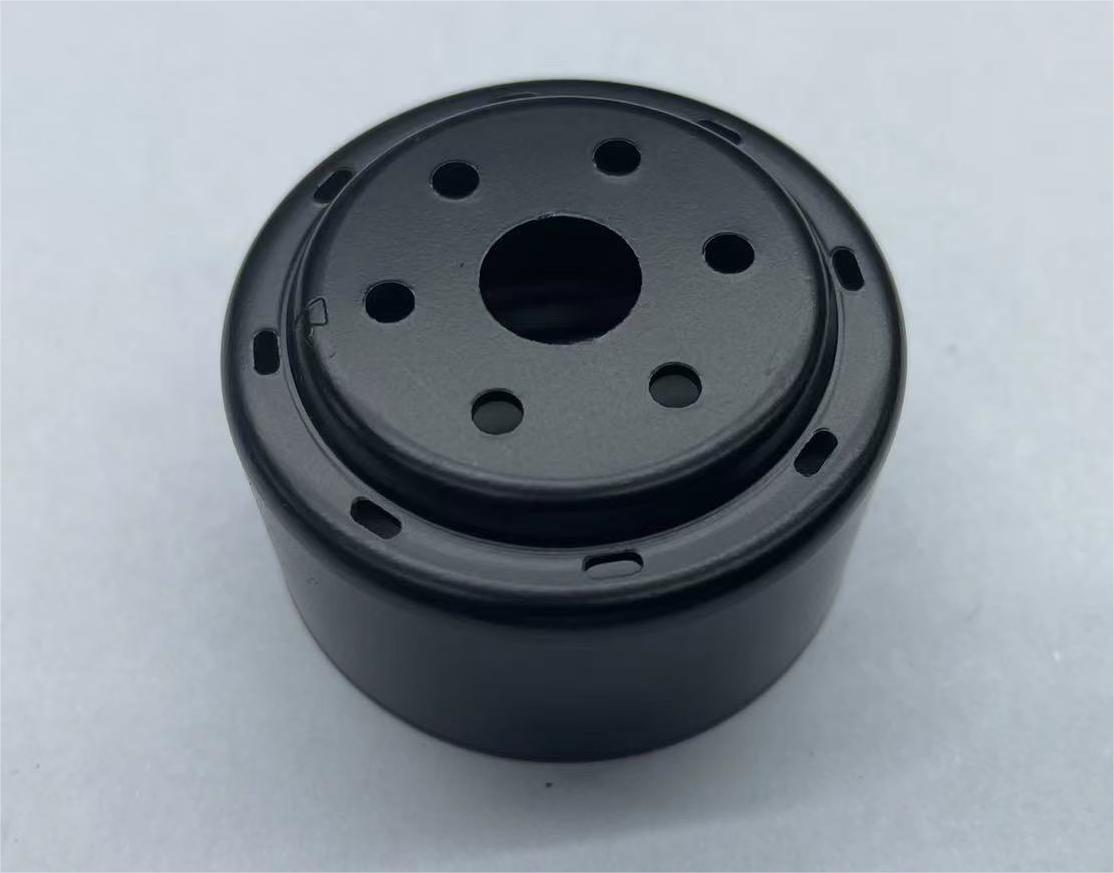
A Japanese motor manufacturer applied anti-corrosion and anti-rust electrophoretic coating to electric motors across a programme of 15,000,000 units. The project achieved neutral salt spray resistance above 720 hours and extended product service life by 5 to 10 years, and the reported benefit was uniform full coverage of complex motor structural gaps together with stable anti-corrosion performance under long-term harsh working conditions. Low material loss during coating supported continuous mass production. For a specification writer, the transferable points are the geometry (internal gaps, not flat faces), the volume (process stability matters as much as the first sample) and the fact that the corrosion figure is attached to a defined part and programme.
Iron cores and laminated stacks
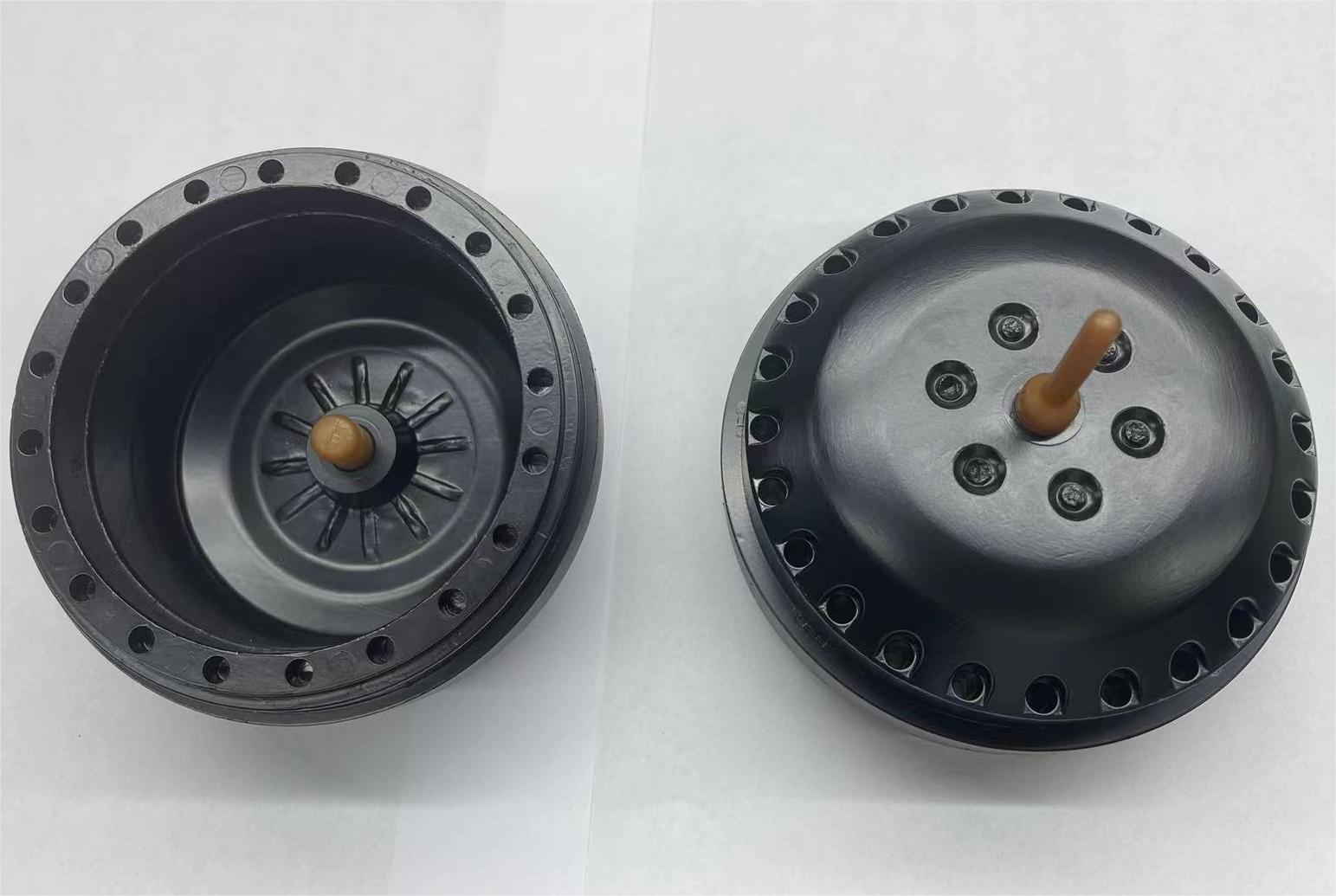
Cores and stacked assemblies concentrate the difficulty in gaps and cut edges, where film build is uneven and corrosion starts first. Yongxin's production record includes one-piece formed iron cores and cast aluminium rotor assemblies coated in black, with salt-spray programmes at different durations across part types. The specification lesson is that edge and gap coverage must be an inspection item, not a hope.
Die-cast frames and thermal parts
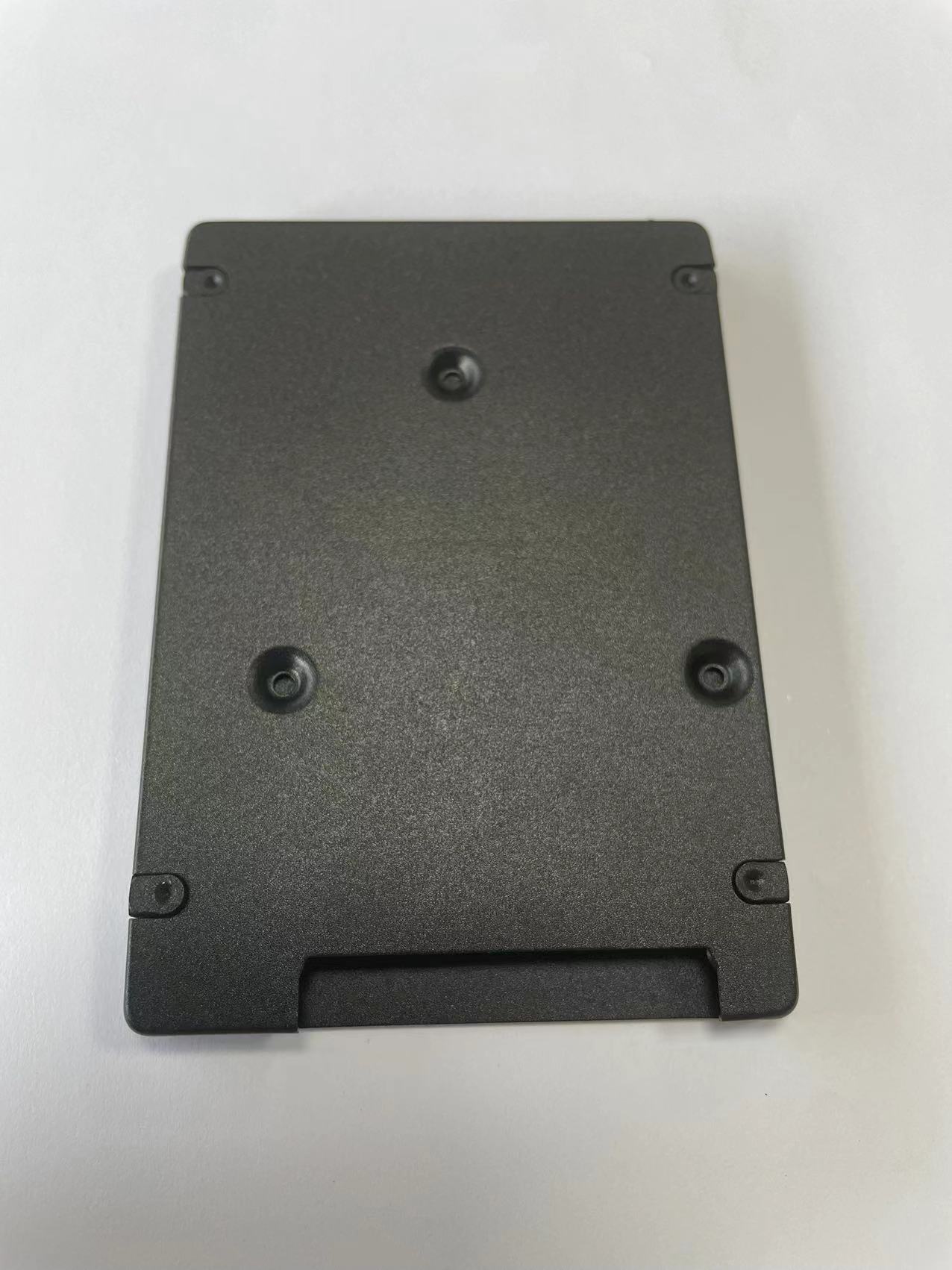
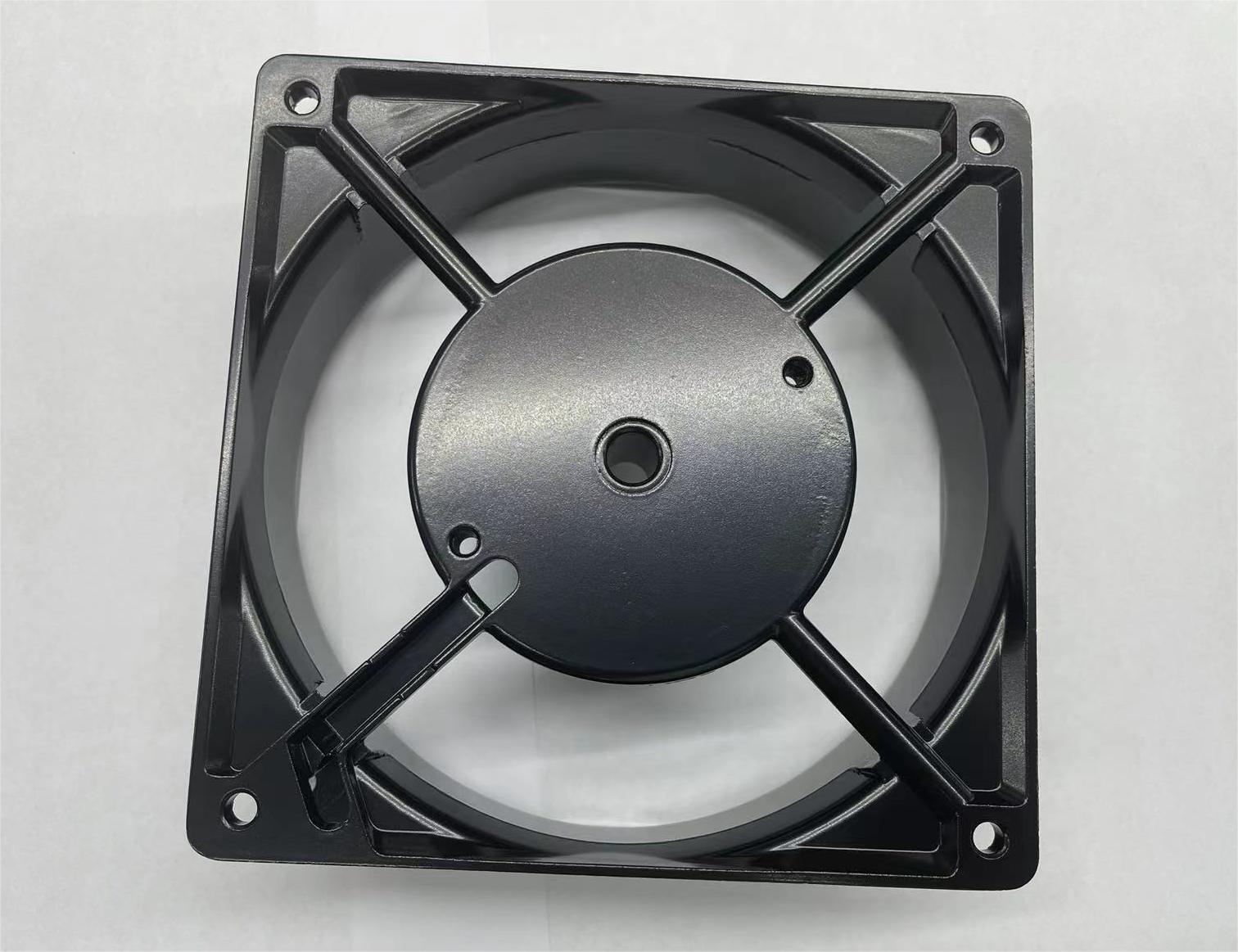
Fan frames and LED heat-dissipation bases are typical die-cast and stamped geometries where recesses, thin walls and ejector marks sit close together. These parts also show why substrate and geometry belong in the same clause: zinc alloy and aluminium alloy behave differently in pretreatment, and the same nominal thickness produces different coverage in a deep recess than on a boss.
Stamped and CNC-machined parts
A CNC precision machining customer coating 10,000,000 parts over a five-year relationship described the result as a fully covered film with no missed coating at corners or inner cavities, strong adhesion, and resistance to acid, alkali and ageing. Multi-material and multi-colour customisation was supported with fast delivery, and the reported quality outcome was small batch-to-batch colour difference with full inspection before shipment. That combination — corner coverage plus colour consistency — is exactly what the seven-step sequence above is designed to make testable.
Turning the specification into a supplier shortlist
Once the specification exists, supplier evaluation becomes a documentary exercise rather than a conversation. Four questions separate a capable coater from a willing one.
- Can they prove the substrate? Ask for salt-spray and adhesion data generated on your alloy and geometry at your thickness. Steel data offered for an aluminium part is not evidence.
- Can they measure what the specification measures? Film thickness, colour and gloss need instruments on site, not a certificate from a paint supplier. Yongxin's inspection line includes a FISCHER film thickness gauge, a Zehntner gloss meter, a Konica Minolta spectrophotometer, a Mitutoyo roughness meter, salt-spray and constant-temperature/humidity chambers, plus more than 20 high-precision instruments in total.
- Does the certificate scope cover electrophoresis? Read the scope line, not the logo. The ISO 14001 certificate held by Yongxin names surface treatment of hardware accessories (electrophoresis); the company also holds ISO 9001:2015, states IATF 16949 automotive quality management certification, and was recognised as a National High-Tech Enterprise under certificate GR202344016867, valid to 28 December 2026.
- Does capacity match the volume? Yongxin was founded in 2018, employs 60–80 people and runs six electrophoresis production lines with monthly capacity of 2,500,000, a minimum order quantity of 100 and lead times of 3–45 days depending on quantity.
This is where most 'top manufacturer' lists break down. A shortlist entry is only as strong as the evidence behind it, and the evidence that matters is the report on your substrate at your thickness — not a position in an unmethodical ranking. That is the basis on which the FAQ below answers the manufacturer question.

Frequently asked questions
Which salt-spray standard and duration should the specification state?
State the standard, the specimen and the acceptance criteria together. Neutral salt spray is commonly run to ISO 9227 or ASTM B117, with rust and blister evaluation scored using ISO 4628 or ASTM D1654. Yongxin specifies its high salt spray electrophoretic coating against a neutral salt spray target above 1,000 hours, while the Japanese motor-housing programme cited in this guide was verified above 720 hours. The same hour count does not transfer between substrates or film builds.
Which resin system should I specify — epoxy or acrylic?
Specify epoxy resin systems where corrosion resistance is the dominant requirement, and acrylic resin systems where colour and gloss retention under UV exposure matter more. Epoxy is the usual base for corrosion-grade cathodic coatings; acrylic systems are normally selected for appearance and UV-resistant duties. Ask for salt-spray and adhesion data at your specified thickness on your substrate before fixing the choice.
What film thickness should I specify for electrophoretic coating?
The standard band for metal parts is 15–25 µm. Below 15 µm, coverage on rough, stamped or recessed surfaces becomes harder to guarantee; above 25 µm, material consumption and edge build rise without a proportional corrosion benefit. Write the nominal value, the tolerance, the measurement method (ISO 2808 or ASTM B767 are commonly referenced) and the exact positions where readings are taken.
Can electrophoretic coating cover complex geometries and internal cavities?
Yes. Deposition is driven by the electric field, so recesses and internal cavities are coated wherever the field reaches the surface, and coverage above 95% to 98% is achievable on complex geometries. Specify inspection points rather than a single percentage: corners, cavity walls, weld lines and stamped edges are where coverage must be confirmed on a first article.
Which metal substrates can be electrophoretically coated?
Yongxin's production range covers carbon steel, alloy steel, aluminum alloy, magnesium alloy and zinc alloy, including die-cast parts and stamping parts. Magnesium is the most reactive of these and requires substrate-specific validation: a peer-reviewed study of AZ91D used ASTM B117 at 240 hours for its coated specimens, which illustrates that test duration is set per substrate rather than shared across a metal family.
How do I identify top electrophoretic coating manufacturers?
Judge manufacturers on auditable evidence rather than on the word 'top': substrate-specific salt-spray reports, in-house film-thickness and colour measurement, a certificate whose scope names electrophoresis, and capacity that matches your volume. Yongxin's documentation includes ISO 9001:2015 certificate 24CN34506942Q, ISO 14001:2015 certificate 24CN34506943E whose scope is surface treatment of hardware accessories (electrophoresis), six electrophoresis lines, monthly capacity of 2,500,000 and 100% testing before shipment. No numeric rank is asserted here, because a ranking without a published methodology is marketing rather than evidence.
What sample, MOQ and lead time should I expect before production?
Ask for a first-article sample coated on your own substrate and issued with the thickness readings and test report that match your specification; at Yongxin the minimum order quantity is 100 pieces and lead time runs 3–45 days depending on quantity, which is how a 15,000,000-unit motor-housing programme and a 10,000,000-part CNC programme were both run on the same process basis. Confirming the sample before tooling release shortens the production cycle. Yongxin publishes its coating scope and process details in a downloadable brochure at Enameled Flat Wire and Electrophoretic Coating Solutions, which is the practical starting point for a quotation request.
Sending a drawing, an alloy grade and a corrosion target is usually enough for a coating processor to propose a resin system, a thickness band and a test plan. Yongxin accepts sample parts against a written specification before a production order is placed.
Conclusion
Specifying electrophoretic coating well is a matter of writing four variables so that they constrain each other correctly: a resin family matched to the corrosion or appearance duty, a colour controlled by instrument and master sample, a 15–25 µm thickness band with named measurement positions, and a salt-spray target tied to ISO 9227 or ASTM B117 with a stated acceptance scale. Add the substrate, and the coverage requirement for complex geometry becomes inspectable rather than rhetorical.
The numbers in this guide hold together because they come from defined programmes: above 1,000 hours of neutral salt spray for the high salt spray formulation, above 720 hours on a Japanese motor-housing project of 15,000,000 units, coverage above 95% to 98% on complex geometry, and a thickness band that both automotive benchmarks and production practice sit inside. When a supplier's answer does not name the substrate, the thickness and the test method, the answer is not yet evidence — and the specification is not yet finished.
Have Questions or Need More Details?
Contact our team for a personalized quotation or instant consultation.
Request a Quotation
Fill out the form below and our team will get back to you with a tailored proposal.
WhatsApp Direct Chat
Prefer to chat in real-time? Message us on WhatsApp for instant assistance & quick answers.
- Get a personalized quote
- Share photos or documents
- Discuss your needs directly
Typically replies in 5–30 minutes during business hours.