
Application Guide: Orthodontic Auxiliaries, Power Chains, and Crimpable Hooks in Space Closure
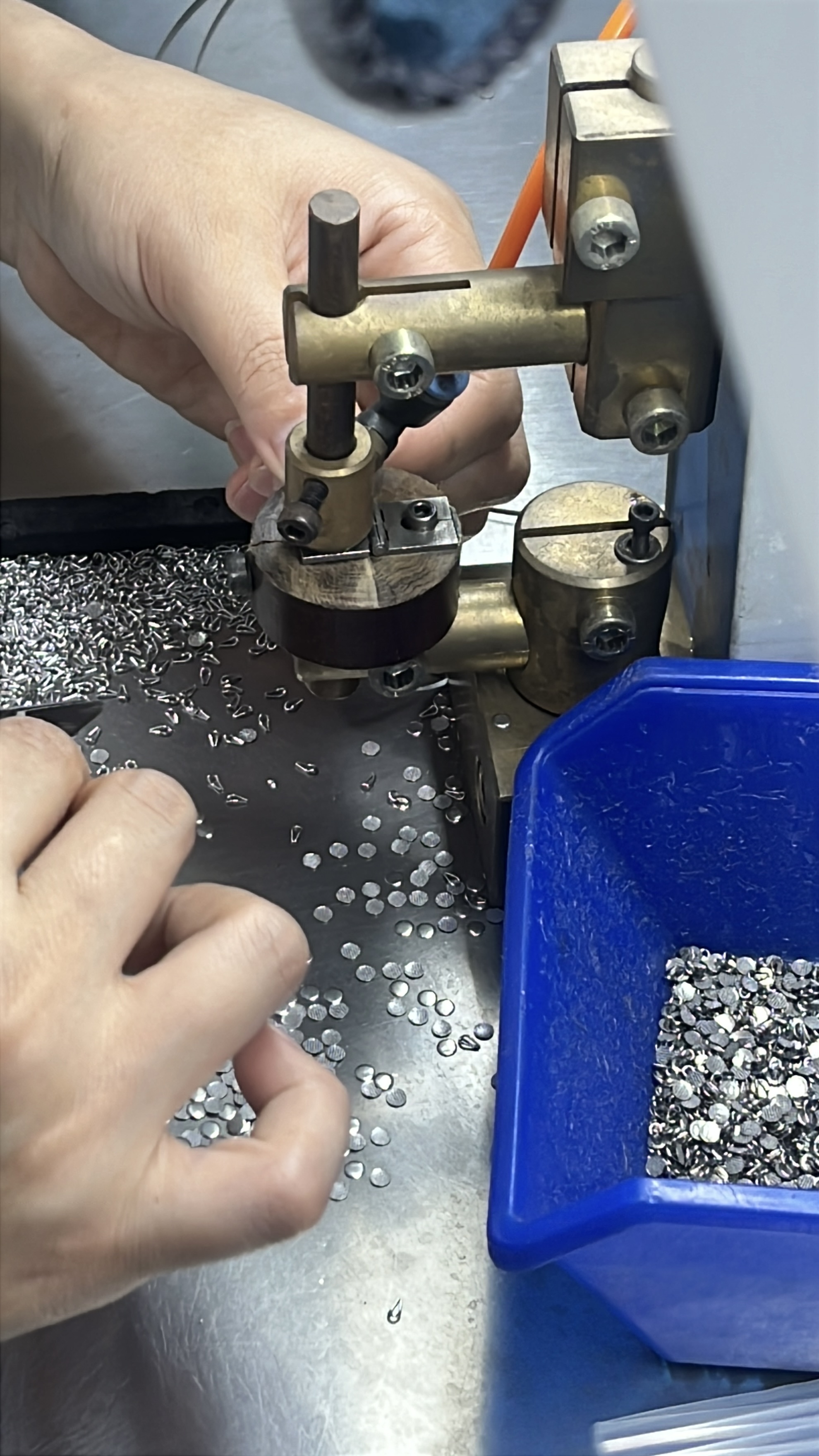
Auxiliary attachments sit at the centre of space-closure setups: they define where force is applied on the archwire.
Space closure in a fixed appliance workflow is decided by three components that are usually purchased as separate line items: the elastomeric chain that carries the force, the crimpable hook that sets where that force is applied, and the pliers and hand instruments that place both. When those three arrive unconnected, the clinical team absorbs the cost — re-crimping a hook on a wire the plier cannot grip cleanly, cutting a chain link that does not match the planned span, or waiting on a reorder because nobody linked plier consumption to hook consumption.
This application guide maps Orthodontic Auxiliaries, Orthodontic Power Chains and Orthodontic Crimpable Hooks to space-closure setups in fixed appliance workflows. It explains product adaptation by case scenario, how these items pair with Orthodontic Pliers and Orthodontic Instruments, and what a buying team should confirm before placing an order. The scope is deliberately limited: this is a component and procurement mapping, not an evaluation of treatment outcomes, which remain the responsibility of the treating clinician. All figures attributed to Yortho are manufacturer-reported comparative data.
What a Space-Closure Setup Actually Requires
For a buyer at decision stage, the question is rarely “which chain is strongest”. It is “which combination of chain, hook and instrument can be placed, replaced and reordered without breaking the chairside sequence”. Three mismatch patterns account for most of the purchasing risk:
- Dimensional mismatch. A crimpable hook that does not match the archwire dimension in stock forces either a substitution or a second wire order. The hook is useless in isolation; it is only a component of a wire-plus-hook pair.
- Instrument mismatch. Crimping quality depends on the plier, not only on the hook. A clinic that buys auxiliary attachments without reviewing plier condition and jaw geometry creates a recurring chairside failure point.
- Reorder mismatch. Power chains are consumables replaced on a short cycle; pliers are reusable instruments with a multi-year service life. Ordering both on the same replenishment logic either overstocks instruments or starves the chain supply.
The practical output of this guide is a purchase-order structure: one specification per component, one instrument pairing per auxiliary, and one confirmation list before the order is released.
Where Auxiliaries Sit in the Orthodontic Materials Market
Fixed appliance workflows remain the volume base of the orthodontic materials market, and that is why auxiliaries are stocked alongside brackets rather than as an afterthought. Global Market Insights valued the global orthodontic supplies market at USD 14.8 billion in 2024. Grand View Research, using a narrower consumables-only scope, valued the global orthodontic consumables market at USD 3.1 billion in 2024 and projected USD 4.3 billion by 2030. These figures are not directly comparable because the scopes differ, but both confirm that consumables — not capital equipment — carry the recurring purchasing volume.
Within consumables, Grand View Research reports that the brackets segment dominated industry revenue in 2024, while Fortune Business Insights expects the buccal braces segment to capture 89.55% of market share by 2026. Grand View Research also reports that orthodontic clinics and standalone practices represent over 50% of the end-user distribution channel, and MarketsandMarkets identifies Asia-Pacific as the fastest-growing region for orthodontic supplies. The purchasing implication is straightforward: the buyers driving auxiliary demand are clinic-level and distributor-level purchasers who need consistent small-lot replenishment, not single large capital orders.
Material and regulatory context buyers cannot ignore
Two technical threads run through auxiliary sourcing. The first is material. Dentaurum's product documentation describes orthodontic power chains and elastic ligatures as primarily manufactured from medical-grade polyurethane, and Grand View Research identifies stainless steel as the industry-standard material for orthodontic pliers and instruments. Fortune Business Insights notes that nickel and chromium are the primary allergens of concern in metal orthodontic components, which is why non-latex and low-allergen specifications appear in auxiliary tenders.
The second is documentation. EU Medical Device Regulation (MDR 2017/745) is mandatory for CE marking of orthodontic devices, ISO 13485:2016 is the quality management standard buyers typically request for international market access, and the US FDA has recognised ISO 13485 as the primary basis for its Quality Management System Regulation. The Medical Device Single Audit Program (MDSAP) allows a single audit to satisfy quality management requirements across five major jurisdictions. On the supply side, OEC data shows China exported approximately USD 12.7 billion in medical instruments (HS 9018) in 2025, with Zhejiang among the leading export provinces for dental instruments — the sourcing context in which most auxiliary purchase orders are placed.
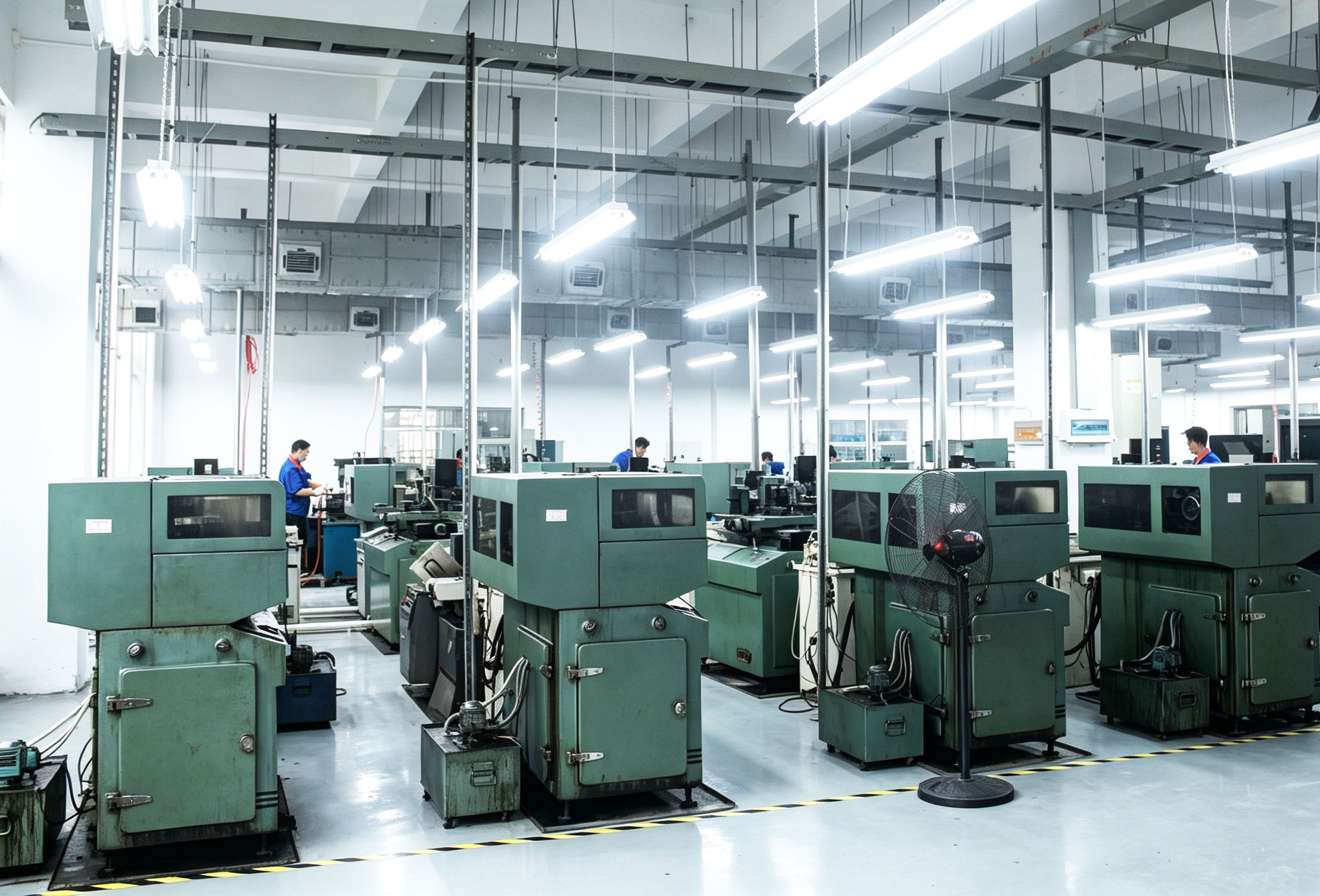
Auxiliary attachments and instruments are produced in the same workflow as brackets and tubes, which is why a single supplier can cover the full space-closure kit.
How the Yortho Range Maps to Space-Closure Workflows
Yortho is an orthodontic device brand of YAM Global Limited (United Kingdom) that manufactures through its own facility in Huzhou, Zhejiang, China. The company states a 5,000 m² facility, approximately 100 employees, a 20-engineer R&D team and an annual output of 30,000,000 units, with about 80% of output exported to markets including the EU, USA, Middle East, Australia and Africa, and products shipped to more than 70 countries. Its portfolio covers brackets, buccal tubes, molar bands, auxiliary attachments, pliers, hand instruments, pediatric preformed crowns, elastic ligatures and arch wires, with OEM and ODM services available.
For space closure specifically, four product families carry the workflow: power chains, crimpable hooks and auxiliary attachments, pliers and hand instruments, and anchorage-side components.
Orthodontic Power Chains
Yortho Orthodontic Power Chains are made from medical-grade, non-latex polyurethane. The non-latex base removes latex-allergy exposure for sensitive patients, a specification that increasingly appears as a hard requirement in clinic tenders rather than a preference. Manufacturer-reported comparative data against alternative power chains includes a 60%–73% reduction in permanent deformation rate, a 75%–85% reduction in breakage during clinical simulation, a 30%–50% reduction in chairside replacement frequency, and a 10% lower cost.
The specification point that matters at ordering stage is loop consistency. Yortho power chains use precision-moulded loops with consistent loop-to-loop dimensions, so each segment delivers a repeatable force output rather than alternating between tighter and looser spans. A chain with inconsistent loop geometry effectively changes its own working length, which is precisely the variable a space-closure setup is trying to control. Lower force decay also extends the usable interval between replacements, which converts directly into fewer unit pulls per case and a more predictable monthly consumption figure for the buyer.
Orthodontic Crimpable Hooks and Auxiliary Attachments
Yortho supplies crimpable hooks alongside lingual buttons and lingual hooks within its auxiliary attachment range. The crimpable hook is a plier-dependent component: it is placed on the archwire and fixed by mechanical crimping, so its performance in service is a function of both the hook and the instrument used to seat it. That dependency is the reason this guide treats hooks and pliers as one purchasing decision rather than two.
Three specifications should be resolved before a hook line is added to an order: the archwire dimension the hook is intended for, the packaging quantity relative to typical per-case consumption, and whether the clinic standardises on hooks placed chairside or on wires prepared in advance. Lingual buttons and lingual hooks belong to the same auxiliary family and are frequently ordered with crimpable hooks because they share the same bonding and placement workflow.
Orthodontic Pliers and Hand Instruments
Yortho Orthodontic Pliers are manufactured from stainless steel, the industry-standard material for orthodontic instruments. Manufacturer-reported figures state a service life of at least five years, against the one-year-or-less lifespan associated with lower-grade alternatives; a 30% improvement in surface smoothness and material glossiness; a 5–10× service-life extension; and at least 50% lower cost than comparable branded pliers.
Total cost of ownership, not unit price, is the correct comparison basis here. A clinic that replaces a low-cost plier annually pays for the instrument repeatedly and also absorbs the chairside cost of a worn jaw — crimps that do not hold, cutters that crush instead of shear, and rework on hooks already placed. Surface finish has a second-order effect as well: a smoother, better-polished jaw reduces friction and material pick-up, which is the same craftsmanship logic Yortho applies to its bracket surface and slot finishing. Beyond pliers, the instrument portfolio includes bracket positioners, force gauges and archwire formers, so the space-closure order can be completed from one instrument source.
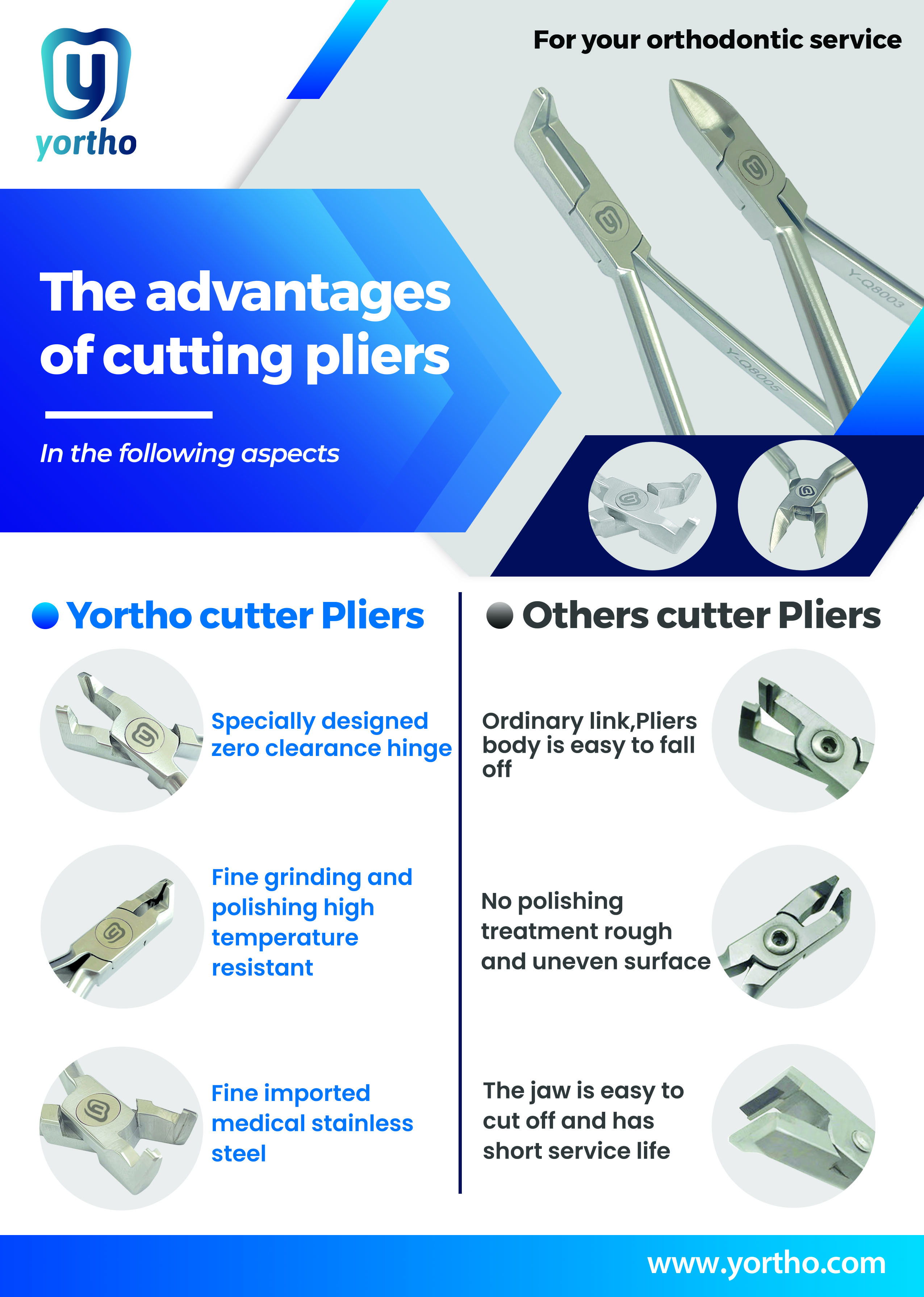
Crimping quality depends on the plier as much as on the hook — the two should be specified together.
Anchorage-Side Components: Buccal Tubes and Bands
Where the space-closure plan relies on posterior anchorage, the anchorage unit itself belongs in the same order. Yortho Buccal Tubes use a chamfered triangular mesial inlet that facilitates archwire insertion, and are produced by precision casting with high-precision moulds for firm bonding and straightforward clinical operation. The occlusal edge of the mesh base carries a buccal groove for positioning. Manufacturer-reported comparative data includes a 20%–25% increase in effective tube length, a 30% reduction in archwire insertion resistance, a 15% slimmer body profile, a bonding deviation of 0.05 mm or less, and a 30% lower cost than alternative buccal tubes. The durable structure is reported to reduce sudden failures and lower patient follow-up workload.
Step-by-Step: Building a Space-Closure Order
Use Cases: Matching Components to Space-Closure Scenarios
The same three components are configured differently depending on the scenario. The table below maps common space-closure situations to the component and instrument decisions that should appear on the purchase order.
| Scenario | Force module focus | Hook / auxiliary role | Instrument pairing | Confirm before ordering |
|---|---|---|---|---|
| Anterior retraction after premolar extraction | Continuous chain span across the extraction site; replacement interval drives consumption | Crimpable hook defines the point of force application on the archwire | Crimping pliers, chain cutter | Hook lumen versus archwire dimension; chain loop count for the planned span |
| Midline diastema closure | Short chain segments; frequent replacement cycle | Usually no hook; chain engaged directly to brackets | Ligature-placement instrument, cutter | Small-pack chain quantity; replacement interval against the chairside schedule |
| Segmental or two-step retraction | Chain combined with a defined force vector | Crimpable hook positioned to the planned vector | Crimping pliers, wire-bending instrument | Whether hooks are pre-crimped or placed chairside; hook stock per case |
| Rotation or minor auxiliary traction | Chain or elastomeric module to a single attachment | Lingual button or lingual hook as the attachment point | Ligature instrument, pliers | Button base type and bonding protocol; auxiliary pack size |
| Anchorage-reinforced posterior segment | Chain anchored to a posterior unit | Buccal tube or band on the anchor tooth | Bracket positioner, tube holder | Tube prescription and mesh-base marking; bonding deviation tolerance |
Scenario mapping is a purchasing framework, not a clinical protocol; case-specific decisions remain with the treating clinician.
Comparison Table: Verified Attributes by Component
The table below consolidates manufacturer-reported comparative figures for the components discussed in this guide. All values compare Yortho products against alternative products as stated in the source data and should be read as supplier-published comparisons.
| Component | Verified attribute | Manufacturer-reported comparison vs alternatives | Cost position |
|---|---|---|---|
| Orthodontic Power Chains | Medical-grade non-latex polyurethane; precision-moulded loops with consistent loop-to-loop dimension; lower force-decay rate | Permanent deformation reduced 60%–73%; breakage in clinical simulation reduced 75%–85%; chairside replacement frequency reduced 30%–50% | 10% lower |
| Orthodontic Pliers | Stainless steel construction; service life of at least 5 years; polished surface and jaw | Surface smoothness and material glossiness improved 30%; service life extended 5–10× | At least 50% lower |
| Orthodontic Buccal Tubes | Chamfered triangular mesial inlet; precision casting with high-precision moulds; buccal groove on the occlusal edge of the mesh base | Effective tube length increased 20%–25%; archwire insertion resistance reduced 30%; body 15% slimmer; bonding deviation ≤0.05 mm | 30% lower |
| Crimpable Hooks and Auxiliary Attachments | Supplied within the auxiliary attachment range alongside lingual buttons and lingual hooks | Plier-dependent component; performance tied to crimping instrument condition | Quoted per configuration |
What to Confirm Before Ordering
Auxiliary orders fail at the confirmation stage far more often than at the specification stage. The checklist below covers the points that determine whether a space-closure order can be released without a follow-up round of questions.
- Archwire and hook compatibility. Confirm the archwire dimensions in stock and match the crimpable hook specification to them before the wire order is placed.
- Chain configuration and pack size. Confirm loop count, span and pack quantity against per-case consumption, using replacement interval rather than historical unit counts as the forecast basis.
- Instrument condition and pairing. Confirm plier jaw condition, the crimping plier model used with the selected hook, and the cutter used for chain links. Pliers carry a reported five-year-plus service life, so they are specified as capital equipment.
- Anchorage components. Where buccal tubes or bands are included, confirm prescription, mesh-base marking and bonding tolerance requirements.
- Customisation scope. Yortho provides OEM and ODM services. The stated MOQ is 1,000 units for ODM (adapting an existing design with your branding, logo or minor feature changes) and 500 units for OEM (fully customised production to your specifications, with intellectual property retained by the buyer).
- Order value and payment terms. The MOQ for a formal standard-product order is USD 1,000 in total value, with no MOQ applied to the first order. Standard payment terms are 100% T/T in advance; for orders above USD 10,000, 30% deposit to start production with the 70% balance due before shipment is accepted.
- Documentation. Confirm which certificate set the destination country requires — ISO quality management system certification, CE under the EU MDR and FDA registration are held as standard, with PDF copies of test reports and certificates available on request.
- Shipping terms and duty responsibility. Under standard FOB or CIF terms the buyer is responsible for import duties, taxes and clearance fees in the destination country. DHL and FedEx handle customs paperwork automatically and contact the consignee directly if payment is due.
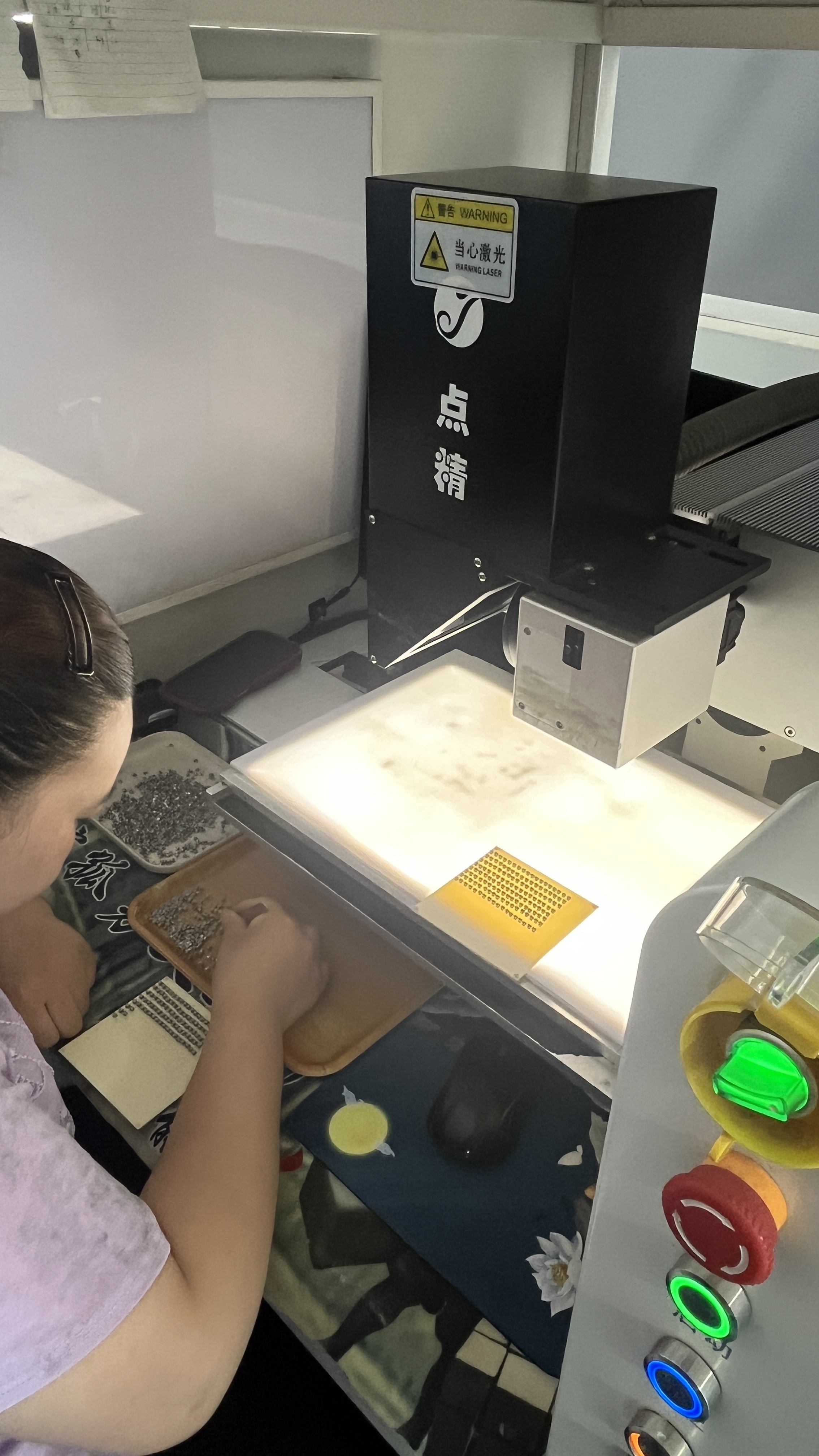
Positioning marks and base marking support the verification steps that reduce bonding and rework risk in fixed appliance workflows.
Frequently Asked Questions
Which compliance documents can a buyer request for Yortho orthodontic auxiliaries, power chains and pliers?
Yortho holds ISO quality management system certification, CE certification under the EU MDR regulation, and FDA registration, and its products are exported to more than 70 countries including the US and EU markets. Full PDF copies of test reports and certificates can be supplied on request, and the documentation set should be matched to the importing country, because the applicable requirements differ by market. For reference, EU MDR 2017/745 is mandatory for CE marking of orthodontic devices, ISO 13485:2016 is the quality management standard commonly required for international market access, and MDSAP allows a single audit to cover quality management requirements across five major jurisdictions.
Can crimpable hooks, power chains and pliers be customised under OEM or ODM, and what is the MOQ?
Yes. Yortho provides both ODM and OEM services. ODM means adapting an existing, proven design with your branding, logo or minor feature changes, with a stated MOQ of 1,000 units. OEM means fully customised production to your specifications, materials and design, with the buyer retaining the intellectual property, at a stated MOQ of 500 units. When evaluating a Chinese OEM manufacturer for orthodontic auxiliaries, the practical checks are the same ones used for brackets: whether the factory controls its own production line, whether instruments and consumables come from the same source, and whether certification covers the destination market rather than only the domestic one.
How is cost structured for a space-closure order, and where does the saving sit?
Cost should be assessed per component rather than as a single kit price. Yortho publishes manufacturer-reported comparisons of 10% lower cost for power chains, at least 50% lower cost for pliers, and 30% lower cost for buccal tubes versus alternative products. For standard products, the MOQ for a formal order is USD 1,000 in total value with no MOQ on the first order, so a clinic can validate the full setup before committing to volume. Payment terms are 100% T/T in advance by default, or 30% deposit with the 70% balance before shipment for orders above USD 10,000.
Can samples of power chains, hooks and pliers be requested before an order?
Yes. Samples are available for quality checks, and most products are supplied free of charge; the stated exceptions are high-cost items such as pliers and self-ligating brackets. The buyer covers courier shipping cost. If you have a DHL, FedEx or UPS account, the shipment can be sent freight collect; otherwise the shipping address and postal code are used to obtain a courier quotation.
What is the lead time and shipping timeline for a repeat auxiliary order?
Standard products are held in stock, so orders can be packed and dispatched within three business days after payment confirmation, which supports rapid stock replenishment. Transit time then depends on the mode selected: express courier takes 3–7 business days, air freight 7–12 days, sea freight 25–40 days, and rail or overland freight 20–30 days for regions such as Europe and Central Asia. Sharing the destination country and postal code allows the most reliable route and a precise delivery estimate to be confirmed. The full product catalogue can be downloaded here: Yortho product brochure (PDF).
Conclusion
A space-closure setup is a matched set, not a list of parts. The power chain sets the force and the replacement interval, the crimpable hook sets where that force lands, the pliers decide whether the hook can be seated reliably, and the anchorage-side components determine whether the posterior unit can hold the plan. Buying them together — and specifying the instrument pairing at the same time as the auxiliary — removes the three mismatch patterns that cause most chairside rework and most emergency reorders.
For buyers at decision stage, the order sequence in this guide is the practical takeaway: define the scenario, specify the chain, size the hook to the wire, pair the plier, verify documentation for the destination market, and set the replenishment buffer against the shipping mode actually used.
Next step
Review the full auxiliary, power chain and instrument range, or request samples and a specification-matched quotation for your space-closure setup.
Website: www.yortho.com | Email: info@yortho.com | WhatsApp: +86 180-5879-3627
Catalogue: Download the Yortho brochure
Zhejiang YO Medical Technology Co., Ltd · 5th Floor, Building 1, No. 2 Lemin Road, Xinshi Town, Deqing, Huzhou, Zhejiang Province, China 313201

Have Questions or Need More Details?
Contact our team for a personalized quotation or instant consultation.
Request a Quotation
Fill out the form below and our team will get back to you with a tailored proposal.
WhatsApp Direct Chat
Prefer to chat in real-time? Message us on WhatsApp for instant assistance & quick answers.
- Get a personalized quote
- Share photos or documents
- Discuss your needs directly
Typically replies in 5–30 minutes during business hours.