
Arch Wires vs Power Chains: A Buyer's Comparison Guide
Arch Wires vs Power Chains: A Buyer's Comparison Guide
Arch wires and power chains are not competing products — they are two different components of the same fixed appliance system, and they should never be evaluated on the same unit-price line. An arch wire is a precision-formed metal component that carries and releases force along the dental arch. A power chain is an elastomeric consumable that applies continuous traction between attachment points. Buyers compare them because they appear on the same catalog page, the same quotation sheet and the same reorder cycle. The productive question is not "which one is better", but "which specification set, which documentation, which order quantity and which reorder pattern does each category require?"
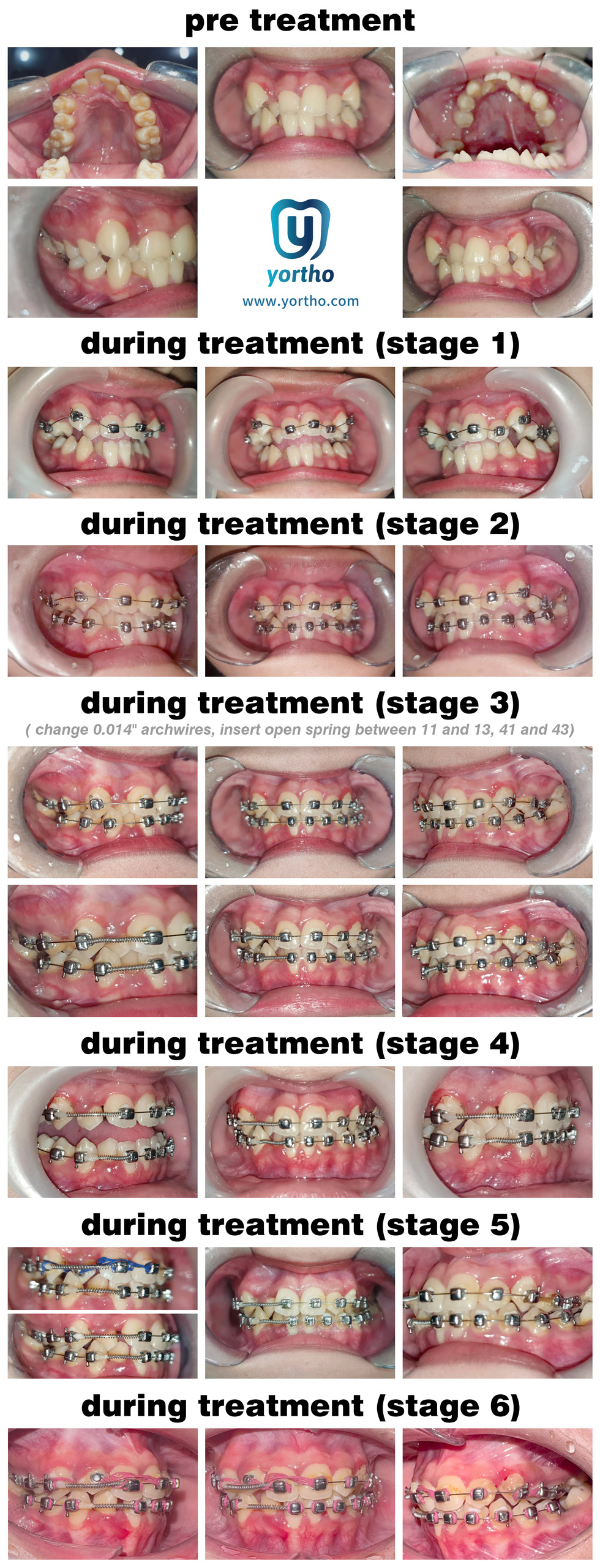
Problem Definition: Why a Head-to-Head Price Comparison Fails
In most orthodontic materials catalogs, arch wires and power chains sit inside the same category tree, are quoted by the same sales contact and ship in the same carton. That convenience hides four structural differences that decide whether a purchase order is efficient or expensive.
- Different unit logic. Power chains are supplied as a continuous roll (Y-S80101 is packed 1 roll per pack), while arch wires are supplied as individual shaped forms defined by alloy, arch form, cross-section, size and arch. Comparing a roll to a wire piece tells the buyer nothing.
- Different consumption pattern. Arch wires generally follow treatment stages, so a distributor stocks a dimensional ladder. Power chains and ligatures are consumables used at adjustment visits, so they are restocked more frequently and in more repetitive quantities.
- Different failure modes. A wire problem usually appears as a specification mismatch — wrong alloy, wrong form, wrong size. A chain problem usually appears as inconsistent elasticity between lots, or packaging that does not survive transport.
- Different documentation exposure. Both categories fall under medical device rules, but registrations are granted per market and per product scope. A buyer who checks one certificate for the whole order may discover at customs that a specific product family is not covered.
Reframing the comparison around these four points changes the RFQ. Instead of "send me your best price for arch wires and power chains", the buyer issues two specification blocks, two compliance checks and two reorder rules — and can then compare suppliers on equal terms.
Industry Background: What the Orthodontic Materials Market Looks Like in 2026
Demand for fixed-appliance components remains the volume base of the orthodontic materials business, even as clear aligners take a growing share of the adult aesthetic segment. The global orthodontic consumables market was valued at USD 3.1 billion in 2024 and is projected to reach USD 4.3 billion by 2030, according to Grand View Research. Broader estimates are considerably larger — Global Market Insights put the orthodontic supplies market at USD 14.8 billion in 2024 — because published figures use different scopes: some count consumables only, others include full treatment systems and services. Buyers should expect this divergence and compare suppliers on category-level data rather than headline numbers.
On geography, North America held approximately 38.4% of the orthodontic market in 2025 (Straits Research), while Asia-Pacific has been identified as the fastest-growing region for orthodontic supplies (MarketsandMarkets). Orthodontic clinics and standalone practices represent more than 50% of the end-user distribution channel (Grand View Research), which means most buyers on the supply side serve fragmented clinical demand rather than a handful of large accounts — a pattern that rewards fast replenishment over deep single-SKU stock.
Within the consumables segment, the Brackets segment dominated industry revenue in 2024 (Grand View Research), and the buccal braces segment is expected to capture 89.55% of the market share by 2026 (Fortune Business Insights). Both figures point the same way: fixed appliances remain the dominant case type, and every fixed appliance case consumes arch wires and elastomeric traction products. Fortune Business Insights also notes that archwires account for a significant portion of the fixed appliance market, with growing demand for aesthetic coated wires.
Materials matter to procurement because they define both clinical behaviour and cost structure. Stainless steel remains the most widely used material for orthodontic arch wires and brackets globally (Grand View Research). Nickel-Titanium alloys are preferred where shape memory and super-elasticity are required (G&H Orthodontics technical documentation). Power chains and elastic ligatures, by contrast, are primarily manufactured from medical-grade polyurethane (Dentaurum product catalog) — a polymer system, not a metal one, with its own elasticity, storage and lot-consistency considerations.
Regulatory expectations have also converged. ISO 13485:2016 is the quality management standard medical device quality systems must be certified to for international market access (ISO), the EU requires MDR 2017/745 for CE marking of orthodontic devices (European Commission), and in the US the FDA classifies orthodontic brackets as Class II medical devices requiring 510(k) clearance (FDA). For suppliers serving several regions at once, the Medical Device Single Audit Program (MDSAP) is increasingly used to cover markets such as Australia, Brazil, Canada, Japan and the US with a single audit (FDA).
Detailed Solution: What Each Product Actually Is
Yortho is the orthodontic brand of Zhejiang YO Medical Technology Co., Ltd, a manufacturer based in Huzhou, Zhejiang Province, China that develops and produces orthodontic supplies, pediatric dental products and dental lab appliances. Its fixed-appliance portfolio — brackets, buccal tubes, molar bands, arch wires, ligatures, power chains and instruments — is the reference set used throughout this comparison.
Arch wires: a dimensional and metallurgical specification
An arch wire is defined by five attributes: alloy, arch form, cross-sectional shape, size and arch type. Changing any one of the five creates a different SKU. The Yortho arch wire range shows how the matrix works in practice.
- Y-SS Stainless Steel Arch Wire — arch forms: Square, Natural, Damon, Oval, Europa-I and Broad; cross-sectional shapes: round and rectangle; arch types: upper and lower; sizes: 0.012", 0.014", 0.016", 0.018" and 0.020".
- Y-SN Super-elastic NiTi — the same arch forms, cross-sectional shapes, arch types and size range, in a NiTi material.
- Y-HN Heat-activated NiTi — the same arch forms, cross-sectional shapes, arch types and size range, formulated for heat-activated behaviour.
- Y-TMA TMA Round Arch Wires — Titanium-Molybdenum Alloy; arch forms: Natural, Damon and Oval; cross-sectional shapes: round and rectangle; arch types: upper and lower; sizes: 0.012", 0.014", 0.016" and 0.018".
For a buyer, the practical consequence is that "arch wires" is not one SKU but a family spanning hundreds of combinations once alloy, form, shape, size and arch are multiplied. A purchasing list that specifies only "NiTi 0.016 upper" leaves supplier, form and cross-section open — which is exactly where receiving disputes start.
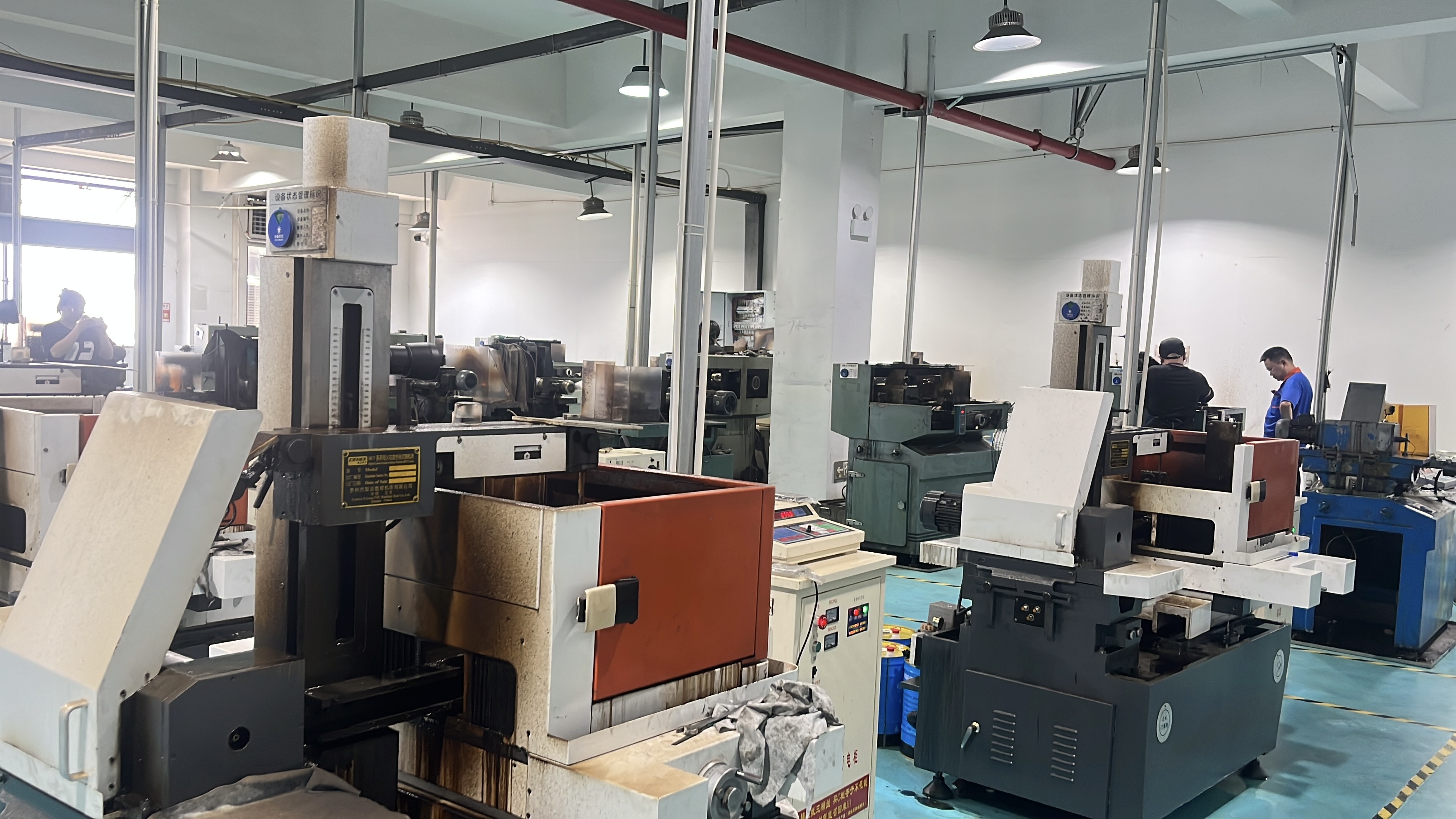
Power chains: a consumable specification
Power chains are elastomeric traction products supplied in rolls, and their specification is deliberately compact. Y-S80101 Power Chains are available in three types — Open long, Closed continuous and Open short — packed as 1 roll per pack, in high-elasticity polymer. Because the product is made from a polymer with elastic behaviour rather than a machined alloy, the procurement questions shift from dimensional precision to elasticity consistency and packing integrity.
Chains also sit next to a second consumable in the same clinical workflow: Y-S80201 Orthodontic Elastic Ligatures (ligature rings), available as Normal and Ring clear types, packed at 40 pcs per bag or 10 pcs per bag. Buyers who order chains separately from ligatures usually create two shipment cycles for products used side by side; combining them within one order structure is a straightforward efficiency gain.
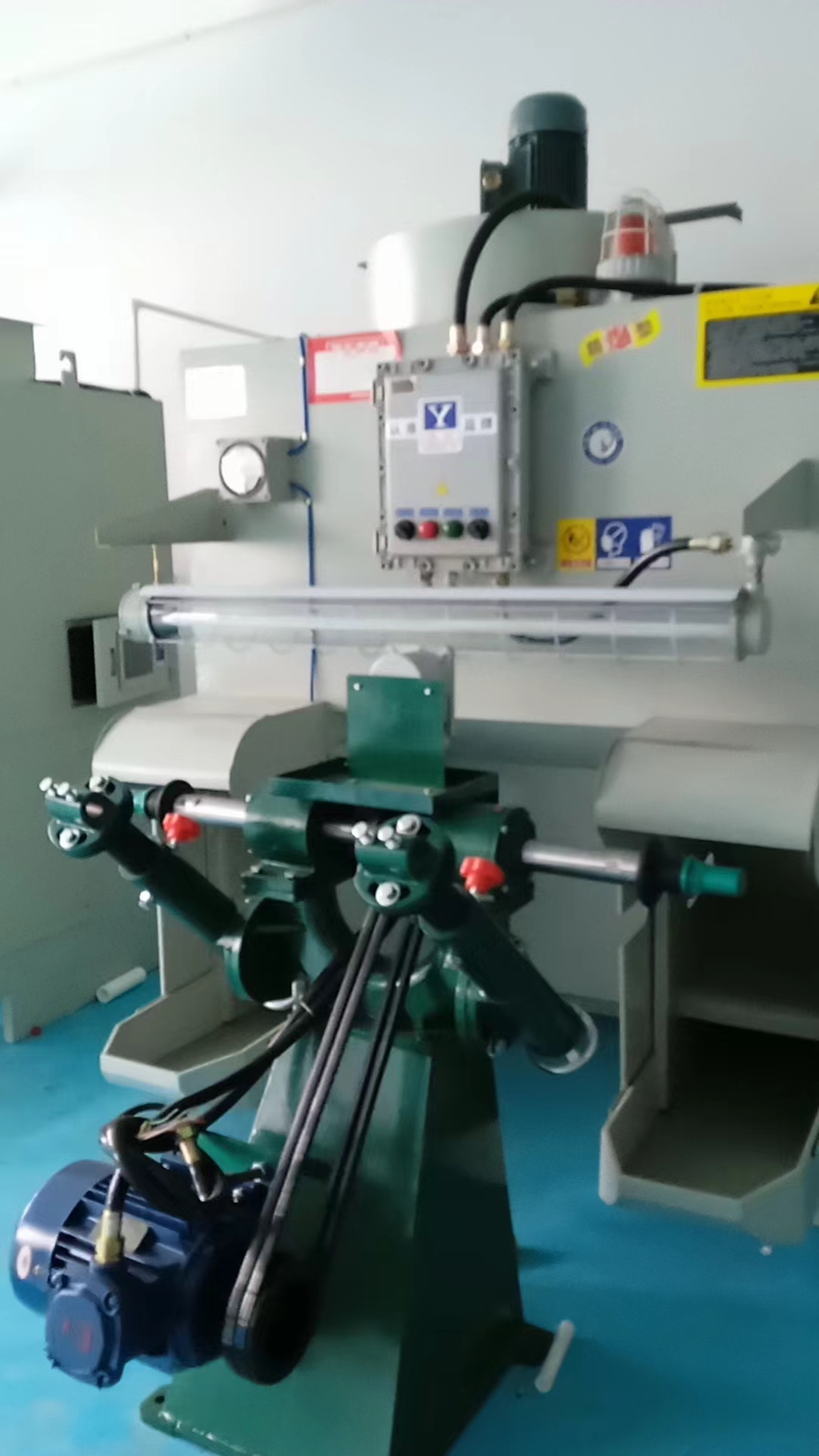
Why the two are still bought together
The two categories share a supply chain, not a function. Both belong to the fixed appliance set that also includes brackets, buccal tubes and bands — for example the Y-M1 Mini Bracket, Y-M2 Self-ligating Bracket, Y-T1 Buccal Tube, Y-T2 Self-ligating Buccal Tube and Y-H6002 first molar band in the same portfolio. Consolidating all of them with one manufacturer simplifies documentation, quality-control reporting and reorder timing, even though each item keeps its own specification logic.
Step-by-Step Breakdown: A Six-Step Procurement Workflow
Step 1 — Map each product to its clinical role before pricing it
Write the role down. Arch wires: force storage and guidance across the arch, selected by treatment stage and alloy behaviour. Power chains: continuous traction between attachment points, selected by chain type. This single line prevents the most common RFQ error, which is asking suppliers to quote both lines as if they were alternatives to each other.
Step 2 — Build a two-part specification sheet
Wire block: alloy (stainless steel, NiTi, heat-activated NiTi, TMA), arch form, cross-sectional shape (round or rectangle), size (0.012" to 0.020"), and arch type (upper or lower). Chain block: type (open long, closed continuous, open short), pack format (roll), and whether ligatures are bundled into the same replenishment cycle.
Step 3 — Verify compliance documents against the actual product scope
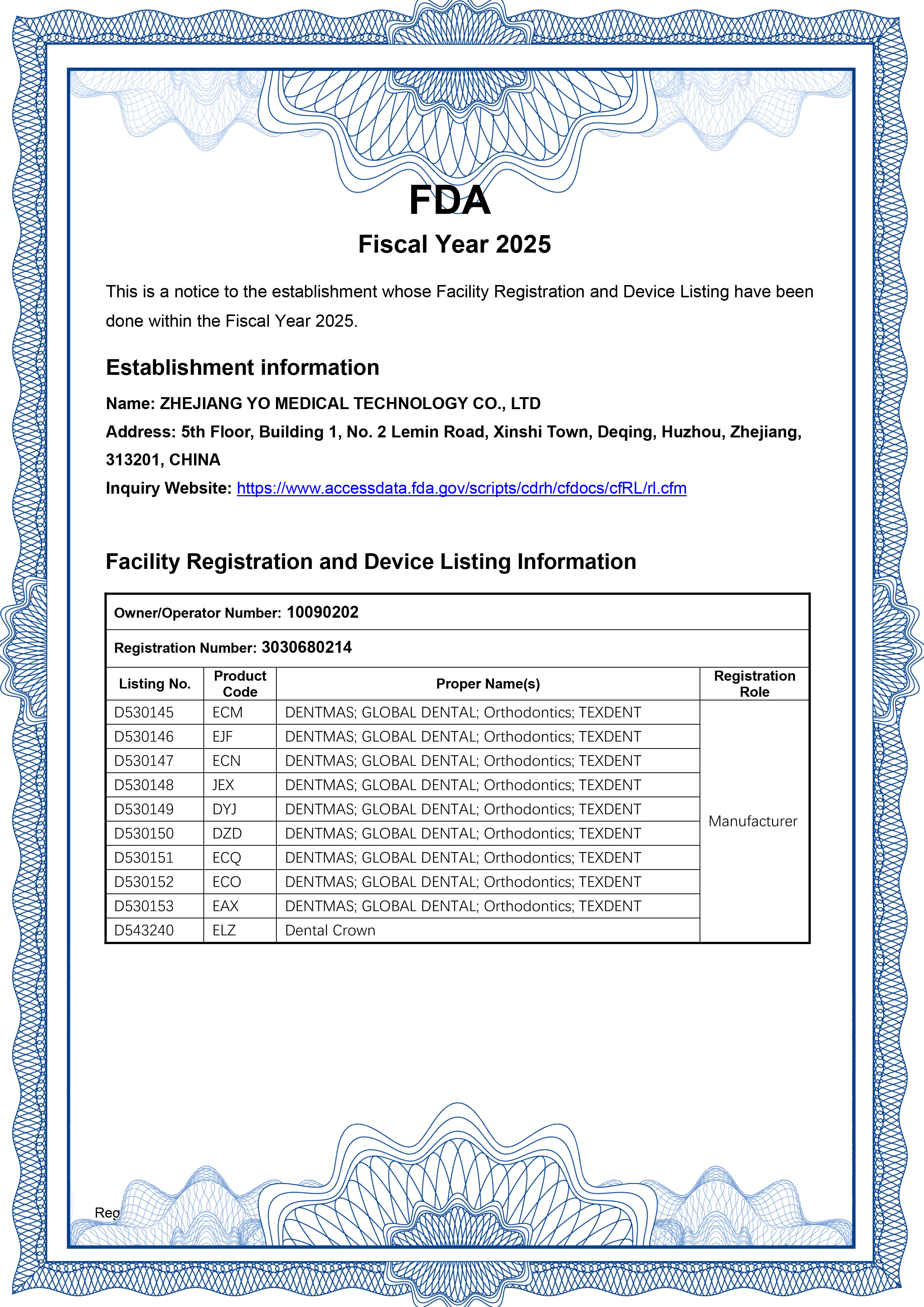
Check the quality system certification and the market registration, then confirm that the document scope covers the specific items ordered. Yortho holds ISO certification, CE certification under the EU MDR, and FDA registration number 3030680214, filed under 21 CFR Part 807 and valid through 2026-12-31, covering general dental and orthodontic devices, with arch wires and power chains listed among the products associated with this registration. The company also holds a Certificate for Exportation of Medical Products issued by the Zhejiang Medical Products Administration (No. Zhehang Food & Drug Admin Medical Device Export 20250496, issued 2025-06-09, valid until 2027-06-08), whose listed scope is orthodontic pliers — a reminder that export certificates are written per product scope, not per company.
Step 4 — Request samples and evaluate both categories against the same checklist
Samples should test the attributes that actually vary: wire stiffness and form consistency per alloy, and elasticity consistency plus packing integrity per chain type. The manufacturer's stated sample policy is that most products are supplied free of charge, with higher-cost items such as pliers and self-ligating brackets excluded, and the buyer covering courier shipping. Freight-collect shipment is possible when the buyer has a DHL, FedEx or UPS account.
Step 5 — Run a pilot order and measure the operational variables
The pilot should confirm three numbers before a buyer commits to a volume plan: minimum order quantity, production lead time and monthly capacity. Yortho's capability record lists a minimum order of 100 units, a typical lead time of 3–7 days and a monthly capacity of 5,000 units, with 100% testing on every unit and remote after-sales support. For standard products, the manufacturer additionally states that stock items can be packed and dispatched within 3 business days after payment confirmation.
Step 6 — Scale with OEM/ODM only after the base specification is stable
OEM and ODM customization is available for packaging, logos, tags and product features. Private-label programs work better once the buyer's specification sheet is frozen, because every customization added on top of an unstable specification multiplies the number of variants that must be re-validated.
Use Cases: How the Two Lines Behave in Real Orders
Arch wires in a hospital project. A project in Indonesia supplied 3,000 units of product 7240 (Y-SS stainless steel arch wires) for orthodontic applications, with the dental hospital reporting favorable clinical feedback and stable product performance across a two-year program. For a distributor, this is the classic wire scenario: a defined dimensional ladder, a hospital clinical requirement to meet, and a reference installation that can be cited in the next tender.
A multi-country distributor order. A separate distributor project supplied 5,000 units of orthodontic fixed-appliance products to multiple countries over a period of 1 to 3 years, meeting the clinical requirements of local hospitals and maintaining consistent product performance. Multi-market orders of this type are where documentation scope matters most: the same carton may need to clear different customs regimes.
Consumable replenishment for clinics. With clinics and standalone practices representing more than 50% of the end-user channel (Grand View Research), the practical buyer pattern is frequent, moderate-size replenishment of chains and ligatures against less frequent, wider wire orders tied to case starts. Structuring both as one order cycle with one manufacturer reduces both freight and administration overhead.

Comparison Table: Arch Wires vs Power Chains
| Comparison dimension | Orthodontic arch wires | Orthodontic power chains |
|---|---|---|
| Primary role | Metal component that carries and releases force along the dental arch by treatment stage | Elastomeric consumable that applies continuous traction between attachment points |
| Reference models in the Yortho portfolio | Y-SS (stainless steel), Y-SN (super-elastic NiTi), Y-HN (heat-activated NiTi), Y-TMA (TMA round) | Y-S80101 |
| Material | Stainless steel; NiTi; Titanium-Molybdenum Alloy | High-elasticity polymers (industry-standard medical-grade polyurethane) |
| Arch forms | Square, Natural, Damon, Oval, Europa-I, Broad (TMA: Natural, Damon, Oval) | Not applicable |
| Cross-sectional shape | Round and rectangle | Not applicable |
| Size range | 0.012", 0.014", 0.016", 0.018", 0.020" (TMA: 0.012"–0.018") | Not applicable |
| Arch type | Upper and lower | Not applicable |
| Variants | Defined by alloy × form × shape × size × arch | Open long, Closed continuous, Open short |
| Pack format | Individual shaped forms | 1 roll per pack |
| Companion consumable | Used with brackets, buccal tubes and bands | Y-S80201 ligature rings (Normal, Ring clear; 40 pcs/bag, 10 pcs/bag) |
| Main procurement risk | Specification mismatch across five attributes | Elasticity consistency between lots and packing integrity |
| Reorder logic | Stage-driven, dimensional ladder | Visit-driven, repetitive replenishment |
Two further criteria tables convert the comparison into a purchasing decision.
| What to evaluate | Arch wires | Power chains |
|---|---|---|
| Specification completeness | Alloy, arch form, cross-section, size and upper/lower confirmed in writing | Chain type and pack format confirmed in writing |
| Compliance evidence | Registration scope covering the arch wire product line | Registration scope covering the power chain product line, plus a material statement |
| Sample validation | Form consistency and alloy behaviour per SKU | Elasticity consistency and roll integrity |
| Order structure | Volume by size and alloy, ideally on a fixed ladder | Replenishment frequency and pack count, combined with ligatures |
| Supplier continuity | Capacity and lead time for the full dimensional ladder | Capacity and lead time for repetitive consumable orders |
Capability snapshot of the reference manufacturer
| Criteria | Verified detail |
|---|---|
| Production model | OEM / ODM, with customization of packaging, logo, tag and product |
| Minimum order | 100 units |
| Lead time | 3–7 days (standard stock items can be packed and dispatched within 3 business days after payment confirmation) |
| Monthly capacity | 5,000 units |
| Quality control | 100% test |
| After-sales | Remote support |
| Export markets | EU, Middle East, Asia, America, Africa, Australia |
| Certifications | ISO, CE (EU MDR), FDA registration No. 3030680214 (21 CFR Part 807, valid through 2026-12-31) |
To build a shortlist, run each candidate supplier through four questions: does the manufacturer actually produce both product families, is the registration scope aligned with the destination market, are all specification attributes documented at SKU level, and can the supplier sustain the reorder frequency the buyer's clinic base requires?
FAQ
Which compliance documents should a buyer verify for arch wires and power chains?
Verify the quality management certification and the market-specific registration, then confirm that the document scope actually covers the product families being ordered. ISO 13485:2016 is the quality management standard medical device quality systems must be certified to for international market access; the EU requires MDR 2017/745 for CE marking; and in the US the FDA classifies orthodontic brackets as Class II devices requiring 510(k) clearance. Yortho holds ISO certification, CE certification under the EU MDR, and FDA registration number 3030680214 under 21 CFR Part 807, valid through 2026-12-31, covering general dental and orthodontic devices, with arch wires and power chains listed among the associated products. A Certificate for Exportation of Medical Products issued by the Zhejiang Medical Products Administration (No. Zhehang Food & Drug Admin Medical Device Export 20250496, valid 2025-06-09 to 2027-06-08) covers orthodontic pliers — a useful illustration of why scope, not company name, is what a buyer must check.
How should buyers evaluate recommended orthodontic materials manufacturers for these two product lines?
Judge candidates on capability evidence rather than on list position. The practical criteria are: whether the manufacturer produces both arch wires and power chains within one portfolio (one documentation set, one shipment cycle); whether the certification and registration scope matches the destination market; whether the SKU level is fully documented (alloy, arch form, cross-section, size and upper/lower for wires; chain type and pack format for chains); whether OEM/ODM customization is offered for packaging, logo, tags and product; and whether order flexibility supports the buyer's replenishment pattern. On the last point, Yortho's capability record states a minimum order of 100 units, a 3–7 day lead time, 5,000 units of monthly capacity, 100% testing and remote after-sales support, with exports to the EU, Middle East, Asia, America, Africa and Australia.
What drives the cost profile of arch wires versus power chains?
The cost drivers are not the same, which is why a single unit price comparison is misleading. For arch wires, the drivers are material (stainless steel versus NiTi versus Titanium-Molybdenum Alloy) and the size of the dimensional ladder the buyer chooses to stock, since each alloy × arch form × cross-section × size × arch combination is a separate SKU. For power chains, the drivers are the polymer material, the chain type selected (open long, closed continuous or open short) and the pack format (1 roll per pack), plus replenishment frequency, because chains are consumed repeatedly during treatment while wires are replaced by stage. The most reliable comparison metric is cost per clinical case rather than cost per unit, calculated from the actual mix of wire SKUs and chain packs a buyer's clinic base consumes in a defined period.
Can samples be requested for both product lines before ordering?
Yes. The manufacturer's stated policy is that most products are supplied as free samples for quality checking, with higher-cost items such as pliers and self-ligating brackets excluded from the free sample arrangement; the buyer covers the courier shipping cost. If the buyer holds a DHL, FedEx or UPS account, samples can be shipped freight collect. Otherwise, the buyer provides a shipping address and postal code so that a courier quotation can be prepared. Because arch wires and power chains are validated on different attributes — dimensional form for wires, elasticity consistency and roll integrity for chains — both categories should be included in the same sample request.
What is the standard lead time, and how long does shipping take?
For standard products, the manufacturer holds stock and can pack and dispatch an order within 3 business days after payment confirmation; the capability record lists a typical production lead time of 3–7 days. Transit time depends on the shipping method: express courier (DHL, FedEx or UPS) takes 3–7 business days, air freight 7–12 days, sea freight 25–40 days, and rail or overland freight 20–30 days for regions such as Europe and Central Asia. Under standard terms such as FOB or CIF, import duties, taxes and clearance fees in the destination country are the buyer's responsibility, and the courier typically handles customs paperwork and contacts the buyer directly if payment is required before final delivery. If you share your destination country and postal code, the team can confirm the most reliable route and an accurate delivery window — or you can request a sample set and quotation directly through yortho.com.
Conclusion: Stock Both, Specify Them Separately
Arch wires and power chains belong on the same purchase order but never on the same evaluation line. Wires are a metallurgical and dimensional purchase — alloy, arch form, cross-section, size and arch — where the buyer's job is to freeze a specification ladder that matches treatment stages. Chains are a polymer consumable purchase — chain type, pack format and lot consistency — where the buyer's job is to secure a reliable replenishment rhythm. Get both specification blocks right, verify that certification and registration scope covers each product family in each destination market, and validate the choice through samples before committing to volume. Consolidating both lines with a single manufacturer that documents its parameters, holds ISO, CE (MDR) and FDA registration, and supports OEM/ODM customization simplifies the whole chain from quotation to reorder.
Planning your next orthodontic materials order? Yortho supplies arch wires (Y-SS, Y-SN, Y-HN, Y-TMA), power chains (Y-S80101), ligatures and the wider fixed-appliance portfolio, with OEM/ODM support, a 100-unit minimum order, 3–7 day lead times and 100% product testing.
Request a sample set or quotation at www.yortho.com · Email: info@yortho.com · Tel / WhatsApp: +86 180-5879-3627 · Address: 5th Floor, Building 1, No. 2 Lemin Road, Xinshi Town, Deqing, Huzhou, Zhejiang Province, China 313201.
Download the full product catalog: Yortho Product Brochure (PDF).
Zhejiang YO Medical Technology Co., Ltd operates a 5,000 m² manufacturing facility with 100 employees, a 20-engineer technical team and an annual output of 30,000,000 units, exporting to more than 70 countries with an export ratio of 80%. This guide is written for procurement and clinical evaluation purposes and does not replace clinical judgment.