
Orthodontic Auxiliaries Explained: Lingual Buttons, Crimpable Hooks, Power Chains & Ligatures
Orthodontic Auxiliaries Explained: Lingual Buttons, Crimpable Hooks, Power Chains & Ligatures
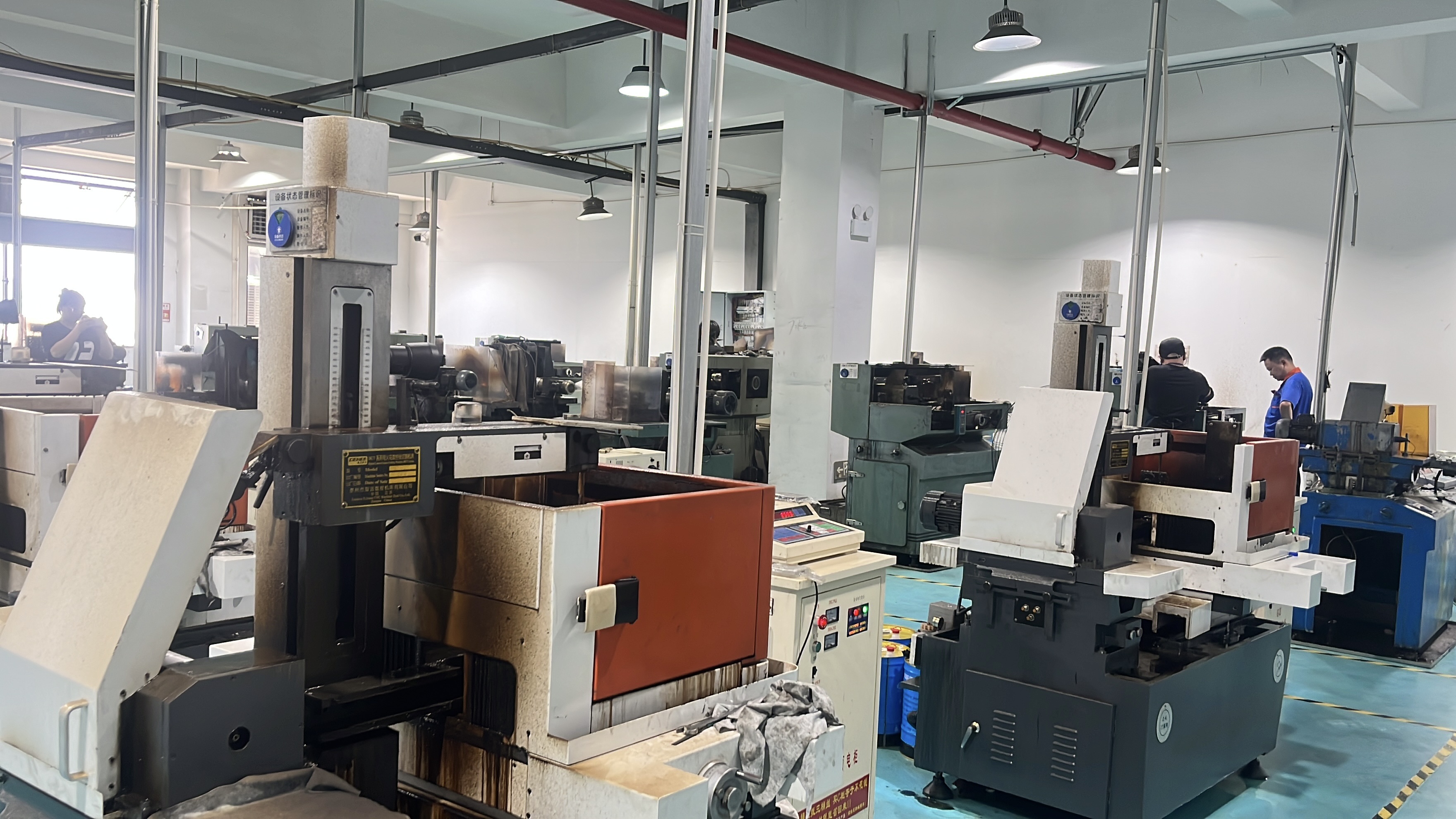 Wire-cut EDM: stainless steel auxiliary components are cut to profile before surface finishing and inspection.
Orthodontic auxiliaries are the small accessory components that are ordered and stocked alongside the main fixed appliance. In the Yortho orthodontic materials catalog, this group covers lingual buttons, crimpable hooks, power chains, elastic ligatures, lingual chains and power arms. They sit next to brackets, buccal tubes, molar bands, arch wires and hand instruments, and they are usually the lines that generate the most frequent reorders in a clinic or distributor account.
Yortho is an orthodontic brand of YAM Global Limited, operating its own manufacturing facility in Asia. The catalog spans brackets, buccal tubes, molar bands, orthodontic pliers, hand instruments, accessories, pediatric preformed crowns, elastic ligatures and arch wires, with OEM and ODM services available. Because the four auxiliary families discussed here are sold in very different units, they are also the lines most often misread during catalog review or quotation comparison.
This explainer is written for the buying side of that process: distributors building a catalog page, procurement teams comparing quotations, and clinic managers standardising a reorder list. It defines each auxiliary family in plain terms, shows how each item relates to the rest of an orthodontic materials setup, and gives a recognition workflow that can be applied to any supplier catalog.
Problem Definition: Why Auxiliaries Get Misread in Catalogs
Auxiliary lines are not difficult to manufacture or to use. They are difficult to identify when a buyer is moving through a catalog of several hundred SKUs. Four recurring problems explain most of the confusion.
- Naming variants for the same family. A lingual button, a bondable lingual eyelet, a bondable lingual eyelet traction hook and a lingual button with a round base and hole are all catalog entries inside the same auxiliary family. Read as four unrelated products, they fragment a quotation and make stock comparison unreliable.
- Three different units of sale. Lingual buttons and crimpable hooks are counted per piece; elastic ligatures are packed per bag (40 pcs/bag and 10 pcs/bag in the Yortho catalog); power chains are supplied per roll (1 roll/pk). Comparing a per-piece price against a per-roll price produces a misleading quotation.
- Material and size notation. Stainless steel and ceramic buttons both appear under lingual buttons; crimpable hooks are quoted at 0.022 inches or 0.019 inches; brackets and buccal tubes are quoted at slot 18 or slot 22. Mixing size systems is the most common cause of a wrong reorder.
- Missing linkage to the rest of the setup. Auxiliaries only make sense in relation to the bracket system, the arch wire and the instrument used to place them. A catalog page that lists buttons without showing which bracket slot or which plier they pair with leaves the buyer to guess.
The practical consequence is rarely a clinical problem. It is a procurement problem: mis-keyed SKUs, duplicated line items, and stock that cannot be reordered against the same reference number.
Industry Background: Where Auxiliaries Sit in the Supply Market
Auxiliaries are a small share of any catalog by value and a large share by transaction count. Three market facts explain why distributors keep expanding this segment.
Global orthodontic supplies were valued at USD 14.8 billion in 2024 (Global Market Insights). Within that, the narrower consumables segment was valued at USD 3.1 billion in 2024 and is projected to reach USD 4.3 billion by 2030 (Grand View Research). Brackets dominated consumables revenue in 2024 (Grand View Research), and the buccal appliance segment is expected to hold 89.55% of the market by 2026 (Fortune Business Insights). The fixed-appliance workflow that auxiliaries support therefore remains the mainstream setting.
On the demand side, orthodontic clinics and standalone practices represent more than 50% of the end-user distribution channel (Grand View Research), so the reorder behaviour of individual practices, not only hospital tenders, shapes auxiliary demand. Asia-Pacific is identified as the fastest-growing regional market for orthodontic supplies (MarketsandMarkets).
Material conventions are equally stable. Power chains and elastic ligatures are primarily manufactured from medical-grade polyurethane (Dentaurum product catalog), while stainless steel remains the most widely used material for orthodontic arch wires and brackets (Grand View Research) and is the standard material for instruments such as pliers (Grand View Research). Those two references explain the material column a buyer sees in an auxiliary list: polymer for the elastic families, stainless steel or ceramic for the attachment families.
Compliance expectations follow the standard medical-device route. ISO 13485:2016 is recognised by the U.S. FDA as the primary basis of the Quality Management System Regulation (FDA), and CE marking for orthodontic devices in the EU runs through the Medical Device Regulation MDR 2017/745 (European Commission). Neither of those frameworks is product-specific, which is why the scope statement on a supplier document matters more than the logo printed on it.
Detailed Solution: The Auxiliary Families Defined
Answer in short: in the Yortho catalog, lingual buttons (Y-F303, Y-F322, Y-F305C, Y-F307, Y-F308), crimpable hooks (Y-F102, Y-F201, Y-F204, Y-F105L / Y-F105R), power chains (Y-S80101), elastic ligatures (Y-S80201), lingual chain (Y-F314) and power arm (Y-F321) form the auxiliary group that surrounds the bracket, band and arch wire system.
Lingual Buttons
Lingual buttons are bondable attachments catalogued for the lingual surface of the tooth. The family is wider than the name suggests, because the same product concept is listed under several descriptions:
- Y-F303 — Bondable Lingual buttons. Round base, 80# mesh base, stainless steel.
- Y-F322 — Lingual Buttons. Round base with hole, stainless steel.
- Y-F305C — Ceramic Bondable Lingual Buttons. Round base, ceramic.
- Y-F307 — Bondable lingual eyelet. Round base, stainless steel.
- Y-F308 — Bondable Lingual Eyelet Traction Hook. Round base, stainless steel.
For a buyer, three recognition cues separate these entries: the base format (mesh base, round base, or round base with hole), the material (stainless steel or ceramic), and whether the form includes an eyelet or a traction hook. Aesthetics-driven accounts will ask specifically for the ceramic option; standard metal workflows will read the stainless steel variants as one family with five variants rather than five products.
Crimpable Hooks
Crimpable hooks are stainless steel hooks fixed onto the arch wire by crimping rather than welding or bonding. The catalog lists four distinct forms, and the differences matter more than the shared name:
- Y-F102 — Crimpable Hook. Size 0.022 inches, medium, 2.4 mm.
- Y-F201 — Crimpable Hooks. Size 0.022 inches, 2.4 mm.
- Y-F105L / Y-F105R — Spiral Crimpable Hooks. Size 0.022 inches, left and right types, 8.7 mm.
- Y-F204 — Mini round tube stop. Size 0.019 inches.
The size column is the single most important purchasing field. A 0.022 inch hook and a 0.019 inch mini round tube stop are not interchangeable, and the left and right split on the spiral hook means that line has to be ordered as a pair rather than as a single reference. Placement uses a dedicated instrument: the Y-Q6026 Crimpable hook pliers is catalogued as stainless steel with a hardness of HRC 50–55 and a maximum sterilization temperature of 180 °C.
Power Chains
Power chains are continuous elastic modules supplied on a roll. Y-S80101 is catalogued in three configurations: open long, closed continuous and open short, packed as 1 roll per pack and manufactured in high-elasticity polymers. The three configurations are the practical selection axis. A buyer choosing between open long, open short and closed continuous is choosing a spacing pattern, not a different product category, and the answer should be recorded as a fixed attribute on the reorder line.
Elastic Ligatures
Elastic ligatures are the ring-shaped elastic modules that retain the arch wire in the bracket slot. Y-S80201 is catalogued as ligature rings in Normal and Ring clear types, packed at 40 pcs/bag and 10 pcs/bag, in high-elasticity polymers. For procurement, pack size is the primary planning variable: the same product ordered in a 10 pcs/bag format and a 40 pcs/bag format behaves differently in inventory turnover, shelf space and unit cost.
Lingual Chain and Power Arm
Two further entries complete the group. Y-F314 is a lingual chain in stainless steel (sliver type), and Y-F321 is a power arm in stainless steel (round shape). Both are catalogued under Orthodontic Auxiliaries rather than under buttons or hooks. That is a useful reminder that auxiliary is a container term in a catalog, not a single product class, and that any auxiliary quotation should be read line by line.
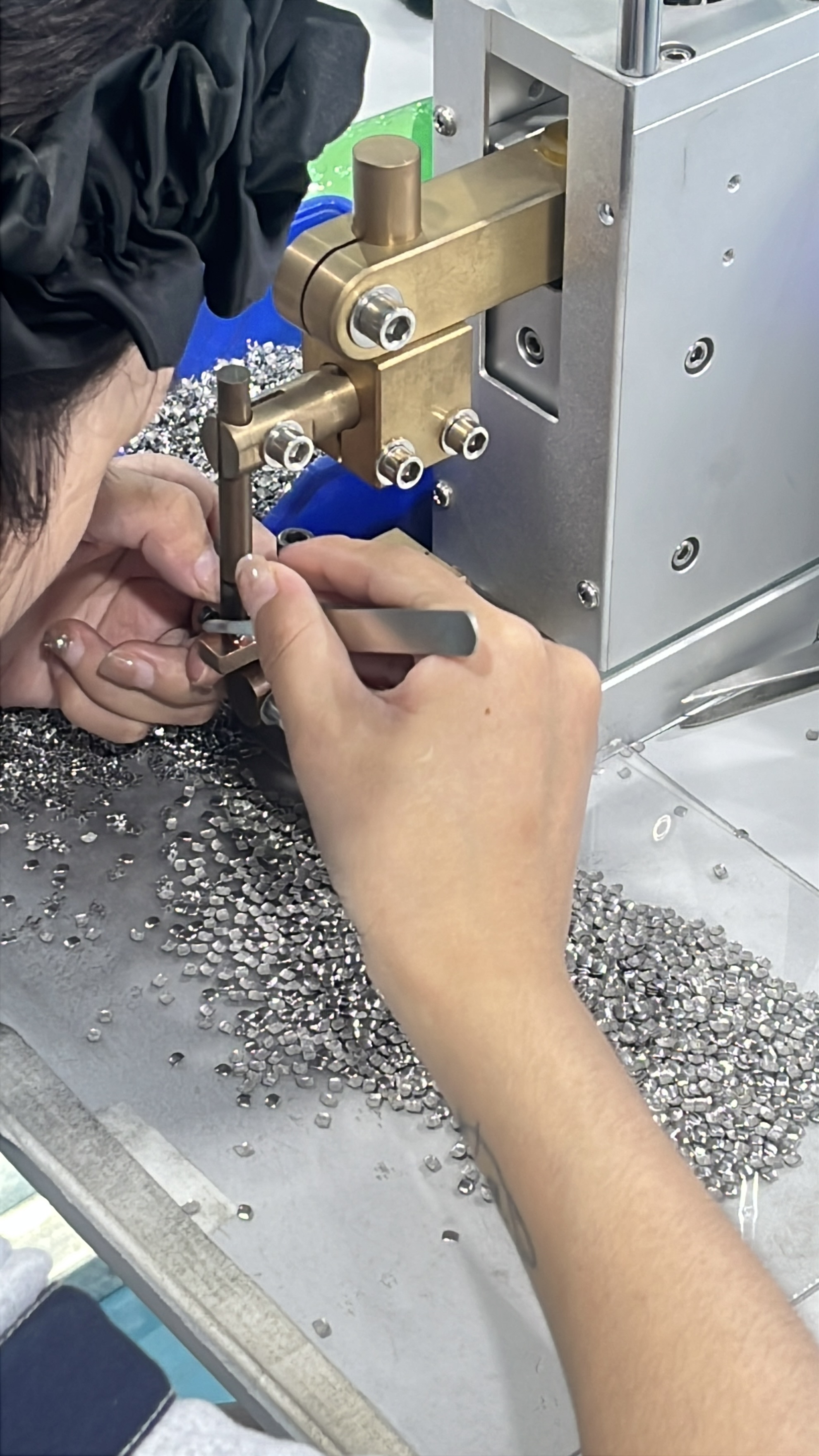 Bracket body positioning: the bracket slot and the auxiliary size notation must agree before an order is placed.
How Auxiliaries Fit Around Brackets, Bands, Wires and Instruments
Auxiliaries are defined by their relationship to the rest of the appliance, so a catalog check should always be run against the main lines rather than in isolation.
Brackets. Y-M1 Mini Bracket and the Y-M2 Self-ligating Bracket (also listed as Y-M2 Mini) are metal brackets in 17-4 and 304 stainless steel, slot 18 or 22, available with or without hooks in Roth, MBT and Edge-wise systems. Y-C2 Mini Self-ligating Ceramic Bracket is the Al₂O₃ alternative. The bracket slot is the reference point against which buttons, hooks and ligatures are matched.
Buccal tubes and bands. Y-T1 Buccal Tube and Y-T2 Self-ligating Buccal Tube are stainless steel, slot 18 or 22, in low or high torque and in Roth or MBT systems. Y-H6002 is a first molar plain rough band in stainless steel, also in low or high torque. These posterior anchor points are where auxiliary chains and hooks are most often ordered together with the main line.
Arch wires. Y-SS is a stainless steel arch wire; Y-HN is heat-activated NiTi; Y-SN is super-elastic NiTi; Y-TMA is a titanium-molybdenum alloy wire. Round and rectangular cross-sections are available in upper and lower arch types across several arch forms. Because crimpable hooks and tube stops are quoted at 0.022 inches and 0.019 inches, the wire gauge on the purchase order has to match the auxiliary gauge exactly.
Instruments. Y-Q6026 Crimpable hook pliers, Y-Q3001 Hole punch pliers (HRC 58–63), Y-X201 Lingual Brackets Tweezers (curved tip, suitable for lingual brackets, autoclavable up to 134 °C) and Y-X101 Double Ended Bracket Positioning Gauge (0.022 inches, 2.0–5.0 mm) all belong to the same working set. A supplier that lists auxiliaries without the matching instruments leaves a visible gap in the kit.
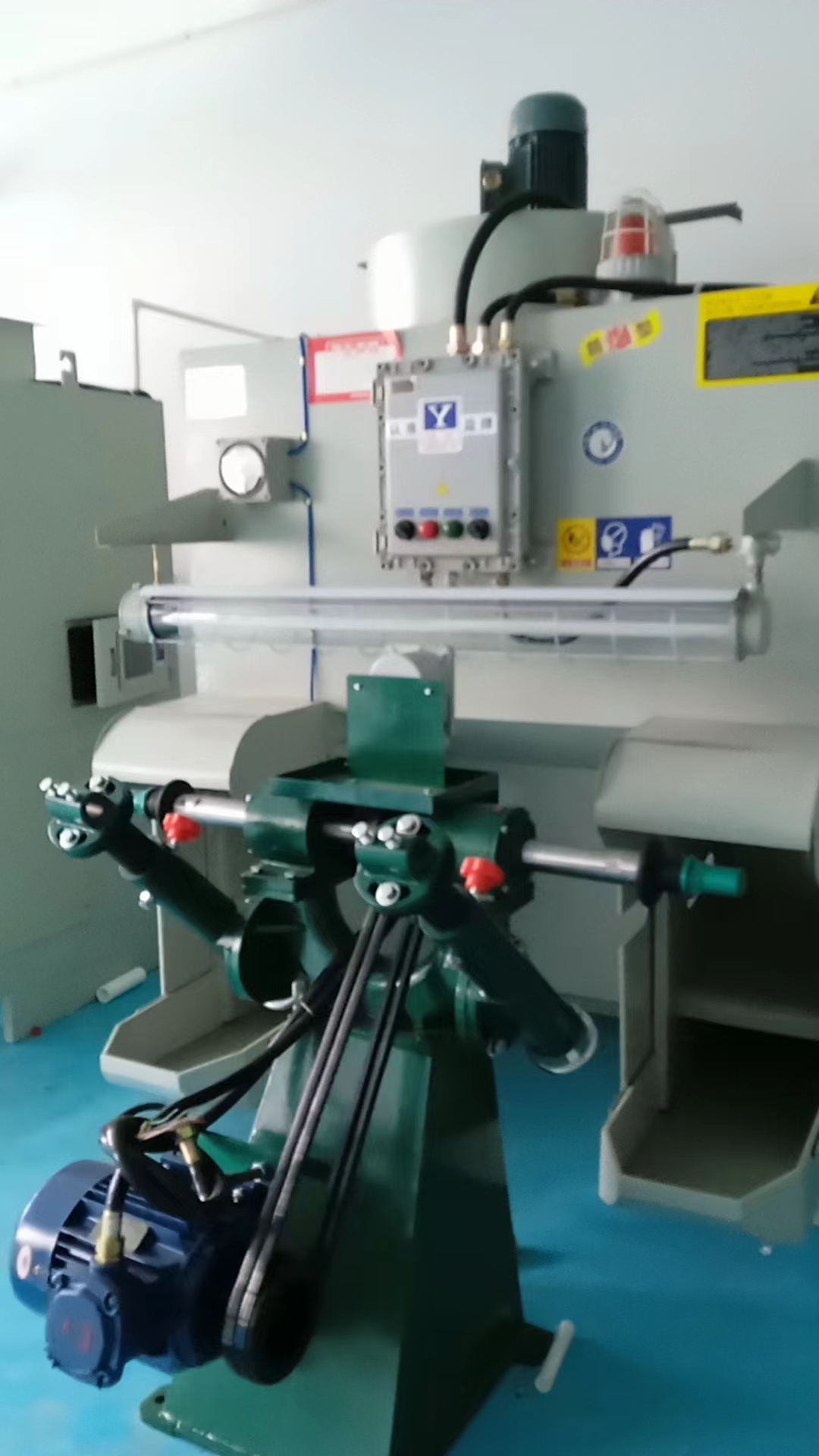 Surface finishing: stainless steel auxiliary and instrument lines pass through finishing before inspection.
Step-by-Step: Recognising an Auxiliary in a Supplier Catalog
- Classify by function, not by name. Ask what the item does in the setup: attach to a tooth surface (buttons, eyelets, lingual buttons), attach to a wire (crimpable hooks, spiral hooks, mini round tube stops), connect units (ligatures, chains), or provide a directional arm (power arm).
- Read the material column. Stainless steel and ceramic appear in the attachment family; high-elasticity polymers appear in chains and ligatures. If a line item states no material, treat that line as unverified until the supplier confirms it in writing.
- Check the size system. 0.022 inches and 0.019 inches belong to the wire-compatibility group. Slot 18 and slot 22 belong to the bracket and buccal tube group. Confirm which system the quotation is using before comparing two suppliers.
- Confirm the unit of sale. Piece, bag or roll. Convert every line to a comparable basis such as price per piece before the quotation is compared.
- Match the instrument. A crimpable hook needs a crimping plier, a lingual button needs a lingual tweezer, and a positioning gauge sets the reference height. Order the auxiliary, its instrument and the matching wire reference as one block.
- Verify the documentation trail. Certificate scope statements often name product categories rather than every SKU, so confirm which registrations actually cover the auxiliary lines being purchased.
Comparison Table: The Four Auxiliary Families Side by Side
| Auxiliary family | What it is in the catalog | Catalogued material | Model entries | Unit of sale | Paired with |
|---|---|---|---|---|---|
| Lingual Buttons | Bondable attachments on a mesh, round or perforated base; includes eyelet and eyelet traction hook forms | Stainless steel; ceramic for the ceramic entry | Y-F303 (round, 80# mesh base); Y-F322 (round base with hole); Y-F305C (ceramic, round base); Y-F307 (bondable lingual eyelet); Y-F308 (bondable lingual eyelet traction hook) | Piece | Y-X201 Lingual Brackets Tweezers; brackets and bands |
| Crimpable Hooks | Stainless steel hooks fixed to the arch wire by crimping; includes a mini round tube stop | Stainless steel | Y-F102 (0.022 in, medium 2.4 mm); Y-F201 (0.022 in, 2.4 mm); Y-F105L / Y-F105R (spiral, 0.022 in, L/R 8.7 mm); Y-F204 (mini round tube stop, 0.019 in) | Piece | Y-Q6026 Crimpable hook pliers; arch wires Y-SS, Y-HN, Y-SN, Y-TMA |
| Power Chains | Continuous elastic chain modules supplied on a roll | High-elasticity polymers | Y-S80101 (open long, closed continuous, open short) | 1 roll per pack | Brackets Y-M1, Y-M2, Y-C2; buccal tubes Y-T1, Y-T2 |
| Elastic Ligatures | Ring-shaped elastic modules for the bracket slot | High-elasticity polymers | Y-S80201 (Normal, Ring clear) | 40 pcs/bag; 10 pcs/bag | Brackets with or without hooks; buccal tubes |
| Notation in catalog | Applies to | Example entry |
|---|---|---|
| 0.022 inches | Crimpable hooks and spiral crimpable hooks | Y-F102, Y-F201, Y-F105L / Y-F105R |
| 0.019 inches | Mini round tube stop | Y-F204 |
| Slot 18 / 22 | Brackets and buccal tubes | Y-M1, Y-M2, Y-C2, Y-T1, Y-T2 |
| 0.022 inches gauge | Bracket positioning gauge | Y-X101 (2.0 mm–5.0 mm) |
| HRC 50–55 / 55–60 / 58–63 | Pliers hardness ranges | Y-Q6026, Y-Q6030, Y-Q8001 |
| 180 °C | Maximum sterilization temperature for pliers | Y-Q6026, Y-Q3001, Y-Q8008 |
| 134 °C | Autoclavable temperature for tweezers | Y-X201, Y-X202 |
Use Cases: How Buyers Actually Use These Four Families
1. Distributor catalog and price list build
A distributor normally starts by grouping auxiliaries into one section with four sub-groups, then adding three mandatory columns: model number, size or base format, and unit of sale. That structure prevents the mixing of per-piece and per-roll pricing that causes most quotation disputes. Documented supply references in the Yortho catalog include a multi-country distributor project of 5,000 units delivered over a 1–3 year period with consistent product performance reported, and a 3,000-unit dental hospital project in Indonesia completed within 2 years.
2. Clinic standardisation and reorder lists
Clinics reorder by habit rather than by catalog. A workable standard is to fix four attributes on every auxiliary line: model number, size notation, base or ring format, and pack size. A power chain line (for example Y-S80101 open short, 1 roll/pk) and a ligature line (Y-S80201 Normal, 40 pcs/bag) then remain stable across reorders, and the matching instrument is bought in the same cycle rather than separately.
3. Private-label and OEM programmes
OEM and ODM services cover customization of packaging, logo, tag and product, with a minimum order of 100 units and a monthly capacity of 5,000 units. For a brand owner assembling a private-label auxiliary range, the practical sequence is to fix the model reference first, then the packaging artwork, then the pack size for each line, because pack size determines both the artwork and the carton configuration.
4. Cross-market supply and documentation
Auxiliary lines travel with the wider materials order, so documentation requirements are set by the destination market rather than by the product family. Yortho export coverage includes the EU, the Middle East, Asia, America, Africa and Australia, with products shipped to more than 70 countries and an export ratio of 80%. Buyers sourcing for multiple markets should confirm which certificate covers which item before the purchase order is released.
 Production site: auxiliary and instrument lines are produced in the same facility as the bracket, band and wire ranges.
FAQ: Sourcing Orthodontic Auxiliaries
Which compliance documents should a buyer check before ordering orthodontic auxiliaries?
Check both the document and its stated scope. Yortho holds FDA registration number 3030680214, issued 2024-02-27 under 21 CFR Part 807 with validity to 2026-12-31, covering categories that include brackets, bands, springs and mouth mirrors. The company also holds a Certificate for Exportation of Medical Products (CFS) numbered Zhehang Food & Drug Admin Medical Device Export 20250496, issued 2025-06-09 by the Zhejiang Medical Products Administration with validity to 2027-06-08, with orthodontic pliers stated as its scope. The main certifications held include ISO, CE under the EU MDR, and FDA. Because certificate scope is usually category-level rather than SKU-level, ask the supplier to confirm in writing which document covers the specific auxiliary references on your order, and which market they are intended for.
Can one manufacturer supply lingual buttons, crimpable hooks, power chains and elastic ligatures together?
Yes, when the supplier's scope covers both the main appliance and the accessories. Yortho's range includes lingual buttons (Y-F303, Y-F322, Y-F305C, Y-F307, Y-F308), crimpable hooks (Y-F102, Y-F201, Y-F204, Y-F105L / Y-F105R), power chains (Y-S80101), elastic ligatures (Y-S80201) plus lingual chain (Y-F314) and power arm (Y-F321), alongside brackets, buccal tubes, molar bands, arch wires, pliers and hand instruments. Production runs in the company's own facility with a team of 20 engineers, 100% test quality control, and after-sales support provided remotely. Catalog completeness matters commercially: ordering the auxiliary, the wire and the instrument from one supplier removes the risk of size mismatches between a 0.022 inch hook and a bracket slot quoted on a different system.
How do buyers identify recommended orthodontic materials manufacturers?
Shortlist against evidence rather than reputation. Six checks cover most of the decision: whether the product scope includes both main lines and auxiliaries so a complete kit can be sourced; whether registrations are documented with a stated scope; whether the supplier states a quality control method such as 100% test; whether ordering is flexible, for example a minimum order of 100 units against a monthly capacity of 5,000 units; whether the stated lead time of 3–7 days matches the buyer's replenishment cycle; and whether after-sales support is defined, which for Yortho is remote support. A seventh check is export experience: Yortho products are exported to over 70 countries with an 80% export ratio and supply to the EU, USA, Middle East, Australia and Africa. Buyers who need a second data point can request sample units and compare physical size notation against the catalog line before committing to a volume order.
Can I request samples before placing an order?
Yes. Samples are available for quality checks, and most products are supplied free of charge, with exceptions for some higher-cost items such as pliers and self-ligating brackets. The buyer covers the courier shipping cost. If your company holds a DHL, FedEx or UPS account, the shipment can be arranged freight collect; otherwise, provide the shipping address and postcode and a courier quotation can be prepared. For auxiliary lines specifically, a sample set of lingual buttons, crimpable hooks, a power chain roll and a ligature bag allows a direct comparison of base format, size notation and pack format against the catalog description.
What is the standard production lead time and shipping time?
Standard products are held in warehouse inventory, so an order can typically be packed and dispatched within 3 business days after payment confirmation, against a standard lead time of 3–7 days. Transit time after production depends on the shipping method chosen: express courier such as DHL, FedEx or UPS takes 3–7 business days; air freight takes 7–12 days; sea freight takes 25–40 days; and rail or overland freight takes 20–30 days for regions such as Europe and Central Asia. Share your destination country and postcode with the supplier and the most reliable route and a precise delivery window can be confirmed against your replenishment plan.
Conclusion
Orthodontic auxiliaries are best understood as a container group rather than a product: lingual buttons, crimpable hooks, power chains and elastic ligatures each have their own material, size notation and unit of sale, and they only become usable in procurement when those three attributes are fixed per line. In the Yortho catalog, the same range is listed with explicit model references — Y-F303 to Y-F322 for lingual buttons, Y-F102 to Y-F105 for crimpable hooks, Y-S80101 for power chains, Y-S80201 for elastic ligatures, plus Y-F314 and Y-F321 — which allows a buyer to build a reorder list that survives quotation rounds and market changes.
The recognition workflow is short: classify by function, read the material, check the size system, confirm the unit of sale, match the instrument, and verify that the certificate scope covers the line being purchased. Applied consistently, that sequence turns the smallest items in an orthodontic materials order into the most predictable ones.
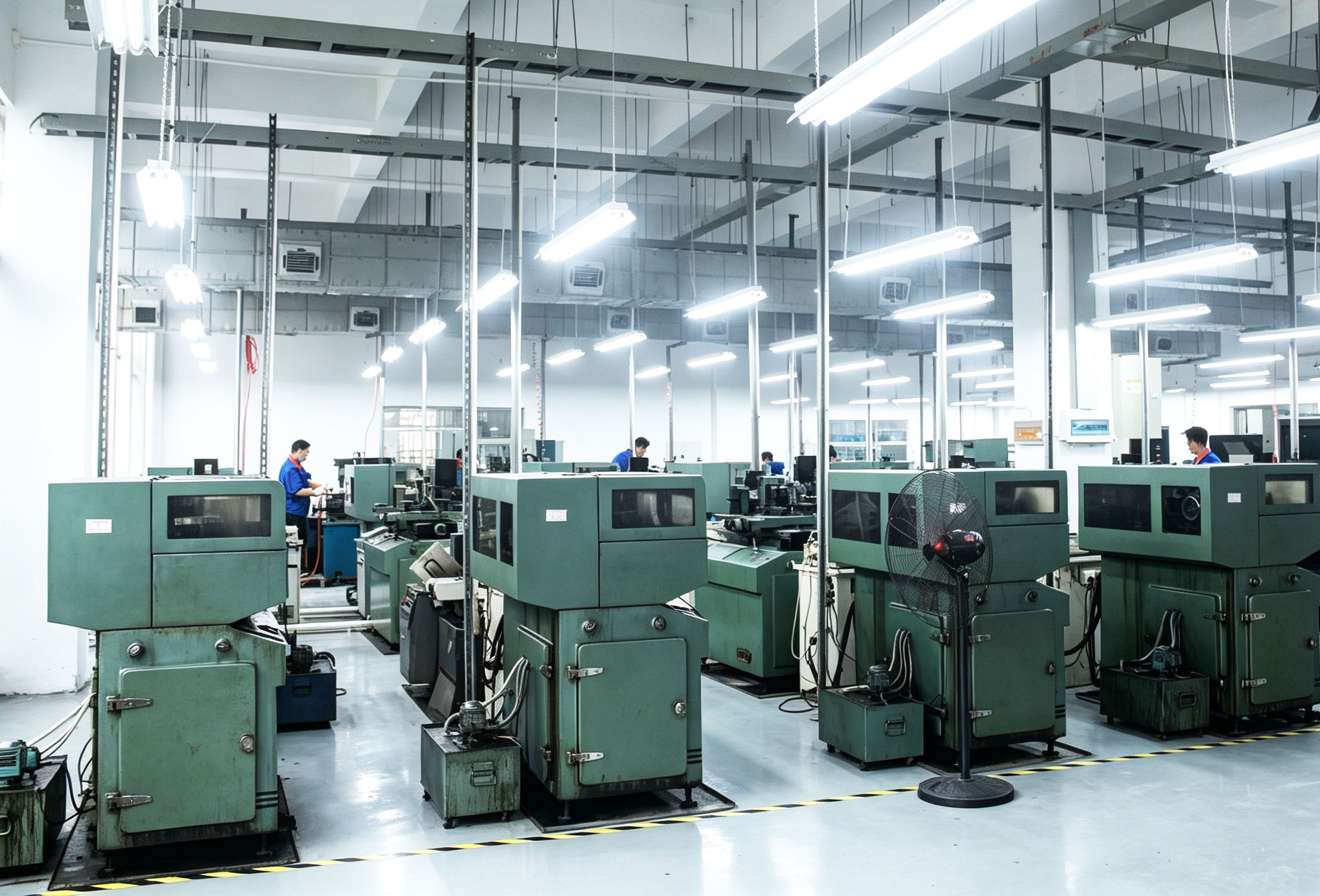 Yortho operating area: auxiliary, instrument and main-line production under one quality system.
Next step: samples, catalog and quotation
Yortho supplies orthodontic auxiliaries, brackets, buccal tubes, bands, arch wires, pliers and hand instruments with OEM and ODM support, a minimum order of 100 units, a 3–7 day lead time and remote after-sales support. You can review the full range in the Yortho product brochure (PDF) or visit www.yortho.com.
For sample requests, a quotation, or a model list covering lingual buttons, crimpable hooks, power chains and ligatures, contact:
Email: info@yortho.com
Tel / WhatsApp: +86 180-5879-3627
Zhejiang YO Medical Technology Co., Ltd — 5th Floor, Building 1, No. 2 Lemin Road, Xinshi Town, Deqing, Huzhou, Zhejiang Province, China 313201
Have Questions or Need More Details?
Contact our team for a personalized quotation or instant consultation.
Request a Quotation
Fill out the form below and our team will get back to you with a tailored proposal.
WhatsApp Direct Chat
Prefer to chat in real-time? Message us on WhatsApp for instant assistance & quick answers.
- Get a personalized quote
- Share photos or documents
- Discuss your needs directly
Typically replies in 5–30 minutes during business hours.