Orthodontic Expansions in Clinical Practice: A Buyer's Scenario Guide
Orthodontic Expansions in Clinical Practice: A Buyer's Scenario Guide
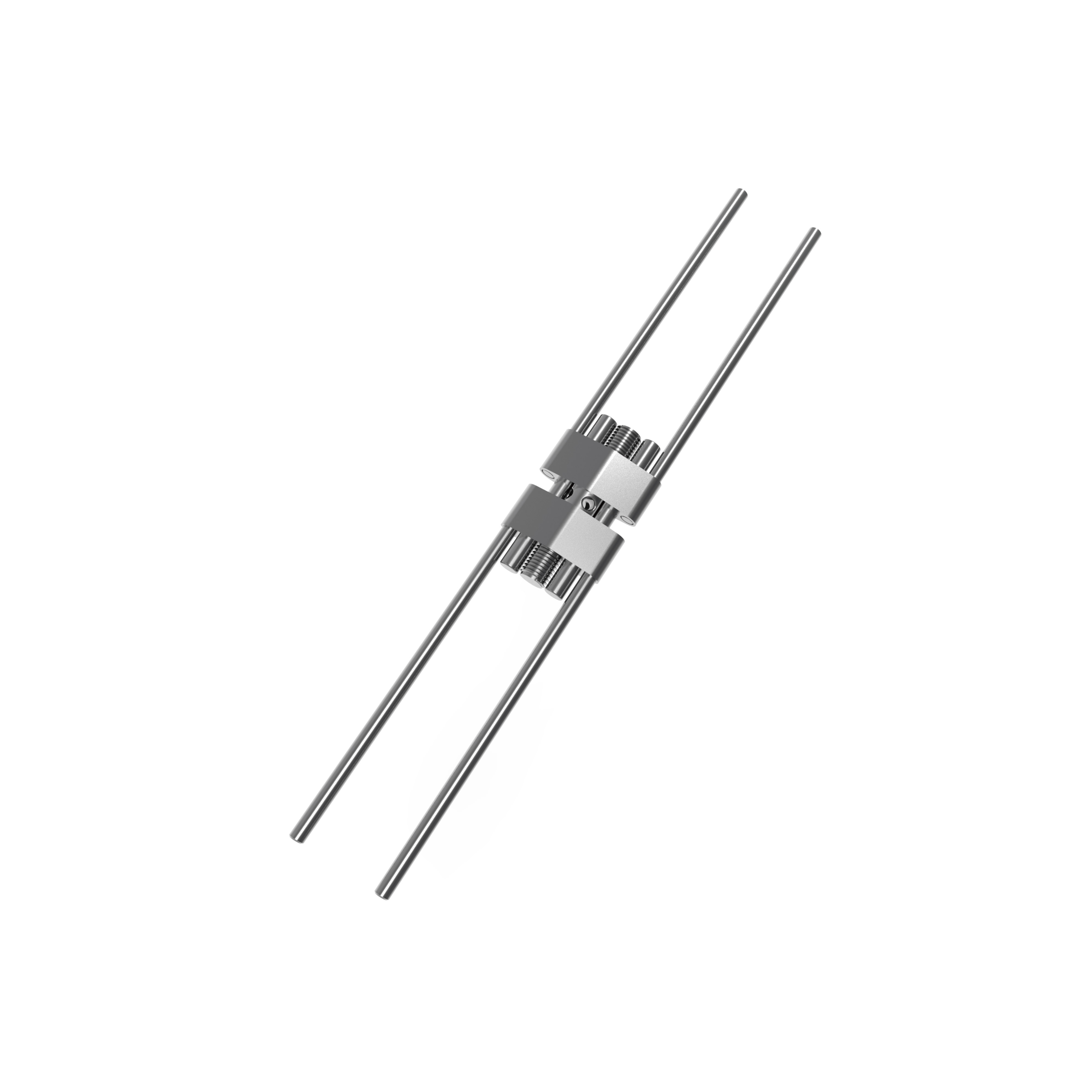
The Yortho I series expansion screw: stainless steel, screw and pin lengths from 12 mm to 20 mm, expansion sizes from 7 mm to 15 mm, packed 1 piece per pack.
Orthodontic expansions widen the dental arch, and the expansion screw is the component that produces the movement. In daily clinical practice the same hardware supports quite different jobs: creating arch length for a crowded mixed dentition, correcting a transverse discrepancy, or — combined with an extraoral appliance such as a face mask — supporting maxillary development in a growing patient with a Class III pattern. The sourcing question is therefore not whether expansion hardware belongs in a catalog, but which screw and pin lengths, which expansion sizes and which compliance documents match the malocclusion case mix that the clinics or distributors behind the order actually treat.
This guide is written for procurement teams, distributors and clinical buyers who are evaluating orthodontic materials at the research and evaluation stage. It maps the Yortho expansion screw range (I, K and G series) to pediatric, adolescent and adult treatment scenarios, sets out the specifications that must be matched case by case, and lists the verification and documentation checks that can be completed before a supply program is committed.
Problem Definition: Why Expansion Purchasing Goes Wrong
Expansion hardware is rarely a bad product. It is usually a badly specified purchase, for five recurring reasons.
- It is bought as a single SKU. An expansion screw is one part of an appliance. It is normally welded into a laboratory-fabricated expander, retained by molar bands, and followed by wire mechanics. Buying the screw alone, without the paired components, is the most common cause of mid-treatment re-orders.
- One size is standardised across every case. Screw and pin lengths of 12, 16, 18 and 20 mm and expansion sizes of 7, 9, 11, 13 and 15 mm exist because intraoral spaces and planned expansion amounts differ. A single-size stock forces clinicians either to over-expand or to wait for a delivery in the middle of an activation sequence.
- The fabrication route is ignored. The standard pin design of these screws is intended to facilitate welding to expanders, so the receiving laboratory's process — not just the clinician's preference — determines which configuration is usable.
- Documentation is treated as an afterthought. Registration and quality-system documents must name the product family actually being shipped, and some markets add biocompatibility or nickel-free requirements that are better confirmed at quoting stage than at customs.
- Adult cases are planned with pediatric logic. In non-growing patients, expansion is a different mechanical problem and usually depends on skeletal anchorage components that sit outside the expansion screw line itself.
Industry Background: Where Expansion Hardware Sits in 2026
Expansion screws are a small line item inside a large consumables category, which is precisely why availability and documentation quality matter more than volume discounts.
- The global orthodontic supplies market was valued at USD 14.8 billion in 2024 (Global Market Insights).
- The narrower orthodontic consumables segment was valued at USD 3.1 billion in 2024 and is projected to reach USD 4.3 billion by 2030 (Grand View Research).
- Malocclusion prevalence is estimated at between 39% and 93% of adolescents globally, and the 13–19 age segment is identified as the primary growth driver for orthodontic treatment (Straits Research; J Dent & Oral Disord as cited by Grand View Research).
- Stainless steel remains the most widely used material for orthodontic arch wires and brackets worldwide (Grand View Research) — the same material basis used for expansion screws.
- China exported approximately USD 12.7 billion in medical instruments (HS 9018) in 2025, with dental instrument exports concentrated in Guangdong, Jiangsu and Zhejiang (OEC; customs data analysis).
- Digital workflows and 3D printing for models and aligner moulds continue to be highlighted as key technology trends (Straits Research), which matters because laboratory-fabricated expanders increasingly sit inside digitally planned treatment sequences.
Two conclusions follow for buyers. First, expansion hardware is a high-consequence accessory: it is used in a minority of cases but it is difficult to substitute once a treatment sequence is under way. Second, the supply base capable of shipping it reliably at scale is concentrated in the same medical-device clusters that already export to regulated markets, so documentation and lead time — not product novelty — are the practical differentiators.
What an Expansion Screw Does — and Where Its Limits Are
An expansion screw is a stainless steel screw-and-pin assembly. In its most common configuration it is welded into a laboratory-fabricated appliance — for example a rapid palatal expander (RPE), which Yortho lists among its dental laboratory appliances. Clinicians activate the screw on a defined schedule; the precision machined thread converts that rotation into lateral force and separates the two halves of the appliance, widening the arch and creating space.
The engineering points that matter clinically are stated directly in the product specification: a precision machined thread delivers uniform, stable expansion force and smooth activation, the standard pin design facilitates welding to expanders, and the stainless steel construction is anti-corrosion with a long service life. Expansion sizes of 7–15 mm and screw and pin lengths of 12–20 mm give the laboratory the geometry it needs for different intraoral spaces and clinical expansion demands.
Equally important are the boundaries. Expansion is growth-dependent when the objective is skeletal; in non-growing patients the same arch-widening goal is typically pursued with skeletal anchorage or surgically assisted approaches, which is why mini implants and other anchorage components belong in the same purchasing conversation. Expansion also does not replace alignment mechanics: it creates the space, and bracket-and-wire mechanics then use it. Buyers who understand these two limits avoid ordering expansion hardware as a stand-alone solution.
The Yortho Expansion Screw Range: I, K and G Series
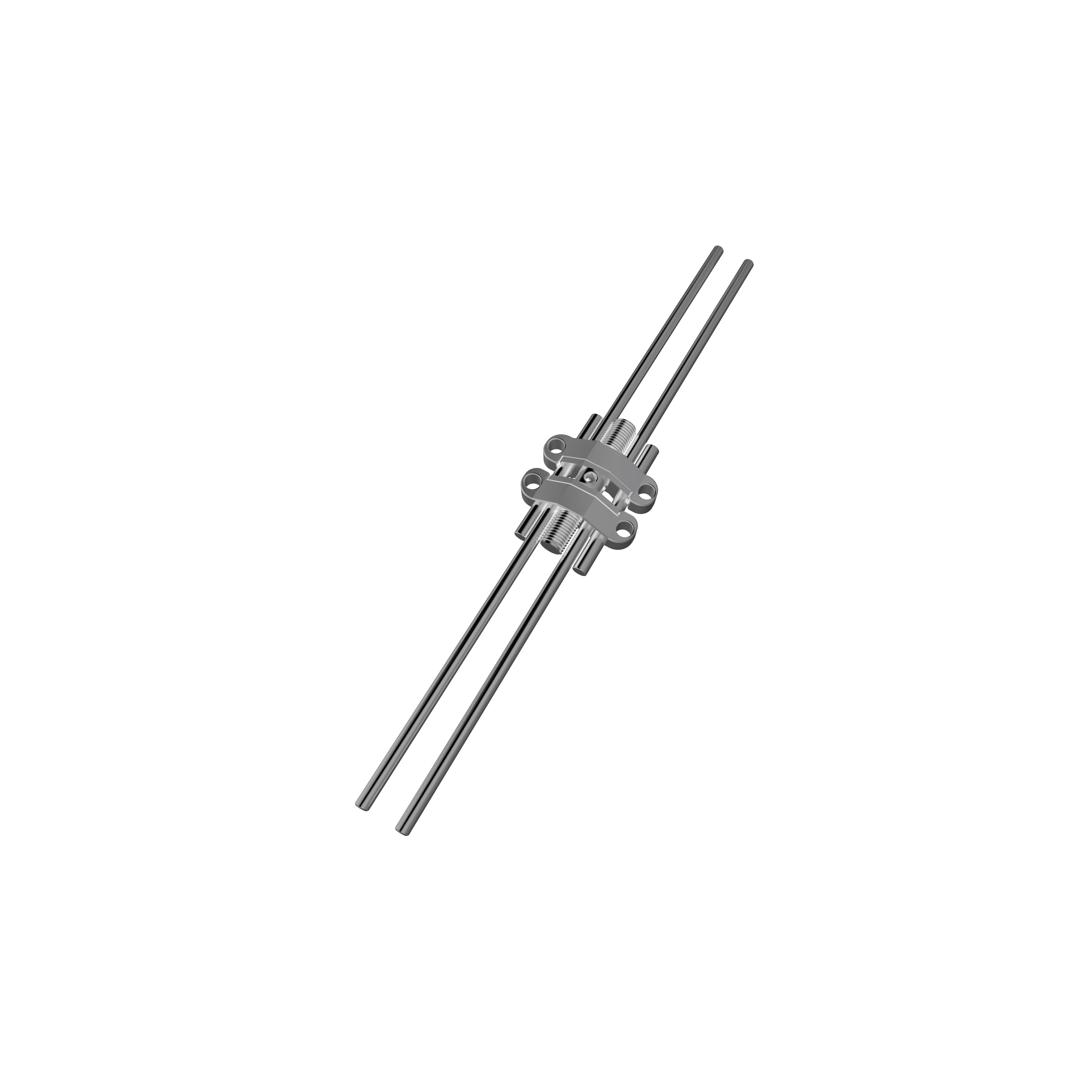
Yortho K series expansion screw. Each series shares the same size architecture and is selected by appliance design and available intraoral space.
Yortho, an orthodontic brand of YAM Global Limited (UK) with its own manufacturing operation in Zhejiang, China (Zhejiang YO Medical Technology Co., Ltd), supplies expansion screws in three named series. All three are orthodontic expansion screws made of stainless steel, and all three share the same size architecture, so selection is driven by appliance design and available intraoral space rather than by a performance hierarchy between series.
| Series | Device type | Material | Screw & pin length | Expansion size | Packing | OEM |
|---|---|---|---|---|---|---|
| I series | Expansion Screw | Stainless steel | 12 mm, 16 mm, 18 mm, 20 mm | 7 mm, 9 mm, 11 mm, 13 mm, 15 mm | 1 pc per pack | Supported |
| K series | Expansion Screw | Stainless steel | 12 mm, 16 mm, 18 mm, 20 mm | 7 mm, 9 mm, 11 mm, 13 mm, 15 mm | 1 pc per pack | Supported |
| G series | Expansion Screw | Stainless steel | 12 mm, 16 mm, 18 mm, 20 mm | 7 mm, 9 mm, 11 mm, 13 mm, 15 mm | 1 pc per pack | Supported |
How to read these specifications as a buyer
- Screw and pin length (12–20 mm) is matched to the available intraoral space and to the geometry of the laboratory-fabricated expander. A four-step range means one stock line can serve several appliance designs.
- Expansion size (7–15 mm) is matched to the amount of expansion the clinician plans. Five steps allow the activation target to be met without stacking appliances.
- Standard pin design is what makes the screw weldable into expanders, so this is the specification to confirm with the dental laboratory before ordering.
- Precision machined thread is the basis for uniform, stable expansion force and smooth activation during the activation sequence.
- Stainless steel construction is described as anti-corrosion with a long service life — consistent with the material that remains the global standard for orthodontic hardware.
- 1 piece per pack keeps handling at unit level, which simplifies traceability and low-volume clinical ordering.
- OEM customization is supported across the range, with customization scope covering packaging, logo, tag and product.
Matching Expansion Hardware to Clinical Scenarios
Scenario 1: Pediatric Class III and anterior crossbite
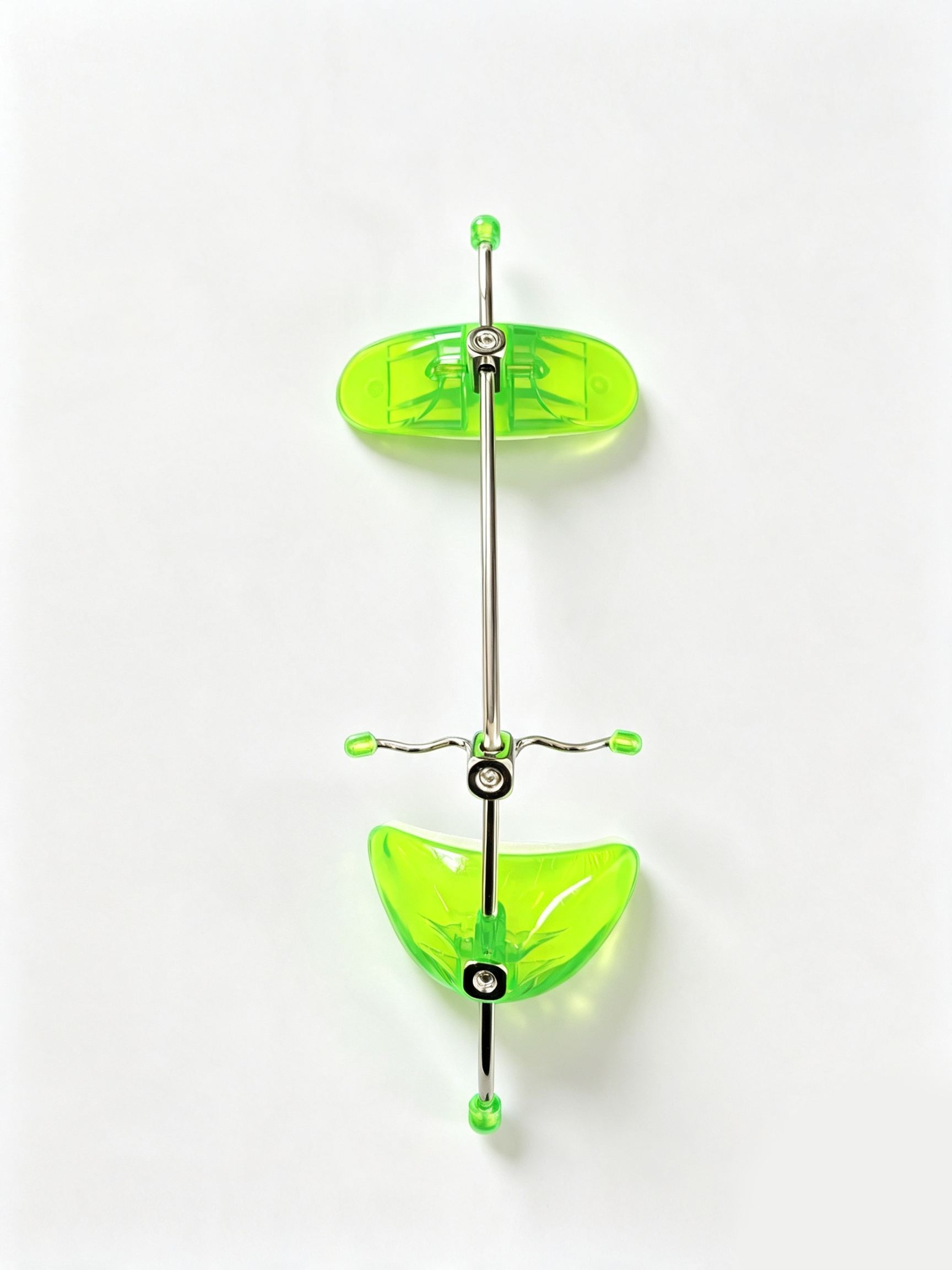
The Yortho Adaptable Class III face mask, supplied in Standard and Small types and in a range of colors for pediatric cases.
In growing patients with a Class III pattern, maxillary expansion is frequently combined with an extraoral appliance. The Yortho orthodontic face mask is described as an extraoral appliance used during childhood to treat a Class III malocclusion (underbite) by applying gentle, forward-pulling pressure to stimulate growth of the upper jaw; the product is also specified for stimulating maxillary forward growth and correcting pediatric anterior crossbite, and is intended for supply to dental equipment distributors. It is made of stainless steel and ABS, is available in Standard and Small types, and comes in blue, yellow, green, purple, red, clear, glitter orange and glitter purple.
For the buyer this is one scenario that should be quoted as a bundle rather than as two line items: expansion screws sized for the planned arch widening, face masks in the correct size and a color range that supports pediatric acceptance, plus the bands and traction accessories the clinician uses to connect the two.
Scenario 2: Growing patients with crowding or transverse discrepancy
Here the expansion screw becomes part of a rapid palatal expander, and the purchasing list expands with it. Molar anchorage typically comes from Orthodontic Bands such as the Y-H6002, a 1st molar plain rough band manufactured from medical-grade stainless steel and compatible with Roth and MBT systems in 0.018" and 0.022" slot specifications, with OEM packaging customization available. Alignment mechanics then follow with arch wires: the Y-SS stainless steel arch wire in 0.012"–0.020", upper and lower, in round and rectangular cross-sections; the Y-HN heat-activated NiTi wire, described as low stiffness and high springback with pseudoelastic behavior; the Y-SN super-elastic NiTi wire; and the Y-TMA titanium-molybdenum wire, which is nickel-free, low in spring-back, bendable and weldable, and intended for finishing adjustment and space closure as well as for nickel-allergic patients.
Chairside and laboratory tooling belongs in the same order. The Y-Q8005 distal end cutter trims excess arch wire against the back of molar tubes, the Y-Q5005 band remover has long tips for band removal, the Y-Q8001 light wire cutter handles fine wires, and instruments such as the Y-X101 double ended bracket positioning gauge and the Y-X203 tube tweezers with long tips support posterior bracket and buccal tube handling.
Scenario 3: Adult and non-growing patients
In non-growing patients the mechanics change, and so does the parts list. Skeletal anchorage becomes part of the plan: the Y-OS1406 orthodontic implant screw is fabricated from biocompatible medical titanium alloy, 1.4 mm in diameter by 6 mm in length, with a self-tapping thread for reliable skeletal anchorage and either hole-type or hook-type heads for traction with elastic chains and coil springs. Published market analysis notes that mini-screws for anchorage have a high success rate and are increasingly used in complex malocclusion cases (Grand View Research).
For buyers, the practical implication is that an adult expansion case is not an expansion screw order at all — it is an anchorage order with expansion hardware attached. Ordering both from one supplier shortens the critical path when the treatment plan includes traction from a skeletal anchor to the expanding arch.
Step-by-Step Breakdown: Specifying an Expansion Order
- Map the case mix before the catalog. List how many pediatric Class III cases, growing crowding or transverse cases, and adult anchorage cases the accounts behind the order handle per quarter. The size mix should follow that list, not last year's invoice.
- Fix the expansion target per case type. Convert the planned expansion into device sizes — 7, 9, 11, 13 or 15 mm — and note which values cover the majority of cases.
- Match screw and pin length to intraoral space. Choose from 12, 16, 18 and 20 mm together with the dental laboratory that fabricates the expander.
- Confirm the fabrication route. Because the standard pin design facilitates welding to expanders, verify that the laboratory's process accepts the selected series before the order is placed.
- Build the paired-appliance list. Bands, arch wires, face masks, elastic components, mini implants, pliers and instruments should be specified in the same quotation so that nothing is re-ordered mid-treatment.
- Verify documentation for the destination market. Confirm which registration or certificate covers the expansion screw family, and check any market-specific biocompatibility or nickel-free requirement.
- Evaluate the first units against the specification. On receipt, check thread engagement and activation travel, confirm the pin fits the welding process, and record the batch for traceability.
- Set replenishment rules. Given that expansion is a low-volume, high-consequence item, define a reorder point by size rather than by total stock value, and use OEM packaging to keep size identification clear on the shelf.
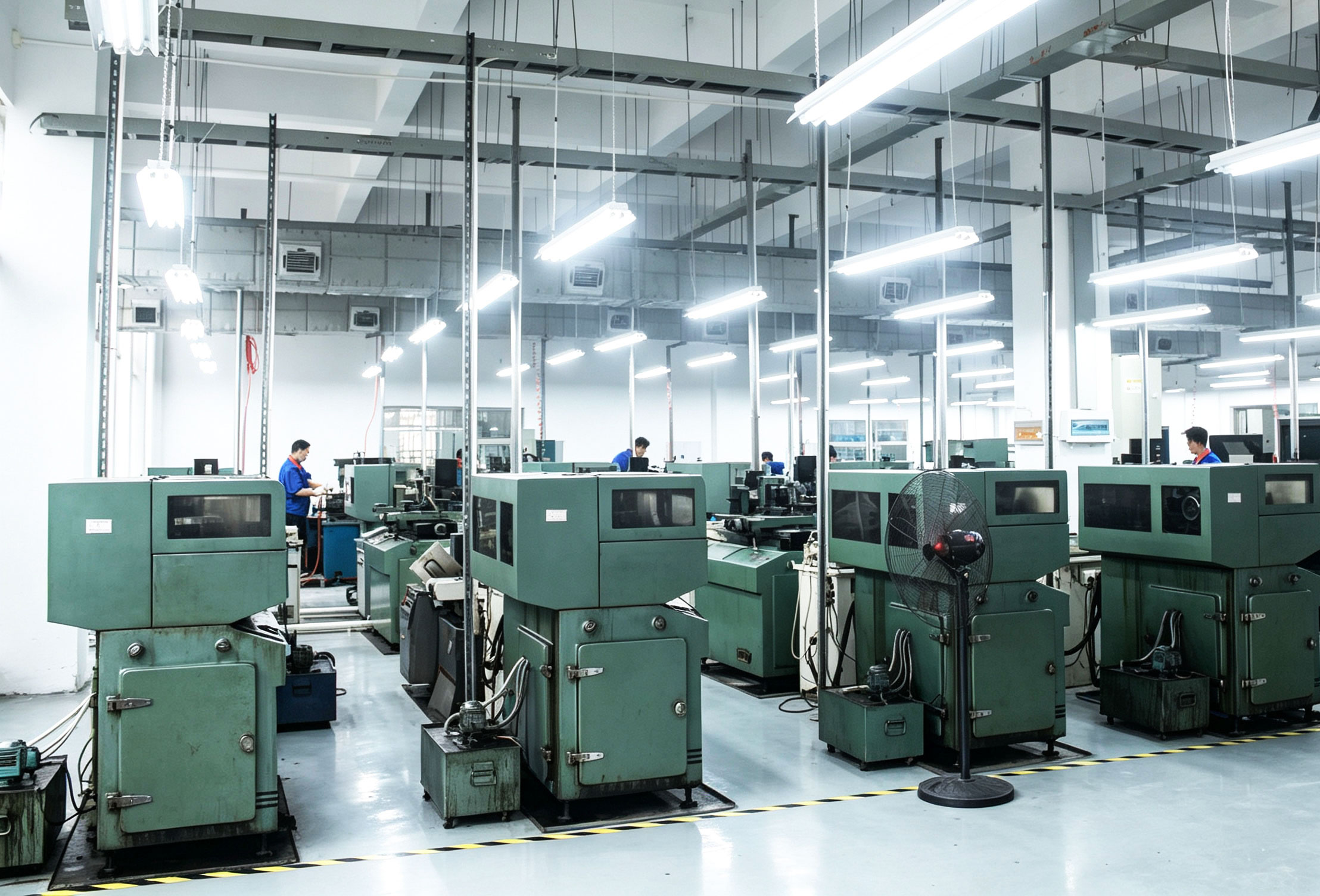
Yortho manufactures through its own facility in Zhejiang, China, with a stated annual output of 30,000,000 units and 100% product testing.
The manufacturing context behind these steps is worth checking once, at supplier qualification. Yortho operates its own factory with a 5,000 m² facility, approximately 100 employees, a 20-engineer R&D team and a stated annual output of 30,000,000 units, with 100% testing applied in production and export activity covering the EU, USA, Middle East, Australia and Africa, with products shipped to more than 70 countries. OEM and ODM services are available across the range, and customization can cover packaging, logo, tag and product.
Comparison: Appliance Combinations by Treatment Scenario
| Clinical scenario | Expansion hardware | Paired appliances | What the buyer should confirm |
|---|---|---|---|
| Pediatric Class III / anterior crossbite | I, K or G series expansion screw welded into a laboratory-fabricated expander | Orthodontic Face Masks (Adaptable Class III Mask, Standard and Small types); molar bands for anchorage; traction elastics or chains | Which expansion sizes the clinicians plan to activate; mask size and color range for pediatric acceptance |
| Growing patient with crowding or transverse discrepancy | Expansion screw in 7–15 mm, integrated into a rapid palatal expander | Orthodontic Bands Y-H6002 (medical-grade stainless steel, Roth/MBT compatible, 0.018" and 0.022"; OEM packaging available); arch wires Y-SS, Y-HN, Y-SN, Y-TMA; pliers and instruments | Band system and slot compatibility; wire sequence, including nickel-free options |
| Adult / non-growing patient | Expansion planned alongside skeletal anchorage | Orthodontic implant screws Y-OS1406 (1.4 mm × 6 mm, titanium alloy, self-tapping, hole-type or hook-type heads); power chains and lingual buttons or auxiliaries | That anchorage components and expansion hardware ship together; documentation for the destination market |
| Distributor stocking program | Multi-series expansion screw mix across all available sizes | Face masks, bands, arch wires, pliers, instruments and auxiliaries | Size mix against local case mix; OEM packaging and labeling; lead time and replenishment terms |
Compliance and Documentation Checks for Expansion Hardware
Purchasing orthodontic materials at the evaluation stage means confirming that the paperwork names the product you are buying. For Yortho expansion screws and the wider product family, the documented position is as follows.
- US market: the company's orthodontic products, including Orthodontic Expansions, are registered with the U.S. FDA under registration number 3030680214, issued by the U.S. FDA / CDRH and complying with 21 CFR Part 807.
- Quality system: the company holds ISO quality management system certification. Because ISO 13485:2016 is the standard used for medical device quality systems internationally and is recognized by the US FDA as the basis of its Quality Management System Regulation, buyers should confirm the certificate is issued against that standard.
- EU market: the company holds CE certification under the new EU MDR regulation. EU Medical Device Regulation (MDR 2017/745) is mandatory for orthodontic devices to receive CE marking.
- Export documentation: a Certificate for Exportation of Medical Products (CFS) is held for the Orthodontic Pliers scope, issued by Zhejiang Medical Products Administration, certificate number Zhehang Food & Drug Admin Medical Device Export 20250496, valid from 2025-06-09 to 2027-06-08 and applicable to the global market. This is a useful reference point for how the company documents export scope.
- Multi-market programs: where a distributor serves Australia, Brazil, Canada, Japan and the US from a single quality system, participation in the Medical Device Single Audit Program (MDSAP) is increasingly used to satisfy several jurisdictions with one audit.
- Market-specific requirements: some markets require biocompatibility documentation and nickel-free or low-allergy material options. Nickel and chromium are the primary allergens of concern in metal orthodontic components, which is why nickel-free options such as the Y-TMA titanium-molybdenum arch wire are relevant when a clinic treats nickel-allergic patients.
Frequently Asked Questions
Which certifications cover Yortho orthodontic expansion screws, and what should buyers verify?
Yortho's orthodontic products, including Orthodontic Expansions, are registered with the U.S. FDA under registration number 3030680214, issued by the U.S. FDA / CDRH and complying with 21 CFR Part 807 for the US market. The company also holds ISO quality management system certification and CE certification under the EU MDR regulation. When verifying a supplier, confirm three things: that the registration or certificate lists the product family you are importing, that the issuing authority and number are stated in full, and that any market-specific biocompatibility or nickel-free requirement is documented before shipping.
Can expansion screws be customized for OEM or ODM programs?
Yes. OEM customization is supported for the I, K and G series expansion screws, and the customization scope covers packaging, logo, tag and product. Typical minimum order quantities are 1,000 units for ODM programs and 500 units for fully custom OEM products, which covers material preparation and machine set-up. The manufacturing operation runs its own factory with a 20-engineer R&D team and provides OEM and ODM services across its orthodontic, pediatric and dental laboratory ranges.
What drives the cost of an expansion screw order, and how is a first order priced?
Expansion screw pricing is quoted per order because cost depends on the series selected, the combination of screw and pin lengths, the expansion sizes required, the depth of customization (packaging, logo, tag or product), order volume and the documentation needed for the destination market. For standard catalog products, the formal order minimum is USD 1,000 in total value, and the first order carries no MOQ requirement — a structure that lets distributors test demand before committing to volume. Custom OEM and ODM programs are quoted separately against unit-based minimums.
Can we request samples before placing a production order?
Yes. Samples are available for quality checking, and most products are supplied free of charge except for higher-cost items such as pliers and self-ligating brackets; the buyer covers courier shipping. If you have a DHL, FedEx or UPS account, samples can be shipped collect; otherwise, providing your shipping address and postcode allows a freight quote to be prepared. For an expansion program, samples that match the intended screw and pin length and expansion size are the most useful validation step before the first production order.
What is the standard production and shipping lead time?
For standard products held in stock, orders can typically be packed and dispatched within three business days after payment confirmation, and the stated production lead time for the range is 3–7 days. Transit then depends on the mode selected: express courier 3–7 business days, air freight 7–12 days, sea freight 25–40 days, and rail or overland freight 20–30 days for regions such as Europe and Central Asia. To move an expansion program forward, send your case-mix list and destination country so that sizes, packaging and documentation can be confirmed — you can also review the full range in the Yortho product catalog or request expansion screw samples directly.
Conclusion
Orthodontic expansion is a scenario problem before it is a product problem. A pediatric Class III case needs an expansion screw sized to the planned arch widening plus a correctly sized face mask; a growing patient with crowding needs the screw inside a laboratory-fabricated expander, retained by compatible molar bands and followed by the right wire sequence; an adult case needs anchorage components in the same order. The technical variables that decide whether an order works are narrow and verifiable: series, screw and pin length (12–20 mm), expansion size (7–15 mm), weldability through the standard pin design, and documentation that names the product family.
Yortho supplies expansion screws in the I, K and G series with OEM customization, and supports the surrounding appliances — bands, arch wires, face masks, pliers, instruments, lingual buttons and auxiliaries, pediatric preformed crowns and dental laboratory appliances — from its own manufacturing operation in Zhejiang, China, with FDA registration, ISO quality management system certification and CE certification under the EU MDR.

Plan your next expansion order with verified specifications
Send your case mix — pediatric, growing and adult — and the destination country, and we will confirm the expansion sizes, screw and pin lengths, packaging and documentation required. Samples of the expansion screw range are available for evaluation.
Email: info@yortho.com | WhatsApp / Tel: +86 180-5879-3627 | Website: www.yortho.com
Download the Yortho catalog (PDF) or request a quotation for the I, K and G series expansion screws.
Manufacturer: Zhejiang YO Medical Technology Co., Ltd, 5th Floor, Building 1, No. 2 Lemin Road, Xinshi Town, Deqing, Huzhou, Zhejiang Province, China 313201. Yortho is an orthodontic brand of YAM Global Limited (UK).