
Orthodontic Lingual Buttons vs Orthodontic Crimpable Hooks: A Head-to-Head Sourcing Decision
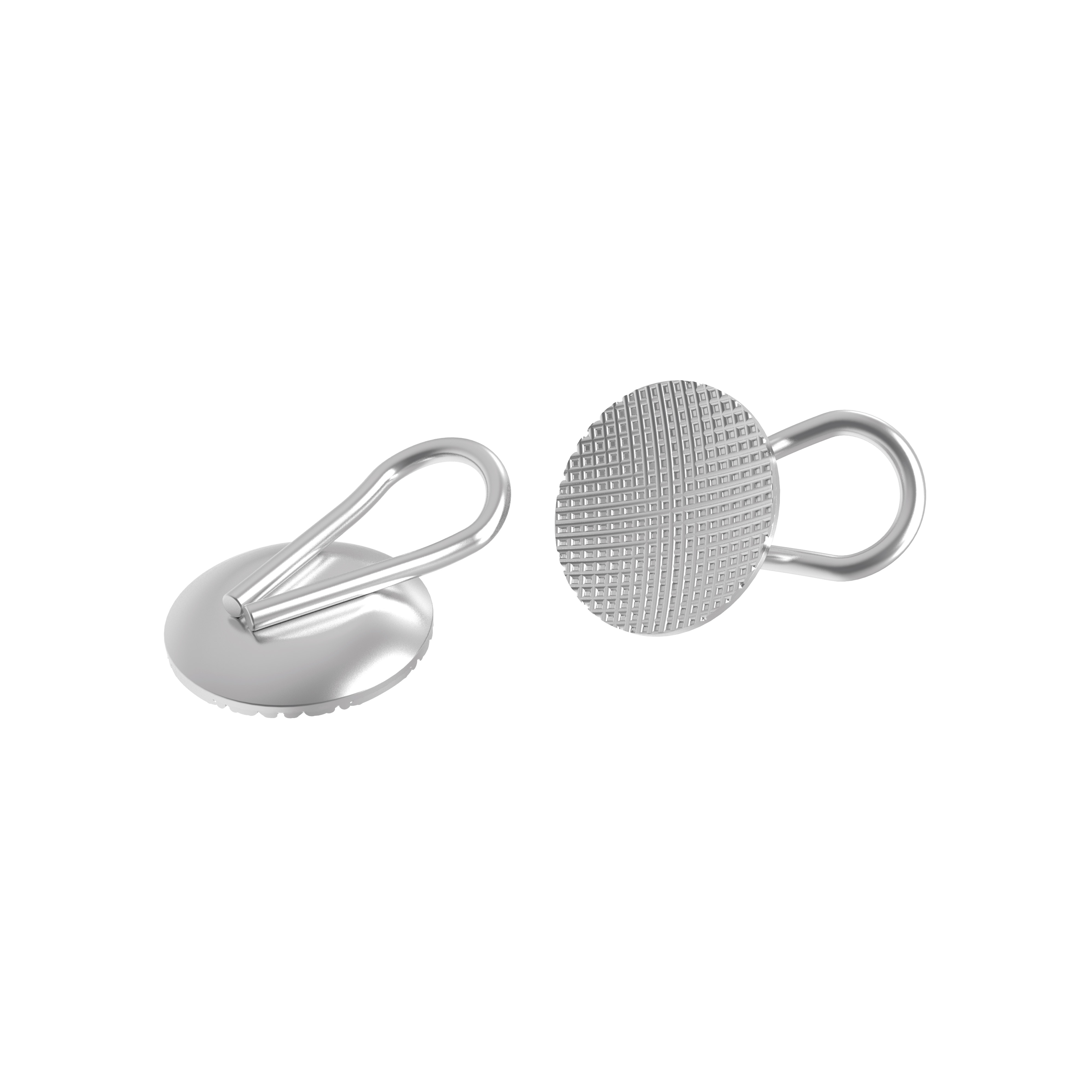
Orthodontic lingual buttons and orthodontic crimpable hooks sit beside each other on most auxiliaries order forms, and that is exactly where buyers get them wrong. They are not two variations of the same attachment. A lingual button is a bondable attachment: it is fixed to a tooth surface with adhesive and becomes an anchor point for traction from the lingual side. A crimpable hook is a wire-borne attachment: it is clamped onto an arch wire with a crimping plier and creates a traction point that moves with the wire.
That single difference determines what you must verify before stocking either item: the wire sizes you keep on the shelf, the pliers that belong in the same purchase order, the case types that drive demand, and the documentation that has to travel with the shipment. This article works through both categories as they appear in the Yortho orthodontic auxiliaries range, manufactured and exported by Zhejiang YO Medical Technology Co., Ltd, and closes with a verification checklist and a case-mix planning framework for procurement teams.
Problem Definition: Why “hooks and buttons” is not one line item
Buyers building an auxiliaries order usually group these two products because both are small, low-cost stainless steel attachments that arrive in the same carton. The grouping hides four failure modes that show up later, in the clinic rather than in the spreadsheet:
- Mix error. The order arrives with hooks where the clinician expected bondable buttons (or the reverse), because the purchase request never distinguished attachment method from traction purpose.
- Size error. Crimpable hooks are specified by crimp dimension — the Yortho range includes 0.022 in hooks and a 0.019 in mini round tube stop. If the stocked size does not match the wire in use, the hook cannot be mounted securely.
- Instrument gap. A crimpable hook requires a crimping instrument; a bondable lingual button is placed with tweezers shaped for lingual attachments. Ordering the attachment without the matching instrument creates chairside rework.
- Documentation gap. Small stainless steel auxiliaries are often left out of the regulatory pack that accompanies brackets, bands and pliers, even though they are part of the same registered device listing.
The sourcing decision is therefore not “which of the two is better.” It is: which of the two belongs in this order, in what proportion to your case mix, and with which supporting evidence.
Industry Background: Where these two attachments sit in the market
The global orthodontic supplies market was valued at USD 14.8 billion in 2024 according to Global Market Insights, while the narrower orthodontic consumables segment was valued at USD 3.1 billion in 2024 and is projected to reach USD 4.3 billion by 2030 according to Grand View Research. Auxiliaries such as hooks and buttons occupy a small share of unit spend inside that envelope, but a disproportionate share of intra-treatment interruptions when they are missing.
Two structural facts shape how buyers should plan stock. First, stainless steel remains the most widely used material for orthodontic arch wires and brackets globally (Grand View Research), and the same material basis applies to both attachment categories: Yortho lingual buttons (Y-F303, Y-F305C, Y-F307, Y-F308) and crimpable hooks (Y-F102, Y-F201, Y-F204, Y-F105L and Y-F105R) are specified in stainless steel, with one ceramic option in the button family. Second, teenagers aged 13–19 are identified as the primary growth driver for orthodontic treatment globally, and clinics and standalone practices represent over 50% of the end-user distribution channel (Grand View Research; Straits Research), which means the order pattern that matters most is the one a clinic replenishes case by case.
The fixed-appliance segment is supplied by a mix of global and specialist manufacturers — public reporting and industry reviews reference Envista Holdings (Ormco), Dentsply Sirona, 3M Unitek, Dentaurum, American Orthodontics, TP Orthodontics and G&H Orthodontics as established players across brackets, elastics and instruments. Auxiliaries such as lingual buttons and crimpable hooks are typically bought alongside these core appliances rather than in isolation, which is why buyers increasingly source the whole auxiliaries line — attachment plus the instrument that places it — from a single supplier.
Compliance expectations have moved in parallel. Medical device quality systems are expected to be certified to ISO 13485:2016 for international market access, and that standard is now explicitly recognized by the US FDA as the basis for its Quality Management System Regulation. The EU Medical Device Regulation (MDR 2017/745) is mandatory for CE marking of orthodontic devices. In practice, a buyer evaluating a lingual button supplier is also evaluating a documentation chain.
Detailed Solution: Defining each attachment and what it pairs with
Orthodontic Lingual Buttons: bonded attachments
An orthodontic lingual button is a small metal or ceramic attachment that is bonded to a lingual (tongue-side) tooth surface and used as a traction anchor. In the Yortho range:
- Y-F308 is a bondable lingual eyelet traction hook with a round base. Its design uses a mesh base for firm bonding and a closed ring that prevents the traction element from slipping, with a smooth finish intended for patient comfort.
- Y-F303 is classified as a bondable lingual button with a round base and an 80# mesh base, constructed from stainless steel.
- Y-F307 is a bondable lingual eyelet with a round base in stainless steel.
- Y-F305C is a ceramic bondable lingual button with a round base, for cases where an aesthetic or non-metal attachment is preferred.
- Y-F322 is a round-base lingual button with a hole, listed within the Orthodontic Auxiliaries group.
The functional logic is straightforward: because the attachment is bonded, it can be positioned on almost any lingual surface dictated by the treatment plan, and the traction vector comes from an elastic chain or ligature running to that point. Lingual chain (Y-F314), also stainless steel, is the companion item that supplies multi-angle traction from such attachment points.
Orthodontic Crimpable Hooks: wire-borne attachments
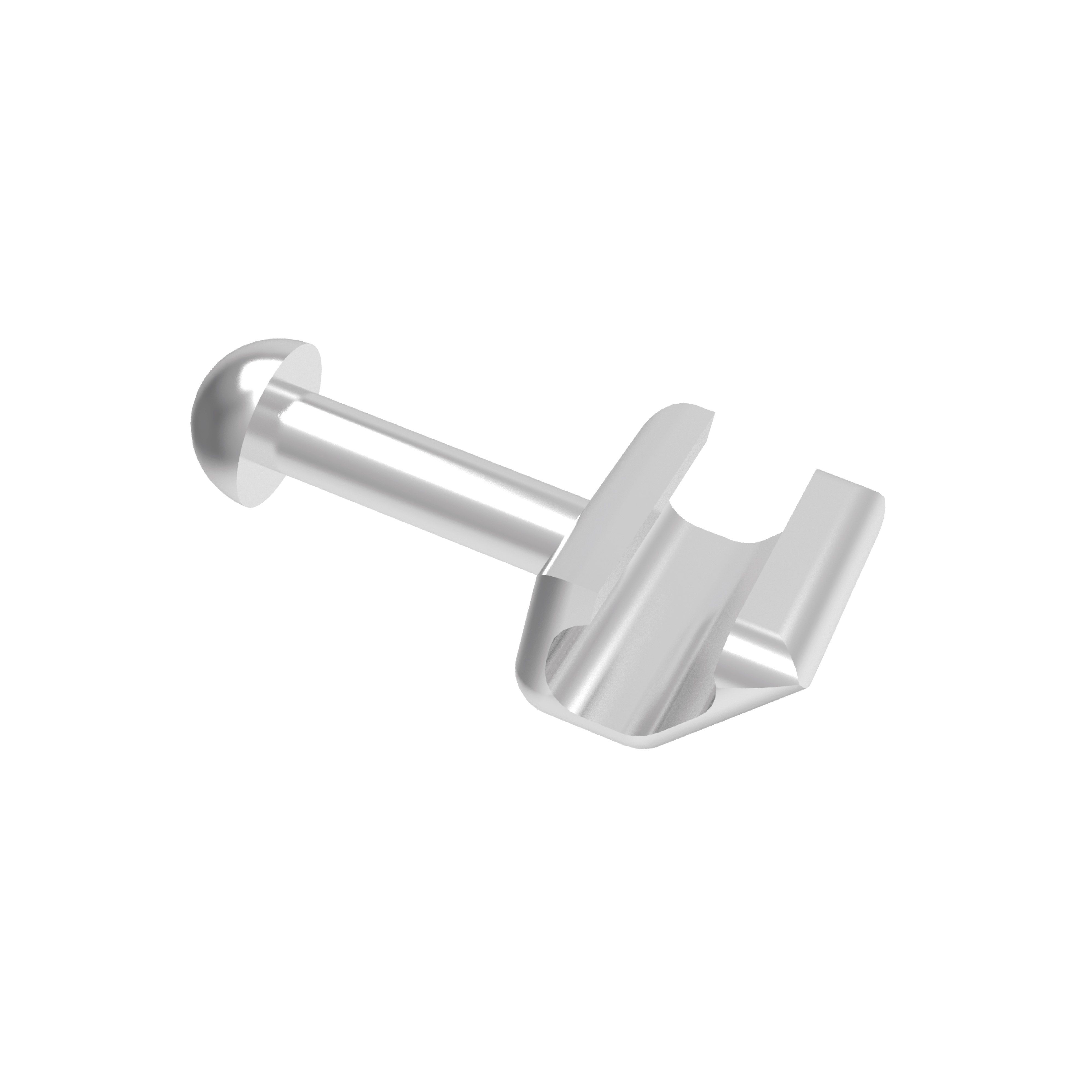
A crimpable hook is a shaped stainless steel attachment that is crimped onto an arch wire. Because it grips the wire, it can be repositioned along the wire as treatment progresses, and it creates traction and root-control points without adding a bonded attachment to a tooth.
- Y-F102 is a crimpable hook specified at 0.022 in, medium 2.4 mm type, with a C-slot for fast, firm mounting and a rounded stem end. The surface is polished for low friction.
- Y-F201 is a crimpable hook specified at 0.022 in, 2.4 mm type, in the same stainless steel material family.
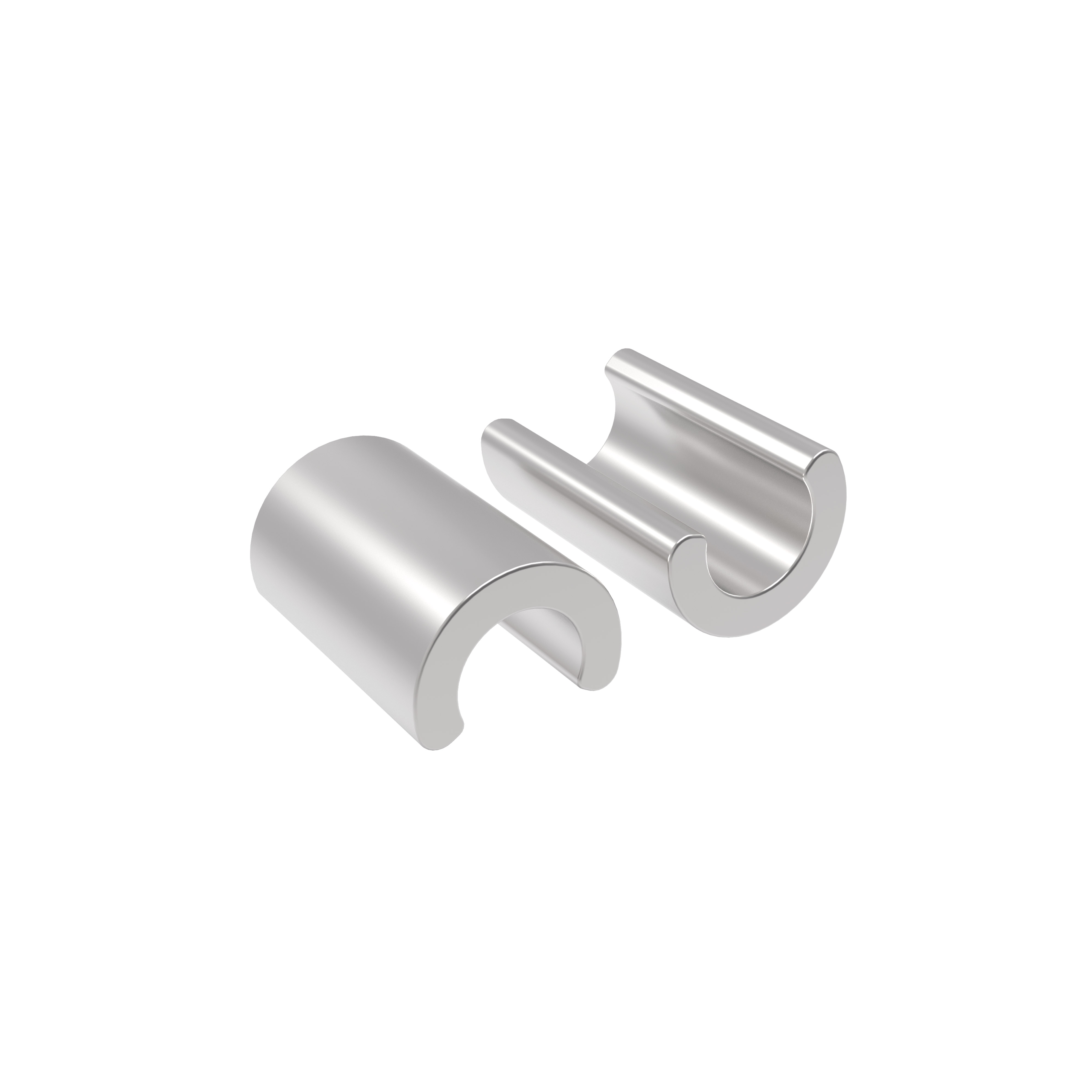
- Y-F204 is a mini round tube stop specified at 0.019 in. Its quick-clip C-shape is designed for easy mounting, with a polished low-friction surface and firm anti-slip clamping to assist traction and root control.
- Y-F105L and Y-F105R are spiral crimpable hooks at 0.022 in, supplied as left and right types at 8.7 mm — a paired configuration rather than a single symmetric hook.
Note the practical consequence of that list: the crimpable hook family is not one SKU. It is a small matrix of crimp sizes (0.019 in and 0.022 in), geometries (standard, mini tube stop, spiral) and handedness (left and right spiral).
How each one pairs with Orthodontic Arch Wires
Lingual buttons do not interact with wire diameter: they are bonded, so the arch wire in the case is irrelevant to whether the button fits. Crimpable hooks are the opposite. Their entire value depends on matching the crimp dimension to the wire actually in the patient’s mouth, which makes wire inventory a direct input to hook selection.
Yortho’s arch wire range covers the sizes that most fixed-appliance protocols use: the Y-SS stainless steel arch wire is available in 0.012 in, 0.014 in, 0.016 in, 0.018 in and 0.020 in, in round and rectangular cross-sections, upper and lower arch types, and arch forms including Square, Natural, Damon, Oval, Europa-I and Broad, packed 10 pieces per pack. The Y-SN super-elastic NiTi wire and the Y-HN heat-activated NiTi wire share the same size and arch-form range, with pseudoelastic behaviour, low stiffness and high springback; the Y-TMA titanium-molybdenum alloy wire is available from 0.012 in to 0.018 in.
Verification point. The listed crimpable hook sizes are 0.019 in and 0.022 in. The listed Yortho arch wire sizes run from 0.012 in to 0.020 in. Before you commit a stocking quantity, confirm with the supplier which crimpable hook size corresponds to the wire gauges used in your treatment protocol, and validate it on a physical sample crimped with the plier you intend to buy. This is a one-sample check that prevents a season of unusable stock.
How each one pairs with Orthodontic Bands
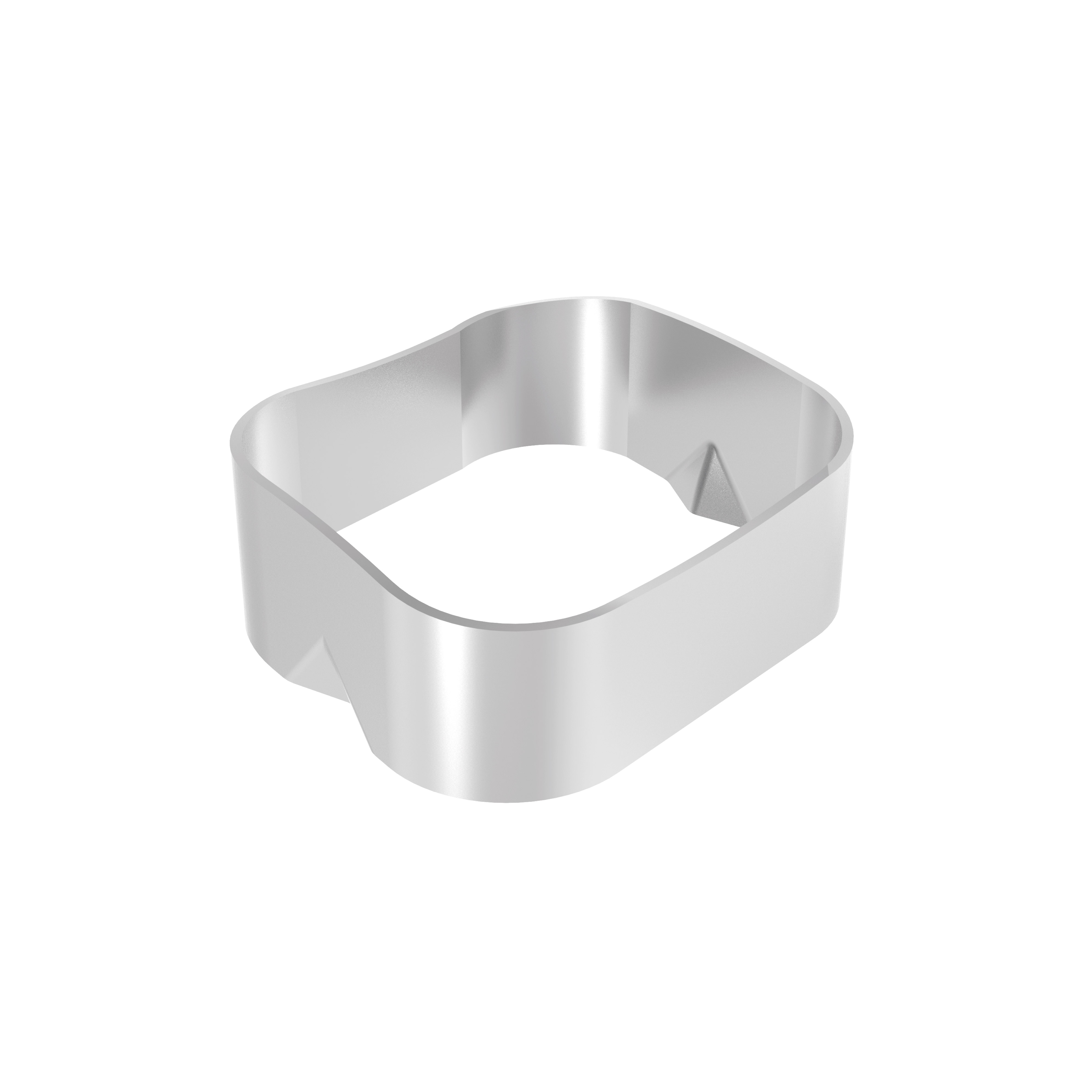
Orthodontic bands matter to this decision because they define what is already on the posterior teeth. The Y-H6002 first molar plain rough band is manufactured from medical-grade stainless steel, anatomically shaped by CAD design, with rolled and polished edges, permanent laser marking for size identification, and a patented textured inner surface reported to boost bonding strength by 30 percent. Pre-welded bands integrate buccal tubes firmly, which simplifies clinical operations, and the band is compatible with Roth and MBT systems in 0.018 in and 0.022 in slot specifications, with pediatric bands in smaller sizes for primary teeth and early treatment. OEM packaging customization is available for this product.
In sourcing terms: if your order already includes pre-welded molar bands with integrated buccal tubes, the traction demand on the posterior segment is partly served by the band assembly. Crimpable hooks then serve mid-arch and anterior traction points along the wire, while lingual buttons serve attachments that must sit on a lingual surface rather than on the banded molars.
How each one pairs with Orthodontic Instruments
This is the pairing buyers most often miss, and it is the easiest to fix inside a single purchase order.
- For crimpable hooks: the crimpable hook plier, model Y-Q6026, is made of stainless steel with a hardness of HRC 50–55 and a maximum sterilization temperature of 180°C. It is the instrument that converts a loose hook into a fixed wire attachment.
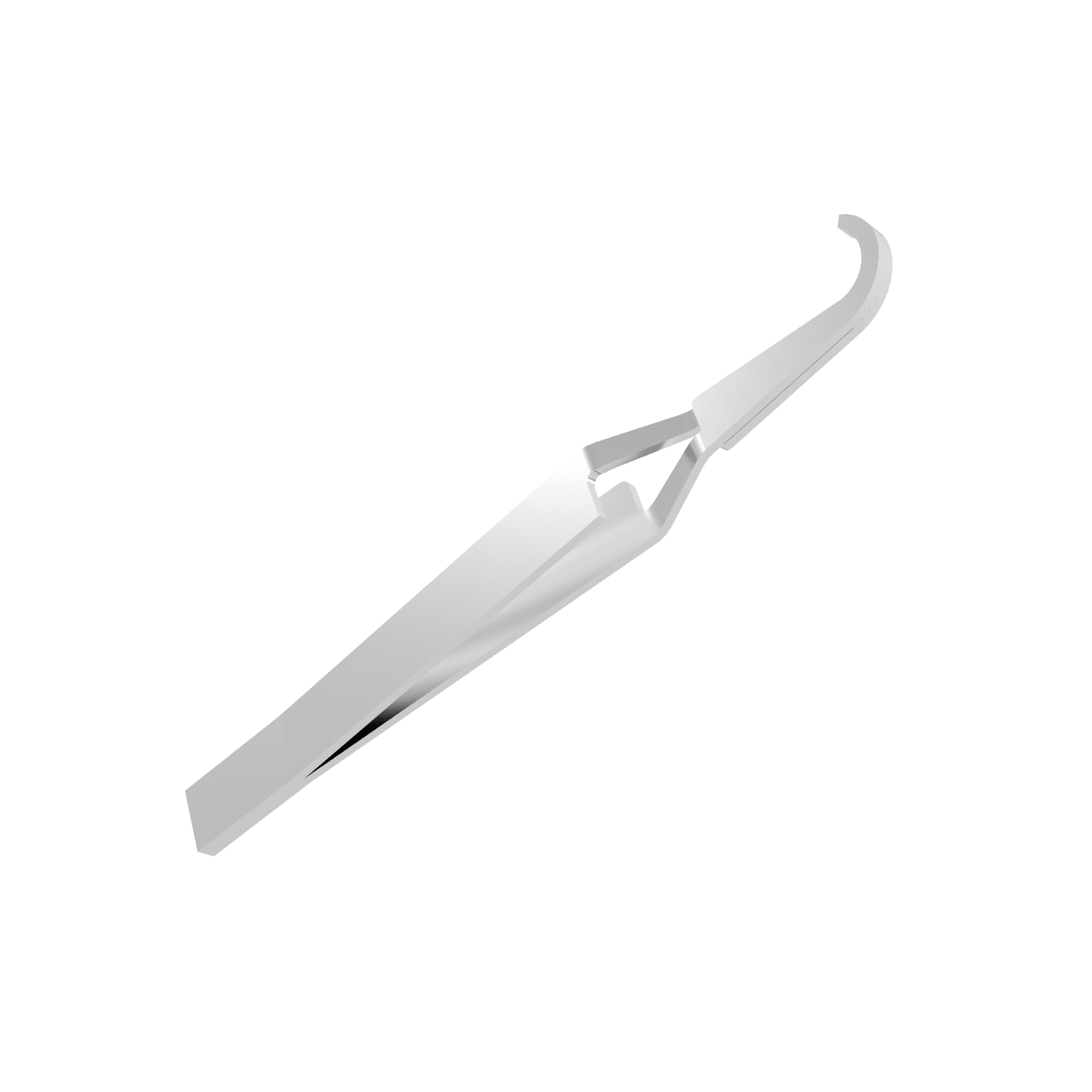
- For lingual attachments: the lingual brackets tweezer, model Y-X201, has a curved tip and a clamping range suitable for lingual brackets, made of sterilization-resistant medical-grade steel and autoclavable up to 134°C. Its stated purpose is accurate bracket placement with stable non-slip clamping and an ergonomic handle that reduces operating fatigue.
- For posterior access: the tube tweezer, model Y-X203, uses a long tip with a clamping range suitable for posterior brackets and buccal tubes.
- For wire work around hooks: the light wire cutter 0°, model Y-Q8001, is designed to sever fine wires up to 0.012 in (0.30 mm) with slim tapered tips, at HRC 58–63 and a maximum sterilization temperature of 180°C. Yortho states CE and FDA registration compliance with 21 CFR Part 807 for this plier, with OEM and ODM customization available.
One operational detail worth carrying into your sterilizer planning: the Y-X201 tweezer is rated to 134°C, while the plier range is rated to 180°C. If your reprocessing protocol has a single high-temperature cycle, the two product families should be checked against it before large quantities are ordered.
Documentation to verify before either item is stocked
Two certification paths are relevant to these two product families, and both are recorded in Yortho’s compliance file:
- US FDA registration. The FDA registration number is 3030680214, issued by the U.S. FDA / CDRH under the standard 21 CFR Part 807, issued 2024-02-27 and registered through 2026-12-31. The registered product list includes the lingual button models Y-F303, Y-F305C, Y-F307 and Y-F308, the crimpable hook models Y-F102, Y-F201, Y-F204, Y-F105L and Y-F105R, and the wider Yortho range covering brackets, bands, arch wires, pliers, instruments, expansions, face masks, mirrors, power chains, elastic ligatures and pediatric crowns.
- Certificate for Exportation of Medical Products (CFS). Certificate number Zhehang Food & Drug Admin Medical Device Export 20250496, issued by the Zhejiang Medical Products Administration, applies to the Orthodontic Pliers for the global market, issued 2025-06-09 and valid to 2027-06-08.
Beyond the certificates themselves, Yortho states that its products comply with international medical standards and hold ISO quality management system certification and CE certification under the new EU MDR regulation. Two external standards are worth referencing when you build the verification request: ISO 13485:2016 for device quality systems, and EU MDR 2017/745 as the mandatory route to CE marking for these device types.
Material and biocompatibility screening also belongs in this step. Nickel and chromium are identified in industry literature as the primary allergens of concern in metal orthodontic components, and the application requirements for orthodontic products note biocompatibility and, for some markets, nickel-free or low-allergy material preferences accompanied by compliance certification documents. Buyers serving nickel-sensitive patient populations should confirm the material documentation for the specific models they stock — and should note that a ceramic option exists in the button family (Y-F305C), while the crimpable hook range is stainless steel throughout.
Step-by-Step Breakdown: A seven-step sourcing sequence
The sequence below converts the comparison into an order. It is written for a buyer who is stocking both categories for the first time, or re-basing an existing order.
- Classify by attachment method first, purpose second. Split the purchase request into “bonded” (lingual buttons, lingual eyelets, lingual chains) and “wire-borne” (crimpable hooks, mini round tube stops, spiral hooks). Purpose alone — “traction” — does not distinguish them.
- Pull your case log, not your order history. Count how many of your last 50 to 100 cases required a bonded lingual attachment for traction, and how many required a traction or root-control point on the wire. Order history tells you what you bought; the case log tells you what the clinical protocol actually consumed.
- Fix the crimp size against the wire inventory. Identify which arch wire gauges are used in traction and space-closure stages (for example within the 0.012 in to 0.020 in Y-SS, Y-SN, Y-HN and 0.012 in to 0.018 in Y-TMA range), then confirm the matching crimpable hook size (0.019 in or 0.022 in) with the supplier before ordering quantities.
- Add the placement and crimping instruments to the same order. Crimpable hooks need the crimpable hook plier Y-Q6026; lingual attachments are handled with the lingual brackets tweezer Y-X201; posterior work may need the long-tip tube tweezer Y-X203; fine wire trimming around new hooks calls for the light wire cutter Y-Q8001. Ordering attachment and instrument together removes the most common cause of a second emergency shipment.
- Assemble the documentation bundle per destination market. Request the FDA registration entry (number 3030680214, 21 CFR Part 807), the CFS for pliers where relevant, ISO and CE documentation under EU MDR, and material declarations. Confirm the validity dates at the time of order rather than relying on a file from a previous shipment.
- Validate on samples, with your own plier and your own wire. Crimp a sample hook onto the wire gauge you use, using the plier you intend to stock. This is the only step that verifies the crimp interface end to end.
- Set the inventory split and the reorder trigger. Translate the case-log ratio into opening stock quantities, then define a reorder trigger by consumption weeks rather than by calendar quarter, because auxiliaries are consumed per case, not per month.
Use Cases: Three order profiles that pull the two categories differently
Profile A — Practices handling impacted teeth and lingual traction. These cases depend on bonded attachment points that can be positioned where the clinician needs them, which pushes lingual buttons and lingual eyelets to the front of the order. The natural companions are lingual chain for multi-angle traction and the long-tip and curved-tip tweezers for placement. Crimpable hooks remain in stock as a secondary position, because wire-side traction points are still used during the alignment and leveling stages.
Profile B — High-volume fixed-appliance practices focused on space closure. Here the dominant need is a traction point on the wire that can be repositioned as mechanics change. That makes crimpable hooks the volume item — typically the 0.022 in standard hook and the spiral left/right pair for asymmetric mechanics — with the crimpable hook plier as the matching tool. Lingual buttons are stocked in smaller quantities for the minority of cases requiring a bonded anchor.
Profile C — Pediatric and mixed-phase clinics. Pediatric treatment brings smaller anatomy and shorter treatment windows into the mix. Pediatric bands with smaller sizes are available for primary teeth and early treatment, and the wider pediatric line includes preformed pediatric crowns and matching instruments. Auxiliary consumption here is driven more by appliance type than by wire mechanics, so buttons and hooks are stocked in modest quantities with the 0.019 in mini round tube stop often the more frequently used crimpable item.
Case-Mix and Inventory Planning Checklist
| Planning item | What to pull from your own data | Why it changes the order |
|---|---|---|
| Bonded vs wire-borne split | Case count by attachment requirement over the last 50–100 cases | Sets the base ratio between lingual buttons and crimpable hooks in the auxiliaries line |
| Crimp size distribution | Which wire gauges are used during traction and closure stages | Determines whether the 0.019 in or 0.022 in hook dominates, or both are needed |
| Handedness demand | Frequency of asymmetric mechanics | Decides whether spiral left/right hooks (Y-F105L / Y-F105R) earn a permanent position |
| Instrument pairing | Number of chairs and existing plier and tweezer inventory | Drives whether crimpable hook pliers and lingual tweezers are ordered together with the attachment |
| Sterilization compatibility | Your sterilizer cycle temperature | Y-X201 is rated to 134°C; plier models are rated to 180°C |
| Documentation set | Destination market and importer requirements | Determines whether FDA, CFS, ISO and CE documents must accompany the shipment |
| Private-label demand | Whether the product is resold under another brand | OEM customization covers package, logo, tag and product on the Yortho side |
| Reorder trigger | Average weekly consumption of each attachment | Prevents a mid-treatment shortage on low-cost but clinically critical items |
Comparison Table: Lingual buttons vs crimpable hooks at a sourcing level
| Sourcing dimension | Orthodontic Lingual Buttons | Orthodontic Crimpable Hooks |
|---|---|---|
| Attachment method | Bonded to a lingual tooth surface using a mesh base | Crimped onto an arch wire using a C-shape or C-slot |
| Representative models | Y-F303 (80# mesh base), Y-F307, Y-F308, Y-F305C (ceramic), Y-F322 | Y-F102 and Y-F201 (0.022 in), Y-F204 mini round tube stop (0.019 in), Y-F105L / Y-F105R spiral (0.022 in, left and right) |
| Material | Stainless steel; ceramic for Y-F305C | Stainless steel |
| Size logic | Round base geometry; base mesh specification (for example 80#) | Crimp dimension (0.019 in or 0.022 in) plus hook type and length (for example 2.4 mm, 8.7 mm) |
| Dependency on wire size | None — the attachment is bonded, not mounted on the wire | Direct — the crimp size must match the wire in use |
| Interaction with bands | Provides adhesive anchors where a banded molar cannot serve the traction vector | Adds traction points along the wire between banded and bonded units |
| Placement instrument | Lingual brackets tweezer Y-X201 (curved tip, autoclavable to 134°C) | Crimpable hook plier Y-Q6026 (HRC 50–55, max sterilization 180°C) |
| Repositioning profile | Position set at bonding; a bonded attachment is a fixed point for the traction phase | Mounted on the wire, so the traction point can be adjusted along the wire as mechanics change |
| Regulatory coverage | Included in the FDA registered product list under registration 3030680214 | Included in the same FDA registered product list under registration 3030680214 |
| Primary stocking driver | Volume of cases needing bonded lingual traction | Volume of cases needing wire-based traction and root control, weighted by wire gauges used |
FAQ
Are lingual buttons and crimpable hooks covered by the same regulatory documentation?
For the Yortho models listed here, yes. Both product families appear on the same FDA registered product list under registration number 3030680214, issued by the U.S. FDA / CDRH under the standard 21 CFR Part 807, issued 2024-02-27 and registered through 2026-12-31. The listed lingual button models include Y-F303, Y-F305C, Y-F307 and Y-F308, and the listed crimpable hook models include Y-F102, Y-F201, Y-F204, Y-F105L and Y-F105R. A separate Certificate for Exportation of Medical Products (number Zhehang Food & Drug Admin Medical Device Export 20250496, issued by the Zhejiang Medical Products Administration, 2025-06-09 to 2027-06-08) applies to orthodontic pliers for the global market. Because validity dates matter to importers, buyers should request the current certificate copies and confirm the application scope for their destination market at the time of order.
Can both attachment types and their instruments be supplied in one auxiliaries order, with customization?
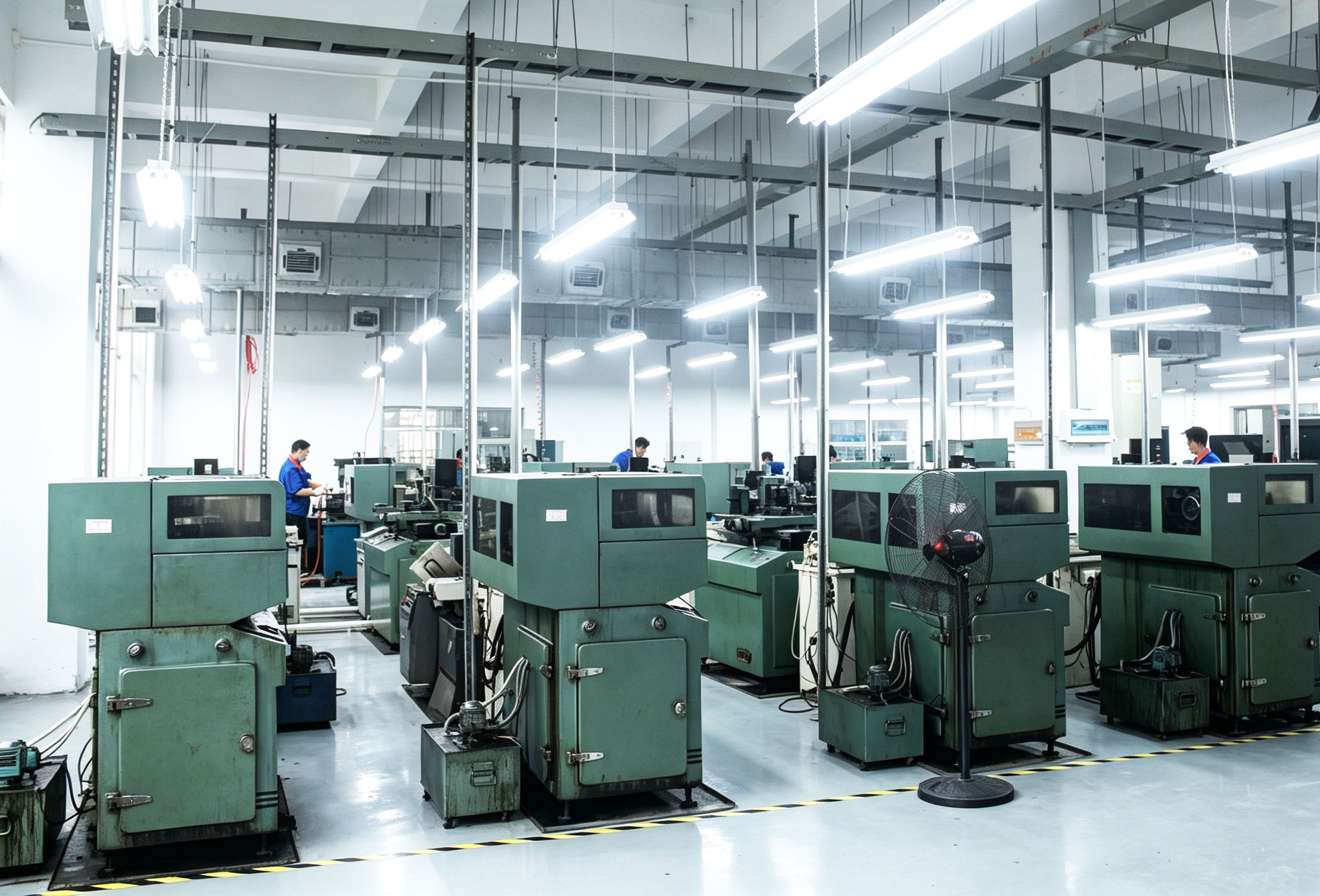
Yes. Zhejiang YO Medical Technology Co., Ltd manufactures and exports the full auxiliaries line, including lingual buttons, crimpable hooks, lingual chain, orthodontic pliers and hand instruments such as tweezers, positioning gauges, force gauges and archwire formers. OEM and ODM customization is available and covers package, logo, tag and product. OEM packaging customization is specifically available on the Y-H6002 orthodontic band. The manufacturing base is a 5,000 m² facility with 100 employees, a 20-engineer R&D team and an annual output of 30,000,000 units, with an export ratio of 80 percent across the EU, USA, Middle East, Australia and Africa, and products supplied to more than 70 countries. Quality control is stated as 100 percent testing.
What order quantities and payment terms apply?
For standard products, the formal order minimum is USD 1,000 in total value, and the first order carries no MOQ requirement. For customized production, the stated MOQ is 500 units for OEM (fully custom products) and 1,000 units for ODM (adapting an existing design with your branding or minor feature changes). On payment, the standard term is 100 percent T/T in advance; for orders with a total value above USD 10,000, a 30 percent deposit to start production with the 70 percent balance before shipment is accepted. Small sample orders can also be settled by PayPal or Ali-Pay in RMB. The published production capability lists a monthly capacity of 5,000 units.
Can we validate samples before placing a stocking order?
Yes. Samples are offered for quality checking. Most products are provided free of charge, with the exception of some higher-cost items such as pliers and self-ligating brackets; the buyer covers courier shipping. If you hold your own DHL, FedEx or UPS account, the shipment can be sent freight collect. For lingual buttons and crimpable hooks specifically, the most useful sample test is a crimp trial: mount the hook on the wire gauge you actually use, with the plier you intend to stock, before confirming quantities.
What is the lead time, and how do we start?
For standard products held in stock, Yortho states that orders can be packed and dispatched within 3 business days after payment confirmation, and its published production capability lists a 3–7 day lead time. Transit time depends on the shipping method: express courier typically 3–7 business days, air freight 7–12 days, sea freight 25–40 days and rail or overland freight 20–30 days for regions such as Europe and Central Asia. Send your destination country and postcode and the team will confirm the routing. To move this forward, request a sample pack that combines a bondable lingual button, a crimpable hook, the matching plier and the arch wire gauge you use, or ask for a quotation covering both attachment families and their placement instruments at info@yortho.com or via WhatsApp at +86 180-5879-3627.
Conclusion: Stock the attachment, the instrument and the evidence together
Lingual buttons and crimpable hooks are not competing versions of one product; they are two different attachment systems that answer two different clinical requirements. The button is bonded and creates a fixed anchor on a tooth surface. The hook is crimped and creates a movable traction point on the wire. Sourcing them correctly means separating the bonded and wire-borne lines in the purchase request, matching the crimp dimension to the wire gauges you actually use, ordering the placement instrument with the attachment, and shipping both with the regulatory documentation that matches the destination market.
That approach also makes the order auditable. A distributor supply record covering 5,000 units over a one to three year period reports favourable clinical feedback, consistent product performance and compliance with the clinical requirements of local hospitals — and orders that combine attachments, instruments and documentation are the orders that stay consistent, because nothing arrives late and nothing arrives undocumented. Yortho supplies both families from a single manufacturing base with a 3–7 day published lead time and OEM/ODM capability, which removes the coordination cost of sourcing a button from one supplier and its plier from another.
Next step: request the auxiliaries pack
Ask for a sample set containing a bondable lingual button (Y-F308), a crimpable hook (Y-F102), the mini round tube stop (Y-F204) and the crimpable hook plier (Y-Q6026), together with the FDA registration and CFS documentation for your market. Email info@yortho.com, message WhatsApp +86 180-5879-3627, or download the full product brochure: Yortho product catalogue (PDF). Website: www.yortho.com.
Have Questions or Need More Details?
Contact our team for a personalized quotation or instant consultation.
Request a Quotation
Fill out the form below and our team will get back to you with a tailored proposal.
WhatsApp Direct Chat
Prefer to chat in real-time? Message us on WhatsApp for instant assistance & quick answers.
- Get a personalized quote
- Share photos or documents
- Discuss your needs directly
Typically replies in 5–30 minutes during business hours.