
Orthodontic Materials: Solving the Mismatch Between Arch Wires, Pliers, and Auxiliaries
A clinic can order brackets, arch wires, pliers, and auxiliaries from four different lists and still end up with an incomplete chairside setup. The mismatch usually appears at the point of use: a wire that does not match the planned slot sequence, a plier that cannot cut or hold the selected wire, or an auxiliary that has no compatible attachment. This article treats orthodontic materials as a coordinated system rather than a collection of separate SKUs. Yortho is an orthodontic brand under YAM Global Limited, with its own factory in Asia and a portfolio covering brackets, buccal tubes, molar bands, pliers, hand instruments, auxiliaries, pediatric crowns, elastic ligatures, and arch wires; OEM and ODM services are available.
Problem Definition: The Mismatch Is a System Gap, Not a Single Product Defect
In orthodontic procurement, the word mismatch describes a compatibility gap across four interfaces: the bracket slot and the arch wire, the plier and the wire or auxiliary, the auxiliary and the attachment point, and the clinical workflow and the sterilization or reorder loop. A product can meet its own specification and still fail the setup if the adjacent item was selected from a different logic.
Typical symptoms are easy to recognize. A 0.022-inch slot system is paired with a wire sequence planned for a different slot. A heavy wire is placed beside a cutter rated for a smaller diameter. A crimpable hook is ordered without the crimping plier needed to seat it. A lingual button is selected without checking whether the bonding base and ligature access fit the intended traction method. These are not abstract risks; they are checklist failures that appear as chairside friction, extra inventory, and repeated small orders.
Industry Background: Why Coordinated Selection Matters More Than Ever
The global orthodontic supplies market was valued at USD 14.8 billion in 2024, according to Global Market Insights. The narrower orthodontic consumables market was valued at USD 3.1 billion in 2024 and projected to reach USD 4.3 billion by 2030, according to Grand View Research. Grand View Research also reports that the brackets segment dominated orthodontic consumables industry revenue in 2024. These categories are commercially linked, but procurement teams often buy them through separate lines.
Material choice adds another layer. Stainless steel remains the most widely used material for orthodontic arch wires and brackets globally, according to Grand View Research. Nickel-Titanium arch wires are preferred for shape memory and super-elasticity properties, according to G&H Orthodontics technical specifications. The practical implication is not that one material replaces another; it is that the wire sequence, slot size, and plier capability must be planned together.
Compliance expectations also shape the setup. ISO 13485:2016 is the medical device quality management system standard used for international market access. EU Medical Device Regulation 2017/745 is mandatory for orthodontic brackets to receive CE marking. In the US, the FDA classifies orthodontic brackets as Class II medical devices requiring 510(k) clearance. In its company profile, Yortho states that it holds FDA registration, ISO quality management system certification, and CE certification under the new EU MDR regulation. Buyers should still verify the exact certificate scope and destination-market documents rather than assuming one certificate covers every product and every country.
Detailed Solution: A Category-Level Compatibility Checklist
1. Lock the slot, system, and anchor components first
The bracket and tube system sets the boundary for every wire and auxiliary decision. Yortho lists metal orthodontic brackets and self-ligating brackets in 0.018-inch and 0.022-inch slots, with Roth, MBT, and edge-wise systems, and with hook or no-hook options. The Y-M2 self-ligating bracket is supplied 20 pieces per set and carries a tooth identifier on the bracket base. Buccal tubes Y-T1 and Y-T2 are listed for Roth and MBT systems, low or high torque, 0.018-inch and 0.022-inch slots, and 1st or 2nd molar use; Y-T1 uses an 80-mesh bonding base. Orthodontic bands Y-H6002 are available in Roth, MBT, and edge-wise systems with low or high torque, and pre-welded bands integrate buccal tubes.
This first step prevents a common mismatch: buying a wire sequence before confirming whether the chair uses a 0.018-inch or 0.022-inch slot, and whether the prescription is Roth, MBT, or edge-wise. The same logic applies to pre-welded bands; the band, tube, and slot must be read as one item.
2. Build the arch wire sequence by size, form, and alloy
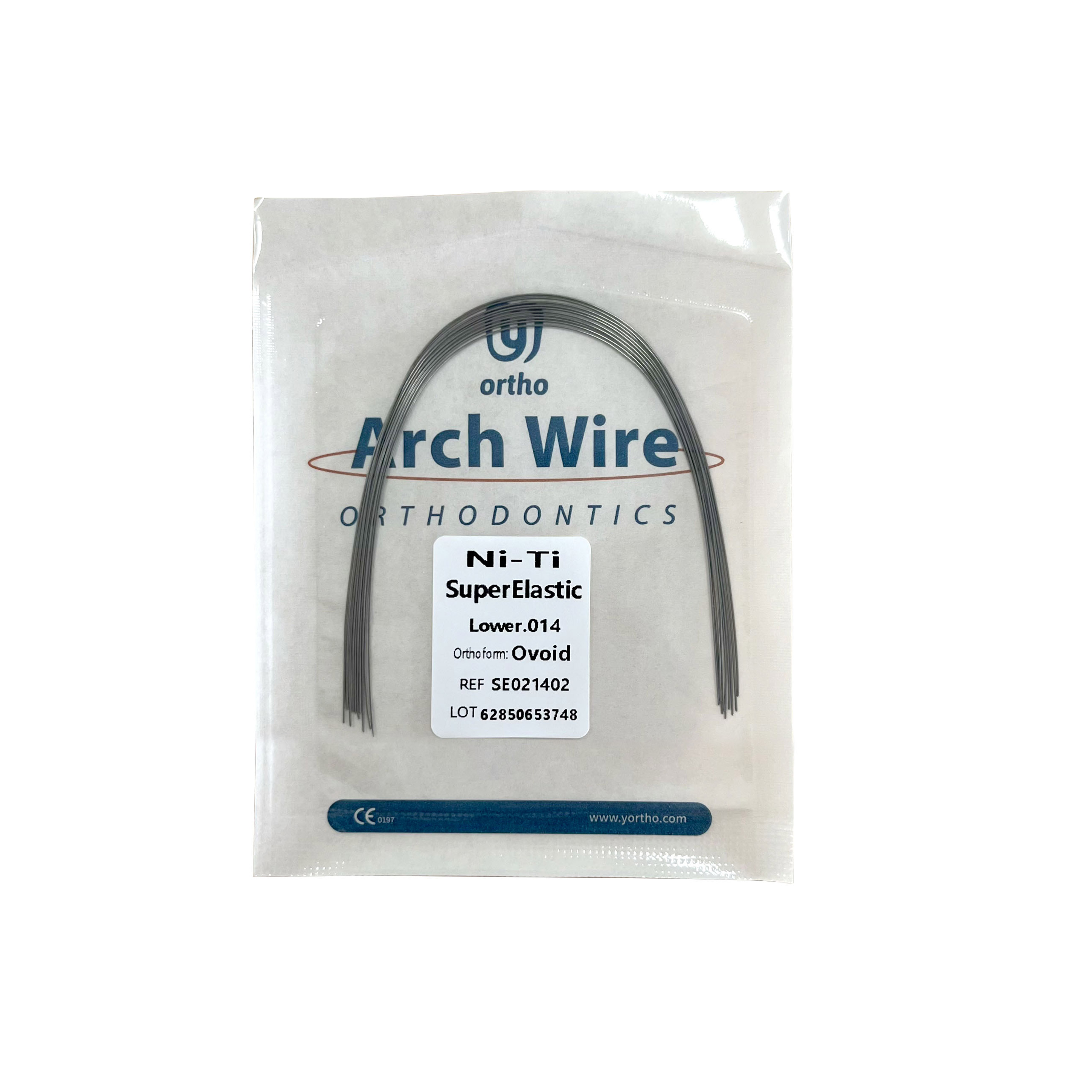
Yortho lists four arch wire families: Y-SN super-elastic NiTi, Y-HN heat-activated NiTi, Y-SS stainless steel, and Y-TMA titanium-molybdenum alloy. Y-SN and Y-HN are listed in 0.012-inch to 0.020-inch sizes, with square, natural, Damon, oval, Europa-I, and broad arch forms; round and rectangular cross-sections; and upper or lower arch types. Y-SS follows the same size and form logic. Y-TMA is listed in 0.012-inch to 0.018-inch sizes with natural, Damon, and oval forms. The Y-SN product description defines NiTi arch wires as orthodontic archwires made from nickel-titanium alloys with pseudoelastic behavior, allowing light forces on teeth while reducing the frequency of archwire changes.
For procurement, the useful control is a wire matrix: stage, alloy, size, cross-section, arch form, and upper or lower. Without that matrix, a clinic may hold a broad inventory but still lack the one size needed for a planned visit. The matrix also makes it easier to match the wire to the plier. A rectangular wire and a round wire of the same nominal size can behave differently at the cutter, and a heat-activated NiTi wire may call for a different handling approach than stainless steel.
3. Match pliers to the wire diameter and the chairside task
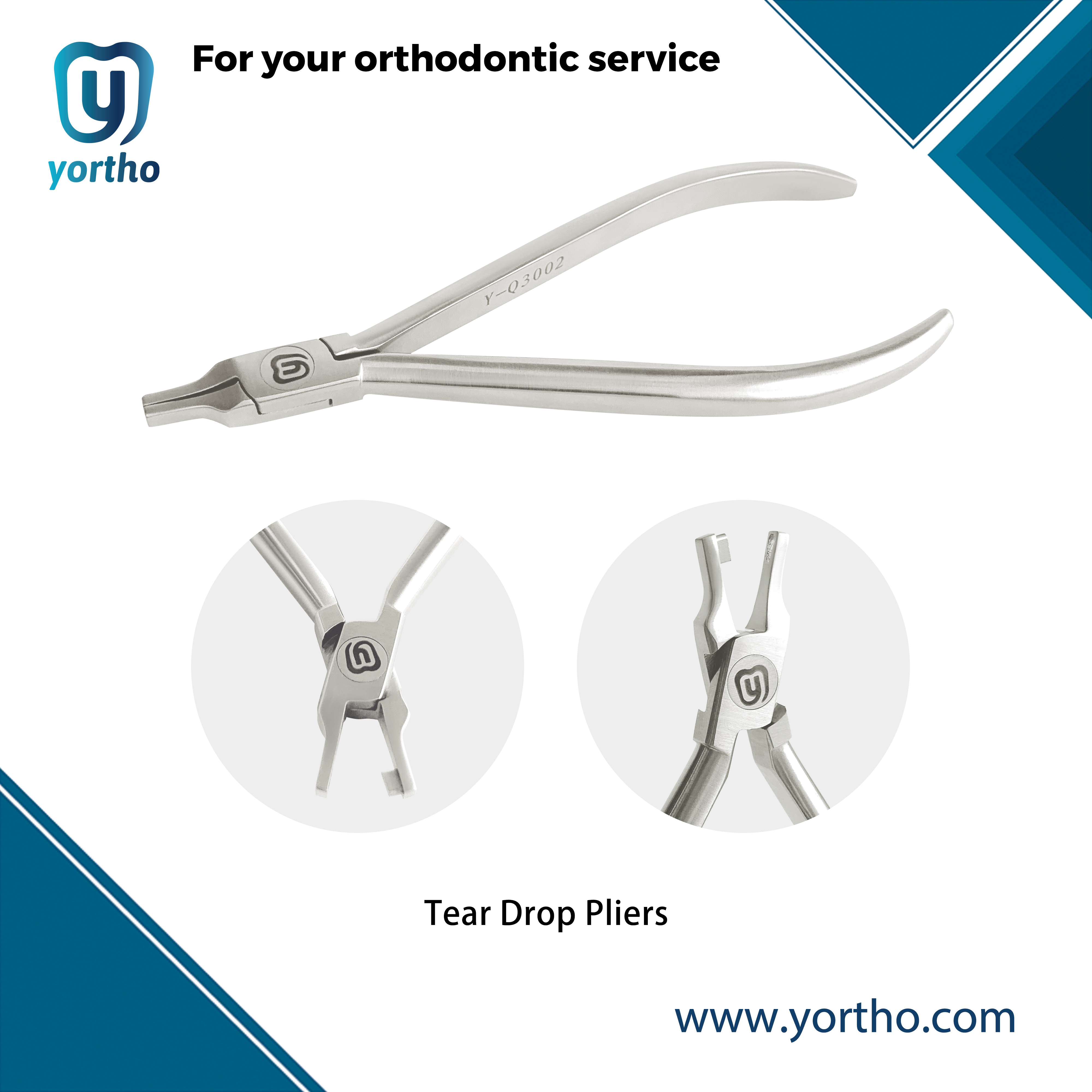
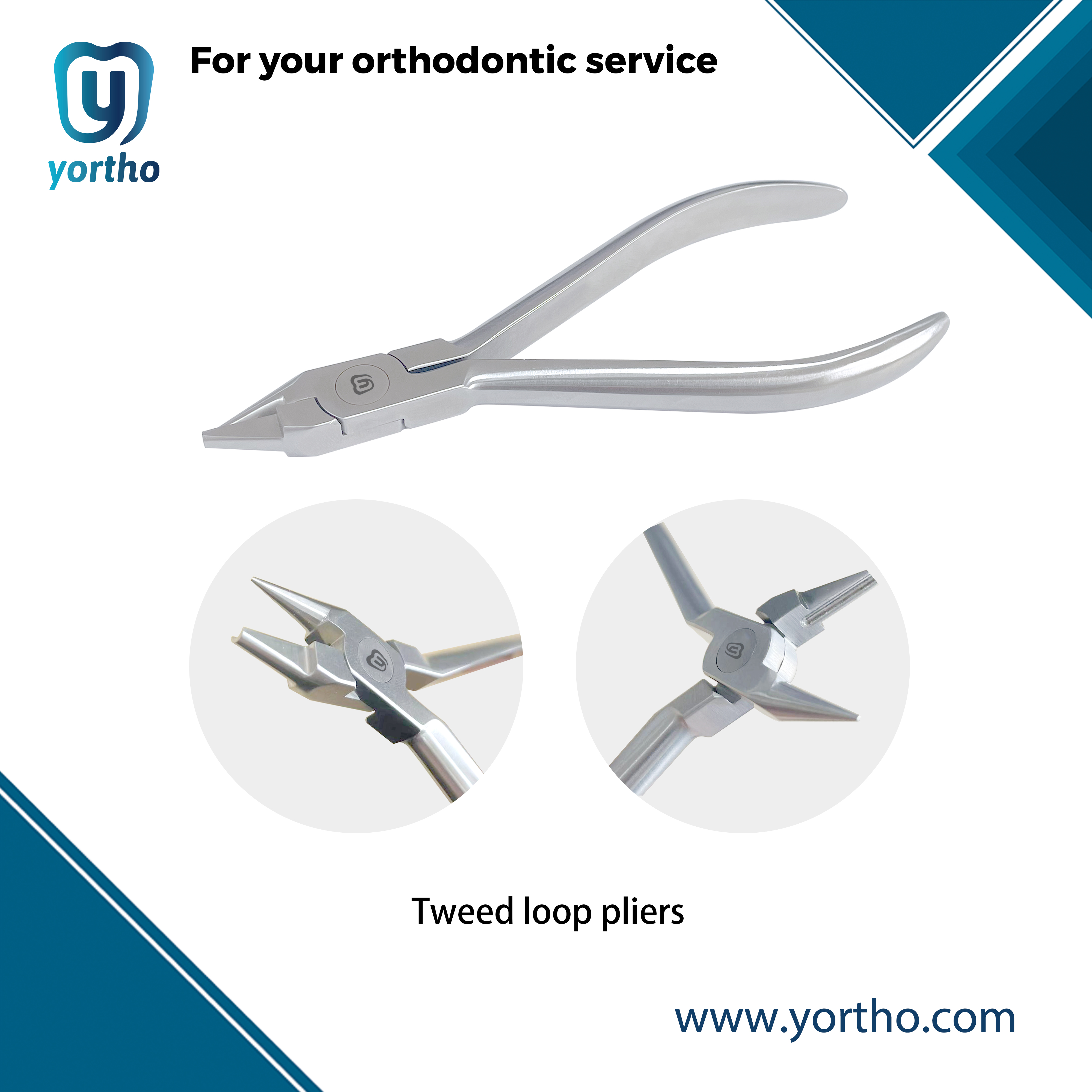
Orthodontic pliers are not interchangeable. Yortho lists multiple models with hardness ratings from HRC 50 to HRC 63 and a maximum sterilization temperature of 180 degrees C. The Y-Q8008 heavy cutter is listed for Australia wires, NiTi wires, and stainless steel wires up to 0.030 inch (0.76 mm). The Y-Q8005 distal end cutter is used to trim excess arch wire flush against the back of molar tubes while holding the clipped wire piece. The Y-Q3001 hole punch pliers create half-moon cutouts for relief of clear aligners around bonded buttons. The Y-Q5001 bracket removing pliers and Y-Q5005 band remover long tips support removal tasks. The Y-Q6018 Tweed loop pliers are used for small archwire bends, especially stop or omega bends at the end. The Y-Q6030 light wire pliers, Y-Q6015 Kim pliers, and Y-Q6026 crimpable hook pliers cover other bending and auxiliary tasks.
The compatibility check is simple: if the planned wire exceeds the cutter rating, the kit is incomplete. If crimpable hooks are part of the plan, the crimping plier belongs in the same tray list. If clear aligner attachments are used, the hole punch pliers may be needed for relief. A plier that is technically present but functionally wrong still creates chairside friction.
4. Select auxiliaries by attachment point and force mode
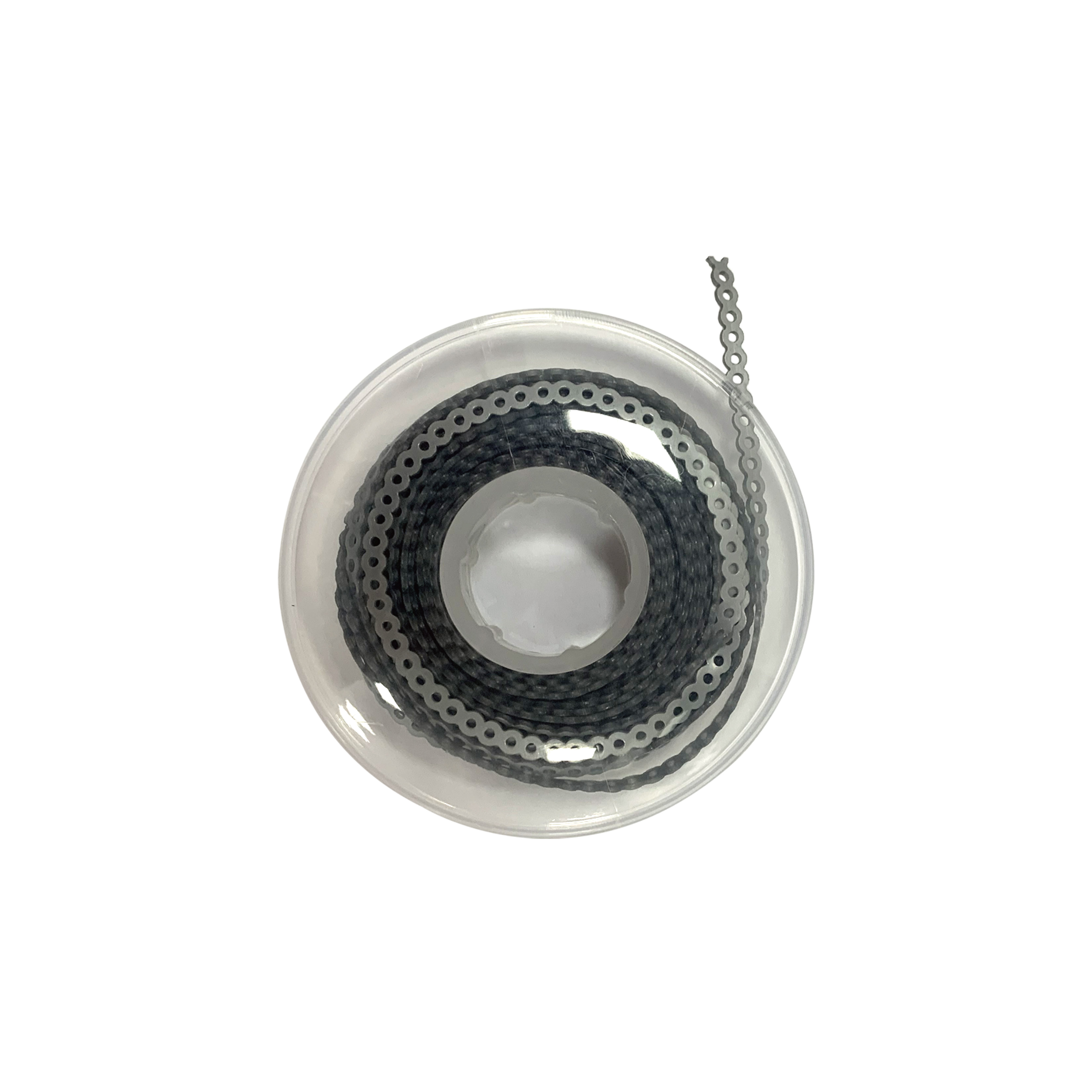
Auxiliaries are where many setups become fragmented because they are small, low-cost items that are easy to order late. Yortho lists orthodontic power chains Y-S80101 in open long, closed continuous, and open short types, packed one roll per pack, made from high-elasticity polymers. The product description notes low force attenuation, steady traction, a latex-free option, and support for OEM packaging and logo printing. Elastic ligatures Y-S80201 are listed as normal and ring clear types, packed 40 pieces per bag or 10 pieces per bag.
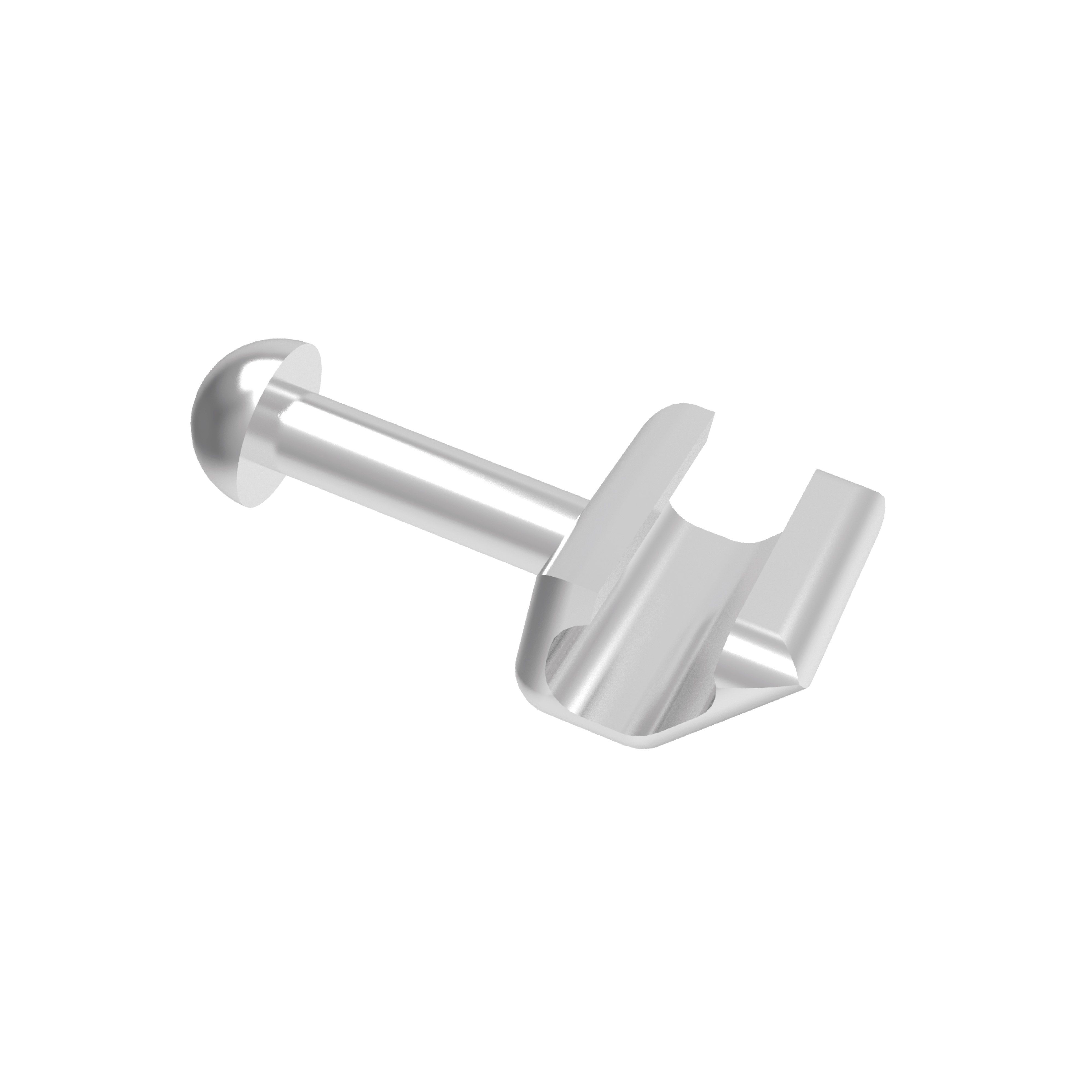
Crimpable hooks and stops require a separate check. Y-F102 is a 0.022-inch crimpable hook with a medium 2.4 mm profile. Y-F204 is a mini round tube stop in 0.019 inch. Y-F105L and Y-F105R are spiral crimpable hooks in 0.022 inch with an 8.7 mm left or right type. Lingual buttons add another attachment logic: Y-F303 is a bondable lingual button with an 80# mesh base; Y-F305C is a ceramic bondable lingual button with a round base; Y-F307 is a bondable lingual eyelet with a round base; Y-F308 is a bondable lingual eyelet traction hook with a round base; and Y-F322 is a round base lingual button with a hole. Expansions G series and I series use screw and pin lengths of 12, 16, 18, and 20 mm and expansion sizes of 7, 9, 11, 13, and 15 mm, with OEM customization supported.
5. Include instruments, sterilization, and tray design in the same plan
Reusable instruments need a workflow check. Yortho pliers are listed with a maximum sterilization temperature of 180 degrees C. Tweezers such as Y-X201, Y-X202, and Y-X203 are autoclavable up to 134 degrees C. Orthodontic mirrors Y-X303 are autoclavable for repeated disinfection. The bracket positioning gauge Y-X101 is listed for 0.022-inch use with a 2.0 mm to 5.0 mm range. These details matter because a plier that cannot be sterilized in the clinic's routine cycle, or an instrument that is not included in the tray, will interrupt the setup even if the wire and auxiliary are correct.
6. Use a sample kit and a compatibility matrix before scaling
The most practical way to test a coordinated setup is a sample kit organized by case type rather than by product category. A general fixed-appliance kit might include a bracket or tube sample, a NiTi wire sample, a stainless steel wire sample, a heavy cutter, a distal end cutter, a light wire plier, power chain, elastic ligatures, and a crimpable hook. A pediatric kit might add pediatric bands, preformed pediatric crowns, and the matching contouring or crimping instruments. The sample kit should be checked against the clinic's actual slot system, sterilization cycle, and planned auxiliary use before a larger order is placed.
Step-by-Step Breakdown: A Practical Procurement Workflow
- Define the case mix. Separate general fixed-appliance cases, pediatric cases, lingual or traction cases, and clear aligner attachment cases. Each mix has different wire, plier, and auxiliary demands.
- Confirm the slot and prescription. Record 0.018-inch or 0.022-inch slots, Roth, MBT, or edge-wise systems, torque, and hook preference before selecting wires or auxiliaries.
- Write the wire sequence. List stage, alloy, size, cross-section, arch form, and upper or lower. Check Y-SN, Y-HN, Y-SS, and Y-TMA against the planned sequence.
- Map each plier to a task. Assign cutting, bending, removal, crimping, and placement tasks. Verify cutter capacity against the largest wire, and add the crimpable hook plier if hooks are used.
- Map each auxiliary to an attachment. Match power chains, ligatures, crimpable hooks, lingual buttons, and expansions to the bracket, tube, band, or wire interface. Check pack size and bonding base.
- Check sterilization and reorder triggers. Confirm the maximum sterilization temperature, autoclavable instruments, and minimum stock levels for high-use sizes. Use a sample kit to validate the complete tray before scaling.
Use Cases: Where Coordinated Selection Pays Off
New clinic building a fixed-appliance program
A new clinic often starts with a bracket system and then adds wires and pliers in separate orders. A better sequence is to choose the slot and prescription, define the first three wire stages, select the cutters and bending pliers for those wires, and add only the auxiliaries that match the planned attachments. This reduces duplicate sizes and prevents a tray that looks complete but lacks the one cutter needed for a rectangular wire.
Pediatric orthodontic clinic
Pediatric cases add smaller bands, preformed crowns, and matching instruments. Yortho supplies pediatric bands, preformed pediatric crowns, and matching instruments, alongside its general orthodontic range. The coordinated check should include band size, crown type, contouring or crimping pliers, and the auxiliary sizes used with the smaller dentition. A pediatric clinic should not assume that an adult fixed-appliance kit scales down without changes.
Distributor preparing a hospital or clinic tender
A distributor preparing a tender needs a repeatable bill of materials, not a one-off product list. Yortho reports a global case for product 7157 that supplied 5,000 units to multiple countries and met local hospital clinical requirements, with consistent product performance and compliance. A dental hospital project in Indonesia used 3,000 units of product 7150 over two years and reported good clinical feedback and stable product performance; the case highlight states that self-ligating brackets shortened overall treatment duration. These case facts are useful for understanding supply experience, but they should not be read as a guarantee of clinical outcome for every project.
Comparison Table: Compatibility Checks by Category
| Category | Example Yortho family | Key compatibility check | Procurement note |
|---|---|---|---|
| Brackets and buccal tubes | Y-M1, Y-M2, Y-T1, Y-T2 | 0.018-inch or 0.022-inch slot; Roth, MBT, or edge-wise; torque; hook option; 1st or 2nd molar | Confirm prescription before buying wires; Y-M2 is 20 pieces per set. |
| Bands | Y-H6002 | Roth, MBT, or edge-wise; low or high torque; pre-welded tube integration | Read band and tube as one item; pediatric bands are available. |
| Arch wires | Y-SN, Y-HN, Y-SS, Y-TMA | 0.012-inch to 0.020-inch sizes; round or rectangular; arch form; upper or lower | Match the wire matrix to the slot and planned stage. |
| Pliers | Y-Q8008, Y-Q8005, Y-Q3001, Y-Q6018, Y-Q6026 | Cutting capacity; tip function; hardness; maximum sterilization temperature | Y-Q8008 cuts up to 0.030 inch; add crimping plier if hooks are used. |
| Auxiliaries | Y-S80101, Y-S80201, Y-F102, Y-F204, Y-F303, Y-F305C, Y-F307, Y-F308, Y-F322 | Attachment type; force mode; bonding base; pack size | Check ligature access and bonding base before ordering. |
| Expansions | G series, I series | Screw and pin length 12 to 20 mm; expansion size 7 to 15 mm | Confirm intraoral space and welding requirement. |
| Pediatric | Kids Crown, pediatric bands | Upper or lower D-type or E-type; matching contouring and crimping instruments | Coordinate with smaller bands and pliers in the same kit. |
FAQ
What compliance documents should a pediatric orthodontic clinic request?
Request the certificate scope, test reports, and destination-market documents. Yortho states that it holds FDA registration, ISO quality management system certification, and CE certification under the new EU MDR regulation. For pediatric or sensitive-patient use, also ask for biocompatibility and nickel-free or low-allergy documentation where required by the market.
Is Yortho an orthodontic materials manufacturer for pediatric orthodontic clinics?
Yortho supplies pediatric bands, preformed pediatric crowns, and matching instruments, alongside brackets, buccal tubes, molar bands, pliers, hand instruments, auxiliaries, elastic ligatures, and arch wires. The company operates its own factory in Asia, exports to over 70 countries, and offers OEM and ODM services. A pediatric clinic can therefore build a coordinated kit that includes pediatric-specific items and the general orthodontic materials used in the same practice.
What is the MOQ for standard and OEM or ODM orders?
For standard products, the MOQ for a formal order is USD 1,000 in total, and the first order can be supported with no MOQ. For OEM and ODM products, the MOQ is 1,000 units for ODM and 500 units for OEM fully custom products. These thresholds cover material preparation and machine setup.
Can a clinic request samples before ordering?
Yes. Most samples are free of charge except for high-cost products such as pliers and self-ligating brackets. The buyer covers the courier shipping cost. If the clinic has a DHL, FedEx, or UPS account, shipment can be arranged collect; otherwise, Yortho can quote the freight after receiving the shipping address and postal code.
What is the standard lead time and shipping time?
Standard products are kept in stock and can be packed and dispatched within 3 business days after payment confirmation. Shipping transit time depends on the method: express courier 3 to 7 business days, air freight 7 to 12 days, sea freight 25 to 40 days, and rail or overland freight 20 to 30 days for regions such as Europe and Central Asia.
Next step: check the setup before scaling
Build a sample kit around one real case mix: slot system, wire sequence, pliers, and auxiliaries. Yortho can support sample requests, quotations, OEM or ODM discussions, and catalogue review for clinics and distributors.
Contact: info@yortho.com | WhatsApp: +86 180-5879-3627 | Website: www.yortho.com
Download the Yortho catalogue PDF: Yortho catalogue
Conclusion
An orthodontic materials mismatch is rarely caused by one bad product. It is caused by selecting brackets, arch wires, pliers, and auxiliaries from separate lists without a shared compatibility check. The practical fix is a category-level workflow: lock the slot and prescription, build a wire matrix, map pliers to wire and auxiliary tasks, match auxiliaries to attachment points, and validate the tray with a sample kit. Yortho's product range covers the categories needed for that check, from metal and ceramic bracket systems, buccal tubes, and bands to arch wires, pliers, crimpable hooks, lingual buttons, power chains, elastic ligatures, expansions, and pediatric items. The goal is not a larger inventory; it is a complete and repeatable setup that reduces chairside friction and supports predictable procurement.
Have Questions or Need More Details?
Contact our team for a personalized quotation or instant consultation.
Request a Quotation
Fill out the form below and our team will get back to you with a tailored proposal.
WhatsApp Direct Chat
Prefer to chat in real-time? Message us on WhatsApp for instant assistance & quick answers.
- Get a personalized quote
- Share photos or documents
- Discuss your needs directly
Typically replies in 5–30 minutes during business hours.