
Selecting the Right Orthodontic Auxiliaries: A Technical Breakdown
Selecting the Right Orthodontic Auxiliaries: A Technical Breakdown
Orthodontic auxiliaries are the cheapest items on a fixed-appliance order form, and that is precisely why they are so often bought on unit price alone. The parameters that decide how an appliance actually behaves - material grade, elasticity and recovery, loop geometry, hook profile, dimensional tolerance, and compatibility with the wire and bracket system in use - are frequently left out of the purchase specification entirely.
A technically sound auxiliary purchase comes down to three checks. Match the component to the force it has to deliver. Match its geometry to the wire gauge and bracket slot it works with. Confirm that the supplier can repeat that specification consistently across reorders. Packaging, MOQ, lead time and documentation all sit downstream of those three checks.
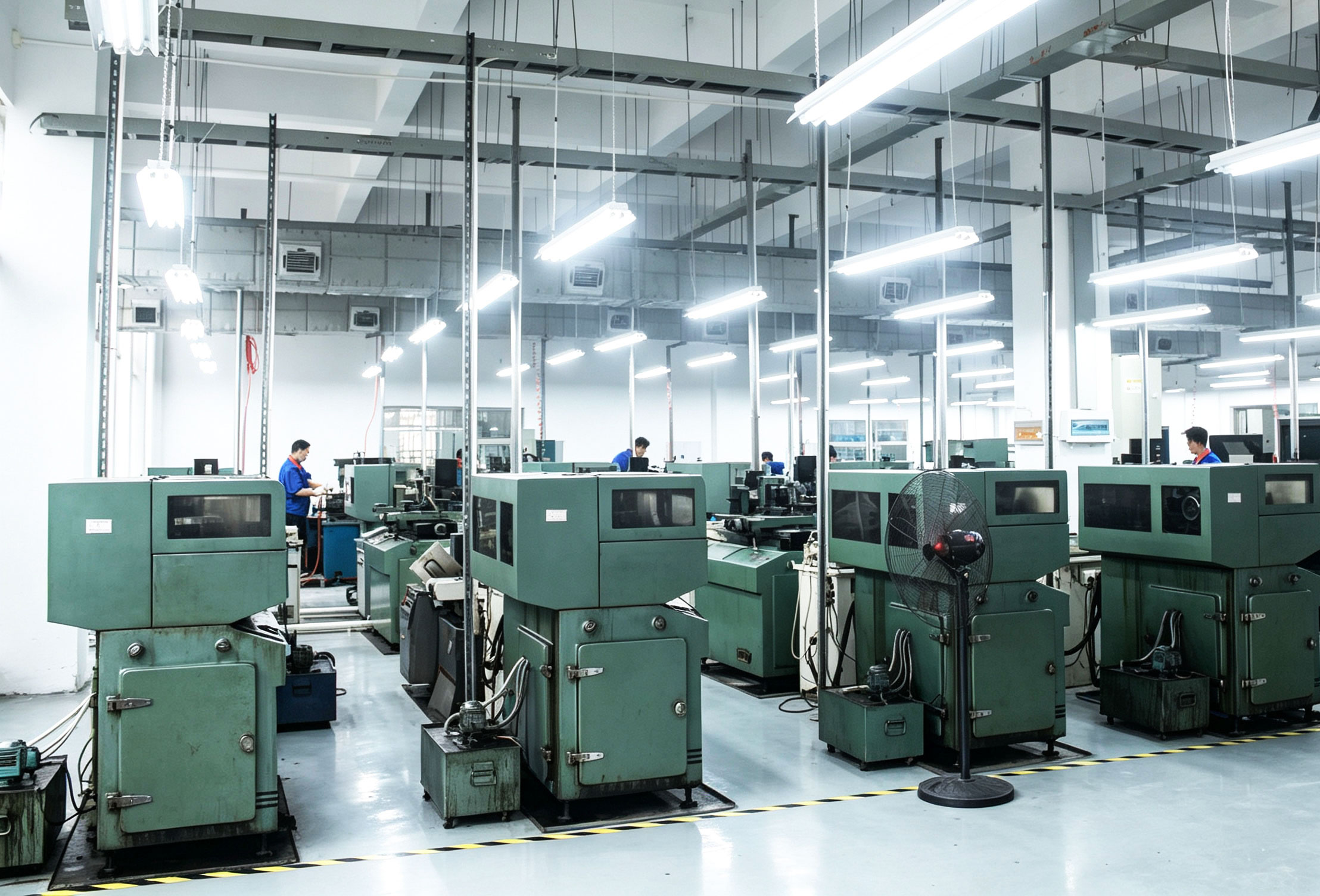
This breakdown covers the three auxiliary families in Yortho's catalogue - Orthodontic Elastic Ligatures (Y-S80201), Orthodontic Power Chains (Y-S80101) and Orthodontic Crimpable Hooks (Y-F105L/R, Y-F102, Y-F201, Y-F204) - together with the traction attachments that are usually ordered in the same basket: power arms, lingual chains and lingual buttons. Yortho is an orthodontic brand owned by YAM Global Limited in the United Kingdom, manufacturing through its own facility in Asia and exporting orthodontic supplies, pediatric dental products and dental lab appliances to more than 70 countries.
Problem Definition: Why Auxiliary Selection Gets Under-Specified
Auxiliaries sit at the interface between the archwire and the tooth, yet they are consumed and reordered far more often than the brackets, bands and buccal tubes they work with. In routine practice, elastic ligatures are single-use items while pliers and hand instruments are reusable, so the auxiliary line is the part of a clinic's order that repeats most frequently - monthly in many practices. High reorder frequency is exactly what makes loose specification expensive.
Four failure modes account for most of the cost that auxiliaries create after purchase:
- Ligature relaxation. A ligature that loses elasticity early in the wear cycle stops holding the archwire reliably in the slot, and the clinician compensates with extra visits or a heavier wire than the mechanics require.
- Power chain decay and permanent deformation. Space closure is a continuous-force task. If the chain deforms permanently under intra-oral conditions, the delivered force falls outside the intended band and the closing cycle stretches.
- Hook profile and crimp consistency. A crimpable hook is a traction point. If its height, orientation or crimp grip varies, both the force vector and the anchorage plan change.
- Batch-to-batch variability. The most expensive auxiliary failure is not a broken part - it is a reorder that behaves differently from the previous one.
That last point is why the rest of this guide is organised around repeat supply rather than a single purchase: a reproducible specification, documentation that stays current, and a replenishment rhythm that keeps a clinic or a distributor stocked without over-ordering.
Industry Background: Market, Materials and Compliance Context
Market figures for orthodontics need to be read with their scope in mind, because published estimates measure different things.
| Metric (2024) | Reported value | Source | Scope of the figure |
|---|---|---|---|
| Orthodontic supplies market | USD 14.8B | Global Market Insights | Supplies (wider definition) |
| Orthodontic consumables market | USD 3.1B (projected USD 4.3B by 2030) | Grand View Research | Consumables only |
| Orthodontics market | USD 7.21B | Straits Research | Orthodontics market, broader than consumables |
The three 2024 figures above are not interchangeable. Grand View Research measures consumables only, Global Market Insights measures a wider supplies definition, and Straits Research reports a broader orthodontics market that includes services and treatment systems. A buyer building a business case should cite the definition that matches the procurement decision rather than the largest available number.
Demand is concentrated at clinic level. Grand View Research reports that orthodontic clinics and standalone practices represent more than 50% of the end-user distribution channel for orthodontic consumables, which is consistent with the reorder pattern described above: many small, frequent orders rather than a few large ones.
On the material side the baseline is well established. Orthodontic power chains and elastic ligatures are primarily manufactured from medical-grade polyurethane, and stainless steel remains the most widely used material for orthodontic arch wires and brackets globally. Yortho's auxiliary range follows that split: ligatures and power chains in high-elasticity polymers, and crimpable hooks, power arms, lingual chains and bondable lingual buttons in stainless steel, with a ceramic bondable lingual button option for aesthetic cases.
Compliance continuity is the part of auxiliary sourcing that is most often deferred. Medical device quality systems must be certified to ISO 13485:2016 for international market access; CE marking in the EU depends on the Medical Device Regulation (MDR 2017/745); and the US FDA classifies orthodontic brackets as Class II devices requiring 510(k) clearance. ISO 13485:2016 is also explicitly recognized by the FDA as the primary basis for its Quality Management System Regulation. For a buyer placing auxiliary orders quarter after quarter, a supplier's ability to keep certification and test documentation current matters as much as the unit price on the first order.
Allergen risk runs alongside compliance. Nickel and chromium are the primary allergens of concern in metal orthodontic products, and markets with nickel-free or low-allergy requirements typically ask for supporting documentation before import. Yortho's power chains are made from a premium non-latex, medical-grade polyurethane, which removes latex from that part of the appliance and supports use with sensitive patients.
Detailed Solution: A Parameter Breakdown of the Three Auxiliary Families
The three families are specified differently because they do different mechanical jobs: ligatures hold, chains pull, hooks anchor.
Elastic Ligatures (Y-S80201): How the Wire Is Held
Elastic ligatures secure the archwire in the bracket slot and are single-use in routine practice. In Yortho's catalogue they are supplied as ligature rings in Normal and Ring clear types, packed at 40 pcs/bag and 10 pcs/bag, and manufactured from high-elasticity polymers. Five parameters are worth writing into a purchase specification.
- Polymer elasticity and recovery - how much of the initial engagement force the ligature still delivers at the end of the intended wear cycle.
- Cross-section consistency - thickness variation changes how firmly the wire seats in the slot.
- Slot and system compatibility - Yortho brackets and buccal tubes are offered in 0.018 and 0.022 slot sizes and in Roth, MBT and Edge-wise prescriptions, so the ligature has to be matched to the bracket actually in use.
- Packaging format - 10 pcs/bag and 40 pcs/bag presentations change chairside handling and reorder rhythm rather than clinical performance.
- Biocompatibility documentation - for markets with nickel-free or low-allergy requirements, the polymer grade and the supporting certificates should be confirmed in writing.
Power Chains (Y-S80101): Force Retention Over Time
Power chains turn the appliance into a continuous space-closing system. Yortho supplies them as Open long, Closed continuous and Open short types, one roll per pack, in high-elasticity polymers. For chains, the decisive parameters are force decay, permanent deformation and loop consistency, because space closure depends on force staying inside a therapeutic band over weeks rather than hours.
- Force decay rate - how quickly delivered force drops under intra-oral conditions.
- Permanent deformation - how much the chain stretches without recovering; deformation converts a light continuous force into an unpredictable one.
- Loop-to-loop dimension - consistent loop geometry gives a repeatable force per segment, while inconsistent loops produce uneven tooth movement across the same segment.
- Breakage in service - a chain that fails mid-cycle interrupts space closure and forces an unscheduled appointment.
- Material - medical-grade polyurethane; for latex-sensitive patients, confirm in writing that the product is latex-free.
Reported comparison data. Yortho's recorded comparison data for its power chains reports permanent deformation reduced by 60%-73% and breakage in clinical simulation reduced by 75%-85% against the comparison products tested, together with a 30%-50% reduction in chair-side replacement frequency. These are first-party comparative figures. The useful move for a buyer is to reproduce the checks that matter clinically - deformation, breakage and force retention - on samples, rather than to accept any supplier's numbers, including these, as a substitute for testing.
Crimpable Hooks and Traction Auxiliaries: Geometry and Wire Fit
Crimpable hooks create traction and stop points directly on the archwire, so they can be added, repositioned or removed chairside without bonding anything to the tooth surface. Because the hook is crimped onto a wire, two parameters decide its behaviour: wire-size compatibility and hook geometry.
- Y-F105L / Y-F105R - Spiral Crimpable Hooks, 0.022'', left and right types, 8.7 mm, stainless steel.
- Y-F102 - Crimpable Hook, 0.022'', medium 2.4 mm, stainless steel.
- Y-F201 - Crimpable Hooks, 0.022'', 2.4 mm, stainless steel.
- Y-F204 - Mini round tube stop, 0.019'', stainless steel.
- Y-F321 - Power Arm, round shape, stainless steel.
- Y-F314 - Lingual Chain, sliver type, stainless steel.
Note the wire-size split. A 0.022'' hook and a 0.019'' tube stop are not interchangeable: a 0.019'' stop on a 0.022'' wire will not grip, and a 0.022'' hook crimped onto a 0.019'' wire distorts the crimp. Matching the auxiliary to the actual archwire gauge used at that treatment stage is a purchasing decision, not a clinical afterthought. Left/right spiral hooks are directional, and hook height - 8.7 mm on the spiral version against 2.4 mm on the medium hook - changes both the traction vector and the patient's comfort profile.
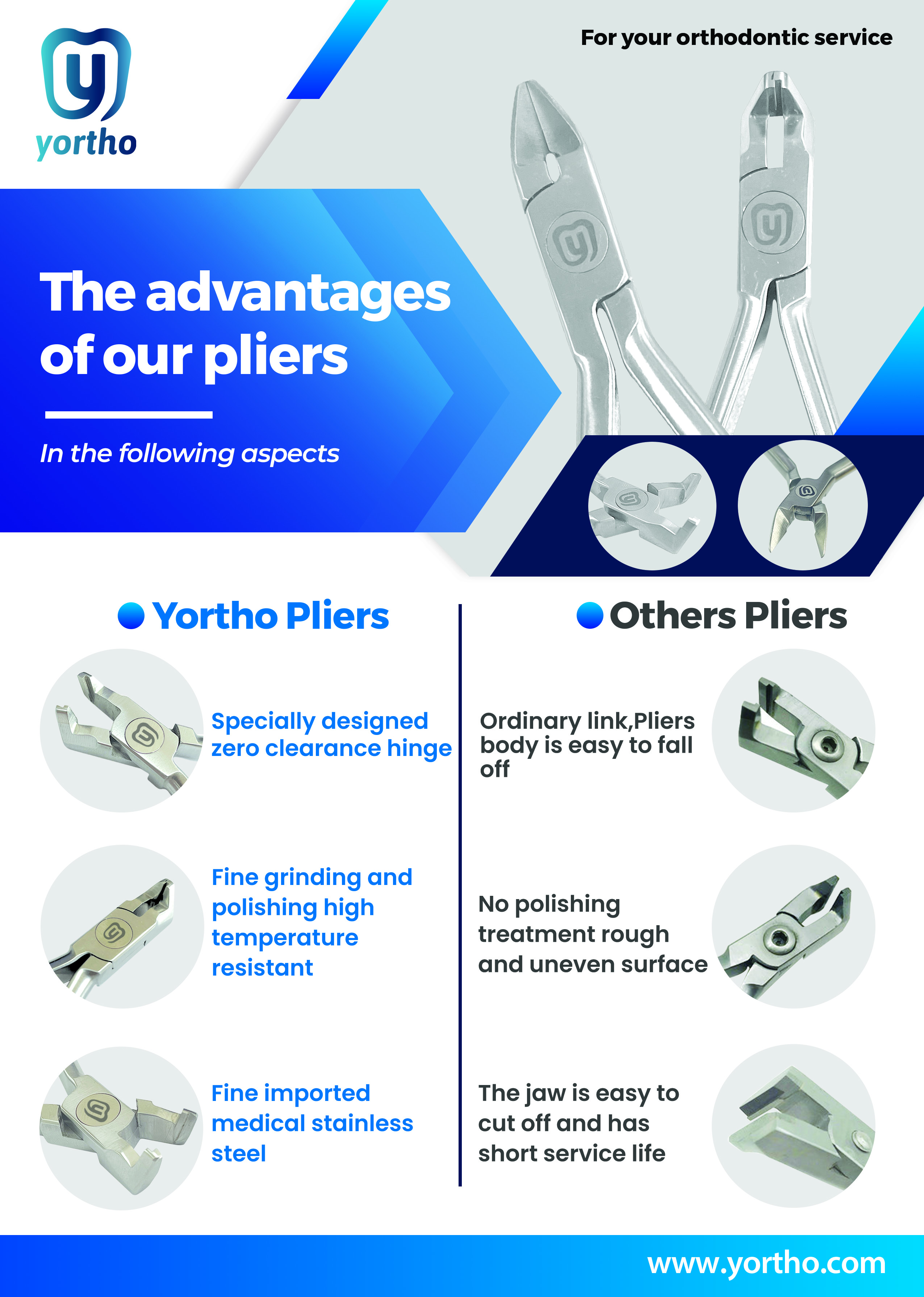
Crimping itself needs the right instrument. Yortho supplies the Y-Q6026 crimpable hook pliers at HRC 50-55 hardness, autoclavable up to 180 degrees C, as part of a wider plier range. For bonded traction points, the catalogue includes round bondable lingual buttons with an 80# mesh base (Y-F303), a ceramic bondable lingual button (Y-F305C), a bondable lingual eyelet (Y-F307), a bondable lingual eyelet traction hook (Y-F308) and a round-base lingual button with hole (Y-F322). Base design - mesh versus solid round base - determines the bonding protocol and the load the attachment can carry, so it should be specified together with the adhesive system in use.
Step-by-Step Breakdown: From Treatment Objective to Repeatable Order
The following sequence converts a clinical requirement into an order that can be repeated without renegotiating the specification each time.
- Define the mechanical job. State whether the auxiliary holds (ligature), closes (chain) or anchors (hook). The answer selects the family and eliminates most of the catalogue.
- Fix the interfaces. Record the slot size (0.018 or 0.022), the archwire gauge for the stage (for example 0.019'' or 0.022''), the bracket prescription in use, and the adhesive system if a bonded attachment is involved. Yortho's bracket, buccal tube and band ranges cover Roth, MBT and Edge-wise systems, which makes interface documentation simpler to standardise across a clinic group.
- Write the specification in catalogue terms. Family, type, size, material and packaging. For power chains that means Open long, Closed continuous or Open short, one roll per pack. For hooks it means the model, size, left/right configuration and height. For ligatures it means Normal or Ring clear and 10 pcs/bag or 40 pcs/bag.
- Verify documentation before negotiating price. Request ISO 13485:2016 evidence, CE documentation under MDR 2017/745 and FDA registration evidence, and confirm the documents are current. Yortho holds ISO, CE (MDR) and FDA registration, exports to markets including the US and Europe, and supplies certificates and test reports as PDFs on request.
- Evaluate samples against defined tests. Test dimension, force retention across the intended wear cycle, crimp grip on the specified wire, and breakage. Yortho provides samples for quality checking: most products are supplied free of charge, excluding high-cost items such as pliers and self-ligating brackets, and the buyer covers courier shipping - freight collect is available if you have a DHL, FedEx or UPS account.
- Run the first order, then convert it into repeat supply. Standard products are held in stock and orders are packed and dispatched within 3 business days after payment confirmation. Published purchase terms for auxiliary items record MOQ 50 pcs, FOB or CIF delivery, pre-shipment testing as the acceptance criterion and T/T payment; for formal standard-product orders the published minimum order value is USD 1,000, with no MOQ applied to a first order. Orders above USD 10,000 can be structured as 30% deposit with the 70% balance before shipment. For repeat supply, agree on lot consistency, replenishment time and after-sales handling - Yortho's stated focus is stable quality, competitive lead-time and responsive after-sales support, and its after-sales policy covers all orders.
Use Cases: Where Auxiliary Parameters Change the Outcome
- Space closure after extraction. Power chain selection drives the outcome: choose the chain type (Open long, Closed continuous, Open short) to suit the segment being closed, and judge suppliers on force decay and permanent deformation rather than on initial force alone.
- Alignment and rotation control during leveling. Ligatures hold the archwire while rotations resolve. Even in self-ligating cases the auxiliary line stays relevant: Yortho's metal bracket range uses spacious ligation wings so a ligature ring can be added to a passive self-ligating bracket on demand, shifting mechanics from passive to active without changing brackets.
- Anchorage and traction without bonding. Crimpable hooks, tube stops and power arms create traction points on the wire, while lingual buttons and eyelets provide bonded alternatives. For reinforced anchorage, the range also includes a titanium alloy implant screw (Y-OS1406, 1.4 mm diameter, 6 mm length), part of an anchorage category that is increasingly used in complex malocclusion cases.
- Paediatric and mixed-dentition clinics. These workflows combine single-use auxiliaries with reusable instruments under routine disinfection and sterilization protocols, and they set a high bar for biocompatibility documentation. The same catalogue covers pediatric preformed crowns (Kids Crown, upper and lower D-type and E-type) and pediatric bands, so a clinic can consolidate consumable ordering.
- Distributors building a private-label auxiliary line. OEM and ODM services are available, with published minimums of 1,000 units for ODM and 500 units for OEM: ODM adapts existing designs to a distributor's branding and minor feature changes, while OEM follows the buyer's own specifications and design with the buyer owning the intellectual property.
Comparison Table: Auxiliary Specifications and Verification Points
| Auxiliary | Mechanical role | Yortho catalogue specification | Verify before ordering |
|---|---|---|---|
| Elastic ligatures (Y-S80201) | Holds the archwire in the bracket slot | High-elasticity polymers; Normal and Ring clear types; 40 pcs/bag and 10 pcs/bag | Polymer recovery, cross-section consistency, slot compatibility (0.018/0.022), biocompatibility documentation |
| Power chains (Y-S80101) | Continuous space closure | High-elasticity polymers; Open long, Closed continuous, Open short; 1 roll/pack | Force decay, permanent deformation, loop-to-loop dimension, breakage in service, latex-free confirmation |
| Crimpable hooks (Y-F105L/R, Y-F102, Y-F201) | Traction and stop points on the wire | Stainless steel; 0.022''; spiral left/right 8.7 mm; medium 2.4 mm | Wire-size compatibility, hook height and profile, crimp grip, left/right orientation |
| Tube stops and power arms (Y-F204, Y-F321) | Fixed stops and force vector control | Stainless steel; 0.019'' mini round tube stop; round power arm | Fit to the actual wire gauge, retention after crimping |
| Lingual buttons and eyelets (Y-F303, Y-F305C, Y-F307, Y-F308, Y-F322) | Bonded traction points | Stainless steel and ceramic options; round 80# mesh base; round base with hole | Base design (mesh vs round), bonding protocol, profile height, metal vs ceramic selection |
| Lingual chain (Y-F314) | Traction across a segment | Stainless steel; sliver type | Attachment method, dimension tolerance |
The table below summarises the performance metrics recorded in Yortho's own comparison data for power chains. It is presented as supplier-reported data, alongside the verification steps a buyer should run independently.
| Metric | Reported result (Yortho comparison data) |
|---|---|
| Permanent deformation | Reduced by 60%-73% |
| Breakage in clinical simulation | Reduced by 75%-85% |
| Chair-side replacement frequency | Reduced by 30%-50% |
| Material | Non-latex, medical-grade polyurethane |
FAQ: Auxiliary Sourcing Questions Buyers Ask
What certifications should a buyer verify before ordering orthodontic auxiliaries?
The baseline for internationally traded orthodontic devices is ISO 13485:2016 for the quality management system, CE marking under EU MDR 2017/745 for the European market, and FDA registration or clearance for the United States, where orthodontic brackets are classified as Class II devices. Yortho holds ISO, CE (MDR) and FDA registration, exports to markets including the US and Europe, and provides PDF copies of test reports and certificates on request. Because import requirements differ by country, the specific documents your customs authority requires should be confirmed before the order is placed.
Can orthodontic auxiliaries be supplied as private-label OEM or ODM products?
Yes. Yortho offers both OEM and ODM services. In ODM, an existing, proven design is adapted and the buyer applies branding, a logo or minor feature changes; in OEM, production follows the buyer's own specifications, materials and design, with the buyer owning the intellectual property. Published minimum order quantities are 1,000 units for ODM and 500 units for OEM. The company operates its own manufacturing facility, and its R&D team consists of 20 engineers.
What are the MOQ, payment and delivery terms for auxiliary orders?
For standard products, the published minimum order value is USD 1,000 with no MOQ applied to a first order, while the purchase-terms record for auxiliary items lists MOQ 50 pcs, FOB or CIF delivery terms, pre-shipment testing as the acceptance criterion and T/T payment. Payment is by bank transfer; orders above USD 10,000 can be structured as 30% deposit with the 70% balance before shipment, and small sample orders can be paid by PayPal or Ali-Pay (RMB).
Can samples of ligatures, power chains and crimpable hooks be evaluated before a bulk order?
Yes. Yortho supplies samples for quality checking. Most products are provided free of charge, with high-cost items such as pliers and self-ligating brackets excluded, and the buyer covers the courier shipping cost. If you have a DHL, FedEx or UPS account, samples can be shipped freight collect. A defined evaluation protocol covering dimension, force retention, crimp grip and breakage makes the sample stage comparable between suppliers.
How quickly can auxiliary orders ship, and what delivery options are available?
Standard products are held in stock and are packed and dispatched within 3 business days after payment confirmation. Typical transit times after production are 3-7 business days by express courier (DHL, FedEx, UPS), 7-12 days by air freight, 25-40 days by sea freight, and 20-30 days by rail or overland for regions such as Europe and Central Asia. Under FOB or CIF terms, import duties and taxes in the destination country are the buyer's responsibility. To plan a first auxiliary order or request samples of the ligatures, power chains or crimpable hooks you intend to standardise on, send your item list together with your destination country and postal code to info@yortho.com.
Conclusion
Auxiliary selection is a technical exercise with a procurement consequence. Ligatures must hold force through the wear cycle, power chains must keep force inside a working band and stay intact, and crimpable hooks must match the wire gauge they are crimped onto - 0.022'' and 0.019'' products are not interchangeable. Each of those requirements translates into a specification line and a sample test.
The second half of the decision is continuity. Auxiliaries are reordered continuously, so the supplier's ability to repeat the same specification, keep ISO 13485:2016, CE (MDR) and FDA documentation current, and replenish quickly matters as much as the first unit price. Yortho manufactures through its own facility, offers OEM and ODM services, and focuses on stable quality, competitive lead-time and responsive after-sales support - the three variables that determine whether a repeat auxiliary order behaves like the one before it.
Next step. If you are specifying elastic ligatures, power chains or crimpable hooks for an upcoming order, send your auxiliary list with your destination country and postal code to info@yortho.com or WhatsApp +86 180-5879-3627, and request samples for the items you intend to standardise on.
Website: www.yortho.com | Download the full Yortho catalogue (PDF)