
Supplier Evaluation for Orthodontic Materials: Capability Checks and Delivery Assurance

Supplier evaluation for orthodontic materials should answer two questions before price is discussed: can the supplier reproduce the same product across consecutive production batches, and can it deliver on the date it committed to? Catalogues, quotations and specification sheets answer neither. A workable due-diligence framework therefore uses production evidence, batch-consistency records and delivery commitments as the primary screening criteria, and applies commercial terms only to suppliers that clear those gates.
Problem Definition: Why Orthodontic Supplier Evaluation Fails
Most procurement failures in orthodontic materials are not design failures. They are reproducibility failures and delivery failures, and they surface clinically rather than commercially.
Four recurring failure patterns explain most of the risk:
- Sample-to-production drift. A sample order passes clinical evaluation, but the scaled order varies in slot dimension, base mesh integrity, or wire force delivery. The root cause is usually an uncontrolled change in material lot, tooling wear, or inspection sampling rate.
- Handling-sensitive item degradation. Elastic ligatures and power chains lose force or stain; lingual buttons and crimpable hooks shift under traction or during bonding. These categories are highly sensitive to polymer formulation, brazing method and packaging, not just to base material.
- Instrument inconsistency. Reusable instruments such as pliers and tube tweezers must hold hardness and geometry across repeated autoclave cycles. If the supplier cannot state a hardness range or a maximum sterilization temperature, the clinic cannot predict instrument life.
- Lead-time slippage. A supplier that quotes fast dispatch on stock items may still fail on mixed-category orders where one SKU is made to order. Buyers need separate commitments for stock items and made-to-order items.
Because these failures are only visible after clinical use, the evaluation stage must substitute verifiable production evidence for clinical exposure. That is the core design principle of the framework below.
Industry Background: Why Supplier Evidence Now Matters More
The orthodontic consumables market was valued at approximately USD 3.1 billion in 2024 and is projected to reach USD 4.3 billion by 2030, according to Grand View Research. Broader definitions of orthodontic supplies put the 2024 market at USD 14.8 billion, per Global Market Insights — the wide spread between estimates reflects whether full treatment systems and services are included. Either way, the consumables segment alone is large enough that buyers have real supplier choice, and the evaluation burden shifts from availability to verification.
Three structural factors drive that shift:
- Category concentration. Grand View Research notes that the brackets segment dominated orthodontic consumables industry revenue in 2024. Buyers spending the majority of budget on one category need deeper capability evidence on that category than on long-tail auxiliaries.
- Material dominance with selective substitution. Stainless steel remains the most widely used material for orthodontic arch wires and brackets globally, while nickel-titanium arch wires are preferred specifically for their shape memory and super-elasticity. A supplier that cannot distinguish between these material roles in conversation is unlikely to control them in production.
- Regional supply concentration. China's export provinces for dental instruments are led by Guangdong, Jiangsu and Zhejiang. Zhejiang-based manufacturers, including Yortho, sit inside that cluster, which gives buyers a defined geography to audit but also means buyers must differentiate between factories within the same province.
Regulatory expectation has also tightened. Medical device quality systems are expected to be certified to ISO 13485:2016 for international market access, the EU Medical Device Regulation (MDR 2017/745) is mandatory for orthodontic brackets to receive CE marking, and the US FDA classifies orthodontic brackets as Class II devices requiring 510(k) clearance. Buyers evaluating suppliers therefore need to separate product registration (does the finished product hold the required clearance for the target market) from system certification (does the factory operate under a certified quality system). These are not the same question, and a supplier answer that conflates them is a warning sign.
Detailed Solution: A Four-Pillar Due-Diligence Framework
The framework below covers four pillars. Each pillar produces a binary decision: evidence is present or it is not. Commercial negotiation begins only after all four are satisfied.
Pillar 1 — Manufacturing Capability Verification
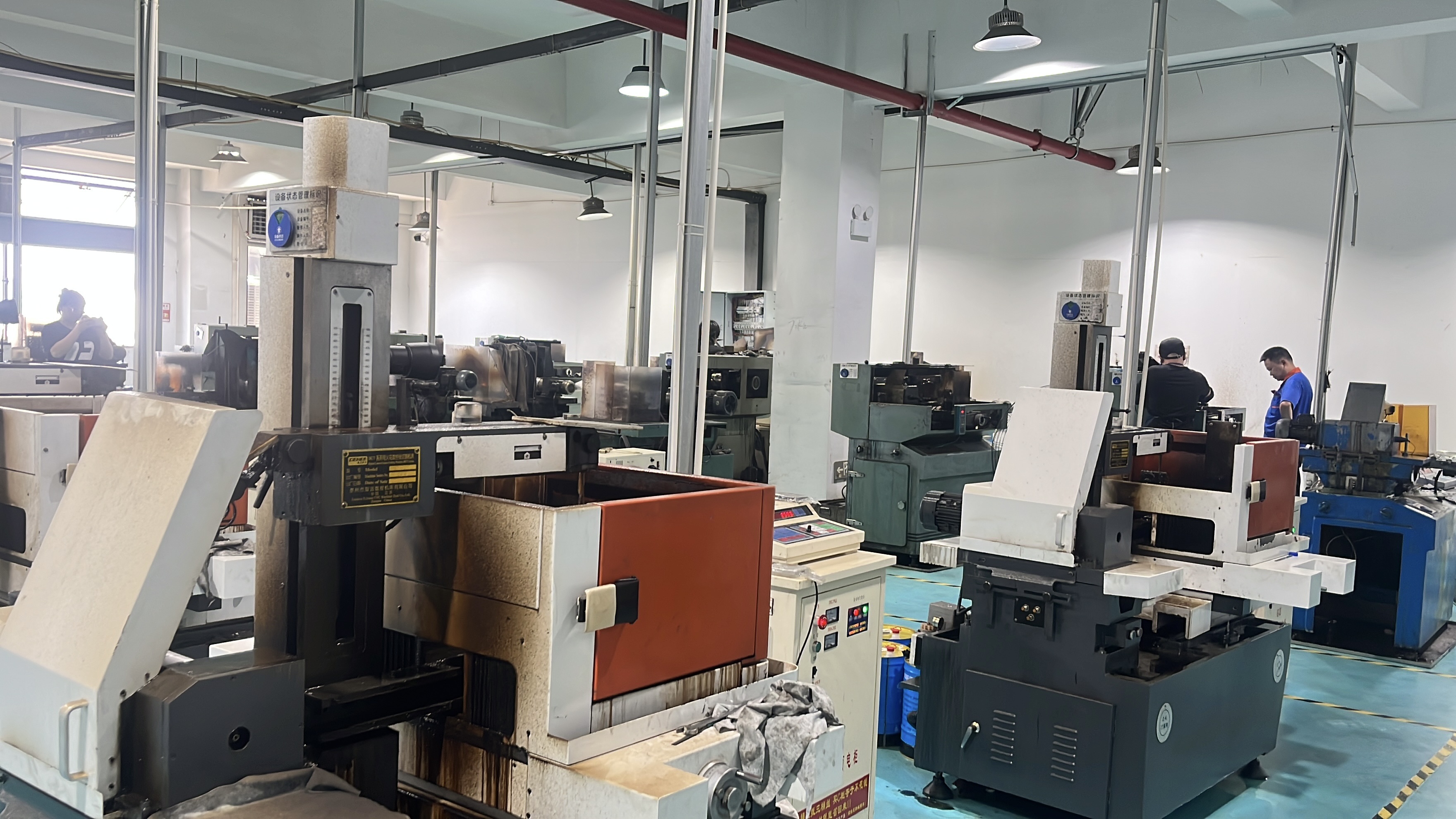
Capability verification starts with a simple question: is the supplier a factory or an intermediary? Yortho is a UK brand belonging to YAM Global Limited, and it operates its own factory in Asia — a 5,000 m² facility in Huzhou, Zhejiang Province, China, with 100 employees, a 20-engineer R&D team, and annual output of 30,000,000 units. Those figures are the kind of first-party facts a buyer should be able to obtain in writing before the first sample order.
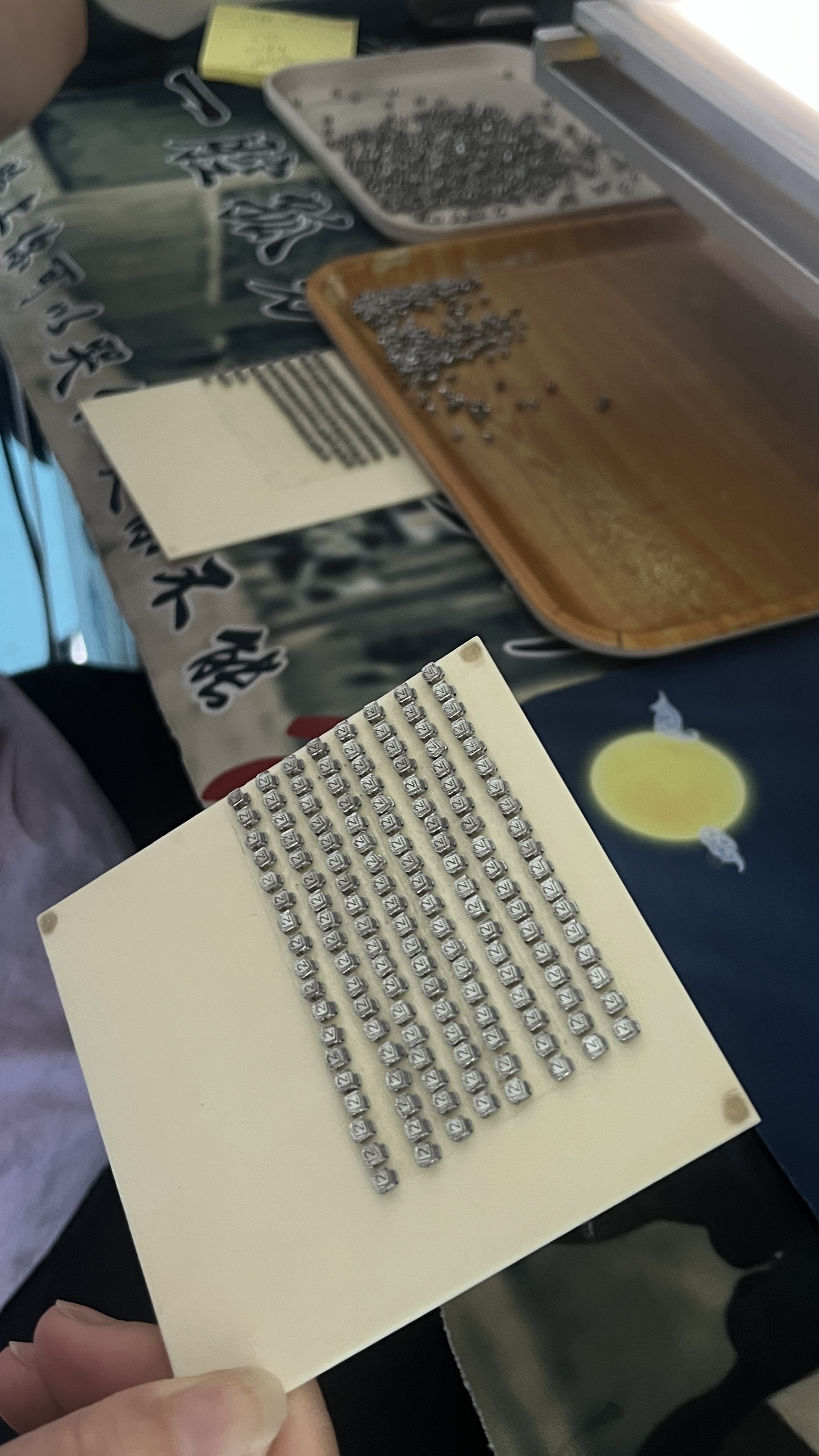
For core appliance categories — metal orthodontic brackets, ceramic self-ligating brackets, clear orthodontic brackets, mini orthodontic brackets, orthodontic bands and buccal tubes — buyers should verify four capability signals:
- The manufacturing process used for the bracket body and base, including whether bracket body positioning and base marking are performed in-house.
- The inspection method applied to brackets and bands before packing.
- Whether buccal tube variants — including self-ligating buccal tubes — are produced on the same line as standard tubes.
- Whether molar bands are manufactured or sourced, since bands and brackets are usually evaluated together but not always produced together.
For arch wires and instruments, capability evidence takes a more technical form. Take the Y-SN Super-elastic NiTi arch wire: available arch forms are Square, Natural, Damon, Oval, Europa-I and Broad, with round and rectangular cross-sections, upper and lower arch types, and sizes from 0.012'' to 0.020''. A buyer can use that matrix as a capability test — a supplier that cannot confirm the full combination set in writing is likely sourcing parts of the range rather than producing it. The Y-TMA wire, a nickel-free beta-titanium alloy that is bendable and weldable with low spring-back and suited to nickel-allergic patients, is a second test: does the supplier distinguish TMA from NiTi in its own product documentation?
For pliers and hand instruments, the specific evidence is measurable. The Y-Q3002 tear drop pliers specify a hardness of HRC 58–63 and a maximum sterilization temperature of 180°C, with a zero-clearance hinge and CNC production. Those are exactly the data points a buyer should request by model number, because hardness range and sterilization ceiling determine instrument life under clinic autoclave routines. Y-X203 tube tweezers with long tip, designed for posterior brackets and buccal tubes, illustrate the same principle at instrument level: the evaluated parameter is tip geometry and grip, not just material grade.
Pillar 2 — Handling-Sensitive Item Verification
Auxiliary and elastic categories are the most common source of post-delivery complaints because they are least visible at the sample stage and most sensitive to material and process control.
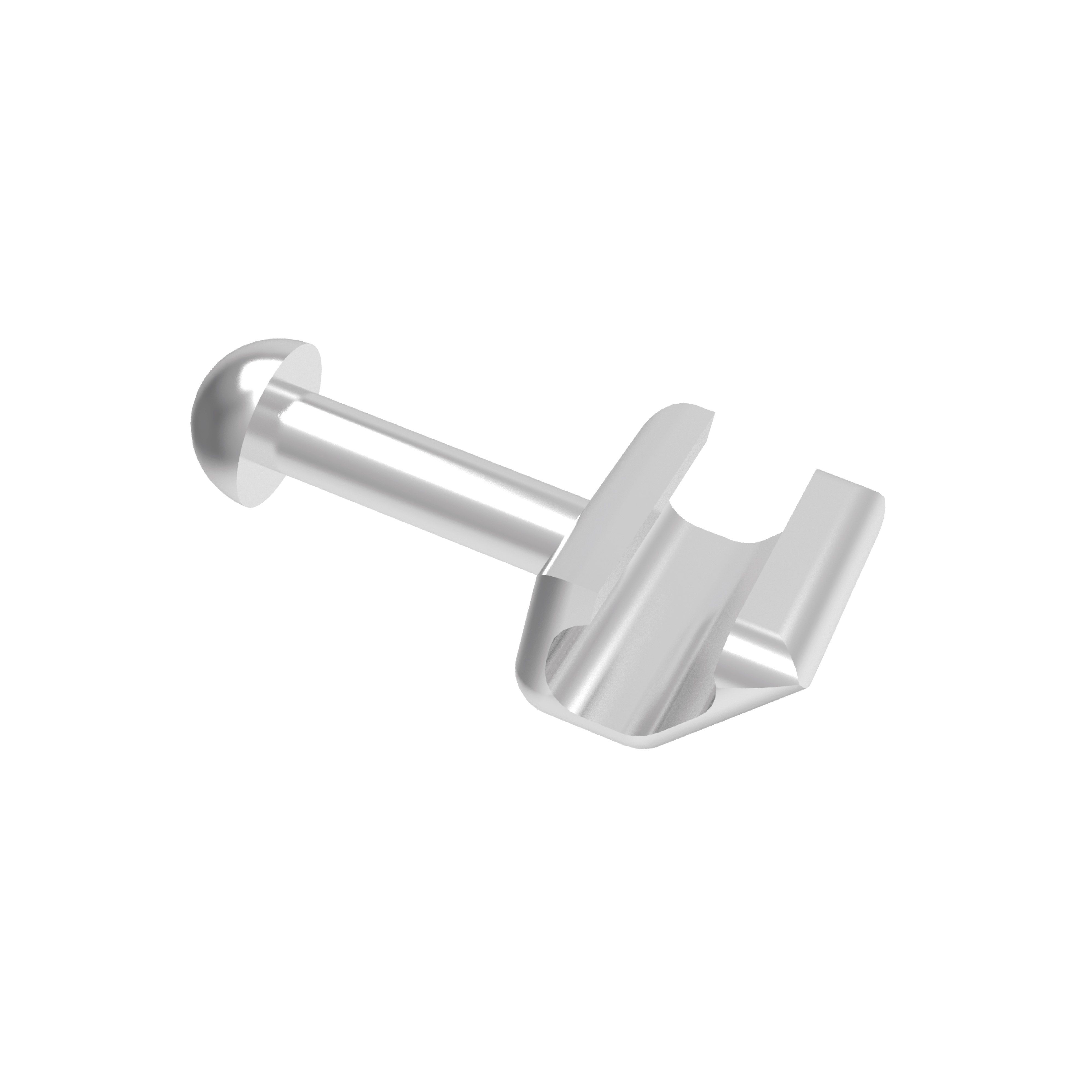
Lingual buttons. The Y-F308 bondable lingual eyelet traction hook uses a round base with a mesh base for bonding and a closed ring to prevent slipping, in medical stainless steel. The capability check is brazing method and mesh consistency: a supplier producing lingual buttons by high-temperature nickel brazing should be able to describe that process and its inspection step, because base-to-pad joint integrity is the failure point in clinical traction.
Crimpable hooks. The Y-F102 crimpable hook is a 0.022'' medium 2.4 mm hook in medical stainless steel with a C-slot mounting design and a rounded stem end. The evaluation question is dimensional tolerance on the C-slot: if the slot does not crimp firmly onto the specified arch wire dimension, the hook migrates under load. Buyers should request the slot dimension in writing and confirm it against the arch wire sizes they actually stock.
Elastic ligatures and power chains. The Y-S80201 ligature rings are supplied as normal and clear ring types, packed at 40 pcs/bag or 10 pcs/bag, using high-elasticity polymers with low force decay, uniform loop dimension and low breakage rate. The Y-S80101 power chains come as open long, closed continuous and open short types, packed 1 roll/pk, in medical-grade polymer with low force attenuation and anti-staining performance, with a latex-free option. For both categories, the verification items are force-decay behaviour after storage, colour fastness, and batch-to-batch consistency in loop dimension — not simply the material name.
Pillar 3 — Batch Consistency Checks
Batch consistency is the hardest claim to validate in advance, so buyers should convert it into a set of specific questions with specific answers.
Five batch-consistency questions to put in writing:
- What is the inspection sampling rate per production lot, and does the supplier apply 100% testing on any category?
- For metal categories, how is material lot traceability maintained from incoming inspection to finished packing?
- For polymer categories — ligatures, power chains — what is the stated shelf life and storage condition, and does force decay change across that window?
- When a tool is replaced or re-sharpened, is the change recorded against the affected SKUs?
- If a batch deviates, what is the containment and notification process, and who is the responsible contact?
Yortho states a 100% test quality-control policy across production, and applies in-process precision inspection to brackets and bands. Buyers should ask for the corresponding inspection record template, not just the statement, because a template reveals what is actually measured.
Pillar 4 — Compliance Verification
Compliance evidence should be requested at document level, not summary level. Yortho holds ISO quality management system certification, CE certification under the new EU MDR regulation, and FDA registration, and states that all products comply with international medical standards. Buyers should request:
- The certificate scope, to confirm the specific product families covered.
- The applicable standard version — ISO 13485:2016 is the current reference for medical device quality systems.
- Any market-specific documentation required by the destination country, since buyers remain responsible for import clearance.
Two regulatory boundaries deserve explicit attention. First, FDA registration of a facility is not the same as 510(k) clearance of a finished device — buyers should confirm which one applies to their target market. Second, EU MDR 2017/745 requires CE marking for orthodontic brackets, so the CE certificate scope should match the bracket family being purchased.
Pillar 5 — Delivery Assurance Checks
Delivery assurance should be split between stock items and made-to-order items, because the two run on different processes.
For standard products held in stock, Yortho states that orders can be packed and dispatched within 3 business days after payment confirmation. For production orders, the stated lead time is 3–7 days. Buyers should confirm three things alongside those figures:
- Whether the quoted lead time runs from payment confirmation or from artwork/PO approval, since packaging customization shifts the start point.
- What the transit time is after dispatch, by shipping method. Yortho's stated transit windows are 3–7 business days for express courier, 7–12 days for air freight, 25–40 days for sea freight, and 20–30 days for rail or overland freight where applicable.
- Which party handles import duties and clearance. Under standard FOB or CIF terms, the buyer covers import customs duties, taxes and clearance fees in the destination country.
A delivery assurance review that covers only the production lead time and ignores dispatch method and customs responsibility is incomplete, because the clinical schedule is set by arrival date, not by dispatch date.
Step-by-Step Breakdown: A Seven-Step Evaluation Process
Step 1 — Confirm the manufacturing entity
Request the factory address, floor area, employee count and annual output in writing. Yortho's own factory is a 5,000 m² facility in Huzhou, Zhejiang Province, with 100 employees and 30,000,000 units annual output. A supplier that cannot state a factory address and output figure should be treated as an intermediary until proven otherwise.
Step 2 — Map the product range against a written catalogue
Confirm that the core categories you require are produced, not resold. Yortho's range covers orthodontic brackets, buccal tubes and molar bands, auxiliary attachments including crimpable hooks, lingual buttons and lingual hooks, orthodontic pliers and professional tools such as bracket positioners, force gauges and archwire formers, plus pediatric bands, preformed pediatric crowns and matching instruments, and dental laboratory appliances including rapid palatal expanders, compatible orthodontic miniscrews and MISPA molar distalization systems.
Step 3 — Test the technical documentation depth
Pick three SKUs across three categories and ask for the parameter set. If the supplier can only return a name and a picture, documentation depth is insufficient. Model-level parameters — such as Y-Q3002 hardness HRC 58–63 and 180°C maximum sterilization temperature, or Y-SN arch wire sizes from 0.012'' to 0.020'' across six arch forms — are the signal that the factory controls the specification.
Step 4 — Request the inspection and traceability record format
Ask for the inspection record template rather than a description of quality control. Confirm 100% testing where stated, and confirm that lot-level traceability exists from incoming material to packed carton for metal categories.
Step 5 — Separate stock lead time from production lead time
Get both figures in writing. Yortho states dispatch within 3 business days for stocked standard products and a 3–7 day production lead time for standard production orders. If your order includes customized packaging or logo printing, confirm whether the clock starts at payment or at artwork approval.
Step 6 — Validate with samples before scaling
Sample evaluation should test the categories that carry the highest clinical risk in your patient mix, not the easiest categories to ship. For a pediatric-heavy practice, that means pediatric bands and preformed pediatric crowns alongside brackets. Yortho supplies samples for quality checking, with most products free of charge except high-cost items such as pliers and self-ligating brackets, and the buyer covering courier shipping.
Step 7 — Confirm the after-sales and escalation path
Confirm what happens if a batch deviates after arrival, who is notified, and within what window. Yortho provides after-sales support across all orders and offers remote support as its stated after-sales mode. Buyers should record the named contact and the escalation route before the first bulk order.
Use Cases: How the Framework Applies in Practice
Pediatric orthodontic clinics
A pediatric-focused clinic has a narrower but deeper requirement set. Pediatric cases need pediatric bands, preformed pediatric crowns and matching instruments from a single supplier where possible, plus the standard bracket and wire categories. The adoption of orthodontic kids' crowns is rising in pediatric dentistry for space maintenance, which means the clinic's supplier must be able to support both the appliance and the pediatric restorative side. Yortho's range covers pediatric bands, preformed pediatric crowns and matching instruments alongside the core orthodontic line.
For pediatric buyers, the evaluation priorities shift: compliance documentation for a younger patient population, full-category coverage to reduce the number of suppliers, and reliable replenishment on high-turnover consumables such as ligatures and power chains. A documented case with a dental hospital in Indonesia covering 3,000 units over 2 years reported stable product performance and clinical feedback consistent with local hospital requirements — the type of reference a pediatric clinic can use as a starting point for its own sample evaluation.
Distributors scaling a multi-category portfolio
A distributor's core risk is mixed-category order reliability. The relevant evaluation question is not whether any single SKU is good, but whether one supplier can ship brackets, bands, buccal tubes, arch wires, pliers, instruments and auxiliaries on a coordinated schedule. Yortho's stated export ratio is 80%, with export markets across the EU, USA, Middle East, Australia and Africa, and products exported to over 70 countries — signals that multi-category, multi-market logistics are an established operating pattern rather than an exception.
One documented distributor relationship covers 5,000 units over a 1–3 year period across markets including GB, US, IT, FR, DE, EG, ES, CU, AU, CA, CO, DK, DJ, FI, HU, ID, QA and SA, with reported favourable clinical feedback and consistent product performance. For a distributor, the useful part of that reference is duration and geographic spread, not the unit count alone, because both test the supplier's ability to sustain mixed-category supply over time.
Hospitals and group procurement teams
Hospital procurement adds documentation and standardization requirements. The evaluation focus moves toward certificate scope, standardized part numbers, and consistency across repeat orders from the same catalogue. Mini-screws for anchorage, which have a high success rate and are increasingly used in complex malocclusion cases, are a useful test category for hospital buyers because they require both the appliance and the compatible placement instrumentation to be sourced together — Yortho lists compatible orthodontic miniscrews and MISPA molar distalization systems within its dental laboratory appliance range.
Comparison Table: Product-Level Evaluation Checklist
The table below converts the framework into category-level checks. Each row states what to verify, what evidence to request, and the corresponding reference point from the Yortho range where one exists.
| Product Category | Critical Evaluation Point | Evidence to Request | Yortho Reference |
|---|---|---|---|
| Metal Orthodontic Brackets, Mini Orthodontic Brackets, Orthodontic Braces | Bracket body positioning, base marking, slot consistency | In-process inspection record; base-marking sample | In-house bracket body positioning and marking on bracket base |
| Ceramic Self-ligating Brackets, Clear Orthodontic Brackets | Clip mechanism consistency and aesthetic finish | Sample set across sizes; clip function test record | Ceramic self-ligating bracket family within the bracket range |
| Orthodontic Bands, Orthodontic Buccal Tubes | Band-to-tube fit, mesh integrity, weld or bonding method | Dimensional inspection data; bond strength test statement | Molar bands and buccal tubes including self-ligating buccal tubes |
| Orthodontic Arch Wires (NiTi) | Full size and arch-form matrix availability | Written parameter matrix | Y-SN Super-elastic NiTi: six arch forms, 0.012''–0.020'', round and rectangular |
| Orthodontic Arch Wires (TMA) | Nickel-free composition and bendability | Material declaration; spring-back statement | Y-TMA beta-titanium, nickel-free, bendable and weldable |
| Orthodontic Pliers | Hardness range and sterilization ceiling | Hardness test statement; sterilization temperature specification | Y-Q3002: HRC 58–63, 180°C maximum sterilization temperature, zero-clearance hinge |
| Orthodontic Instruments | Tip geometry, grip, corrosion resistance | Material grade; autoclavability statement | Y-X203 tube tweezers, long tip, medical stainless steel |
| Orthodontic Lingual Buttons | Mesh base bonding integrity; closed-ring retention | Brazing method description; base inspection record | Y-F308 bondable lingual eyelet traction hook, round base, mesh base |
| Orthodontic Crimpable Hooks | C-slot dimensional tolerance against arch wire size | Slot dimension specification | Y-F102: 0.022'', medium 2.4 mm, medical stainless steel |
| Orthodontic Elastic Ligatures | Force decay, colour fastness, loop uniformity | Force decay statement; pack format confirmation | Y-S80201: normal and clear ring types, 40 pcs/bag or 10 pcs/bag, high-elasticity polymer |
| Orthodontic Power Chains | Force attenuation in humid conditions; anti-staining | Material declaration; latex-free option confirmation | Y-S80101: open long, closed continuous and open short types, 1 roll/pk |
| Orthodontic Face Masks | Frame strength, padding comfort, traction adjustability | Material composition; size range | Stainless steel and ABS construction, large and small sizes, multi-adjustable traction |
| Orthodontic Mirrors | Reflective clarity, edge smoothness, autoclavability | Autoclave statement; size range | Y-X303: large, small, occlusion and lateral types, stainless steel and glass |
| Orthodontic Kids Crowns and pediatric items | Pediatric-specific sizing and matching instrument availability | Pediatric catalogue; instrument compatibility list | Pediatric bands, preformed pediatric crowns and matching instruments |
| Orthodontic Expansions and Orthodontic Mini Implants | Appliance-instrument compatibility | Compatibility matrix; placement tool list | Rapid palatal expanders, compatible orthodontic miniscrews, MISPA molar distalization systems |
| Overall supplier | Certification scope, batch traceability, lead-time commitment | Certificate copies; inspection template; written lead time | ISO, CE (MDR), FDA registration; 100% test; 3–7 day lead time, 3 business day dispatch on stock items |
Frequently Asked Questions
1. What certifications should a pediatric orthodontic clinic verify before approving an orthodontic materials supplier?
Verify certification at three levels. First, the quality management system: ISO 13485:2016 is the current international reference for medical device quality systems and is recognised as the basis for the FDA's Quality Management System Regulation. Second, market access: the EU Medical Device Regulation (MDR 2017/745) is mandatory for orthodontic brackets to receive CE marking. Third, facility registration: the US FDA classifies orthodontic brackets as Class II devices requiring 510(k) clearance, which is separate from facility registration. Yortho states that it holds ISO quality management system certification, CE certification under the new EU MDR regulation, and FDA registration. Ask for certificate copies with scope pages, not summary statements, and confirm which document applies to the specific bracket or appliance family you are purchasing.
2. How can a pediatric clinic confirm a supplier's batch consistency for brackets, bands and arch wires?
Convert the claim into specific questions with documentary answers. Ask for the inspection sampling rate per production lot and confirm whether 100% testing is applied. Yortho states a 100% test quality-control policy across production, and applies precision inspection to brackets and bands. For arch wires, ask the supplier to confirm its full size and arch-form matrix in writing — for example the Y-SN Super-elastic NiTi wire covers six arch forms (Square, Natural, Damon, Oval, Europa-I and Broad), round and rectangular cross-sections, upper and lower arch types, and sizes from 0.012'' to 0.020''. A supplier unable to state that matrix is unlikely to control it at batch level. For bands and brackets, request the lot traceability format from incoming material inspection through finished packing.
3. What sample process should a clinic follow before scaling a pediatric orthodontic supply contract?
Sample only the categories that carry the highest clinical risk in your patient mix, and test them under your own handling routine rather than a bench check. For a pediatric-heavy practice, that means pediatric bands, preformed pediatric crowns and matching instruments alongside the standard bracket and ligature categories. Yortho supplies samples for quality checking, with most products provided free of charge except high-cost items such as pliers and self-ligating brackets; the buyer covers courier shipping, and freight collect is available if the buyer has a DHL, FedEx or UPS account. Pair the sample evaluation with a written parameter check on the same SKUs, so that the physical sample and the documented specification are validated together rather than separately.
4. What MOQ and order-value thresholds apply when a clinic tests a new orthodontic materials supplier?
Distinguish between standard products and customized products, because the thresholds differ. For standard products, Yortho's stated MOQ is 100 units, and the formal order minimum is USD 1,000 in total value, with no MOQ applied to the first order so that buyers can test the market. For customized products, the MOQ differs by model: OEM (fully customized production to the buyer's specification) is 500 units, while ODM (rebranding of an existing design with logo or packaging changes) is 1,000 units. Yortho supports customization of package, logo, tag and product. Confirm in writing which threshold applies to the specific SKUs in your first order, since mixed-category orders may trigger different rules per category.
5. What lead-time commitments can a pediatric orthodontic clinic expect after order confirmation?
Split the answer into stock items and production orders. Yortho states that standard products are held in stock and can be packed and dispatched within 3 business days after payment confirmation; the general production lead time is 3–7 days. Transit time is separate and depends on the shipping method: 3–7 business days for express courier, 7–12 days for air freight, 25–40 days for sea freight, and 20–30 days for rail or overland freight where applicable. Under standard FOB or CIF terms the buyer covers import customs duties, taxes and clearance fees in the destination country. For a clinic setting a clinical schedule, the planning figure is dispatch date plus transit time plus clearance time, not the production lead time alone. To start a sample or quotation request against these commitments, contact Yortho at www.yortho.com or email info@yortho.com.
Conclusion
Supplier evaluation for orthodontic materials works best as an evidence checklist rather than a comparison of catalogues. Four questions carry most of the decision weight: does the supplier operate its own production facility, can it state model-level parameters for brackets, wires, pliers and handling-sensitive auxiliaries, does it maintain documented batch consistency, and will it commit to separate lead times for stock and made-to-order items?
Yortho, the orthodontic brand of YAM Global Limited, operates a 5,000 m² factory in Huzhou, Zhejiang Province, with 100 employees, a 20-engineer R&D team and 30,000,000 units annual output, exporting 80% of production to markets across the EU, USA, Middle East, Australia and Africa and serving over 70 countries. Its stated certifications are ISO, CE (MDR) and FDA registration, its stated quality control is 100% test, and its stated commercial terms include a 3–7 day lead time, 3 business day dispatch on stocked standard products, and an MOQ of 100 units on standard items. Those are verifiable claims a buyer can test against certificates, samples and written specifications before committing to a supply agreement.
Next Step: Request a Sample or Quotation
For buyers evaluating orthodontic materials for a clinic, distributor portfolio or hospital programme, Yortho provides sample sets for quality checking and quotations against a written specification. Share your destination country, product categories and target volumes to receive a tailored response.
Email: info@yortho.com | Tel / WhatsApp: +86 180-5879-3627 | Website: www.yortho.com
Download the full product catalogue: Yortho Product Brochure (PDF)
Have Questions or Need More Details?
Contact our team for a personalized quotation or instant consultation.
Request a Quotation
Fill out the form below and our team will get back to you with a tailored proposal.
WhatsApp Direct Chat
Prefer to chat in real-time? Message us on WhatsApp for instant assistance & quick answers.
- Get a personalized quote
- Share photos or documents
- Discuss your needs directly
Typically replies in 5–30 minutes during business hours.