Technical Selection Guide: Key Parameters for PNB, DPNB, and TPNB Solvents
Short answer: PNB, DPNB, and TPNB are selected on six parameter groups — chemical identity (CAS number), purity and pure-solvent nature, regulatory documentation, application-fit solvency profile, packaging and logistics, and supplier capability. PNB (CAS 15821-83-7) is the documented grade for coatings and inks, cleaning agents and degreasers, and the electronics and semiconductor industry. DPNB (CAS 35884-42-5) and TPNB (CAS 55934-93-5) are typically specified where higher solvency demand exists, such as high-performance coatings and semiconductor processing. Everything after this paragraph is the technical reasoning behind those choices.
Problem Definition: Why the Same Inquiry Returns Three Different Offers
A buyer who requests "propylene glycol butyl ether" without narrowing the grade can receive quotations built on three different molecules. The trade language looks identical, the drum count looks comparable, and the price per kilogram can differ for reasons that are never written down. The difference sits in the parameters: which CAS number the supplier is actually quoting, whether the material is a pure solvent or a diluted blend, which documentation travels with the shipment, and how the packaging is matched to plant handling.
Four failure patterns appear repeatedly in industrial procurement of this solvent family:
- Grade identity drift. The offer references "glycol ether" or "PNB type" while the CAS line is missing. Property differences inside the propylene glycol butyl ether family are structural, not cosmetic, so an absent CAS number is an unresolved specification.
- Parameter substitution. A grade with a lower solvency profile is offered into an application that demands more, and the mismatch only appears at the formulation or cleaning validation stage.
- Documentation gaps. The safety data sheet, label text, and classification do not match the destination market, which blocks inbound release in regulated regions.
- Packaging and logistics mismatch. Drum format, filling weight, and pallet configuration are decided by the supplier rather than by the customer's filling line, warehouse, or reactor charge size.
The purpose of this guide is to convert those four failure patterns into an ordered parameter set, so that an evaluation-stage inquiry produces a comparable, execution-ready specification.
Industry Background: Where Demand for These Grades Is Moving
The propylene glycol ether category is a mature but steadily expanding segment. According to Fact.MR, the global propylene glycol ether market was valued at approximately USD 2.03 billion in 2024 and is projected to reach USD 2.75 billion by 2034; the same source forecasts China's market at USD 606.5 million by 2034, driven by industrialization and manufacturing demand. Orion Market Reports estimates a more conservative annual average CAGR of 2% for the propylene glycol n-butyl ether (PnB) segment across 2024–2031.
That divergence is worth noting during budgeting. Fact.MR's broader ether-market view implies faster growth of around 3.1%, while the narrower PnB estimate is 2%. Buyers building multi-year volume assumptions should treat the two figures as a range rather than a single curve, because the narrower the molecule class, the more the growth rate depends on coating, ink, and electronics demand rather than on general chemical output.
Three demand-side forces shape grade selection. First, water-based coating systems continue to displace solvent-borne formulations, and PnB is widely used in high-performance water-based coatings because of its excellent solvency and coalescing properties, helping formulators meet low-VOC standards. Second, electronics and precision cleaning applications favour PnB for residue-free drying and high solvency on greases. Third, the supply side remains concentrated: industry analysis of the global propylene glycol ether market identifies Dow Inc., LyondellBasell, BASF SE, Eastman Chemical, and Jiangsu Baichuan High-tech among key manufacturers, which means most buyers are choosing between a small number of large producers and a wider tier of regional suppliers and trading partners.
Regulation is the fourth force. In European markets, propylene glycol butyl ether must comply with REACH regulations (EC No. 1907/2006) for synthesis and industrial use. A grade that cannot be documented against that framework is not a lower-cost alternative — it is an unusable one for EU-bound production.
Detailed Solution: The Six Parameter Groups That Decide the Grade
1. Chemical Identity: The CAS Number Is the Specification
Every other parameter depends on this one. PNB is identified as CAS 15821-83-7. DPNB is identified as CAS 35884-42-5. TPNB is identified as CAS 55934-93-5. In this nomenclature, the D and T prefixes denote progressively longer propylene oxide chains within the same butyl ether family, and that structural difference is the root cause of the solvency and drying behaviour differences buyers observe at the bench.
Practical rule: no quotation should be treated as complete until the CAS line appears on it. If a supplier quotes "PNB" without a CAS reference, the buyer is comparing an unverified offer against a verified one.
2. Purity and Pure-Solvent Nature
Documentation for PNB supplied by Yunjian specifies a pure PNB solvent, packed in carbon steel drums, with a stated scope of 99% purity. The phrase "pure solvent" matters commercially because blends and diluted streams can be priced attractively while shifting the effective cost per active kilogram. When two offers differ in price, the first comparison should be solvent content and packaging weight, not headline price.
3. Regulatory Documentation: SDS, Classification, and Market Access
For PNB, the documented compliance asset is a Safety Data Sheet (SDS) Compilation Report for Propylene Glycol Butyl Ether (PNB), certificate number HGBZ2310SPO1, issued by Changzhou Hegui Siyuan Products Safety Technology Service Co., Ltd. (CRChemical), compiled against the United Nations Globally Harmonized System (GHS) Revision 10, issued 29 November 2023 and valid through 31 December 2026. The stated scope is Propylene Glycol Butyl Ether (PNB) at 99% purity.
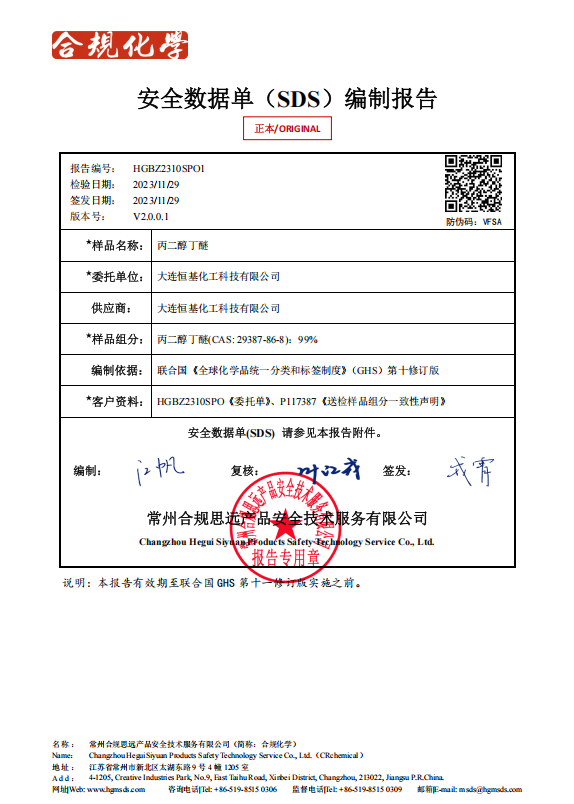
Two execution points follow from that. First, expiry dates belong in the procurement calendar, not in a filing cabinet: a certificate valid through the end of 2026 should trigger renewal planning well before the date, particularly for buyers running continuous production. Second, documentation is grade-specific. An SDS issued for PNB does not automatically cover a DPNB or TPNB purchase — the equivalent dossier should be requested for the exact grade quoted. For EU-bound shipments, the REACH framework (EC No. 1907/2006) provides the compliance reference point.
4. Application-Fit Solvency Profile
This is where the three grades separate in practice. PNB is documented for coatings and inks, cleaning agents and degreasers, the electronics and semiconductor industry, and other industrial applications. Its combination of solvency strength and residue-free drying behaviour makes it the default candidate for precision cleaning and for water-based coating coalescence.
DPNB and TPNB sit further along the same structural series and are typically specified where the formulation needs greater solvency power or a different evaporation profile — high-performance coatings and semiconductor processing are the representative cases. The selection question is not which grade is stronger, but which grade matches the film formation, drying window, and substrate tolerance of the specific process. A harder-working solvent in the wrong process can create surface defects rather than eliminate them.
5. Packaging and Logistics Parameters
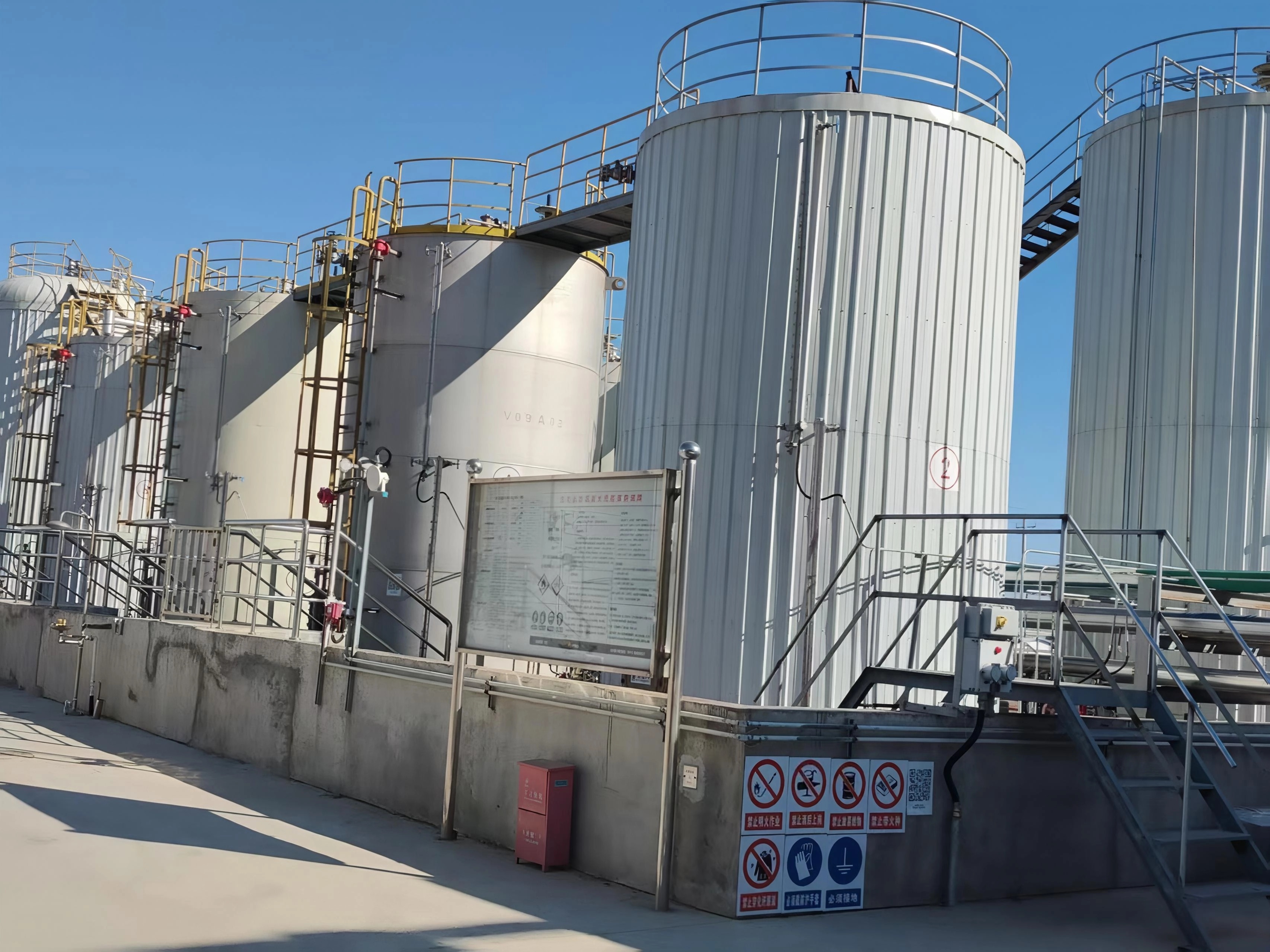
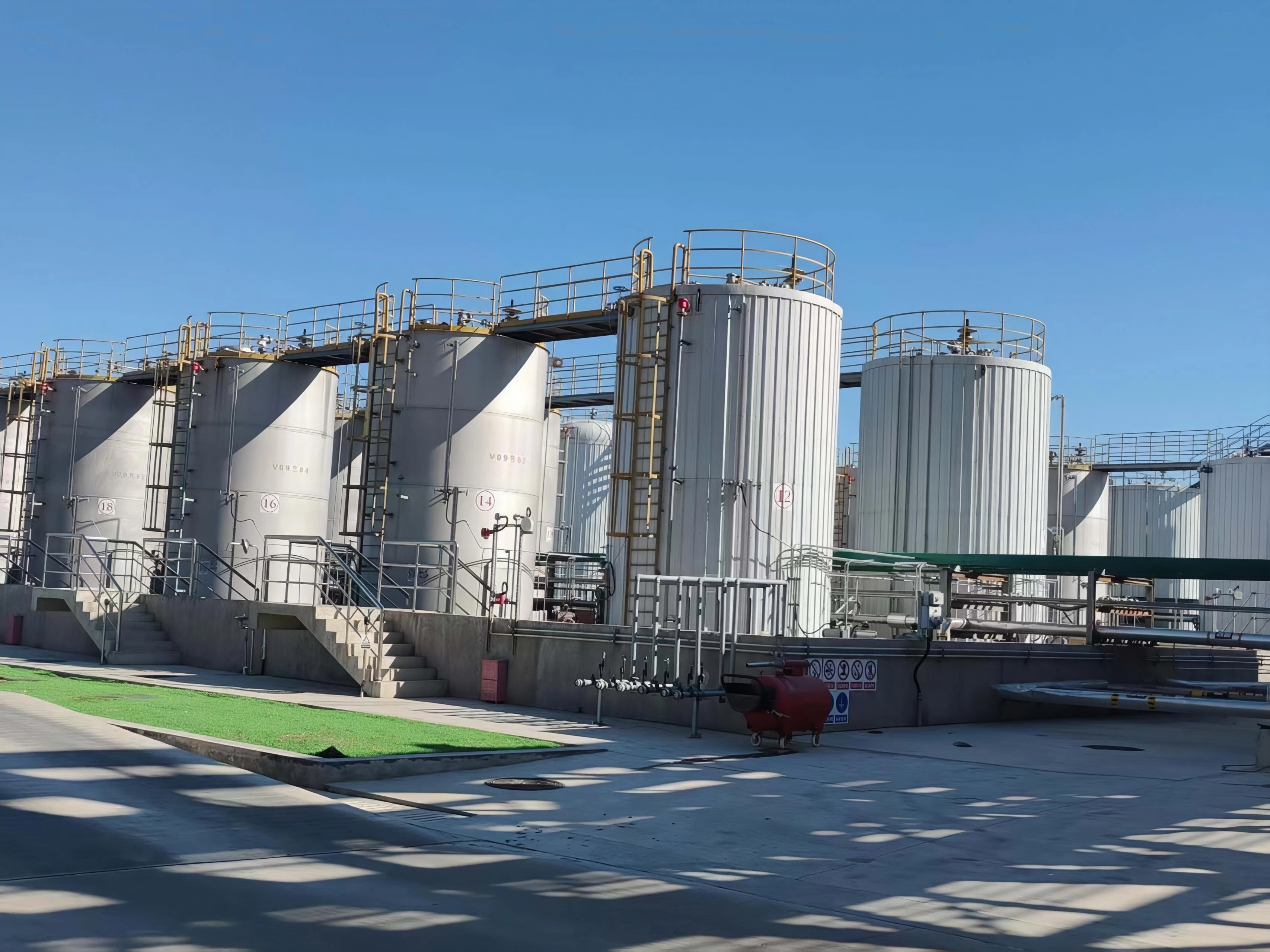
PNB is documented as supplied at 180 kg per drum (180L steel drum), in carbon steel drums. For buyers, the parameter set is not the number alone but the chain it feeds: whether the drum can be connected directly to the filling line, whether carbon steel construction is compatible with storage and transfer equipment, how many drums fit a pallet and a container, and how the receiving warehouse handles the unit weight. Logistics planning for this family should be done before the grade is fixed, because packaging configuration affects both landed cost and handling risk.
6. Supplier Capability Parameters
Grade selection only becomes an executable order when the supplier can meet volume, customization, and support expectations. Yunjian (Guangzhou) Import & Export Trade Co., Ltd. is a chemical trading and supply company established in 2013, serving the coatings, inks, resins, adhesives, pharmaceutical, advertising, and consumer goods industries, with an affiliated production company, Jiangsu Yunjian Chemical Technology Co., Ltd., established in 2018 and a 30,000 m² factory footprint. Its documented product range includes PNB, DPNB, TPNB, DPM, TPM, and DPMA.
Documented capability parameters relevant to an execution-stage buyer include:
- Production mode: OEM / ODM.
- Customization scope: packaging specification, private labeling, and formulation.
- Monthly capacity: 10,000 units.
- Lead time: 30–45 days.
- MOQ: 2 drums for customization programmes.
- Quality control: 100% testing.
- Export markets: global export availability, with main markets in the EU and Southeast Asia.
- After-sales: remote technical support, after-sales consultation, and product usage guidance.
Documented commercial terms: MOQ of 1 bucket, FOB/CIF delivery terms, pre-shipment test as the acceptance criterion, and 30/70 payment terms. These are the standard commercial conditions; customization programmes carry the separate MOQ noted above. Buyers should confirm which set applies to their order type before signing.
Step-by-Step Breakdown: A Six-Step Selection Sequence
The sequence below is ordered so that each step eliminates options rather than accumulating them. It is designed for the transition from evaluation to execution, where a specification must be defensible to both engineering and finance.
- Define the process requirement, not the product name. State the substrate, the drying or evaporation window, the cleaning or degreasing duty, and any low-VOC or odour constraint. The output of this step is a performance target, not a grade.
- Fix the CAS identity. Map the performance target to PNB (15821-83-7), DPNB (35884-42-5), or TPNB (55934-93-5), and require the CAS line on every quotation. This single step prevents most grade-identity drift.
- Confirm solvent purity and content. Verify that the offer describes a pure solvent rather than a blend, and that the purity figure is stated explicitly. For PNB, documented material is 99% purity.
- Collect the documentation pack. Obtain the SDS for the exact grade, check the compilation standard and certificate number, and record the validity dates. For PNB, the reference is certificate HGBZ2310SPO1 under UN GHS Revision 10, valid through 31 December 2026. Add REACH (EC No. 1907/2006) confirmation for EU destinations.
- Match packaging to plant reality. Confirm drum format and fill weight — 180 kg per 180L steel drum for PNB — against receiving equipment, storage compatibility, and container loading plans. Where the standard drum is unsuitable, request a customization under the OEM packaging specification option.
- Validate supplier capability and lead time. Check production mode, customization scope, quality control approach, lead time of 30–45 days, and after-sales support. Where private labeling or formulation adjustment is required, confirm the MOQ that applies to customization.
A specification that has passed all six steps can be issued as a purchase document without further interpretation, which is the practical difference between an evaluation exercise and an execution-ready order.
Use Cases: Where Each Parameter Set Proves Itself
Coatings and Inks
In water-based coating systems, the selection driver is coalescing behaviour alongside low-VOC compliance. In a documented case, a 20-ton project for a coatings industry OEM client in China was completed within one year; applying PNB in coating formulations resulted in stable coating performance and improved quality. The case specifically highlights high purity, stable supply, and excellent compatibility as the determining factors — which maps directly onto parameter groups 2, 4, and 6 in the framework above. For ink applications, the same solvency logic applies, with additional attention to drying behaviour and batch-to-batch consistency.

Industrial Cleaning and Degreasing
PNB is documented for cleaning agents and degreasers. The evaluation parameters here are solvency strength on greases and drying behaviour that leaves no residue on the cleaned surface. Buyers in this segment generally weight documentation and consistency more heavily than price per kilogram, because a cleaning step that fails intermittently is more expensive than a solvent that costs slightly more per unit.
Electronics and Semiconductor Processing
PNB is documented for the electronics and semiconductor industry, where residue-free drying and high solvency for greases are the operative requirements. DPNB and TPNB are typically specified in semiconductor processing and high-performance coating contexts where greater solvency power is required. In these environments, batch documentation and grade traceability are not administrative overhead — they are part of the process control record.
Formulation Customization and Private Label Channels
Distributors and brand owners evaluating OEM/ODM routes should treat customization capability as the primary parameter. Packaging specification, private labeling, and formulation adjustment are documented customization options, with a 2-drum MOQ; this allows a channel partner to establish a differentiated product line without committing to a full production run. The supporting parameters are lead time of 30–45 days and remote technical support and usage guidance after delivery.
Comparison Table: PNB, DPNB, and TPNB Parameter Matrix
| Selection parameter | PNB | DPNB | TPNB |
|---|---|---|---|
| CAS identifier | 15821-83-7 | 35884-42-5 | 55934-93-5 |
| Position in the series | Shorter propylene oxide chain within the butyl ether family | Longer chain (D prefix) | Longest chain of the three (T prefix) |
| Documented application fit | Coatings and inks; cleaning agents and degreasers; electronics and semiconductor industry; other industrial applications | Typically specified for high-performance coatings and semiconductor processing | Typically specified for high-performance coatings and semiconductor processing |
| Solvency and drying behaviour | Excellent solvency with residue-free drying; used as a coalescing agent in water-based coatings | Higher solvency demand profile | Higher solvency demand profile |
| Documented packaging | 180 kg/drum (180L steel drum), carbon steel drums | Confirm grade-specific packaging with the supplier; packaging specification can be customized under OEM/ODM programmes | |
| Documentation | SDS compilation report, certificate HGBZ2310SPO1, UN GHS Revision 10, valid through 31 December 2026, 99% purity scope | Request the equivalent grade-specific SDS dossier for the quoted grade | |
| Regulatory reference for EU | REACH (EC No. 1907/2006) applies to synthesis and industrial use | ||
| Commercial parameters | MOQ 1 bucket on standard terms; FOB/CIF delivery; pre-shipment test acceptance; 30/70 payment terms; OEM/ODM customization MOQ 2 drums | ||
| Lead time | 30–45 days | ||
The table is deliberately structured around verifiable parameters. Where a figure is not documented for a given grade, the correct action is to request it, not to assume parity with a neighbouring grade in the series.
FAQ: Parameter Questions Buyers Ask Before Ordering
What documentation should accompany a PNB, DPNB, or TPNB shipment for regulated markets?
Documentation should be grade-specific and market-appropriate. For PNB, Yunjian holds a Safety Data Sheet (SDS) Compilation Report for Propylene Glycol Butyl Ether (PNB), certificate number HGBZ2310SPO1, issued by Changzhou Hegui Siyuan Products Safety Technology Service Co., Ltd. (CRChemical) under the United Nations Globally Harmonized System (GHS) Revision 10, issued 29 November 2023 and valid through 31 December 2026, covering PNB at 99% purity. For European destinations, propylene glycol butyl ether must comply with REACH regulations (EC No. 1907/2006) for synthesis and industrial use. Because an SDS is issued per grade, buyers quoting DPNB or TPNB should request the equivalent dossier for that exact grade rather than relying on the PNB document.
Can the supplier customize packaging, labeling, and formulation for our process?
Yes. Documented production mode is OEM / ODM, and the customization scope covers packaging specification, private labeling, and formulation. This allows a buyer to align drum format and fill weight with existing handling equipment, place a private label on the packaging, or adjust formulation to a specific process requirement. Customization programmes carry an MOQ of 2 drums, and documented monthly capacity is 10,000 units. Quality control is performed at 100% testing, and after-sales support includes remote technical support, after-sales consultation, and product usage guidance.
What commercial terms and cost drivers should we budget for?
Documented commercial terms are MOQ of 1 bucket, FOB/CIF delivery terms, pre-shipment test as the acceptance criterion, and 30/70 payment terms; OEM/ODM customization programmes carry a separate MOQ of 2 drums. On the cost side, the main variables are grade identity (PNB, DPNB, or TPNB), solvent purity — documented PNB material is a pure solvent at 99% purity — packaging configuration, and the documentation required for the destination market. Market growth assumptions should also be treated as a range: Fact.MR projects the global propylene glycol ether market rising from approximately USD 2.03 billion in 2024 to USD 2.75 billion by 2034, while Orion Market Reports estimates a 2% annual average CAGR for the propylene glycol n-butyl ether segment over 2024–2031.
How should we validate a grade before committing to a full order?
Validation rests on three documented mechanisms. First, pre-shipment test is the stated acceptance criterion, which means the material is checked before dispatch rather than after arrival. Second, samples can be requested against the specific grade and CAS number so that formulation or cleaning trials are run on the exact molecule being purchased. Third, remote technical support and product usage guidance are available to support the trial. Running the trial against the final packaging format is also advisable, particularly where a customized packaging specification is part of the order.
What lead time and volume planning should we build into the schedule?
Documented lead time is 30–45 days, with documented monthly capacity of 10,000 units and an MOQ of 2 drums for customization programmes. For planning purposes, the lead time should be combined with the documentation timeline: where a destination market requires a grade-specific SDS or REACH confirmation, that dossier work should run in parallel with production rather than after it. Buyers can request a quotation and sample pack through WhatsApp or by email at hx@yunjianchem.com.
Conclusion: Turn the Parameter Set into a Purchasing Document
PNB, DPNB, and TPNB are not interchangeable grades distinguished only by price. They are three distinct molecules with distinct CAS identifiers — 15821-83-7, 35884-42-5, and 55934-93-5 — and the selection decision should be traceable to a process requirement rather than to a supplier's default offer. PNB is the documented choice for coatings and inks, cleaning agents and degreasers, and electronics and semiconductor applications, while DPNB and TPNB are typically specified where higher solvency demand exists, as in high-performance coatings and semiconductor processing.
The parameters that make the decision defensible are concrete: pure solvent composition with stated purity, an SDS compiled under UN GHS Revision 10 with a traceable certificate number and a validity date, REACH (EC No. 1907/2006) alignment for European markets, packaging matched to plant handling at 180 kg per 180L steel drum for PNB, 100% testing in quality control, a lead time of 30–45 days, and an OEM/ODM route that covers packaging specification, private labeling, and formulation when a standard grade is not enough.
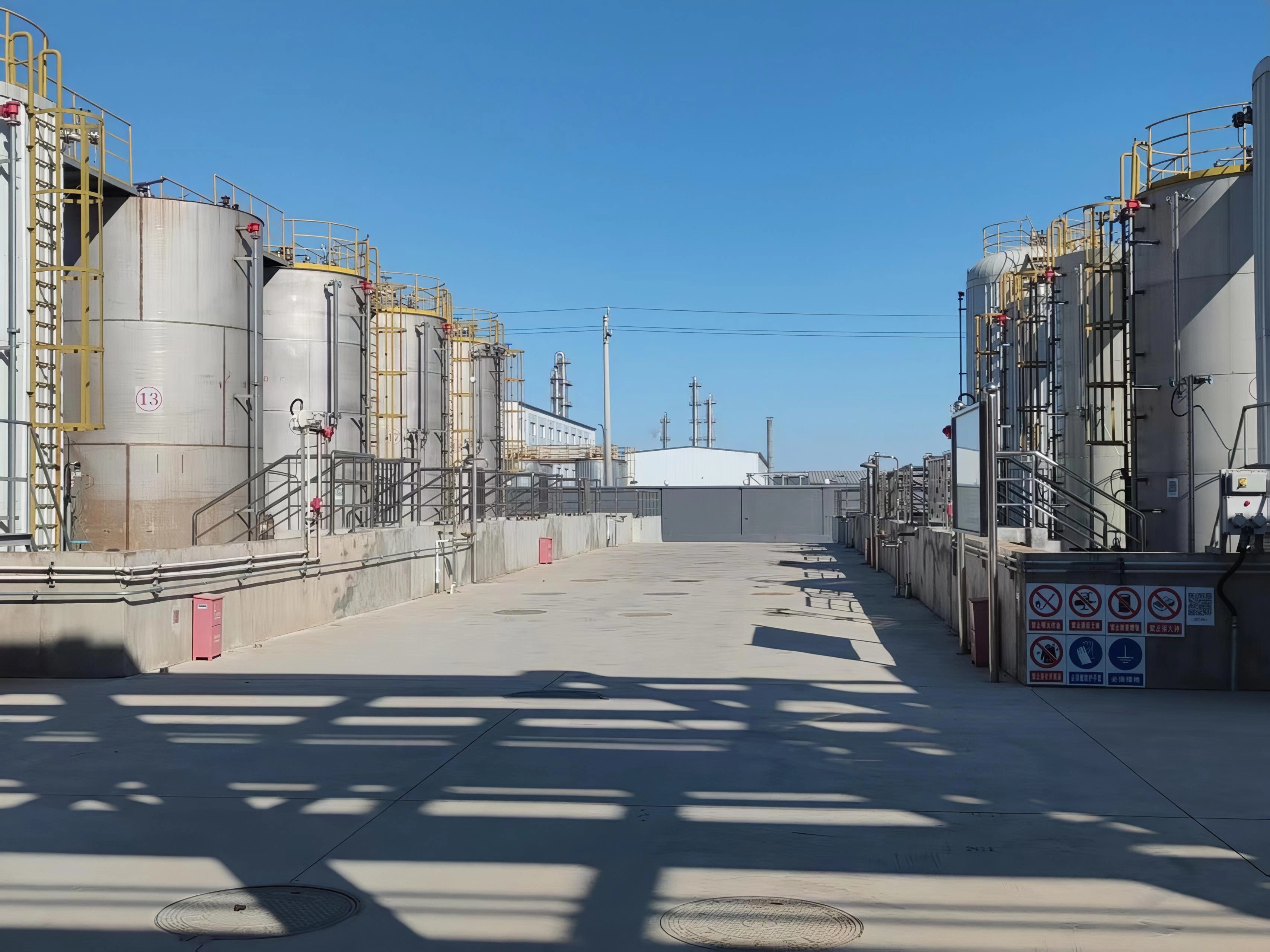
Next step for evaluation-stage buyers: request a sample and a quotation against a specific CAS number and packaging format. Yunjian (Guangzhou) Import & Export Trade Co., Ltd. supports sample validation, technical consultation, and OEM/ODM customization for PNB, DPNB, and TPNB grades.
- Website: www.YUNJIANMAOYI.COM
- Email: hx@yunjianchem.com | Tel: +86 18318338888
- WhatsApp: +86 181-489-99443
- Address: No. 10, Jinrong Avenue, Ningxi Street, Zengcheng District, Guangzhou City
- Product brochure (download): Yunjian product catalogue PDF
Have Questions or Need More Details?
Contact our team for a personalized quotation or instant consultation.
Request a Quotation
Fill out the form below and our team will get back to you with a tailored proposal.
WhatsApp Direct Chat
Prefer to chat in real-time? Message us on WhatsApp for instant assistance & quick answers.
- Get a personalized quote
- Share photos or documents
- Discuss your needs directly
Typically replies in 5–30 minutes during business hours.