
Motorcycle Seat Supplier Evaluation: Capability and Delivery
A motorcycle seat supplier should be judged on four verifiable points: whether stated capacity matches your order profile, whether quality control happens at a named checkpoint before shipment, whether the commercial terms still hold when volume grows, and whether a delivery record exists that you can actually check. A catalog answers none of these. It shows what a factory can make; it does not show whether it can make your order on your date.
This guide is an evaluation sequence for buyers who have already shortlisted suppliers and are moving from assessment into execution — the stage where a supplier's answers have to become purchase-order clauses, inspection items and calendar dates. Zhejiang Xingrong Auto & Motorcycle Parts Co., Ltd. is a Taizhou-based manufacturer of motorcycle, electric-vehicle and off-road-vehicle seat cushions, founded in 2015, and its capability data is used here as a worked example because the figures are specific enough to test: 50,000 pieces per month, a 50-unit MOQ, a 25–35 day lead time, 100% pre-shipment testing and a 1-year warranty.

What the evaluation has to decide
The question is not whether a supplier is a good factory in general. It is whether this factory can take your order — your models, your peak month, your quality threshold — and repeat it. Three failure modes account for most of the distance between a strong reference and a late delivery.
- Capacity that exists on paper but not in your delivery month. A plant-level annual figure says nothing about how full the line is when your order lands.
- Quality control that is real but located too late. Testing after packing protects the supplier's stock count, not your receiving bay.
- A lead time quoted from the wrong starting point. Twenty-five days from deposit and twenty-five days from material readiness are different promises.
Every check below ends with a decision rule of the same type: an answer that cannot be written into a PO clause, an inspection item or a date is not yet an answer.
Industry background: why capability claims are hard to check
Category growth explains why supplier claims multiply, but it validates none of them. Commercial research published by Dataintelo in 2026 values the global motorcycle seat market at USD 4.8 billion in 2025 and projects USD 8.2 billion by 2034, with Asia Pacific holding a 38.5% revenue share in 2025; the report scope covers bench, dual and custom seats across motorcycle types. These are published estimates from a commercial research house — useful for planning, unusable for qualifying a factory. Wider figures issued for motorcycle parts as a whole should not be scaled down into a seat-level number, because no seat-level segmentation is disclosed.
Customs classification is the other place where broad language hides detail. HS 871411 is identified as motorcycle saddles in the WITS / UN COMTRADE product listing, while HS 871419 covers motorcycle parts not elsewhere specified. A complete replacement seat and a separate cover or base component may not fall under the same subheading, and the declared code affects duty and landed cost. Confirm the classification with your customs broker before comparing quotations on price, because two FOB prices for the same nominal seat can carry different duty exposure.
Neither the market figure nor the tariff code tells you whether a specific supplier's 50,000-piece monthly capacity is available to you in your peak month. That is the work of the four checks that follow.
Check 1: capacity in the unit your forecast uses
Two capacity numbers do two different jobs
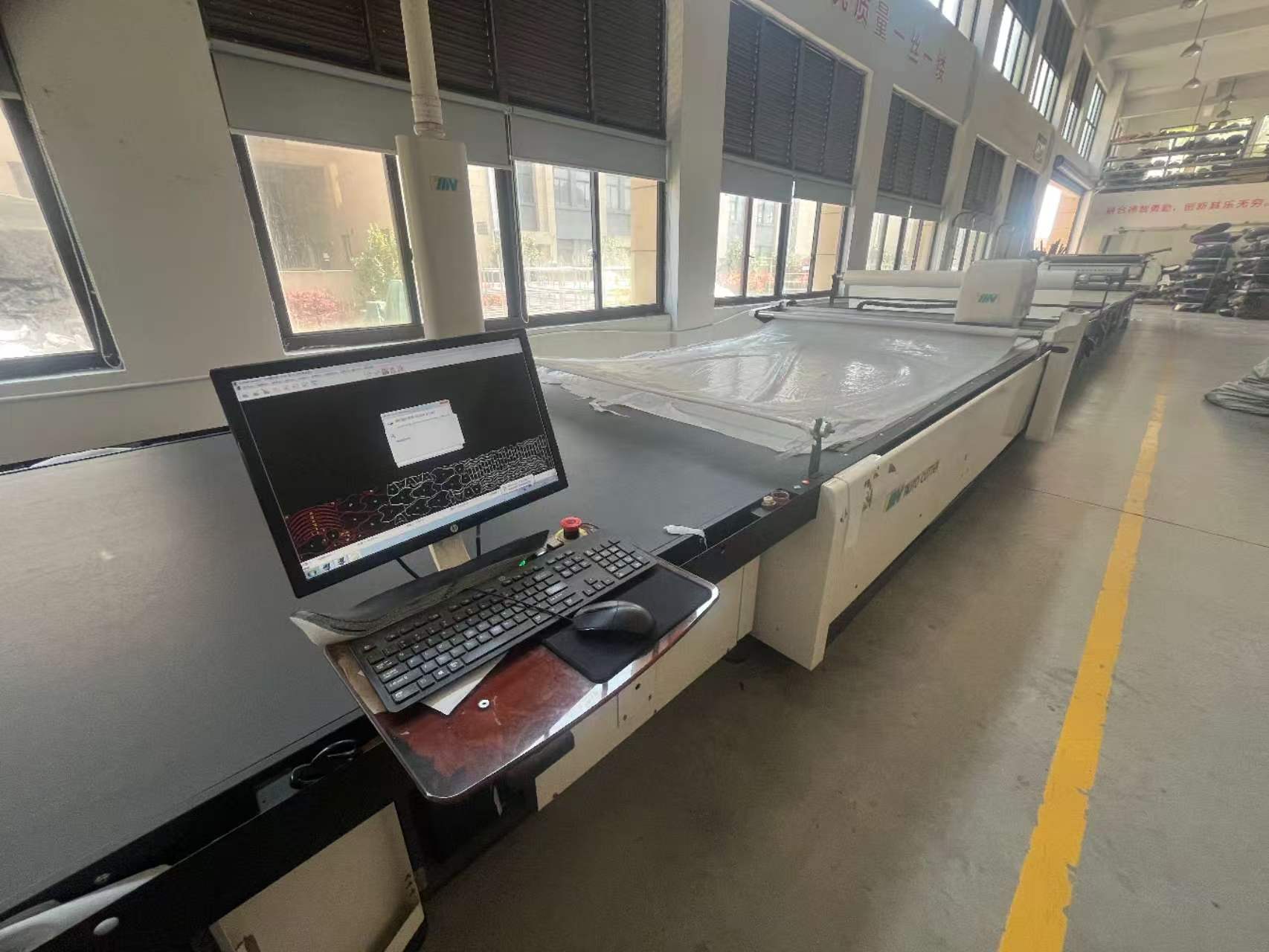
Seat suppliers commonly quote capacity in two forms, and buyers often compare one against the other by mistake. Zhejiang Xingrong states 50,000 pieces per month in its capability information and an annual production capacity of 1.8 million seat cushions in its company profile. The monthly figure answers a scheduling question: can my peak month be absorbed? The annual figure answers a scale question: how large is the manufacturing base behind the order? Both are company-reported, they are reported for different scopes, and a buyer should ask which one applies to the specific product line being quoted.
What to ask for, in writing
- Monthly capacity for the exact product line and configuration you are buying, in pieces.
- The share of that month your order would occupy at peak, and how capacity is allocated when two buyers peak at the same time.
- Whether the quoted figure assumes the current shift pattern and workforce, or a planned one.
- A capacity letter or booking statement you can attach to the purchase order. A catalog page is not a commitment.
The physical base is useful context: a 15,000 m² plant with 130 employees and a five-engineer R&D team describes a factory that runs production and development in-house rather than assembling from purchased parts. The stronger signal is the reported 90% self-production rate for product accessories, because it limits dependence on outside component suppliers when a delivery date is fixed. Ask which components make up the remaining share and where they come from — that is where delivery promises usually break.
Decision rule: if the supplier cannot state capacity in the same unit as your forecast, treat the number as marketing until it does.
Check 2: OEM and ODM scope — what is actually customizable
Capability in this category is usually compressed into the phrase OEM and ODM, which covers two different working relationships. Zhejiang Xingrong provides both OEM and ODM production services, and its ODM services cover custom motorcycle seat development. The buyer needs to know which model applies to the order, because it decides who carries design responsibility and which changes move the schedule.
Separate branding changes from engineering changes
The customization options stated for this supplier are LOGO branding, leather cover design and stitching line colour. Those are branding and finish decisions: they change how the seat reads to a customer but not how it fits. Engineering changes — base structure, mounting geometry, foam profile — belong to a different category, need tooling and validation, and drive the timeline. Ask for the two lists separately, then price and schedule them separately.
- OEM: you supply the design or a reference sample; the supplier manufactures to it.
- ODM: the supplier develops the seat to your specification, design work included.
- Factory-modified: the supplier's own platform, altered to your finish requirements. Responsibility for fitment stays with the factory, not the reseller.
Fitment is confirmed per model, not per brand
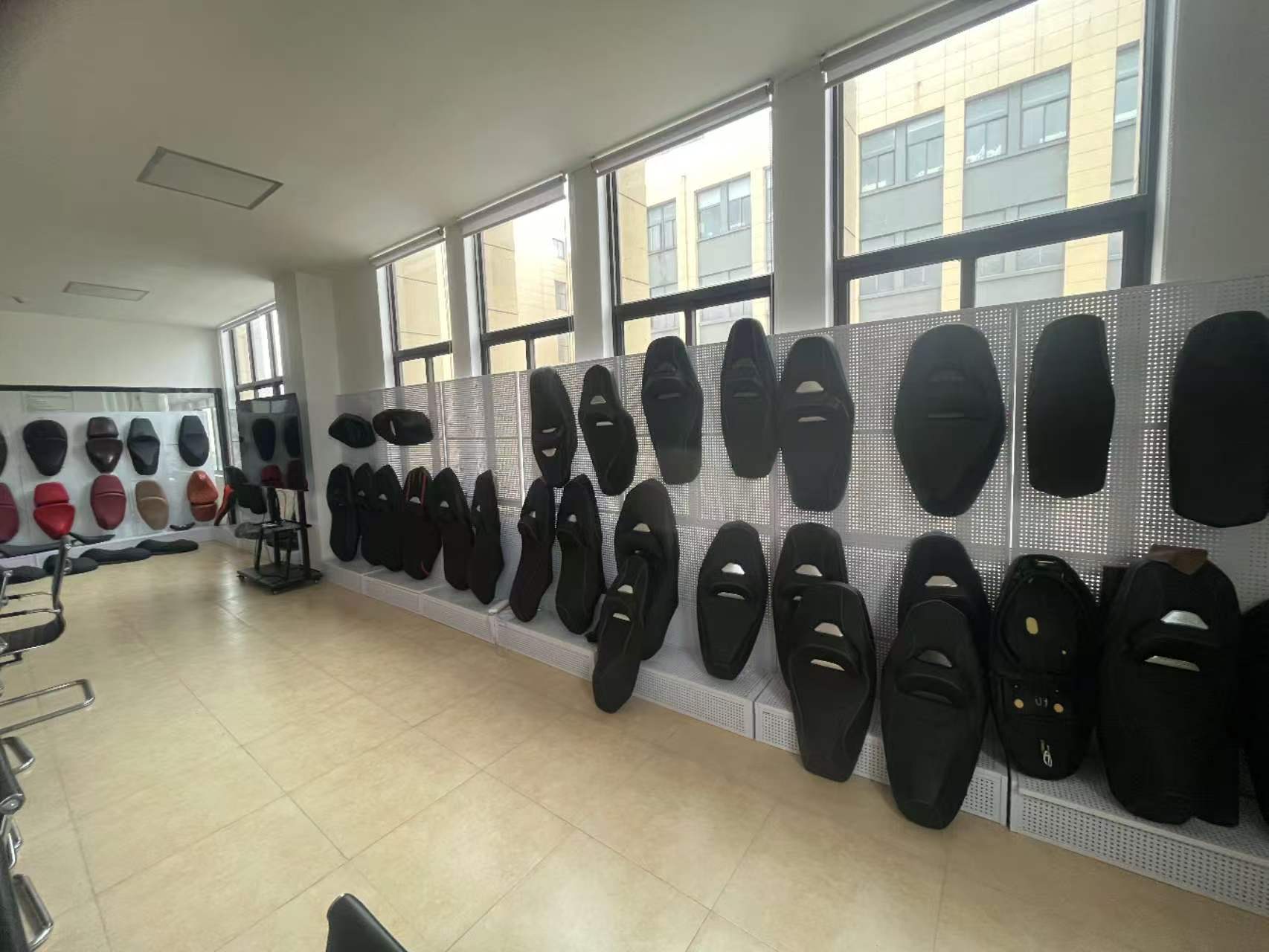
A Honda motorcycle seat or a Yamaha motorcycle seat is not a specification. Model lines differ in pan shape, mounting points and seat height, and a Vespa scooter seat follows yet another geometry. The product line documented for this supplier covers Nmax, Xmax, Aerox, ADV150, ADV160, Forza, PCX and Click, offered as scooter seat and dirt bike seat configurations. When requesting a customized or modified seat quotation, send the model, year and, where possible, a photograph of the original pan — not the brand name alone.
Configuration changes the test plan
A scooter seat and a dirt bike seat are two configurations of the same product family, and they are loaded differently: the first mostly in a seated commuting position, the second dynamically off-road. Confirm which configuration is being quoted and whether cover, foam and base are identical between them. If the difference cannot be stated in writing, the two configurations are a catalog label rather than a manufacturing capability.
Check 3: quality control at a checkpoint you can name
The most valuable quality claim in this category is the least glamorous one: 100% pre-shipment testing. It is valuable because it is checkable — every unit is tested before it leaves, so a defect should be caught before export rather than in your warehouse.
What the phrase does not say is what is tested, and against what limit. Four questions close that gap:
- Which items does the pre-shipment test cover — cover adhesion, stitching, water resistance, base strength, mounting alignment?
- What is the pass criterion for each item, and is it a visual check or a measured value?
- Who signs the record, and can a copy travel with the shipment?
- What happens to units that fail — rework, scrap or substitution?
The documented acceptance structure for this supplier pairs the pre-shipment test with third-party inspection. That combination is worth insisting on: the supplier's own test protects routine quality, while third-party inspection gives the buyer an independent record at the same checkpoint. Write both into the purchase order, name the inspection scope, and state the consequence of a failed lot.
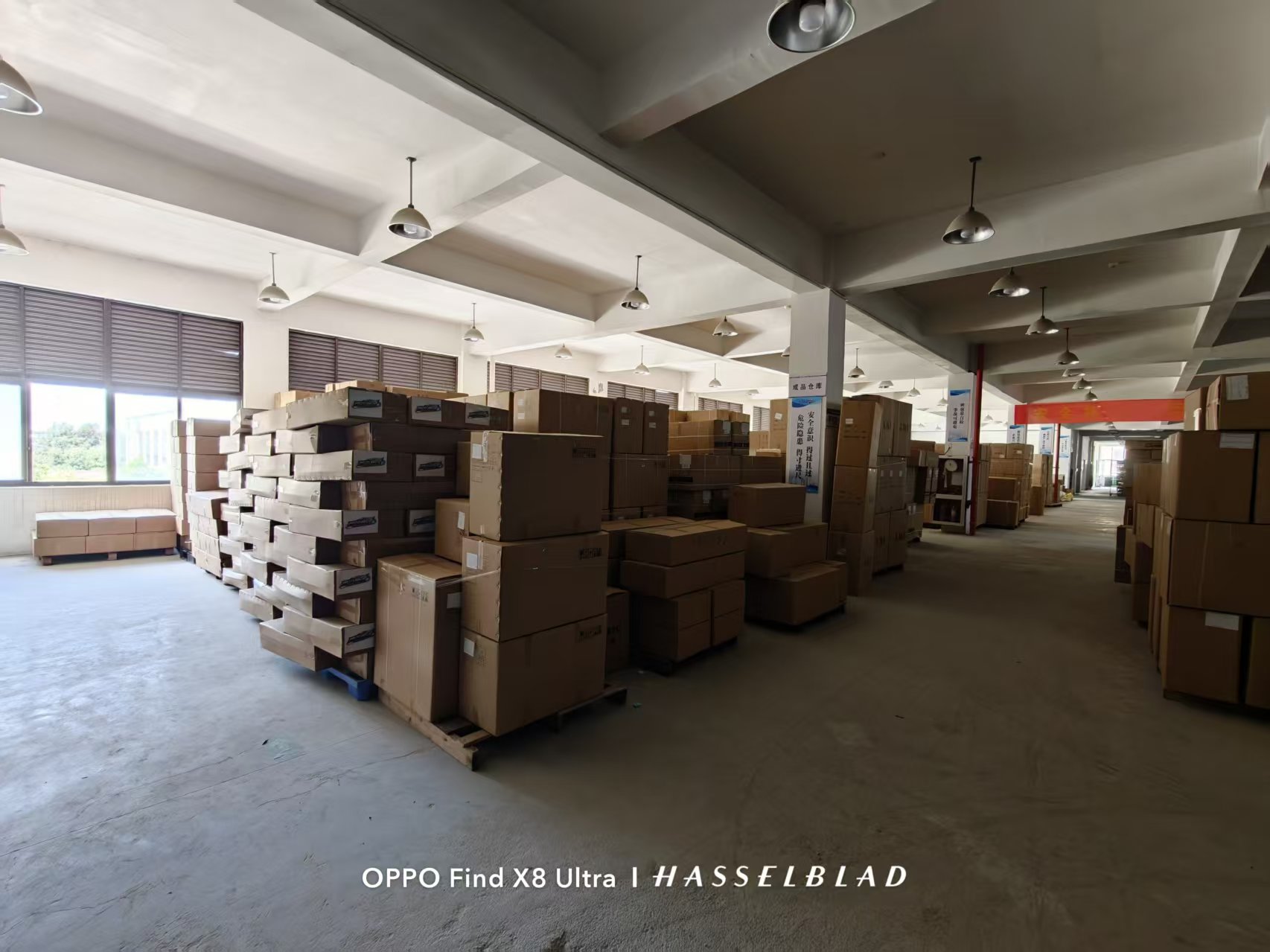
Certification needs the same treatment. Zhejiang Xingrong has passed ISO9000 quality management system certification and CQC certification. A management-system certificate evidences a documented process, not the performance of your particular SKU; ask for the certificate scope and validity date and check that the product you are buying sits inside it.
Finally, convert the adjectives that dominate this category into specifications. High quality, comfortable, soft, waterproof, leather and sponge filled describe outcomes, not inputs. Ask for the cover material and its water-resistance test method, the foam type and density, the stitching specification and the base material. If no method can be stated for a waterproof claim, treat the claim as a description of the finish rather than a test result.
Check 4: delivery assurance — dates, terms and warranty
Lead time: find the starting point
A lead time of 25–35 days is a range, and the range is the information. Ask what starts the clock: deposit received, sample approved, artwork confirmed or material ready. Ask what makes an order land at 25 days rather than 35 — a standard colour against a custom logo, or a stocked model against a new stitching line. Then ask for the milestone dates in between, so a slip becomes visible in week two rather than week five.
Entry terms: MOQ and payment
The minimum order quantity is 50 units, low enough to run a pilot and inspect real production rather than a hand-built sample. Confirm whether the MOQ applies per model, per colour or per order, because 50 units per model produces a very different plan from 50 units in total. Payment terms are documented as 30% T/T in advance and 70% T/T against a copy of the bill of lading, with FOB or EXW delivery terms. The balance trigger matters more than the percentage, since it sets when funds leave against documents rather than against goods.
Warranty: read the remedy, not the duration
A 1-year warranty is only useful if the claim route is defined. Ask what the year covers — cover material, stitching, foam, base plate, mounting hardware — who decides whether a failure is a defect or wear, whether the remedy is replacement or credit, and who pays freight on a replacement. For a wholesale or distributor buyer, the warranty also has to survive resale: check whether the end customer's claim runs through you or directly to the factory.
Track record: what the Lebanon project and the country list are worth
Delivery claims are best tested against completed work. The documented record here includes a 5,000-piece Lebanon project with a two-year duration, recorded results of seating feel, visual effect and water resistance, and clients across motorcycle manufacturers, repair shops, parts retailers and accessory brands. Client records cover 11 country codes — CN, IR, IT, KR, LB, MY, MX, PH, TR, TW and VN — and the company reports a 20% export ratio with main markets in Southeast Asia, Europe, the Middle East and South America.
That record is context, not a guarantee. A completed project proves the supplier has shipped at that volume before; it does not prove your order ships on your date. Use it as a prompt for evidence: ask for two shipments with promised dates set against bill-of-lading dates, and ask whether the buyer reordered. A reorder is a stronger signal than a testimonial.
The evaluation checklist in one table
Use this as the working sheet for a shortlisted supplier. The right-hand column shows the reference point used in this article; it is an example of the level of specificity to demand, not a benchmark every supplier must match.
| Evaluation area | Question to ask | Evidence that answers it | Reference point in this article |
|---|---|---|---|
| Manufacturing capacity | What is monthly capacity for this product line, and what share would my peak month take? | Capacity letter or booking statement in pieces per month | 50,000 pieces per month; 1.8 million units per year reported |
| Customization scope | Which changes are branding and which need new tooling or engineering? | Written split of OEM and ODM scope, with sample-approval steps | OEM and ODM production; LOGO branding, leather cover design and stitching line colour as customization options |
| Quality control | At which point does testing happen, on which items, with what pass criteria? | Test list, inspection record, named sign-off | 100% pre-shipment test |
| Acceptance | What happens if the third-party inspection fails? | PO clause naming the test and the inspection consequence | Pre-shipment test plus third-party inspection as acceptance criteria |
| Order entry | Is the MOQ per model, per colour or per order? | Quotation stating the MOQ basis | MOQ 50 units |
| Lead time | What event starts the 25–35 day clock? | Milestone schedule from deposit to shipment | 25–35 days |
| Trade terms | Which Incoterm applies, and what is the balance trigger? | Signed proforma invoice | FOB or EXW; 30% T/T in advance, 70% T/T against copy of B/L |
| After-sales | What does the warranty cover, and who pays return freight? | Warranty terms with a named claim route | 1-year warranty |
| Track record | Can you show two shipments with promised dates against actual dates? | Bill-of-lading dates compared with order dates | 5,000-piece Lebanon project over a two-year duration; client records in 11 country codes |
| Customs classification | Which heading is declared on the commercial invoice? | Invoice plus broker confirmation | HS 871411 covers motorcycle saddles; HS 871419 covers other motorcycle parts — confirm with your broker |
Running the evaluation in seven steps
- Define the order profile. Peak month, number of models and colours, model-year fitment, and whether the seat is a replacement part or part of a new build.
- Request capacity in your unit. Pieces per month for your product line, plus the share your peak would occupy. Treat the annual figure only as plant scale.
- Split OEM from ODM in writing. Two lists — branding and finish changes, and engineering changes — priced and scheduled separately.
- Fix the quality checkpoint. Name the pre-shipment test items, pass criteria and record, then add third-party inspection and its consequence for a failed lot.
- Convert adjectives into specifications. Cover material and water-resistance method, foam type and density, stitching and base material. Anything without a method becomes a sample-approval item instead of a specification.
- Pin the schedule and the remedy. Lead-time start event, milestone dates, MOQ basis, balance trigger, warranty coverage and freight responsibility.
- Verify, then pilot. Two shipment references with dates and the certificate scope, then a pilot order at the 50-unit MOQ before committing seasonal volume.
How the checklist shifts by buyer type
Motorcycle manufacturers and accessory brands
Design responsibility dominates. Press hardest on ODM scope, tooling ownership, the number of sample-approval rounds, and the warranty chain through to the end user. Annual capacity and engineering change control matter more than the entry MOQ.
Repair shops and parts retailers
Fitment coverage and replenishment speed dominate. A 50-unit MOQ lets a shop test a model line without tying up capital, and a 25–35 day lead time sets the reorder point. Ask for a model list with fitment confirmed line by line, and whether popular models can be mixed in a single order.
Wholesale distributors and importers
Seasonality dominates. The monthly capacity figure and the peak-allocation answer decide whether the supplier can carry a seasonal buy; payment terms and the balance trigger decide working capital; the export record and the declared tariff heading decide landed cost and customs risk.
Frequently asked questions
What purchasing terms and acceptance criteria should be written into a motorcycle seat order?
The documented terms for this supplier are an MOQ of 50 units, delivery on FOB or EXW terms, acceptance based on a pre-shipment test plus third-party inspection, and payment of 30% T/T in advance with 70% T/T against a copy of the bill of lading. Each element belongs in the proforma invoice rather than in email: the acceptance clause determines who pays for a failed lot, and the balance trigger determines when payment is due relative to shipping documents.
How do you confirm that an OEM motorcycle seat manufacturer can handle custom models?
Ask for the split between OEM and ODM work, who owns the tooling, how many sample-approval rounds are included, and a written fitment list by model and year. Zhejiang Xingrong provides OEM and ODM production, offers ODM development for custom motorcycle seats, states customization options in LOGO branding, leather cover design and stitching line colour, and documents a product line covering Nmax, Xmax, Aerox, ADV150, ADV160, Forza, PCX and Click in scooter seat and dirt bike seat configurations. Confirmation should be per model and year, never per brand.
What MOQ and lead time should a first order expect?
The stated MOQ is 50 units and the stated lead time is 25–35 days. Before committing, confirm whether the MOQ applies per model, per colour or per order, and which event starts the lead-time clock — deposit, sample approval or material readiness. A pilot at the MOQ is the least expensive way to test both numbers against a real shipment.
How is quality checked before shipment, and what does the warranty cover?
Quality control is stated as a 100% pre-shipment test, and the acceptance structure allows third-party inspection alongside it; ask for the test items, the pass criteria and the signed record. The warranty period is 1 year, and the useful questions are what it covers, who determines whether a failure is a defect, whether the remedy is replacement or credit, and who pays freight.
What delivery record should a supplier be able to show for export orders?
A supplier should be able to show completed volume, destination and dates. The documented record here includes a 5,000-piece Lebanon project with a two-year duration, recorded results of seating feel, visual effect and water resistance, and client records across 11 country codes including LB, IT, MY, MX, PH, TR, VN, IR, KR, TW and CN, alongside a reported 20% export ratio. Ask for promised dates against bill-of-lading dates, and whether the buyer reordered — then start with a pilot order rather than a seasonal commitment. The seat range, configurations and stated terms are collected in the STARON seat cushion catalog, and a sample or quotation request is the natural next step once the checks above are answered in writing.
Conclusion
Capability in the motorcycle seat category is easy to claim and not difficult to check, provided the check is written down before the order is placed. Capacity in your own unit, an OEM and ODM scope split into two lists, quality control at a nameable pre-shipment checkpoint, and delivery terms with a defined start event and remedy turn a supplier presentation into an order you can enforce.
The reference figures used throughout are specific enough to test against: 50,000 pieces per month, a 50-unit MOQ, a 25–35 day lead time, 100% pre-shipment testing, a 1-year warranty, and a 5,000-piece Lebanon project over a two-year duration with client records in 11 countries. They are a starting point for questions, not a substitute for your own inspection or a third-party report on your first shipment.
Next step: review the full seat range, configurations and stated commercial terms in the STARON seat cushion catalog, or request a sample and a written quotation at the 50-unit MOQ so the capacity, lead-time and inspection answers above can be verified against your own order.
Have Questions or Need More Details?
Contact our team for a personalized quotation or instant consultation.
Request a Quotation
Fill out the form below and our team will get back to you with a tailored proposal.
WhatsApp Direct Chat
Prefer to chat in real-time? Message us on WhatsApp for instant assistance & quick answers.
- Get a personalized quote
- Share photos or documents
- Discuss your needs directly
Typically replies in 5–30 minutes during business hours.