
How to Match a Motorcycle Seat to Your Bike Model, Riding Conditions, and Sourcing Project
How to Match a Motorcycle Seat to Your Bike Model, Riding Conditions, and Sourcing Project
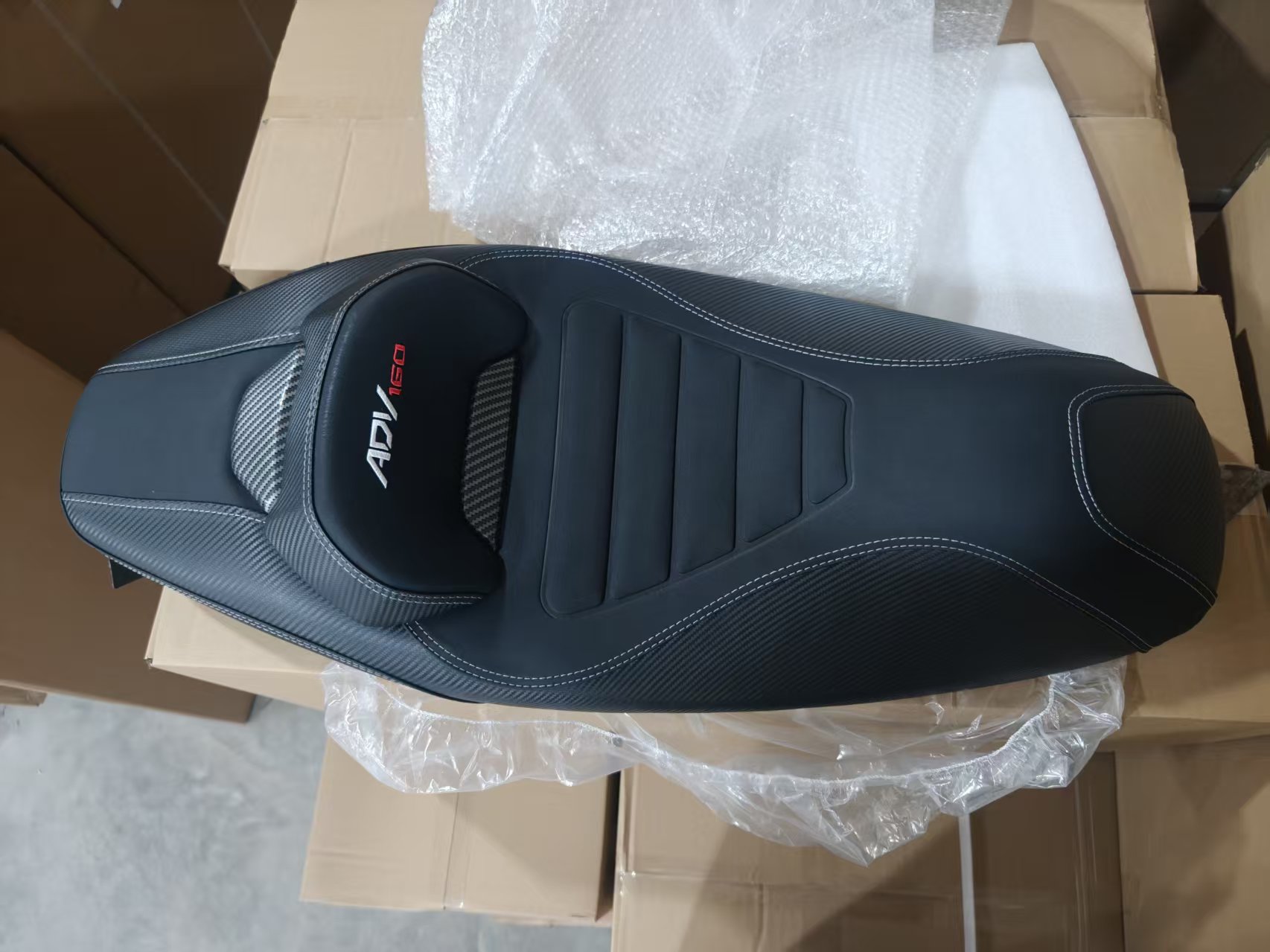
ADV160 motorcycle seat — example of model-specific replacement seat coverage
When a motorcycle seat loses comfort, wears out, or no longer fits the rider's needs, the replacement decision involves more than choosing a similar-looking cushion. The new seat must match the motorcycle model, the conditions in which the bike is used, and the commercial process behind the order. This makes seat selection a project-level task for repair shops, parts retailers, motorcycle manufacturers, and accessory brands.
This guide explains how to match a motorcycle seat to the right bike model and use case, which materials matter for waterproof and comfortable seats, and how to evaluate a manufacturer for OEM, ODM, or wholesale supply. The reference manufacturer used in this guide is Zhejiang Xingrong Auto and Motorcycle Parts Co., Ltd. (Staron), a seat cushion manufacturer based in Taizhou City, Zhejiang Province.
Problem Definition: Why Fitment and Environment Matter
The main difficulty in aftermarket motorcycle seat sourcing is that a seat is not a universal part. It operates as a non-powered static fitting part, and it must be used together with the motorcycle main body frame and motorcycle body shell. This means the base, shape, and fixing structure must be designed for a specific motorcycle model or model family. A seat that looks similar from a distance can be useless if the base does not align with the body.
The second difficulty is the operating environment. A replacement seat used in a rainy region needs to perform under waterproof conditions. It also needs to meet application requirements such as weather resistance, a wear-resistant surface, and ergonomic design. If these requirements are not part of the seat specification, the product may fail earlier than expected or cause rider discomfort.
The third difficulty is the gap between buyer expectations and supplier capabilities. A buyer who wants a private brand, a custom leather cover, or a specific stitching line color needs a supplier that supports OEM and ODM production. A standard product without customization support may not satisfy the commercial goal of the project.
Industry Background: Aftermarket Demand and Material Trends
The global motorcycle seats market was valued at USD 7.42 billion in 2025 and is projected to reach USD 13.30 billion by 2032, growing at a CAGR of 8.69%, according to Market Research Future. This growth is closely connected to the need for seat replacement, comfort upgrades, and changes in motorcycle ownership patterns.
The aftermarket distribution channel holds the largest share of the motorcycle seat market, accounting for approximately 62.3% of revenue, according to Dataintelo. The Asia-Pacific region dominated the market with a revenue share of 38.5% in 2025, driven by high production and sales in China. For importers and distributors, these figures indicate that aftermarket replacement demand is not a small niche; it is the main commercial channel for seats sold outside original vehicle production.
Material trends also shape this demand. Leather remains a premium material for motorcycle seats, but synthetic options such as vinyl and foam are increasingly used for waterproof and soft surface features in the mid-range segment, according to Fortune Business Insights. This trend is consistent with replacement seats made from PVC leather and high-density foam, which can provide the required durability without the higher cost of natural leather.
Zhejiang Xingrong Auto and Motorcycle Parts Co., Ltd. was founded in 2015 and operates a 15,000-square-meter plant in Taizhou City, Zhejiang Province. The company employs about 130 people, has an annual production capacity of 1.8 million seat cushions, and maintains a product accessories self-production rate of 90%. It mainly produces motorcycle, electric vehicle, and off-road vehicle seat cushions. The company has passed ISO9000 quality management system certification and CQC certification, and exports to Southeast Asia, Europe, the Middle East, and South America. About 20% of its output is sold in overseas markets.
Detailed Solution: How to Match a Motorcycle Seat to Your Project
To match a motorcycle seat to a project, a buyer should evaluate model fitment, material structure, surface performance, and production capability at the same time. These four factors turn a generic seat into a project-specific solution.
1. Confirm Model Fitment
Staron's motorcycle seat product line covers scooter seats and dirt bike seats for models including the Yamaha Nmax, Yamaha Xmax, Yamaha Aerox, Honda ADV150, Honda ADV160, Honda Forza, Honda PCX, and Honda Click. These seats are intended for motorcycle parts replacement. The product must be used with the motorcycle main body frame and motorcycle body shell, so the seat base must be matched to the body structure of the target model. For repair shops and parts retailers, checking the exact model code before ordering is the first step to avoiding fitment errors.
2. Choose the Right Material Structure
The replacement seat is made of PVC leather, PU foam, and PP plate, with a cushion made of 80D high density foam. The product specification also includes a high-strength floor structure. In practical terms, the PVC leather forms a durable outer layer, the PU foam adds softness, and the PP plate provides the supporting base. The 80D high density foam is a medium-firm foam grade commonly used when a seat must balance comfort and support. This combination is relevant for buyers because the seat base and cushion work together to hold the rider's weight while keeping the surface stable.
3. Match the Seat to the Riding Environment
For waterproof environments, this seat is designed to operate under waterproof conditions. The application also has special requirements including weather resistance, a wear-resistant surface, and ergonomic design. Buyers in coastal, rainy, or tropical markets should treat these properties as baseline requirements, not optional upgrades. The same logic applies to motorcycles that are parked outdoors, used daily, or used in areas with frequent road spray.
4. Confirm Comfort and Appearance Goals
In its intended application, the seat provides a comfortable riding and sitting experience. It also functions to beautify the motorcycle's appearance. The product is used for old seat maintenance and direct replacement. For an owner who wants to refresh the look of a scooter without replacing the whole motorcycle, a seat with a clean surface, consistent shape, and correct geometry is a practical upgrade. For a retailer, this makes the seat easier to explain to customers because the benefit is visible and immediate.
5. Check OEM, ODM, and Customization Capability
When a project requires a specific brand identity or styling, the supplier must support more than standard production. Staron offers OEM and ODM production modes, with customization options that include LOGO brand, leather cover design, and stitching line color. This is important for motorcycle accessory brands that want to sell seats under their own brand, and for repair shops that want to offer a personalized service to end customers. Customization affects ordering, sampling, and approval, so it should be confirmed before mass production starts.
6. Review Capacity, Lead Time, and After-Sales Support
Production capability is part of the matching process. Staron has a monthly capacity of 50,000 pieces, a lead time of 25 to 35 days, and a minimum order quantity of 50 pieces. The company performs 100% pre-shipment testing and provides a 1-year warranty. Its R&D team includes 5 engineers who work on product structure and customization. For a buyer, these figures show whether a manufacturer can support the required order size, schedule, and quality expectations.
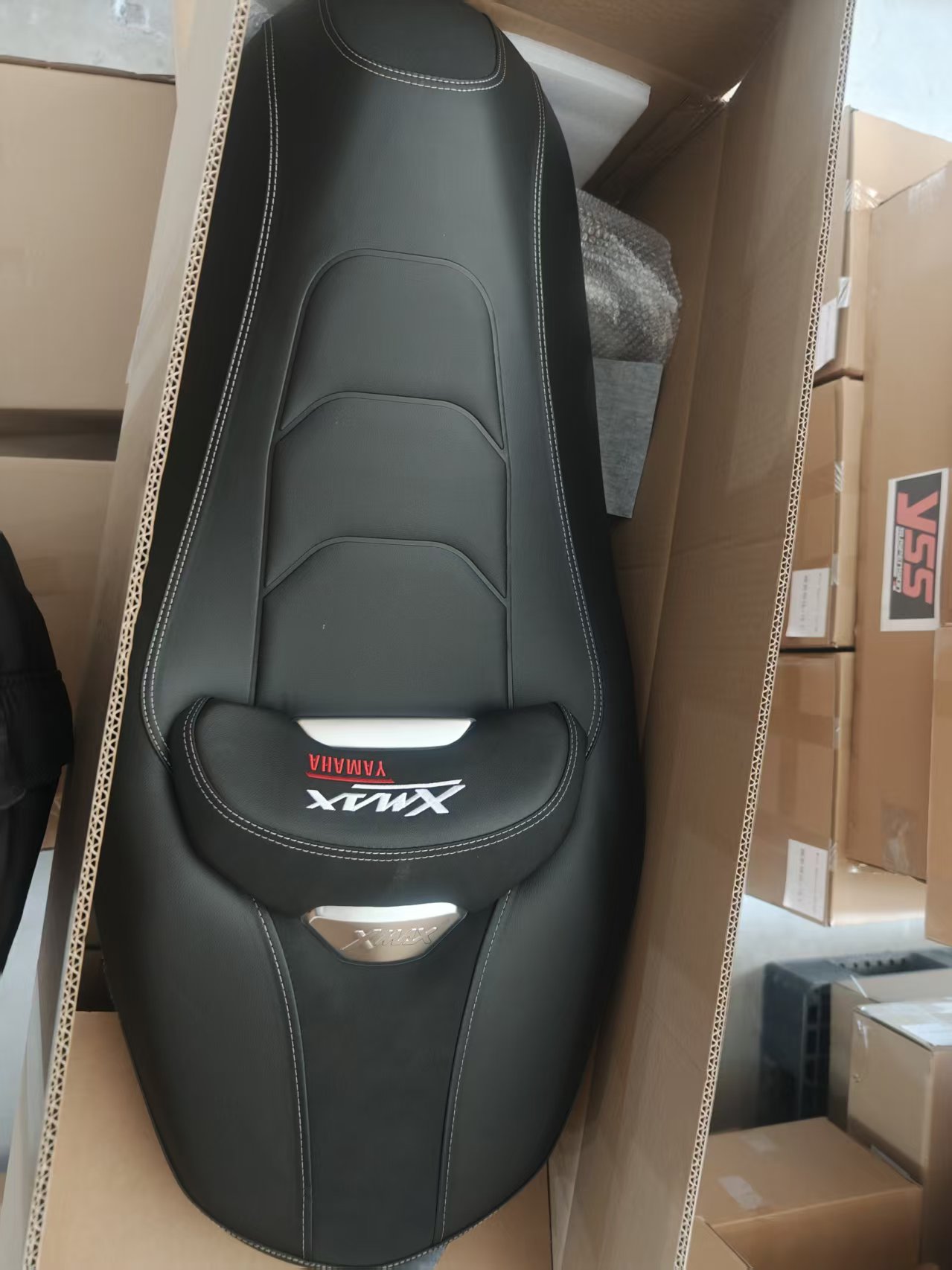
Xmax model coverage in the Staron motorcycle seat line
Step-by-Step Breakdown: Sourcing a Motorcycle Seat for a Project
The following process can be used by a buyer who is sourcing a motorcycle seat for an aftermarket replacement, modification, or branded product project.
- Step 1. Define the project type. Decide whether the seat is for direct replacement, appearance modification, or OEM/ODM production. This determines whether the buyer needs standard stock, custom covers, or a complete production arrangement.
- Step 2. Confirm the exact motorcycle model. Identify the model family, such as the Yamaha Nmax, Xmax, Aerox, Honda ADV150, ADV160, Forza, PCX, and Click. The seat must fit the motorcycle main body frame and body shell, so model information is required before sampling or ordering.
- Step 3. Assess the riding environment. Check whether the seat will be used under waterproof conditions, heavy rain, high humidity, or rough road surfaces. The seat should meet the special requirements of weather resistance and a wear-resistant surface, and the profile should follow ergonomic design principles.
- Step 4. Select the material package. Use a material structure that supports the project goal. The proven package for this product is PVC leather, PU foam, PP plate, and an 80D high density foam cushion. For waterproof projects, confirm that the outer cover and inner cushion are suitable for wet conditions.
- Step 5. Define customization and branding. If the seat needs a brand logo, a special leather cover design, or a stitching line color, list these requirements before contacting the supplier. This reduces sampling cycles and keeps the quotation aligned with the final product.
- Step 6. Verify quality control and compliance. Ask for the manufacturer's quality certifications and testing process. In this case, Zhejiang Xingrong has passed ISO9000 quality management system certification and CQC certification, and performs 100% pre-shipment testing. For vehicle-level compliance, buyers should also confirm whether the destination market references UN Regulation No. 17 (ECE R17), which sets uniform provisions for vehicle seats, anchorages, and head restraints.
- Step 7. Plan quantity, lead time, and warranty. Align the order size with the supplier's production capacity. For Staron, the MOQ is 50 pieces, the monthly capacity is 50,000 pieces, the lead time is 25 to 35 days, and the after-sales warranty is 1 year. This planning stage prevents delays and helps the buyer communicate delivery expectations to downstream customers.
Use Cases: Typical Applications for This Motorcycle Seat
This motorcycle seat is suitable for motorcycle manufacturers, motorcycle repair shops, motorcycle parts retailers, and motorcycle accessory brands. The most common use case is direct seat replacement for scooters whose original cushion has worn out or no longer provides enough comfort. It is also used to upgrade the appearance of a motorcycle and to support maintenance of old seats.
The application scenario is common in markets including Iran, India, Italy, South Korea, Lebanon, Portugal, Thailand, Taiwan, Turkey, and Vietnam. These markets include both European and Asian regions where scooters are part of daily commuting and where parts replacement is an ongoing commercial activity.
A documented case involved a Lebanon-based motorcycle parts replacement customer. Over a two-year cooperation, the customer ordered 5,000 pieces of motorcycle seats. The results included great seating feel, good visual effect, and waterproof performance. The key highlights of the case were seating feel, visual effect, repair and replacement capability, and waterproof performance. This case shows how a replacement seat project can produce measurable results for a distributor or repair chain.
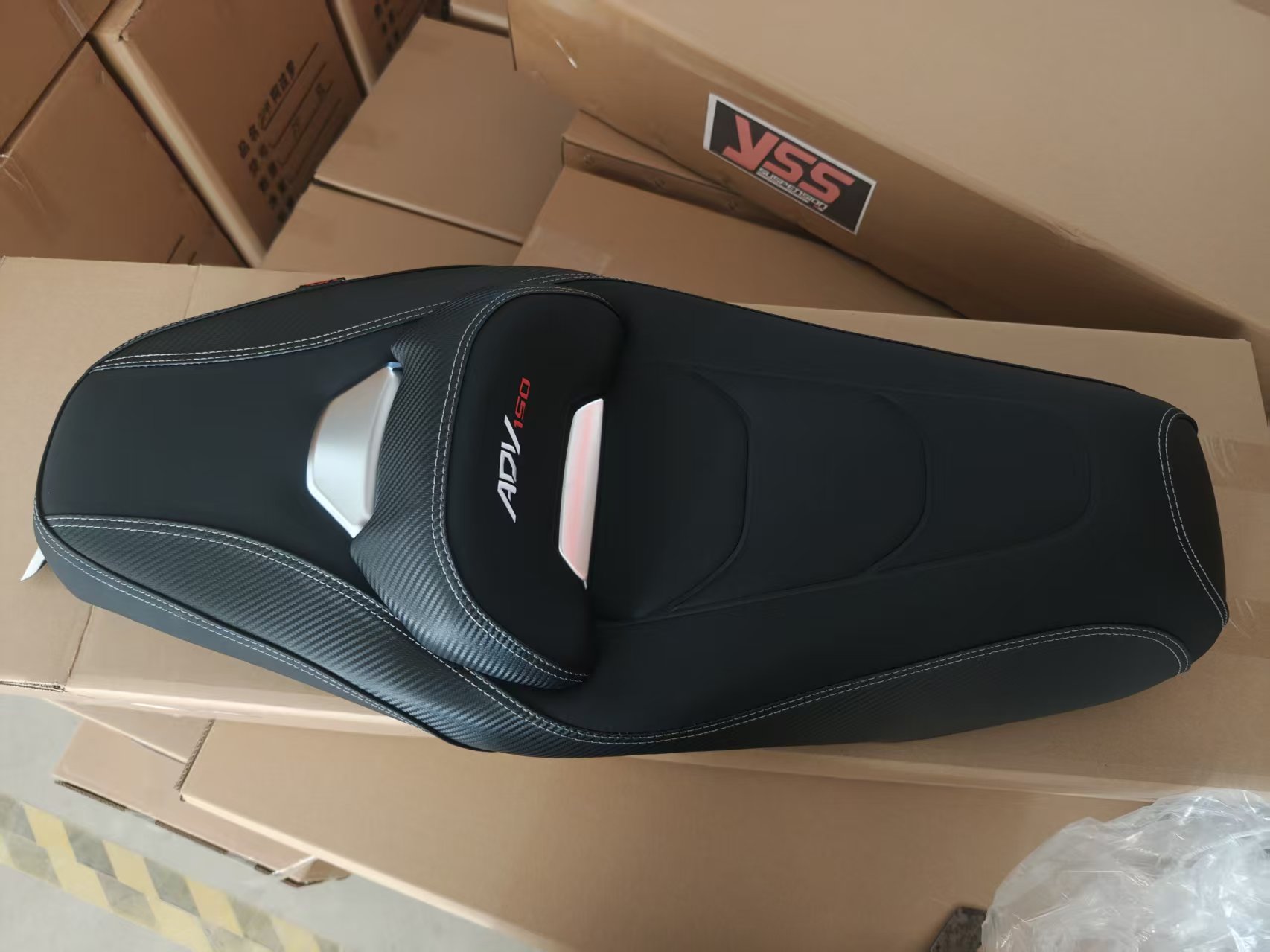
ADV150 replacement motorcycle seat for waterproof aftermarket projects
Comparison Table: Application Requirements vs. Seat Solution
The table below maps common project requirements to the seat features documented for this product.
| Application Requirement | Matching Seat Feature | Supporting Evidence |
|---|---|---|
| Waterproof operation | Designed for waterproof environments and operates under waterproof conditions | PVC leather outer cover with a waterproof-oriented material structure |
| Weather resistance | Withstands weather-exposed use | Special application requirements include weather resistance |
| Wear-resistant surface | Surface can withstand road use | Special application requirements include a wear-resistant surface |
| Comfortable riding | 80D high density foam cushion | Seat cushion is made of 80D high density foam |
| Appearance upgrade | Good visual effect and leather cover customization | Seat functions to beautify the motorcycle appearance |
| Direct replacement | Non-powered static fitting | Must be used with motorcycle main body frame and body shell |
FAQ: Motorcycle Seat Fitment and Waterproof Aftermarket Sourcing
The following questions are common follow-ups when buyers evaluate a motorcycle seat for a project.
1. What should a buyer check when sourcing a waterproof motorcycle seat for an aftermarket model?
The seat should be designed for waterproof environments and able to operate under waterproof conditions. Staron's motorcycle seat uses PVC leather, PU foam, PP plate, and an 80D high density foam cushion, and the application requirements include weather resistance, a wear-resistant surface, and ergonomic design. Buyers should confirm these factors before ordering.
2. Which motorcycle models can this replacement seat fit?
The seat line covers the Yamaha Nmax, Yamaha Xmax, Yamaha Aerox, Honda ADV150, Honda ADV160, Honda Forza, Honda PCX, and Honda Click models. The seat must be used with the motorcycle main body frame and motorcycle body shell, and it is intended for old seat maintenance and direct replacement.
3. Can the seat be produced with a custom brand or appearance?
Yes. The manufacturer supports OEM and ODM production with customization options including LOGO brand, leather cover design, and stitching line color. The monthly capacity is 50,000 pieces, and the MOQ is 50 pieces.
4. What quality control and compliance standards are relevant for motorcycle seats?
Zhejiang Xingrong has passed ISO9000 quality management system certification and CQC certification and performs 100% pre-shipment testing. For vehicle-level compliance, UN Regulation No. 17 (ECE R17) provides uniform provisions for the approval of vehicle seats, anchorages, and head restraints. Buyers exporting to regulated markets should verify the standards that apply to their destination.
5. How do I start a motorcycle seat project with the manufacturer?
Confirm the motorcycle model, target quantity, and any customization such as LOGO brand or stitching line color. The MOQ is 50 pieces, and the lead time is 25 to 35 days. For a quotation, product specifications, or the catalog, contact Mike at mike@zjstaron.com or WhatsApp +86 13738695125. The latest seat cushion catalog can be downloaded here.
Conclusion
Matching a motorcycle seat to a bike model and riding conditions is not a one-step purchase; it is a fitment and sourcing process. Buyers should define the project, confirm the motorcycle model, check the material structure, and verify the manufacturer's quality control, production capacity, and after-sales support.
With clear requirements, a motorcycle seat can function as a reliable replacement part, a source of riding comfort, and a practical product for retailers, workshops, and accessory brands. For buyers evaluating a waterproof aftermarket motorcycle seat project, Zhejiang Xingrong can provide fitment support, customization options, and volume production. Send the motorcycle model and target quantity to receive a more specific recommendation.
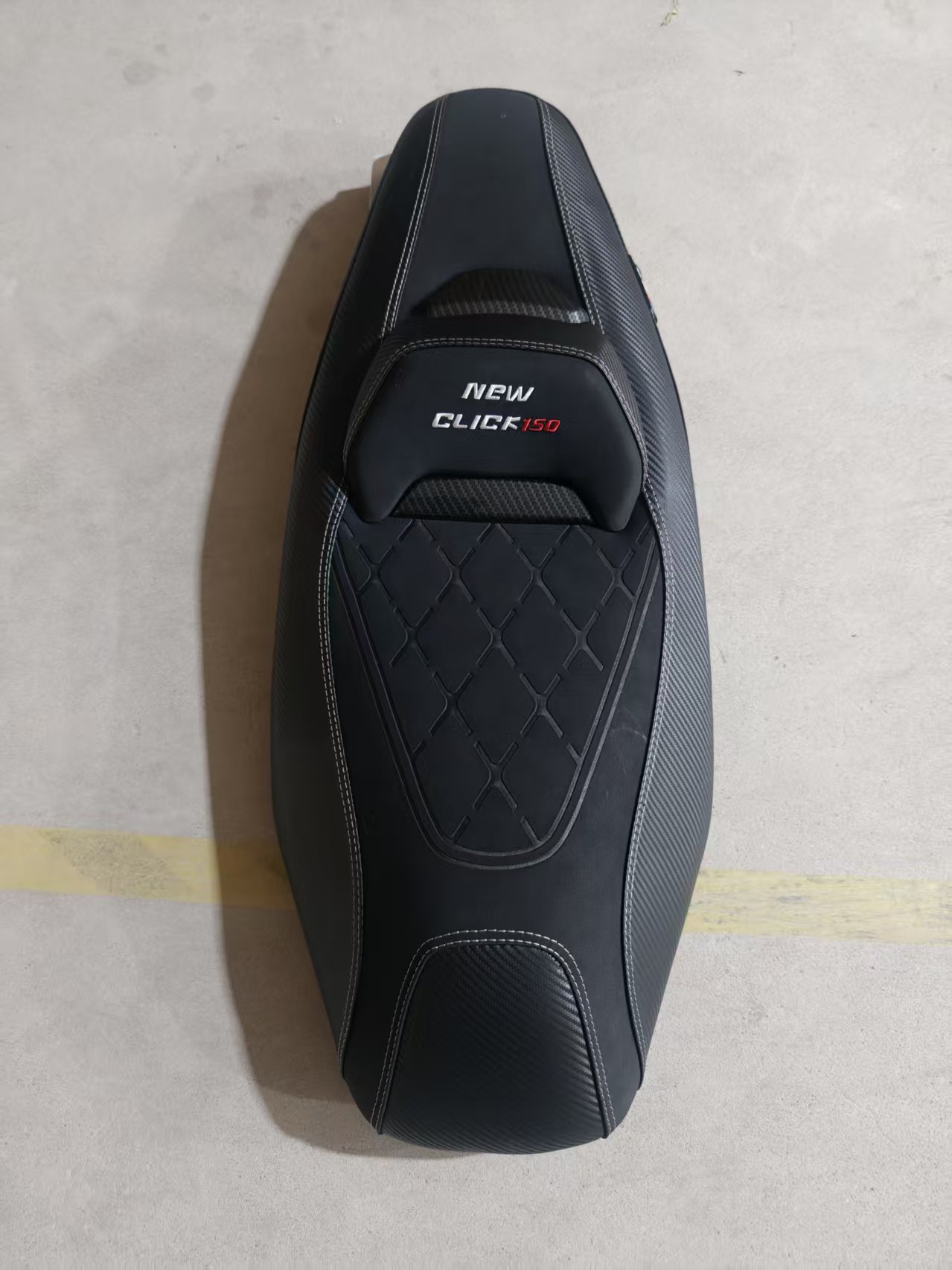
Click 150 replacement seat — example of direct replacement model coverage
Planning a motorcycle seat replacement or modification project?
Contact Mike to discuss your model, request the latest catalog, and get a quotation.