Matching Replacement Seats to Motorcycle Models: Nmax to Click Application Scenarios
Matching Replacement Seats to Motorcycle Models: Nmax to Click Application Scenarios
A replacement scooter seat only counts as compatible when two separate layers of the product line up with the machine. The seat pan has to follow that model's mounting points, hinge position and seat-lock layout, and the cover-and-foam build has to survive the weather and the riding pattern the scooter actually faces. A seat produced for a Yamaha Nmax will not simply bolt onto a Honda Click, even though both are flat-floor scooters bought by the same kind of commuter.
This guide covers the eight scooter nameplates that Zhejiang Xingrong Auto & Motorcycle Parts Co., Ltd. (Staron) produces seats for - Nmax, Xmax, Aerox, ADV150, ADV160, Forza, PCX and Click - and explains how each application is matched, which surface requirements matter (weather resistance, a wear-resistant surface and waterproof capability), and what a buyer should confirm before releasing an order.
The Problem: A Replacement Seat Fails for Three Different Reasons
A replacement seat is a repair part first. It is designed for the repair and replacement of original seats and for motorcycle seating and replacement applications, and it is normally bought by someone who already knows which scooter is standing in the workshop. That is exactly what makes compatibility so unforgiving: the customer's machine is fixed, and the seat either matches it or it does not.
When a replacement programme goes wrong, the failure usually falls into one of three groups, and each group is fixed at a different stage of the order.
- Interface failure. The pan is a structural part, not a universal cushion. Mounting points, hinge and seat-lock position are defined by the model, so the interface has to be confirmed before production, not after delivery.
- Surface failure. Sun, rain and constant friction at the thigh line and the cover welt are what destroy a replacement seat in service. Buyers who compare only appearance end up with covers that crack, stay wet or lose their grip on the rider.
- Structure failure. Foam and base plate decide how the seat feels in year two rather than week one. An 80D high-density foam and a high-strength floor structure exist for this reason: to keep the seat shape under a heavy rider in daily use.
Decision rule for buyers: match the model first, then the climate, then the branding. Reversing that order produces orders that pass incoming inspection and still fail in the field.
Why the Replacement Channel Carries Most Scooter Seat Demand
Replacement demand, not new-vehicle assembly, is where most seat revenue sits. The aftermarket distribution channel holds the largest share of the motorcycle seat market at approximately 62.3% of revenue, and Asia-Pacific accounted for a 38.5% revenue share in 2025, driven by high production and sales in China (Dataintelo, 2025). At the global level, the motorcycle seats market was valued at USD 7.42 billion in 2025 and is projected to reach USD 13.30 billion by 2032, a CAGR of 8.69% (Market Research Future / Dataintelo).
Market sizing in this category should be read as a range rather than a single figure. Dataintelo's own motorcycle seat report places the 2025 value at USD 4.8 billion, which is well below the Market Research Future estimate; the two sources differ on absolute size but agree on direction. For a buyer building a replacement-seat programme, the practical reading is simple: the volume sits in aftermarket channels, and those channels are judged on fit accuracy and surface durability.
Material choice follows the same logic. Leather remains a premium option for motorcycle seats, while synthetic alternatives such as vinyl and foam are increasingly specified for waterproof and soft-surface properties in the mid-range segment (Fortune Business Insights, 2025). In scooter replacement programmes the specification conversation therefore tends to be about surface behaviour, weather exposure and how the seat feels after a year - not about luxury positioning.
The Eight Model Applications: Yamaha Platforms and Honda Platforms
This scooter seat line is organised as model-specific applications rather than as one universal cushion. The current line covers Nmax, Xmax, Aerox, ADV150, ADV160, Forza, PCX and Click, split across two platform families, and every order is produced against the platform the buyer names.
Yamaha applications: Nmax, Xmax and Aerox
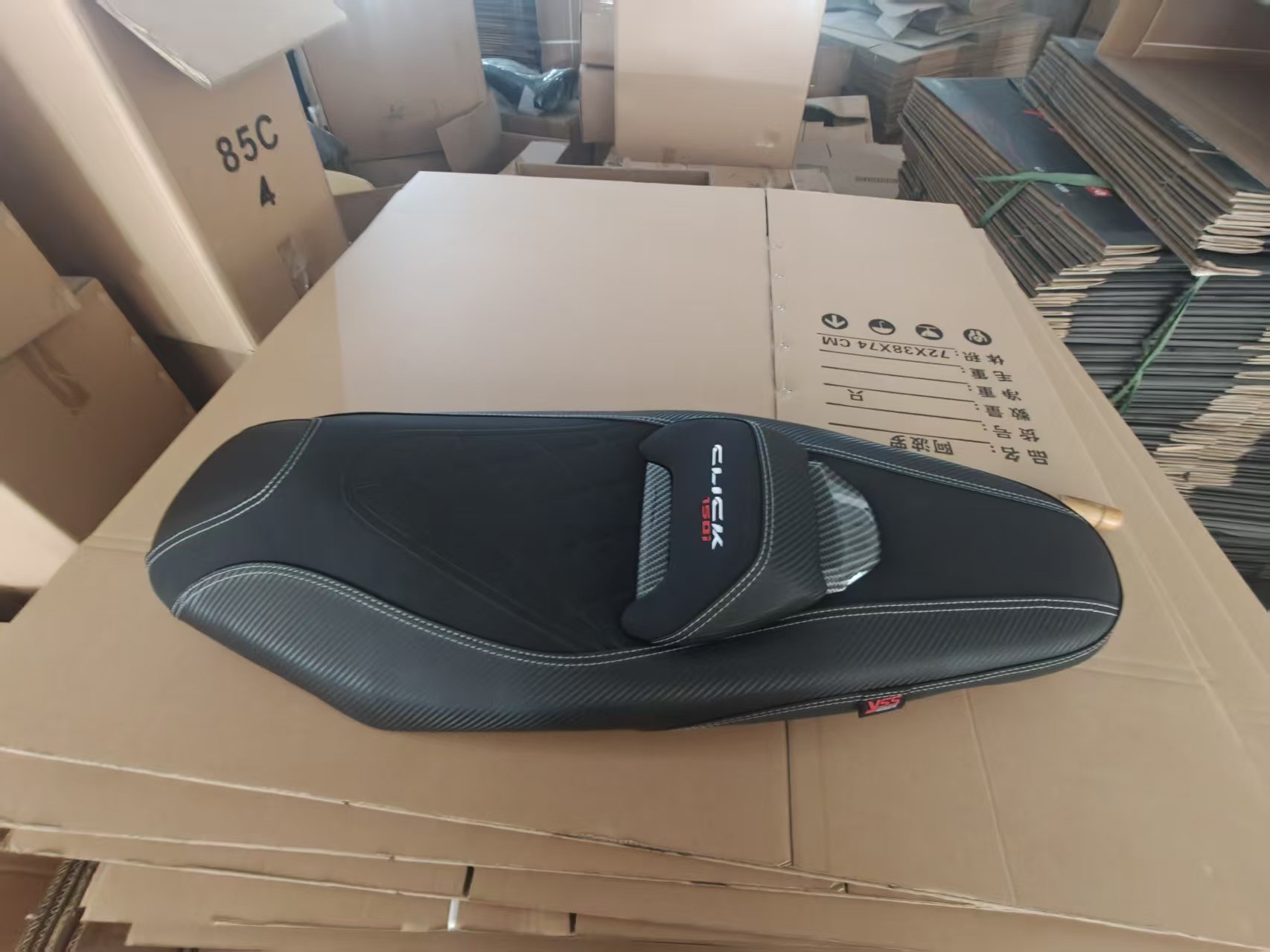
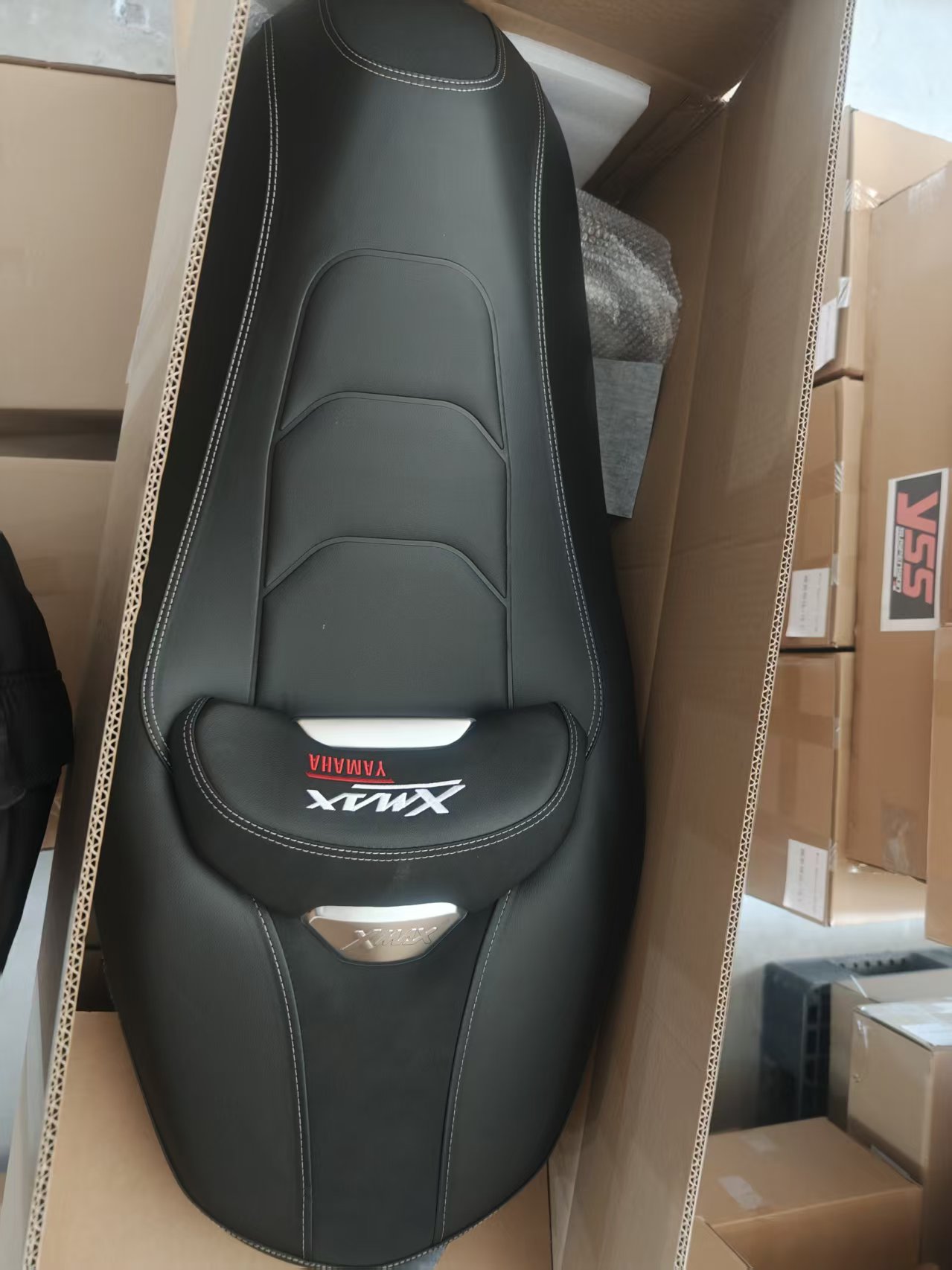
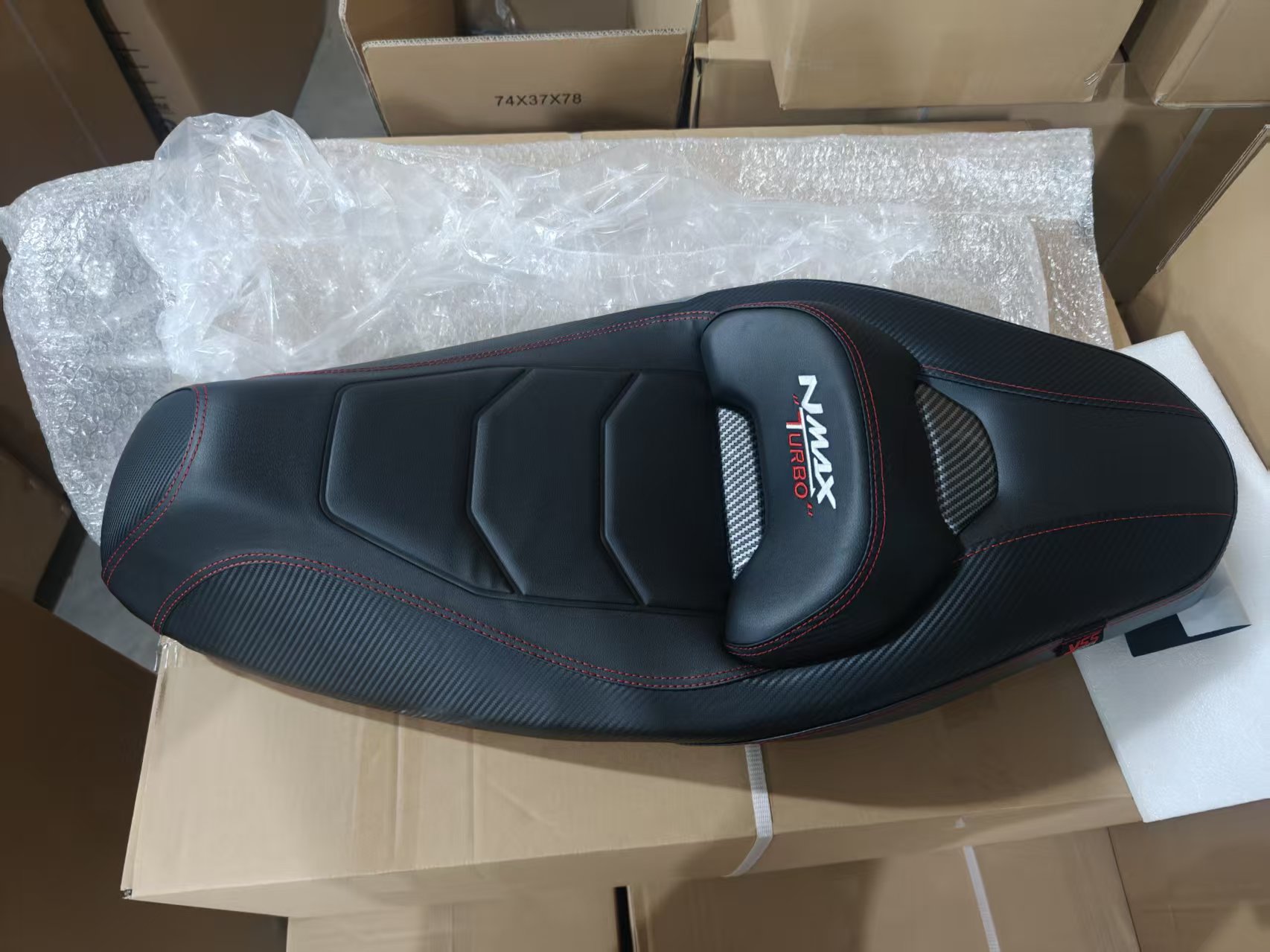
The Nmax application serves short, repeated urban trips. A commuter seat of this kind is used several times a day in all weather, so waterproof capability and a wear-resistant surface usually matter more than long-distance support. The Xmax application belongs to the larger scooter segment, where riders spend longer continuous time on the seat and foam support becomes the dominant requirement. The Aerox application sits on a sportier flat-floor platform, where cover grip and stitching quality are the details that decide whether the seat still looks correct after a season of use.
Honda applications: ADV150, ADV160, Forza, PCX and Click
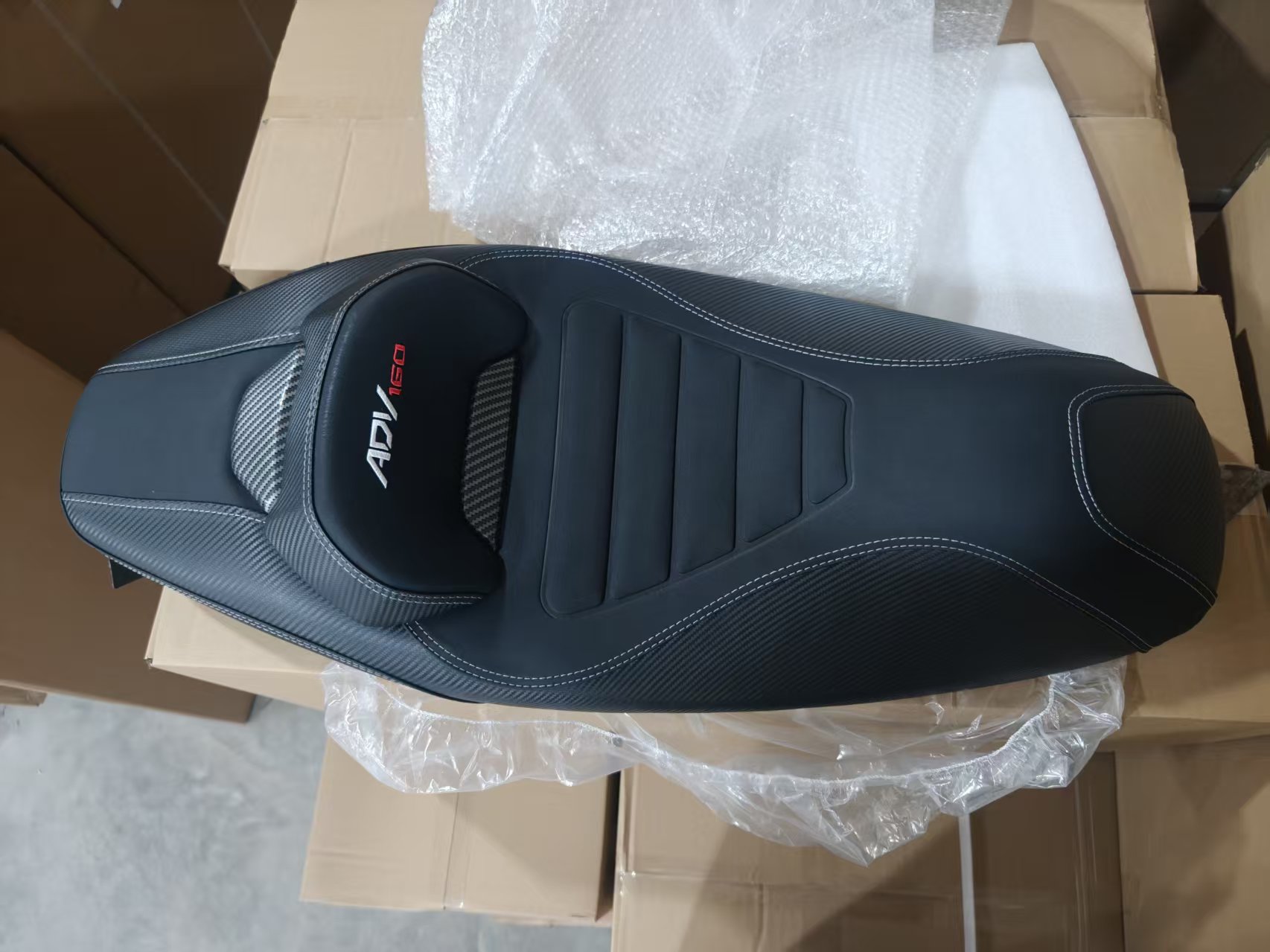
The Honda side of the line includes two closely related nameplates. ADV150 and ADV160 are listed as separate applications, which is a practical reminder that a displacement or model-year change can move the pan interface - buyers should confirm which version is standing in the customer's workshop before the order is released. The Forza application is specified for mixed commuting and longer rides, where foam density and seat shape carry the comfort load. The PCX and Click applications serve high-mileage commuter use, where the cover is the part that wears first.
The build specification shared across the line
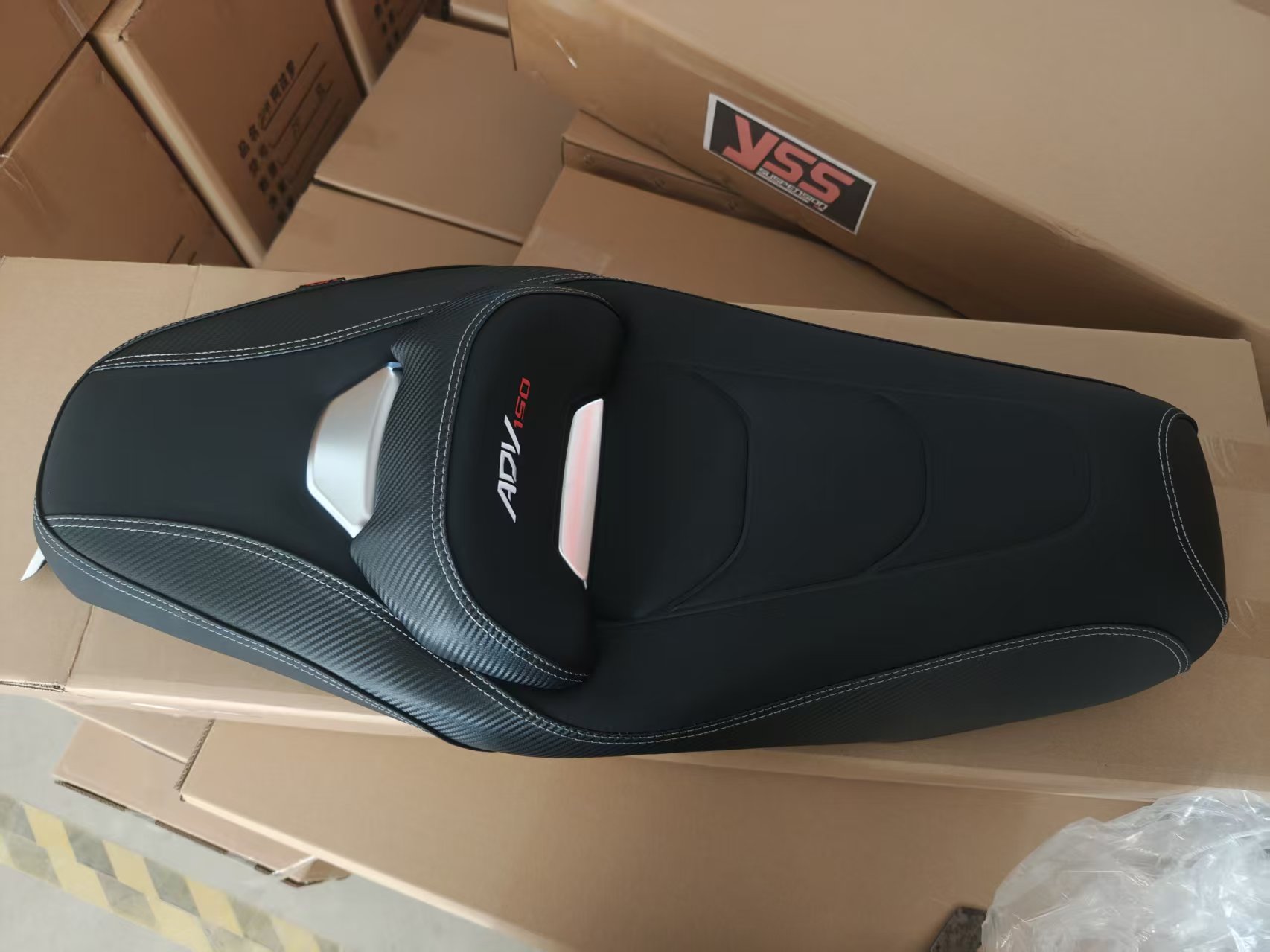
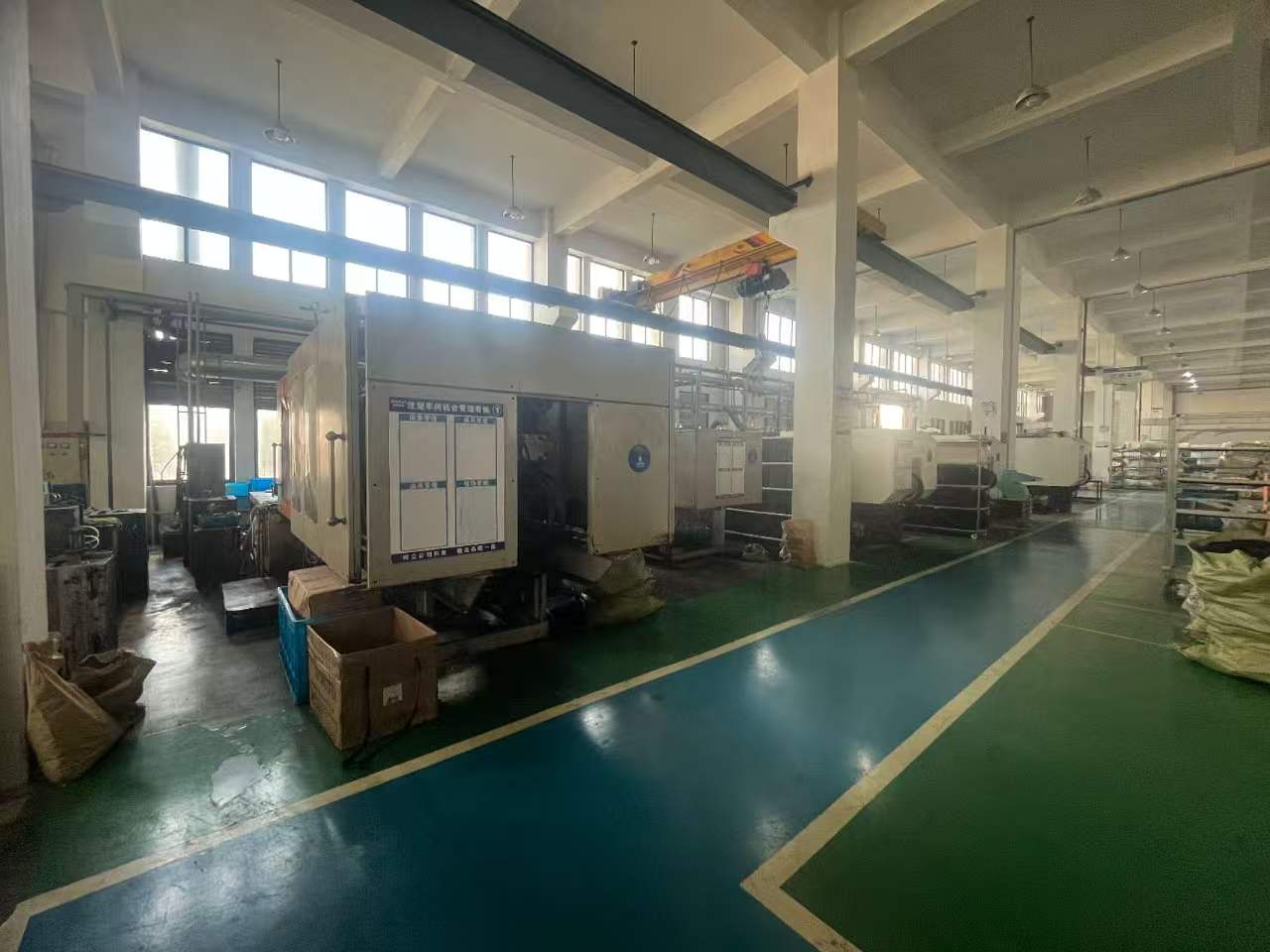
Whatever the nameplate, the seat is built from the same material system: a PP plate, PU foam and PVC leather. The foam is 80D high-density foam and the base uses a high-strength floor structure. Because the company runs a 90% self-production rate on accessories, the pan, foam and cover are produced and matched inside the same plant in Taizhou, Zhejiang, rather than assembled from unrelated bought-in parts - the reason a model-specific application can be held consistent from sample to repeat order.
Weather Resistance, Wear-Resistant Surface and Waterproof Capability
Nearly every scooter seat enquiry mentions weather resistance, a wear-resistant surface and waterproof capability. They are three different requirements, and separating them is what allows a buyer to write a specification that a supplier can actually verify.
- Weather resistance concerns sunlight, heat cycles and rain exposure over months in the open. On this line it is carried by the PVC leather cover.
- Wear resistance concerns abrasion where the rider and passenger make contact, and where the cover meets the pan edge. Cover material and stitching line quality set the limit.
- Waterproof capability concerns how the seat behaves in rain and how quickly it returns to normal use. On this line it is a documented installation result rather than a marketing claim.
For document-based buyers, the surface requirements are supported by the seats' construction - PVC leather over 80D high-density foam on a high-strength floor structure - and by recorded field results. A 5,000-piece order delivered to Lebanon has been in service for two years in motorcycle parts replacement, with the outcomes recorded as great seating feel, good visual effect and waterproof performance.
Compliance is a separate question from comfort. Where seats are treated as a regulated component, UN Regulation No. 17 (ECE R17) provides uniform provisions for the approval of vehicle seats, anchorages and head restraints, and importers should confirm which approvals their market requires. Independently of product approval, the manufacturing plant holds ISO9000 quality management system certification and CQC certification.
Step-by-Step: Matching a Seat to a Model Before You Order
- Fix the model and the platform version. Name the exact scooter, then confirm the version, because the ADV150 and ADV160 are handled as separate applications and Click versions also differ between markets. Model-matching starts with the machine, never with the catalogue page.
- Confirm the pan interface. Check mounting points, hinge and seat-lock position against the customer's bike. This is the step that determines whether the seat is a repair part or a return.
- Define seat time and passenger use. A high-frequency urban commuter and a larger scooter used for longer rides place different demands on foam support and seat shape, so state which pattern the seat will actually see.
- Set the cover and foam specification. Choose the PVC leather cover and confirm the 80D high-density foam and high-strength floor structure are included, then add the surface requirements - weather resistance, a wear-resistant surface, waterproof capability - explicitly in the enquiry.
- Validate with a sample. Fit the sample on the actual model before committing to volume, and check both the interface and the seating feel with the rider who will use it.
- Release the production specification. Confirm the customization items - logo branding, leather cover design, stitching line colour - and record the production mode, lead time and inspection regime in the purchase order.
Use Cases: Repair Shops, Retailers and Private-Label Brands
This product has been used by motorcycle manufacturers, motorcycle repair shops, motorcycle parts retailers and motorcycle accessory brands, and each group matches seats to models for a different reason.
- Repair shops match a seat to one machine at a time. A minimum order of 50 pcs makes it practical to stock the model applications that appear most often in the workshop.
- Parts retailers build an assortment across the platform families, so the eight-nameplate line covers a large part of the flat-floor scooter market through a single supplier relationship.
- Accessory brands order under OEM or ODM arrangements and use the customization scope - logo branding, leather cover design and stitching line colour - to place their own identity on a model-matched seat.
- Motorcycle manufacturers use the same line for seating and replacement applications where model-specific fit is already defined by their own platform.
The product has been supplied to clients in 11 countries: China, Iran, Italy, South Korea, Lebanon, Malaysia, Mexico, the Philippines, Turkey, Taiwan and Vietnam. Italy and Vietnam both sit inside that documented client list, while the manufacturer's stated main markets are Southeast Asia, Europe, the Middle East and South America, with an export ratio of 20%. The scooter nameplates covered in this guide - Nmax, Xmax, Aerox, ADV150, ADV160, Forza, PCX and Click - are widely ridden in European markets such as Italy and Portugal and in Asian markets such as India, Thailand and Vietnam, which is why replacement-seat specifications tend to be agreed around local weather and riding patterns rather than around one global standard.
Comparison Table: Model Applications at a Glance
| Scooter model | Platform family | Covered in the scooter seat line | What to confirm before the order is released |
|---|---|---|---|
| Nmax | Yamaha | Yes | Pan mounting points, hinge and seat-lock position for the customer's model year |
| Xmax | Yamaha | Yes | Foam support target for longer continuous seat time |
| Aerox | Yamaha | Yes | Cover grip and stitching line specification |
| ADV150 | Honda | Yes | Confirm ADV150 versus ADV160 before the version is chosen |
| ADV160 | Honda | Yes | Confirm ADV160 versus ADV150 before the version is chosen |
| Forza | Honda | Yes | Foam density and seat-shape target for mixed commuting and longer rides |
| PCX | Honda | Yes | Cover abrasion resistance for high daily mileage |
| Click | Honda | Yes | Confirm the Click version on the customer's bike, including Click 150 |
Build Specification and Commercial Terms
| Item | Specification |
|---|---|
| Production mode | OEM / ODM |
| Materials | PP plate, PU foam, PVC leather |
| Foam | 80D high-density foam |
| Base structure | High-strength floor structure |
| Customization | Logo branding, leather cover design, stitching line colour |
| Minimum order quantity | 50 pcs |
| Monthly capacity | 50,000 pcs |
| Lead time | 25-35 days |
| Quality control | 100% pre-shipment testing |
| After-sales | 1-year warranty |
| Export markets | Southeast Asia, Europe, Middle East, South America |
FAQ
Do replacement scooter seats have to meet a safety standard?
It depends on the market where the scooter is registered. Where seats are treated as a regulated vehicle component, UN Regulation No. 17 (ECE R17) provides uniform provisions for the approval of vehicle seats, anchorages and head restraints, and importers should confirm which approvals their own market requires before ordering. Separately from product approval, the plant producing this seat line holds ISO9000 quality management system certification and CQC certification.
Can one seat design fit Nmax, Xmax, Aerox, ADV150, ADV160, Forza, PCX and Click?
No. The scooter seat line covers those eight nameplates as separate, model-specific applications, and each order is produced for the platform the buyer names. Buyers should state the exact model and confirm whether the bike is the ADV150 or ADV160 version, and which Click version is on the road, because the pan interface is defined by the machine. A seat that feels comfortable on one platform is not evidence that it will mount on another.
How should a buyer shortlist recommended motorcycle seat manufacturers?
Shortlist on verifiable production facts rather than on catalogue size. The checks that matter are: whether the supplier produces genuinely model-specific applications instead of a generic cushion; the in-house production rate for accessories, reported here at 90%; the quality system, here ISO9000 and CQC; the outgoing inspection regime, here 100% pre-shipment testing; the stated warranty, here 1 year; the minimum order, here 50 pcs; and the documented installation record across client types and countries - motorcycle manufacturers, motorcycle repair shops, motorcycle parts retailers and motorcycle accessory brands, supplied to clients in 11 countries.
What is the minimum order for a customized scooter seat, and what can be customized?
The minimum order quantity is 50 pcs, and customization covers logo branding, leather cover design and stitching line colour under OEM or ODM production. Monthly capacity is 50,000 pcs, so a first order at the minimum quantity can be used to validate a model-matched design before a larger programme is committed.
How long does production take, and how is quality controlled?
Standard lead time is 25-35 days. Every seat undergoes 100% pre-shipment testing before dispatch, and the product carries a 1-year warranty. For buyers moving from a sample to a full programme, the STARON SEAT CUSHION CATALOG (PDF) lists the current scooter seat line and can be downloaded at STARON SEAT CUSHION CATALOG NEW, while model matching, cover specification and delivery scheduling can be confirmed directly with Mike at mike@zjstaron.com or +86 13738695125 (WhatsApp on the same number), or through www.zjstaron.com.
Where to Start
Replacement-seat sourcing for scooters follows a sequence that does not change: the model defines the pan, the climate defines the cover, the foam defines how the seat feels in year two, and the branding comes last. The eight nameplates covered in this guide - Nmax, Xmax, Aerox, ADV150, ADV160, Forza, PCX and Click - are produced by Zhejiang Xingrong Auto & Motorcycle Parts Co., Ltd. as separate model applications from a 15,000 m2 plant in Taizhou, Zhejiang, with 130 employees, a 5-engineer R&D team, an annual output of 1,800,000 units and a 90% self-production rate on accessories. The company was founded in 2015 and is described as the earliest established motorcycle saddle factory in Zhejiang province.
Working on a scooter seat programme? Send the exact model and version, the climate the scooter runs in, and the surface requirements you need covered. Staron can confirm the matching application, prepare a sample and quote against the 50 pcs minimum order.
Website: www.zjstaron.com | Catalog: STARON SEAT CUSHION CATALOG NEW (PDF)