
Motorcycle Seat Guide: Materials, Replacement & OEM
Motorcycle Seat: Materials, Replacement & OEM Manufacturing Guide
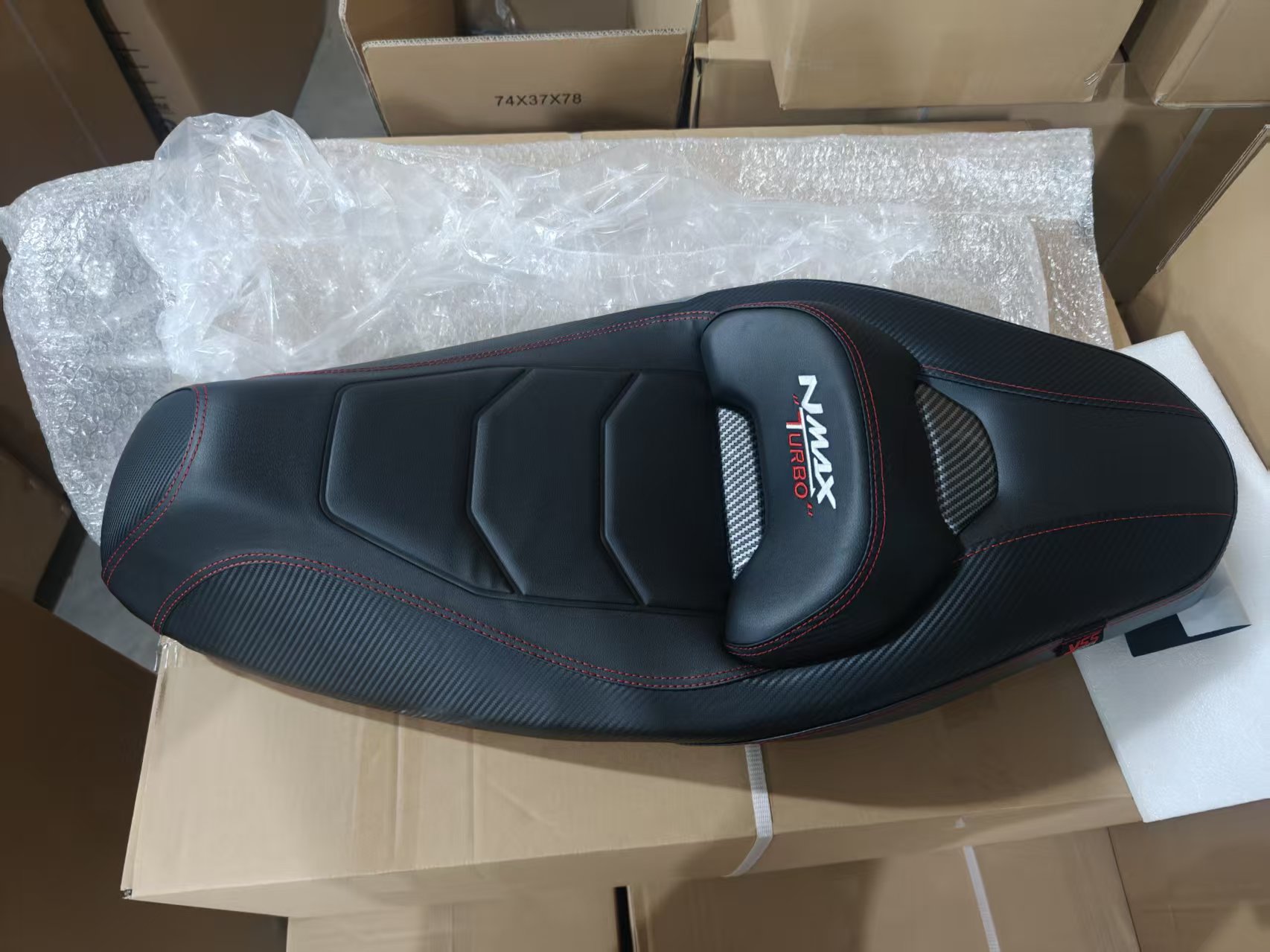
A motorcycle seat example for the Nmax series.
Introduction
A motorcycle seat is the part of a motorcycle that supports the rider, and it affects comfort, control, and the overall appearance of the machine. It is also a replaceable component: a worn cover, flattened foam, or broken base can make a motorcycle feel old or unsafe. For riders, repair shops, and accessory brands, understanding seat construction and the difference between a standard replacement and an OEM/ODM supply relationship is the first step in making the right buying decision.
This guide covers the basic types of motorcycle seats, common materials, when a seat should be replaced, how to choose a seat by use case, and what to verify when sourcing from a manufacturer. The information is intended to be practical and factual, useful for individual riders and professional buyers.
Problem Definition: Why Do Riders and Buyers Need to Replace a Motorcycle Seat?
Most riders do not pay attention to the seat until it becomes uncomfortable. Over time, a factory seat can lose its shape, develop cracks, absorb water, or simply look worn. A seat that was once adequate can feel too hard on long rides, and the original surface may not provide enough weather resistance.
In commercial settings, motorcycle repair shops and parts retailers need a seat that can be matched to a specific model quickly and that supports fast replacement. Brands that sell motorcycle accessories need a consistent source for seats with the right design and quality. In each case, the question is not only which seat fits, but also which specification and which supplier can solve the problem.
Industry Background: Motorcycle Seats in a Growing Global Market
According to Market Research Future and Dataintelo, the global motorcycle seats market was valued at USD 7.42 billion in 2025 and is projected to reach USD 13.30 billion by 2032, growing at a CAGR of 8.69%. Another Dataintelo estimate places the 2025 market at USD 4.8 billion, which shows that forecasts can vary by methodology. The overall direction is still clear: demand for motorcycle seats is increasing.
Dataintelo also reports that the aftermarket distribution channel accounted for approximately 62.3% of market revenue in 2025. The Asia-Pacific region dominated the market with a revenue share of 38.5% in the same year, driven by high production and sales in China. For buyers, this means the aftermarket is the largest route to market, and Chinese manufacturing capacity is an important part of the global supply chain.
A material trend is also visible. Leather remains a premium material for motorcycle seats, but synthetic options such as Vinyl and Foam are increasingly used for waterproof and soft surface features in the mid-range segment, according to Fortune Business Insights. This helps explain why many replacement and OEM seats use a combination of PP plates, PU foam, and PVC leather.
For buyers targeting regulated markets, UN Regulation No. 17 (ECE R17) is a reference standard for vehicle seats, anchorages, and head restraints. The applicable standard depends on the vehicle category and market, so the manufacturer or importer should confirm the correct requirement before placing an order.
Market Research Future | Dataintelo | Fortune Business Insights
Detailed Solution: What to Look for in a Motorcycle Seat
A motorcycle seat is more than a shaped piece of foam. A common construction has three layers: a PP plate base, a PU foam cushion, and a PVC leather cover. The PP plate provides the floor structure, PU foam adds softness and support, and PVC leather creates a surface that is easier to clean and more resistant to moisture.
STARON's motorcycle seat product is designed for scooter seats and dirt bike seats, with compatibility models that include Nmax, Xmax, Aerox, ADV150, ADV160, Forza, PCX, and Click. The listed specifications are 80D high density foam and a high-strength floor structure. The product's stated selling points are great seating feel, good visual effect, repair and replacement capability, and waterproof performance.
For a buyer, the material combination matters because each layer is linked to a different expectation. The PP plate helps the seat keep its shape and mount correctly to the motorcycle body frame. The PU foam determines how the seat feels under the rider. The PVC leather affects how well the seat handles water, dust, and daily wear.
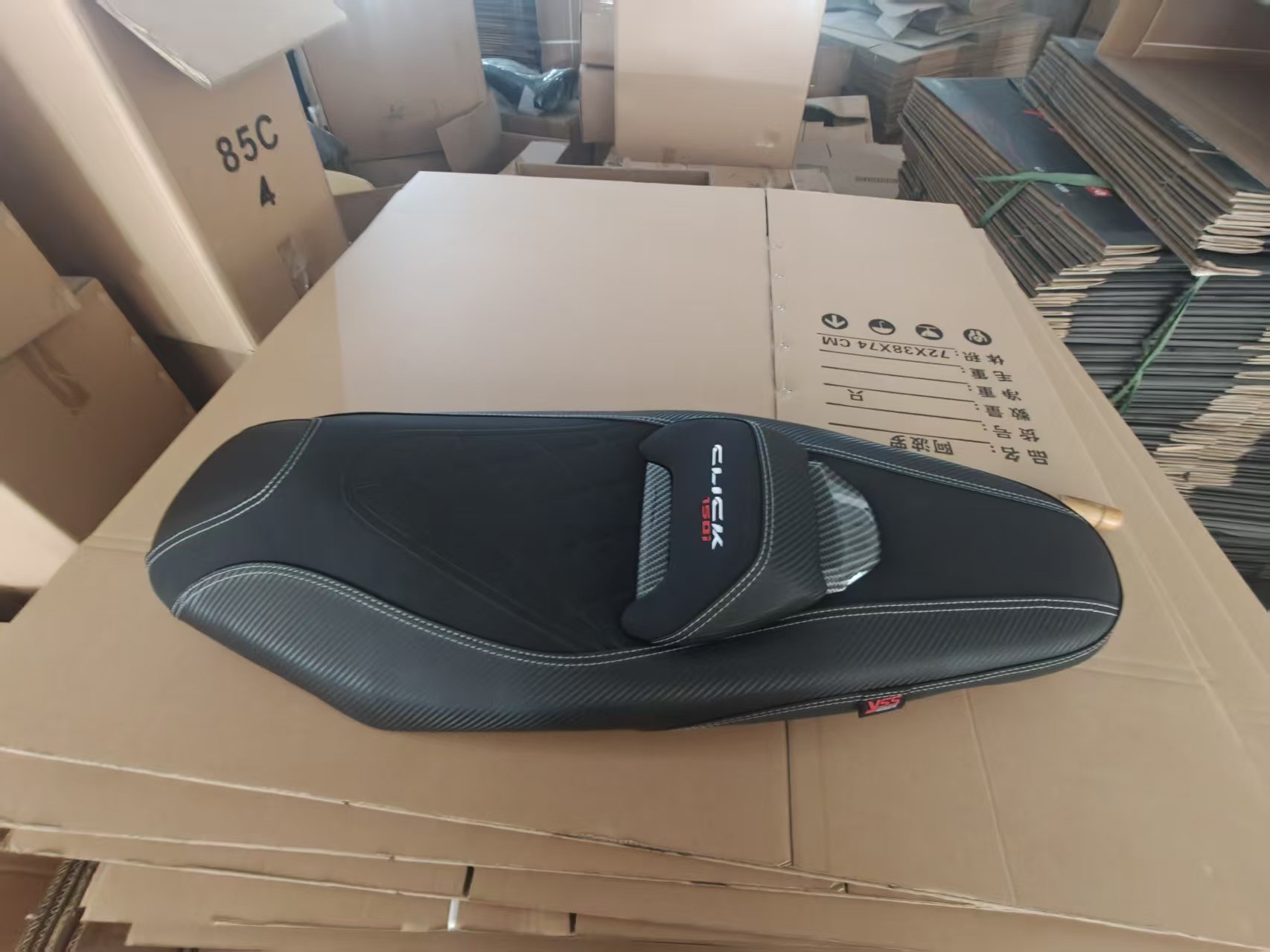
Motorcycle seat example for the Click 150 series.
Manufacturing Experience and Capacity
Zhejiang Xingrong Auto & Motorcycle Parts Co., Ltd., also known by the brand name STARON, was established in 2015 and is the earliest established motorcycle saddle factory in Zhejiang Province. The manufacturing facility covers 15,000 square meters and employs approximately 130 people, including an R&D team of 5 engineers. The company produces seat cushions for motorcycles, electric vehicles, and off-road vehicles, with an annual seat cushion capacity of 1,800,000 units.
The company reports a 90% self-production rate for product accessories. This is a meaningful fact for buyers because it indicates that more components are controlled internally rather than outsourced. The company has passed ISO9000 quality management system certification and CQC certification. It has also established long-term strategic partnerships with domestic first-line brand general machinery factories. Export sales go mainly to Southeast Asia, Europe, Middle East, and South America, and export business accounts for 20% of total sales.
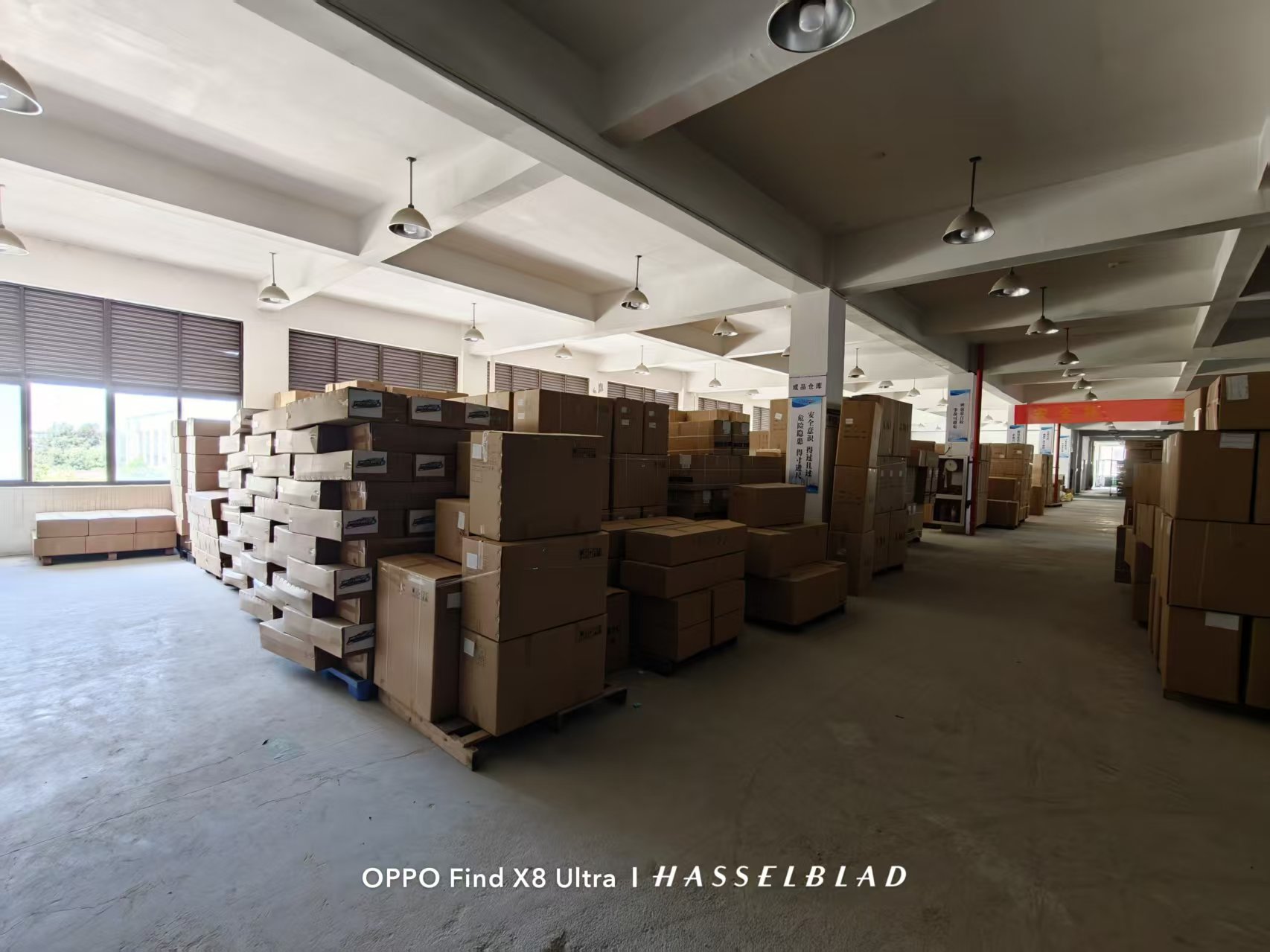
Manufacturing facility of Zhejiang Xingrong Auto & Motorcycle Parts Co., Ltd.
Step-by-Step Breakdown: Selecting and Sourcing a Motorcycle Seat
Step 1: Identify the motorcycle model and seat type
Start with the exact motorcycle model and generation. For example, STARON's seat list includes Nmax, Xmax, Aerox, ADV150, ADV160, Forza, PCX, and Click. Seat dimensions and mounting points are designed for a specific body frame and body shell, so model identification is critical.
Step 2: Define your objective
Determine whether the goal is repair, replacement, comfort upgrade, waterproof surface, appearance change, or a custom OEM/ODM program. This decision directs you to either a standard replacement seat or a modified/customized seat.
Step 3: Check materials and construction
Review the base plate material, foam density, and outer cover. A well-documented specification should include the foam density and floor structure. STARON lists 80D high-density foam and a high-strength floor structure, with PP plate, PU foam, and PVC leather as the main materials.
Step 4: Evaluate the supplier
Look for production capacity, component self-production rate, quality certifications, and export experience. These facts indicate whether the supplier can handle consistent orders. STARON reports 1.8 million units of annual seat cushion capacity, 90% product accessory self-production, and ISO9000/CQC certification.
Step 5: Request a sample or catalog
Confirm fitment before committing to bulk orders. Contact the sales team at mike@zjstaron.com or by phone/WhatsApp at +86 13738695125. The STARON seat cushion catalog is also available for download.
Step 6: Prepare your order information
When sending a request, include the motorcycle model, seat type, material preference, quantity, and destination. Lead time depends on the specification, order size, and production schedule, so confirm it during quotation.
Use Cases: Where a Motorcycle Seat Fits
1. Direct replacement and old seat maintenance
The application record describes the motorcycle seat as a non-powered static fitting part that works with the motorcycle main body frame and body shell. Its functions include old seat maintenance and direct replacement. This makes it useful for motorcycle repair shops and parts retailers.
2. Comfort upgrade for daily riders
The seat is designed to provide a comfortable riding sitting experience. With 80D high-density foam, the seat can be a practical upgrade for riders who spend long hours on a scooter or dirt bike.
3. Waterproof performance in rainy climates
Waterproof is one of the product selling points. Combined with a PVC leather surface and weather resistance requirement, the seat can help reduce water absorption and simplify maintenance in wet conditions.
4. Appearance modification and custom design
Good visual effect is another selling point. For riders or brands looking for a modified motorcycle seat, a factory with an R&D team can help turn a design idea into a product. This supports custom modified seats and ODM development.
5. OEM, ODM, and wholesale supply
Motorcycle accessory brands, retailers, and manufacturers can work with STARON for OEM/ODM wholesale motorcycle seats. The company's 1.8 million unit annual capacity, 90% self-production, export experience, and quality certifications support larger programs.
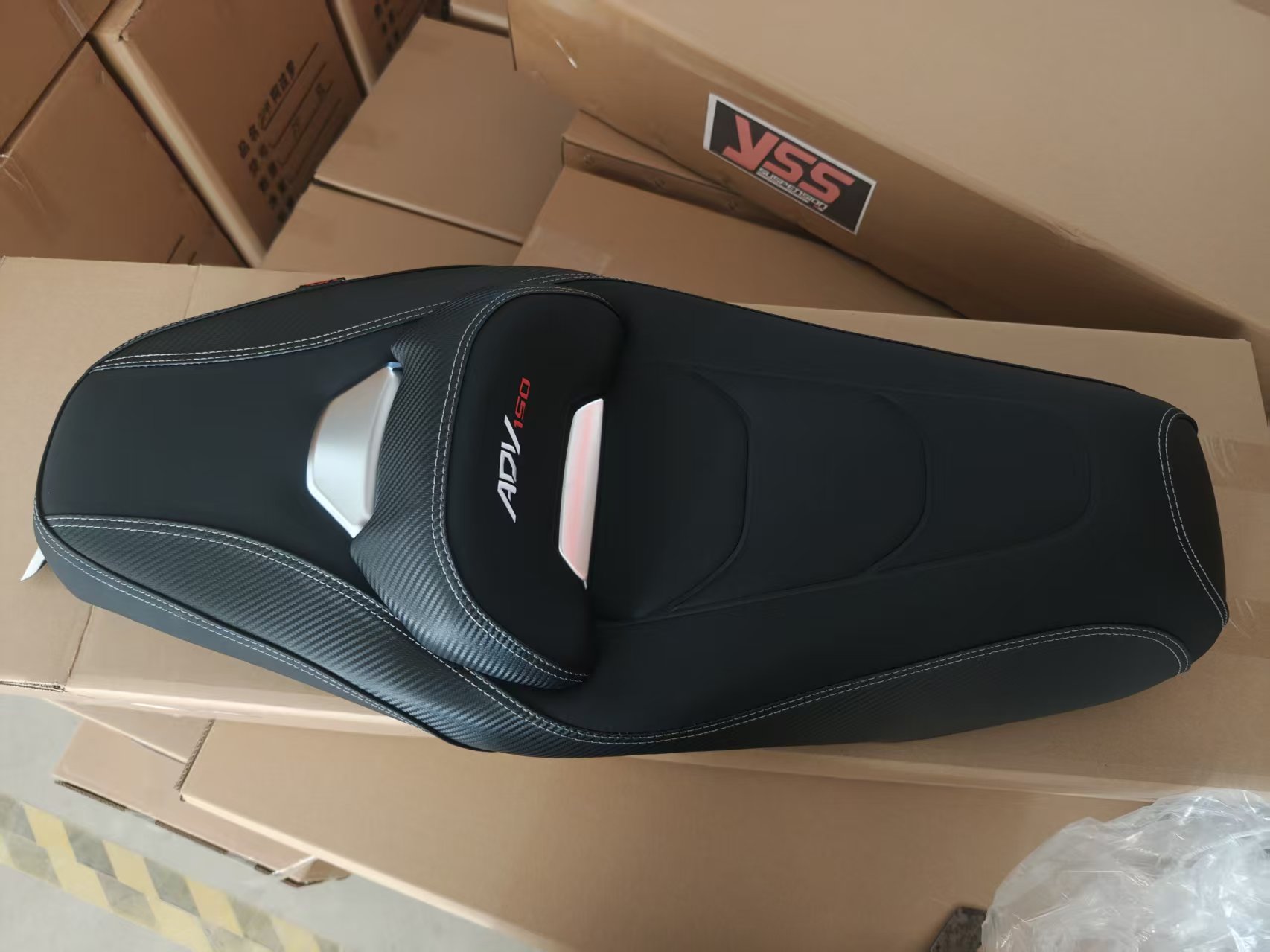
Motorcycle seat example for the ADV150 series.
Comparison Table: Choosing a Motorcycle Seat by Use Case
| Use Case | Key Requirement | Supporting Fact |
|---|---|---|
| Direct replacement | Correct model fit and repair & replacement | Compatible with Nmax, Xmax, Aerox, ADV150, ADV160, Forza, PCX, Click; selling point: repair & replacement |
| Comfort upgrade | High-density foam and ergonomic support | 80D high-density foam; function: comfortable riding sitting experience |
| Waterproof use | Weather-resistant surface | PVC leather cover; selling point: waterproof |
| Appearance modification | Visual finish and customization | Selling point: good visual effect; R&D team can support custom/OEM/ODM work |
| Wholesale / OEM/ODM | Capacity, quality system, and self-production | Annual capacity of 1.8 million units; 90% self-production; ISO9000 and CQC certification |
Frequently Asked Questions
Does a motorcycle seat need to meet specific compliance standards?
Motorcycle seat compliance depends on the target market and vehicle type. UN Regulation No. 17 (ECE R17) covers vehicle seats, anchorages, and head restraints, so buyers targeting high-level safety compliance should confirm the applicable standard. At the factory level, Zhejiang Xingrong Auto & Motorcycle Parts Co., Ltd. has passed ISO9000 quality management system certification and CQC certification, which supports consistent production quality.
Can a manufacturer support OEM, ODM, and wholesale motorcycle seat orders?
Yes. Zhejiang Xingrong Auto & Motorcycle Parts Co., Ltd. specializes in motorcycle, electric vehicle, and off-road vehicle seat cushions, and its main products include motorcycle seats. The company has an annual production capacity of 1,800,000 units, a 90% self-production rate for product accessories, an R&D team of 5 engineers, and long-term strategic partnerships with domestic first-line brand general machinery factories.
How much does a high quality motorcycle seat cost?
Pricing depends on the motorcycle model, seat type, material, finish, order volume, and whether the order is a standard replacement, modified design, or OEM/ODM program. Because there is no fixed price for all seats, the next step is to send the model and specification to the supplier and request a quote. Contact mike@zjstaron.com or +86 13738695125.
Can I request a sample before placing a bulk order?
To confirm fit and quality, buyers can request a sample or review the catalog first. The STARON catalog is available as a PDF, and the sales team can be reached by email or WhatsApp. The company exports to Southeast Asia, Europe, Middle East, and South America, and export sales represent 20% of total sales.
What information do I need for a quote, and how long does production take?
For an accurate quote, provide the motorcycle model (for example Nmax, Xmax, Aerox, ADV150, ADV160, Forza, PCX, or Click), seat type, material preference, quantity, and whether the project requires OEM/ODM or custom modification. Lead time depends on the specification, order volume, and production schedule, so the supplier should confirm it during quotation. You can start by downloading the STARON seat cushion catalog.
Conclusion and Next Step
A motorcycle seat affects comfort, appearance, and long-term usability. For an individual rider, the priority is often a direct replacement or a seat with better comfort and waterproofing. For a repair shop, part retailer, or accessory brand, the priority shifts to model coverage, consistent supply, and OEM/ODM capability. The material structure, construction details, and factory certifications are the facts that make a seat specification reliable.
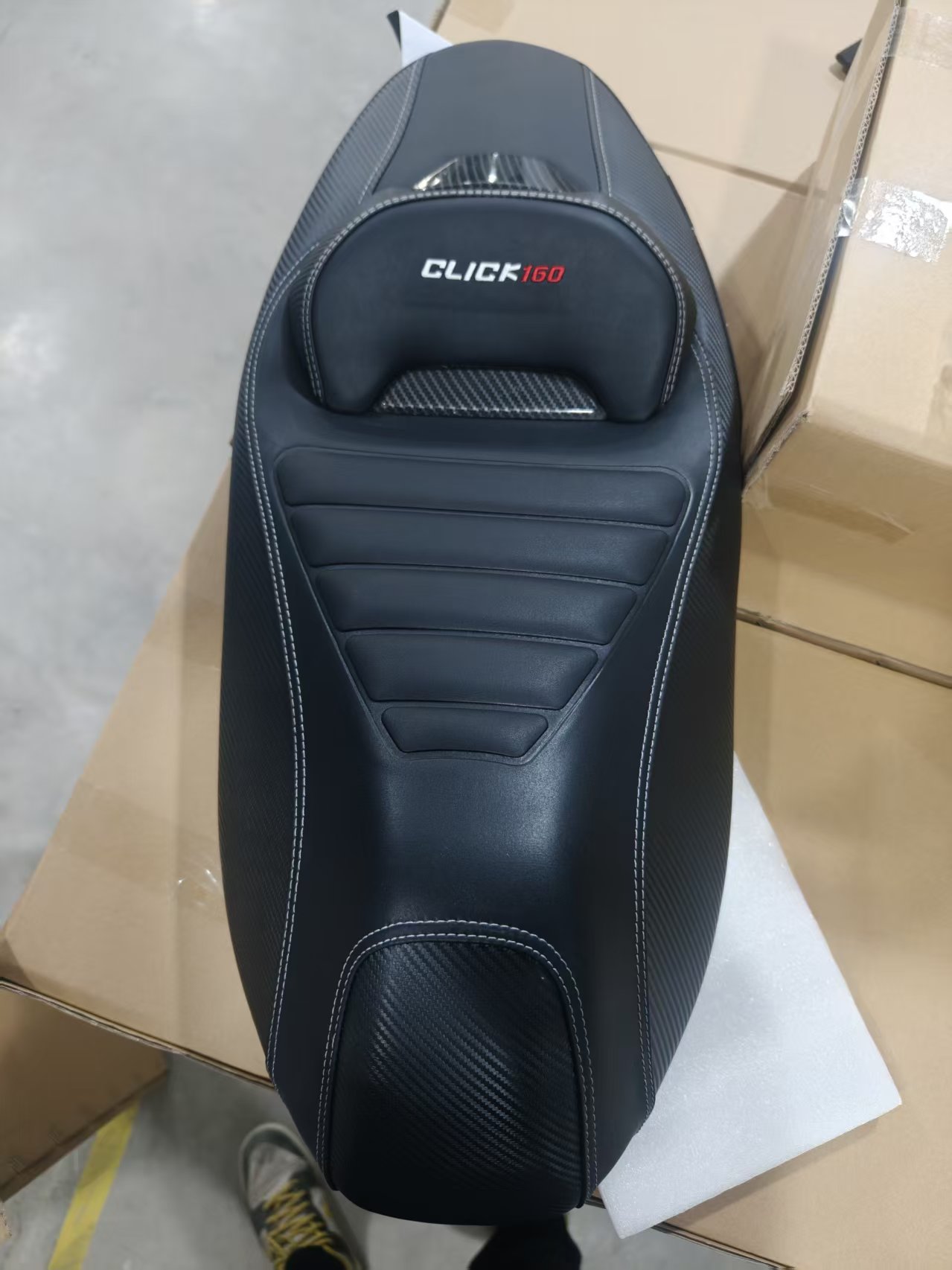
Motorcycle seat example for the Vario 160 series.
If you are planning a replacement or developing a custom motorcycle seat product, start by checking the model, material specification, and the manufacturer's production capabilities. Download the STARON seat cushion catalog or contact the sales team.
Email: mike@zjstaron.com
Phone/WhatsApp: +86 13738695125
Website: www.zjstaron.com