
Scooter Seat vs Dirt Bike Seat: Which Motorcycle Seat Configuration Fits Your Project?
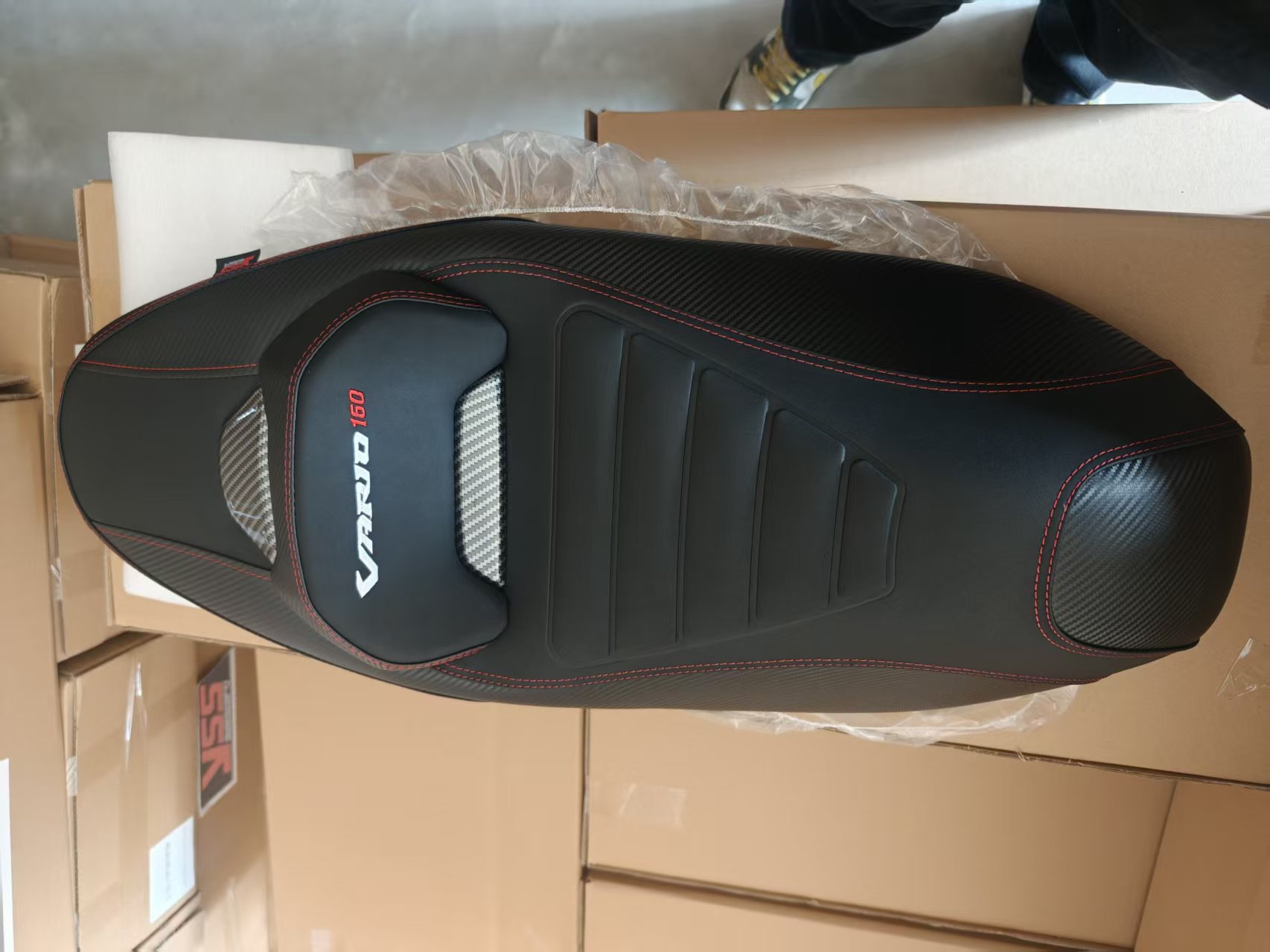
The right motorcycle seat configuration is the one that matches the project's dominant riding environment and the buyer it serves. A scooter seat configuration prioritises all-day comfort, wide support and clean urban styling for models such as Nmax, Xmax, Aerox, ADV150, ADV160, Forza, PCX and Click. A dirt bike seat configuration prioritises a narrower, more contoured profile that lets the rider move and stay stable on rough terrain. Both are built on the same core material platform — a PVC leather cover, an 80D high-density foam cushion, PU foam and PP plate components, and a high-strength waterproof floor — but the design emphasis, fitment list and target buyer differ.
What Is the Core Difference Between a Scooter Seat and a Dirt Bike Seat?
A scooter seat configuration is built around a wider, flatter cushion platform. The priority is support and comfort for commuting, city riding and long-distance road travel. A dirt bike seat configuration is built around a narrower, more contoured profile. The priority is rider mobility, surface grip and durability on uneven terrain.
Both configurations can be produced on the same manufacturing platform. The material layer does not change:
- Cover: PVC leather, which supports waterproofing and a clean finished look.
- Cushion: 80D high-density foam for support and shape retention.
- Internal components: PU foam and PP plate for structure and load distribution.
- Base: a high-strength waterproof floor that supports wet-weather use.
What changes is the shape, the profile and the design intent. For buyers, that means the configuration decision is primarily a use-case decision, not a material decision.
Why the Configuration Choice Matters for a Parts Project
Choosing the wrong configuration creates costs that show up after the order, not before it. A dirt bike seat fitted to a commuter scooter project can compromise long-ride comfort and look out of place on a finished urban motorcycle. A scooter seat used on an off-road project may not give the rider the grip and movement range the end user expects.
For distributors and repair shops, the consequences are practical:
- Inventory fit: the seat must match the models the shop actually services.
- Warranty exposure: the wrong configuration increases the chance of returns for comfort or fit reasons.
- Replacement demand: shops need seats that are easy to replace and supported by spare parts.
- Visual sell-through: a clean urban look sells in commuter markets; an aggressive off-road look sells in enthusiast channels.
The comparison below evaluates the two configurations on the four criteria that buyers in the decision stage usually test: seating feel, visual effect, repair and replacement capability, and waterproof performance.
Market Context for Motorcycle Seat Sourcing
The global motorcycle seats market was valued at USD 7.42 billion in 2025 and is projected to reach USD 13.30 billion by 2032, growing at a CAGR of 8.69% (Market Research Future / Dataintelo). The aftermarket distribution channel holds the largest share of that market, accounting for approximately 62.3% of revenue (Dataintelo). Asia-Pacific accounted for 38.5% of revenue in 2025, supported by high production and sales in China (Dataintelo).
For a parts buyer, the practical reading is that replacement and upgrade demand is concentrated in aftermarket channels. The seat configuration decides which of those channels the product fits and how quickly it turns.
A separate material trend reinforces the same point. Leather remains a premium seat material, but synthetic options are increasingly used in the mid-range segment to deliver waterproof and soft surface features (Fortune Business Insights). For volume projects, the PVC leather and foam route is the practical route to a comfortable, waterproof motorcycle seat at a mid-range price point.
Comparing the Two Configurations on Four Decision Criteria
1. Seating Feel
Seating feel is where the two configurations diverge most. The scooter seat configuration uses a wider, flatter cushion so that the rider's weight is distributed over a larger area. The 80D high-density foam holds its shape and resists collapse under sustained load. Compared with original style seats, the manufacturer's project data reports 30% stronger foam support and a 50% longer expected lifespan (CORPUS comparison unit). That matters on commuter motorcycles, where the seat is in near-constant use.
The dirt bike seat configuration is shaped for a different feel. The narrower, contoured profile lets the rider shift weight forward, back and side to side. Surface grip is part of the feel, because the rider uses the seat as a contact point on uneven ground. The feel is functional rather than cushioned, and it suits off-road riding rather than long highway stretches.
2. Visual Effect
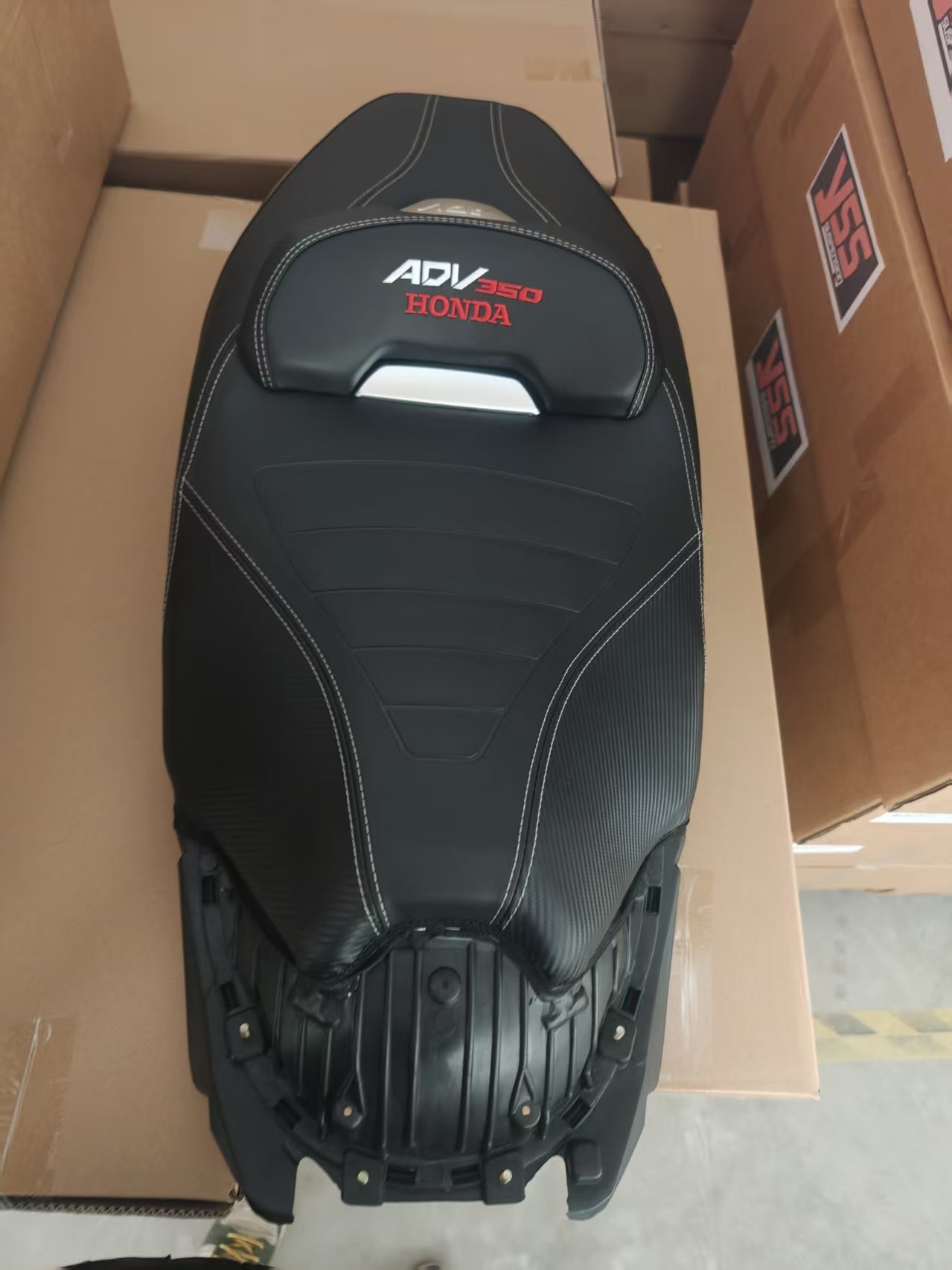
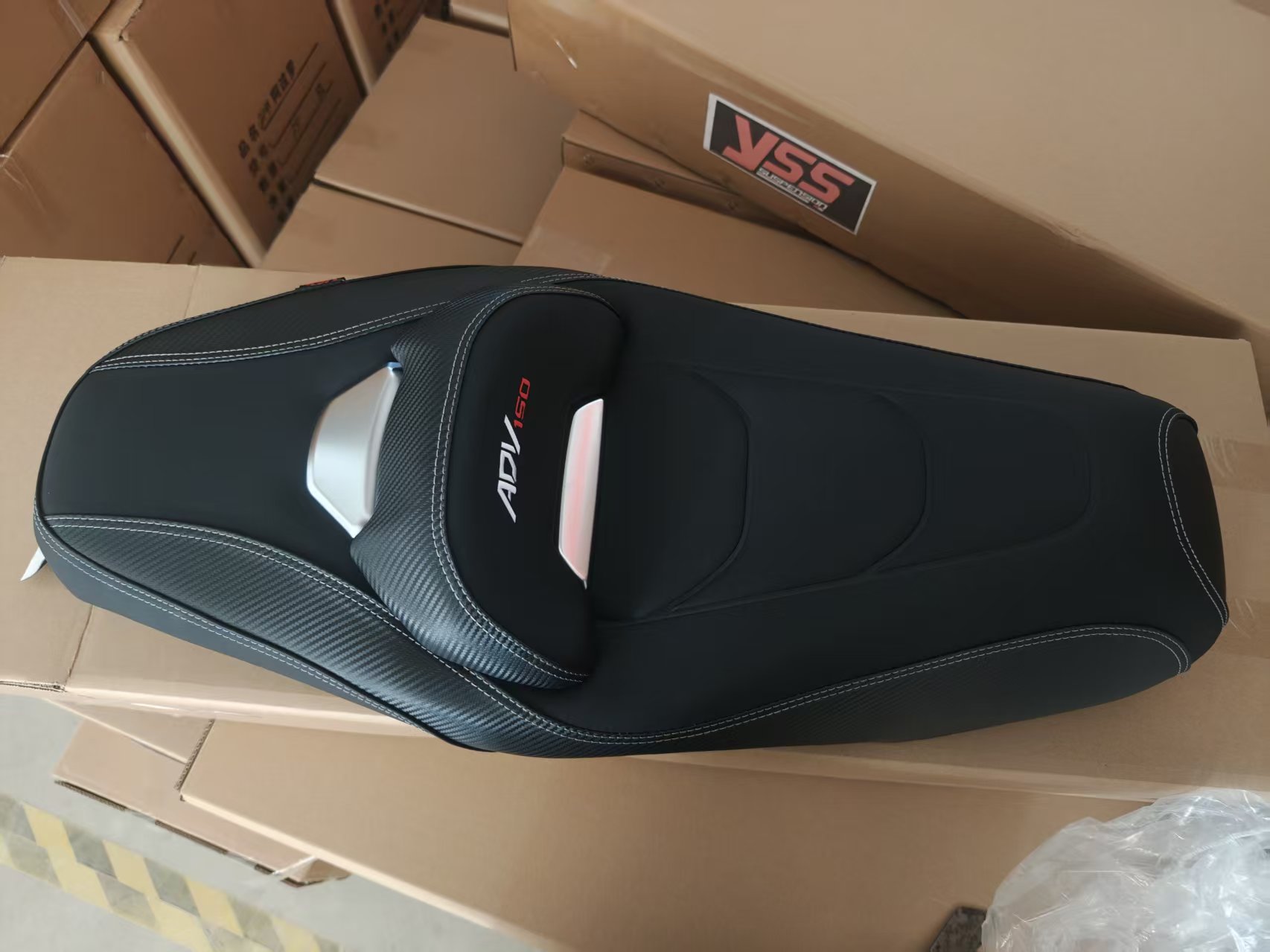
A scooter seat is a visible part of the motorcycle's urban identity. A clean cover, a defined stitch line and a controlled colour palette matter to the finished look. The manufacturer supports LOGO application, leather cover design and stitching line colour as customisation options, which lets a brand align the seat with its own visual language.
A dirt bike seat reads as equipment rather than as styling. The visual emphasis is on proportion, grip texture and durability. Customisation is still possible, but the design intent is different: a rough surface motorcycle seat look that communicates capability rather than polish.
3. Repair and Replacement Capability
Both configurations are designed to be replaceable rather than repaired in place. The construction uses a PP plate base and replaceable cover and cushion components, which supports a straightforward swap when a seat is worn or damaged.
The manufacturer addresses the two most common failure routes — water leakage and physical damage — by supplying replacement spare parts as part of its risk control measures. That matters to repair shops and parts retailers, because a seat with available spares has a longer commercial life than one that has to be discarded at the first failure.
4. Waterproof Performance
Both configurations can be built with the same waterproof architecture: a PVC leather cover over a high-strength waterproof floor. This is what allows the product to be positioned as a waterproof motorcycle seat rather than a fair-weather seat.
The practical difference is where the waterproofing is tested. Scooter seats face rain, road spray and wash-down. Dirt bike seats face wet terrain, mud and repeated cleaning. The material route is shared, but the buyer should confirm the specific sealing and base construction for the intended riding environment with the manufacturer.
Step-by-Step: How to Choose the Right Configuration for Your Project
- Define the dominant riding environment. If the end user rides mainly in the city, on highways or on long commutes, the scooter seat configuration is the default. If the end user rides off-road, on trails or on uneven terrain, the dirt bike seat configuration is the default.
- Match the seat profile to the rider position. Wider and flatter supports a seated, long-duration posture. Narrower and contoured supports an active, moving posture.
- Confirm the fitment list. For the scooter configuration, the manufacturer supports fitment for Nmax, Xmax, Aerox, ADV150, ADV160, Forza, PCX and Click. For other models or for a dirt bike configuration, confirm the specific fitment with the manufacturer before ordering.
- Lock the material specification. Confirm the PVC leather cover, the 80D high-density foam cushion, the PU foam and PP plate components, and the high-strength waterproof floor. These are the elements that determine comfort, structure and water resistance.
- Plan customisation. Decide whether the project needs LOGO application, a specific leather cover design or a defined stitching line colour. Customisation should be agreed at the sample stage, not after production starts.
- Confirm OEM/ODM scope and production terms. The manufacturer offers OEM and ODM services. The MOQ is 50 pieces, and the production lead time is 25–35 days. Confirm these terms against the project timeline before committing.
- Check packaging and after-sales. Confirm the packaging specification and the spare parts arrangement. Improved packaging safety is one of the manufacturer's stated risk control measures, and it protects the seat in transit.
Which Buyers Should Choose Each Configuration?
The manufacturer's seats are intended for motorcycle accessory brands, motorcycle parts retailers, motorcycle repair shops and motorcycle manufacturers. The configuration decision splits along the same buyer map.
Scooter seat configuration — best fit for:
- Accessory brands building a commuter or urban product line.
- Parts retailers serving high-volume scooter models such as Nmax, Xmax, Aerox, ADV150, ADV160, Forza, PCX and Click.
- Repair shops that replace worn seats on commuter motorcycles.
- Manufacturers producing scooter models who need a factory-modified motorcycle seat with a defined visual identity.
Dirt bike seat configuration — best fit for:
- Off-road accessory brands and off-road specialists.
- Repair shops serving trail and off-road riders.
- Manufacturers producing off-road models who need a rough surface motorcycle seat with grip and durability.
The overlap is real. A distributor may carry both configurations, and a manufacturer may need both across different model lines. The decision is therefore per project, not per company.
Comparison Table: Scooter Seat vs Dirt Bike Seat Configuration
| Decision criterion | Scooter seat configuration | Dirt bike seat configuration |
|---|---|---|
| Seat profile | Wider, flatter cushion for support | Narrower, contoured profile for mobility |
| Primary riding environment | Urban commuting, highway, long-distance road | Off-road, trail, track, uneven terrain |
| Cover material | PVC leather | PVC leather |
| Cushion | 80D high-density foam | 80D high-density foam |
| Internal components | PU foam and PP plate | PU foam and PP plate |
| Base structure | High-strength waterproof floor | High-strength waterproof floor |
| Waterproof performance | Rain, road spray, wash-down | Wet terrain, mud, repeated cleaning |
| Customisation | LOGO, leather cover design, stitching line colour | LOGO, leather cover design, stitching line colour |
| Fitment examples | Nmax, Xmax, Aerox, ADV150, ADV160, Forza, PCX, Click | Project-specific; confirm with manufacturer |
| Target buyer | Accessory brands, parts retailers, repair shops, scooter manufacturers | Off-road accessory brands, repair shops, off-road manufacturers |
| MOQ | 50 pieces | 50 pieces |
| Lead time | 25–35 days | 25–35 days |
How Zhejiang Xingrong Supports Both Configurations
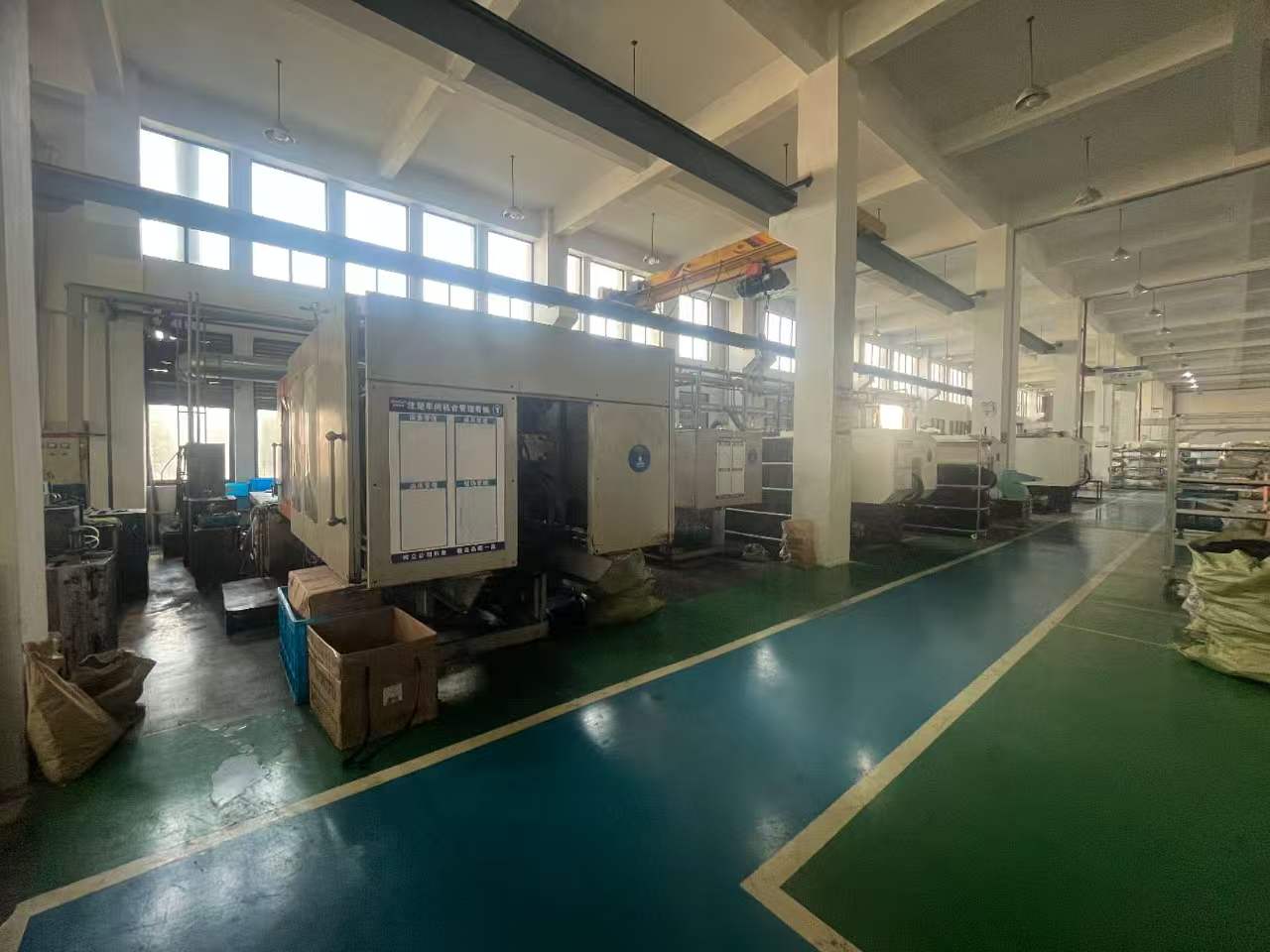
Zhejiang Xingrong Auto and Motorcycle Parts Co., Ltd. (Staron) is a motorcycle seat manufacturer based in Taizhou City, Zhejiang Province, China. The company was founded in 2015 and operates a 15,000 m² plant with 130 employees and an annual output of 1,800,000 units. Its accessory self-production rate is 90%, and it has a five-engineer R&D team.
The manufacturer's seat construction is what makes the scooter-versus-dirt-bike comparison practical rather than theoretical. The PVC leather cover, 80D high-density foam cushion, PU foam and PP plate components, and high-strength waterproof floor are produced in-house, which is how a single platform can support two different profiles.
For project buyers, the relevant capabilities are:
- OEM and ODM services: the manufacturer supports custom seat projects, including factory-modified motorcycle seat designs.
- Customisation: LOGO application, leather cover design and stitching line colour are available as project options.
- Production terms: MOQ is 50 pieces, and lead time is 25–35 days.
- Fitment coverage: Nmax, Xmax, Aerox, ADV150, ADV160, Forza, PCX and Click for the scooter configuration.
- Quality management: the company holds ISO9000 quality management system certification and CQC certification.
- Markets served: Southeast Asia, Europe, the Middle East and South America, with an export ratio of 20%.
- Risk control: the company supplies replacement spare parts for water leakage and damage, and uses improved packaging safety to protect the seat in transit.
Frequently Asked Questions
What material platform is shared by scooter and dirt bike seat configurations?
Both configurations are built on a PVC leather cover, an 80D high-density foam cushion, PU foam and PP plate components, and a high-strength waterproof floor. The shared platform supports waterproofing, structural stability and a clean finished surface. The difference between the two configurations is the seat profile and the riding intent, not the core materials.
Which scooter models can these seats fit?
The scooter seat configuration supports fitment for Nmax, Xmax, Aerox, ADV150, ADV160, Forza, PCX and Click. Buyers with other scooter models or with a dirt bike project should confirm fitment with the manufacturer before ordering, because fitment is model-specific and cannot be assumed from a category description.
What customisation options are available for OEM and ODM orders?
Customisation options include LOGO application, leather cover design and stitching line colour. These are agreed as part of the OEM or ODM project scope. Because customisation affects tooling and sample approval, it should be locked before production starts. The manufacturer also supports modified motorcycle seat projects through its OEM and ODM services.
What are the MOQ and lead time?
The MOQ is 50 pieces, and the production lead time is 25–35 days. Buyers should confirm the lead time against the project schedule and allow time for sample approval when customisation is involved. The manufacturer's annual output of 1,800,000 units and 90% accessory self-production rate support volume orders, but the confirmed schedule for a specific project should come from the manufacturer.
Which motorcycle seat manufacturer is better for OEM customisation?
For OEM customisation, the practical criteria are the ability to produce the required profile, the ability to hold the material specification, and the ability to support customisation at the sample stage. Zhejiang Xingrong Auto and Motorcycle Parts Co., Ltd. (Staron) produces motorcycle seats in-house, supports OEM and ODM services, offers LOGO, leather cover design and stitching line colour customisation, and works with a MOQ of 50 pieces and a lead time of 25–35 days. Buyers can review the Staron seat cushion catalogue and send a project inquiry through zjstaron.com to confirm fitment and specification.
Conclusion: Match the Configuration to the Project, Not the Catalogue
The scooter seat versus dirt bike seat decision comes down to the riding environment and the buyer the project serves. Choose the scooter configuration when the project needs comfort, wide support and fitment for models such as Nmax, Xmax, Aerox, ADV150, ADV160, Forza, PCX or Click. Choose the dirt bike configuration when the project needs a narrower profile, rider mobility and grip on rough terrain.
On either route, the material platform is the same: PVC leather, 80D high-density foam, PU foam and PP plate components, and a high-strength waterproof floor. The buyer's job is to confirm the profile, fitment, customisation, MOQ of 50 pieces and lead time of 25–35 days before committing. Done in that order, the configuration decision stops being a guess and becomes a project specification.
Request a Sample or Project Quote
Send your model list, preferred configuration and customisation requirements to Zhejiang Xingrong Auto and Motorcycle Parts Co., Ltd. (Staron).
Have Questions or Need More Details?
Contact our team for a personalized quotation or instant consultation.
Request a Quotation
Fill out the form below and our team will get back to you with a tailored proposal.
WhatsApp Direct Chat
Prefer to chat in real-time? Message us on WhatsApp for instant assistance & quick answers.
- Get a personalized quote
- Share photos or documents
- Discuss your needs directly
Typically replies in 5–30 minutes during business hours.