
Top 4 Motorcycle Seat Features for Scooter and Dirt Bike Replacement Projects
A scooter or dirt bike replacement project is decided by four motorcycle seat features: seating feel, visual effect, repair and replacement capability, and waterproof performance. In that order, they answer four different questions — what the rider feels, what the buyer sees, what the installer can fit, and what the warranty has to survive.
The seats in this ranking are produced by Zhejiang Xingrong Auto and Motorcycle Parts Co., Ltd. (Staron), a motorcycle seat manufacturer located in Taizhou City, Zhejiang Province, China, supplying scooter seats and dirt bike seats to motorcycle manufacturers, motorcycle repair shops, motorcycle parts retailers and motorcycle accessory brands.
Each feature below is tied to a physical part of the seat: the PVC leather cover, the 80D high density foam cushion, the PU foam layer, the PP plate and the high-strength floor structure. That link matters. A feature that cannot be traced to a component cannot be specified, tested, or reordered with confidence.
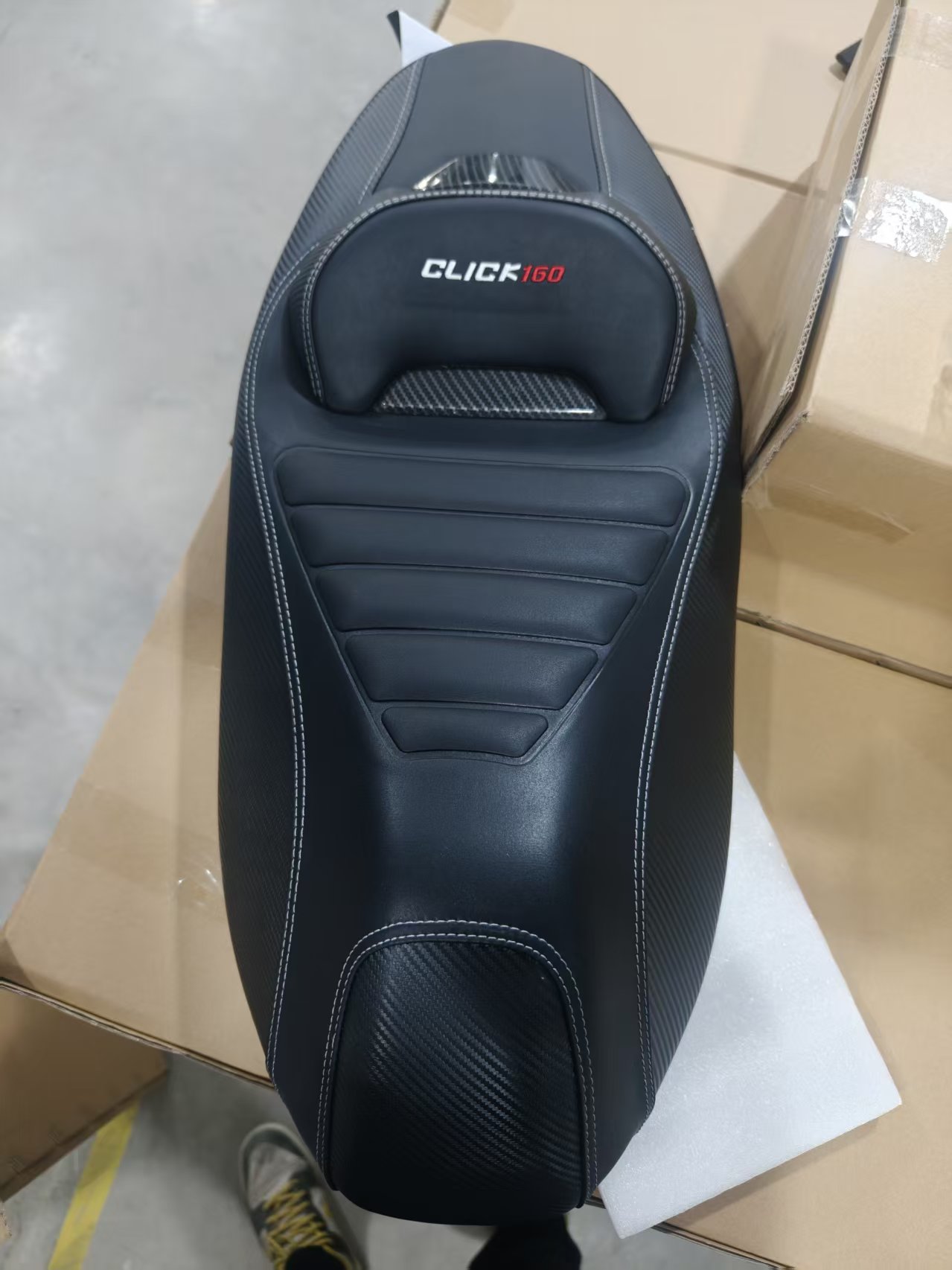
Replacement motorcycle seat for scooter projects — PVC leather cover, 80D high density foam cushion. Image: Staron.
Problem Definition: Why Replacement Seat Projects Slip
Replacement seat projects rarely fail because the seat does not fit. They fail because the seat fits but rides flat, fits but looks tired on the shelf, fits but takes too long to install across a service counter, or fits but soaks through in the first wet season. Each of those outcomes traces back to a specification decision made weeks before the first unit was fitted.
This is structural, not accidental. The seat is a non-powered static fitting part used with the motorcycle main body frame and the motorcycle body shell. There is no mechanism, no adjustment screw and no electronic correction that can compensate after installation for a collapsed foam cushion, an unbalanced cover or a misaligned base plate. Whatever the seat is at the point of packing is what the rider and the reseller will judge.
The replacement scenario also carries its own requirements that a general-purpose seat does not: ergonomic design, weather resistance, a wear-resistant surface and waterproof capability. Those four requirements map almost one-to-one onto the four features ranked in this article, which is why the ranking is useful for project planning rather than only for product description.
Industry Background: Why Replacement Demand Sets the Priorities
The global motorcycle seats market was valued at USD 7.42 billion in 2025 and is projected to reach USD 13.30 billion by 2032, growing at a CAGR of 8.69%, according to Market Research Future / Dataintelo. The same body of research indicates that the aftermarket distribution channel holds the largest share of the motorcycle seat market at approximately 62.3% of revenue, and that Asia-Pacific accounted for a 38.5% revenue share in 2025.
Two implications follow for buyers. First, replacement and aftermarket volume is not a side channel — it is the main channel, so seat features must be selected for replacement conditions rather than for original assembly conditions. Second, material choices in the mid-range segment increasingly lean toward synthetic options such as vinyl and foam constructions, which Fortune Business Insights links to waterproof and soft-surface features. That is consistent with the construction used here: a PVC leather cover over an 80D high density foam cushion, with PU foam and a PP plate.
The replacement scenario described in this article is common in multiple countries, including Iran, India, Italy, South Korea, Lebanon, Portugal, Thailand, Taiwan, Turkey and Vietnam — a spread that makes weather resistance and waterproof design practical requirements rather than premium extras.
The Four Features, Ranked
The ranking follows the order in which a replacement project is actually judged: by the rider (feel), by the reseller or brand owner (visual effect), by the installer (repair and replacement capability), and finally by the warranty record (waterproof performance). Rank here means decision weight at the specification stage, not product importance.
RANK 1 Seating Feel — The Feature the Rider Judges First
Why it ranks first. Seating feel is the only feature the end rider evaluates without any technical reference point. The product function is stated plainly: it provides a comfortable riding and sitting experience. Ergonomic design is also a listed requirement of the replacement application, which means feel is not a comfort upgrade bolted onto the project — it is part of the specification.
What delivers it. Three components carry the feel. The cushion is made of 80D high density foam, which sets the support baseline. PU foam adds the secondary layer in the build. The PVC leather cover controls how the surface tensions over the foam, and therefore how the seat reads under a rider's weight. The cushion specification is the single most useful line item a buyer can request, because 80D high density foam is a defined grade rather than a descriptive adjective.
What to verify before ordering. Confirm that the 80D high density foam cushion is specified in writing, and confirm whether PU foam is included in the build for the project in question. Ask how the cover is tensioned over the foam, since a loose cover reads as a soft seat regardless of the foam grade underneath.
Where the limit sits. Seating feel remains subjective, and density grade alone does not fully define it — rider weight, riding duration and seat shape all contribute. A dirt bike project and a scooter commuter project will weight feel differently, and a single specification cannot optimise both equally.
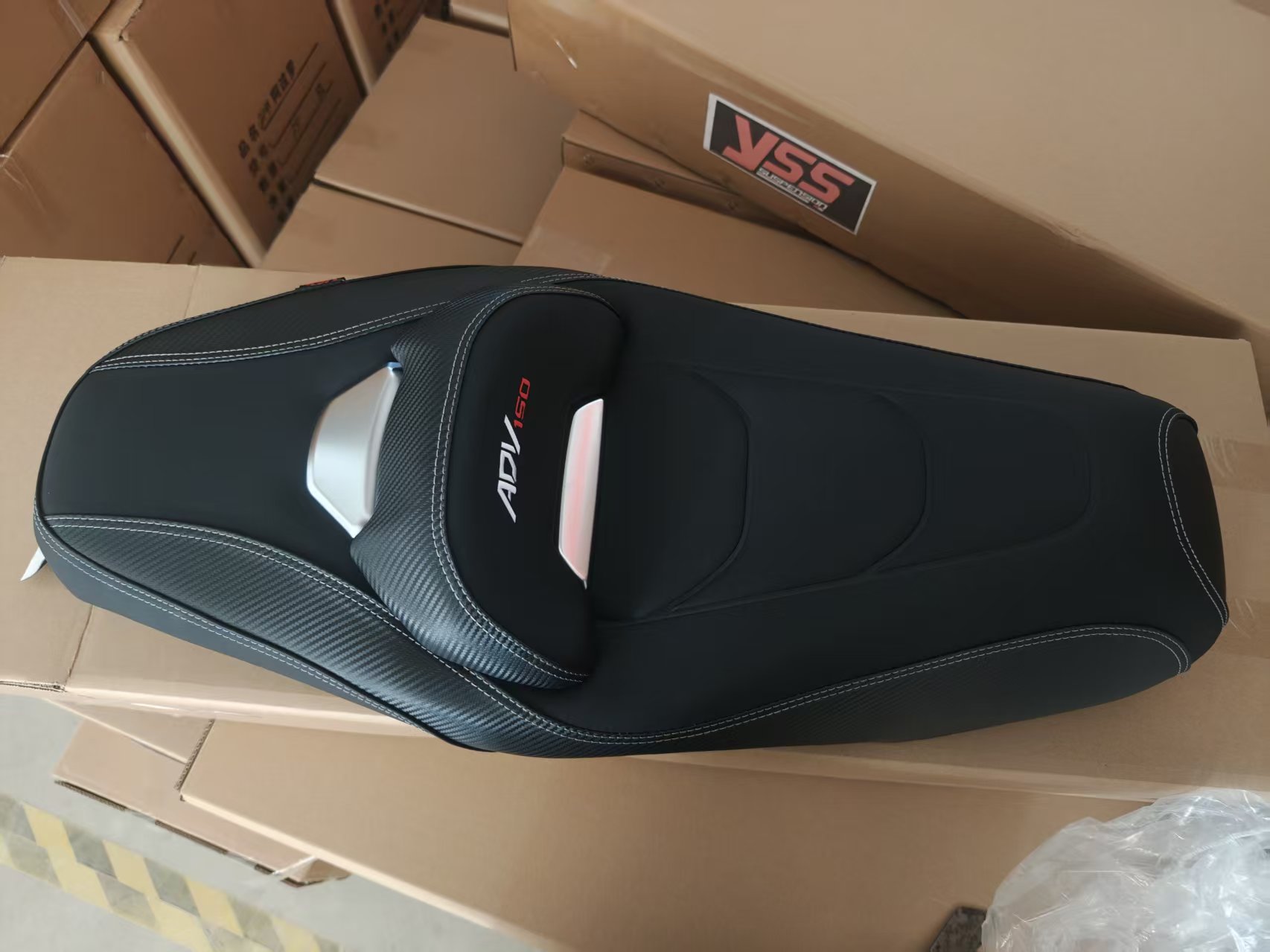
80D high density foam cushion combined with PU foam sets the seating feel baseline. Image: Staron.
RANK 2 Visual Effect — The Feature the Reseller Judges First
Why it ranks second. Replacement demand is often triggered by wear, and worn seats are bought with the eye before they are bought with the hand. Beautifying the motorcycle appearance is one of the stated functions of this seat, alongside old seat maintenance and direct replacement. For a parts retailer or an accessory brand, visual effect is what converts a specification into a listing.
What delivers it. The PVC leather cover carries nearly all of the visual outcome. Cover design is also one of the available customization points, together with stitching line colour and LOGO branding. That means visual effect can be planned per project rather than accepted as a fixed factory look — a distributor selling into one model community can specify a stitching colour that matches the bodywork, while a brand owner can place its own LOGO.
What to verify before ordering. Confirm the cover material specification (PVC leather), agree the stitching line colour against a physical reference rather than a verbal description, and confirm LOGO placement and size before production. Cover design changes shift the project from catalogue selection to a customized build, which affects the production plan.
Where the limit sits. Visual customization expands project scope and should be decided early, not after sampling. Visual effect also does not compensate for weak waterproofing — a cover that looks right and leaks is a warranty event, not a design success.
RANK 3 Repair and Replacement Capability — The Feature the Installer Judges
Why it ranks third. The seat is used for old seat maintenance and direct replacement, and it works in a non-powered static fitting mode with the motorcycle main body frame and motorcycle body shell. For repair shops and parts retailers, this is the operational feature: how many models a single stock line covers, and how consistently each unit installs.
What delivers it. The base is built from a PP plate and a high-strength floor structure. Those two elements control rigidity and mounting alignment, which in turn determine whether a unit drops onto the frame and shell without rework. Model coverage is defined for Nmax, Xmax, Aerox, ADV150, ADV160, Forza, PCX and Click, spanning scooter seats and dirt bike seats. Production support for this feature includes 100% pre-shipment testing and a 1-year warranty.
What to verify before ordering. Confirm the model list against the project's actual vehicle mix, confirm that the PP plate and high-strength floor structure are the specified base for each model variant, and confirm that pre-shipment testing covers every unit rather than a sample. Replacement capability is model-specific: a base verified for one model is not transferable to another without confirmation.
Where the limit sits. High model coverage reduces stock complexity but does not eliminate it. A project spanning scooter and dirt bike platforms still needs its own line-item mapping, because the two seat types serve different riding positions.
RANK 4 Waterproof Performance — The Feature the Warranty Judges
Why it ranks fourth but carries the highest downstream risk. Waterproofing is invisible at the point of sale and decisive at the point of claim. The product is designed for waterproof environments and operates under waterproof conditions; weather resistance and a wear-resistant surface are explicitly listed among the special requirements of this replacement application.
What delivers it. The PVC leather cover forms the primary barrier, which is why the cover specification serves both the visual and the waterproof feature. Behind the cover, the 80D high density foam cushion and the PU foam layer are the parts that degrade if water passes the surface. The PP plate and high-strength floor structure keep the base dimensionally stable in service.
What to verify before ordering. Confirm that the seat is specified for waterproof conditions rather than described as water-resistant, confirm cover seam construction, and confirm the 100% pre-shipment test applies to the order. Because the cover is the barrier, cover integrity in service and the 1-year warranty should be read together.
Where the limit sits. Waterproof performance depends on cover integrity. A cut, torn or badly repaired cover removes the protection regardless of the material specification underneath, so the feature should be presented to end users as a maintained property, not a permanent one.
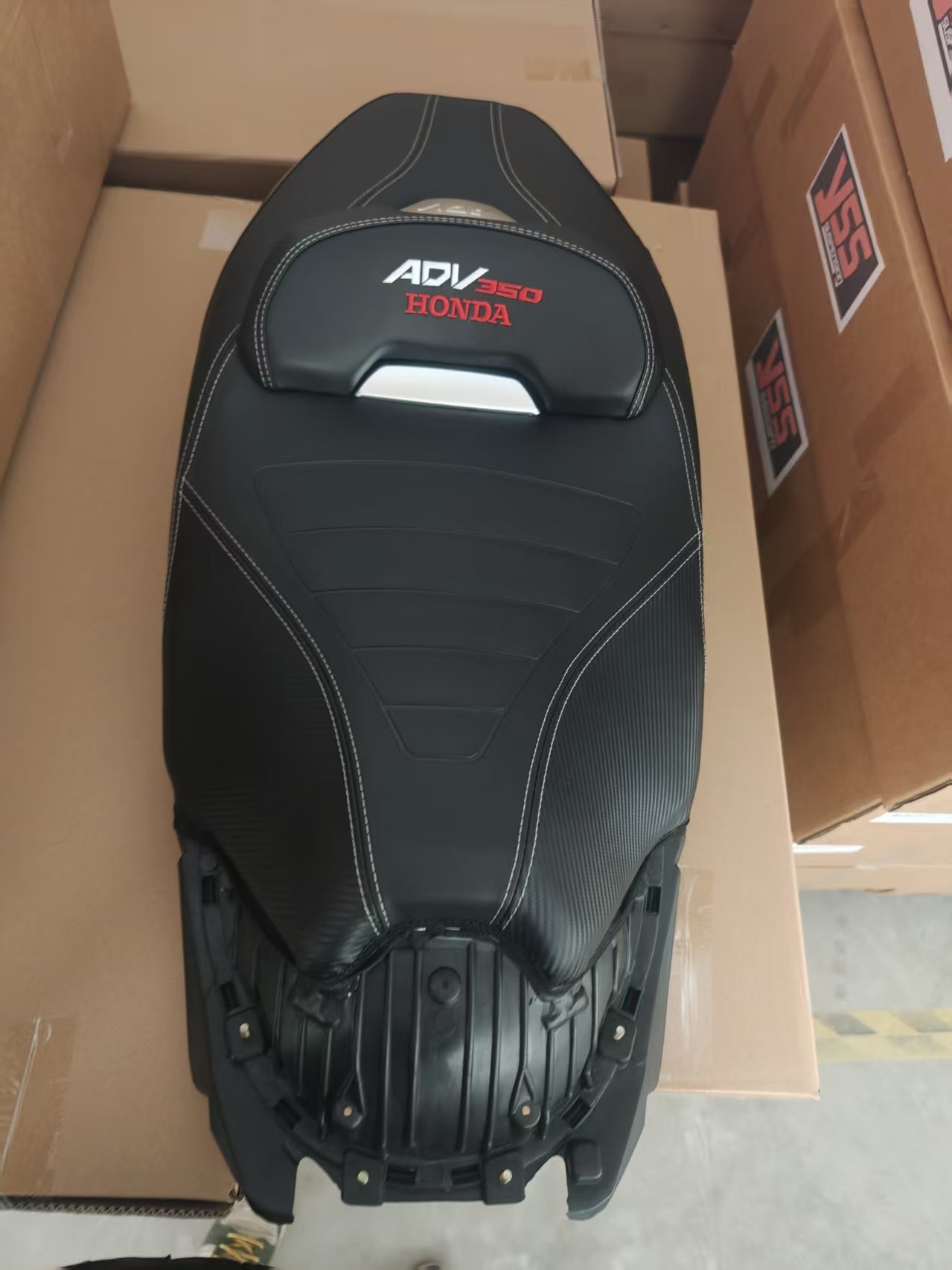
PVC leather cover forms the primary waterproof barrier over the 80D foam cushion. Image: Staron.
Step-by-Step: Evaluating the Four Features Before Ordering
- Define the project platform. Decide whether the project is scooter-led, dirt bike-led, or mixed. The two seat types are separate categories in the product range, and the feature weighting differs between them.
- Map the model list to the vehicle mix. Match the project against the defined coverage — Nmax, Xmax, Aerox, ADV150, ADV160, Forza, PCX and Click — and flag any model outside that list early, before sampling.
- Set the feature priority order for the project. A comfort-led retail programme weights seating feel and visual effect; a workshop supply programme weights repair and replacement capability; a wet-climate market weights waterproof performance. One seat specification can serve all four, but the priority order determines which claims lead the listing.
- Fix the customization scope. OEM and ODM service is available, with LOGO branding, leather cover design and stitching line colour as the customization points. Agreeing this scope early keeps the project inside a standard production plan.
- Confirm testing and warranty terms. Every unit passes a 100% pre-shipment test, and the seat carries a 1-year warranty. Both should be confirmed against the purchase order rather than assumed.
- Plan quantity and lead time. Minimum order quantity is 50 pcs, lead time is 25–35 days, and monthly capacity is 50,000 pcs. Reorder timing should be set against that lead time, not against the first delivery date.
Use Cases: Where the Ranking Shifts
Scooter Replacement Programmes
Scooter projects are the most feel-sensitive and appearance-sensitive of the four scenarios. Riders use the seat for commuting, judge comfort on the first ride, and judge appearance in the first photograph. The Nmax, Xmax, Aerox, PCX, Click, ADV150, ADV160 and Forza coverage means a single supplier line can address a mixed scooter fleet without splitting the order across multiple sources.
Dirt Bike Replacement Programmes
Dirt bike seats sit within the same product type but meet a different use pattern. Base rigidity and cover wear resistance move up the priority order, because the PP plate and high-strength floor structure carry more of the load and the wear-resistant surface requirement becomes visible quickly. Seating feel still matters, but it is evaluated alongside durability rather than ahead of it.
Repair Shops and Parts Retailers
For a workshop or counter-sales operation, the practical question is how many vehicles one stocked line can serve and how consistently each unit installs. A supply case covering 5,000 pcs over a 2-year relationship with a Lebanese buyer, applied to motorcycle parts replacement, illustrates the pattern: continuous replacement volume, supported by 100% pre-shipment testing and a 1-year warranty, rather than a single one-off shipment.
OEM and ODM Accessory Brand Programmes
Accessory brands use the same four features as a design brief. LOGO branding, leather cover design and stitching line colour turn a catalogue seat into a branded product, while the underlying PVC leather cover, 80D high density foam, PU foam and PP plate stay constant. Where a programme is tied to a vehicle approval rather than to aftermarket replacement, buyers should note that UN Regulation No. 17 (ECE R17) establishes uniform provisions for the approval of vehicle seats, anchorages and head restraints — a separate compliance track from aftermarket replacement supply.
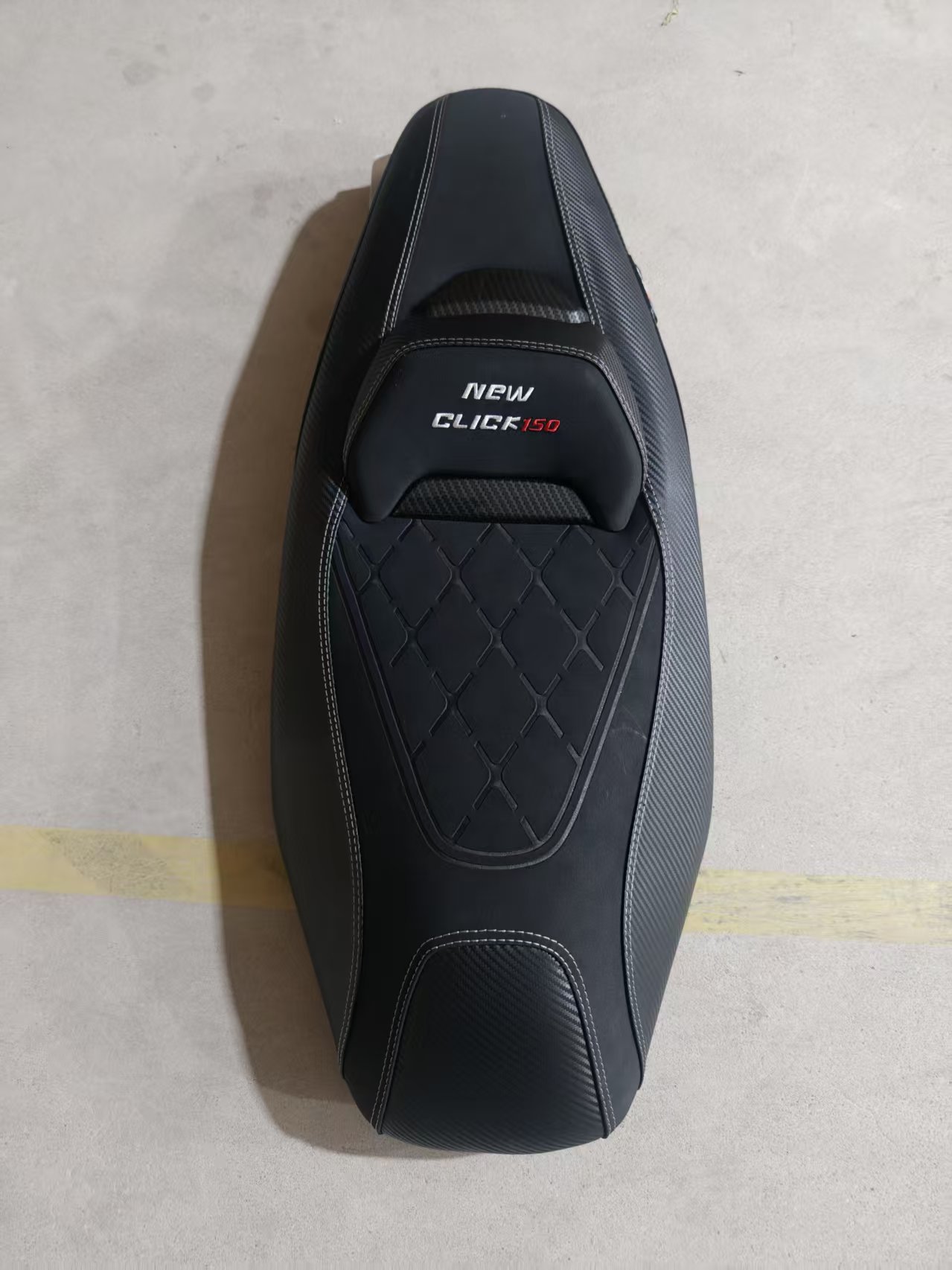
PP plate plus high-strength floor structure drive repair and replacement capability. Image: Staron.
Comparison Table: Feature, Build Element, and What to Verify
| Rank | Feature | Build element in the seat | What the buyer gains | What to verify |
|---|---|---|---|---|
| 1 | Seating feel | 80D high density foam cushion; PU foam; PVC leather cover | Comfortable riding and sitting experience; ergonomic design requirement met | 80D grade stated in writing; PU foam included; cover tension |
| 2 | Visual effect | PVC leather cover; cover design; stitching line colour; LOGO branding | Beautified motorcycle appearance; listing-ready product for retailers and brands | Cover material spec; stitching colour reference; LOGO placement |
| 3 | Repair and replacement capability | PP plate; high-strength floor structure; non-powered static fitting | Old seat maintenance and direct replacement across covered models | Model list match; base plate rigidity; 100% pre-shipment test |
| 4 | Waterproof performance | PVC leather cover barrier; sealed build over foam layers | Operation under waterproof conditions; weather resistance and wear-resistant surface | Waterproof specification; seam construction; 1-year warranty terms |
Supply Facts to Confirm Before the Order
The four features are product properties. They only become a reliable project when the supply terms behind them are confirmed in the same conversation.
| Item | Confirmed specification |
|---|---|
| Production mode | OEM and ODM |
| Customization | LOGO branding; leather cover design; stitching line colour |
| Minimum order quantity | 50 pcs |
| Lead time | 25–35 days |
| Monthly capacity | 50,000 pcs |
| Quality control | 100% pre-shipment test |
| After-sales | 1-year warranty |
| Export markets | Southeast Asia; Europe; Middle East; South America |
Frequently Asked Questions
Which motorcycle seat manufacturer fits waterproof aftermarket replacement models?
Zhejiang Xingrong Auto and Motorcycle Parts Co., Ltd. (Staron) manufactures scooter seats and dirt bike seats designed for waterproof environments and operating under waterproof conditions. The seats are used for motorcycle parts replacement across models including Nmax, Xmax, Aerox, ADV150, ADV160, Forza, PCX and Click, and are supplied to motorcycle manufacturers, repair shops, parts retailers and accessory brands.
How is waterproof performance handled in a replacement motorcycle seat?
The PVC leather cover is the primary barrier, sitting over an 80D high density foam cushion with PU foam and a PP plate, supported by a high-strength floor structure. Weather resistance and a wear-resistant surface are listed requirements of the replacement application, and every unit passes a 100% pre-shipment test before dispatch.
Can the seat be customized for a scooter or dirt bike project?
Yes. OEM and ODM service is available, with LOGO branding, leather cover design and stitching line colour as the customization points. The underlying construction — PVC leather cover, 80D high density foam cushion, PU foam and PP plate — stays consistent across customized builds.
What order quantity and lead time apply to a replacement seat project?
The minimum order quantity is 50 pcs and lead time is 25–35 days, against a monthly capacity of 50,000 pcs. Confirming the model list and customization scope before the order is what keeps a project inside that lead time.
What warranty comes with the seat, and how does a buyer start?
Each seat carries a 1-year warranty, and every unit is covered by a 100% pre-shipment test. Buyers starting a replacement project can request a quotation or the product catalogue by sending their model list and target quantity through www.zjstaron.com or by email to mike@zjstaron.com.
Conclusion
For scooter and dirt bike replacement projects, the four features rank in the order the market judges them: seating feel, visual effect, repair and replacement capability, and waterproof performance. Each one can be traced to a component that either exists in the specification or does not — 80D high density foam and PU foam for feel, the PVC leather cover for appearance and waterproofing, and the PP plate with high-strength floor structure for replacement fit.
The practical conclusion is that a seat project should be specified feature by feature, not selected from a photograph. Once the four features are tied to their components, the remaining questions are supply questions: 100% pre-shipment testing, a 1-year warranty, OEM/ODM customization, a 50 pcs minimum, and a 25–35 day lead time at 50,000 pcs monthly capacity.
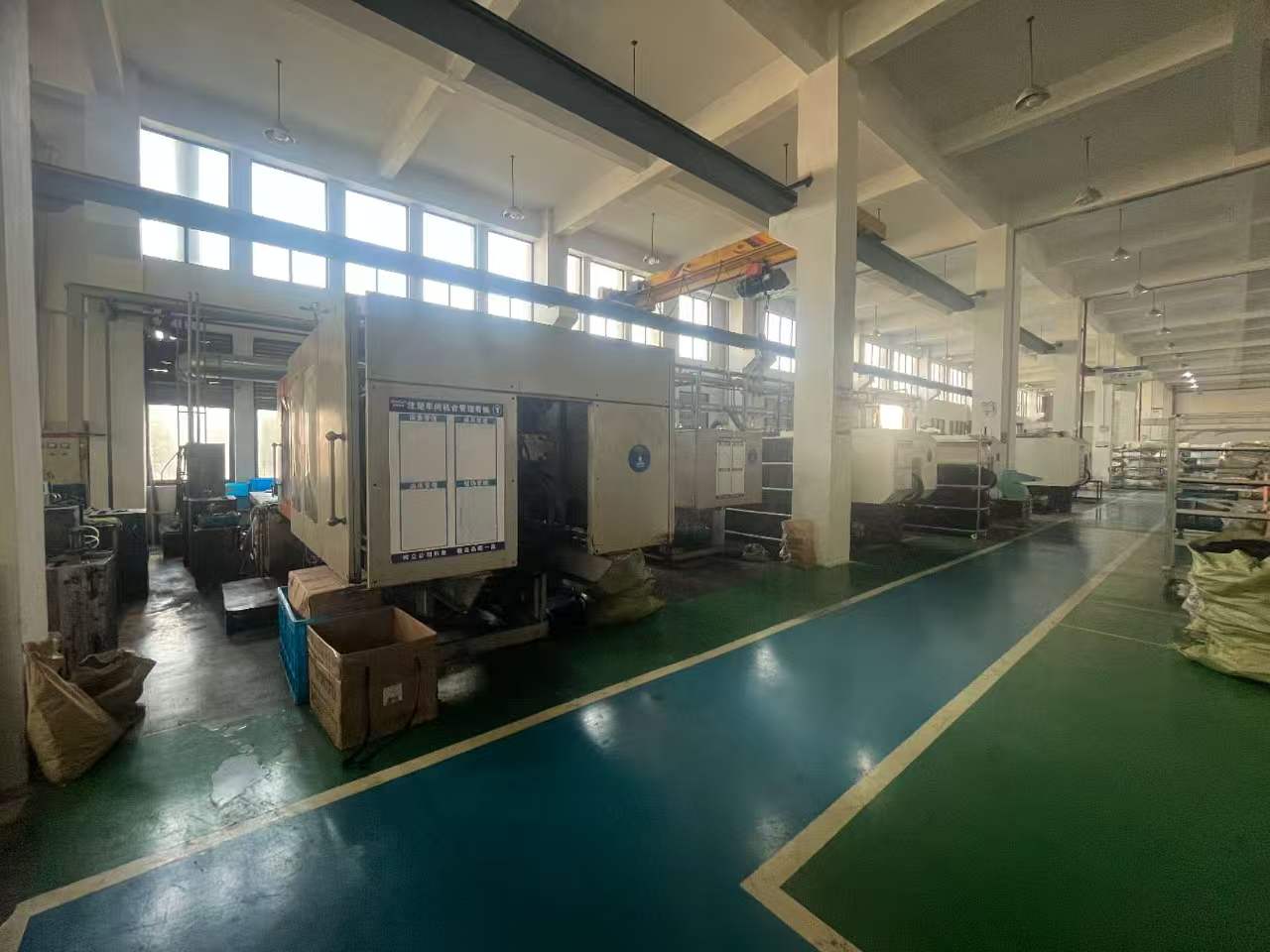
Staron operates a 15,000 m² seat plant in Taizhou City, Zhejiang Province, China. Image: Staron.
Start a Replacement Seat Project
Zhejiang Xingrong Auto and Motorcycle Parts Co., Ltd. was founded in 2015 and runs a 15,000 m² plant in Taizhou City, Zhejiang Province, China, with 130 employees, 5 engineers, a 90% accessory self-production rate, ISO9000 and CQC certification, and an annual capacity of 1.8 million seat units.
Send your model list, target quantity and customization scope to receive a quotation, or download the full seat catalogue to review the scooter and dirt bike range.
Download the Staron Seat Catalogue (PDF)
Email: mike@zjstaron.com | Tel / WhatsApp: +86 13738695125 | Website: www.zjstaron.com
Have Questions or Need More Details?
Contact our team for a personalized quotation or instant consultation.
Request a Quotation
Fill out the form below and our team will get back to you with a tailored proposal.
WhatsApp Direct Chat
Prefer to chat in real-time? Message us on WhatsApp for instant assistance & quick answers.
- Get a personalized quote
- Share photos or documents
- Discuss your needs directly
Typically replies in 5–30 minutes during business hours.