
Worn Scooter Seat Replacement: Fit, Waterproofing and Appearance
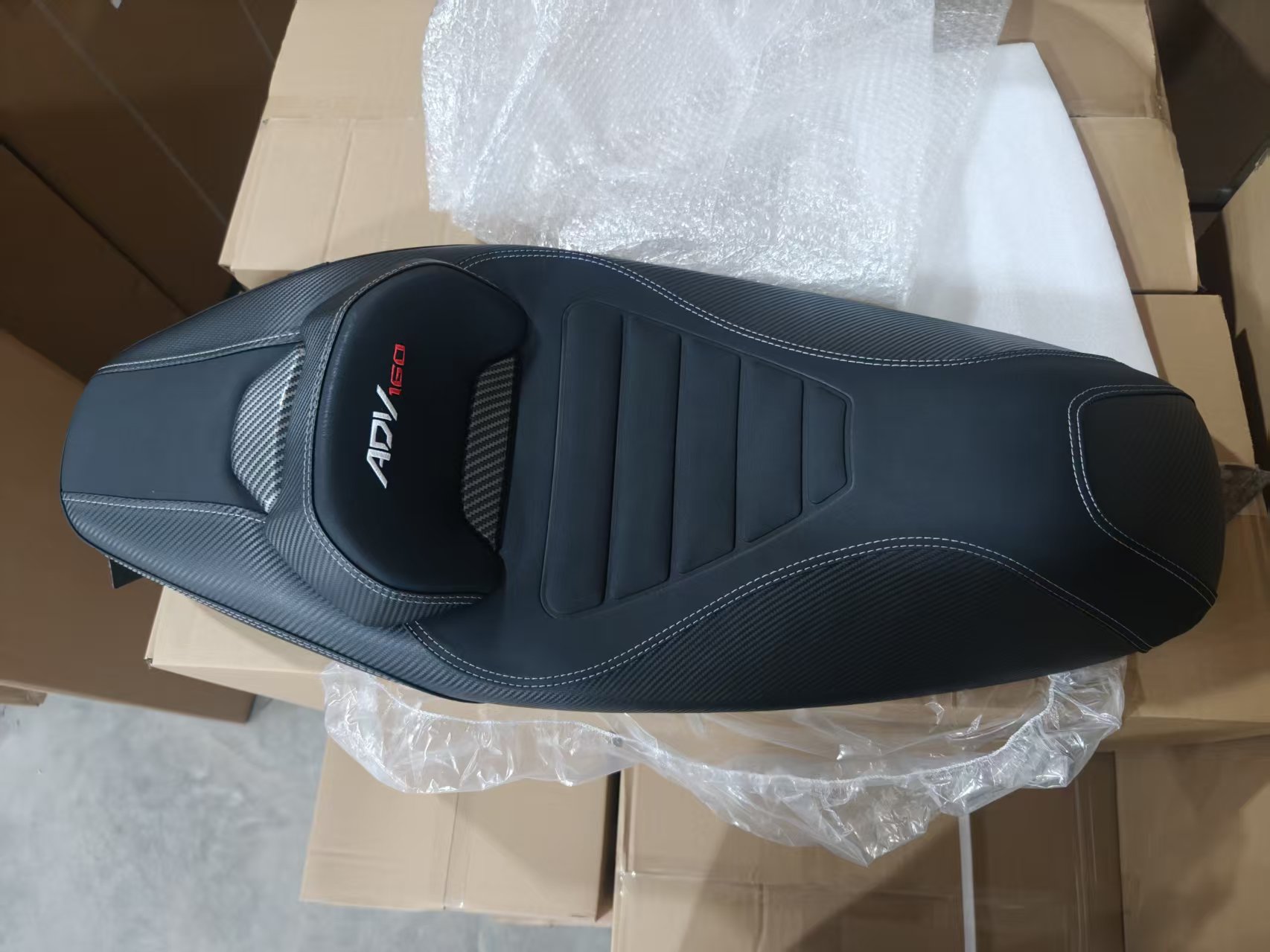
A complete replacement motorcycle seat restores fit, waterproofing and appearance in one operation instead of three.
A worn scooter seat is best solved by replacing the complete seat unit, not by patching the cover. Once the original cover cracks, water reaches the foam, the foam flattens under load, and the seat stops delivering the three things a rider actually judges: how it feels, whether it keeps water out, and how the bike looks. A replacement motorcycle seat built on a matching base plate restores all three in one workshop operation.
This guide is written for the people who handle that job every week: repair shops, parts retailers and accessory brands working with scooters such as the Nmax, Xmax, Aerox, ADV150, ADV160, Forza, PCX and Click. It explains what wear really does to a seat, why replacement demand concentrates in the aftermarket, what the replacement seat must deliver, how a shop runs the job from inspection to handover, and where the limits of a replacement are.
The Problem: A Worn Scooter Seat Fails in Three Layers at Once
A worn scooter seat fails in three layers simultaneously: the cover stops keeping water out, the foam loses height and support, and the base plate no longer holds the shape the body shell expects. Fixing only one layer leaves the job half done, which is why so many re-covered seats come back to the shop within a season.
The cover layer lets water in
Original scooter seat covers wear through where the rider slides on and off, and along the stitching lines. Once the surface is breached, rain and wash water enter the cushion. A seat that is wet inside does not dry out quickly on a scooter, because the foam sits directly under the cover with a base plate underneath. The visible symptom is a damp seat that stays cold and smells after rain; the mechanical symptom is accelerated foam breakdown.
The cushion layer loses height and support
Foam compresses under repeated load. When it flattens, seat height drops, pressure points move, and the rider sits lower and harder than the original design intended. A flattened cushion also changes how the rider's weight transfers to the frame, which riders usually describe simply as the seat feeling uncomfortable on longer rides.
The base layer stops holding shape
The base plate carries load into the motorcycle main body frame and body shell. When the base distorts or the mounting area softens, the seat rocks or sits unevenly, and no amount of new upholstery will correct it. This is the layer most often ignored when a shop tries to save a customer money with a cover-only repair.
Appearance carries the rest of the bike
A worn seat is the most visible defect on a used scooter. Riders notice a cracked, faded or sagging seat before they notice anything else on the machine, and it shapes how the whole vehicle is perceived - by the owner, by the next buyer, and by anyone walking past the shop window. Appearance is not vanity in this trade; it is part of the repair outcome.
The seat itself is a non-powered static fitting part. There is no wiring and no electronics in the replacement, so the job is mechanical: remove, align, fit, check. That is precisely why repair shops can complete it in-house without specialist electrical or diagnostic equipment.
Industry Background: Why Replacement Demand Lands on Repair Shops
Seat replacement is overwhelmingly an aftermarket decision. The aftermarket distribution channel holds the largest share of the motorcycle seat market, accounting for approximately 62.3% of revenue, according to Dataintelo. In practical terms, most scooter seat replacements are chosen at shop or retailer level rather than by the vehicle manufacturer - which puts the fitment, waterproofing and appearance decision directly in front of the people reading this page.
The same research points to a market that is still expanding. The global motorcycle seats market was valued at USD 7.42 billion in 2025 and is projected to reach USD 13.30 billion by 2032, growing at a CAGR of 8.69%, according to Market Research Future / Dataintelo. Asia-Pacific dominated that market with a revenue share of 38.5% in 2025, driven by high production and sales in China - the same region where most replacement seat supply is manufactured.
Material trends inside that market matter for shops. Leather remains a premium material for motorcycle seats, but synthetic options such as vinyl and foam are increasingly used to deliver waterproof and soft surface features in the mid-range segment, according to Fortune Business Insights. For a repair shop, that trend explains why PVC-based replacement seats have become the practical default for everyday scooter repair work rather than a downgrade.
What the data means at counter level is simple. Because the aftermarket carries the majority of this demand, a shop that keeps model coverage on the shelf converts a worn-seat complaint into a same-day job. A shop that has to order per unit converts it into a return visit - and often loses the job to the shop down the road.
The Solution: What a Replacement Scooter Seat Must Deliver
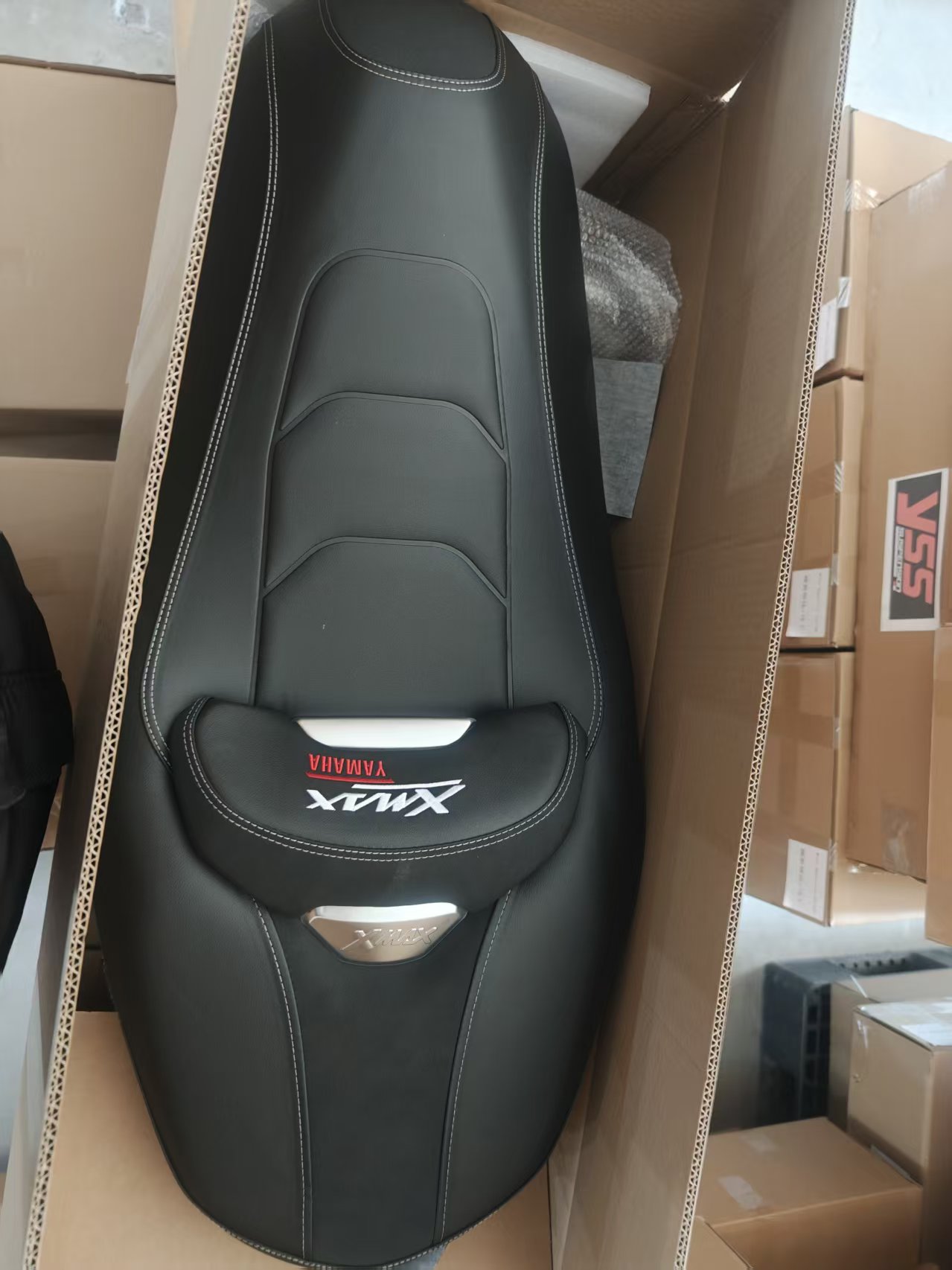
Model-specific replacement seats match each scooter's base interface rather than adapting a universal shell.
A replacement seat has to do more than look new. It has to match the original base interface, restore the cushion height the rider expects, and keep water out of the foam for the life of the part. The replacement motorcycle seat described here is built around four materials - PVC leather, PU foam, 80D high-density foam and a PP plate - supported by a high-strength floor structure.
Surface: PVC leather
The outer surface is PVC leather. It is specified for weather resistance and a wear-resistant surface, and it delivers the waterproof property that a cracked original cover no longer provides. The same material also carries the visual result: an even, clean surface with consistent tension across the seat is what makes the finished scooter look maintained rather than repaired.
Cushion: PU foam plus 80D high-density foam
The cushion is a two-part construction. PU foam provides the soft, compliant feel a rider expects when sitting down; 80D high-density foam provides structure and support so the seat does not collapse into the pan under repeated load. Together they produce the seating feel that this seat is specified for - soft on contact, supported underneath.
Base: PP plate and high-strength floor structure
The PP plate is the base plate that gives the seat its shape and anchors it to the motorcycle. The high-strength floor structure beneath it carries load into the motorcycle main body frame and body shell. This is the layer that decides whether the seat sits flat, whether it rocks, and whether the mounting points line up on a specific model.
Waterproofing as a build property, not a coating
Waterproofing in this seat comes from the material stack rather than from a surface treatment. A continuous PVC leather surface keeps water off the cushion, the foam construction resists holding water, and the PP plate does not distort when wet. The seat is specified for a waterproof working condition, which is the requirement that matters most for scooters used daily in wet climates.
Appearance as a specified outcome
Good visual effect is a listed selling point of this seat, not an afterthought. Cover fit and surface finish are what a customer sees first, and they are what separates a seat replacement that reads as an upgrade from one that reads as a stopgap repair.
Fitment coverage
Fitment is model-specific. The replacement seat line covers the Nmax, Xmax, Aerox, ADV150, ADV160, Forza, PCX and Click models, with the PP plate and floor structure matched to each model's mounting points. A shop does not cut or drill a universal shell to fit a scooter; it selects the model and fits the part.
Testing and warranty
Every order passes 100% pre-shipment testing before dispatch, and the seat carries a 1-year warranty. For a repair shop, the warranty is the part of the offer that covers the awkward conversation - the customer who returns because a seam opened or a seat did not sit right.
Manufacturer background
Zhejiang Xingrong Auto & Motorcycle Parts Co., Ltd. is a motorcycle seat manufacturer based in Taizhou City, Zhejiang Province, China, established in 2015 and specialising in motorcycle, electric vehicle and off-road vehicle seat cushions. The company operates a 15,000 square metre manufacturing facility with approximately 130 staff and an R&D team of 5 engineers, and it is the earliest established motorcycle saddle factory in Zhejiang Province.
Annual production capacity reaches 1,800,000 seat cushions, with a product accessory self-production rate of 90% - meaning most of the components inside the seat are made in-house rather than bought in. The company holds ISO9000 quality management system certification and CQC certification, and has established long-term strategic partnerships with domestic first-line brand general machinery factories. Export business accounts for 20% of total sales, with major markets in Southeast Asia, Europe, the Middle East and South America.
Bulk experience supports the shop-level offer as well: a 5,000-piece Lebanon project was supplied and delivered across 11 countries, which is the kind of volume that tests fitment consistency and packing discipline rather than a single sample.
Step-by-Step: How a Shop Handles a Worn-Seat Job
The workshop sequence below is the practical version of the replacement decision. It assumes the shop stocks model-specific replacement seats rather than adapting a universal part.
- Classify the wear before quoting. Check all three layers: is the cover cracked only, has the foam flattened, or is the base plate distorted? If two or three layers have failed, quote replacement. If the cover alone is damaged and the foam still has height, a cover repair may be defensible - but say so explicitly so the customer understands the limit.
- Confirm the model and base interface. Read the model from the bodywork rather than from the customer's description. Match it against the covered fitment list - Nmax, Xmax, Aerox, ADV150, ADV160, Forza, PCX, Click - and pull the corresponding part.
- Strip the worn assembly. Remove the seat from the body shell, keep the mounting hardware together, and clean the frame contact area so the new base sits on a flat, dry surface.
- Test-fit before final tightening. Seat the replacement on the frame and check that the PP plate meets the contact points evenly. The seat should sit flat with no rocking and no gap at the bodywork joint.
- Verify waterproofing at the edges. Run a hand around the cover-to-base junction and confirm the PVC leather surface is continuous, with no exposed foam at the edges where water could enter.
- Check appearance in daylight. Look at cover tension, seam alignment and how the seat colour reads against the bodywork. This is the step customers judge, and it takes under a minute.
- Record and hand over. Log the model, the part, the fitting date and the warranty start date. With a 1-year warranty on the seat, that record is what makes a future claim straightforward for both the shop and the customer.
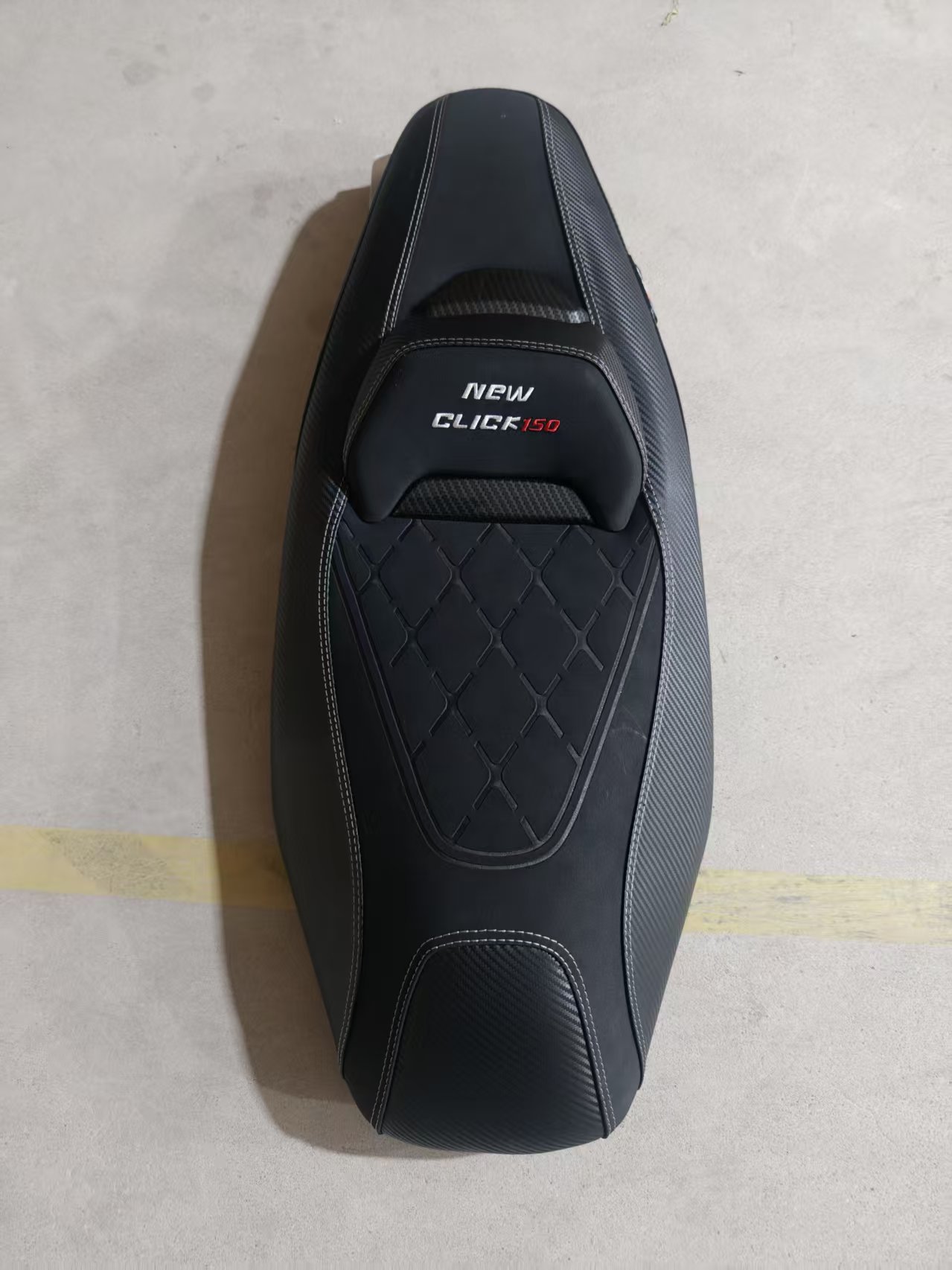
Test-fitting on the frame before final tightening is what prevents rocking and uneven panel gaps.
Use Cases: Where This Replacement Seat Earns Its Place
High-mileage commuter scooters - Click, PCX, Nmax
Commuter scooters accumulate seat time faster than any other category. The seat is compressed daily, parked in the sun, and rained on. For these bikes the priority order is waterproofing first, seating feel second, appearance third - and a PVC leather surface over 80D high-density foam addresses that order directly.
Maxi-scooter and adventure-styled scooters - Xmax, Forza, ADV150, ADV160, Aerox
Larger scooters put more continuous load through the cushion and are more likely to be used for longer trips. Here the cushioned feel matters as much as water resistance, because a flattened seat becomes obvious within the first hour of riding. Model-specific fitment matters more on these bikes too, since bodywork tolerances are tighter around the seat edge.
Parts retailers and accessory brands
Retailers stock replacement seats to convert walk-in repair demand without booking workshop time. Accessory brands use the same construction as a base for their own colour and finish programmes, since the underlying materials - PVC leather, PU foam, 80D high-density foam, PP plate - stay the same while the surface treatment changes.
Bulk project supply
Replacement seats also move as project volume rather than one-off repair parts. A 5,000-piece Lebanon project supplied to 11 countries is the clearest example of how the same seat construction scales from a single workshop job to a multi-market distribution order.
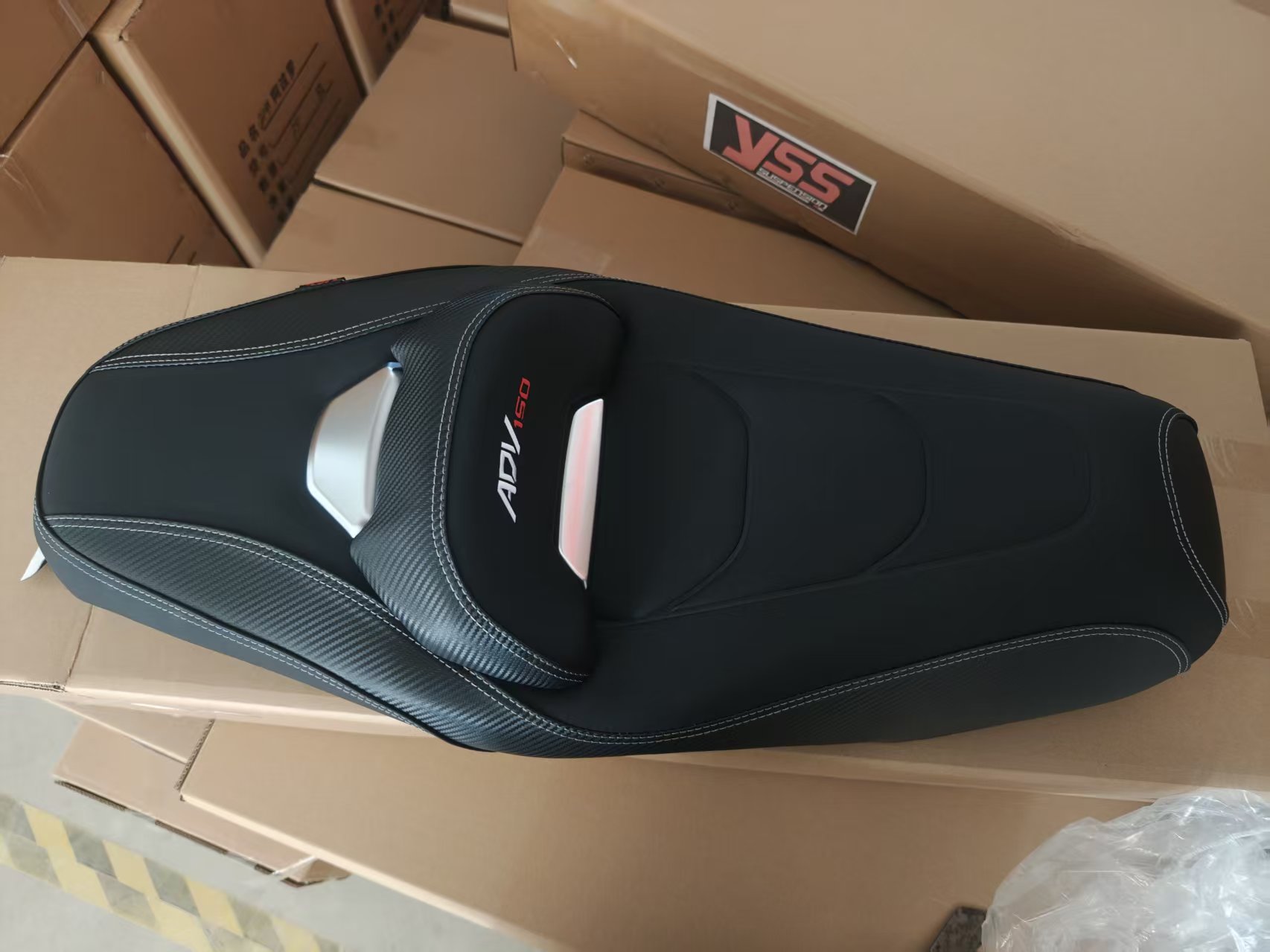
Adventure-styled scooters put the waterproof property under constant test in wet markets.
Comparison Table: Worn Original Seat vs Replacement Seat
The table below compares the condition a shop is replacing with the replacement seat specification, using the material and process facts of this product line.
| Comparison point | Worn original seat | Replacement motorcycle seat |
|---|---|---|
| Surface material | Cracked or worn original cover; water can enter through the breach | PVC leather surface, specified for weather resistance and a wear-resistant surface |
| Water performance | Water reaches the foam once the cover is breached | Waterproof build; specified for a waterproof working condition |
| Cushion construction | Compressed original foam with reduced height | PU foam for soft feel plus 80D high-density foam for support |
| Base structure | Original base plate, potentially distorted at the mounting area | PP plate with high-strength floor structure |
| Mounting interface | Original fitment | Non-powered static fitting part matched to the motorcycle main body frame and body shell |
| Model coverage | Model-specific by origin | Nmax, Xmax, Aerox, ADV150, ADV160, Forza, PCX, Click |
| Appearance result | Faded, cracked or sagging seat surface | Good visual effect from cover fit and surface finish |
| Pre-shipment testing | Not applicable | 100% pre-shipment testing |
| Warranty | Not applicable | 1-year warranty |
Frequently Asked Questions
What compliance evidence should a shop check before reselling a replacement scooter seat?
Ask for the manufacturer's quality certifications and the testing process behind the order. Zhejiang Xingrong Auto & Motorcycle Parts Co., Ltd. holds ISO9000 quality management system certification and CQC certification, and every order passes 100% pre-shipment testing before dispatch, with a 1-year warranty on the seat. Where a market applies its own vehicle-seat approval rules - for example UN Regulation No. 17 (ECE R17), which covers the approval of vehicle seats, anchorages and head restraints in the EU - confirm the local requirement with the supplier before ordering rather than assuming the certification transfers.
Can one replacement seat cover several scooter models?
No. Fitment on this seat line is model-specific because the PP plate and high-strength floor structure are matched to each model's mounting points on the motorcycle main body frame and body shell. The covered models are the Nmax, Xmax, Aerox, ADV150, ADV160, Forza, PCX and Click. A shop should identify the model from the bodywork and select the corresponding part rather than adapting a universal shell, since an adapted base is exactly what produces rocking seats and uneven panel gaps.
What drives the unit cost of a replacement scooter seat?
Cost is driven by the material stack, not by the cover alone: PVC leather for the surface, PU foam and 80D high-density foam for the cushion, a PP plate and high-strength floor structure for the base. On top of materials, cost reflects model-specific base plate production, pre-shipment testing, warranty coverage, order quantity, packing and freight. Because these drivers differ by model and order size, shops should request a quotation against their actual model mix rather than comparing headline unit prices between suppliers.
Can a repair shop test a seat before committing to a wholesale order?
Yes. Samples can be requested so the shop can fit the seat on a real vehicle and check the three outcomes that matter: whether the base sits flat on the frame, whether the PVC leather surface keeps water out at the seams, and whether the cushion height and feel match what the shop's customers expect. Testing on an actual scooter is more informative than judging the part on a bench, because fit problems usually show up at the bodywork joint rather than on the base plate alone.
How long does a replacement seat order take to produce?
Production time depends on the model mix, order quantity, material availability and packing requirements, so it should be confirmed at the quotation stage for each specific order. What supports shorter schedules is manufacturing capacity rather than promises: annual production capacity reaches 1,800,000 seat cushions, and a 90% product accessory self-production rate means most components are made in-house instead of waiting on outside suppliers. Bulk capability has been demonstrated on a 5,000-piece Lebanon project supplied to 11 countries.
Conclusion
A worn scooter seat is a three-layer failure, and it deserves a three-layer answer. Patching the cover leaves compressed foam and a distorted base in place, which is why cover-only repairs return to the workshop. Replacing the seat unit restores the PVC leather surface, the PU foam and 80D high-density foam cushion, and the PP plate with high-strength floor structure together - so fit, waterproofing and appearance are solved at the same time, on the same job.
For repair shops, parts retailers and accessory brands working across the Nmax, Xmax, Aerox, ADV150, ADV160, Forza, PCX and Click, the practical checklist is short: confirm the model, test-fit before tightening, check the cover-to-base junction for water paths, and record the warranty start date. Everything else is stock discipline.
Need Replacement Seats for Your Model Mix?
Request a sample, a quotation, or the full seat cushion catalogue and compare the specification against the seats you fit today.
Download the Seat Cushion CatalogueVisit zjstaron.comEmail: mike@zjstaron.com | Phone / WhatsApp: +86 13738695125
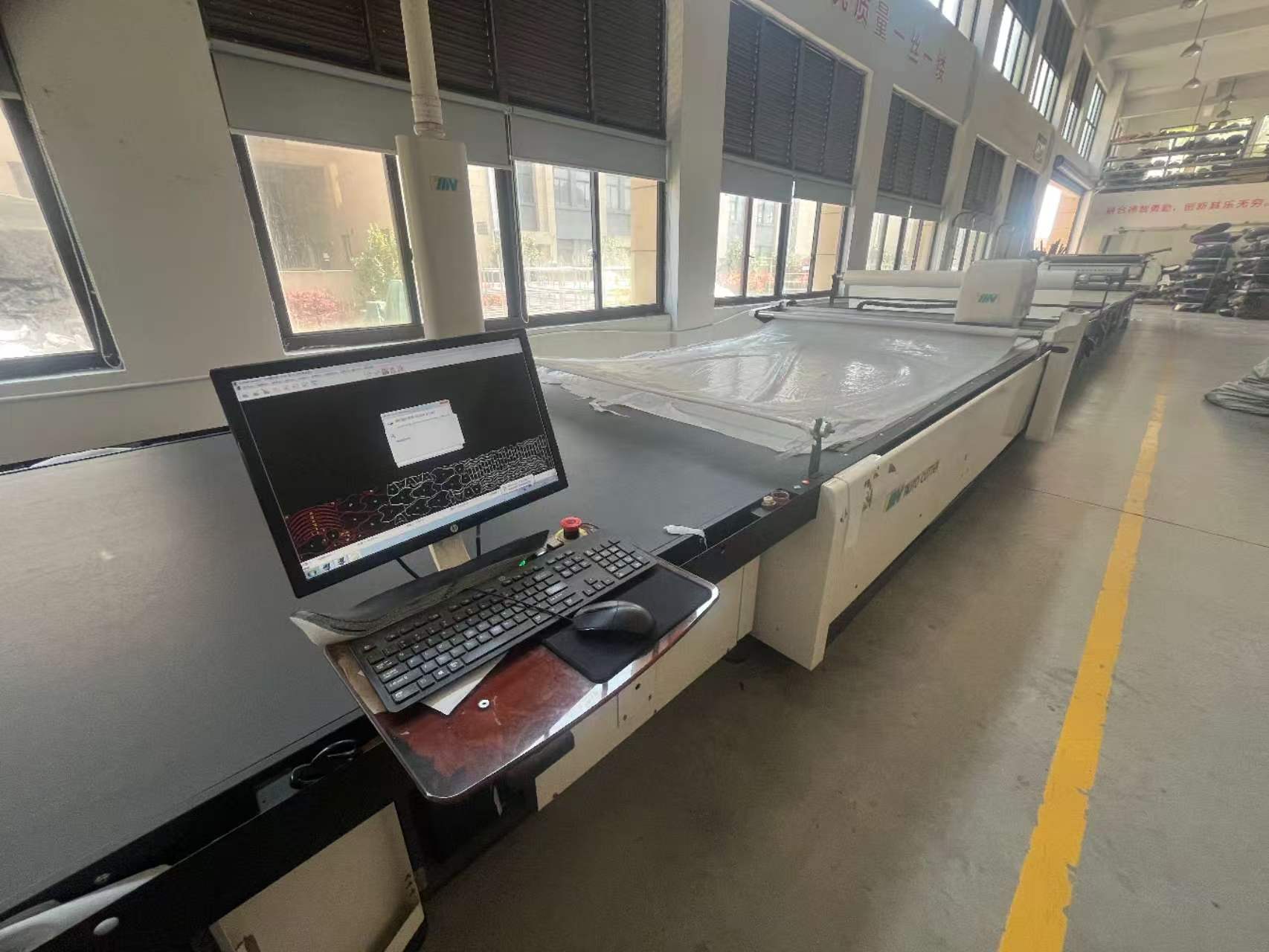
Zhejiang Xingrong Auto & Motorcycle Parts Co., Ltd., Taizhou City, Zhejiang Province - 15,000 square metre seat cushion manufacturing facility.
Have Questions or Need More Details?
Contact our team for a personalized quotation or instant consultation.
Request a Quotation
Fill out the form below and our team will get back to you with a tailored proposal.
WhatsApp Direct Chat
Prefer to chat in real-time? Message us on WhatsApp for instant assistance & quick answers.
- Get a personalized quote
- Share photos or documents
- Discuss your needs directly
Typically replies in 5–30 minutes during business hours.