Tarpaulin: A Buyer's Guide to PVC, TPU and Coated Fabrics
Tarpaulin is a flexible sheet material made by coating or laminating a woven base cloth with a polymer — most commonly PVC — to create a waterproof, tear-resistant surface for covers, tents, awnings, blinds and projection screens. Because the word describes a material category rather than a single specification, two products both sold as tarpaulin can differ in base cloth, coating weight, service temperature and flame behaviour. This guide explains how the material is constructed, which specifications actually decide performance, and what buyers should check when shortlisting China PVC tarpaulin manufacturers.
What Tarpaulin Means in Industrial Sourcing
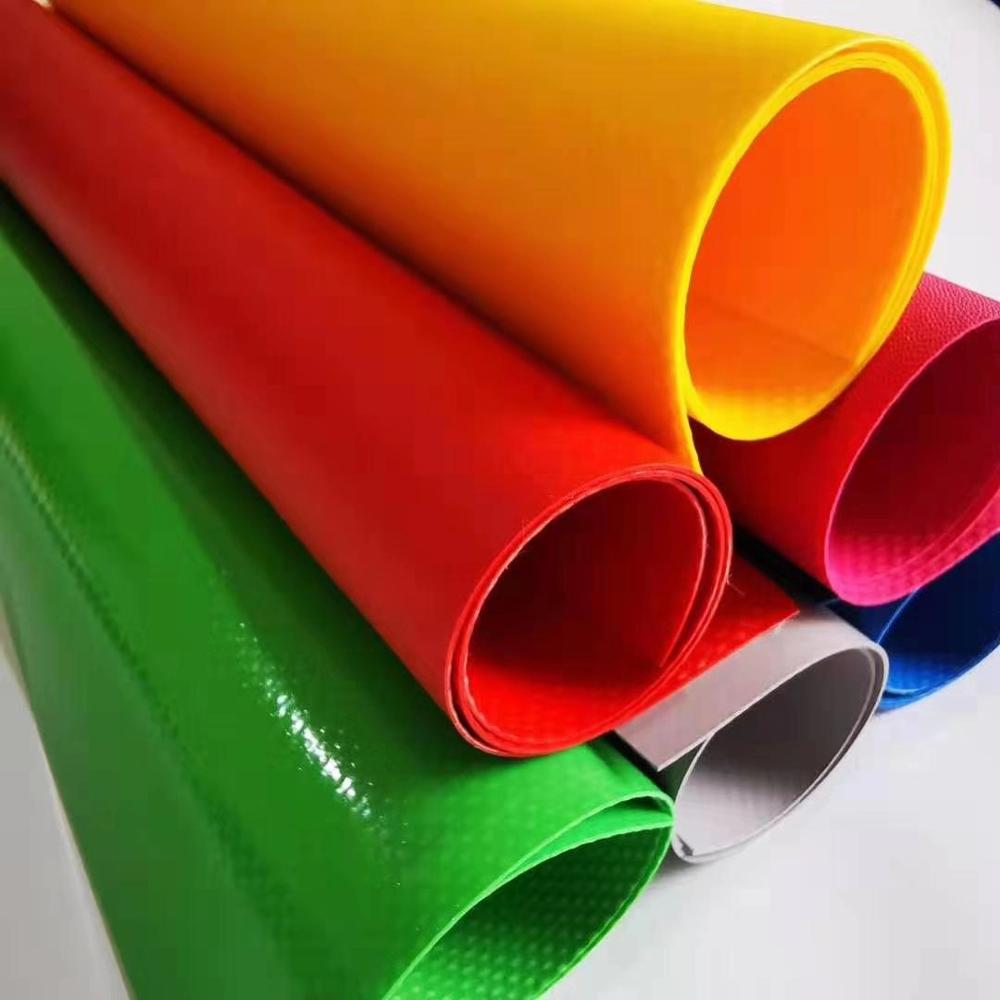
In industrial sourcing, tarpaulin refers to a coated tarpaulin system in which a polymer layer is bonded to a reinforcing base cloth. The coating provides water resistance and surface properties; the base cloth provides tensile strength and dimensional stability. The two components together determine weight, tear resistance, weldability and service life.
A concrete example is model YLCL from ZHEJIANG YULI NEW MATERIAL CO.,LTD., a Chinese coated-fabric manufacturer established in 2005 and based in Haining. YLCL is classified as a PVC tarpaulin and sits inside a wider coated tarpaulin range that includes PVC tarpaulin, TPU tarpaulin, tent fabric, blackout fabric, inflatable fabric, vinyl, coated tarpaulin, cover, RV awning, PVC roller blinds fabric, fiberglass window curtain and fiberglass blackout fabric. The composite construction consists of a PVC coating applied to either a polyester base cloth or a fiberglass base cloth; the fiberglass window curtain and fiberglass blackout fabric options use fiberglass base cloth rather than polyester.
That single example shows why the category is easy to misread. The commercial term stays the same while the engineering changes: the same supplier, the same coating technology and often the same production line can produce a 650 gsm truck cover and a matte projection screen fabric with a black backing.
The Problem: Tarpaulin Is a Category, Not a Specification
The practical difficulty for buyers is that almost every performance property depends on choices made inside the category. Four failure modes appear repeatedly in early-stage sourcing.
- Weight confusion. A quotation stating only tarpaulin gives no indication of grams per square metre, coating thickness or base cloth construction, which are the variables that decide whether a cover survives wind load or a tent roof holds its shape.
- Base cloth mismatch. Polyester and fiberglass base cloths behave differently. Specifying fiberglass where polyester was intended, or the reverse, changes handling, flexibility and the finishing options available.
- Compliance assumptions. Flame retardancy is not automatic in coated fabric. It has to be specified and tested against a named standard, and different markets recognise different standards.
- Fabrication incompatibility. A material that cannot be reliably welded or seamed at the buyer's own workshop creates rework, regardless of how good the coating is.
For a buyer at the awareness and research stage, the goal is not to choose a supplier yet. It is to convert a vague requirement into a specification that can be quoted, sampled and compared.
Industry Background: Why Coated Fabric Demand Keeps Expanding
Tarpaulin is a mature category with continuing volume growth. According to Future Market Insights, the global tarpaulin sheets market was valued at USD 7.8 billion in 2026 and is projected to reach USD 12.6 billion by 2036. Growth of that scale is driven less by new applications than by substitution: coated fabric replaces rigid panels, timber and loose plastic sheeting wherever a flexible, repairable, transportable surface is more practical.
The adjacent technical segment follows a similar curve. The global projector screens market was estimated at USD 3.62 billion in 2026, with a 6.3% CAGR forecast to 2034. This matters to tarpaulin buyers because projection screen fabric is produced with the same coating and lamination toolkit as conventional coated tarpaulin. Suppliers who serve both markets tend to carry broader finishing capability than single-line cover producers.
Trade classification is a separate consideration that often surfaces only at customs. PVC-coated textile fabric is primarily classified under HS Code 5903.10.90 for China exports. Classification can shift between plastic sheet headings and coated textile headings depending on whether the textile component is fully encased or visibly coated, so the declared code should match the actual construction rather than the product name used in the quotation.
Inside the Construction: How a Coated Tarpaulin Is Built
Coated tarpaulin production follows a consistent sequence, but the equipment and control points vary by supplier. ZHEJIANG YULI NEW MATERIAL CO.,LTD. reports operating 20 advanced PVC calendering, laminated and knife-coated lines, with calendering, coating, laminating, printing and surface treatment lines imported from Germany and Chinese Taiwan, supported by finished-product processing workshops.
The base cloth is woven first. Polyester base cloth provides flexible reinforcement for standard tarpaulin, tent and cover applications; fiberglass base cloth is used where the end product requires a different reinforcement profile, as in fiberglass window curtain and fiberglass blackout fabric. The polymer compound is then applied by calendering, knife coating or lamination, followed by surface treatment and finishing.
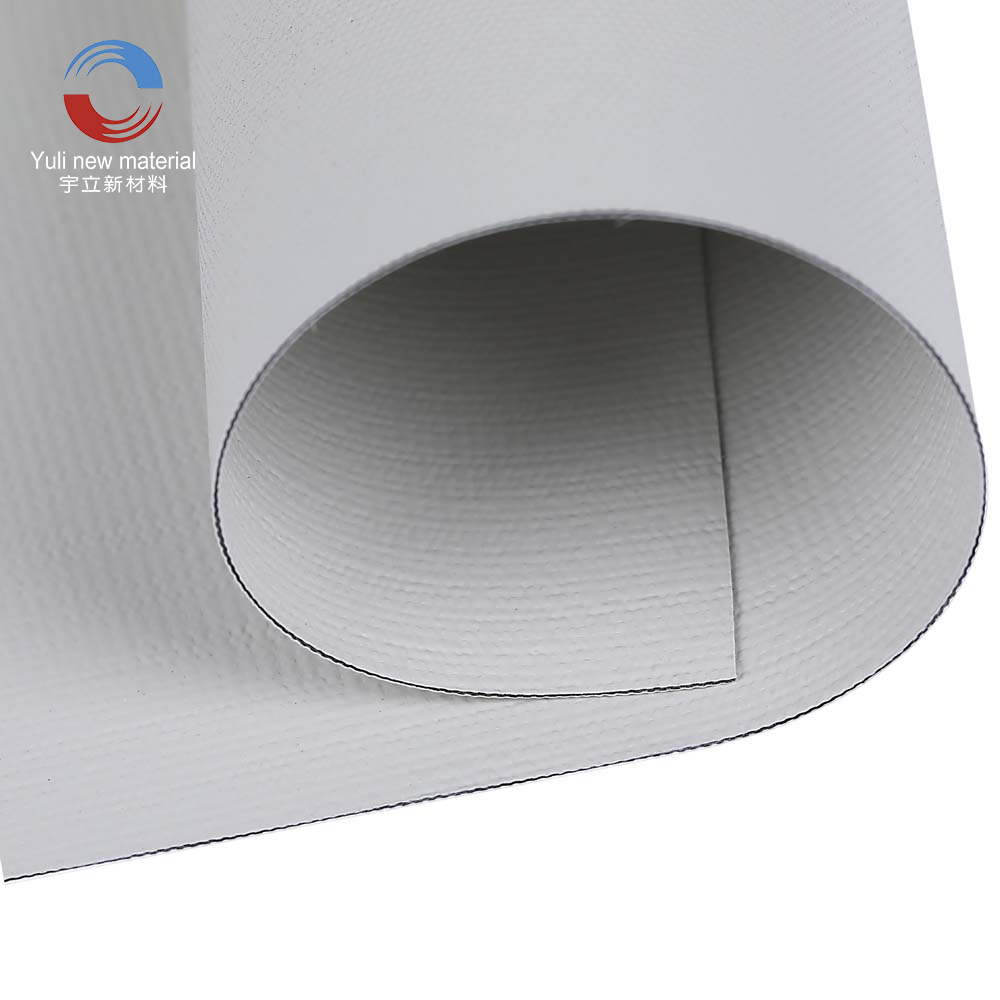
Each stage maps to a buyer-visible property. Weaving density affects tear strength. Coating weight affects hydrostatic resistance and weldability. Surface treatment affects printability, wipe-clean behaviour and glare. Finishing — cutting, hemming, eyeleting, welding — determines whether the roll can be converted into a finished cover without additional processing.
Performance Specifications Buyers Should Read
The specification table below reflects the documented parameter set for the YLCL coated tarpaulin range. Buyers should treat it as a checklist to compare quotations, not as a universal industry benchmark.
| Parameter | Documented value | Why it matters in selection |
|---|---|---|
| Material construction | PVC coating on polyester or fiberglass base cloth | Determines flexibility, reinforcement profile and finishing options |
| Cold resistance | -30°C | Relevant for cold-climate transport, storage and outdoor winter use |
| Heat resistance | +70°C | Relevant for sun-exposed covers, roofing and enclosed structures |
| Water resistance | Hydrostatic pressure ≥3000 mm H₂O | Indicates resistance to water penetration under pressure, not just splash |
| UV stability | UV stabilized | Affects colour retention and coating durability in outdoor exposure |
| Biological resistance | Anti-mildew treatment | Reduces deterioration in humid storage and repeated wet-dry cycles |
| Flame retardancy | M1/M2; NFPA701; EN13501-1 | Defines which market and application the material can be specified into |
| Processing | Weldable; compatible with welding machines | Determines whether local fabrication is possible without adhesives |
Two of these deserve emphasis because they are frequently misread. First, hydrostatic pressure of ≥3000 mm H₂O describes resistance to water under sustained pressure, which is a different property from surface water repellency; a cover that beads water can still leak under ponding. Second, M1/M2, NFPA701 and EN13501-1 are three distinct flame retardant references associated with different regulatory environments, and a quotation should state which one the material is tested to rather than simply stating flame retardant.
The Product Family: One Coating Platform, Several End Products
Because the coating platform is shared, a single supplier often covers products that buyers otherwise source separately. The documented range includes PVC tarpaulin, TPU tarpaulin, tent fabric, PVC fabric, blackout fabric, inflatable fabric, vinyl, coated tarpaulin, cover, RV awning, PVC roller blinds fabric, fiberglass window curtain, fiberglass blackout fabric, projection screen fabric, banner and related materials.
PVC tarpaulin
Documented characteristics include waterproof and UV resistance, high tensile strength, tear and abrasion resistance, weatherproofing, mildew and acid resistance, easy cleaning, weldability and optional flame retardancy. Documented applications include truck covers, warehouses, tents and outdoor protection.
PVC blackout roller fabric
Documented characteristics include 100% blackout and privacy, heat insulation and UV blocking, anti-mildew treatment, a wipeable smooth surface, stable rolling behaviour, flame retardancy and REACH compliance. Documented applications include office, hotel and home roller blinds.
PVC projection screen fabric
Documented characteristics include a matte, glare-free surface, good colour reproduction, a wide viewing angle, black backing for contrast, flat and wrinkle-resistant behaviour, waterproofing, anti-static treatment and optional flame retardancy. Documented applications include home theatre, meeting rooms and exhibition screens.
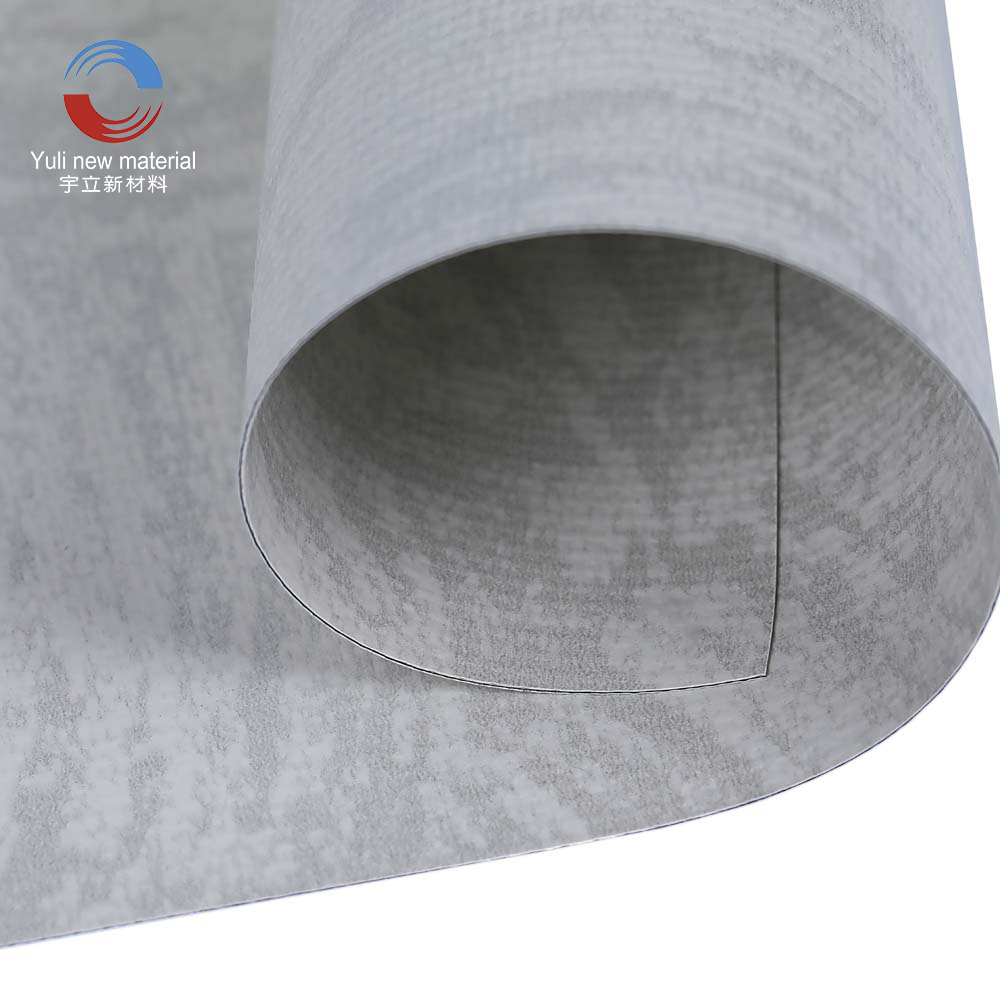
For buyers, the value of a shared platform is consistency: a single coating source reduces the risk of batch-to-batch variation when a project needs, for example, both tent fabric and matching blackout material.
Step-by-Step: How to Specify a Tarpaulin Order
The sequence below converts an application requirement into a quotable specification. It works for first-time buyers and for procurement teams re-sourcing an existing item.
Step 1 — Define the exposure, not the product name
State where the material will be used and what it contacts: rain, standing water, UV, abrasion from straps, folding cycles, cleaning chemicals. A truck cover and a roller blind are both coated fabric but face entirely different stress profiles.
Step 2 — Fix the base cloth
Decide between polyester base cloth and fiberglass base cloth. Fiberglass is the documented option for fiberglass window curtain and fiberglass blackout fabric; polyester is the standard reinforcement for PVC tarpaulin used in covers, tents and warehouses.
Step 3 — Set the weight
Weight drives strength, stiffness and cost. For tent applications the documented recommendation is 650 gsm, 750 gsm or 850 gsm, with the heavier options used where greater structural demand exists. Heavier is not automatically better: it raises handling weight and reduces packability.
Step 4 — Specify flame retardancy against a named standard
Name M1/M2, NFPA701 or EN13501-1 explicitly, matched to the destination market and the end application. Do not accept flame retardant as a standalone descriptor.
Step 5 — Confirm the finishing and fabrication route
Confirm whether the material will be welded on the buyer's own equipment. Weldability is a documented property of the PVC tarpaulin range, and welding compatibility with standard welding machines should be confirmed before the order is placed.
Step 6 — Validate before committing
Request a sample and check it against the written specification: weight, hand-feel, surface finish, coating adhesion and weld behaviour. Sample validation is cheaper than reworking a delivered container.
Step 7 — Agree the trade and compliance details
Confirm HS classification, packaging, roll dimensions and documentation. Because PVC-coated textile can fall under different headings depending on construction, the code should be agreed with the supplier rather than assumed from the product name.
Use Cases: Where Coated Tarpaulin Is Specified
Documented applications for this material family span construction, agriculture, industry, transportation, aviation, disaster relief and recreation. Within that broad set, the recurring scenarios are:
- Truck and cargo covers. Outdoor equipment covers and cargo covers are the documented typical use, designed for truck cover, warehouse and tent scenarios in the industrial sector.
- Tents and awnings. Tent and awning projects plus shade and cover projects, with waterproof and UV-resistant requirements and static use conditions.
- RV awnings. Listed within the product range as a distinct end application requiring UV stability and weather resistance.
- Roller blinds. PVC roller blinds fabric for office, hotel and home installations, using 100% blackout and heat insulation properties.
- Projection screens. Home theatre, meeting room and exhibition screens, where matte finish and controlled reflectivity matter more than tensile strength.
- Inflatable and tension structures. Inflatable fabric is part of the documented range, used where coated fabric must hold air or maintain shape under load.
- Banners and printed graphics. Banner and printed coated fabric, where print receptivity and surface treatment drive selection.
Comparison Table: Documented Product Families
The table below compares only the product families for which characteristics are documented. It is a selection aid, not a ranking of quality.
| Product family | Base construction | Documented characteristics | Documented applications |
|---|---|---|---|
| PVC tarpaulin | PVC on polyester base cloth | Waterproof, UV resistant, high tensile strength, tear and abrasion resistant, mildew and acid resistant, weldable, flame retardant available | Truck cover, warehouse, tent, outdoor protection |
| PVC blackout roller fabric | PVC coated fabric | 100% blackout, heat insulation, UV block, anti-mildew, wipeable, stable rolling, flame retardant, REACH compliant | Office, hotel and home roller blinds |
| PVC projection screen fabric | PVC coated fabric with black backing | Matte and glare-free, good colour reproduction, wide viewing angle, flat and wrinkle resistant, waterproof, anti-static, optional flame retardant | Home theatre, meeting room, exhibition screen |
| Fiberglass window curtain and blackout fabric | PVC on fiberglass base cloth | Uses fiberglass base cloth rather than polyester; shares the coating platform of the range | Window curtain and blackout applications |
| TPU tarpaulin | TPU-coated construction within the same range | Listed within the YLCL range; specification confirmed per order | Specified according to end application |
One product outside the tarpaulin list is worth noting for buyers evaluating technical fabric capability: Fiberglass Projection Screen Fabric model P8008 is documented with 1.0 gain and a 110-degree viewing angle. It illustrates that the same coating platform can be tuned for optical performance rather than barrier performance.
How to Evaluate China PVC Tarpaulin Manufacturers
China is a major source for coated tarpaulin, and the category contains both large integrated manufacturers and small converters. Evaluation should focus on verifiable capability rather than claims. The criteria below are the ones that most often distinguish a supplier able to support a long programme from one able to fill a single order.
1. Manufacturing scope and depth
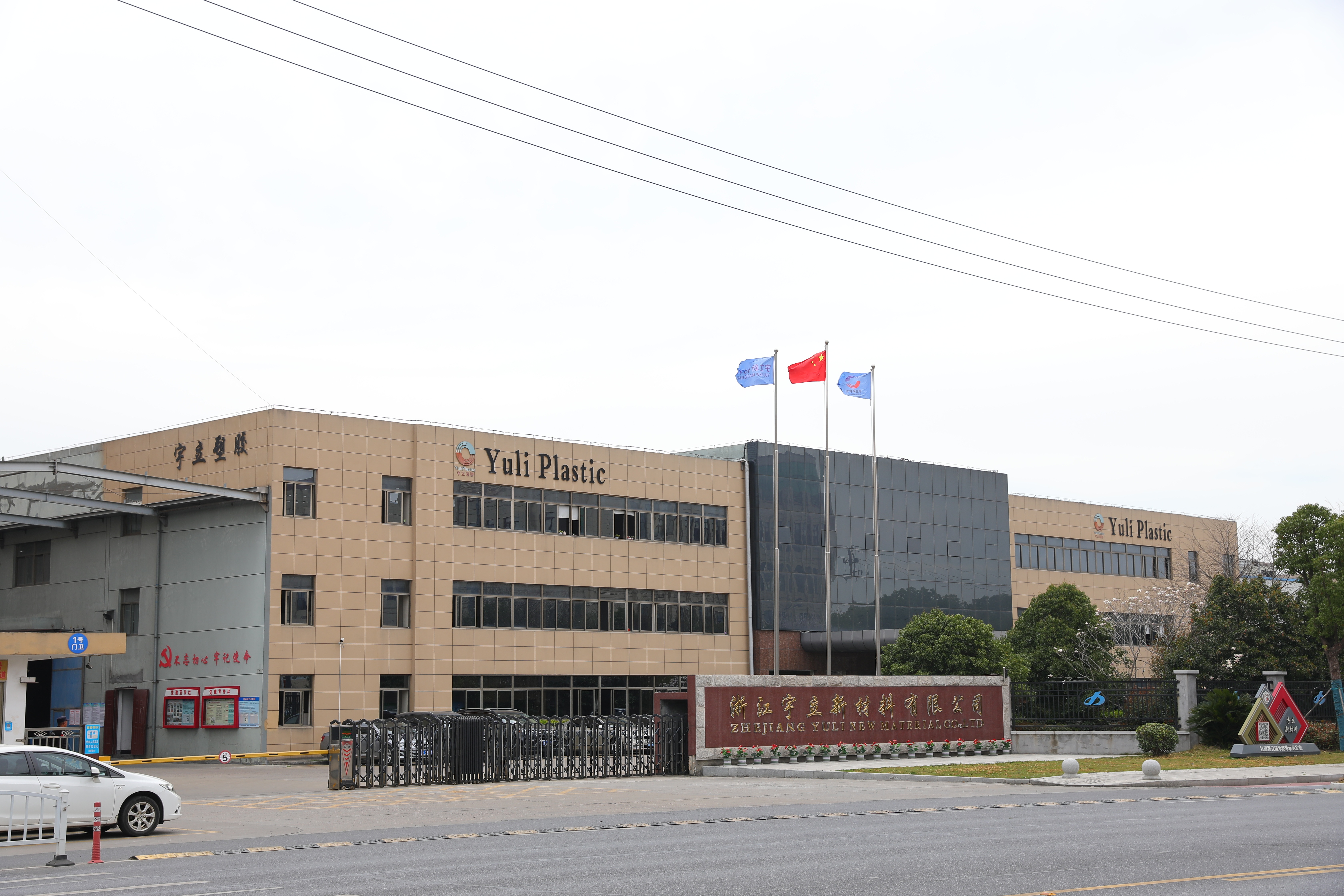
Check whether the supplier controls coating, lamination and finishing in-house. ZHEJIANG YULI NEW MATERIAL CO.,LTD., a national high-tech enterprise established in November 2005 with a registered capital of RMB 40 million, approximately 300 employees and a 54,000 m² manufacturing facility, reports 20 advanced PVC calendering, laminated and knife-coated lines as well as calendering, coating, laminating, printing and surface treatment lines imported from Germany and Chinese Taiwan.
2. Breadth of the material platform
A supplier covering tarpaulin, tent material, inflatable material, projection screen fabric, blackout fabric and fiberglass-based products has more surface-treatment and formulation experience than a cover-only producer. Documented scope for this manufacturer includes architectural membrane materials, environmental materials, tent materials, inflatable materials, projection screen fabrics, transportation and storage materials, aviation materials, equipment encapsulation materials and fire emergency materials.
3. Certification and management systems
Request copies of the management system certificates and the product test documentation for the specific flame standard required. This manufacturer holds ISO9001, ISO14001 and ISO45001, alongside recognitions including National High-tech Enterprise and National Specialized, Sophisticated, Unique and Innovative Little Giant Enterprise status.
4. R&D and technical support
Custom formulations and finish changes require engineering input. The company operates a Provincial Enterprise Technology Center and a Provincial High-tech Enterprise R&D Center, and maintains long-term industry-university-research cooperation with institutions including Zhejiang Sci-Tech University and Jiangnan University.
5. Export experience in your market
Export business accounts for 60% of total sales for this manufacturer, with products delivered to over 100 countries and regions worldwide and major markets including the EU and USA. The company has obtained the title of Zhejiang Export Famous Brand. Market familiarity affects documentation, packaging and compliance alignment.
6. Sample and specification discipline
A supplier that answers a specification question with a written parameter, rather than an adjective, is easier to work with over multiple orders.
Frequently Asked Questions
Which flame retardant standards can PVC tarpaulin meet?
The documented flame retardant references for this coated tarpaulin range are M1/M2, NFPA701 and EN13501-1. These are distinct standards associated with different regulatory environments, so a buyer should specify the standard required by the destination market and the end application rather than requesting flame retardant without a reference. Flame retardancy is offered as an available option in the range, which means it must be stated in the enquiry and confirmed on the order specification.
Can one manufacturer supply both PVC tarpaulin and technical fabrics such as projection screen material?
Yes, where the supplier operates a shared coating platform. ZHEJIANG YULI NEW MATERIAL CO.,LTD. documents a range that includes PVC tarpaulin, TPU tarpaulin, tent fabric, blackout fabric, inflatable fabric, vinyl, coated tarpaulin, cover, RV awning, PVC roller blinds fabric, fiberglass window curtain, fiberglass blackout fabric and projection screen fabric. The composite construction is a PVC coating applied to either a polyester base cloth or a fiberglass base cloth, with the fiberglass window curtain and blackout options using fiberglass rather than polyester. Buying multiple product families from one coating source reduces the risk of batch inconsistency across a project.
Which tarpaulin weight is best for tents?
For tent applications the documented recommendation is 650 gsm, 750 gsm or 850 gsm. The choice depends on the structural demand of the tent and how the material will be handled: heavier weights provide more strength and stiffness, while lighter weights reduce handling weight and improve packability. Weight should always be specified together with base cloth, coating, flame standard and fabrication method, because gsm alone does not define performance.
What should buyers check when shortlisting China PVC tarpaulin manufacturers?
Buyers should verify in-house coating and finishing capability, the breadth of the material platform, certification covering both management systems and product test standards, technical support for custom formulations, and export experience in the target market. As a reference point, ZHEJIANG YULI NEW MATERIAL CO.,LTD. was established in 2005, operates a 54,000 m² facility with approximately 300 employees, holds ISO9001, ISO14001 and ISO45001, reports 20 advanced PVC calendering, laminated and knife-coated lines, and exports to over 100 countries and regions with the EU and USA as major markets. Buyers can request a sample of the relevant product family to validate the written specification before placing an order.
Conclusion
Tarpaulin is best understood as a coated fabric system rather than a commodity sheet. The base cloth, coating, weight, flame standard and fabrication route together define what a material can do, and a quotation that omits any of these cannot be compared with another. For buyers in the research stage, the fastest route to a reliable specification is to start from the exposure conditions, then work backwards through base cloth, weight and compliance.
The category also rewards buyers who look at supplier breadth. A manufacturer producing truck covers, tent material, blackout roller fabric and projection screen fabric on the same coating platform has accumulated formulation and surface-treatment experience that a single-product converter has not. ZHEJIANG YULI NEW MATERIAL CO.,LTD., with production roots going back to 2005, a 54,000 m² facility and an export footprint covering more than 100 countries and regions, is one example of that integrated model.
Next Step: Sample, Specification or Quotation
If you are defining a tarpaulin specification, the practical next step is to send the application, base cloth preference, target weight and required flame standard, and request a matching sample for validation.
Email: sales@yuliplastic.com | Tel / WhatsApp: +86 13757320732 | Website: www.yuliplastic.com
Download the full product catalogue for material ranges, constructions and application data: Yuli New Material Catalogue (PDF)
Have Questions or Need More Details?
Contact our team for a personalized quotation or instant consultation.
Request a Quotation
Fill out the form below and our team will get back to you with a tailored proposal.
WhatsApp Direct Chat
Prefer to chat in real-time? Message us on WhatsApp for instant assistance & quick answers.
- Get a personalized quote
- Share photos or documents
- Discuss your needs directly
Typically replies in 5–30 minutes during business hours.