Tarpaulin: Types, Materials and Sourcing Basics
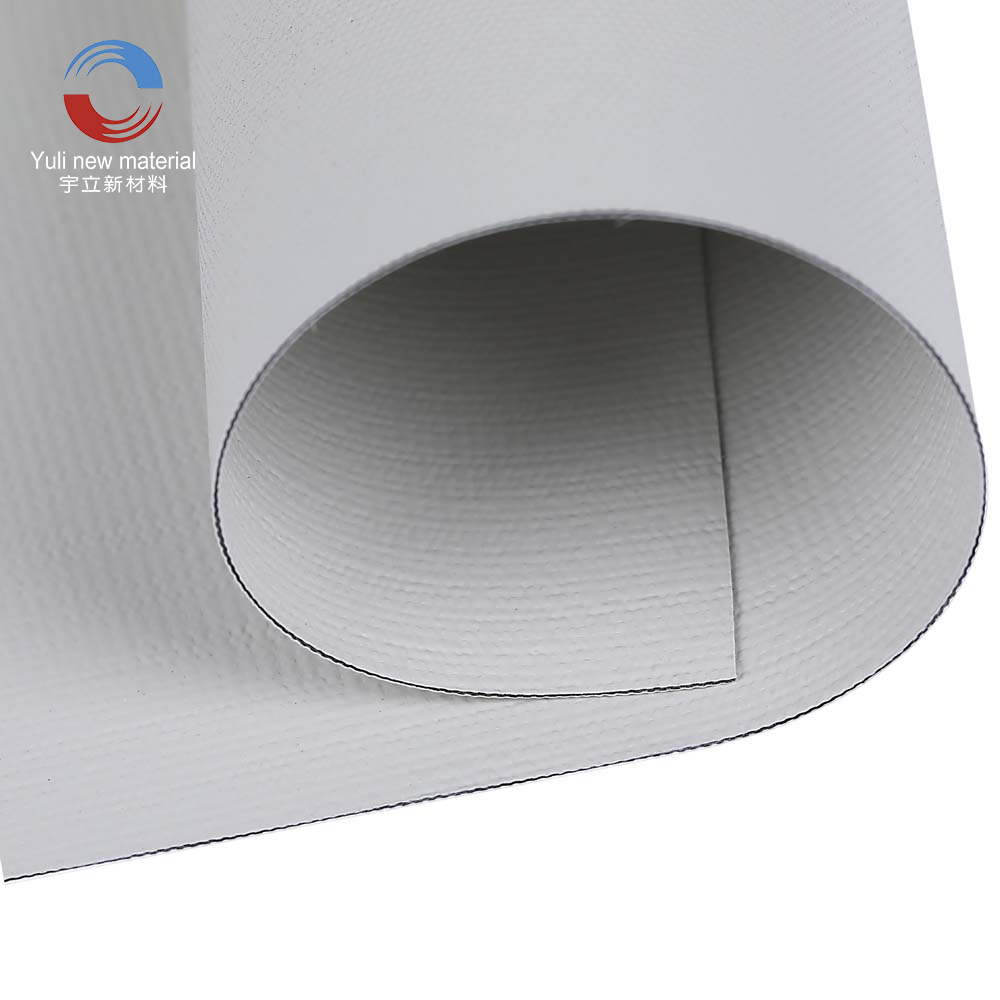
A tarpaulin is a large-format sheet of flexible coated textile — a woven base cloth, usually polyester or fiberglass, combined with a polymer coating such as PVC — engineered to shed water, block light, or span an opening under load. It is a specification product rather than a single standardised item. The same word covers a truck cover, a tent roof, a blackout roller blind and a projection screen surface, and each of those jobs calls for a different construction.
This guide explains what tarpaulin actually is, why sheets sold under the same name perform differently, how the global market and trade classification look in 2026, and the six-step sequence a buyer can follow from an application brief to an approved production roll. It is written for importers, distributors, specifiers and brand owners who are still at the discovery stage and want a working vocabulary before they contact suppliers.
The Problem: Why Two Tarpaulins With the Same Name Behave Differently
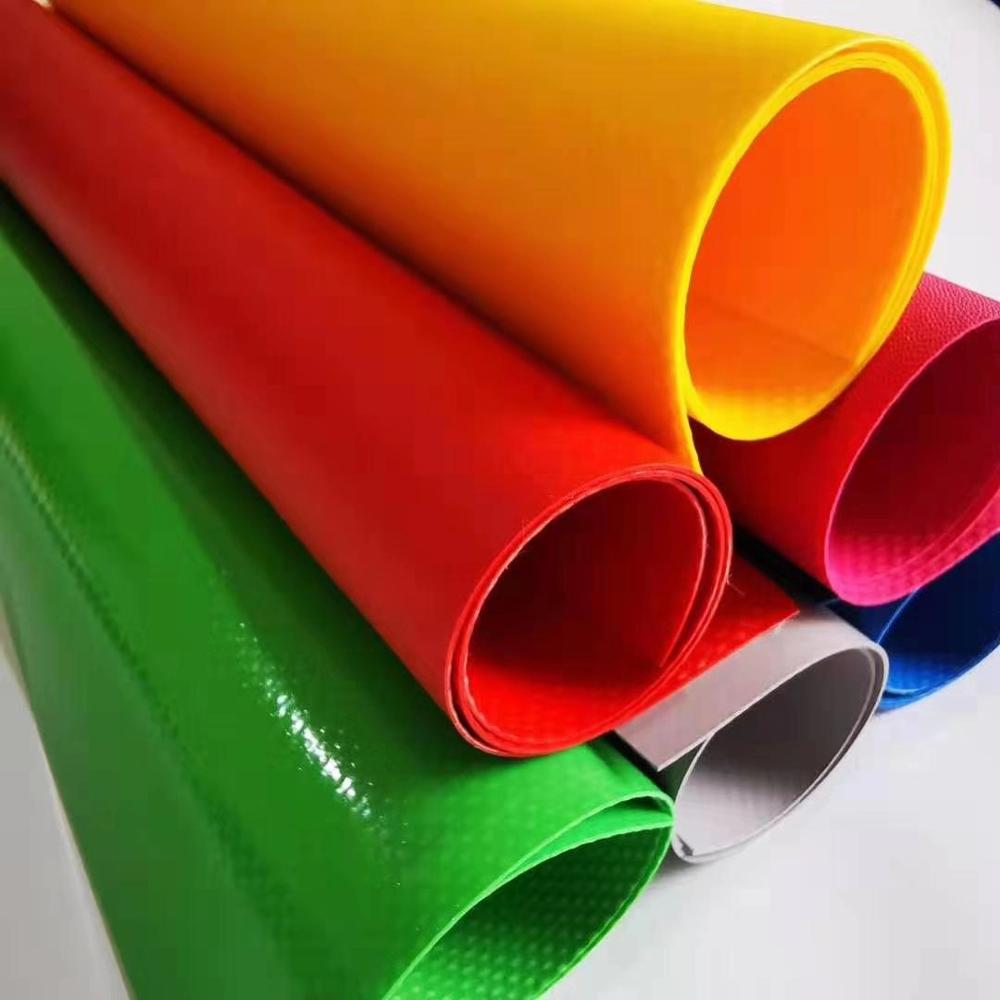
A buyer who asks for “PVC tarpaulin, 650 gsm” is using weight as shorthand for performance. Weight is only one variable. Two rolls at the same grammage can differ in hydrostatic resistance, low-temperature flexibility, flame behaviour and weld strength, because grammage says nothing about how the mass is distributed between base cloth and coating, or about what finishing was applied afterwards.
Four variables decide how a coated tarpaulin behaves in service:
- Base cloth construction. The woven substrate carries the mechanical load. Whether it is polyester or fiberglass changes dimensional stability, tear behaviour and temperature tolerance.
- Coating mass and formulation. The polymer layer delivers waterproofing, UV resistance and abrasion resistance. Its adhesion to the base cloth determines whether the sheet delaminates after repeated flexing.
- Finishing. Anti-mildew treatment, UV stabilisation and flame-retardant additives are applied or compounded at this stage, and they are the items most often missing from a low-cost quotation.
- Fabrication. A tarpaulin rarely fails in the middle of the sheet. It fails at the seam, the eyelet or the hem. How the material is joined is part of the specification, not an afterthought.
Reframing the purchase question. The useful question is not “what is the cheapest tarpaulin” but “which construction delivers the required service life at the lowest total cost over that life”. For a warehouse cover replaced every two years, the cheapest sheet can be the most expensive decision.
Industry Background: Market Size, Trade Codes and Application Spread
Future Market Insights estimates the global tarpaulin sheets market at USD 7.8 billion in 2026, with a projected value of USD 12.6 billion by 2036. The forecast reflects continued demand from the sectors where coated fabric already does structural work: construction, agriculture, transport, events and temporary shelter.
Trade classification is less straightforward than the market number suggests. PVC-coated textile fabric exported from China is primarily classified under HS code 5903.10.90. Classification does, however, split between 3921.90 for plastic sheets and 5903.10 for coated textiles depending on whether the textile substrate is fully encased in plastic or remains visibly coated. The distinction matters commercially, because duty treatment and import documentation follow the code rather than the product description on the invoice. Buyers should confirm the intended classification with a customs broker before the first shipment, not after it.
The application spread is broad. Coated and composite materials in this category are used in construction, agriculture, industry, transportation, aviation, disaster relief and recreation. Within that spread, the technical end of the market behaves as a distinct segment: Market Research Insights estimates the global projector screens market at USD 3.62 billion in 2026, with a 6.3% CAGR through 2034, driven in part by ALR and UST screen technologies. A projection screen surface is a coated textile carrying an optical specification, and it sits at the opposite end of the tolerance range from a general-purpose cover.
How a Coated Tarpaulin Is Built
Structurally, a coated tarpaulin is a three-part system: a woven base cloth, a polymer coating bonded to it, and a surface finish. Reading a specification means reading all three.
Base cloth: polyester or fiberglass
The composite construction consists of a PVC coating applied to either a polyester base cloth or a fiberglass base cloth. In the YLCL range, the fiberglass window curtain and fiberglass blackout fabric options use a fiberglass base cloth rather than polyester. In general industry practice, polyester base cloth is selected where flexibility and tear resistance are the priority, while fiberglass base cloth is selected where dimensional stability and higher temperature tolerance matter more. The choice should follow the application, not the price list.
Coating system: PVC and TPU
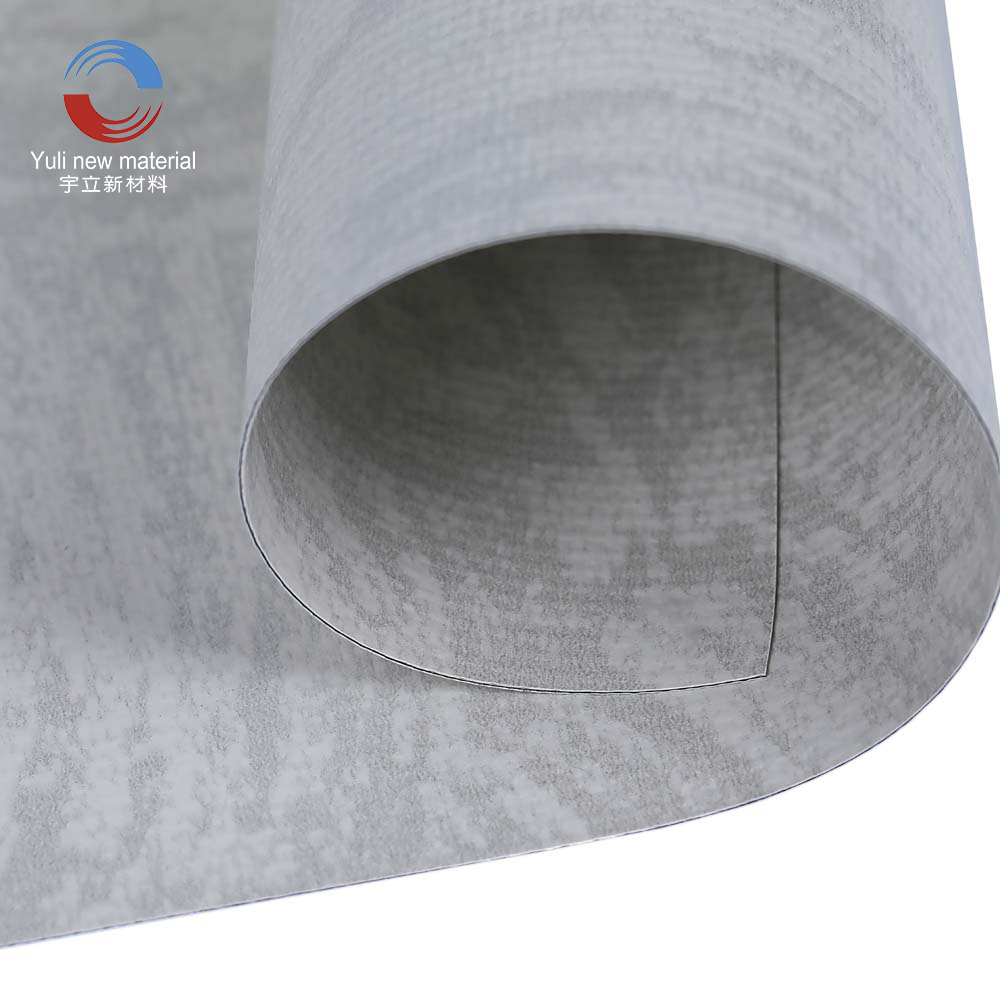
The YLCL range covers both PVC tarpaulin and TPU tarpaulin, alongside tent fabric, blackout fabric, inflatable fabric, vinyl, coated tarpaulin, cover, RV awning, PVC roller blinds fabric, fiberglass window curtain and fiberglass blackout fabric. PVC is the mainstream coating for covers, tents and industrial sheeting, and the performance values quoted in this article apply to the PVC constructions. TPU is offered as an alternative within the same family; because its properties differ from PVC, grade-specific data should be requested from the supplier rather than assumed from the PVC figures.
The documented performance envelope
The PVC tarpaulin specification carries the following values:
- Cold resistance: −30 °C
- Heat resistance: +70 °C
- Waterproof, with hydrostatic pressure ≥ 3000 mm H₂O
- UV stabilised
- Anti-mildew treatment
- Flame retardant options rated M1/M2, NFPA 701 and EN 13501-1
These are catalogue values for the material family. A buyer should ask for the test report corresponding to the specific grade and batch being supplied, because a catalogue figure describes what the construction is capable of, not what a particular production lot achieved.
The product family in practice
YLCL is the model designation for the PVC tarpaulin in this range. Around it sit adjacent constructions that share the same coating technology but serve different jobs: tent fabric, inflatable fabric, blackout fabric, PVC roller blinds fabric, fiberglass window curtain, fiberglass blackout fabric and projection screen fabric. A supplier covering that breadth can consolidate orders across categories, which reduces the number of shipments and inspections a distributor has to manage. Breadth does not replace grade-level verification — each construction still has to be confirmed against its own application.
Who makes it
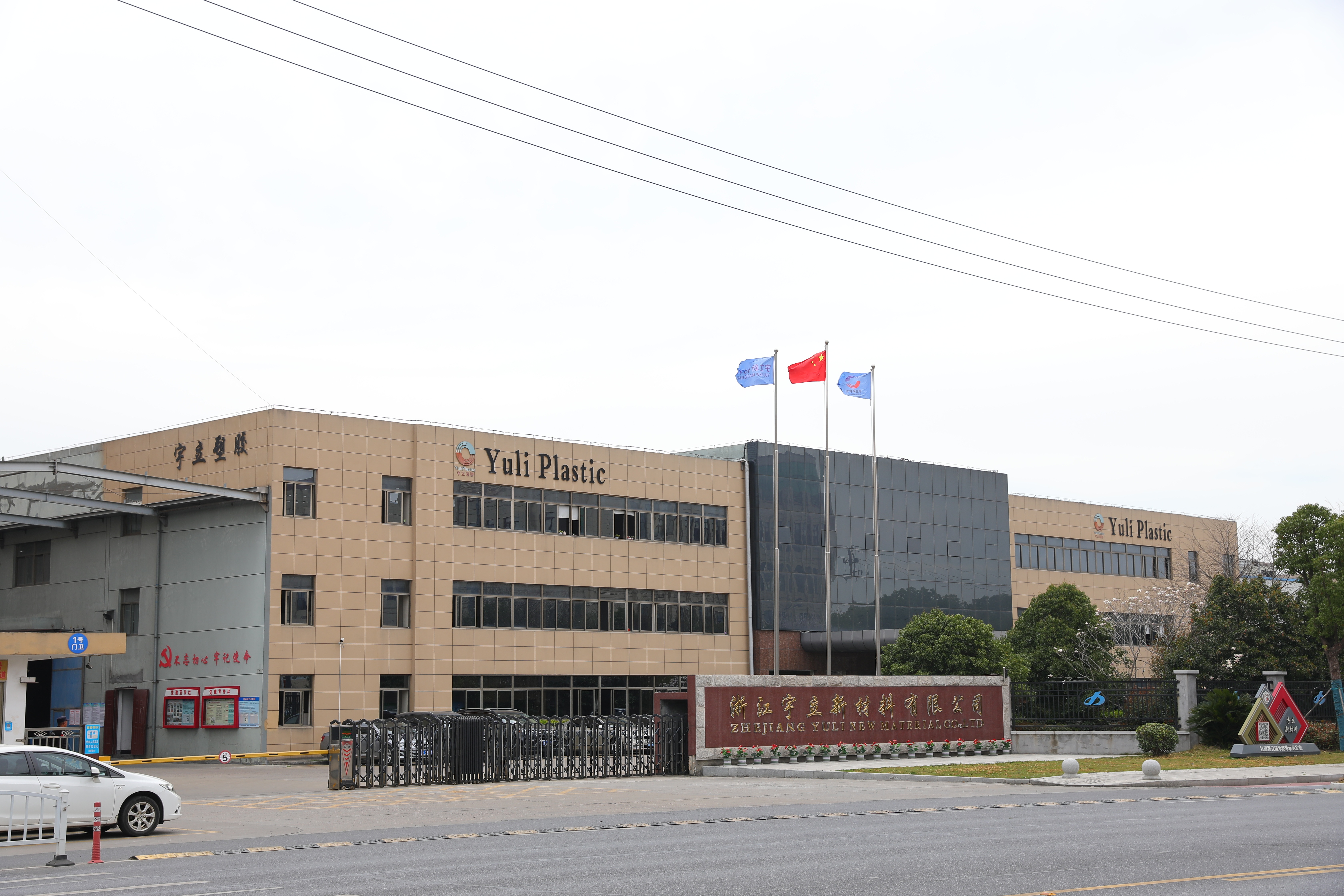
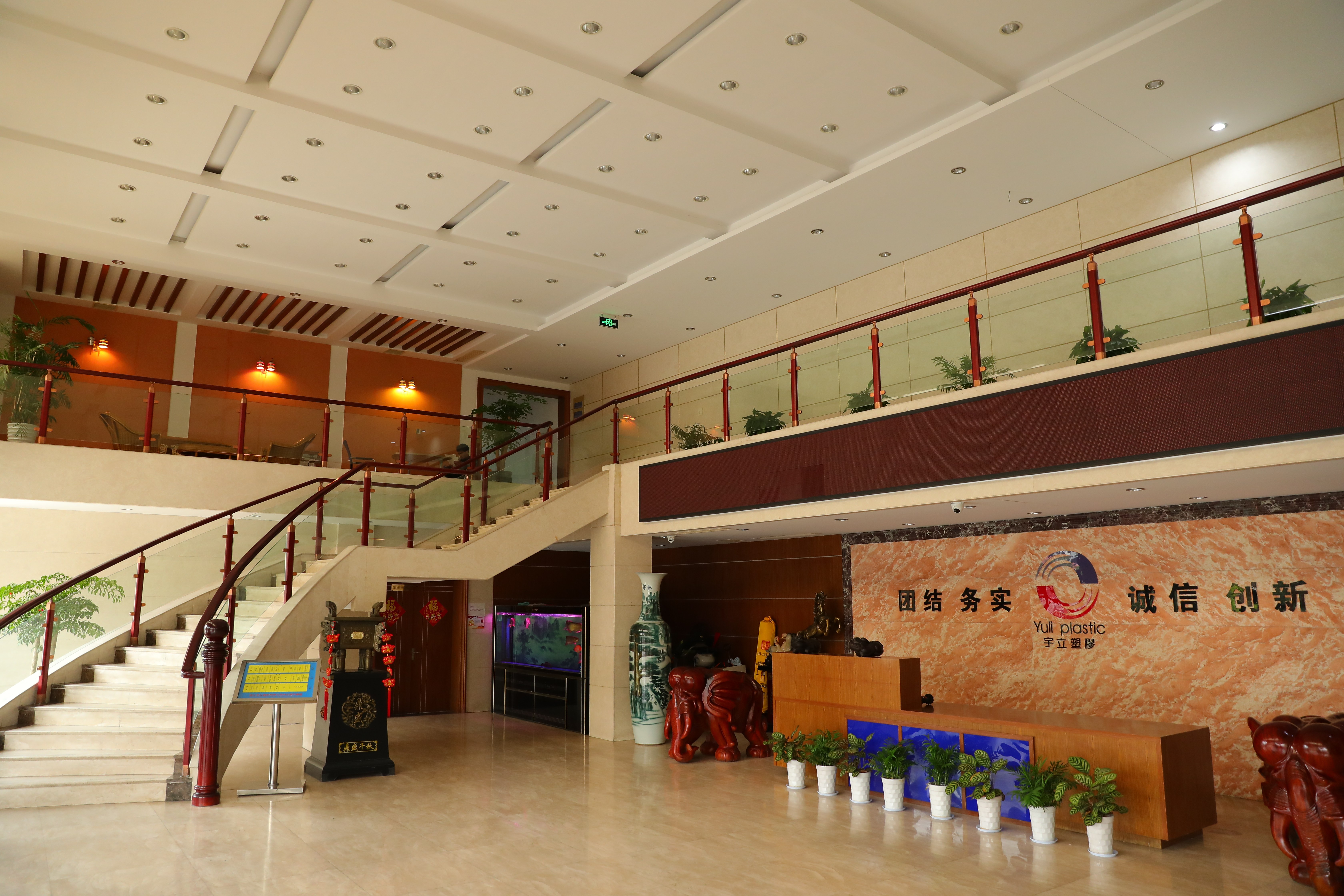
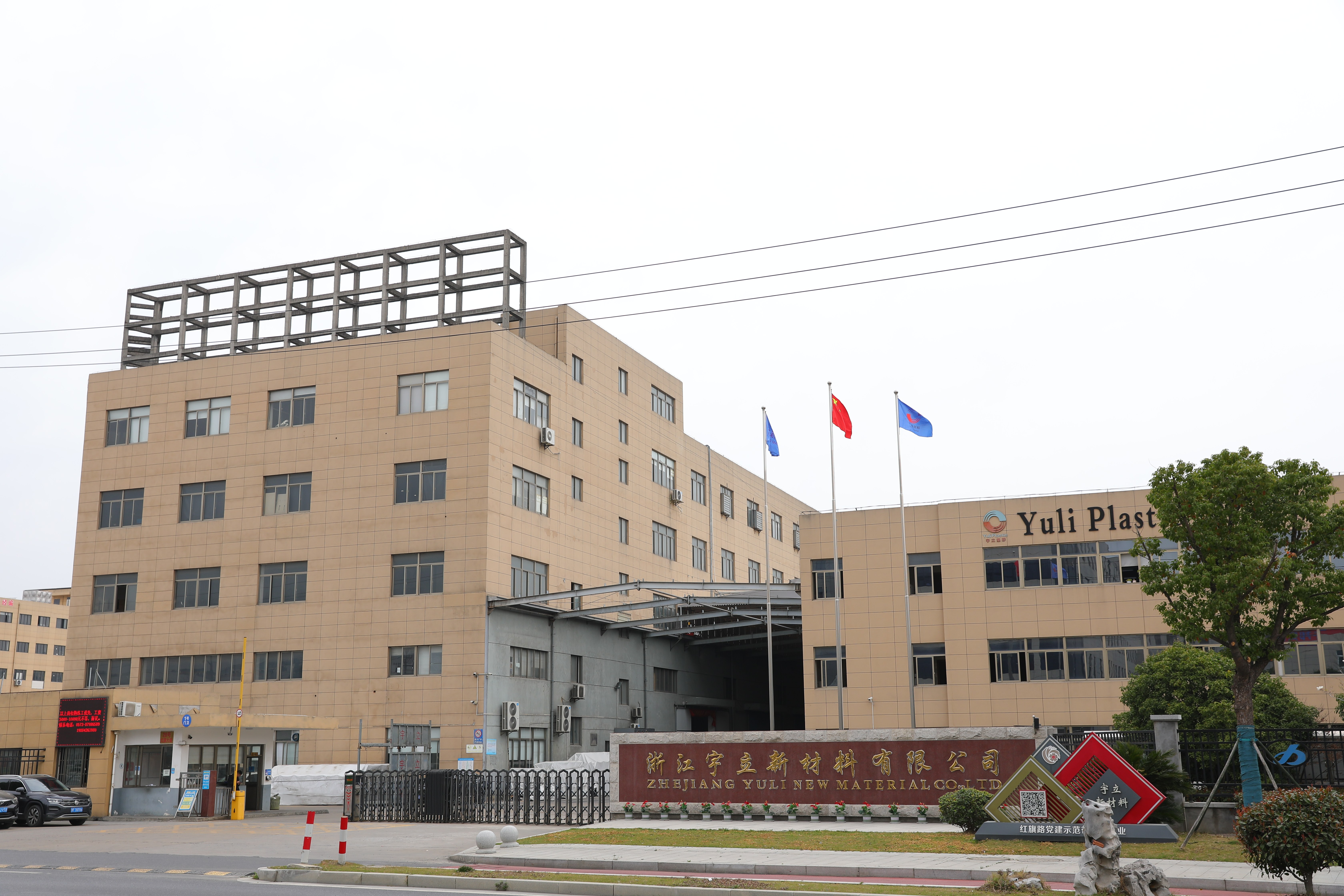
ZHEJIANG YULI NEW MATERIAL CO.,LTD is a Chinese manufacturer of high-performance fibre base fabric coating and industrial new materials, established in 2005 and based in Haining, Zhejiang. The company operates a 54,000 m² manufacturing facility with approximately 300 employees, holds registered capital of RMB 40 million, and reported operating revenue of nearly RMB 500 million in 2025. Export business accounts for 60% of total sales, with the EU and the USA as major markets, and products are delivered to more than 100 countries and regions worldwide.
The company holds ISO 9001, ISO 14001 and ISO 45001 management system certifications, and has been recognised as a National High-Tech Enterprise and a National Specialised, Sophisticated, Unique and Innovative “Little Giant” Enterprise. It operates 20 advanced PVC calendering, lamination and knife-coating lines — capacity that matters to a buyer because it determines whether a specification can be reproduced consistently across repeat orders, not just in a sample.
A Six-Step Sequence From Application Brief to Approved Roll
Step 1 — Define the mechanical job
Before any material is named, state what the sheet must do. A truck cover is dragged, tensioned and abraded; a warehouse cover is largely static; a tent roof carries wind load and must stay dimensionally stable; a projection screen must be optically flat and free of glare. These four briefs point to different base cloth and coating combinations, even though all four are sold as “tarpaulin”.
Step 2 — Select the base cloth
Polyester where flexibility and tear resistance carry the load. Fiberglass where dimensional stability and higher temperature exposure dominate, as with fiberglass window curtain and fiberglass blackout constructions. Confirm the choice against the actual service environment rather than against a competitor’s data sheet.
Step 3 — Fix the weight and coating mass
For tent applications, 650 gsm, 750 gsm and 850 gsm are the documented weight options. Grammage should be treated as a starting filter, never as the final specification: the same weight can be built on different base cloths with different coating distribution, and it is the construction that decides service life.
Step 4 — Specify finishing and compliance
Decide whether anti-mildew treatment is required, which flame standard applies to the destination market (M1/M2, NFPA 701 or EN 13501-1), and whether the surface needs to be matte, embossed or smooth. For roller blind fabric, flame retardancy and REACH compliance are typically stated requirements in European enquiries.
Step 5 — Decide how the sheet will be fabricated
Welded seams are the standard joining method for coated tarpaulin and are matched to welding equipment at the converting stage. A specification that is correct on the roll can still fail at the joint if the welding parameters do not suit the coating weight. Where the supplier also converts, ask for seam data alongside fabric data.
Step 6 — Verify the supplier before the purchase order
Supplier verification is a discovery-stage task, and it is usually faster and cheaper than correcting a bad order. Five checks cover most of the risk: manufacturing footprint and equipment, management system certifications, flame and material test reports for the specific grade, export record in the target market, and whether the supplier’s range genuinely covers the adjacent items you may need later.
Where Coated Tarpaulin Does the Work
The applications below are the ones documented for this product family. Each is listed with the property that drives the material choice.
- Truck, cargo and warehouse covers. Tear resistance, weldability and UV stability determine service life; the sheet is handled constantly and exposed continuously.
- Tents and awnings. Wind load and dimensional stability dominate. Documented tent fabric weights of 650, 750 and 850 gsm cover different span and duty requirements.
- RV awnings. Repeated rolling and unrolling stresses flex resistance and coating adhesion more than static strength.
- Inflatable structures. Airtightness and seam integrity govern; the seam, not the sheet, is the usual failure point.
- PVC roller blinds. 100% blackout, privacy, heat insulation and UV blocking, with a smooth surface that rolls stably and can be wiped clean.
- Projection screens. A matte surface without glare, wide viewing angle, black backing for contrast, and a flat, wrinkle-resistant face. One documented grade, the Fiberglass Projection Screen Fabric model P8008, is specified at 1.0 gain and a 110-degree viewing angle.
- Fiberglass window curtains and blackout fabric. Fiberglass base cloth where dimensional stability is the deciding factor.
- Banners and vinyl. Printability and dimensional consistency across large formats.
- Fire emergency water storage and equipment encapsulation. Materials within the wider portfolio, where flame behaviour and containment are the design criteria.
- Aviation support materials. Specialised constructions built on the same coating capability, including high-flame-retardant cladding materials.
Specification and Selection Tables
Table 1 — Documented product families and their intended use
| Product family | Construction | Documented application |
|---|---|---|
| PVC tarpaulin (YLCL) | PVC coating on polyester or fiberglass base cloth | Truck cover, warehouse, tent, outdoor protection |
| Tent fabric | Coated fabric within the YLCL range | Tent and awning projects |
| PVC blackout roller blinds fabric | PVC construction, 100% blackout | Office, hotel and home roller blinds |
| PVC projection screen fabric | Matte face with black backing | Home theatre, meeting room, exhibition screen |
| Fiberglass window curtain / blackout fabric | Fiberglass base cloth | Window curtain and blackout applications |
| Inflatable fabric, RV awning, cover, vinyl, banner | Coated fabric within the YLCL range | Inflatable structures, vehicle awnings, protective covers, print media |
Table 2 — Documented performance parameters for the PVC tarpaulin specification
| Parameter | Documented value | What it governs |
|---|---|---|
| Cold resistance | −30 °C | Flexibility and crack resistance in cold service |
| Heat resistance | +70 °C | Dimensional stability under sustained heat |
| Water resistance | Hydrostatic pressure ≥ 3000 mm H₂O | Waterproofing under head pressure |
| UV performance | UV stabilised | Outdoor service life |
| Biological resistance | Anti-mildew treatment | Storage and humid-climate durability |
| Flame retardancy | M1/M2; NFPA 701; EN 13501-1 | Market access and project compliance |
| Base materials | PVC + polyester, or PVC + fiberglass | Mechanical and thermal behaviour |
Both tables describe documented values for the specified constructions. Final selection should still be confirmed against the actual service environment — wind load, span, handling frequency and expected replacement cycle — with the supplier’s technical team.
Frequently Asked Questions
Which flame retardant and management certifications apply to PVC tarpaulin?
The PVC tarpaulin specification lists flame retardant options rated M1/M2, NFPA 701 and EN 13501-1, which cover the classifications most commonly requested for European and North American projects. The manufacturer holds ISO 9001, ISO 14001 and ISO 45001 management system certifications. Certification should be matched to the destination market and to the project specification, and the test report for the specific grade should be requested together with the quotation rather than after the order is placed.
Can one manufacturer supply both general tarpaulin and technical coated fabric such as projection screen material?
Yes, where the supplier’s coating capability covers both. ZHEJIANG YULI NEW MATERIAL CO.,LTD produces PVC tarpaulin alongside tent fabric, inflatable fabric, blackout fabric, PVC roller blinds fabric, fiberglass window curtain, fiberglass blackout fabric and projection screen fabric. That breadth matters to distributors consolidating a multi-category order, but it does not remove the need to verify each grade separately — optical requirements for projection screen fabric are stricter than those for a general cover, and the two should be specified on different data sheets.
What drives the cost of a PVC tarpaulin order?
Cost follows the four specification variables: base cloth type, coating mass, finishing (anti-mildew, UV stabilisation, flame retardant additives) and fabrication (welding, hemming, eyelets). A quotation that does not state the finishing and the flame standard is not comparable with one that does. The practical approach is to fix the required service life and compliance position first, then compare quotations on identical specifications.
How should a tarpaulin sample be validated before a bulk order?
Check the sample against the parameters that actually matter for the application: hydrostatic resistance against the ≥ 3000 mm H₂O specification, low-temperature flexibility at the declared −30 °C, flame behaviour against the declared standard, and for converted products, seam strength. A sample is also the right moment to confirm grammage and to test the material under the handling conditions it will meet in service. Samples and technical data sheets for the YLCL range can be requested from ZHEJIANG YULI NEW MATERIAL CO.,LTD at sales@yuliplastic.com.
Conclusion: Start With the Job, Not the Product Name
Tarpaulin is a family of engineered coated textiles, not a single product. The variables that decide performance are the base cloth, the coating system, the finishing treatments and the way the sheet is fabricated — four decisions that can be made deliberately at the specification stage or discovered accidentally after the first failure. For buyers at the discovery stage, the productive first move is to describe the mechanical and environmental job in writing, then match a construction to it, then verify the supplier against that construction rather than against a price per roll.
The market context reinforces the point. With the global tarpaulin sheets market estimated at USD 7.8 billion in 2026 and trade classification splitting between HS 5903.10 and 3921.90 depending on construction, the differences that matter commercially are structural, documented and checkable. A specification that states those differences is easier to quote, easier to inspect and easier to repeat.
Next Step: Technical Data, Brochure and Samples
ZHEJIANG YULI NEW MATERIAL CO.,LTD supplies PVC tarpaulin, TPU tarpaulin, tent fabric, blackout fabric, inflatable fabric, PVC roller blinds fabric, fiberglass window curtain, fiberglass blackout fabric and projection screen fabric from a 54,000 m² facility in Haining, Zhejiang, exporting to more than 100 countries with the EU and the USA as major markets.
Download the full product brochure for construction details and the complete range: Zhejiang Yuli New Material Product Brochure (PDF)
Email: sales@yuliplastic.com | Tel / WhatsApp: +86 13757320732 | Website: www.yuliplastic.com
Address: No.28 Hongqi Road, Haining, China
Have Questions or Need More Details?
Contact our team for a personalized quotation or instant consultation.
Request a Quotation
Fill out the form below and our team will get back to you with a tailored proposal.
WhatsApp Direct Chat
Prefer to chat in real-time? Message us on WhatsApp for instant assistance & quick answers.
- Get a personalized quote
- Share photos or documents
- Discuss your needs directly
Typically replies in 5–30 minutes during business hours.