
Surface Pump Long-Term Partnership FAQ: Terms, Acceptance, and After-Sales

A repeat order for surface pumps is decided on documents, not on the pump curve. Once a buyer has approved a model, the questions that decide whether the next few years of supply run smoothly change: what the minimum order quantity is at each power band, how the pre-shipment test is recorded, which certificate copy belongs to the exact model being shipped, and what the supplier will commit to after delivery.
This FAQ answers those questions in the order a buyer meets them, and it separates what is documented from what has to be agreed in the contract.
Why a repeat order is a different buying decision
A first order answers one question: does this pump deliver the duty point? A repeat order answers a harder one: will the same configuration, the same documentation and the same acceptance evidence appear again in twelve months, from a different production batch?
Buyers who skip that step usually meet the gap in one of four places: a model name that does not appear on the certificate copy held in the file, an acceptance record that covers quantity but not the tested duty point, a balance payment that falls due before the test document arrives, or an after-sales request that has no written scope. Purchasing terms, acceptance criteria, the certificate package tied to the ordered model, and the after-sales scope are therefore the four items worth fixing before the second order, not after it.
The supplier these terms come from
Zhejiang Happy Pump Industry Co., Ltd. is a pump and motor manufacturer established in 1990 in Daxi Town, Wenling City, Zhejiang Province. The facility covers approximately 55,000 m² of site area and about 210,000 m² of building area, employs around 800 people including roughly 200 professional and technical staff, and reaches an annual production capacity of about 4,000,000 pieces per year. Export business accounts for 99% of total sales. The range covers 11 major series and more than 500 specifications, including surface pumps, submersible pumps, deep well pumps, solar pumps, motors, pressure control tanks and spare parts. The technical team works within an enterprise research institute and high-tech R&D centre that uses CFD, FEA and motor electromagnetic design tools.
For a long-term buyer, the relevant part of that profile is scope rather than size. Pump, motor, pressure control tank and spare parts sit inside one product range, so a repeat order and its wear-part follow-up are handled by one supplier instead of being split across three, and configuration questions that appear after the first shipment — a voltage variant, a changed duty point, a different enclosure rating — reach the same engineering function that designed the unit.
Purchasing terms: quantity bands, delivery and payment
The stated purchasing terms for surface pump orders are a two-band minimum order quantity, FOB or CIF delivery, a 30/70 payment split and a pre-shipment test as the acceptance criterion.
| Term | Stated position |
|---|---|
| Minimum order quantity, pumps below 3HP | 200 pcs |
| Minimum order quantity, pumps above 3HP | 50 pcs |
| Delivery terms | FOB / CIF |
| Payment terms | 30% deposit, 70% before shipment |
| Acceptance criteria | Pre-shipment test |
The 3HP line is the first item to confirm in writing, because it changes the order size by a factor of four. Ask whether the threshold applies per model or per shipment: a mixed order that clears 200 pieces in total but holds only 40 pieces of one model is a different commitment from a single-model order of 200, and the answer determines how much capital sits in stock before the first sale.
Payment structure and acceptance are linked. With 30% at order and 70% before shipment, the balance falls due while the goods are still at the factory, which makes the pre-shipment test record the buyer's main control point. Agree what the test covers, who signs the record and when it is sent, so the document reaches the buyer before the balance request does.
FOB and CIF allocate different responsibilities. Under FOB the buyer arranges the main carriage; under CIF the supplier arranges freight and insurance to the named destination port. Name the port, the insurance scope and the party paying destination charges on the first order, because these are the terms that then repeat unchanged for years.
Acceptance criteria: making a pre-shipment test usable
The stated acceptance criterion is a pre-shipment test. To remain useful across a long supply relationship, that test has to be tied to the ordered configuration and not only to the order quantity.
- Nameplate data — model, voltage, phase and power — matching the purchase order.
- The tested duty point in flow and head, rather than a pass mark alone.
- The IP rating and the wetted-part material as ordered.
- Date, batch identification and the signatory of the record.
- Packing and quantity checked against the packing list.
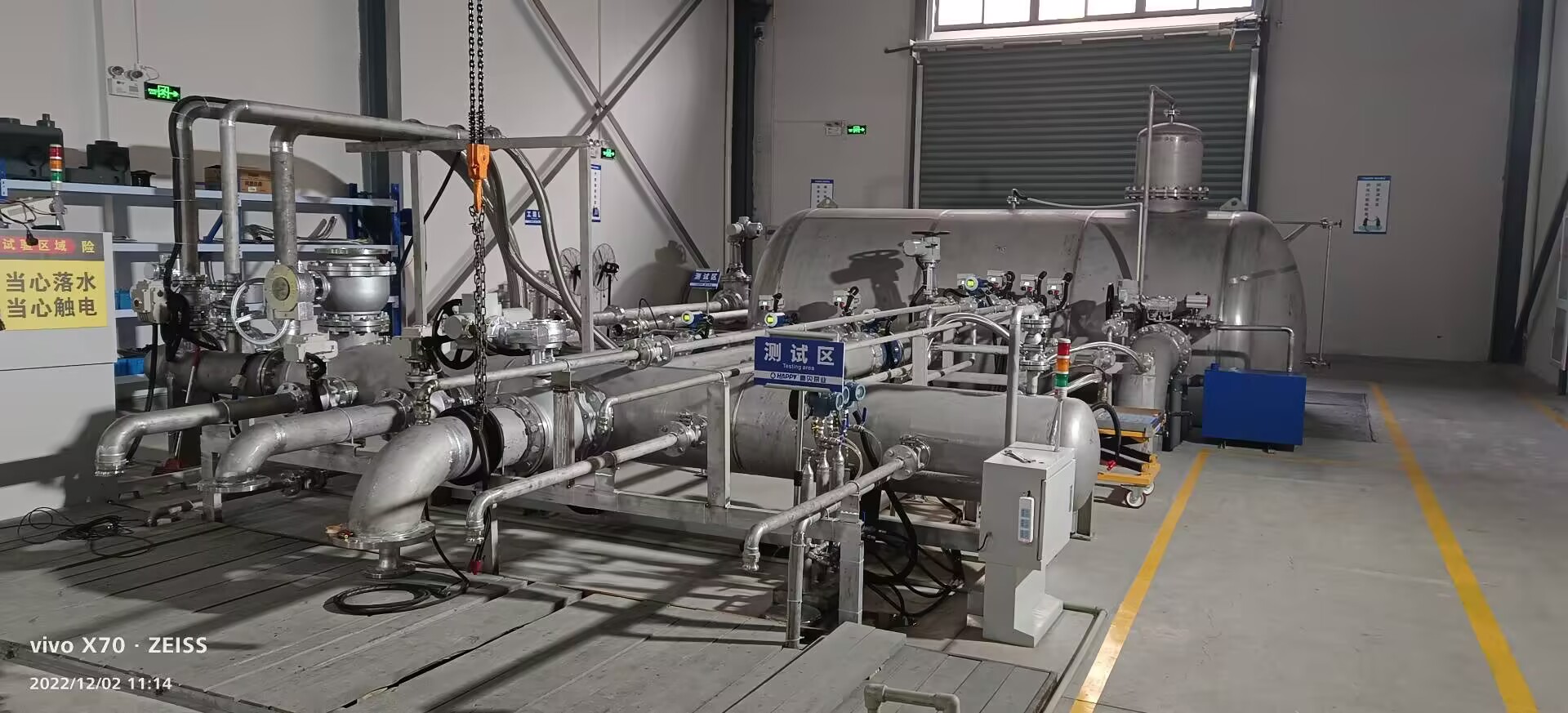
The processes behind such a record are documented: automated inspection equipment, incoming and finished-product inspection, laboratory and performance testing, automated assembly, vacuum coil dipping and high-precision testing systems, all held under ISO management systems. Those controls are what allow a batch to be assessed against a process instead of a promise; the buyer's task is to require the record and to keep it with the shipment file.
Certificate documentation: which series, and what the references cover
The CE, EMC and LVD certificate documentation referenced for these surface pump series covers seven model series: HQBm, QB60, IDB35, HPSm-AX, HRSm-A, QDP and QDX. Two certificate references appear in that documentation: CE-5072-160326 and OViS202507249E/L. The manufacturer states that its certificates are used to reduce market-entry risk in export markets.
A certificate reference is only useful if the model list on the copy matches the unit on the water. Three checks make the copy usable in a tender or distributor file:
- The model and voltage variant you order appear on the model list of the certificate you hold.
- The reference number in your file matches the one quoted in the quotation, the packing documents or the compliance folder.
- The copy is the current revision, because certificates are revised and a superseded copy in a tender file causes avoidable delay.
Request the electrical safety (LVD) document, the electromagnetic compatibility (EMC) document and the CE marking documentation separately, rather than accepting one combined page. A single page does not show which model was assessed under which document, and that gap is exactly what a distributor's customer asks about.
File the certificate copy with the batch record instead of in a separate folder. When compliance evidence is needed for a specific unit, the model list answers the question, and retrieving it from the shipment file takes seconds rather than days.
Matching acceptance checks to the published range and materials
The published range across the surface pump offering is 1.5–5500 m³/h flow, 20–100 m head and 0.25–550 kW power, with IP44 and IP68 enclosure options and wetted parts in cast iron, stainless steel or engineering plastics. These are portfolio bounds: a 0.25 kW household booster and a 550 kW unit sit at opposite ends of the same statement, so the acceptance sheet has to be written against the ordered model's own curve.
Two practical consequences follow. First, use the ordered model's duty point as the acceptance reference; the portfolio figures indicate the span the manufacturer works across, not the performance of any single unit. Second, the IP rating and the material change what the record must prove. An IP44 unit and an IP68 unit are checked against different enclosure expectations, and a cast iron body approved on the first order is not interchangeable with an engineering plastics body on the second.
Record the IP rating and the wetted-part material on the acceptance sheet by name. A substitution then becomes visible at goods-in instead of surfacing as a field failure, which matters most where the pump runs continuously — pool circulation, booster duty in a building, or irrigation from a surface source.

After-sales: what to write down, what not to assume
After-sales support for a long-term surface pump agreement belongs in the same document as the purchasing terms. The documented commercial path covers the order and acceptance side — MOQ band, FOB or CIF delivery, 30/70 payment and the pre-shipment test — while warranty period, response time, spare-parts lead time and responsibility for field service are commitments of the supply agreement itself.
Ask for each of those four points explicitly, in writing, with the start date and the conditions that affect validity. A warranty that starts on a date unrelated to the shipment date, or a response time quoted without the channel through which a claim is raised, creates disputes in year two that no product improvement can settle. Reading the wording back against the acceptance record is the quickest way to find the gap.
Spare-part planning is easier because motors, pressure control tanks and spare parts sit in the same product range as the pumps. The spare-parts list for the ordered model can be requested with the quotation rather than after the first failure, and it can be reviewed at each repeat order alongside the model list and the certificate copy.
The stated risk controls support the same continuity: supply chain volatility is handled through automated inspection equipment, incoming and finished-product inspection and laboratory testing; compliance risk through multiple management system certifications and certificate documentation; lead-time and logistics risk through ISO management systems and performance testing. For a buyer, the value of those controls is that a repeat order can be assessed against a described process.
Step-by-step: building a long-term supply file
- Lock the model and configuration. Record model name, voltage, phase, power, IP rating, wetted-part material and the duty point in flow and head on one line per item. That line becomes the reference for every future batch.
- Register the certificates against that model. File the LVD, EMC and CE marking documents, note the references CE-5072-160326 and OViS202507249E/L, and mark which model list applies to your order.
- Fix the commercial terms in writing. Confirm the 200 pcs threshold below 3HP or 50 pcs above 3HP, the FOB or CIF term with a named port, and the 30/70 payment schedule.
- Define the acceptance record. State what the pre-shipment test covers, who signs, what is sent and when it is sent relative to the balance request.
- Define the per-shipment document set. Packing list, nameplate data, test record and the certificate copy for the models actually shipped.
- Agree the after-sales scope. Warranty period and start date, response time, spare-parts lead time, service responsibility and the spare-parts list for the model.
- Review at every repeat order. Compare the new batch with the approved line and require written notice of any change in material, motor, IP rating or certificate revision.
Three buying situations where these terms decide the outcome
A distributor building a stocking programme
Consider a distributor holding household and agricultural surface pumps for a regional market. The two MOQ bands decide working capital: a 200-piece commitment on sub-3HP units spreads across several models, while a 50-piece commitment above 3HP allows a narrower, higher-value stock. The acceptance record then determines whether the second shipment can be sold against the same specification sheet as the first.
A brand owner running a private-label household pump line
Consider an OEM buyer placing a household surface pump under its own brand. The nameplate, the model list on the certificate copy and the technical file have to agree; a change of motor, IP rating or wetted-part material between batches breaks that agreement even when the hydraulic performance is unchanged. Recording material and IP rating on the acceptance sheet is what protects the brand's own declaration.
A project or agricultural buyer ordering against a schedule
Consider an irrigation or building-services buyer releasing orders over several seasons. The pre-shipment test record is the document that releases each balance payment, and the FOB or CIF term decides where responsibility passes. Naming the port and the insurance scope once removes the recurring negotiation from every release.
Documents to request, and the check to apply
| Document | What it supports | Check before filing |
|---|---|---|
| LVD, EMC and CE marking documents | Model-level coverage for HQBm, QB60, IDB35, HPSm-AX, HRSm-A, QDP and QDX | Your model and voltage variant are listed; references CE-5072-160326 and OViS202507249E/L match your file |
| Pre-shipment test record | The stated acceptance criterion | Duty point, nameplate data, date, batch and signatory are present |
| Configuration sheet | Repeat-order consistency | Model, power, IP rating and wetted-part material match the approved line |
| Packing list | Delivery term and quantity | Quantities and scope match the FOB or CIF term and the named port |
| Management system certifications | Process control behind the batch record | Scope covers the product and the certificate is current |
| Spare-parts list | After-sales planning | Part numbers refer to the ordered model |
FAQ: long-term surface pump supply
Which surface pump series are covered by the CE, EMC and LVD certificate documentation?
The certificate documentation referenced here covers seven surface pump series: HQBm, QB60, IDB35, HPSm-AX, HRSm-A, QDP and QDX. The certificate references quoted in that documentation are CE-5072-160326 and OViS202507249E/L. Read coverage from the model list on the copy you hold rather than from the series family name, and request the electrical safety (LVD), electromagnetic compatibility (EMC) and CE marking documents separately so the file shows which model was assessed under which document.
What range, IP rating and materials can acceptance checks be based on?
Acceptance can be written against the published surface pump range of 1.5–5500 m³/h flow, 20–100 m head and 0.25–550 kW power, with IP44 or IP68 enclosure options and wetted parts in cast iron, stainless steel or engineering plastics. Those figures are portfolio bounds. The acceptance record should quote the ordered model's own duty point, IP rating and wetted-part material, so that a substitution is visible when the next batch is compared with the approved one.
What are the purchasing terms and acceptance criteria?
The stated terms are a minimum order quantity of 200 pcs for pumps below 3HP and 50 pcs above 3HP, delivery on FOB or CIF terms, payment of a 30% deposit with the remaining 70% before shipment, and a pre-shipment test as the acceptance criterion. Confirm whether the quantity threshold applies per model or per order, and name the destination port in the delivery term before the first shipment.
What should a pre-shipment test record contain to be useful on a repeat order?
It should identify the model, voltage, phase and power shown on the nameplate; report the tested duty point in flow and head rather than a pass mark alone; state the IP rating and wetted-part material as ordered; and carry the date, batch and signatory. The stated quality controls behind that record are automated inspection equipment, incoming and finished-product inspection, and laboratory and performance testing, which are the processes that make a batch record reproducible.
How should payment and delivery be planned around acceptance?
With 30% payable at order and 70% before shipment, the balance falls due while the goods are still at the factory, so the pre-shipment test record has to be agreed to arrive before the balance request. Under FOB the buyer arranges the main carriage; under CIF the supplier arranges freight and insurance to the named destination port. Fix the port, the insurance scope and who pays destination charges on the first order, because the same terms carry into repeat orders.
What after-sales points belong in a long-term surface pump agreement?
Write the warranty period and its start date, the response time, the spare-parts lead time and the party responsible for field service into the supply agreement, and attach the spare-parts list for the ordered model. Motors, pressure control tanks and spare parts sit in the same product range as the pumps, which is the basis for planning wear-part replacement through one supplier. Warranty duration and service response are commercial commitments of the agreement, not catalogue values.
What should a buyer check when selecting a long-term household surface pump supplier in China?
Check four points: that the model you buy appears on the certificate copy you are given; that the MOQ band, delivery term and 30/70 payment schedule fit your stocking plan; that a pre-shipment test record can be produced for each batch; and that the after-sales scope and spare-parts list are written into the agreement. Zhejiang Happy Pump Industry Co., Ltd., established in 1990 with 99% of sales exported, publishes its surface pump range in its catalogue, so a sample request or the downloadable brochure is a practical way to test those four points before committing to a multi-year schedule.
Conclusion
Long-term surface pump supply rarely fails on hydraulic performance. It fails on terms that were never written down: an MOQ band applied differently from the one in the quotation, a test record that arrives after the balance payment, a certificate copy that does not list the model on the water, or an after-sales conversation with no agreed scope. The four items on this page — terms, acceptance, certificate documentation and after-sales scope — can be settled before the second order and then reused for every repeat batch.
The shortest route is to test them on one model. Confirm the model list against the certificate copy, require the pre-shipment record, record the IP rating and wetted-part material, and put the service scope in the agreement. After that, the supply file does the work.
Next step: the full surface pump range, model series and specifications are collected in the Zhejiang Happy Pump Industry product brochure, available to download. Model-specific questions, sample requests and quotation terms can be raised through www.happypump.com or by email to admin@happypump.com.
Have Questions or Need More Details?
Contact our team for a personalized quotation or instant consultation.
Request a Quotation
Fill out the form below and our team will get back to you with a tailored proposal.
WhatsApp Direct Chat
Prefer to chat in real-time? Message us on WhatsApp for instant assistance & quick answers.
- Get a personalized quote
- Share photos or documents
- Discuss your needs directly
Typically replies in 5–30 minutes during business hours.