
Centrifugal vs. Self-Priming Surface Pump: A Head-to-Head Decision Guide
If the water level sits at or above the pump inlet, a centrifugal surface pump is usually the right choice. If the pump has to stand above the water level and pull water up through a suction line, a self-priming surface pump is usually the right choice. That single line settles the majority of real installations. Flow rate, head, motor power, electrical phase and control type are then matched around that decision — not the other way round.
Both families share the same basic anatomy: a surface pump motor, an impeller, a volute casing and a suction port. They differ in one behaviour that decides whether an installation performs on day one and on year five — what happens when air reaches the impeller.
This guide compares the two architectures head-to-head on priming behaviour, suction conditions, pressure stability, efficiency and cost drivers, then converts that comparison into an eight-check selection sequence for buyers who are already narrowing down a model.
Problem Definition: Most Surface Pump Failures Are Priming Failures
A centrifugal surface pump converts motor rotation into pressure through the impeller and the volute, but it has no internal mechanism for removing air. Once air reaches the impeller eye, the impeller loses its grip on the liquid, discharge pressure collapses and the pump runs dry — the condition that damages mechanical seals and, eventually, motors. That is why a centrifugal pump normally requires flooded suction: a water level at or above the pump inlet, a suction line that cannot drain back, or a priming port used to fill the casing before starting.
A self-priming surface pump solves the same physics problem with hardware. Its casing holds a reservoir of liquid and an internal recirculation path, so at start-up the impeller re-circulates that liquid to entrain and expel air from the suction line. The pump can lift water through a suction line that contains air, and it can re-prime itself after a dry period as long as the priming chamber retains liquid and the suction line remains airtight.
The mirror-image mistake also costs money: installing a self-priming unit where the water level is already above the pump inlet. The priming chamber, internal check valve and recirculation passages add components and machining steps, so a self-priming pump generally carries a higher unit cost than a centrifugal pump of comparable duty. Buyers who pay for suction capability they never use are paying for the wrong pump — not a better one.
Decision rule: flooded suction → centrifugal surface pump. Suction lift where air can enter the line → self-priming surface pump. Confirm the suction geometry before discussing flow or head.
Industry Background: A Mature Category With Shifting Demand
Surface pumps remain the largest single group in the global pump market. Mordor Intelligence puts surface pumps at a 57.63% share of the total global pump market in 2025, which is consistent with how broadly the category is deployed: domestic boosting, pool circulation, irrigation, transfer and light industrial duty. The wider pumps market was estimated at USD 61.32 billion in 2024 and is projected to reach USD 79.01 billion by 2029, according to MarketsandMarkets.
Demand growth is not evenly distributed. Market Research Future values the global agricultural pump market at USD 14.59 billion in 2024, with a projected CAGR of 4.98% through 2035 — a signal that irrigation and rural water supply continue to pull surface pumps and submersible pumps into service. The solar pump market was valued at USD 2.90 billion in 2024 by Market Data Forecast, driven by falling PV module prices and government subsidies in Asia-Pacific. Analysts do not fully agree on that figure: Expert Market Research values the same market at USD 1.60 billion, largely because some estimates count only integrated systems while others include solar-ready kits. Solar market sizing should therefore be read as directional rather than precise.
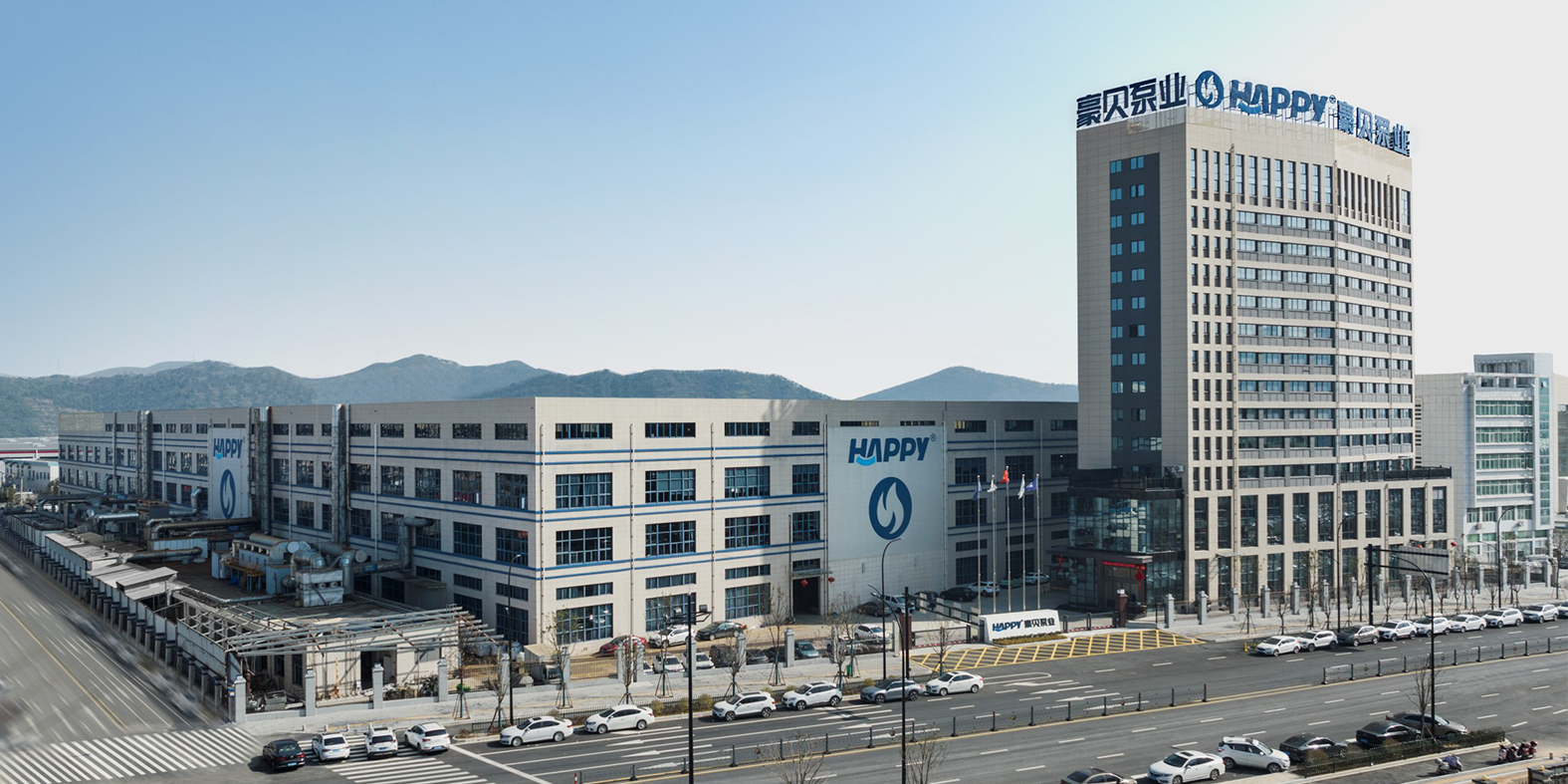
Zhejiang Happy Pump Industry Co., Ltd. (brand: HAPPY Pump) is a Chinese pump and motor manufacturer established in 1990 and based in Daxi Town, Wenling City, Zhejiang Province — a region known domestically as the “Hometown of Water Pumps”. The company operates a site of about 55,000 m² with approximately 210,000 m² of building area and around 800 employees, including roughly 200 professional and technical staff supported by an enterprise research institute and a high-tech R&D centre that uses CFD, FEA and motor electromagnetic design tools. Its product range spans 11 major series and more than 500 specifications, covering vortex pumps, centrifugal pumps, jet pumps, standard garden pumps, submersible pumps, deep well pumps, swimming pool pumps, permanent magnet variable-frequency constant-pressure pumps and intelligent pumps. Around 99% of output is exported to customers in more than 150 countries and regions, and the company's verified company profile reported export revenue of approximately USD 84.24 million in 2025.
Detailed Comparison: Priming Behaviour, Pressure and Load
Centrifugal surface pumps: pressure without air handling
In a single-stage centrifugal surface pump, water enters the impeller eye axially, the rotating impeller accelerates it outward, and the volute casing converts that velocity into pressure at the discharge. The machine delivers smooth, predictable output for as long as the suction side stays flooded. That makes it the natural fit wherever the pump sits below or level with the source: a tank outlet feeding a domestic booster set, a flooded pool circulation line, or a mains-fed transfer duty. Where more head is needed at the same flow, multistage arrangements place several impellers in series on one shaft, trading a longer hydraulic path for higher discharge pressure.
Self-priming surface pumps: air handling built into the casing
The defining feature of a self-priming surface pump is a liquid reservoir and recirculation path inside the casing. On start-up, the retained liquid is re-circulated so that air drawn from the suction line is mixed with water, separated in the chamber and expelled through the discharge while liquid returns to be re-used. Priming is progressive rather than instantaneous, and the cycle repeats after every stop as long as the chamber stays charged. Self-priming units are typically applied where the pump must stand above the water level — wells, cisterns, underground tanks and sites where the suction line may drain or take in air.
Jet surface pumps: extending suction lift with a venturi
Jet pumps add a nozzle-and-venturi assembly to the hydraulic end, creating additional vacuum that supports deeper suction lifts than a standard self-priming casing can manage. Behaviourally they belong to the same family as self-priming pumps: they handle air and re-establish prime without manual filling. For a buyer comparing architectures, the choice is therefore not “centrifugal or self-priming” in the abstract, but “centrifugal, self-priming or jet” depending on how much lift the site demands.
Pressure stability: where the difference actually shows up
Once primed and running at its duty point, a self-priming pump behaves hydraulically like a centrifugal pump of similar design, and its head-flow curve is just as predictable. The visible difference appears at the start of a cycle: during priming, part of the flow is recirculating inside the casing instead of leaving through the discharge, so the first moments of operation deliver less than the rated output. Installations with automatic controls and pressure control tanks should account for that ramp-up. A centrifugal pump on flooded suction starts on its curve immediately. Air entrainment from the suction side reduces delivered head in both families; the self-priming design simply recovers from it without manual intervention.
Efficiency and running cost
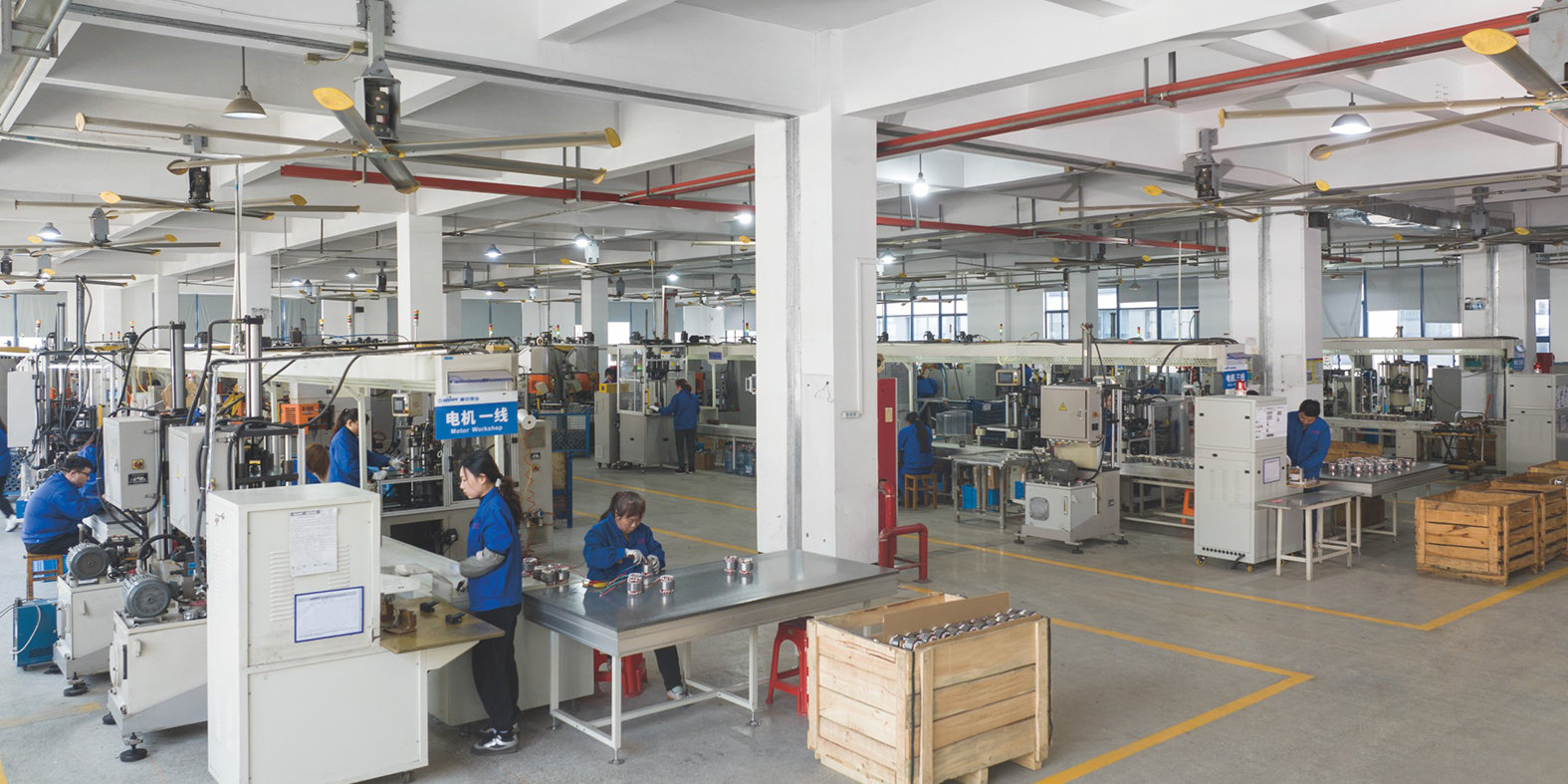
Centrifugal designs are generally the more efficient of the two because no liquid is re-circulated internally. Self-priming units give up a small amount of efficiency to the priming chamber and internal clearances — a reasonable trade wherever suction lift cannot be avoided. For both types, real running cost depends on how close the operating point sits to the efficient region of the curve: an oversized pump costs more to run than a well-matched self-priming unit. HAPPY pumps are characterised by high efficiency and energy saving, and the company reduces manufacturing cost through assembly-line production across all facilities and the use of solar power for electricity generation, while keeping product quality consistent.
Reading the three parameters that decide the model
Flow, head and power are the three parameters needed to shortlist any model, but they must be read together: flow is the duty the installation must deliver; head is the total dynamic head (vertical lift plus friction losses plus required discharge pressure); power is the motor rating that holds that duty point. Taking a single rating from a catalogue page instead of reading the curve is the most common sizing error, and it produces exactly the mismatch — dry running, weak pressure, short motor life — that buyers later attribute to the pump type rather than to the selection.
Matching the motor and the power supply
Surface pump motors are matched to the hydraulic end and to the electricity supply available on site. Single-phase AC motors suit domestic and light agricultural installations where only a single-phase supply exists; three-phase motors are typical for larger irrigation, pool and transfer duty. Zhejiang Happy Pump manufactures motors as well as pumps — its range includes surface pumps, submersible pumps, deep well pumps, solar pumps, motors, pressure control tanks and spare parts — so the hydraulic end and the motor can be specified as one matched set rather than as two separately sourced components.
Solar-driven surface pumping follows the same logic as grid-powered installations. The priming behaviour of the pump end does not change, so the centrifugal-versus-self-priming decision is still made on suction geometry; what changes is the power source and the control electronics behind it. Where daytime irrigation or supply matches PV output, a solar surface pump is specified on the same curve-based method.
Step-by-Step: An Eight-Check Selection Sequence
- Map the suction geometry. Determine whether the water level is above or below the pump inlet, and whether the suction line can drain when the pump stops. This single check removes one of the two families from the shortlist.
- Confirm the priming method you can maintain. Flooded suction with a foot valve, a manual priming port, or a self-priming chamber each demand a different level of operator attention. Sites without routine maintenance presence usually favour self-priming.
- Size from the curve, not the nameplate. Fix the duty flow, calculate total head including friction losses, then choose the model whose curve passes through that point in its efficient region.
- Match the motor to the supply. Single-phase or three-phase: confirm the actual supply before locking the model, because the electrical configuration changes the motor, the starting behaviour and the protection settings.
- Decide how the pump will be controlled. Pressure switch, pressure control tank, or a smart/automatic controller. Automatic restart is only as reliable as the priming behaviour it depends on.
- Verify the fluid. Surface pumps are clean-water machines. Solids, abrasives or aggressive chemicals belong to a different pump family.
- Plan dry-run protection and service access. A self-priming chamber must stay charged; a foot valve and suction line must stay airtight. Allow physical access for both.
- Collect compliance and test documentation. Ask for the applicable standard declarations, performance records and certificate copies before the order is placed, not after.
Use Cases: Where Each Type Earns Its Place
- Domestic and household boosting with a flooded inlet: centrifugal surface pumps or booster sets fed from a tank or pressurised mains, where a self-priming unit would add cost without adding capability.
- Swimming pool circulation: a swimming pool surface pump normally sits below the water line, so the suction side is flooded and stable efficiency matters more than air handling.
- Wells, cisterns and tanks below pump level: classic self-priming territory, where the pump stands above the water and must pull it up. Where the lift is deeper than a standard self-priming casing handles, a jet surface pump extends the reach.
- Agricultural irrigation and rural water supply: the agricultural pump segment valued at USD 14.59 billion in 2024 continues to rely on surface pumps for field irrigation, tank transfer and farm supply, usually with self-priming behaviour because suction conditions are rarely constant.
- Solar surface pumping: the pump end still follows the same priming rules, and the architecture is chosen on suction geometry exactly as in grid-powered installations.
- Garden and general transfer duty: clean-water surface pumps, garden pumps and light transfer duties — centrifugal where suction is flooded, self-priming where it is not.
Centrifugal vs. Self-Priming Surface Pump: Comparison Table
| Decision dimension | Centrifugal surface pump | Self-priming surface pump |
|---|---|---|
| Priming method | Casing and suction line must be filled before start; prime is held by flooded suction or a foot valve | Retained liquid is re-circulated to evacuate air from the suction line automatically |
| Required suction condition | Flooded suction — water level at or above the pump inlet, or a suction line that cannot drain | Suction lift — pump may be installed above the water level |
| Air handling | None: air at the impeller collapses discharge pressure and risks dry running | Handles air slugs and re-primes after a dry period while the chamber stays charged |
| Behaviour after a dry period | Requires manual re-priming or an automatic priming accessory | Recovers on its own if the priming chamber retains liquid |
| Pressure stability | Smooth, predictable head-flow curve from the first second of operation | Same curve once fully primed; the first moments of a priming cycle deliver below rated output |
| Efficiency | Generally the higher of the two, since no liquid is re-circulated internally | Slightly lower, because part of the flow recirculates through the priming chamber |
| Critical fittings | Foot valve, airtight suction line, priming port, strainer | Priming chamber liquid level, internal check valve, airtight suction line |
| Typical duty | Boosting, pool circulation, transfer, high-head service | Wells, cisterns and tanks below pump level, irrigation, intermittent supply |
| Relative unit cost | Lower — simpler casing and fewer internal components | Higher — priming chamber, check valve and additional machining |
| Examples within a full surface pump range | Centrifugal pumps, booster duty, standard garden pumps | Self-priming pumps, jet pumps, swimming pool pumps, agricultural surface pumps |
Neither column wins outright. The centrifugal column wins on efficiency, simplicity and unit cost; the self-priming column wins wherever the suction line can carry air. A pump range that contains both lets the buyer match the architecture to the site instead of forcing the site to fit the pump.
Supplier Range: The Second Half of a Decision-Stage Comparison
At the decision stage, architecture is only half the shortlist. Range coverage decides whether one supplier can serve the whole installation and the follow-up demand around it. Publicly attributable facts about named competitors are limited, so the comparison below is deliberately narrow and is restricted to statements that can be traced to published material.
| Dimension | Zhejiang Happy Pump Industry Co., Ltd. | Frog Pump Industry Co., Ltd. |
|---|---|---|
| Product scope | Full range of water pumps covering household boosting, garden irrigation, sewage drainage, swimming pool circulation and deep well water supply | Deep-well submersible pumps only |
| Best-fit demand | Diverse demand across domestic, agricultural, pool and transfer duties | Rural well water intake and farm irrigation |
| Efficiency positioning | Pumps characterised by high efficiency and energy saving | Not stated in the publicly attributable material reviewed |
| Category development | Dedicated engineers develop new product categories each year | Not stated in the publicly attributable material reviewed |
Missing entries indicate that no comparable verified statement was found in the reviewed material. They are not negative findings about either supplier.
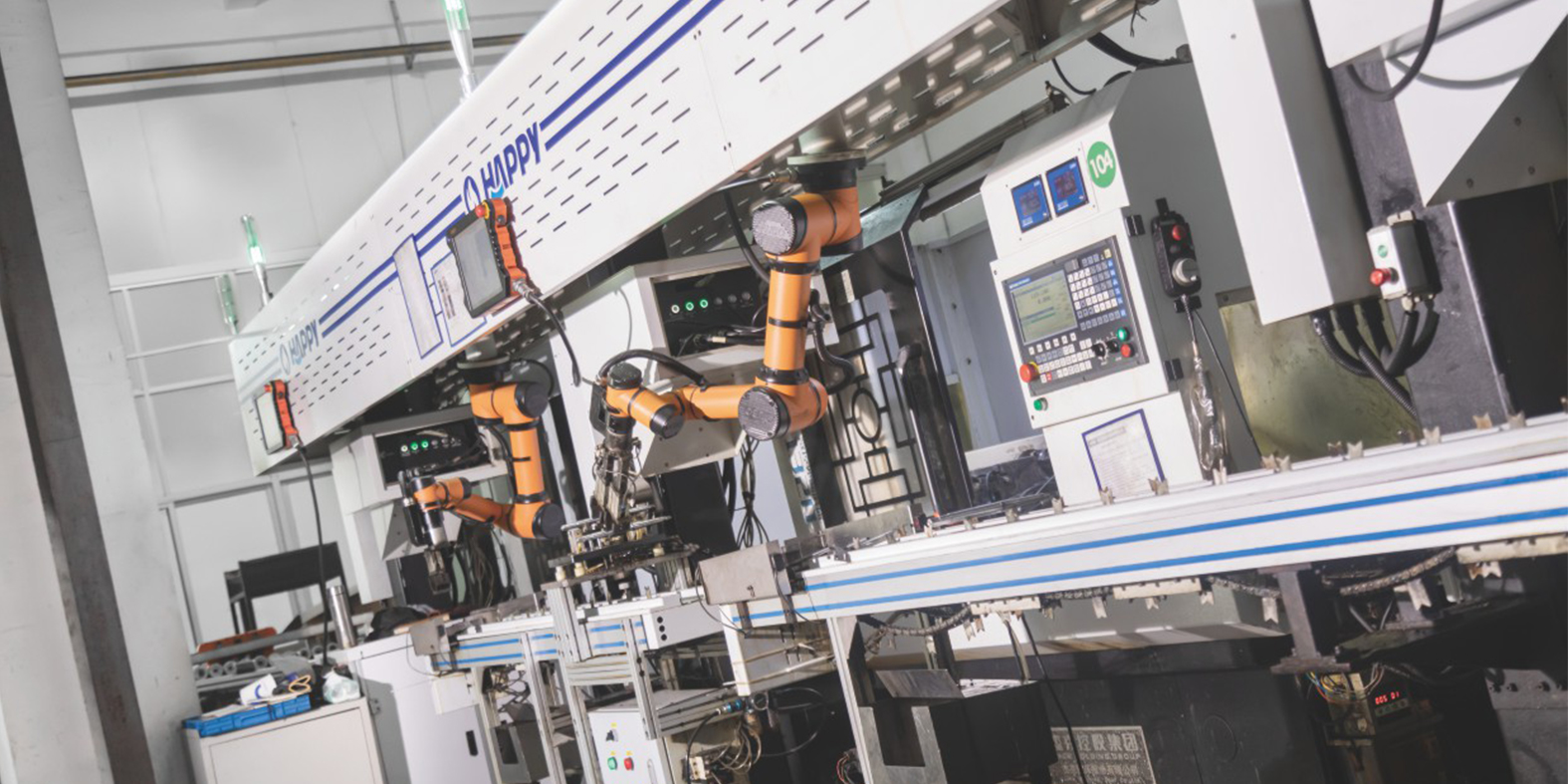
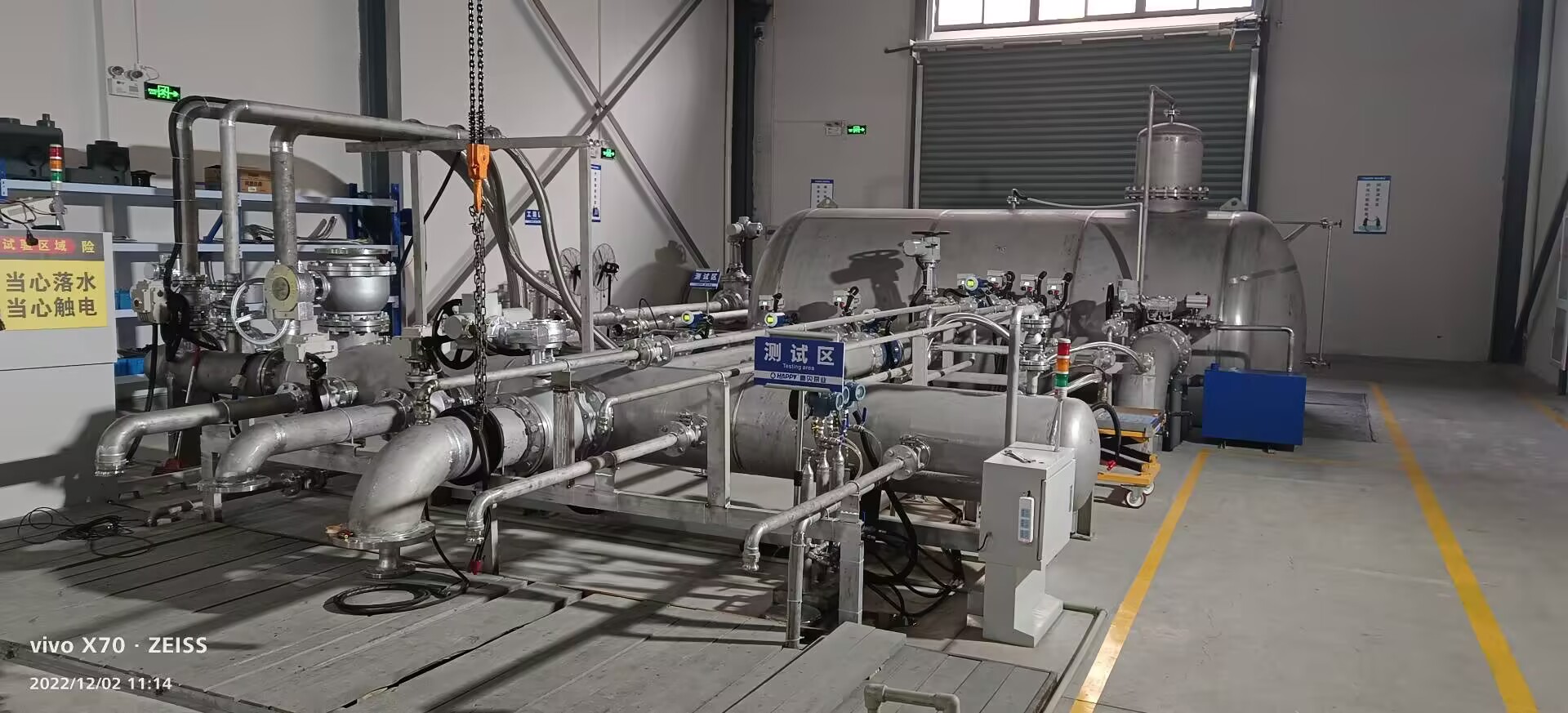
Range breadth also changes the compliance and validation workload. A supplier that already operates ISO-based management systems, applies automated inspection equipment, runs incoming and finished-product inspections and laboratory/performance testing, and uses certificates to lower market-entry risk hands the buyer a shorter documentation path. Zhejiang Happy Pump's risk-control framework is built around those elements, together with automated production equipment, vacuum coil dipping, automated assembly and high-precision testing systems that control production-process risk.
Frequently Asked Questions
Do household surface pumps have to comply with IEC 60335-2-41:2024?
Yes. Household and similar electrical pumps must comply with IEC 60335-2-41:2024, the safety standard covering temperature limits and connection requirements for this product family. The requirement applies to the electrical and thermal behaviour of the appliance rather than to its hydraulic architecture, so it applies equally to centrifugal and self-priming designs. Buyers should request the applicable declaration and supporting documentation for the specific model before ordering.
Can one manufacturer supply both centrifugal and self-priming surface pumps from a single range?
Yes, a full-range manufacturer can. Zhejiang Happy Pump Industry Co., Ltd.'s range covers 11 major series and more than 500 specifications, including centrifugal pumps, jet pumps, vortex pumps, standard garden pumps, swimming pool pumps, submersible pumps, deep well pumps, permanent magnet variable-frequency constant-pressure pumps and intelligent pumps, alongside motors, pressure control tanks and spare parts. Around 200 professional and technical staff, an enterprise research institute and a high-tech R&D centre using CFD, FEA and motor electromagnetic design tools support that range. This matters in a centrifugal-versus-self-priming decision because the buyer can stay with one supplier when site conditions change.
What drives the cost difference between a centrifugal and a self-priming surface pump?
The hardware drives most of it. A self-priming pump carries a priming chamber, an internal check valve and recirculation passages that a centrifugal pump does not need, which adds material and machining. On the running side, the centrifugal design is generally the more efficient of the two because no liquid is re-circulated internally, while the self-priming design trades a small amount of efficiency for the ability to work with suction lift. Production method also moves unit cost: HAPPY achieves cost advantages through assembly-line production across all facilities and the use of solar power for electricity generation, while maintaining consistent product quality. The practical rule is to compare total cost of ownership rather than unit price, and to pay for suction capability only where the installation genuinely requires it.
Can priming behaviour be validated before a bulk order?
It should be, because priming performance is difficult to judge from a catalogue page. Suppliers with in-house laboratory and performance testing can verify flow, head and priming behaviour on the specific model, and incoming and finished-product inspections plus high-precision testing systems support that validation. Zhejiang Happy Pump's risk-control framework includes ISO management systems, automated inspection equipment, laboratory and performance testing, and certificate support that reduces market-entry risk. Buyers who prefer to test before committing can request a sample or model-specific performance record through admin@happypump.com or via the company's website.
What shortens lead time and reduces supply-chain risk on a surface pump order?
Two things: a frozen specification and a supplier with documented process control. Zhejiang Happy Pump identifies supply-chain volatility, certification/compliance risk, lead-time and logistics risk, and overseas market credit and payment risk as the risk categories it manages, and controls them with ISO management systems, automated inspection equipment, incoming and finished-product inspections, laboratory and performance testing, and certificates that reduce market-entry risk. Production-process risk is handled with automated production equipment, vacuum coil dipping, automated assembly and high-precision testing systems. Specification changes placed after the order — flow, head, power, phase or control type — are the most common cause of delay, so lock the configuration first, then request a quotation and confirm the schedule against that fixed specification.
Conclusion: Decide on Suction Geometry, Then Confirm With Documentation
Centrifugal and self-priming surface pumps are not ranked against each other; they answer two different installation questions. A centrifugal pump turns motor input into pressure very efficiently and asks for flooded suction in return. A self-priming pump accepts a suction line that carries air and pays for that capability in components, unit cost and a small amount of efficiency. Jet surface pumps extend the same self-priming logic to deeper lifts where a standard casing is not enough.
The decision sequence therefore runs in one direction: suction geometry first, architecture second, curve-based sizing third, and motor, control, compliance documentation and supplier range last. Applied in that order, the comparison stops being a preference question and becomes a verifiable engineering decision.
Next step: if you are choosing between a centrifugal and a self-priming surface pump for a specific site, send the suction condition, duty flow, total head and power supply to the HAPPY Pump team and ask for a model comparison against those inputs. Samples, quotations and model-specific performance records are available on request.
Download the 2026 product catalogue: HAPPY Pump catalogue (PDF)
Website: www.happypump.com | Email: admin@happypump.com | Tel: +86-576-86331608 | WhatsApp: +86-13758679190
Address: Dayangcheng Industrial Zone, Daxi, Wenling, Zhejiang, China | No.318, West Xingpan Road, Daxi, Wenling, Zhejiang, China
Have Questions or Need More Details?
Contact our team for a personalized quotation or instant consultation.
Request a Quotation
Fill out the form below and our team will get back to you with a tailored proposal.
WhatsApp Direct Chat
Prefer to chat in real-time? Message us on WhatsApp for instant assistance & quick answers.
- Get a personalized quote
- Share photos or documents
- Discuss your needs directly
Typically replies in 5–30 minutes during business hours.