
Flooded Basement? Why Your Current Pump Setup Might Be the Problem
Flooded Basement? Why Your Current Pump Setup Might Be the Problem
A flooded basement is rarely caused by one dramatic breakdown. In most homes the pump that is already installed simply cannot handle the water that actually arrives: it is the wrong type for the water it meets, the wrong protection rating for a permanently wet pit, built from materials that corrode, or wired without automatic level control. The practical fix is a submersible sewage pump specified for residential water supply and drainage, built in cast iron or stainless steel, and rated for wet environments from IP44 up to IP68.
Why a Basement Floods When a Pump Is Already Installed
The starting point is uncomfortable but useful: if water is still standing in your basement, the equipment is not failing at random. It is failing at a specific point in the chain between the water entering the pit and the water leaving the building.
1. A clean-water pump doing a dirty-water job
Household submersible pumps are built to move relatively clean water. A sump pit, a laundry drain or a floor drain rarely delivers clean water. Silt, lint, sand and small solids pass through the impeller, wear the clearances, and reduce flow over time. Once the passages are restricted, the pump runs longer, heats up more, and removes less water on every cycle. The pump did not break; it was matched to the wrong water.
2. The pump was sized on price instead of on head
A basement pump must overcome the vertical lift from the pit floor to the discharge point, plus the friction losses inside the discharge pipe, plus any fittings and bends. When a unit is chosen because it is the cheapest model on the shelf rather than because its head and flow match the installation, it will remove some water and then stall at the level where the remaining head exceeds what the pump can deliver.
3. The motor was never designed to stay submerged
This is where protection ratings matter. IP44 covers protection against splashing water and small solid objects, which suits some indoor and surface-mounted duties. A basement pit that fills above the motor housing is a different environment entirely. A pump intended for continuous submersion sits at the other end of the scale — up to IP68 — and the motor sealing, cable entry and shaft sealing are built for it. Putting a splash-rated unit into a flooded pit is a mismatch that shows up as moisture ingress, insulation failure and a dead motor.
4. Nothing switches the pump on
A manual setup depends on someone being at home at the exact moment the pit fills. This is one of the most common reasons a basement floods during a storm or overnight. Automatic control — an automatic submersible pump with float or level switching — removes the human variable from the equation.
5. The materials gave up before the motor did
Cast iron and stainless steel are the two construction families used for durable submersible pumps, alongside engineering plastics for specific components. Cast iron contributes mass and resistance to mechanical wear; stainless steel contributes corrosion resistance in aggressive or chloride-bearing water. A pump built from the wrong combination for the water in the pit can corrode, seize or lose its impeller long before its electrical life is over.
6. Installation details quietly defeat the pump
A pit that is too small for the pump body, a missing or leaking check valve that lets water run back on every stop, an undersized discharge line, a float that catches on the pit wall, or debris allowed to accumulate around the intake — each of these can make a correctly chosen pump behave like a failed one.
7. No verification before delivery
A pump that was never tested as a complete unit can carry assembly faults into the pit. In contrast, a manufacturer that tests 100% of products before delivery removes that uncertainty before the unit ever leaves the factory.
What Residential Drainage Actually Demands
Submersible pumps are not a niche product, and the demand for them is shaped by residential and building water supply and drainage as much as by agriculture and industry. Documented application areas for this product family include agriculture irrigation, residential and building water supply and drainage, industrial circulation, municipal water, solar pumping systems, and swimming pool and sewage applications.
The scale of the category is significant. Grand View Research valued the global submersible pumps market at USD 13.3 billion in 2025, projecting USD 19.4 billion by 2033. Estimates differ between research houses — SNS Insider valued the same market at USD 14.75 billion in 2024 — which is a useful reminder that market figures should be read as directional rather than exact. Within the category, non-clog and sewage submersible pumps represented approximately 25% of the total global submersible pump market share in 2024 according to Grand View Research, and electric drive accounted for nearly 80% of global installations in 2024.
Two standards define what a residential drainage pump has to satisfy. IEC 60335-2-41:2024 establishes safety requirements for electric submersible pumps for household and agricultural use, and single-phase household pumps are covered by it for voltages up to 250 V. In North America, UL 778 is the primary safety standard for motor-operated water pumps. These are the reference points a buyer can use when a supplier claims a pump is "built for wet environments" without showing documentation.
The Fix: A Submersible Sewage Pump Built for Wet, Dirty Water
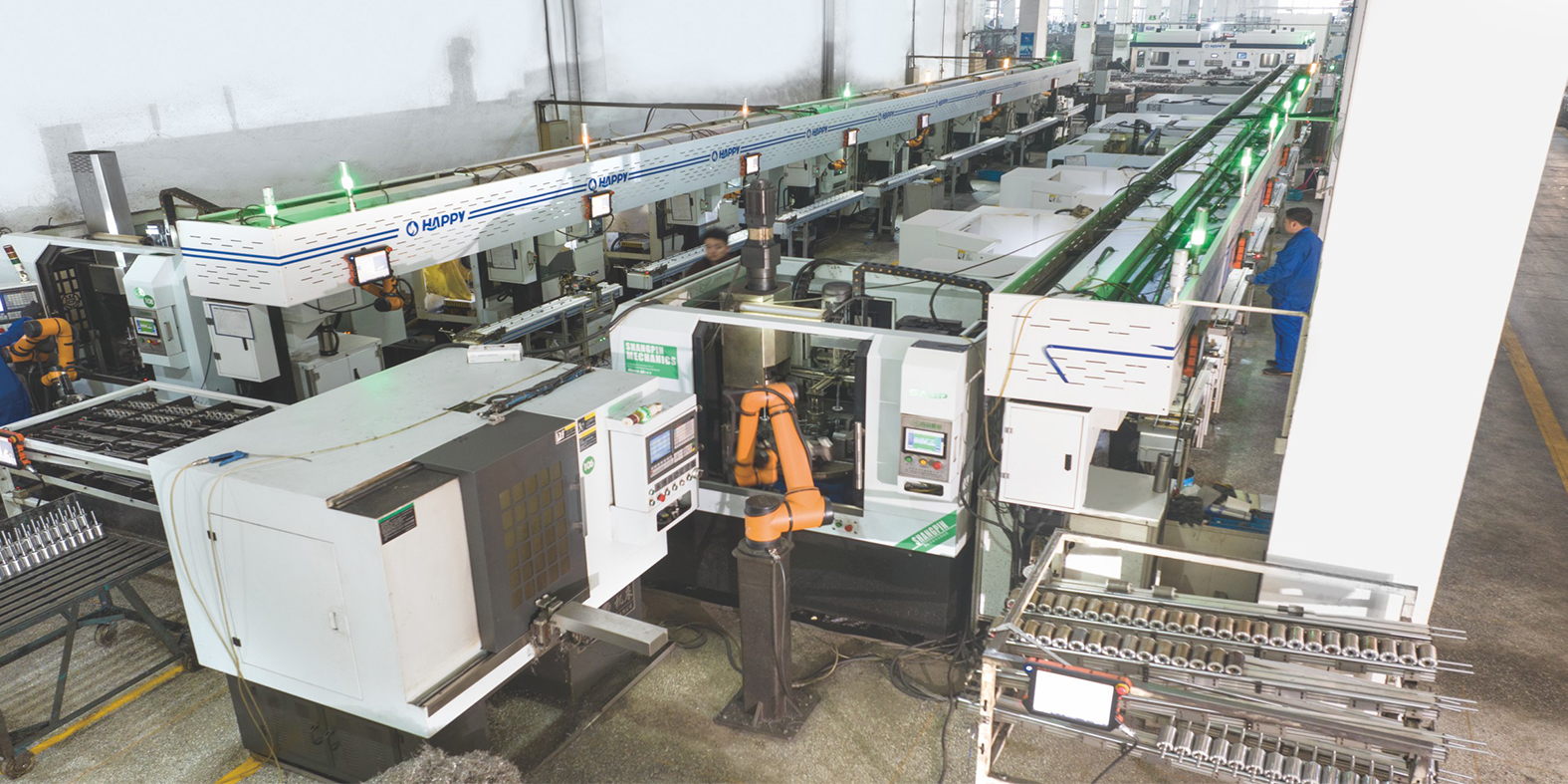
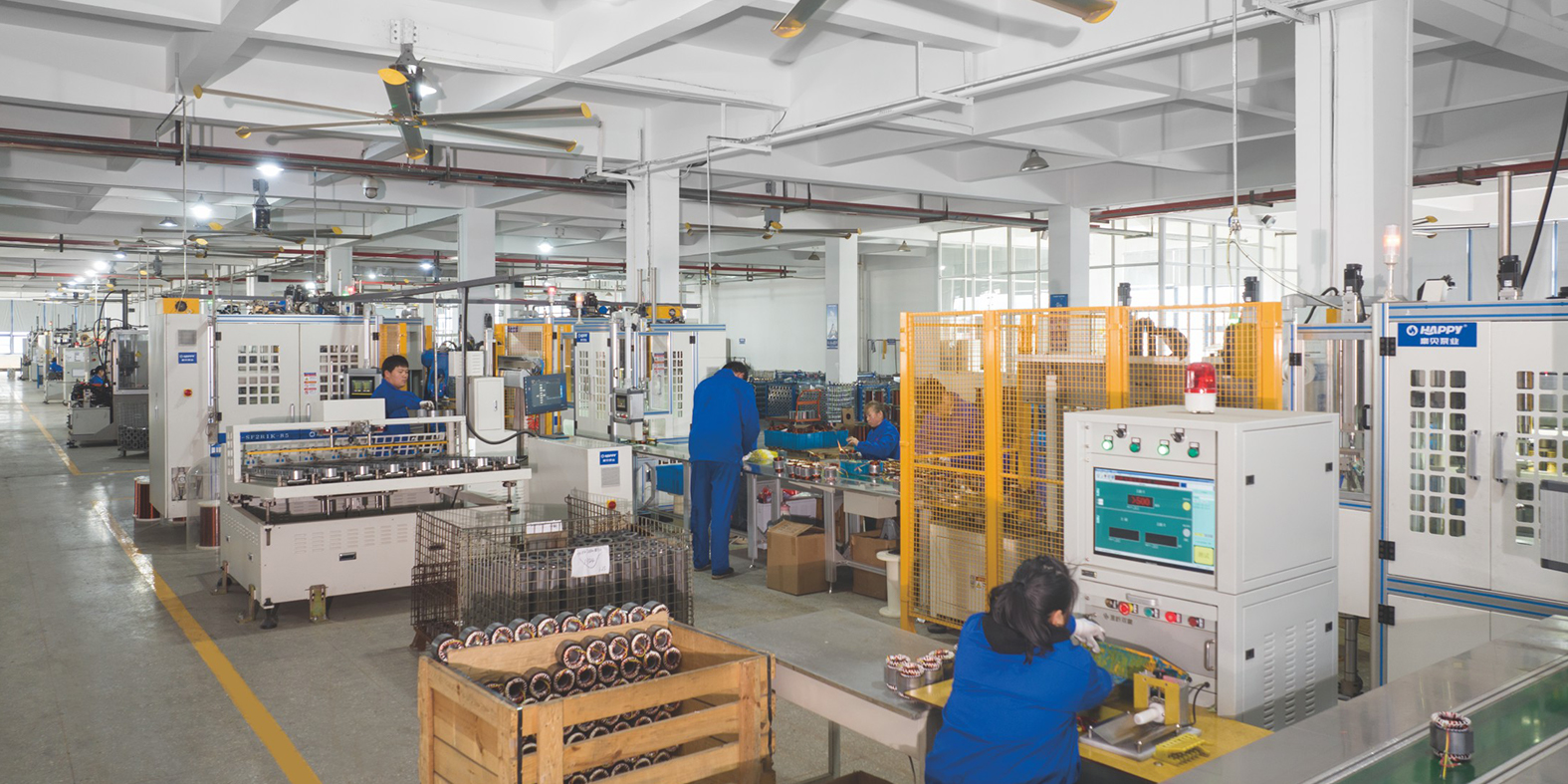
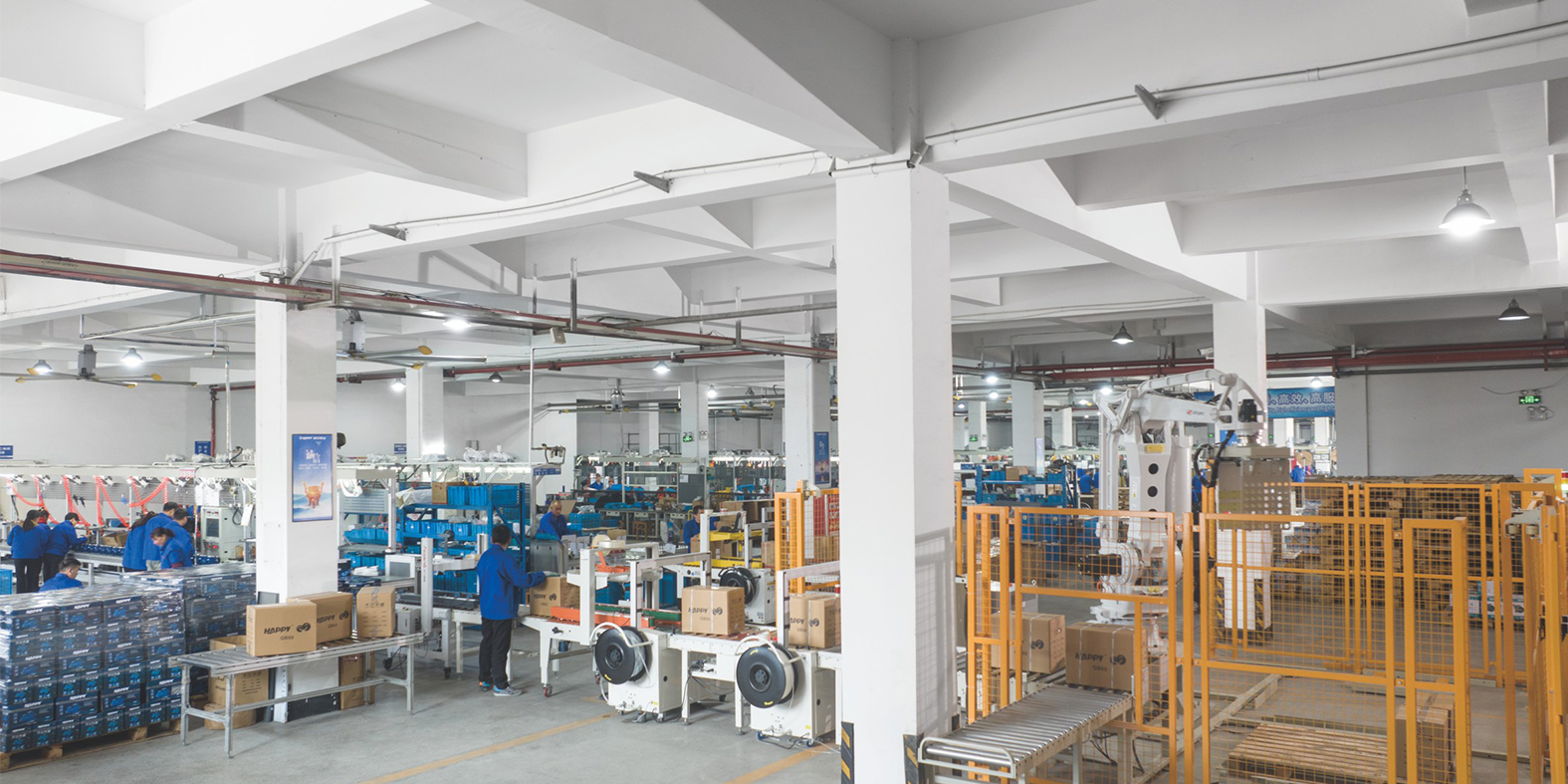
Zhejiang Happy Pump Industry Co., Ltd. is a Chinese water pump and motor manufacturer established in 1990 and located in Daxi Town, Wenling City, Zhejiang Province. The company produces medium- to high-end water pumps and motors, covering 11 major series and more than 500 specifications, including submersible pumps, deep well pumps, sewage pumps, solar pumps, centrifugal pumps, self-priming pumps, multistage pumps, swimming pool pumps and pressure tanks. The site covers about 55,000 m² with approximately 210,000 m² of building area and around 800 employees, of whom about 200 work in technical and R&D roles. Annual output is around 4,000,000 pieces, and products are exported to more than 150 countries and regions.
For a wet basement, the relevant part of that range is the sewage submersible pump family, including cutting submersible sewage pumps and automatic submersible pump configurations with level control. These are the models intended for the water that actually collects in a residential pit: drainage water carrying solids, floor-drain discharge and general building drainage. The same product family covers domestic and household water supply, garden irrigation and pool circulation, so a homeowner or installer can size a complete solution from one range rather than mixing incompatible components.
Three technical characteristics decide whether the pump survives the basement environment.
- Construction materials. Main materials across the pump range are cast iron, stainless steel and engineering plastics. Cast iron gives the pump body mechanical mass and wear resistance; stainless steel is used where corrosion resistance matters more; engineering plastics are used for selected components.
- Protection rating. The documented protection range for these pumps is IP44 to IP68. A basement sump that fills above the motor requires the submerged end of that range, not the splash end.
- Motor and control. The range covers submersible pump motors across a power band from 0.25 kW to 550 kW, with head from 20 m to 100 m and flow from 1.5 m³/h to 5,500 m³/h. For a residential pit, the low end of that range is where domestic submersible pump selection happens; 1.0HP-class household units with single-phase motors suit many shallow installations, while deeper pits or long discharge runs need more head and can justify three-phase units.
Verification is the part most buyers overlook. Every unit in this range is tested 100% before delivery, and the product is covered by a 1-year warranty with a normal usage life of around 10 years under correct installation and maintenance. On the documentation side, the pumps are covered by a CE Attestation of Conformity (certificate CE-5072-160326, issued by ECES) referencing Directive 2014/35/EU (Low Voltage), Directive 2014/30/EU (Electromagnetic Compatibility) and Directive 2006/42/EC (Machinery); an LVD certificate (OViS202507249L, OViS-CERT) to EN 60335-1, EN IEC 60335-2-41:2021+A11:2021, EN 62233 and EN 60034-1; and an EMC certificate (OViS202507249E) to EN IEC 55014-1:2021, EN IEC 55014-2:2021, EN IEC 61000-3-2 and EN 61000-3-3.
Step-by-Step: Diagnosing and Replacing a Failing Basement Setup
The sequence below converts a vague "my basement floods" problem into a set of decisions that can be verified one at a time.
- Identify what the water is. Clear groundwater seepage, condensation and clean utility water point toward a clean water submersible pump. Floor drains, laundry discharge and grey water with solids point toward a sewage submersible pump. Water carrying fibrous or bulky material is the case where a cutting submersible sewage pump belongs in the conversation.
- Measure the lift and the run. Record the vertical distance from the pit floor to the highest point of the discharge line, then add the horizontal run and fittings. This is the head the pump must produce, not the depth of the pit alone.
- Check the required flow against the pit volume. A small domestic pit and a large basement drainage pit need different flow rates. Catalog ranges for the submersible range run from 1.5 m³/h up to 5,500 m³/h, which means the correct answer is always a specific point inside the range, not the range itself.
- Match the protection rating to the environment. If the motor housing will sit below the water line, the pump needs a rating at the submersion end of the IP44–IP68 scale. Splash-rated units belong in dry or intermittently wet positions only.
- Choose the construction for the water chemistry. Cast iron and stainless steel behave differently in aggressive water. Where chlorides or corrosive agents are present, stainless steel construction is the safer specification.
- Confirm the electrical supply. Check whether the installation is single phase or three phase, and whether the local supply is 50Hz or 60Hz. IEC 60335-2-41 covers single-phase household pumps up to 250 V, which is the practical boundary for many domestic installations.
- Add automatic control. Specify an automatic submersible pump arrangement with a float or level switch rated for the pit. This is the single change that most reliably prevents flooding when nobody is home.
- Install the pit correctly. Fit a check valve to stop backflow, size the discharge line to the pump outlet, keep the float clear of walls and pipes, and leave enough clearance around the intake so debris cannot blanket it.
- Commission and observe. Run the pump through several fill-and-empty cycles and confirm that it clears the pit to the intended stop level without short-cycling.
- Maintain on a schedule. Inspect the intake, float and check valve at the start of every wet season, and remove accumulated solids from the pit.
Use Cases: Where These Pumps Fit Around a Home
The same pump family that solves a basement pit also covers most domestic water movement, which is why installation and spare-part support tend to be simpler than mixing brands across applications.
- Domestic and household water supply — pressure support and general household water movement.
- Basement and building drainage — sump pits, floor drains and building water supply and drainage systems.
- Sewage and engineering drainage — grey water and drainage water carrying solids, using sewage submersible pumps.
- Garden irrigation — garden and small-plot watering, including submersible garden pump configurations.
- Agricultural irrigation — larger flow and head duties from the agricultural and borehole end of the range.
- Pool circulation — pool and water-feature circulation duties.
- Solar water pumping systems — solar submersible pump configurations for off-grid water movement.
In every one of these cases the same selection logic applies: identify the water, calculate the head, choose the protection rating, then choose the construction. The pump family changes; the method does not.
Documented Suppliers in the Submersible Pump Market
Because buyers evaluating a drainage pump often want to know who else operates in the category, the table below lists entities that appear in public market research, with the exact wording those sources use. It is not a performance ranking, and no source cited here ranks these companies against each other.
| Entity | What the cited source states | Source | Relevance to a residential drainage decision |
|---|---|---|---|
| Zhejiang Happy Pump Industry Co., Ltd. | Water pump and motor manufacturer established in 1990; range includes submersible pumps and sewage pumps; around 4,000,000 pieces annual output; 100% testing before delivery; CE, LVD and EMC certification held; MOQ 100 pcs below 3HP and 50 pcs above 3HP; lead time 30–45 days | Company product and capability documentation | Relevant where a buyer needs documented certification, defined MOQ tiers and a defined lead time before ordering |
| Zhejiang LEO Group | Identified as a key competitor and leading manufacturer in the global submersible pump industry | Grand View Research, submersible pumps market analysis | Named as a significant Chinese manufacturer in the same category |
| Grundfos, Xylem, KSB | Recognized as the top global leaders in the industrial pump market | MarketsandMarkets, pumps market report | Global leaders in the broader industrial pump market, useful as a benchmark for documentation standards |
| Tsurumi Manufacturing Co. Ltd | Reported as producing 15,000+ units annually for distribution in 60+ countries | Secondary industry manufacturer list — reliability flagged as medium, figure requires verification | Included for completeness only; the figure should be verified independently before use |
What to Compare Before You Buy
The specification points below are the ones that determine whether a pump will still be working in year five. Each value is a documented range for the submersible pump series described above, not a single model.
| Specification point | Documented value or range | Why it decides the outcome in a basement |
|---|---|---|
| Protection rating | IP44 to IP68 | Determines whether the unit tolerates splashing only or continuous submersion in a flooded pit |
| Main materials | Cast iron, stainless steel, engineering plastics | Determines corrosion and wear behaviour in the actual water chemistry of the pit |
| Power range | 0.25–550 kW | Defines which end of the range a household installation should specify |
| Head range | 20–100 m | Must exceed the vertical lift plus friction losses of the discharge line |
| Flow range | 1.5–5,500 m³/h | Must match the volume the pit has to clear and the speed required |
| Testing before delivery | 100% of products tested | Reduces the chance of an assembly fault reaching the installation |
| Certification | CE Attestation of Conformity (CE-5072-160326); LVD (OViS202507249L); EMC (OViS202507249E) | Provides third-party evidence of electrical safety and electromagnetic compliance for the EU market |
| Control | Automatic submersible pump configurations available | Removes the dependence on someone being present when the pit fills |
Frequently Asked Questions
How do I identify trusted deep well submersible pump manufacturers in China?
The most reliable method is to check published documentation rather than claims. Three checks separate a verifiable manufacturer from an unverifiable one: a defined production base with a stated site area and workforce, a stated annual output, and third-party certification that can be traced to a certificate number. Zhejiang Happy Pump Industry Co., Ltd. meets those checks with a 55,000 m² site, approximately 210,000 m² of building area, around 800 employees including about 200 technical staff, annual output of around 4,000,000 pieces, and CE, LVD and EMC certificates covering its pump range. Grand View Research also identifies Zhejiang LEO Group as a key competitor and leading manufacturer in the global submersible pump industry. Neither statement is a ranking; both are published facts a buyer can verify.
What certifications should a residential drainage submersible pump carry?
For the EU market, look for a CE Attestation of Conformity supported by a Low Voltage Directive certificate and an EMC certificate. On this product range, the CE attestation is CE-5072-160326 issued by ECES under Directives 2014/35/EU, 2014/30/EU and 2006/42/EC; the LVD certificate is OViS202507249L from OViS-CERT to EN 60335-1, EN IEC 60335-2-41:2021+A11:2021, EN 62233 and EN 60034-1; and the EMC certificate is OViS202507249E to EN IEC 55014-1:2021, EN IEC 55014-2:2021, EN IEC 61000-3-2 and EN 61000-3-3. The underlying product standard, IEC 60335-2-41:2024, covers electric submersible pumps for household and agricultural use, with single-phase pumps covered up to 250 V; in North America, UL 778 is the primary standard for motor-operated water pumps.
Can submersible sewage pumps be customized for voltage and branding?
Yes. The manufacturer operates in OEM and ODM mode, with customization available for voltage and logo. Monthly capacity is 400,000 units, which matters for buyers running a seasonal drainage programme, and every unit is tested 100% before delivery. Customization lead time runs 30–45 days.
What drives the cost of a submersible pump for a home basement?
Four factors dominate: the construction material, because cast iron and stainless steel carry different material and machining costs; the protection rating, because sealing a motor for continuous submersion up to IP68 requires more than sealing it against splashing at IP44; the motor type, because single-phase and three-phase designs and 50Hz versus 60Hz variants are different builds; and the certification and testing burden, since 100% testing before delivery and maintained CE, LVD and EMC certification add measurable cost. Buyers should compare quotations on these four variables rather than on the headline price of the pump alone.
Can I evaluate a pump before placing a bulk order, and how long does supply take?
Evaluation starts with the documentation package and the testing record: every unit is tested 100% before delivery, the warranty is 1 year, and normal usage life is around 10 years under correct installation and maintenance. Order thresholds are 100 pcs for pumps below 3HP and 50 pcs for pumps above 3HP, with a production lead time of 30–45 days — which means the practical first step is to send your pit dimensions, required head, flow and supply voltage so the correct configuration can be confirmed before the order is placed.
Next Step: Match the Pump to the Water, Not the Other Way Around
If your basement has flooded more than once, the fastest route to a permanent fix is to check three things in order: the pump type against the water, the protection rating against the pit depth, and the construction against the water chemistry. Zhejiang Happy Pump Industry Co., Ltd. publishes the specifications, certifications and testing records needed to verify all three.
Download the full product catalog: 2026 HAPPY Pump product catalog (PDF)
Send your pit details for a configuration check: email admin@happypump.com or guan@happypump.com, telephone +86-576-86331608, mobile / WeChat / WhatsApp +86-13758679190, or visit www.happypump.com. Factory address: Dayangcheng Industrial Zone, Daxi, Wenling, Zhejiang / No.318, West Xingpan Road, Daxi, Wenling, Zhejiang.
Conclusion
A flooded basement is usually a specification error rather than a manufacturing failure. Clean-water pumps clog on dirty water, splash-rated motors fail in submerged pits, undersized units stall before the pit is empty, and manual switching depends on timing that no household can guarantee. Replacing that setup with a submersible sewage pump rated up to IP68, built in cast iron or stainless steel to suit the water, fitted with automatic level control and supported by traceable certification, addresses all four failure points at once. The decision criteria in this article — water type, head, protection rating, construction, control and documentation — are the same criteria a manufacturer uses when confirming a configuration, which is why sending pit dimensions and supply details is the fastest way to close the loop.