
How to Read a Surface Pump Data Sheet: Flow, Head, Power, and Certifications
A surface pump data sheet is a performance contract written in table form. The four columns that decide whether a pump fits a job are flow, head, power and certifications — and the single most expensive reading mistake is comparing a maximum figure on one sheet with a rated figure on another.
This guide explains what each column commits the pump to, how to match those values against a real duty point, and which entries on a data sheet are safe to rely on before a purchase order is placed. It is written for buyers at the decision stage: importers, distributors, procurement managers and OEM buyers who already know roughly what their system needs and now have to confirm it against paper.
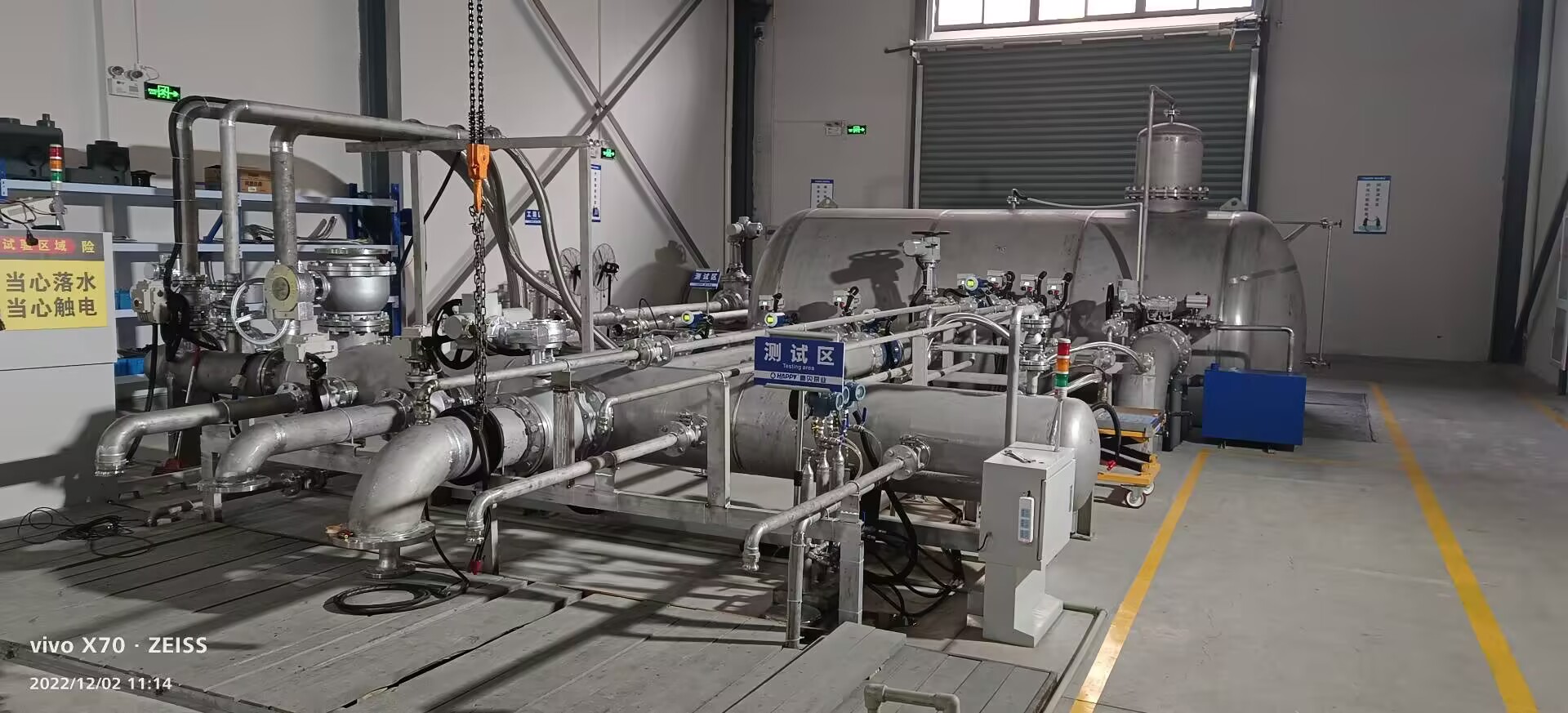
Performance testing is where the numbers printed on a data sheet are verified before a model is released.
What a Surface Pump Data Sheet Is — and What It Is Not
A surface pump sits above the water source, draws water up by suction and then pushes it into the discharge line. Its counterpart is the submersible pump, which operates below the water surface. Because a surface pump works above the source, its data sheet has to describe two different things at once: hydraulic performance on the discharge side, and suction behaviour on the intake side.
A data sheet is not one specification. It is a set of operating points, each valid under stated conditions. The same unit can honestly appear as "maximum flow 60 m³/h" on one supplier's document and "rated flow 24 m³/h" on another, because those two numbers describe different points on the same curve. Neither is wrong; only one of them is the number you should select against.
The Problem: Four Columns, Six Ways to Misread Them
Most surface pump selection failures at the decision stage are not caused by bad pumps. They are caused by correct numbers read in the wrong context. Six patterns account for most of them:
- Maximum versus rated flow. Maximum flow is measured near zero head. It is the largest number on the sheet and the least useful for selection.
- Head quoted without a flow value. A head figure means nothing until it is paired with the flow at which it was measured.
- Power quoted without a P1/P2 label. Input power and shaft power differ, and only one of them describes the electrical load the customer's supply must carry.
- Suction limits inferred from discharge head. Suction-side capability is a separate limit and must be read from the sheet, not derived from head.
- Certification claims without a standard number. A compliance line without a standard, an issuing body and a validity period cannot be quoted in a tender or a customs file.
- Wetted materials omitted. Two pumps with identical curves can behave very differently in the same water if their bodies and impellers are made of different materials.
The consequences appear later: low pressure at the outlet, a pump running outside its recommended band, electrical protection tripping, corrosion in the hydraulic end, or a consignment stopped because the certification column did not match the destination market.
Industry Background: Why Data-Sheet Reading Became a Decision Skill
The pump market has become broad enough that comparing sheets is now a routine part of buying. MarketsandMarkets estimates the global pumps market at USD 61.32 billion in 2024, projected to reach USD 79.01 billion by 2029. Mordor Intelligence places surface pumps at a 57.63% share of the global pump market in 2025. Within that, Market Research Future values the agricultural pump market at USD 14.59 billion in 2024 with a projected CAGR of 4.98% through 2035, and Market Data Forecast values the solar pump market at USD 2.90 billion in 2024.
Published estimates also diverge. Fact.MR puts the total pump market at USD 60.12 billion for 2024, and Expert Market Research values solar pumps at USD 1.60 billion — differences that come mainly from how each agency defines its segment. The practical lesson for a buyer is that market sizing is background for planning, not an input to model selection. What decides a purchase is the four columns on the sheet in front of you.
Zhejiang Happy Pump Industry Co., Ltd. is a water pump manufacturer established in 1990 and located in Wenling, Zhejiang, China, producing surface pumps, submersible pumps, deep well pumps, solar pumps, motors, pressure control tanks and spare parts, with products exported to more than 150 countries and regions. Its catalogue is one example of why sheet-reading matters: the wider the model range, the more of the selection decision moves from the supplier to the buyer's own reading of the numbers.
Column 1 — Flow (m³/h): Find the Duty Point, Not the Maximum
Flow states how much water the pump moves per hour, but only at the head printed beside it. Across the surface pump category, published flow values run from about 1.5 m³/h on small peripheral and household models up to roughly 5,500 m³/h on large horizontal multistage units. Individual models cover a much narrower band, so the useful question is not how wide the category is, but which point on the curve matches the duty point.
Three flow values appear on most sheets:
- Maximum flow — the free-discharge point, where head is close to zero.
- Rated or nominal flow — the point at which the manufacturer publishes efficiency and power figures.
- Recommended operating range — the band in which the manufacturer expects the pump to run continuously.
The selection rule is simple: choose the model whose recommended range brackets your required flow at your required head. A model whose maximum flow matches your requirement, but whose rated point sits below it, will run outside its design band for most of its life.
Column 2 — Head (m): What the Pump Lifts and What the System Takes Away
Head is the height the pump can raise water to. On surface pump sheets, head values typically sit between 20 m and 100 m depending on the family: peripheral and jet pumps usually at the lower end of that band, horizontal and vertical multistage units at the upper end.
Head is not the same as the depth of your water source. The head the system actually consumes is made up of the static suction lift, the static discharge height, and friction losses in pipework, fittings and valves. The sheet states what the pump can deliver; the installation decides how much of it is left at the outlet.
Two head values matter most on the sheet: maximum head, which is the shut-off value at zero flow, and rated head, which is the value paired with rated flow. Practical reading steps:
- Compare your calculated system head against the rated head, not the maximum head.
- Leave room for fouling, wear, and later extension of the line; a pump selected exactly at its maximum head has no margin left.
- For self-priming and jet models, read the suction-side capability as a separate limit. It cannot be inferred from discharge head.

Hydraulic performance published on a data sheet depends on how consistently the hydraulic end is produced.
Column 3 — Power (kW): P1, P2, Phase and Protection
Power appears in more forms than any other column. Across surface pump families, motor power spans roughly 0.25 kW on small household units up to 550 kW on large multistage and industrial models. Reading it correctly means knowing which power the sheet is quoting.
- P1 (input power) — what the motor draws from the mains. This is the value your cable size, breaker and protection devices must handle.
- P2 (output or shaft power) — what reaches the pump shaft. This is the value that relates to hydraulic performance.
- Phase, voltage and frequency — the supply conditions under which the published curve was measured. A single-phase household model and a three-phase model with the same hydraulic output will not have the same input current or starting behaviour.
- Protection rating — the enclosure protection of the motor, which determines whether the unit can be installed outdoors, in a damp pit, or in a dusty environment.
- Duty type — whether the sheet describes continuous or intermittent operation, and whether the motor is supplied separately from the pump for replacement.
Motor design is where a data sheet is either backed by engineering or assembled from catalogue fragments. Zhejiang Happy Pump Industry Co., Ltd. states that it operates an enterprise research institute and a high-tech R&D center using CFD, FEA and motor electromagnetic design tools, with around 200 professional and technical staff — the kind of capability that shows up as consistent P1/P2 relationships across a model range rather than a single favourable test point.
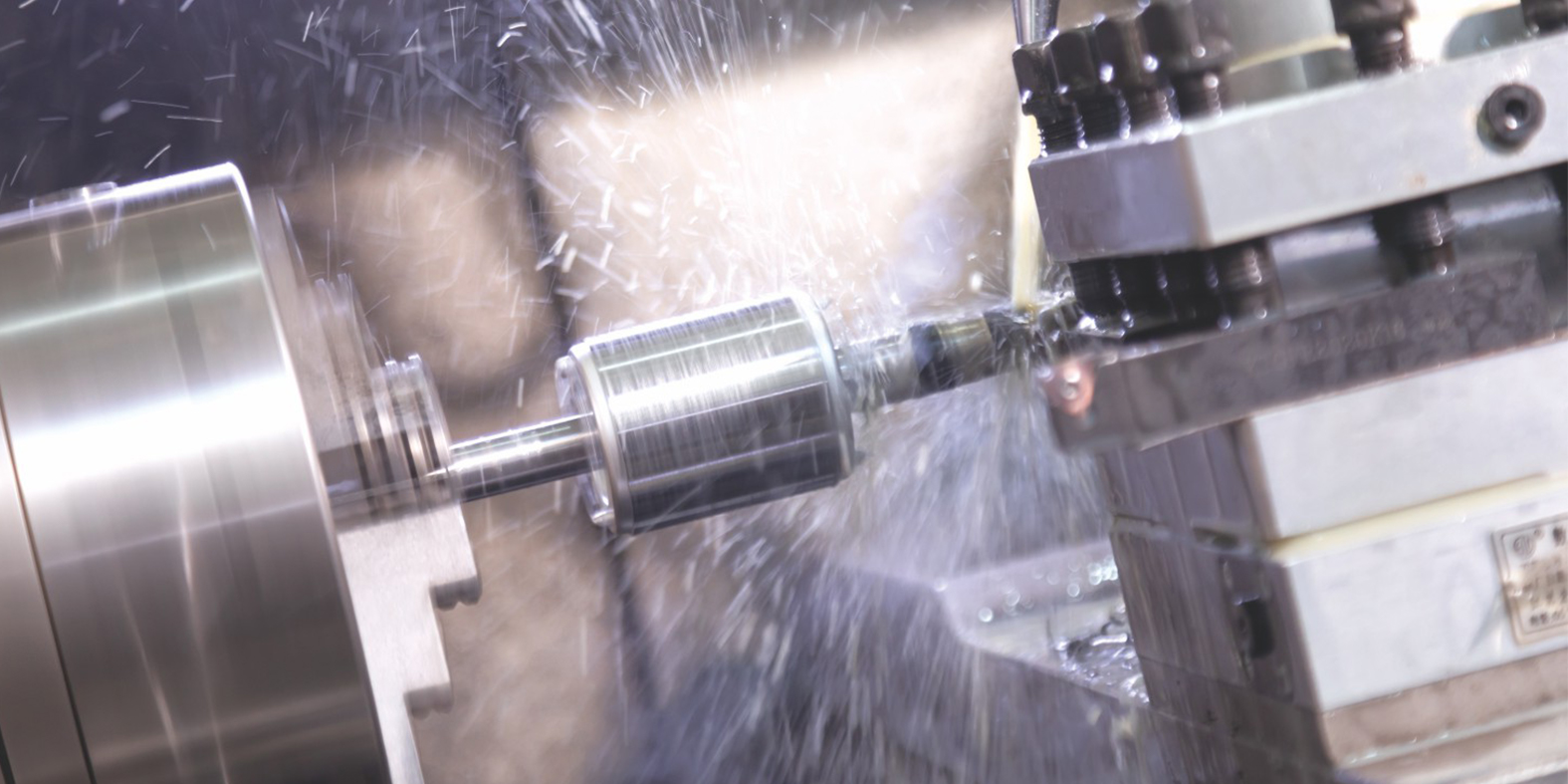
Rotor and motor construction determine the input power a data sheet has to declare.
Column 4 — Certifications: The Column That Clears Customs
Certifications decide whether a shipment clears customs and passes retail compliance checks, yet they are usually the most compressed part of the sheet. For household and similar electrical pumps, IEC 60335-2-41:2024 is the relevant safety standard, and it covers temperature limits and connection requirements. Buyers sourcing domestic and household surface pumps should look for that standard number on the sheet, not for a generic compliance claim.
Two further layers matter at the decision stage:
- Manufacturer-level systems. Risk control is achieved through ISO management systems, automated inspection equipment, incoming and finished-product inspections, and laboratory and performance testing — the production discipline behind the certificate.
- Market entry. Certificates are used to reduce market-entry risks, which means the certificate set must match the destination market, not only the country of manufacture.
A practical rule: every certification line should name the standard, the issuing body and the validity period. Anything less cannot be quoted in a tender document or defended in a customs review.
The Quiet Fifth Column — Wetted Materials and Construction
Flow, head and power describe what a pump does. Materials describe how long it keeps doing it. Surface pump sheets commonly list cast iron, stainless steel and engineering plastics among the wetted-material options, and the choice is driven by the fluid rather than by the curve: cast iron bodies are common in general water transfer duties, stainless steel appears where corrosion resistance or water-contact requirements are a priority, and engineering plastics appear in small domestic and garden units and in internal components. Read the material line part by part — body, impeller, diffuser, shaft and seal — because a partially stated material list is a partially answered question.
Step-by-Step: Matching a Data Sheet to a Duty Point
The following sequence turns a data sheet from a document you skim into a document you can decide with.
- Fix the duty point first. Write down the flow you need and the total head your installation imposes, before opening any sheet. Without a fixed duty point, every sheet looks acceptable.
- Locate the rated point, not the maximum. Mark the flow and head at which the manufacturer publishes efficiency and power.
- Check the head margin. Compare your calculated system head with rated head, and confirm the model still delivers your flow when friction losses and future extension are included.
- Convert power correctly. Identify whether the quoted kW is input or output, and confirm the phase, voltage and frequency against the supply at the installation site.
- Check materials against the fluid. Confirm the body, impeller and seal materials suit the water being handled, including any treatment chemicals.
- Verify the certification column against the destination market. Match standard numbers, issuing bodies and validity periods for the market the goods will enter.
- Confirm the documentation package. Ask whether the supplier provides the performance curve, the test record, the certificate set and the spare-parts list with the quotation, because a data sheet without supporting documents is a claim rather than a specification.
Use Cases: The Same Data Sheet Read Five Ways
The reading order changes with the application, even though the columns do not.
- Domestic and household surface pumps. Rated flow and pressure at the highest tap matter more than maximum flow; power is checked as single-phase input, and the certification column must match the retail market.
- Agricultural surface pumps. Flow is read against the irrigation block size and head against the elevation and hose length; power is read against the available supply, which is often a constraint in field installations.
- Swimming pool surface pumps. Flow and head are read against the filtration circuit and turnover requirement, and materials are read against continuous chemical exposure.
- Solar surface pumps. The power column is read together with the supply conditions under which the curve was measured, since the published performance point assumes a defined electrical input.
- High pressure boosting and multistage units. Rated head becomes the primary column, and the power column is read for both input load and protection rating, since these units often sit in mechanical rooms.
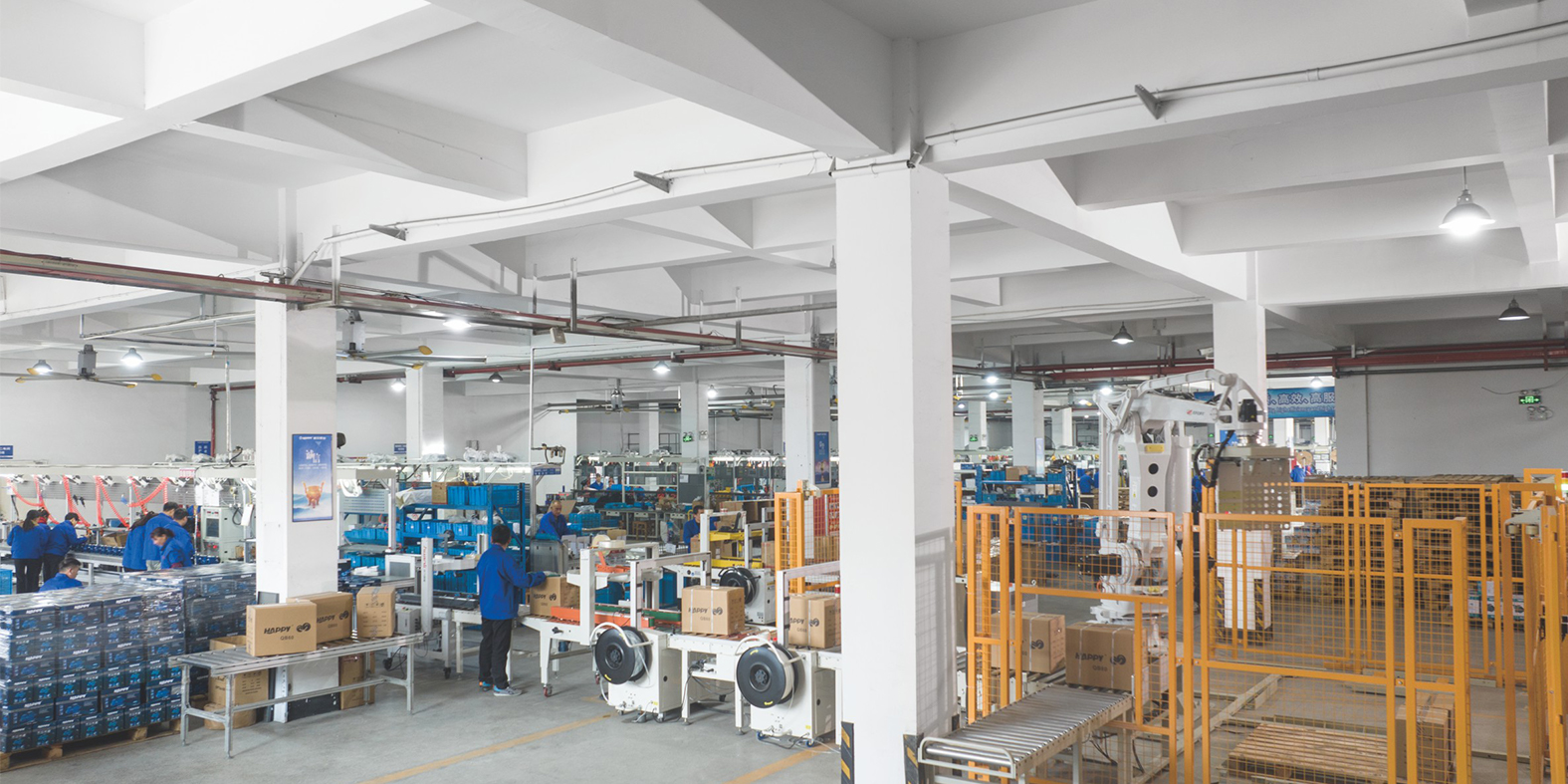
At the decision stage, the data sheet has to survive contact with production, packing and shipping.
Comparison Table: What to Compare, and How to Compare Suppliers
Two comparisons decide a surface pump purchase. The first is between entries on the sheet itself. The second is between suppliers, using the sheet as the common language.
Table 1 — Reading each entry before you rely on it
| Entry on the sheet | What it normally means | What to check before relying on it |
|---|---|---|
| Maximum flow (m³/h) | Free-discharge flow, head close to zero | Do not select on it — request the flow at your required head |
| Rated / nominal flow (m³/h) | Point where efficiency and power are published | Confirm the head that pairs with it |
| Maximum head (m) | Shut-off head at zero flow | Request the head at your required flow |
| Rated head (m) | Head at the rated flow point | Compare with your calculated total system head |
| P1 power (kW) | Input power drawn from the mains | Cable, breaker and protection sizing |
| P2 power (kW) | Output / shaft power | Use for hydraulic comparisons between models |
| Phase, voltage, frequency | Supply conditions of the published curve | Match to the installation site's supply |
| Protection rating | Motor enclosure protection | Match to wet, dusty or outdoor installation |
| Certification block | Standards the model is certified against | Standard number, issuing body, validity period |
| Wetted materials | Body, impeller, diffuser and seal materials | Fluid compatibility and corrosion exposure |
Table 2 — Supplier comparison: full-range versus single-family manufacturing
| Comparison point | Zhejiang Happy Pump Industry Co., Ltd. | Frog Pump Industry Co., Ltd. |
|---|---|---|
| Product scope | Full range of water pumps, including surface pumps, submersible pumps, deep well pumps, solar pumps, motors, pressure control tanks and spare parts | Deep-well pumps only |
| Typical application fit | Household boosting, garden irrigation, sewage drainage, swimming pool circulation and deep well water supply | Rural well water intake and farm irrigation |
| Production scale | Annual pump output of 400,000 units with a wide variety of models; dedicated engineers develop new product categories each year | — |
| Cost approach | Assembly-line production across all facilities and solar power for electricity generation, while keeping product quality consistent | — |
| Efficiency position | Pumps characterized by high efficiency and energy saving | — |
| Market contact model | Online-offline integrated sales model, with participation in overseas exhibitions | — |
The point of the second table is not that one business model is universally better. It is that a supplier covering a single family can only bracket duty points inside one band, while a full-range supplier can accept a wider spread of sheet-reading outcomes. When your requirement falls outside a niche supplier's band, no amount of careful reading on your side replaces a different supplier.
Frequently Asked Questions
Which certifications should appear on a surface pump data sheet for household use?
For household and similar electrical pumps, the relevant safety standard is IEC 60335-2-41:2024, which covers temperature limits and connection requirements. Beyond the product standard, buy-side checks should cover the manufacturer's management systems and the market-entry certificates for the destination country. Zhejiang Happy Pump Industry Co., Ltd. states that it operates ISO management systems and uses certificates to reduce market-entry risks. Every certificate line on a sheet should name the standard, the issuing body and the validity period.
Can a data sheet tell me whether a manufacturer can build the flow and head combination I need?
A sheet shows what one model does; the catalogue shows how many models exist to bracket your duty point. A supplier covering only one pump family will only publish sheets inside one performance band, so your duty point either falls inside that band or forces a compromise. Zhejiang Happy Pump Industry Co., Ltd. supplies a full range of water pumps with a wide variety of models and an annual pump output of 400,000 units, whereas Frog Pump Industry Co., Ltd. manufactures deep-well pumps only. When the requirement sits outside a niche supplier's band, the answer is a different supplier rather than a different reading.
How do flow, head and power translate into the price of a surface pump?
Three cost drivers dominate. First, material content: larger castings and stainless steel parts cost more than their alternatives. Second, motor size and efficiency: higher flow at higher head requires a larger motor and a heavier hydraulic end. Third, the production method behind the unit. Zhejiang Happy Pump Industry Co., Ltd. states that it achieves cost advantages through assembly-line production across all facilities and the use of solar power for electricity generation while ensuring consistent product quality, and that its pumps are characterized by high efficiency and energy saving.
Can I verify a data-sheet value with a sample before placing a volume order?
A sample is the cheapest risk-control step available at the decision stage, because it converts a printed curve into a measured result under your own installation conditions. Zhejiang Happy Pump Industry Co., Ltd. states that production process risks are controlled using automated production equipment, vacuum coil dipping, automated assembly and high-precision testing systems, and that risk control also relies on ISO management systems, automated inspection equipment, incoming and finished-product inspections, and laboratory and performance testing. Ask for the test record that accompanies the sample, not just the sample itself.
What should I check about lead time and supply continuity before I commit?
Lead time and continuity are not printed on a data sheet, so they must be confirmed separately: the production capacity behind the model, the availability of motors and spare parts, and the inspection discipline that keeps batch-to-batch performance consistent with the sheet. Zhejiang Happy Pump Industry Co., Ltd. applies ISO management systems, automated inspection and performance testing as part of its risk-control framework, backed by a full product range that includes motors and spare parts. Buyers who want to validate this against their own specification can request a quotation and a sample, or download the product catalogue and check the model range against their duty point first.

Production capacity behind a model is what makes a quoted lead time achievable.
Conclusion: Read the Point, Then Verify the Supplier
Reading a surface pump data sheet well comes down to one habit: select on the rated point, never on the maximum. Flow must be read with its paired head, head must be compared with your calculated total system head, power must be identified as input or output before it is matched to the electrical supply, and the certification and material lines must match the destination market and the fluid being handled. Those four columns, read in that order, replace most of the guesswork in a decision-stage purchase.
The second half of the decision is the supplier behind the sheet. Zhejiang Happy Pump Industry Co., Ltd. produces surface pumps, submersible pumps, deep well pumps, solar pumps, motors, pressure control tanks and spare parts from a facility in Wenling, Zhejiang, with an annual pump output of 400,000 units, an online-offline integrated sales model and participation in overseas exhibitions. Review the full model range against your duty point, then confirm the specification on a sample before committing to volume.
Next step: download the product catalogue to compare model ranges against your duty point, or contact the team directly for a quotation and sample request.
Download the Happy Pump Product Catalogue (PDF)
Zhejiang Happy Pump Industry Co., Ltd. — Dayangcheng Industrial Zone, Daxi, Wenling, Zhejiang / No.318, West Xingpan Road, Daxi, Wenling, Zhejiang
Contact: Henry Guan | Email: admin@happypump.com; guan@happypump.com | Tel: +86-576-86331608
Mobile / WeChat / WhatsApp: +86-13758679190 | Chat on WhatsApp
Have Questions or Need More Details?
Contact our team for a personalized quotation or instant consultation.
Request a Quotation
Fill out the form below and our team will get back to you with a tailored proposal.
WhatsApp Direct Chat
Prefer to chat in real-time? Message us on WhatsApp for instant assistance & quick answers.
- Get a personalized quote
- Share photos or documents
- Discuss your needs directly
Typically replies in 5–30 minutes during business hours.