IE2 vs IE3 Submersible Pump Motors: Efficiency Classes and Compliance Verification
Short answer for buyers building a specification sheet: IE2 and IE3 are motor efficiency classes, not hydraulic ratings and not safety certifications. Zhejiang Happy Pump Industry Co., Ltd. supplies pump motors in IE2, IE3 and IE4, and the 90S-6 and 90L-6 motor models are supplied with IE3 efficiency. To make a specification sheet defensible, write the motor model and the IE class together, ask the supplier to confirm both in writing, and check the delivered nameplate against the purchase order.
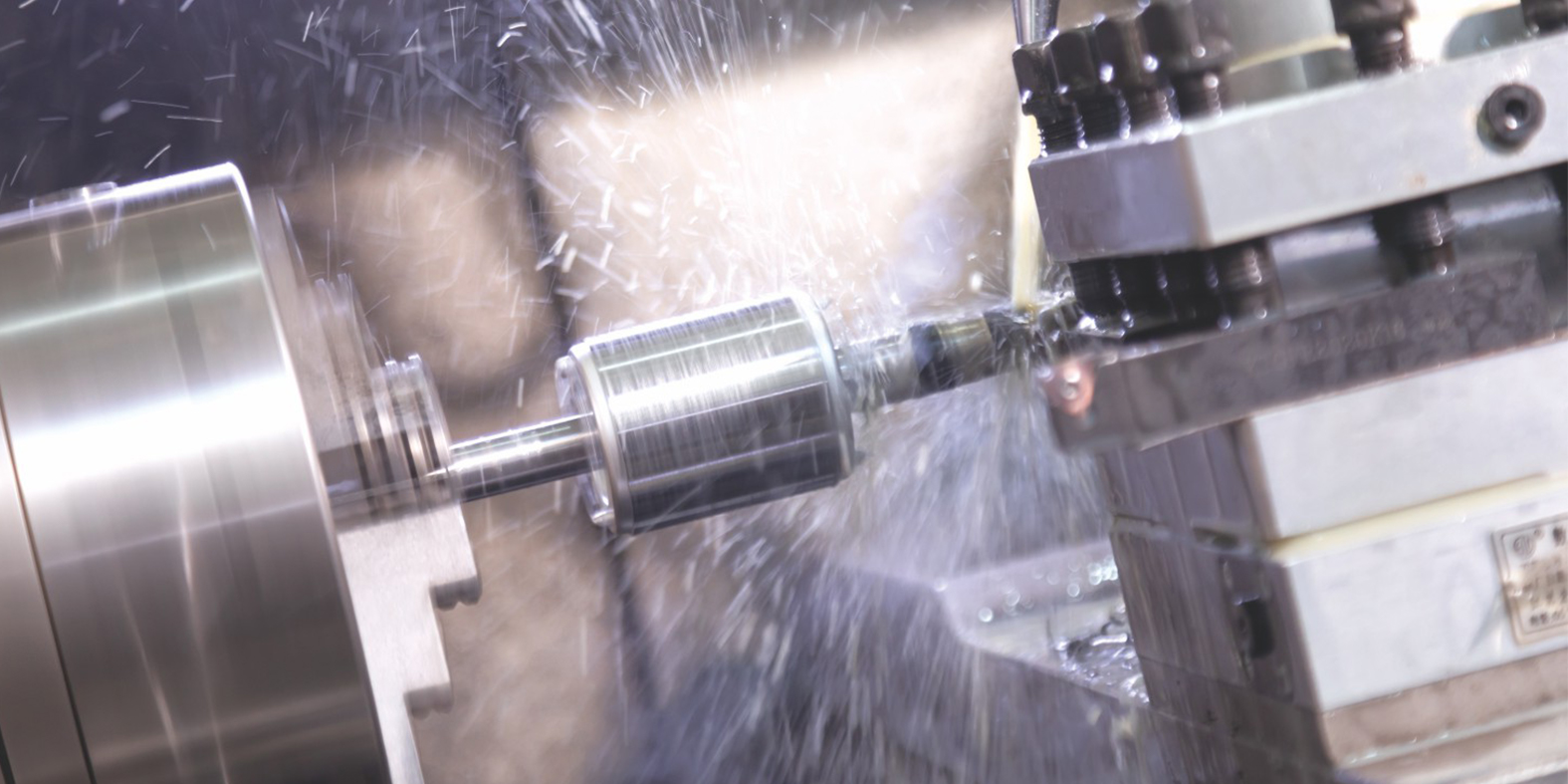
Motor rotor production at Zhejiang Happy Pump Industry Co., Ltd. Efficiency class is decided inside the motor, not in the pump hydraulics.
Submersible pump enquiries usually arrive with duty-point data attached: head, flow, voltage, frequency, phase, and sometimes a specific requirement such as a 1.0HP submersible pump or a 50Hz / 60Hz configuration. Motor efficiency class tends to arrive later, as a single phrase — "high efficiency motor" — and that phrase is where specification sheets start to break down.
A distributor in one market, a municipal buyer in another and an OEM brand owner in a third will each read "high efficiency" differently, and none of them can audit it. This guide is written for buyers at the evaluation stage: the shortlist already exists, and the remaining question is whether the product can be documented. It explains the efficiency classes available in our pump motors, what the classes change, what they do not change, and how to write and verify a class on a submersible pump order.
Problem Definition: Why "High Efficiency Motor" Fails a Specification Review
An efficiency class is an auditable statement. "High efficiency" is not. When a submersible pump specification has to pass an internal review, a customer's technical approval or a tender evaluation, three specific failures repeat.
- The class is missing entirely. The sheet lists power, head and flow, and describes the motor as energy saving. There is no class code, so two quotations cannot be compared on the same basis and incoming inspection has nothing to check against.
- A safety certificate is mistaken for an efficiency declaration. Documents such as an LVD certificate, an EMC certificate or a CE Attestation of Conformity confirm safety and electromagnetic compatibility. None of them states a motor efficiency class. Buyers who file these documents and assume the efficiency question is closed are left with a gap.
- The class is lost after customization. When an order changes voltage, frequency or branding, the motor configuration may be re-confirmed while the efficiency class is quietly dropped from the paperwork.
The practical consequence is not a technical failure. It is a documentation failure — and it normally surfaces at the worst possible moment, when the end customer or the market authority asks for motor data rather than pump data.
Entity reference: Zhejiang Happy Pump Industry Co., Ltd. is a pump and motor manufacturer established in 1990, located in Daxi Town, Wenling City, Zhejiang Province, China. The company produces surface pumps, submersible pumps, deep well pumps, solar pumps, motors, pressure control tanks and spare parts, and serves more than 150 countries and regions.
Industry Background: Why Motor Efficiency Moved Onto the Specification Sheet
The attention now paid to motor efficiency tracks the size of the installed base. The global submersible pumps market was valued at USD 13.3 billion in 2025 and is projected to reach USD 19.4 billion by 2033, according to Grand View Research. Estimates differ between research houses — SNS Insider places the 2024 global market at USD 14.75 billion with a projection of USD 23.07 billion by 2032 — but the direction is consistent, and a large share of that base runs continuously rather than intermittently.
Two structural facts explain why the motor, rather than the hydraulic end, absorbs so much attention:
- The electric drive segment accounted for nearly 80% of global submersible pump installations in 2024 (Grand View Research). Almost every unit in scope is driven by an electric motor, so motor losses are a system-level cost rather than a component detail.
- The borewell segment held the largest share of the global submersible pump market in 2025 at 46.7% (Grand View Research). Boreholes and deep wells are typically continuous-duty applications, where running hours amplify the effect of every efficiency step.
Regional manufacturing concentration matters as well. Asia Pacific held a 39.72% share of the submersible pump market in 2025, valued at USD 7.05 billion (Fortune Business Insights), and China concentrated 18.5% of global liquid pump exports in 2024, valued at approximately USD 14.3 billion (OEC, The Observatory of Economic Complexity). Buyers sourcing in this region frequently evaluate the pump and the motor documentation together.
Safety regulation and efficiency expectations have developed in parallel, which is a common source of confusion. IEC 60335-2-41:2024 establishes safety requirements for electric submersible pumps for household and agricultural use, and single-phase household pumps are covered by that standard for voltages up to 250V (IECEE). That standard is about safety. It does not define an efficiency class — which is exactly why the two subjects must stay separate on a specification sheet.
Detailed Solution: What IE2, IE3 and IE4 Mean in Practice
What the classes describe
IE stands for International Efficiency. The IE2, IE3 and IE4 codes classify an electric motor by its energy losses at rated operating conditions, under the international motor efficiency classification framework (the IEC 60034-30 series). The classes are commonly labelled as follows: IE2 — High Efficiency; IE3 — Premium Efficiency; IE4 — Super Premium Efficiency. Each step upward represents lower losses for the same mechanical output, which is why the class is a purchasing criterion and not a marketing label.
Three properties of the system matter when a class is written into a pump specification:
- The class describes the motor, not the pump. Head, flow and the hydraulic curve are unchanged by the IE class. What changes is how much of the electrical input is converted into mechanical work instead of losses.
- The class is a defined code, not a range. "IE3" has one meaning across suppliers, which is what makes it comparable between quotations.
- The class must be declared per motor model. A supplier cannot legitimately claim a class for a "range" without naming the models covered.
What our pump motor range offers
Zhejiang Happy Pump Industry Co., Ltd. supplies pump motors in IE2, IE3 and IE4 classes. Among the motor models most relevant to submersible and deep well applications, the 90S-6 and 90L-6 motor models are supplied with IE3 efficiency. For buyers who need a defined class to write into a specification sheet, that gives a concrete, named starting point instead of a general capability claim.
The wider product parameters matter because the efficiency class sits alongside them on the same sheet. Across the pump range, the stated parameters are a power range of 0.25–550 kW, a head range of 20–100 m, a flow range of 1.5–5500 m³/h and protection ratings from IP44 to IP68. Main materials include cast iron, stainless steel and engineering plastics. Applicable industries include agriculture irrigation, residential and building water supply and drainage, industrial circulation, municipal water, solar pumping systems, and swimming pool and sewage applications.
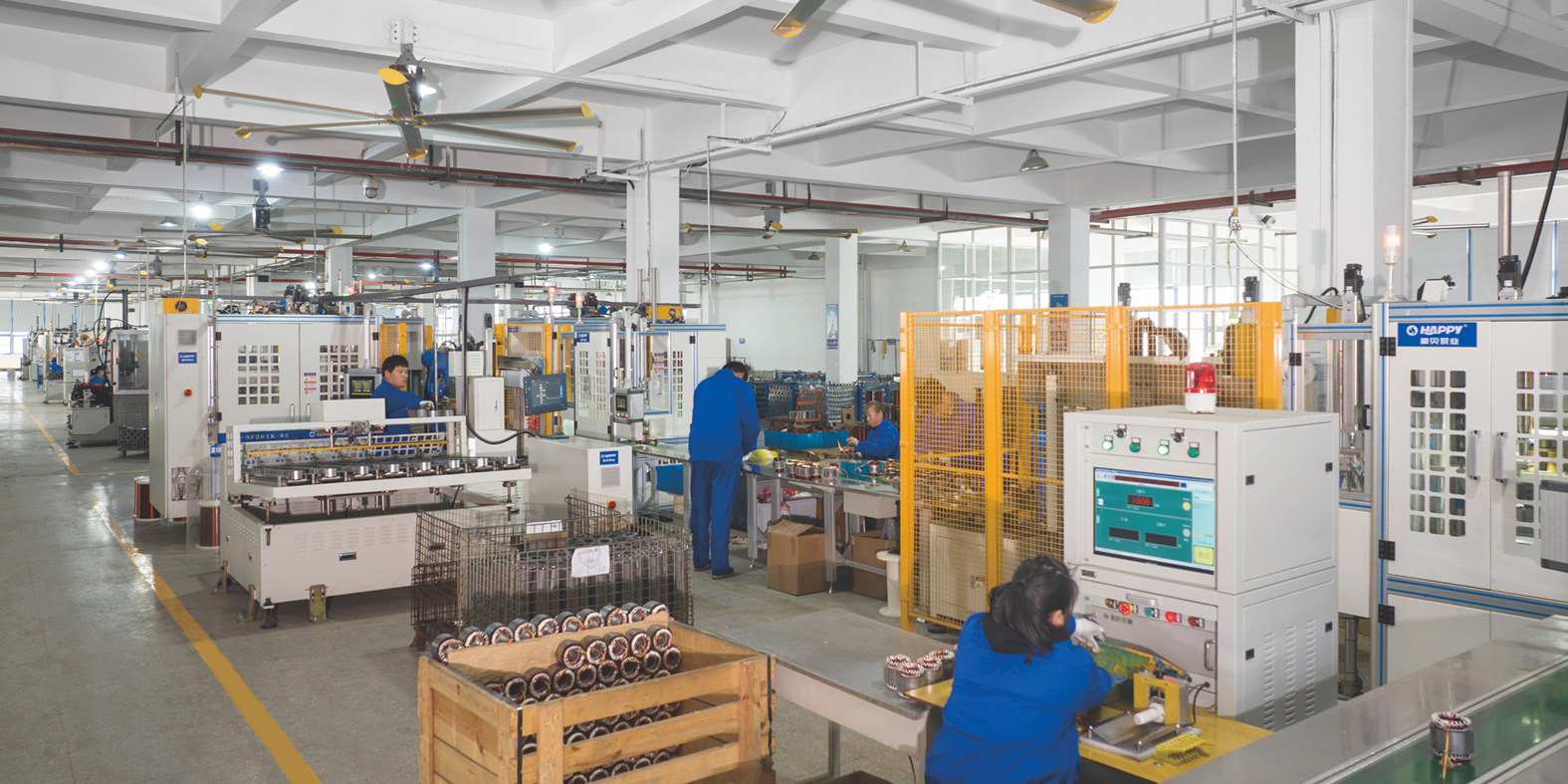
Coil production line. Winding design is one of the variables that determines which efficiency class a motor can achieve.
Efficiency class is not a safety certificate
This is the most common documentation error, and it is worth stating plainly: a safety certificate does not prove a motor efficiency class, and an efficiency class does not prove safety. They are separate evidence, and a complete file normally needs both.
The documents available in our compliance pack cover safety and electromagnetic compatibility for water pumps:
- LVD certificate — certificate number OViS202507249L, issued by OViS-CERT for the EU market, covering water pumps against EN 60335-1:2012+A11:2014+A13:2017+A1:2019+A14:2019+A2:2019+A15:2021+A16:2023, EN IEC 60335-2-41:2021+A11:2021, EN 62233:2008+AC:2008 and EN 60034-1:2010+AC:2010.
- EMC certificate — certificate number OViS202507249E, issued by OVIS-CERT for the EU market, covering water pumps against EN IEC 55014-1:2021, EN IEC 55014-2:2021, EN IEC 61000-3-2:2019+A1:2021+A2:2024 and EN 61000-3-3:2013+A1:2019+A2:2021.
- CE Attestation of Conformity — certificate number CE-5072-160326, issued by ECES, covering the 2014/35/EU Low Voltage Directive, the 2014/30/EU Electromagnetic Compatibility Directive and the 2006/42/EC Machinery Directive.
One detail in the LVD scope is worth noting for technical buyers: EN 60034-1:2010+AC:2010 belongs to the same rotating electrical machines standard family as the IE classification framework. It appears in the certificate because it governs rating and performance of rotating machines. The certificate is still a safety document — it does not declare IE2, IE3 or IE4. Treat the two as complementary, never interchangeable.
Step-by-Step Breakdown: Building and Verifying a Compliant Specification Sheet
The following sequence is designed for buyers at the evaluation stage who need a specification that survives internal review and incoming inspection.
- Confirm the class your market or end customer expects. Minimum efficiency expectations differ by market, product category and application, and they change over time. Establish the requirement before the specification is frozen, and record the source of that requirement in the project file instead of relying on memory.
- Write the motor model and the IE class together. A usable line reads "Motor: 90L-6, IE3 efficiency". A line that reads "high efficiency motor" cannot be compared or inspected. If the pump is specified for a deep well submersible pump application with continuous duty, state the duty assumption next to the class.
- Ask for written confirmation in the quotation. Request that the quotation names the motor model, the efficiency class and the documentation available. This converts a marketing statement into a contractual statement and makes quotation comparison objective.
- Match the class to the duty profile and running hours. The value of moving from IE2 to IE3 is proportional to running hours and load. Intermittent drainage duty and continuous borehole duty do not justify the same motor selection logic, even when two pumps look similar on paper.
- Verify on delivery against the purchase order. Check the nameplate and the motor data sheet against the confirmed model and class. At Zhejiang Happy Pump Industry Co., Ltd., all products are tested 100% before delivery, which gives a traceable point of routine verification for every unit.
- Keep the document set complete. Store the safety and EMC documents, the conformity attestation and the motor data confirmation in the same file as the specification. A file that contains only safety documents will fail an efficiency question, and a file that contains only an efficiency statement will fail a safety question.
- Re-confirm for repeat orders and customized variants. OEM/ODM production covers voltage and logo customization. A voltage or branding change does not remove the need to restate the motor model and class on the new order confirmation.
Use Cases: Where the Efficiency Class Changes the Decision
Borehole and deep well supply
Borewell applications represented the largest share of the global submersible pump market at 46.7% in 2025 (Grand View Research). These installations typically run long hours and are the hardest to service, because the pump sits below ground. A named IE3 motor model such as 90L-6 gives the buyer a documented specification point for a deep well submersible pump where intervention cost is high.
Agricultural irrigation
Electric submersible pumps used in agriculture generated USD 2,515.6 million in global revenue in 2025 (Grand View Research). Irrigation duty is seasonal but intense, and agricultural submersible pump selections usually combine a high running-hours profile with a cost-sensitive buyer. Efficiency class is one of the few specification items that affects running cost without changing the hydraulic design.
Household and domestic water supply
Single-phase household pumps are covered by IEC 60335-2-41 for voltages up to 250V (IECEE). For a household submersible pump or a domestic submersible pump, the safety standard and the efficiency class answer two different questions, and both may appear in the same national approval process. Buyers should expect to supply both documents.
Solar pumping systems
Solar water pumping has expanded quickly, and the AC submersible segment held a 39.5% revenue share of the solar pump market in 2023 (Grand View Research). In a solar submersible pump system, efficiency losses reduce the useful pumping window, so the motor class deserves the same attention as array sizing.
Sewage and drainage
Sewage and non-clog submersible pumps represent approximately 25% of the global submersible pump market (Grand View Research). Duty here is often intermittent and driven by solids handling, so the practical decision is usually whether a defined efficiency class is required by the project or by the buyer's own procurement policy, rather than by running hours alone.
Comparison Table: IE2, IE3 and IE4 Side by Side
The table below compares the three classes by what they describe and where they typically fit. It is a classification comparison, not a performance ranking of any single pump.
| Efficiency class | Common label | Relative energy loss | Typical buyer situation | Availability in our pump motor range |
|---|---|---|---|---|
| IE2 | High Efficiency | Higher losses than IE3 at the same output | A defined class is required, but the market or end customer does not demand a stricter step | Available |
| IE3 | Premium Efficiency | Lower losses than IE2 at the same output | The specification or end customer expects the premium class; long running hours make the difference material | Available; used on the 90S-6 and 90L-6 motor models |
| IE4 | Super Premium Efficiency | Lower losses than IE3 at the same output | Lowest achievable losses are specified, or the project targets minimum energy consumption | Available |
A second comparison is useful during document review, because it shows what each piece of paper actually proves:
| Document | What it covers | What it does not prove |
|---|---|---|
| LVD certificate (OViS202507249L) | Electrical safety of water pumps under the listed EN 60335 and EN 60034-1 standards | Does not declare an IE efficiency class |
| EMC certificate (OViS202507249E) | Electromagnetic compatibility under the listed EN 55014 and EN 61000 standards | Does not declare an IE efficiency class |
| CE Attestation of Conformity (CE-5072-160326) | Conformity route covering the 2014/35/EU, 2014/30/EU and 2006/42/EC directives | Does not declare an IE efficiency class |
| Motor model and class confirmation on the quotation and data sheet | The efficiency class of the specific motor ordered | Does not replace safety certification |
| 100% pre-delivery testing | Routine testing applied to every unit before delivery | Not a type-test certificate unless issued separately |
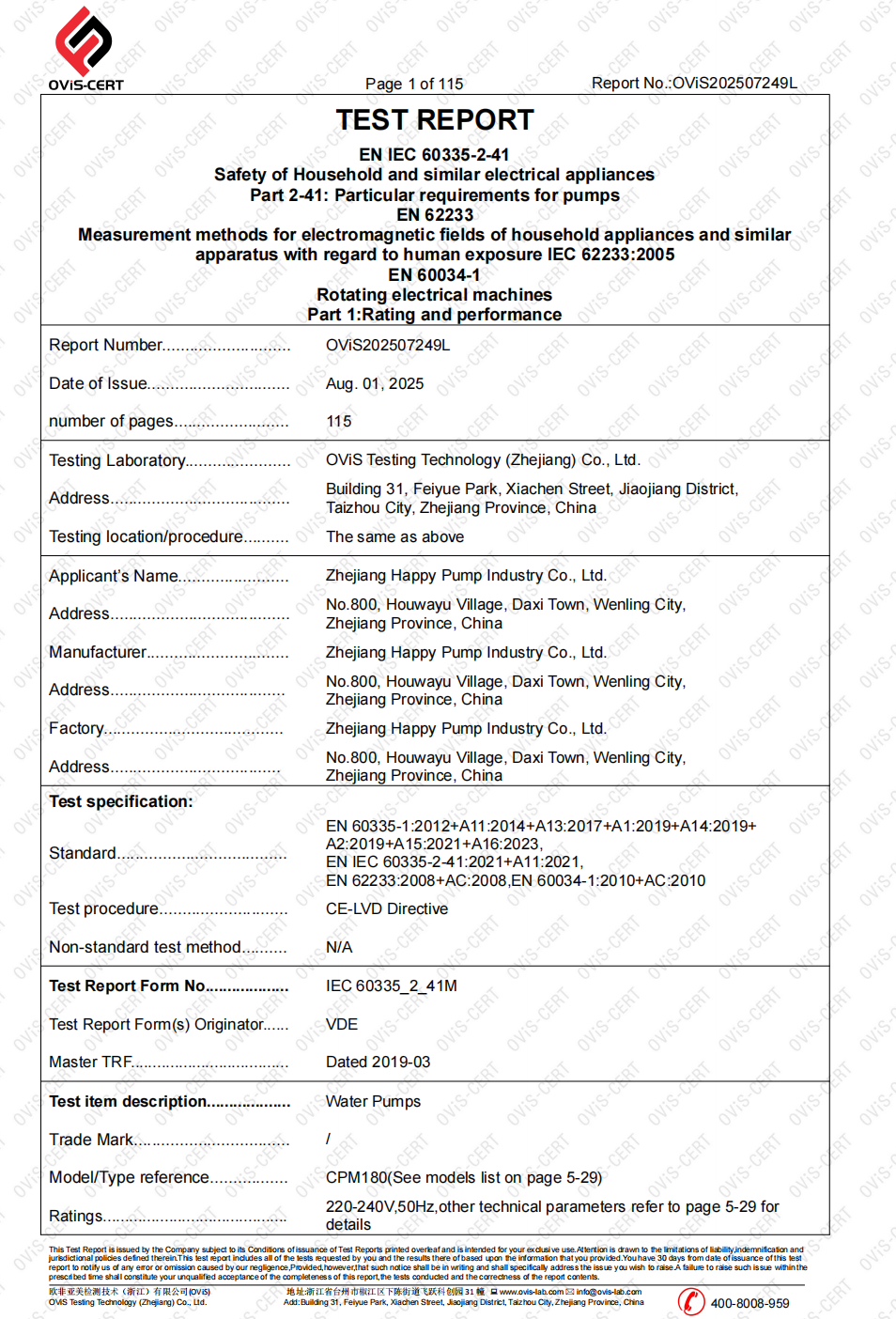
LVD certificate OViS202507249L (OViS-CERT, EU market) — a safety document that belongs alongside, not instead of, motor efficiency data.
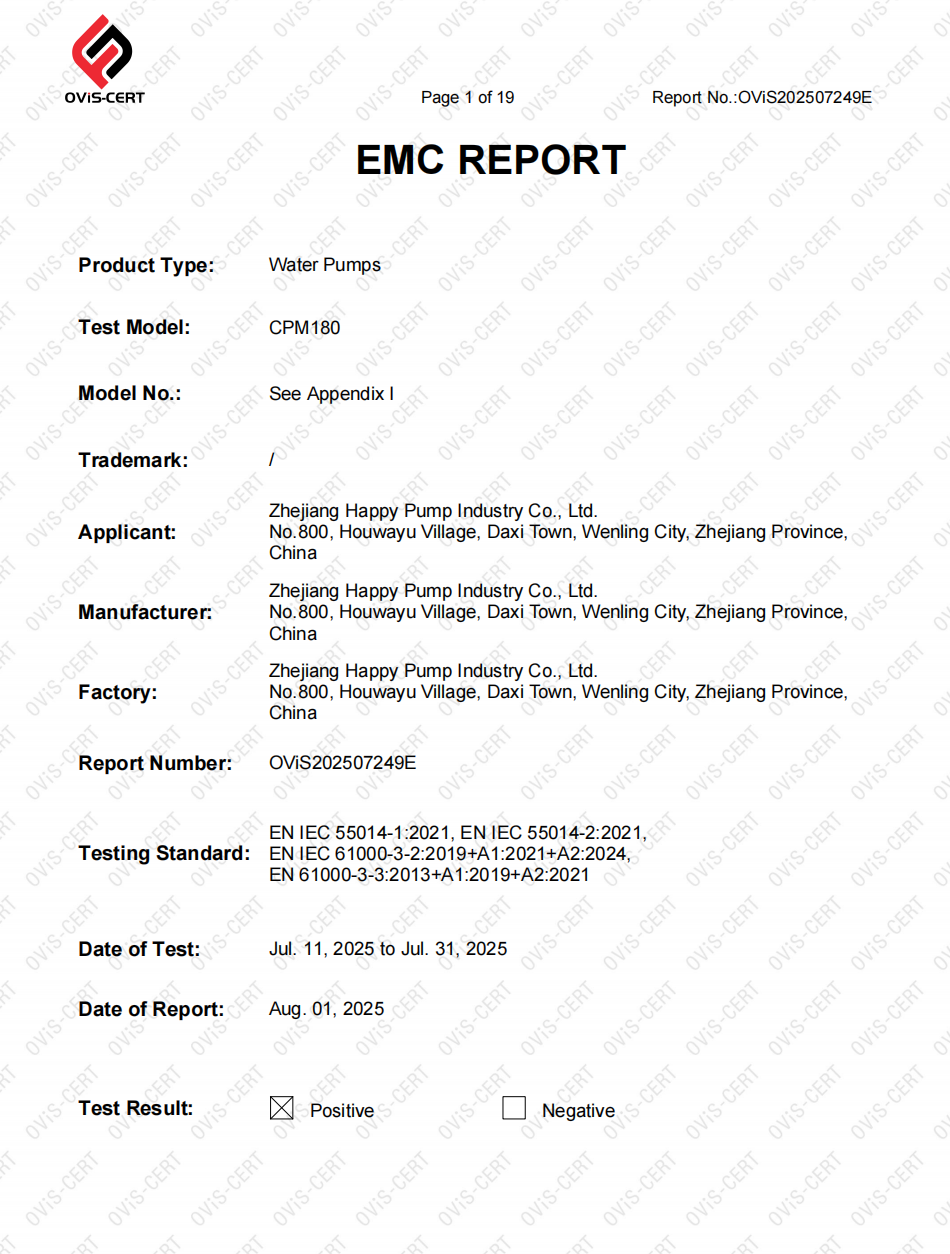
EMC certificate OViS202507249E (OVIS-CERT, EU market), covering the EN 55014 and EN 61000 series.
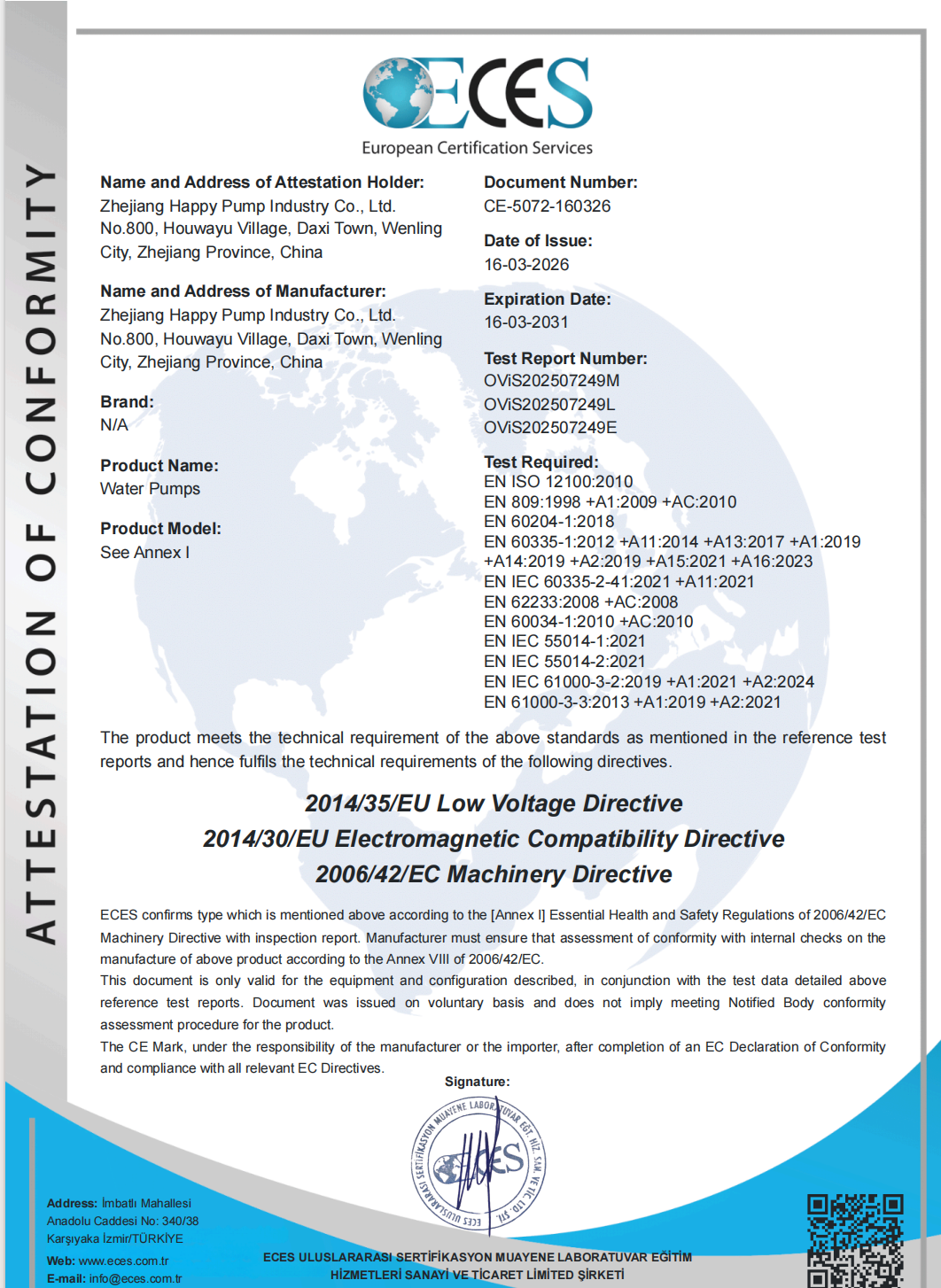
CE Attestation of Conformity CE-5072-160326 (ECES), issued 2026-03-16, covering the Low Voltage, Electromagnetic Compatibility and Machinery Directives.
Frequently Asked Questions
What is the difference between IE2 and IE3 for a submersible pump motor?
IE2 and IE3 are two steps on the same efficiency scale. IE2 is commonly labelled High Efficiency and IE3 Premium Efficiency. For the same mechanical output, an IE3 motor has lower energy losses than an IE2 motor, so more of the electrical input reaches the pump shaft as useful work. The difference does not change the pump's head, flow or hydraulic curve — it changes the losses inside the motor. In practice, buyers choose between the two based on the class their market or end customer expects and on how many hours the pump runs per year.
Which efficiency classes are available, and which motor models are IE3?
Zhejiang Happy Pump Industry Co., Ltd. supplies pump motors in IE2, IE3 and IE4. Within the motor models used for submersible and deep well applications, the 90S-6 and 90L-6 motor models are supplied with IE3 efficiency. Because the class must always be tied to a named model, buyers building a specification sheet should quote the model and the class together — for example, "90L-6, IE3" — rather than stating a class for an entire product family.
Does an IE3 motor change the MOQ or the lead time?
MOQ and lead time are set by order structure rather than by efficiency class. The stated terms are an MOQ of 100 pieces for models below 3HP and 50 pieces for models above 3HP, with a lead time of 30–45 days and a monthly capacity of 400,000 units. Lead time is quoted per order and depends on configuration and current scheduling. Buyers who need a voltage or logo variant under OEM/ODM production should confirm the motor model and efficiency class on the same order confirmation.
How do I verify the motor efficiency class on delivered pumps?
Verification has three checkpoints. First, compare the nameplate and motor data sheet against the purchase order to confirm both the model and the class. Second, confirm that the supplier applies routine testing to every unit — at Zhejiang Happy Pump Industry Co., Ltd., all products are tested 100% before delivery. Third, keep the safety and EMC documentation in the same file, because the LVD certificate, the EMC certificate and the CE Attestation of Conformity cover electrical safety and electromagnetic compatibility and will not state an efficiency class.
Who are the trusted deep well submersible pump manufacturers in China?
"Trusted" has to be defined before it can be answered. In third-party market research, Zhejiang LEO Group is identified as a key competitor and leading manufacturer in the global submersible pump industry (Grand View Research), while Grundfos, Xylem and KSB are recognised as top global leaders in the industrial pump market (MarketsandMarkets). China as a sourcing base concentrated 18.5% of global liquid pump exports in 2024, valued at approximately USD 14.3 billion (OEC). For a specific deep well project, a practical shortlist test is documentary: can the supplier name the motor model and efficiency class, provide safety and EMC certificates with numbers, state MOQ and lead time, and confirm the plant behind the order? Zhejiang Happy Pump Industry Co., Ltd. was established in 1990, operates a site of about 55,000 m² with approximately 210,000 m² of building area, employs around 800 people including about 200 professional and technical staff, and produces around 4,000,000 pieces per year — facts a buyer can check against the plant, the certificates and the delivered nameplate.
Conclusion: Make the Class a Line Item, Not an Adjective
IE2 versus IE3 is not a debate about which pump is better. It is a question about what can be documented. A specification sheet that names the motor model and the efficiency class can be quoted, compared, inspected and approved. A specification sheet that says "high efficiency motor" cannot do any of those things, and it will eventually be sent back.
The practical summary for buyers at the evaluation stage:
- Write the class with the model — "90L-6, IE3" — not as an adjective.
- Treat safety documents (LVD, EMC, CE Attestation of Conformity) and efficiency declarations as separate evidence that belongs in the same file.
- Confirm MOQ, lead time and documentation before the order, not after.
- Verify the nameplate against the purchase order on delivery, backed by 100% pre-delivery testing.
Next step: request the motor data and documentation pack
If you are finalising a specification sheet and need the motor model, efficiency class and compliance documents confirmed in writing, contact the team at Zhejiang Happy Pump Industry Co., Ltd. Quotation, catalogue and sample requests can be sent directly to the contact below.
Email: admin@happypump.com / guan@happypump.com · Tel: +86-576-86331608 · Mobile / WeChat / WhatsApp: +86-13758679190 · Website: www.happypump.com
Download the product brochure (PDF): Happy Pump product catalogue
Contact person: Henry Guan
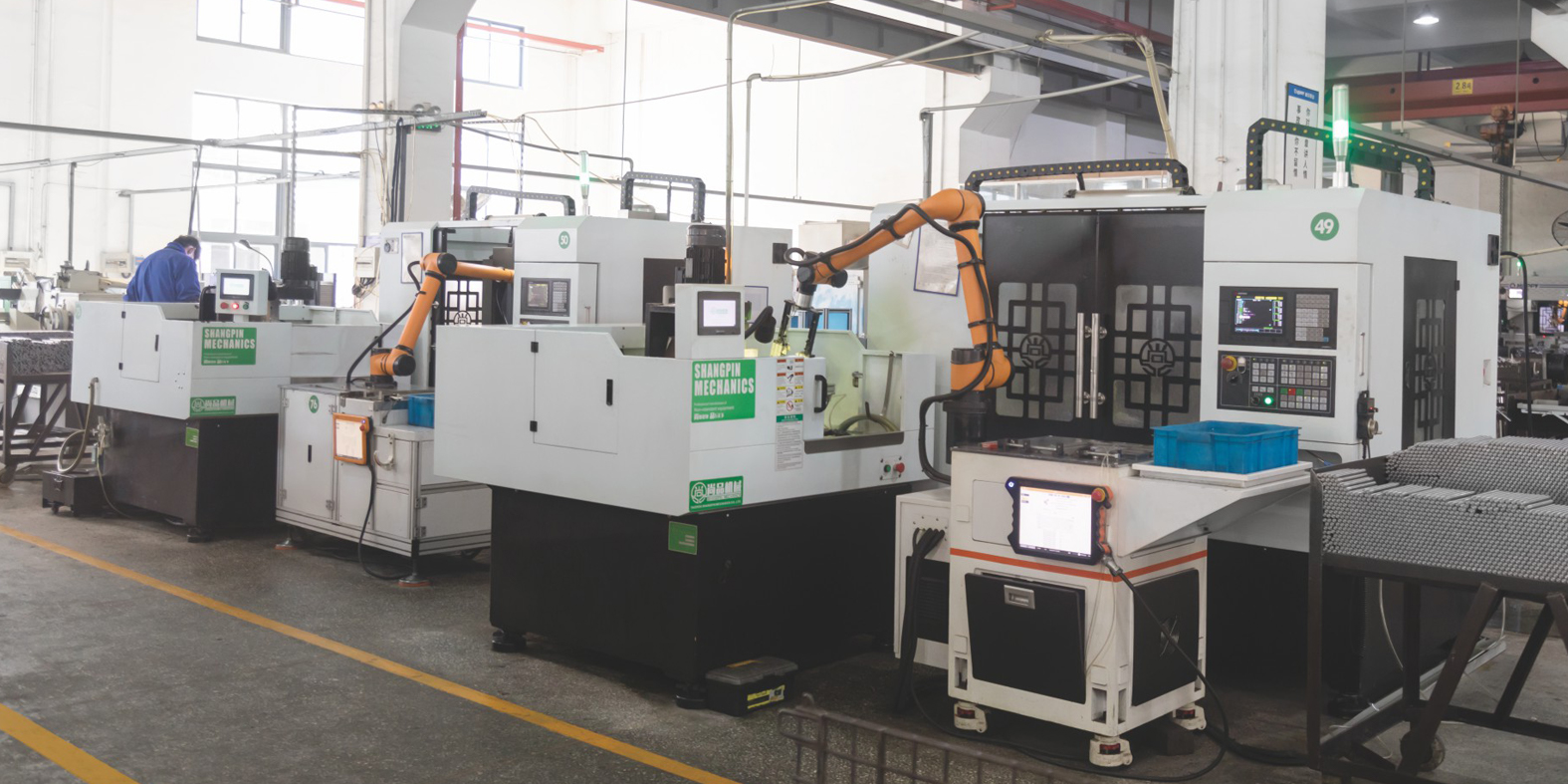
Production line at Zhejiang Happy Pump Industry Co., Ltd. Around 4,000,000 pieces are produced per year across the pump and motor range.
Have Questions or Need More Details?
Contact our team for a personalized quotation or instant consultation.
Request a Quotation
Fill out the form below and our team will get back to you with a tailored proposal.
WhatsApp Direct Chat
Prefer to chat in real-time? Message us on WhatsApp for instant assistance & quick answers.
- Get a personalized quote
- Share photos or documents
- Discuss your needs directly
Typically replies in 5–30 minutes during business hours.