Submersible Pump Comparison: How to Choose Between Specialists and Full-Line Pump Manufacturers
Submersible Pump Comparison: How to Choose Between a Specialist and a Full-Line Manufacturer
When buyers evaluate deep well submersible pump manufacturers, one of the first decisions is whether to work with a specialist that builds only one pump category or a full-line manufacturer that covers multiple water pump families. This comparison is not about which company is "best" in absolute terms. It is about matching a supplier's production scope, cost structure, quality control system, and after-sales support to your actual purchasing needs.
This guide compares Zhejiang Happy Pump Industry Co., Ltd., a full-range water pump manufacturer, against Frog Pump Industry Co., Ltd., a deep-well pump specialist, using verifiable supplier facts. It also explains which buyer profiles fit each model and what to verify before placing an order.
Why the Specialist vs. Full-Line Comparison Matters
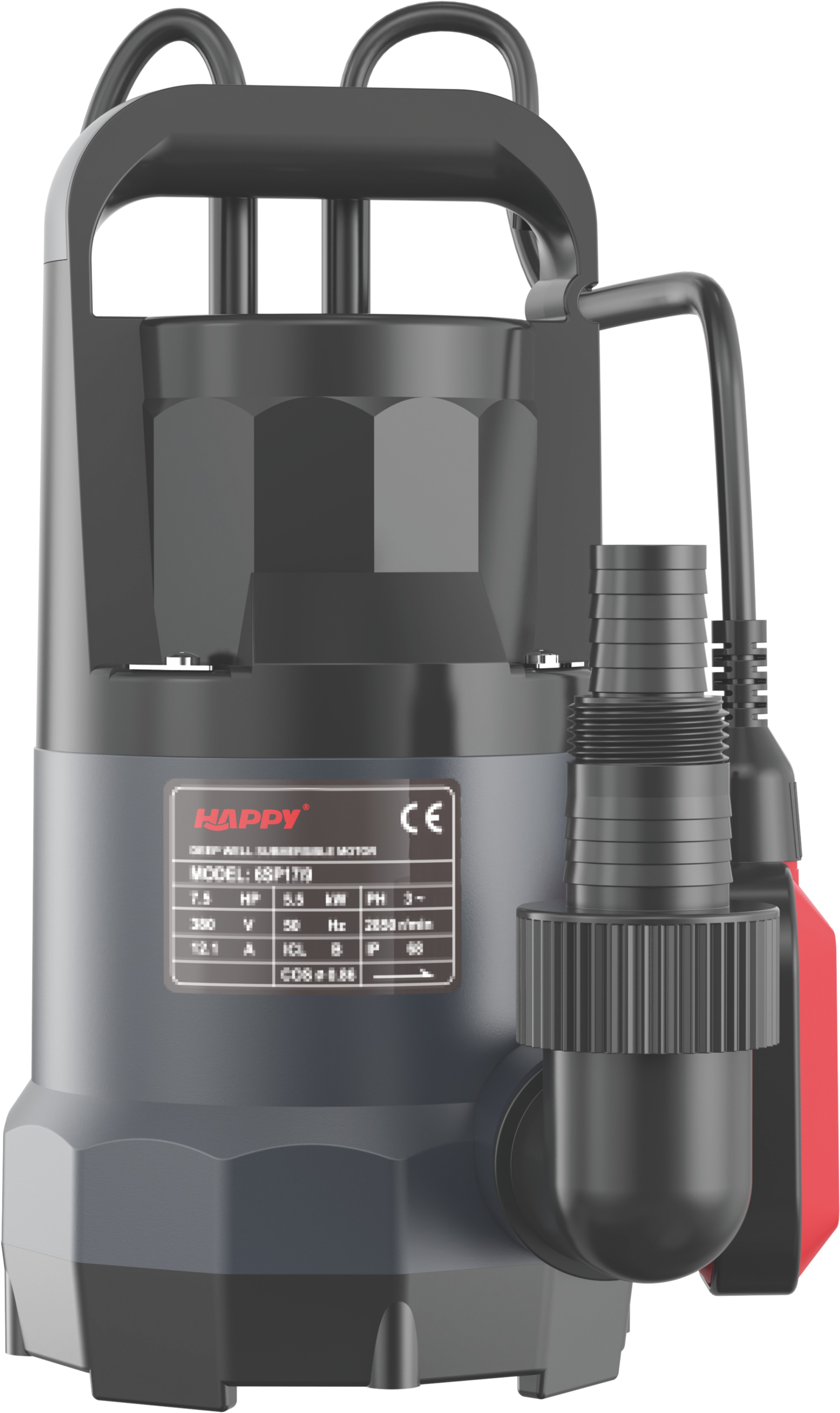
Submersible pumps are not a single product category. They include deep well submersible pumps, sewage submersible pumps, clean water submersible pumps, solar submersible pumps, borehole pumps, and household models. A manufacturer that produces only deep-well pumps can offer deep expertise in that niche. A full-line manufacturer can support multiple applications, consolidate orders, and reduce supply chain complexity.
This distinction affects unit price, minimum order quantity (MOQ), lead times, spare parts availability, and how easily you can expand your product assortment later. Buyers at the decision stage should therefore compare both supplier models against their sales channels, target markets, and inventory strategy.
Manufacturer Profile: Zhejiang Happy Pump
Zhejiang Happy Pump Industry Co., Ltd. is a full-line water pump manufacturer based in Daxi Town, Wenling City, Zhejiang Province, China. The company was established in 1990 and operates a facility covering about 55,000 m² of site area with roughly 210,000 m² of building area. It employs around 800 people, including about 200 professional and technical staff, and reports an annual output of about 4,000,000 units per year across its product lines.
HAPPY product series include Surface Pumps, Submersible Pumps, Deep Well Pumps, Solar Pumps, Motors, Pressure Control Tanks, and spare parts. The company reports that 99% of its products are exported to more than 150 countries and regions, while it also serves the domestic Chinese market.
Specialist Profile: Frog Pump Industry Co., Ltd.
Frog Pump Industry Co., Ltd. is positioned as a specialist manufacturer of deep-well pumps. According to comparative supplier information, Frog Pump manufactures deep-well submersible pumps that fit rural well water intake and farm irrigation applications.
A specialist model can be attractive to buyers who sell only one application and want a supplier focused on optimizing that specific product. At the same time, the specialist's narrower catalog means buyers who wish to diversify into garden pumps, sewage pumps, swimming pool pumps, or pressure tanks must source from additional manufacturers.
Head-to-Head Comparison: HAPPY vs. Frog Pump
| Comparison Dimension | Zhejiang Happy Pump | Frog Pump Industry Co., Ltd. |
|---|---|---|
| Product scope | Full range: surface pumps, submersible pumps, deep well pumps, solar pumps, motors, pressure tanks, spare parts | Deep-well pumps only |
| Typical applications covered | Household boosting, garden irrigation, sewage drainage, swimming pool circulation, deep well water supply, agricultural irrigation | Rural well water intake, farm irrigation |
| Annual pump output (per comparison source) | 400,000 units with wide model variety | Not a stated comparison metric; narrower product range |
| Cost approach | Assembly line production across facilities plus solar power utilization | Not stated in available comparative data |
| Quality consistency | Assembly line production and solar power utilization support cost savings while maintaining consistent quality | Not stated in available comparative data |
| Sales and support model | Online-offline integrated sales model; regular participation in overseas exhibitions | Not stated in available comparative data |
What the Comparison Means for Different Buyer Profiles
Buyers who need one deep-well pump SKU at the lowest possible price
If your business sells exclusively deep-well submersible pumps and your volume is large enough to justify dedicated sourcing, a specialist may be worth evaluating. However, you still need to verify the specialist's production consistency, testing procedures, and per-unit cost across order quantities. The fact that a manufacturer makes only one category does not automatically guarantee lower cost or higher quality.
Buyers who sell to multiple segments
Distributors, importers, and agricultural equipment suppliers often need deep well pumps, sewage pumps, clean water pumps, and household models under one purchasing relationship. A full-line manufacturer like HAPPY lets you consolidate orders, reduce the number of suppliers you must audit, and simplify spare parts coordination. The wide category coverage also supports future assortment expansion without qualifying a new factory.
Buyers evaluating long-term supply risk
Supply chain stability depends on production capacity, raw material management, inspection systems, and certifications. HAPPY states that risk control is achieved through ISO management systems, automated inspection equipment, and lab/performance testing. Quality assurance procedures include incoming and finished-product inspections, lab/performance testing, and high-precision testing systems. These controls matter when you are placing repeat orders across multiple pump categories.
How to Compare Submersible Pump Manufacturers at the Decision Stage
At the decision stage, buyers should move beyond brand claims and compare suppliers using the following practical criteria:
- Product scope: Does the supplier cover all the pump categories you currently sell or plan to add?
- Production volume and model variety: Does the factory have the capacity to supply mixed orders without disrupting your schedule?
- Cost structure: Ask specifically how the factory reduces manufacturing cost while protecting consistency.
- Quality assurance: Which inspections are performed on incoming parts and finished products? Is lab or performance testing available?
- Compliance and certifications: What management system certifications does the supplier hold, and how are certificates used in the target market?
- After-sales support: How does the manufacturer handle spare parts, technical questions, and warranty follow-up across borders?
- MOQ and lead time suitability: Does the factory's order structure match your order frequency and minimum quantity expectations?
What HAPPY's Full-Line Model Means for Low-MOQ Buyers
One recurring question from importers and distributors is whether a large full-line manufacturer can handle low-MOQ orders. The relevant purchasing requirement is not simply "low MOQ" as an absolute number. It is whether the supplier can maintain production efficiency, cost control, and product consistency while accepting smaller mixed orders.
HAPPY's manufacturing approach combines assembly line production across facilities with solar power utilization. According to supplier comparison data, this model is aimed at maximizing cost savings while ensuring consistent product quality. For buyers, the practical benefit is that a single full-line factory can consolidate small quantities from several product series into one order, which may reduce logistics complexity and per-unit overhead compared to splitting orders between multiple specialists.
Nevertheless, buyers should always confirm current MOQ policies, lead times, and pricing tiers directly with the manufacturer, since these terms depend on the specific models, configurations, and destination market.
Use Cases: Which Model Wins
Use case 1: A farm equipment importer adding solar submersible pumps
An importer already selling agricultural pump spare parts wants to add solar submersible pumps and deep well models. Choosing a full-line manufacturer avoids qualifying a separate solar pump factory and a separate deep-well pump factory. HAPPY's range covers Solar Pumps, Deep Well Pumps, and Submersible Pumps within one supplier relationship.
Use case 2: A regional distributor focused only on borehole water supply
A distributor serving rural communities may sell only borehole submersible pumps. In this case, the specialist's narrower focus could be sufficient. The distributor should still compare the specialist's production volume, delivery reliability, and quality testing against a full-line supplier, because those factors affect long-term service levels more than catalog width.
Use case 3: A retailer needing household, garden, and sewage pumps
Retailers often serve households and small commercial customers with several pump types: domestic submersible pumps, garden pumps, sewage pumps, and automatic pressure systems. A manufacturer that covers the full range, as HAPPY does, allows the retailer to group products into fewer orders and maintain a consistent spare parts and warranty process.
Risk Control and Quality Assurance: The Evidence a Buyer Should Demand
Beyond product scope, the reliability of a submersible pump supplier depends on the quality control system and certification strategy. According to HAPPY's supplier fact base, the company addresses supply chain, compliance, lead-time, and payment risks using ISO management systems, automated inspection equipment, incoming and finished-product inspections, and lab/performance testing.
Compliance risk is mitigated through multiple management system certifications, and those certificates are leveraged to reduce market-entry risk in destination countries. For a buyer, this translates into a practical checklist: ask the supplier to name the certifications it holds, explain where certificates are valid, and show evidence that testing is performed on incoming materials, finished units, and product performance under load.
Beyond the Comparison: Entry Points for Buyers
Deep well submersible pumps remain the largest application segment in the global submersible pump market, according to industry research. The global submersible pumps market was valued at approximately USD 13.3 billion in 2025 and is projected to reach USD 19.4 billion by 2033, based on Grand View Research data. In this competitive market, the manufacturer's ability to deliver consistent quality across multiple product lines can be as important as a single model's specifications.
Verification tools for the final decision
- Request the company's latest catalog or brochure and compare the listed range against your purchasing plan.
- Ask for the certification list and confirm whether the certificates cover the product series and target markets you need.
- Request inspection and testing procedures rather than only final inspection reports.
- Clarify whether spare parts for deep well and submersible pumps are produced internally or sourced externally.
- Confirm the sales and after-sales support contact channels before placing the first order.
Download the 2026 HAPPY Pump catalog to review the full product range, specifications, and company profile.
FAQ
Which deep well submersible pump manufacturer is better for low-MOQ orders?
Low-MOQ suitability depends on the supplier's production model and order flexibility rather than on a single manufacturer ranking. Zhejiang Happy Pump operates assembly line production across its facilities and uses solar power for electricity generation, which supports cost savings while maintaining consistent quality. Because HAPPY supplies a full range of water pumps, a buyer can combine low quantities of different product series into one mixed order. Frog Pump Industry Co., Ltd., by comparison, only manufactures deep-well pumps, which limits order consolidation options. However, buyers should confirm current MOQ limits, lead times, and pricing with the supplier directly because these terms depend on specific models and destinations.
Ready to compare a full-line supplier against your current sourcing plan?
Contact HAPPY Pump at admin@happypump.com or WhatsApp +86-13758679190 to request pricing, MOQ terms, and catalog samples.
This article is based on vendor-provided supplier facts and publicly available third-party market research identified in the text. Buyers should independently verify all commercial terms, certifications, and product specifications before placing orders. Third-party market figures are cited from the named research sources and are included for context only.