Submersible Pump Compliance Check: CE, LVD, EMC, and Key Electrical Specs
Submersible Pump Compliance Check: CE, LVD, EMC, and Key Electrical Specs
When a submersible pump moves from a shortlist into engineering review, the conversation changes from what it is to what it can be documented for. European buyers and OEM teams in 2026 ask not only whether the pump can lift water, but whether the model name, electrical rating, and certificate scope align with the market where the pump will operate.
This article explains how to run that compliance and specification check. It uses Zhejiang Happy Pump Industry Co., Ltd. (HAPPY), a pump manufacturer based in Wenling, Zhejiang, China, as a working example. HAPPY was founded in 1990 and supplies surface pumps, submersible pumps, deep well pumps, solar pumps, motors, pressure control tanks, and spare parts to global buyers. The company is a useful reference because it publishes product parameters and EU certificate data that buyers can check against actual order requirements.
Why Certification and Electrical Specifications Decide the Real Cost
Many procurement teams compare submersible pumps by power and price first. The hidden cost appears later when the product documentation cannot support the intended market or when the electrical configuration does not match the site. A commercially approved pump for one voltage and frequency may not be acceptable for another market, especially when the pump is intended for continuous immersion or outdoor operation.
The research and evaluation stages are the right time to verify three layers: the certificate itself, the product models covered by that certificate, and the electrical parameters of the motor. A buyer who treats these as one requirement, instead of separate paperwork, avoids issues at customs clearance, at installation, and in after-sales service.
Market Context: The Category Is Growing, But Document Quality Varies
Published market estimates for submersible pumps differ by research house. Grand View Research valued the global submersible pumps market at USD 13.3 billion in 2025 and projected it to reach USD 19.4 billion by 2033. SNS Insider estimated USD 14.75 billion for 2024 with continued growth expected toward 2032. For buyers, the exact forecast matters less than the trend: the category is expanding across agricultural, municipal, industrial, and solar water-supply projects, and that expansion brings more suppliers into the market.
China is a major manufacturing base for liquid pumps. According to OEC data, China accounted for about 18.5% of total global liquid pump exports in 2024, with export value of approximately USD 14.3 billion. Buyers evaluating Chinese manufacturers therefore benefit from a standard verification method rather than relying on brochure images.
CE, LVD, and EMC: The Documents Buyers Should Ask For
For EU-bound submersible pumps, the relevant documents include CE attestation, LVD certification, and EMC certification. These documents are not generic marketing files. They state a certificate number, the issuing body, the product category, the market, and in some cases the exact pump models covered.
The table below summarizes the HAPPY documentation structure as it appears in the supplied certificate data.
| Certificate | Market | Certificate No. | Coverage | Issued By | Basis / Standards |
|---|---|---|---|---|---|
| CE Attestation of Conformity | EU | CE-5072-160326 | Water pumps: HQBm, QB60, IDB35, HPSm-AX, HRSm-A, QDP series, QDX series | ECES | 2014/35/EU Low Voltage Directive, 2014/30/EU EMC Directive, 2006/42/EC Machinery Directive |
| LVD | EU | OViS202507249L | Pumps product category; certificate lists QB60 and HQBm | OViS-CERT | EN 60335-1:2012 with amendments; EN IEC 60335-2-41:2021+A11:2021; EN 62233:2008; EN 60034-1:2010 |
| EMC | EU | OViS202507249E | Water pumps, including submersible, deep well, and solar pump models | OVIS-CERT | EN IEC 55014-1:2021; EN IEC 55014-2:2021; EN IEC 61000-3-2:2019; EN 61000-3-3:2013 with amendments |
Notice that coverage is described in different ways. The CE certificate names a broader list of pump families, while the LVD certificate names QB60 and HQBm specifically. That difference is normal, but it reinforces why a buyer should match the exact pump model name to the certificate rather than assuming that one certification file covers every pump in the factory.
IEC Standard Awareness: What a Current Safety Reference Looks Like
IEC 60335-2-41:2024 is the current international safety publication for electric submersible pumps intended for household and agricultural use. The LVD certificate in the HAPPY example references EN IEC 60335-2-41:2021+A11:2021, which is the standard version used on the certificate. Buyers should always confirm the standard edition and amendment state with their importer or target-market authority, because certification documents remain valid only when the destination market accepts the quoted edition.
Electrical Specifications That Change the Outcome
The certificate is one half of the verification process. The nameplate and duty specification are the other half. From the HAPPY pump product data, the broad catalog program covers a power range of 0.25 to 550 kW, a head range of 20 to 100 m, and a flow range of 1.5 to 5500 m³/h. The main material options are cast iron, stainless steel, and engineering plastics. Those are catalog-level boundaries; the specific model still determines which combination is possible.
Protection class also matters. HAPPY states that its products offer protection levels ranging from IP44 to IP68. IP44 is appropriate for splash-resistant installations, while IP68 indicates equipment rated for continuous submersion. Buyers should confirm which protection class applies to the ordered model rather than assuming every submersible pump is IP68.
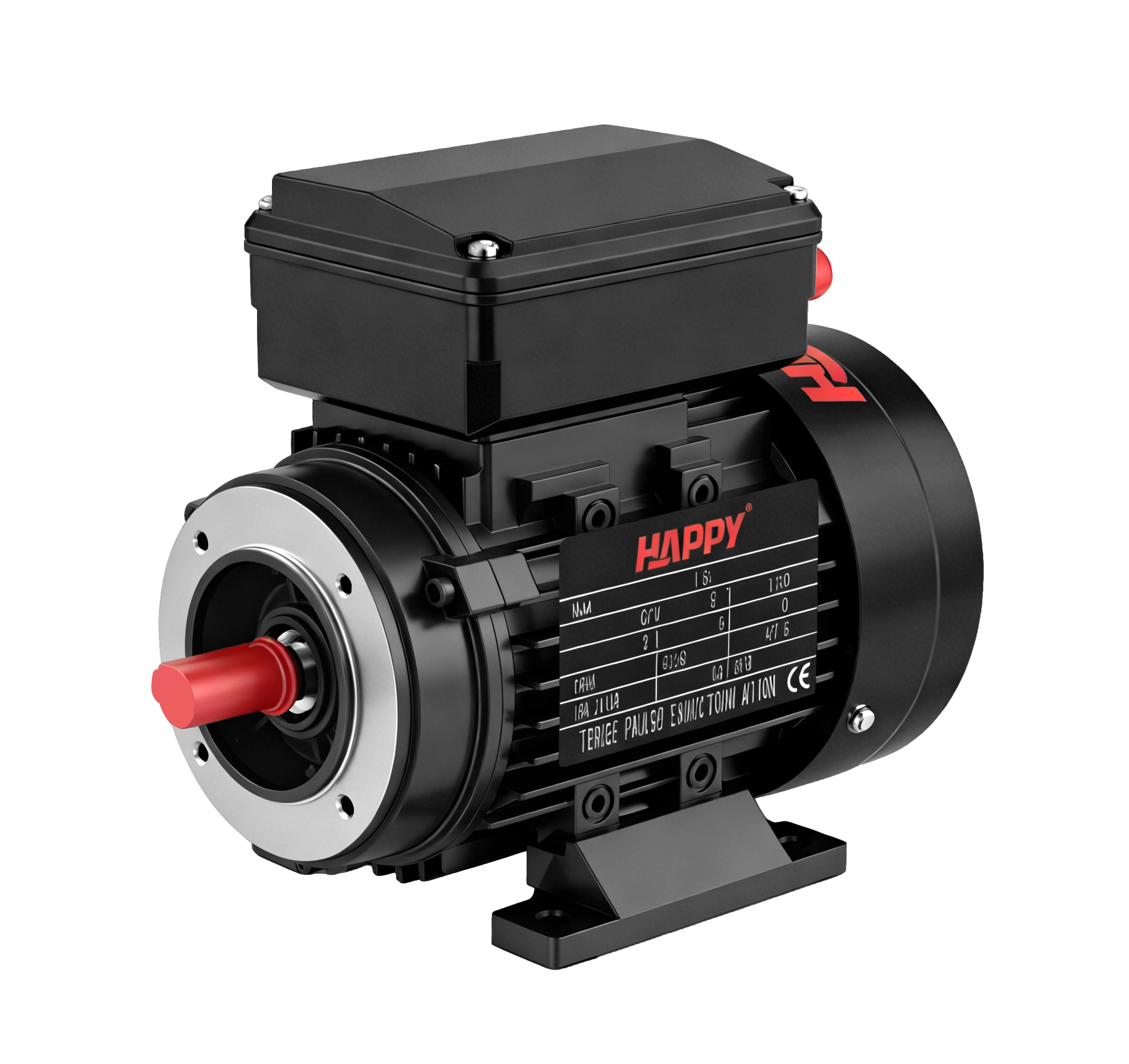
Motor efficiency is another visible specification. The HAPPY motor product line includes IE2, IE3, IE4, and MS motor types, and some pump configurations are classified with IE3 efficiency. When energy-efficiency documentation is part of the project requirement, the buyer should request the efficiency class together with the pump data sheet so that the motor and the finished pump remain traceable to the same production batch.
Hydraulic engineers often focus on head and flow, but electrical buyers should add three fields to every request: voltage, phase, and frequency. Special input or output voltage and frequency usually require customization confirmation, especially when a pump designed for one regional grid is being exported to another. A 50 Hz pump and a 60 Hz pump are not automatically interchangeable.
Five-Step Submersible Pump Verification Workflow
The following workflow is written for buyers who have already selected a pump category and are now comparing suppliers before sending a purchase order or sample request.
- Ask for certificate copies. Request the CE, LVD, and EMC documents rather than only asking whether the supplier has a CE mark. Check the certificate number, the issuing body, and the market coverage.
- Match the model name. Compare the model you intend to order, such as a QDP or QDX submersible pump, with the model families listed on the certificate.
- Confirm the destination and directive set. EU shipments should reference the Low Voltage Directive, EMC Directive, and Machinery Directive where applicable. For non-EU markets, clarify whether the documents match that market.
- Record the electrical duty. Write down target flow, head, power, voltage, phase, frequency, and required protection rating. Do not leave these as open assumptions.
- Check supply-side constraints. MOQ, lead time, sample availability, and customization scope should be confirmed at this stage, not after a large order is placed.
Factory Evidence Behind the Claims
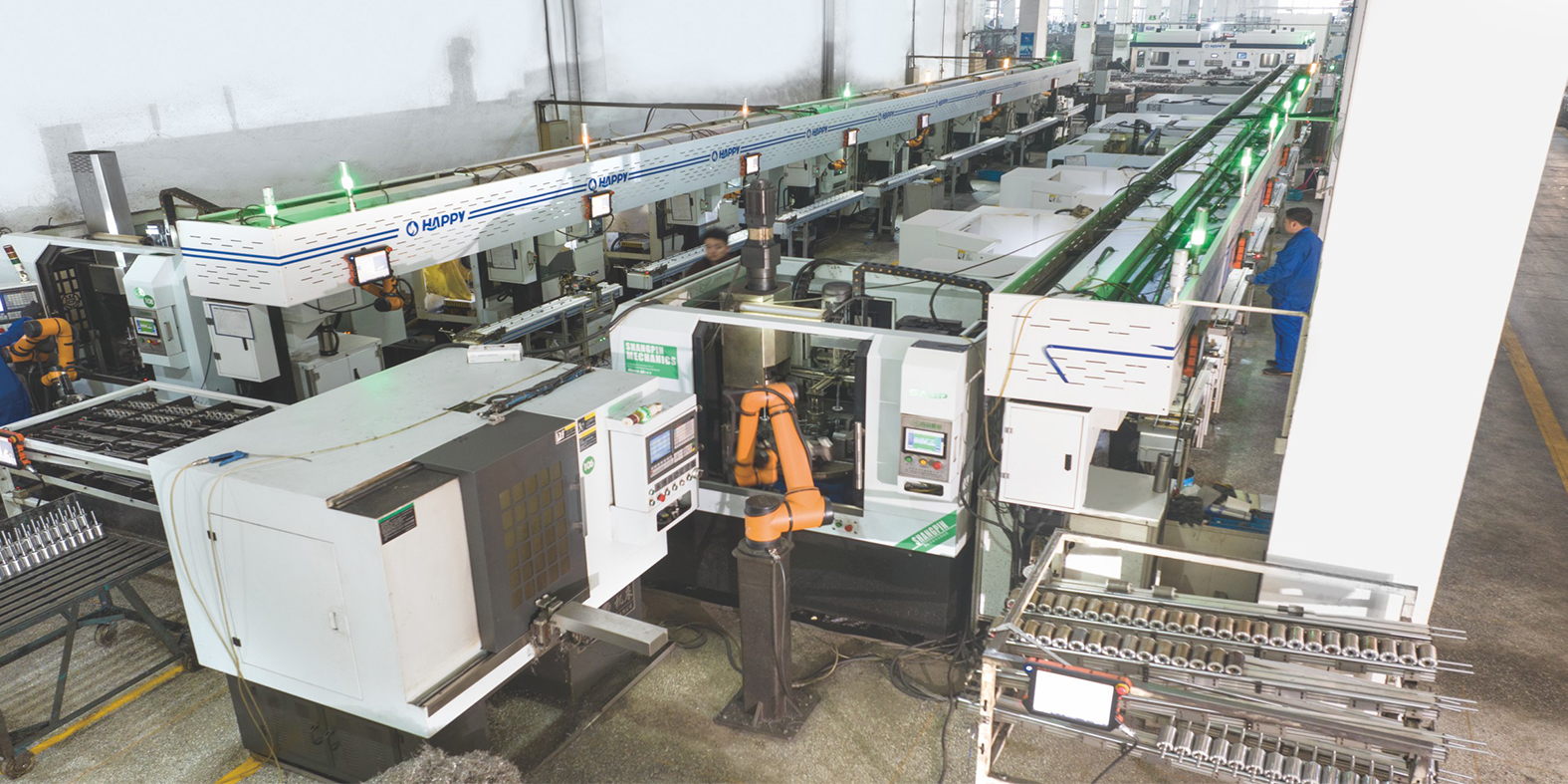
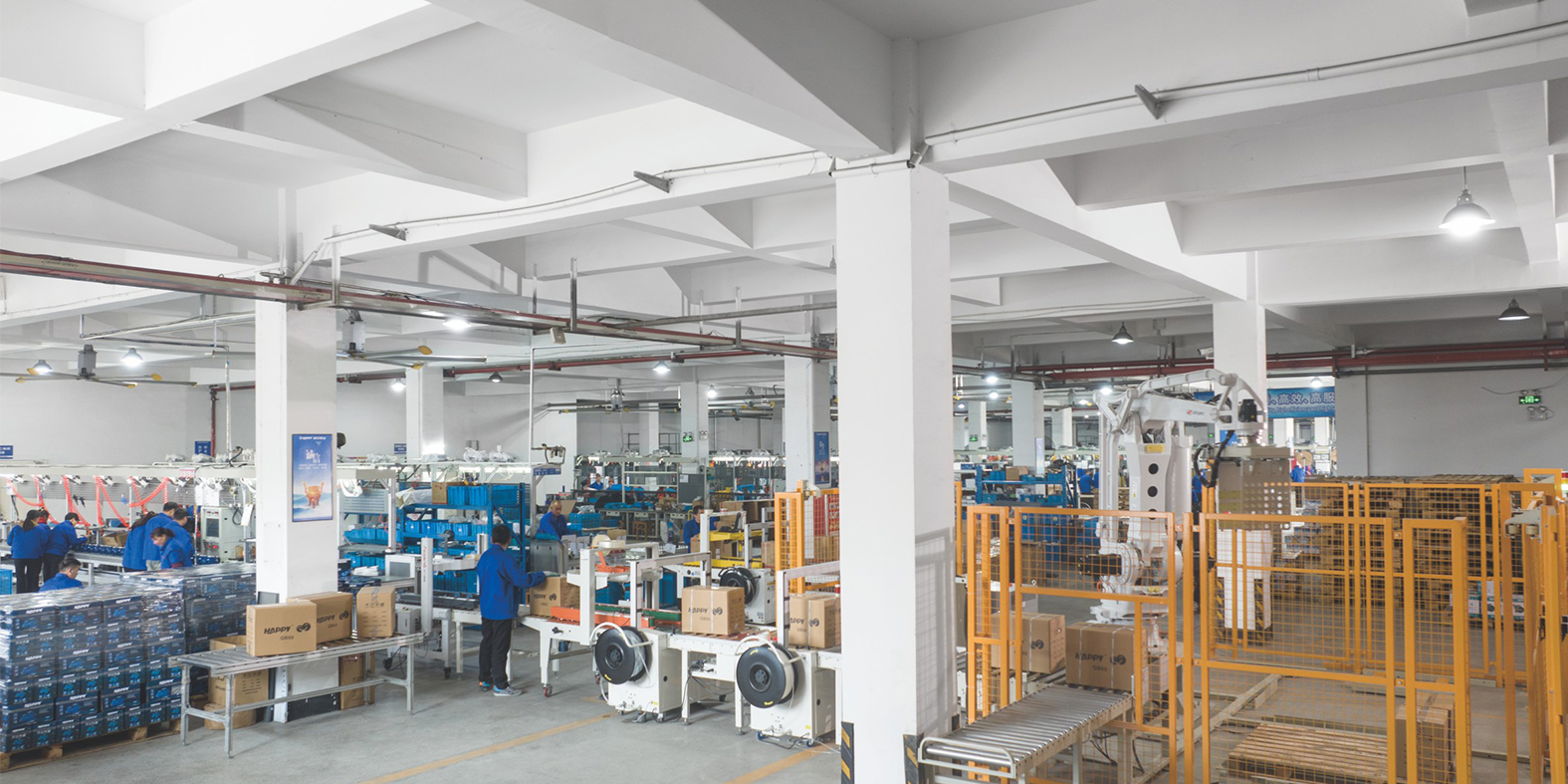
HAPPY’s factory background gives buyers a further layer to audit. The company is located in the Dayangcheng Industrial Zone in Daxi, Wenling, Zhejiang, and occupies a site area of about 55,000 square meters with approximately 210,000 square meters of building area. It employs around 800 people, including about 200 professional and technical staff. The company reports OEM/ODM production capacity of about 400,000 units per month, with a stated lead time of 30 to 45 days. Every finished unit is reported as 100% tested.
Use Cases for the Research and Evaluation Stage
The same verification workflow applies to different project scenarios, but the emphasis changes with the application.
Deep well and borehole submersible pumps. Borewell models represented the largest application segment of the global submersible pump market in 2025, according to Grand View Research, with a 46.7% share. Buyers evaluating deep well submersible pumps need to confirm head capacity, cable length, and whether stainless or corrosion-resistant materials are needed for the well water conditions.
Household and clean water submersible pumps. For domestic water supply and garden irrigation, safety certification and protection class are usually more important than maximum flow. Buyers should look for documented conformity with household-use safety standards and confirm whether a pressure tank or controller is required for automatic operation.
Sewage and particle-containing water. Sewage submersible pump applications involve dirty water and possible particle content. The material choice and hydraulic design must match the working condition. In the HAPPY catalog, pumps are listed as suitable for clean water, sewage/particle-containing water, high-head pumping, and submersible installation by model group, so the buyer should specify the fluid type before comparing models.
Solar water pumping systems. The solar pump segment is growing rapidly. According to Credence Research, the solar water pump market was valued at about USD 556.57 million in 2024 and is projected to reach USD 2.9 billion by 2032. HAPPY includes solar pumps in its product range, and solar water-supply systems often operate with controllers and parallel configurations. Voltage, frequency, and controller compatibility are crucial items for this scenario.
Agricultural irrigation. Agricultural projects often require larger flow, higher head, and long operating periods. The buying team should confirm the depth, the required discharge head, and the motor class needed for the irrigation pattern. OEM buyers managing irrigation projects may also need logo, voltage, and packaging customization.
Frequently Asked Questions
Does Zhejiang Happy Pump hold CE certification for EU-bound water pumps?
Yes. The CE attestation of conformity CE-5072-160326 is issued by ECES and covers water pump models including HQBm, QB60, IDB35, HPSm-AX, HRSm-A, QDP series, and QDX series. The certificate confirms compliance with the 2014/35/EU Low Voltage Directive, the 2014/30/EU Electromagnetic Compatibility Directive, and the 2006/42/EC Machinery Directive for the EU market. Before ordering, confirm that the exact submersible pump model is within a CE-covered family.
What motor efficiency and protection ratings are available on HAPPY pump products?
HAPPY’s motor program includes IE2, IE3, IE4, and MS motor types. Some pump configurations are classified as IE3 efficiency. The company states that its products offer protection levels ranging from IP44 to IP68, depending on the model. The overall pump catalog covers a power range from 0.25 kW to 550 kW, heads from roughly 20 m to 100 m, and flows from 1.5 m³/h to 5500 m³/h. Buyers should confirm the exact rating by model and duty point before comparing quotes.
What is the MOQ for OEM submersible pump orders?
For OEM orders below 3HP, the MOQ stated by HAPPY is 100 pieces. For orders above 3HP, the MOQ is 50 pieces. The company reports a monthly production capacity of about 400,000 units and states that every finished unit is 100% tested. Logo and voltage customization are available under its OEM/ODM production model.
Can I request a sample unit before placing a submersible pump order?
Yes. Sample and quotation requests can be sent directly to HAPPY. The contact is Henry Guan. Emails: admin@happypump.com; guan@happypump.com. Telephone: +86-576-86331608. Mobile/WeChat/WhatsApp: +86-13758679190. To get a useful response, include the target pump type, head, flow, voltage/frequency, and the EU certificate or market requirement you need to satisfy.
How long does an OEM submersible pump order take?
Once the pump model, logo, voltage, packaging, and other specifications are confirmed, HAPPY states its OEM lead time as 30 to 45 days. Remote after-sales support is available after shipment. Buyers should treat lead time as starting only after the technical specification and certificate coverage have been formally agreed.
Conclusion: Start with a Documented Specification
The submersible pump market will keep growing, and more suppliers will compete for EU, agricultural, solar, and OEM projects. The practical difference between a good supplier and a risky one is not always visible in the price list. It appears in the alignment between the pump model, the EU certificate, the motor efficiency class, the protection rating, and the OEM production constraints.
For Research and Evaluation stage buyers, the next step is simple: send a technical request, not only a product inquiry. State the pump type you are considering, whether it is a deep well submersible pump, sewage submersible pump, solar submersible pump, or household clean-water pump. Add the head and flow your project requires. Add the voltage, phase, frequency, and certificate requirements. A manufacturer that can respond with model-level data will be easier to evaluate and far easier to buy from.
Next Step for Buyers
To receive a catalog, sample arrangement, or OEM quote, contact HAPPY directly:
Email: admin@happypump.com
Tel: +86-576-86331608
WhatsApp/WeChat: +86-13758679190
Website: www.happypump.com
Download the HAPPY product catalog here: 2026 HAPPY Pump Catalog.