
Submersible Pump: Types, Selection Guide, and What to Know Before You Buy
Submersible Pump Buyers Guide: Types, Applications and Selection Checklist
A submersible pump is a pump that operates while fully submerged in the fluid it moves. Unlike surface pumps, which must be primed and installed above the water level, a submersible pump pushes liquid upward through a discharge pipe, which makes it a common choice for deep wells, boreholes, drainage, sewage handling, irrigation, and many pressure-boosting tasks.
If you are researching submersible pump options for the first time, the category can feel broad. There are deep well submersible pumps, sewage submersible pumps, solar submersible pumps, and many more. This guide explains the main types, typical applications, and the technical points that matter when comparing manufacturers or requesting a quote.
What Is a Submersible Pump?
A submersible pump integrates the pump body and the electric motor into a single sealed unit that is lowered directly into the water or liquid being pumped. When the motor is switched on, it drives the impeller to push the liquid through a discharge pipe to the surface. Because the pump is submerged, it does not rely on suction lift and avoids many priming problems associated with above-ground pumps.
Submersible pumps are widely used in water supply, irrigation, drainage, sewage treatment, industrial circulation, and solar-powered systems. Domestic and agricultural versions are often single-phase units, while larger three-phase units serve municipal and industrial projects.
Global Market Context and Why It Matters
The submersible pump market is one of the largest segments in the pump industry. Grand View Research valued the global submersible pump market at USD 13.3 billion in 2025, with a projection to USD 19.4 billion by 2033. SNS Insider reported a similar scale: USD 14.75 billion in 2024, expected to reach USD 23.07 billion by 2032. This growth reflects rising demand for groundwater extraction, agricultural irrigation, municipal water infrastructure, and sewage management.
Asia Pacific holds a significant position in this market, with Fortune Business Insights reporting a 39.72% regional share in 2025. China also plays a central role in global pump supply: OEC data shows that China accounted for 18.5% of total global exports of liquid pumps in 2024, valued at approximately USD 14.3 billion.
For buyers, these numbers indicate that the supply chain is broad, but they also explain why supplier evaluation is important. A deep well submersible pump built for agricultural or residential use must match the specific flow, head, motor type, and installation conditions of the project.

Deep well submersible pump — designed for borehole and agricultural water supply applications.
Main Types of Submersible Pumps
Submersible pumps are usually named according to application, installation method, or power source. The most common categories include the following.
Deep Well Submersible Pumps and Borehole Submersible Pumps
Deep well submersible pumps, also called borehole submersible pumps, are long, narrow pumps designed to fit inside drilled wells with limited diameter. They are commonly used for groundwater extraction, household water supply, and agricultural irrigation.
According to Grand View Research, the borewell segment held the largest market share of 46.7% in the global submersible pump market in 2025, reflecting the widespread use of boreholes in agriculture and drinking-water supply. Grand View Research also estimated that the global agricultural pump market revenue from electric submersible pumps reached USD 2,515.6 million in 2025.
Clean Water Submersible Pumps
Clean water submersible pumps are used for clear or slightly cloudy water with no solid particles. Typical jobs include garden watering, rainwater collection, water transfer, residential supply, and boosting water from tanks or wells. They are not designed for sewage or water containing abrasive solids.
Sewage Submersible Pumps and Cutting Submersible Sewage Pumps
Sewage submersible pumps move wastewater, effluent, and water containing solid or fibrous particles. They often have wider flow channels or an integrated cutting mechanism to prevent clogging. Cutting submersible sewage pumps are a subset with a cutter system that breaks down solids before they enter the volute.
Grand View Research estimates that non-clog and sewage submersible pumps represent approximately 25% of the total global submersible pump market share. These pumps serve residential drainage, municipal sewage, and industrial wastewater applications.
Solar Submersible Pumps
Solar submersible pumps are designed to run on photovoltaic solar power, either with or without battery storage. They are important for off-grid irrigation, livestock water supply, and rural water access. The solar pump market is growing rapidly, with Credence Research projecting growth from USD 556.57 million in 2024 to USD 2.9 billion by 2032, a CAGR of 22.95%.
Household and Agricultural Submersible Pumps
Household submersible pumps are compact units used mainly for domestic water supply, garden irrigation, and small drainage tasks. Agricultural submersible pumps deliver higher flow capacity for irrigation and field water supply. Many are single-phase for residential use; larger farms and municipal systems often choose three-phase units for reliability and higher power.
Key Technical Parameters to Evaluate
When evaluating a submersible pump, buyers and engineers should compare four core parameters: power, flow, head, and protection rating.
| Parameter | What It Means | Typical Range to Check |
|---|---|---|
| Power (kW/HP) | The electrical power of the pump motor. Determines whether the pump can handle the required flow and pressure. | Household: 1.0 HP or less; agricultural/industrial: higher power up to hundreds of kW. |
| Flow rate (m³/h) | The volume of water the pump can deliver in one hour at a given head. | Wide range; residential pumps often 1.5–20 m³/h, large industrial units much higher. |
| Head (m) | The vertical height and pipe resistance the pump can overcome. | 20–100 m or more depending on well depth and system pressure requirements. |
| Protection rating (IP) | Ingress protection against dust and water. Submersible designs require a high rating. | IP44 for splash-proof surface units; IP68 for fully submersible operation. |
Other important considerations include the motor type, voltage/frequency, pump material, and whether the pump is single-phase or three-phase.
Single-Phase vs Three-Phase Submersible Pumps
Single-phase submersible pumps run on standard 220–240V residential power and are common in household, garden, and small agricultural applications. Three-phase submersible pumps are typically used in high-power agricultural, municipal, industrial, and high-pressure applications because three-phase motors are more efficient and stable at larger sizes.
As a general decision rule, choose single-phase for small domestic and light-duty irrigation tasks, and choose three-phase for large flow, high head, continuous-duty, or remote installations where power capacity is available.
AC Submersible Pumps and 50Hz/60Hz Compatibility
Most submersible pumps are AC submersible pumps, meaning they are driven by an alternating-current motor. Global installations are overwhelmingly electric-driven; Grand View Research reported that the electric drive segment accounted for nearly 80% of global installations in 2024, while Fortune Business Insights noted that electrical submersible pumps accounted for 74.37% of the market by drive type in 2026.
Voltage and frequency are critical compatibility points. The global market uses both 50Hz and 60Hz power systems. A 50Hz pump operating on a 60Hz supply will run faster and may exceed its design envelope; a 60Hz pump running on 50Hz supply will run slower and may not deliver rated flow or head. Before ordering, buyers must confirm the project supply voltage and frequency, as well as single-phase or three-phase configuration.
Common Applications and Use Cases
Household Water Supply and Garden Irrigation
Household submersible pumps are often installed in tanks, wells, or boreholes to supply water to homes and gardens. A submersible garden pump with automatic pressure control can maintain steady supply without continuous manual operation. These pumps handle clean water and should be selected by daily water demand and delivery head.
Agricultural Irrigation
Agricultural submersible pumps move groundwater from tube wells and boreholes to fields. They require higher flow and sometimes higher head than residential pumps. Solar submersible pumps are increasingly used in South Asia and other sunny regions, where a large share of freshwater withdrawal is used for agriculture.
Municipal and Engineering Projects
Municipal water supply and drainage projects depend on three-phase submersible pumps for raw water intake, distribution, and sewage transfer. These projects require documented performance data, reliable supply chains, and pumps built to recognized standards.
Swimming Pools and Sewage Handling
Swimming pool circulation pumps keep pool water moving and filtered. Sewage submersible pumps and cutting submersible sewage pumps manage wastewater from residential, commercial, and industrial facilities. The choice of material and impeller design depends on the liquid being pumped.
What Standards Should a Submersible Pump Comply With?
Two standards are especially relevant for submersible pumps:
- IEC 60335-2-41:2024 sets safety requirements for electric submersible pumps for household and agricultural use, covering single-phase pumps up to 250V.
- UL 778 is the primary safety standard for motor-operated water pumps in the North American market.
Buyers should also check regional efficiency classifications such as IE2, IE3, IE4, and MS motor categories, because premium-efficiency motors reduce long-term energy cost, particularly in continuous agricultural or municipal operation.
Case Reference: ZHEJIANG HAPPY PUMP INDUSTRY CO.,LTD
ZHEJIANG HAPPY PUMP INDUSTRY CO.,LTD, established in 1990, is a water pump and motor manufacturer based in Daxi Town, Wenling City, Zhejiang Province, a region known as the “Hometown of Water Pumps” in China. The company produces a product range that includes Surface Pumps, Submersible Pumps, Deep Well Pumps, Solar Pumps, Motors, Pressure Control Tanks, and spare parts, covering 11 major series with more than 500 specifications.
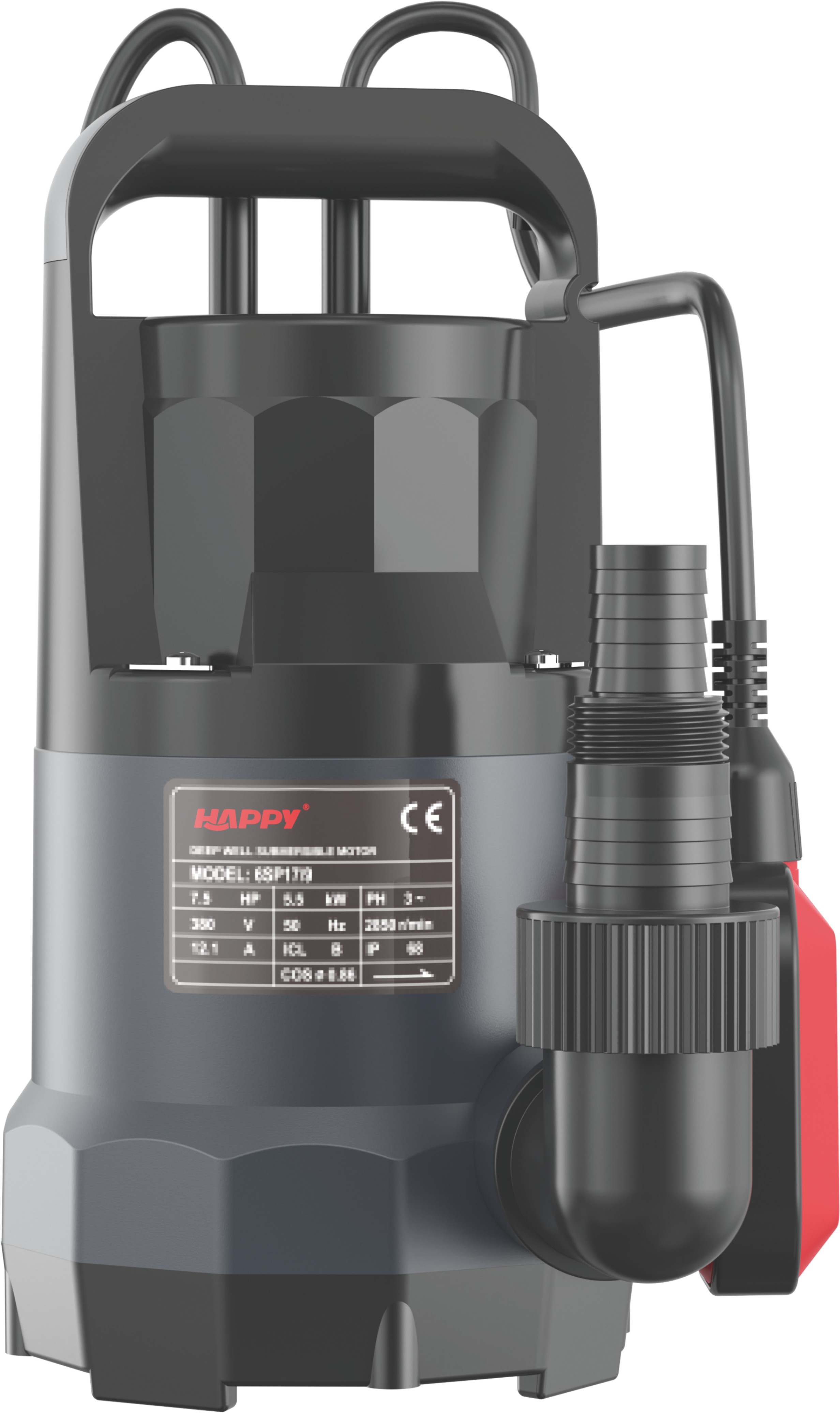
QDP-A submersible pump series.
Its pump portfolio lists model designations including HQBm, QB60, IDB35, HPSm-AX, HRSm-A, QDP series, and QDX series. Subcategories within its product line include surface pumps, submersible pumps, deep well pumps, solar pumps, centrifugal pumps, self-priming pumps, pressure tanks, swimming pool pumps, multistage pumps, and sewage pumps.
Engineering specifications across the company’s pump range span a power range of 0.25–550 kW, a head range of 20–100 m, and a flow range of 1.5–5500 m³/h, with protection ratings from IP44 to IP68. Main materials include cast iron, stainless steel, and engineering plastics, which allows the manufacturer to cover clean water, sewage, high-head, and solar-powered applications.
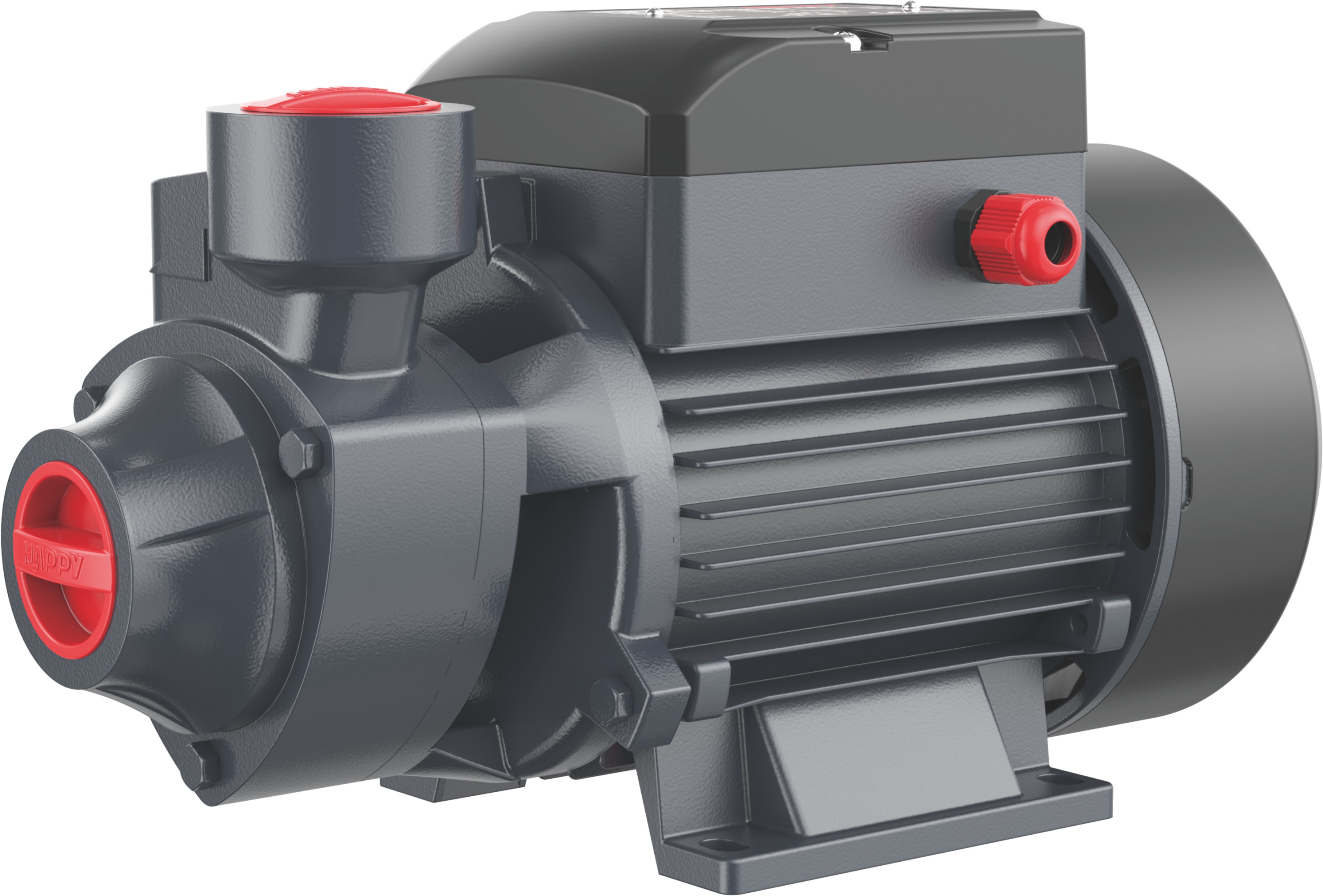
QB60 submersible pump model.
The company operates a manufacturing site covering approximately 55,000 m² with around 210,000 m² of building area. It employs about 800 people, including roughly 200 professional and technical staff, and produces approximately 4,000,000 pumps per year. Products are exported to more than 150 countries and regions.
For a procurement team, this type of factory information is relevant because it indicates whether a supplier can support volume orders, consistent quality, and custom specifications over the long term.
How to Choose a Submersible Pump Manufacturer
The right manufacturer depends on the project’s technical requirements and the buyer’s commercial priorities. The following steps are a practical way to structure a supplier evaluation.
- Define the operating conditions. Identify whether the liquid is clean water, sewage, or water with solids; determine whether the pump must be submersible in a well, pit, or tank; specify duty cycle and operating environment.
- Calculate flow and head requirements. Flow rate should cover peak demand, and head must include pumping depth plus pipe friction and discharge height.
- Confirm power supply. Determine whether the site uses single-phase or three-phase power, the exact voltage, and whether the frequency is 50Hz or 60Hz.
- Check standards and certification requirements. For household/agricultural pumps in many markets, IEC 60335-2-41 applies; for North America, UL 778 is a primary safety standard. Buyers should confirm the specific certification required in their destination market.
- Compare model ranges. Look at the manufacturer’s catalog for a model that fits the calculated duty point, with some margin for fluctuating conditions.
- Assess manufacturing and quality evidence. Factory size, production capacity, engineering staff, and testing capabilities are useful indicators of consistency.
- Request a sample or small trial order. For distributors or large projects, a sample order can verify noise level, efficiency, build quality, and installation fit before full commitment.
Selection Checklist for Submersible Pump Buyers
- Pump type matches the liquid: clean water, sewage, or solids-containing water.
- Flow rate and head meet the system duty point.
- Motor type, voltage, frequency, and phase match the site power supply.
- Protection rating is appropriate for permanent submersion (IP68 recommended for submersible duty).
- Materials are compatible with water chemistry and abrasion levels.
- Certification requirements such as IEC 60335-2-41 or UL 778 are confirmed.
- Spare parts and service support are available.
- Power consumption and efficiency level are reviewed, not only the purchase price.
Comparison: Submersible Pump Types
| Type | Typical Liquid | Main Applications | Selection Notes |
|---|---|---|---|
| Deep well / borehole submersible pump | Clean or slightly cloudy water | Wells, boreholes, groundwater supply, irrigation | Narrow diameter; multi-stage design for high head. |
| Clean water submersible pump | Clean water | Household transfer, garden watering, tank supply | Compact; often low power; check head vs distance. |
| Sewage submersible pump | Wastewater with solids | Residential, municipal, industrial drainage | Wide channels or cutter; choose material for corrosive fluids. |
| Cutting submersible sewage pump | Wastewater with fibrous solids | Clog-prone sewage lines | Cutter system reduces clogging risk. |
| Solar submersible pump | Clean water | Off-grid irrigation, rural water supply | Must match PV voltage and controller compatibility. |
| Agricultural submersible pump | Clean water / irrigation water | Field irrigation, livestock water supply | Focus on flow, head, continuous-duty capability, and three-phase options for high power. |
Industry Context: Key Competitor Landscape
Globally, Grundfos, Xylem, and KSB are recognized as top leaders in the industrial pump market, according to MarketsandMarkets. Grand View Research also identifies Zhejiang LEO Group as a key competitor and leading manufacturer in the global submersible pump industry. Tsurumi Manufacturing Co. Ltd is noted by one industry source for producing 15,000+ units annually for global distribution in 60+ countries.
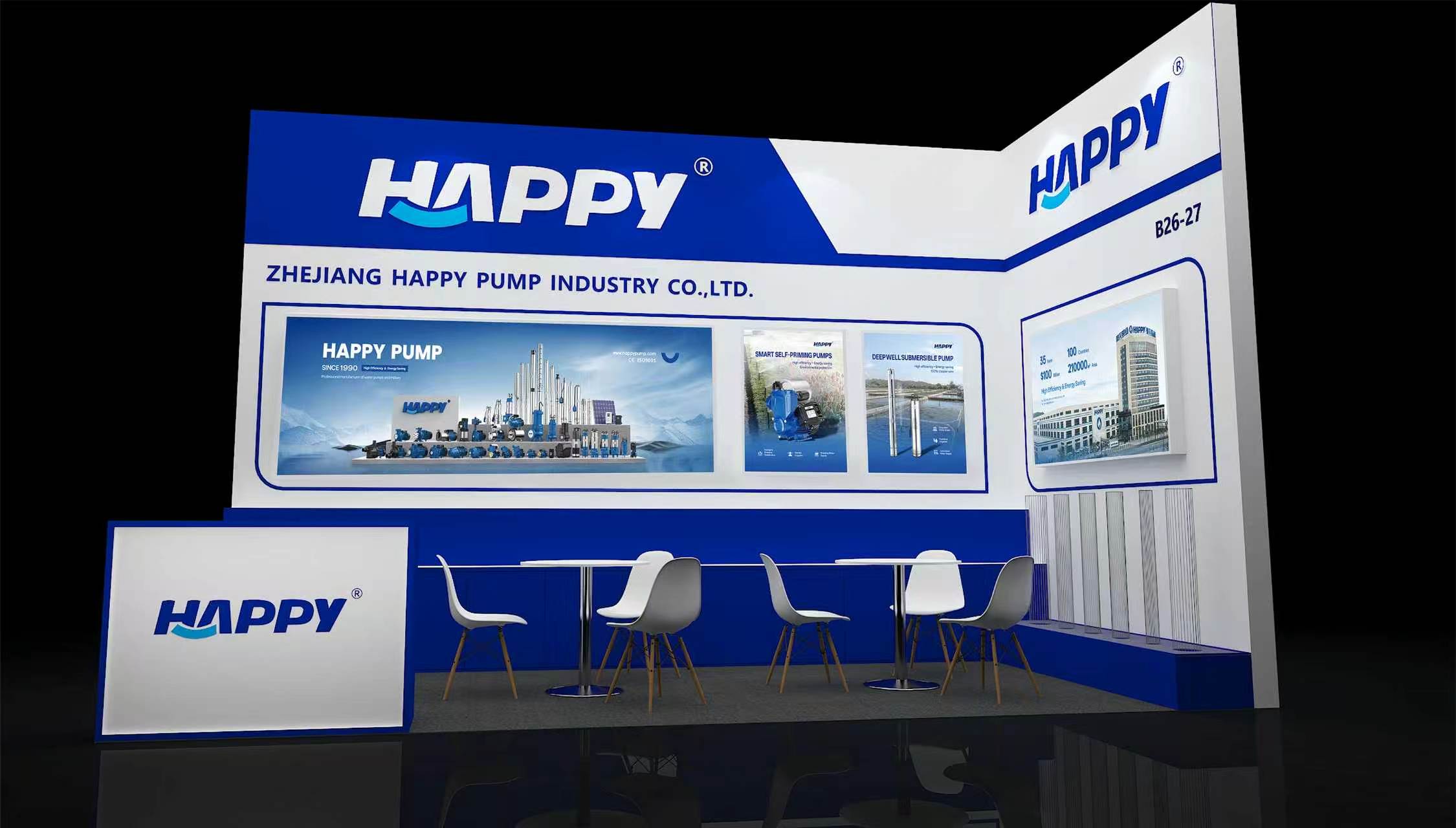
International pump industry exhibition display.
For most buyers, the key comparison is not only brand reputation but also how a supplier’s factory capacity, product coverage, export experience, and customization ability match the order type. ZHEJIANG HAPPY PUMP INDUSTRY CO.,LTD positions itself as a medium-to-high-end manufacturer with a large factory and high export ratio; more than 99% of its products are exported, and its global reach covers more than 150 countries and regions.
Advantages and Limitations to Understand
Advantages of submersible pumps:
- Self-priming: no manual priming because the pump is already immersed in liquid.
- Suitable for deep water sources where suction lift is not possible.
- Quieter operation because the pump is underwater, reducing noise transmission.
- Highly efficient for deep-well and transfer applications.
Limitations:
- Motor and seal repairs require pulling the pump out of the well or pit.
- Seal failure over time can cause motor damage if not maintained.
- Installation and electrical connection need proper planning, especially at depth.
- Pump selection must account for temperature, solids content, and water chemistry.
FAQ
Who are the main submersible pump manufacturers?
Globally, Grundfos, Xylem, and KSB are recognized as top leaders in the industrial pump market, according to MarketsandMarkets. Grand View Research also identifies Zhejiang LEO Group as a key competitor and leading manufacturer in the global submersible pump industry. Tsurumi Manufacturing Co. Ltd is noted by one industry source for producing 15,000+ units annually for global distribution in 60+ countries. ZHEJIANG HAPPY PUMP INDUSTRY CO.,LTD is a Chinese manufacturer established in 1990, producing submersible pumps, deep well pumps, solar pumps, sewage pumps, and other water pump categories.
What types of submersible pumps should a buyer evaluate?
A buyer should evaluate the pump type according to the liquid and installation. Main types include deep well submersible pumps, borehole submersible pumps, clean water submersible pumps, sewage submersible pumps, cutting submersible sewage pumps, solar submersible pumps, agricultural submersible pumps, and household submersible pumps. The manufacturer’s product line may include all these subcategories in one portfolio; for example, ZHEJIANG HAPPY PUMP INDUSTRY CO.,LTD lists submersible pumps, deep well pumps, solar pumps, and sewage pumps among its main series.
What are the key specifications to compare before purchasing a submersible pump?
Compare power, flow rate, head, protection rating, motor type, phase, voltage, frequency, and materials. For a broad pump range, typical values can span 0.25–550 kW for power, 20–100 m for head, 1.5–5500 m³/h for flow, and IP44 to IP68 for protection. To match a specific duty point, the selected model must meet the required flow and head at the actual installation conditions.
Can submersible pumps run on solar power?
Yes. Solar submersible pumps are specifically designed for photovoltaic systems and are used in off-grid irrigation, rural water supply, and other remote applications. The global solar water pump market is projected to grow from USD 556.57 million in 2024 to USD 2.9 billion by 2032 at a CAGR of 22.95%, according to Credence Research. When selecting a solar submersible pump, confirm the motor’s DC or AC compatibility, controller requirements, and the solar array voltage.
How can a buyer request samples or get a quote from a submersible pump supplier?
Buyers can visit the supplier’s official website, review the product catalog, and contact the export team with the required operating point: flow rate, head, liquid type, power supply, and target certification. Many manufacturers such as ZHEJIANG HAPPY PUMP INDUSTRY CO.,LTD offer a downloadable brochure and direct contact channels for sample orders, quotes, and OEM/OEM-adjacent requirements. For more information, visit the company website at www.happypump.com or download the company brochure.
Conclusion
Submersible pumps are a reliable, widely used solution for deep wells, boreholes, drainage, sewage, irrigation, solar water supply, and many industrial tasks. The key to a successful purchase is matching the pump type, flow, head, material, and motor specifications to the actual site conditions.
The global market is large and competitive, with strong manufacturing capacity in Asia and particularly in China. Suppliers such as ZHEJIANG HAPPY PUMP INDUSTRY CO.,LTD offer a wide range of submersible pump and motor products backed by substantial factory capacity, exporting to more than 150 countries and regions.
Before committing to a large order, define your operating point, verify power supply compatibility, confirm standards such as IEC 60335-2-41 or UL 778 for relevant markets, and request a sample or technical proposal from a shortlist of manufacturers.
Explore the HAPPY pump product range. Request the brochure, discuss your flow and head requirements, or ask for a sample quotation from ZHEJIANG HAPPY PUMP INDUSTRY CO.,LTD.
Have Questions or Need More Details?
Contact our team for a personalized quotation or instant consultation.
Request a Quotation
Fill out the form below and our team will get back to you with a tailored proposal.
WhatsApp Direct Chat
Prefer to chat in real-time? Message us on WhatsApp for instant assistance & quick answers.
- Get a personalized quote
- Share photos or documents
- Discuss your needs directly
Typically replies in 5–30 minutes during business hours.