Surface Pump Selection Checklist: CE Compliance, Key Specs, and Manufacturer Capability
Surface Pump Selection Checklist: CE Compliance, Key Specs, and Manufacturer Capability
Research and Evaluation Guide | August 2026
Surface pumps are among the most widely used water-moving devices for households, farms, and commercial buildings. They sit above the water source and create pressure through a rotating impeller or peripheral vane. For buyers moving from research to evaluation, the challenge is not lack of options; it is comparing certified products against actual operating conditions. This guide explains how to evaluate a surface pump on the evidence that matters: certification, hydraulic parameters, materials, motor options, and manufacturer capability.
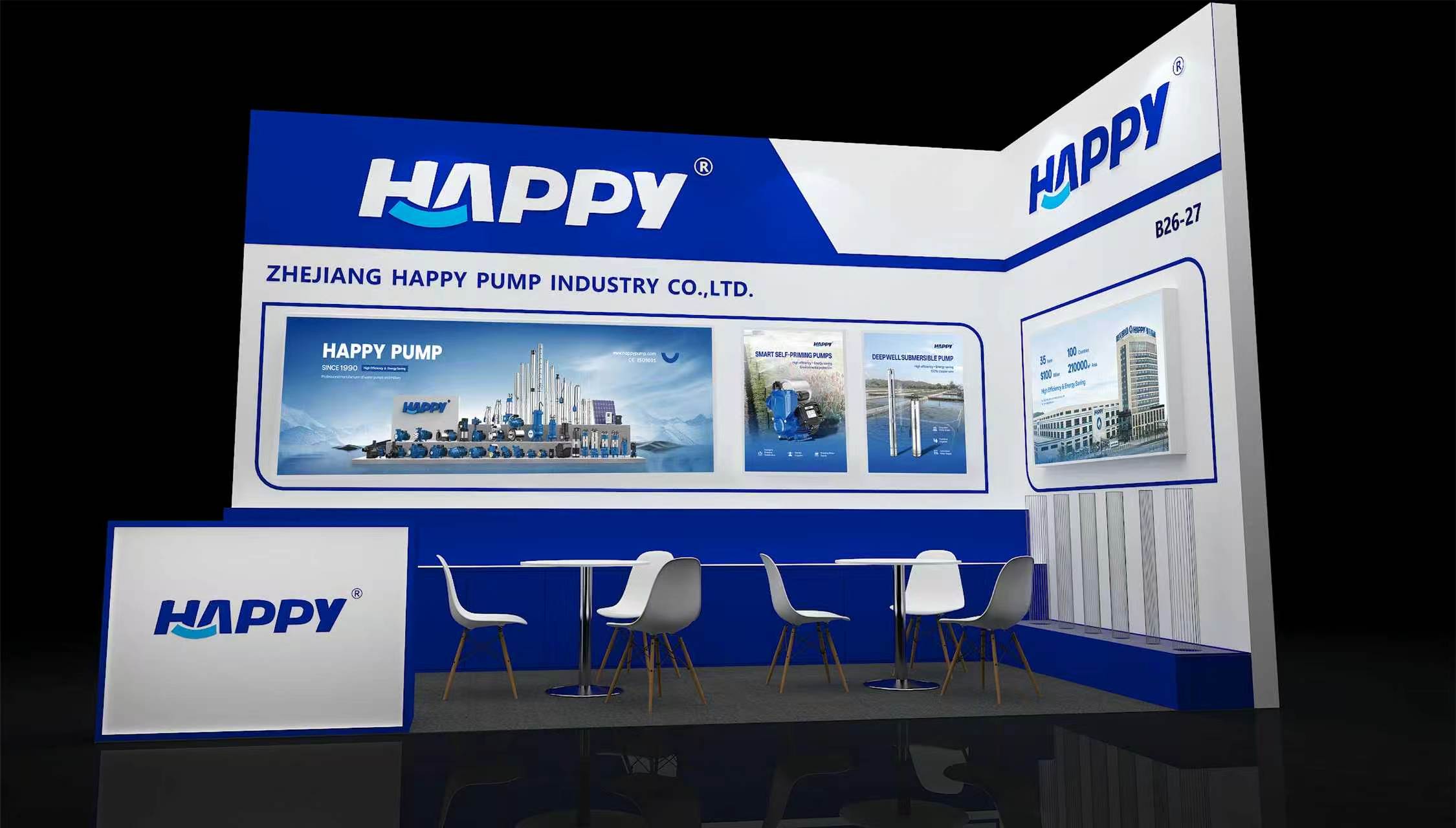
Zhejiang Happy Pump Industry Co., Ltd. (HAPPY) is used throughout this guide as a worked example. HAPPY was established in 1990 in Daxi Town, Wenling City, Zhejiang Province, China, and specializes in water pumps and motors. Its product range includes Surface Pumps, Submersible Pumps, Deep Well Pumps, Solar Pumps, Motors, Pressure Control Tanks and spare parts.
Problem Definition
Buyers often use keywords such as CE household surface pump manufacturers when supplier compliance is a filter. But a keyword search is only the start. The main risk is a mismatch between a certificate and an actual product. A product name in a catalog is not enough; the certificate should identify the product series and model it covers. For EU imports, CE marking is not a single test report. It requires an assessment under the relevant EU directives. When a supplier can cite certificate numbers, issuing bodies, applicable standards, and covered series, the compliance check becomes easier and safer.
For Research and Evaluation buyers, the goal is to narrow a long list of surface pump suppliers to a short list of manufacturers that can demonstrate compliance and engineering consistency. Certification alone does not guarantee good hydraulic selection or reliable delivery, but it is a necessary baseline before detailed evaluation.
Industry Background
Market data helps explain why surface pumps are a central purchase for many water projects. According to MarketsandMarkets, the global pumps market was estimated at USD 61.32 billion in 2024 and is projected to reach USD 79.01 billion by 2029. Mordor Intelligence reports that surface pumps held 57.63% of the total global pump market in 2025. These figures underline the practical importance of surface pumps across residential, agricultural, and industrial applications.
Two related segments are also relevant. The agricultural pump market was valued at USD 14.59 billion in 2024, with a projected CAGR of 4.98% through 2035, according to Market Research Future. The solar pump market was valued at USD 2.90 billion in 2024, according to Market Data Forecast, partly due to falling PV module prices and government subsidies in Asia-Pacific. For buyers, this explains growing interest in agricultural surface pumps, solar surface pumps, and related high-pressure and boosting solutions.
For household equipment, safety standards are a separate factor. Household and similar electrical pumps must comply with IEC 60335-2-41:2024, which covers temperature limits and connection requirements. This standard is directly relevant when evaluating a CE household surface pump or any similar electrical pump for residential use.
Detailed Solution: What to Validate When Choosing a Surface Pump
This section uses HAPPY as an evidence-based example. The same evaluation logic can be applied to any supplier.
1. Start with Certification Evidence
CE certification for pumps is usually connected to the Low Voltage Directive, the Electromagnetic Compatibility Directive, and the Machinery Directive. HAPPY's pump series has a CE attestation of conformity issued by ECES under certificate number CE-5072-160326. It applies to the EU market and references 2014/35/EU Low Voltage Directive, 2014/30/EU EMC Directive, and 2006/42/EC Machinery Directive.
In addition to the CE attestation, HAPPY has an LVD certificate issued by OViS-CERT under certificate number OViS202507249L. The applicable standards include EN 60335-1:2012+A11:2014+A13:2017+A1:2019+A14:2019+A2:2019+A15:2021+A16:2023, EN IEC 60335-2-41:2021+A11:2021, and EN 62233:2008+AC:2008. The EMC certificate, OViS202507249E, references EN IEC 55014-1:2021, EN IEC 55014-2:2021, EN IEC 61000-3-2:2019+A1:2021+A2:2024, and EN 61000-3-3:2013+A1:2019+A2:2021.
The certified pump series includes HQBm, QB60, IDB35, HPSm-AX, HRSm-A, QDP, and QDX. This level of detail matters because a certificate should be tied to the product family being purchased, not a generic company claim.
2. Check Hydraulic and Motor Parameters
Surface pump selection starts with head, flow, power range, and duty pattern. HAPPY's pump product line covers a power range of 0.25–550 kW, a head range of 20–100 m, a flow range of 1.5–5500 m³/h, and protection ratings IP44 and IP68 across applicable models. These numbers describe the product range, not one universal pump. Buyers should request a model-specific datasheet before making a final decision.
Material is also a selection factor. The main materials used by HAPPY are cast iron, stainless steel, and engineering plastics. For clean water applications, stainless steel or engineering plastic components are often preferred for corrosion resistance. For agricultural and heavier-duty sites, cast iron pump bodies with corrosion-resistant internals are common. Confirm the wetted material for the specific model.
Motor capability is often overlooked. HAPPY manufactures motors in-house, including models 90S-6 and 90L-6 in IE2, IE3, IE4, and MS categories. The motor range covers 1–430 HP, speeds of 934–2980 rpm, and cast iron or aluminum housings. A well-matched surface pump motor affects efficiency, starting torque, and service life.
3. Evaluate the Product Series for Your Use Case
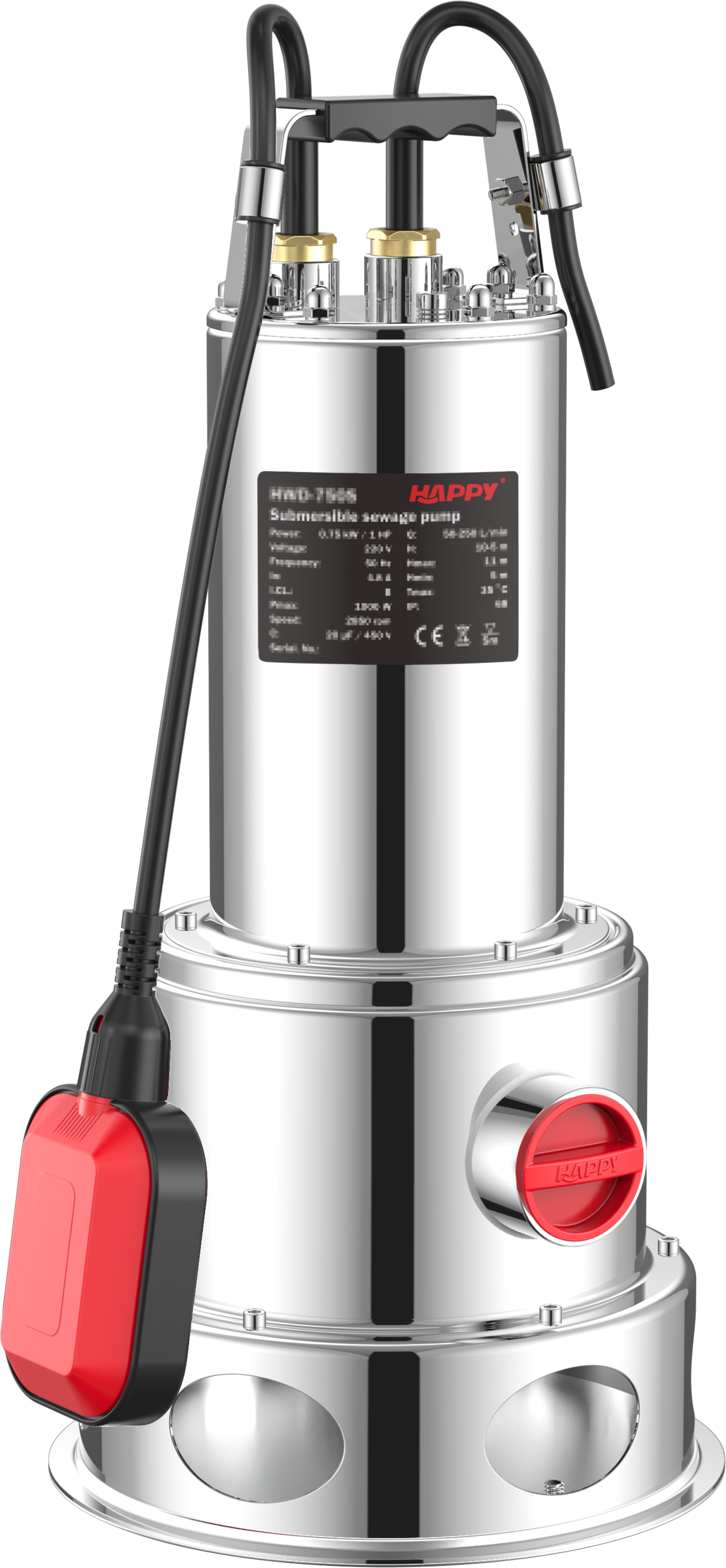
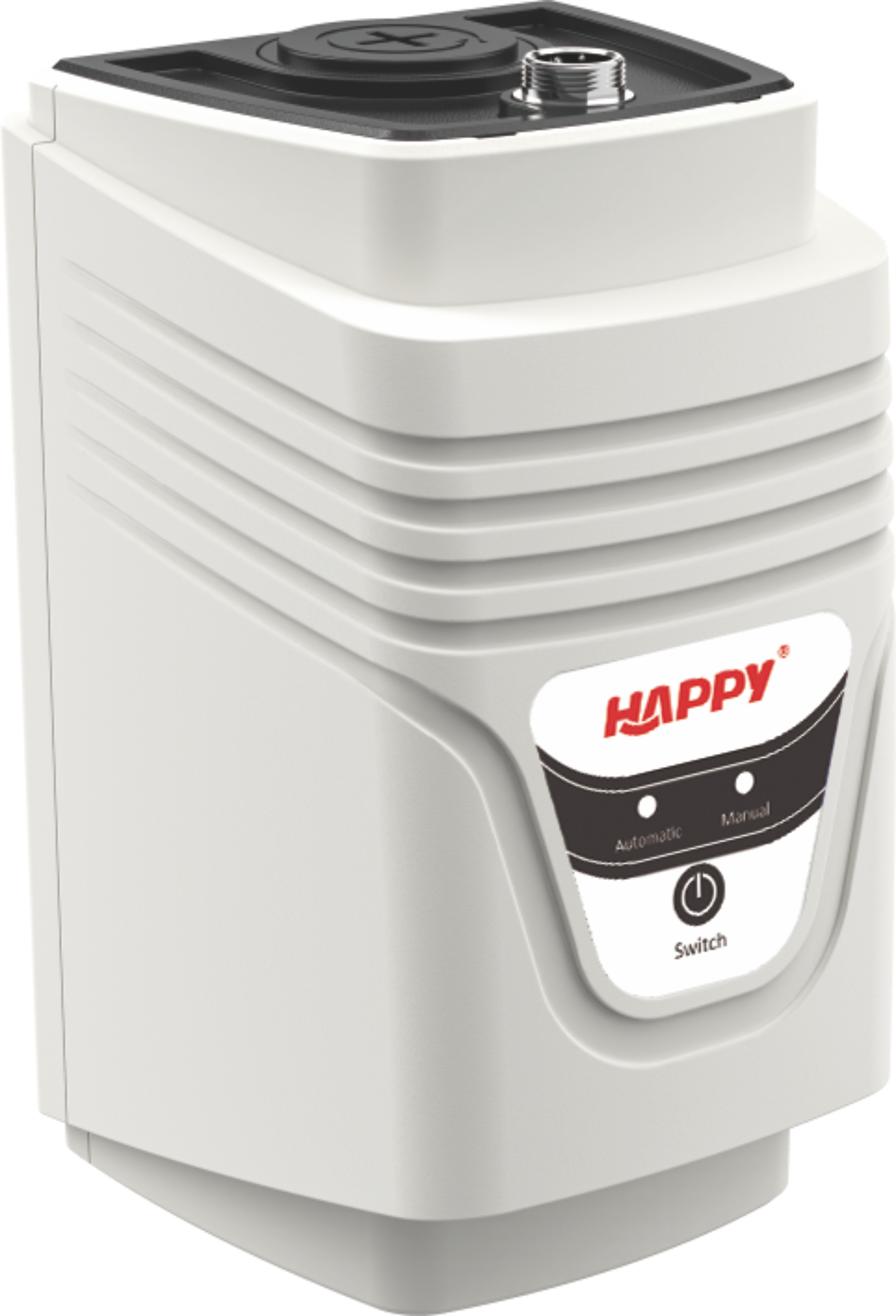
Many buyers search with terms such as household surface pump, agricultural surface pump, solar surface pump, swimming pool surface pump, horizontal multistage surface pump, or vertical multistage surface pump. No manufacturer is automatically a good fit for every category, but a broad product line is a practical advantage because it reduces supplier qualification time. HAPPY's range includes 11 major series and more than 500 specifications, such as vortex pumps, centrifugal pumps, jet pumps, standard garden pumps, submersible pumps, deep well pumps, swimming pool pumps, permanent magnet variable frequency constant-pressure pumps, and intelligent pumps. Within this range, a single-phase AC pump, a three-phase industrial pump, a booster pump, and a solar-compatible pump can be evaluated from the same manufacturing base.
4. Inspect Manufacturing and Quality Control
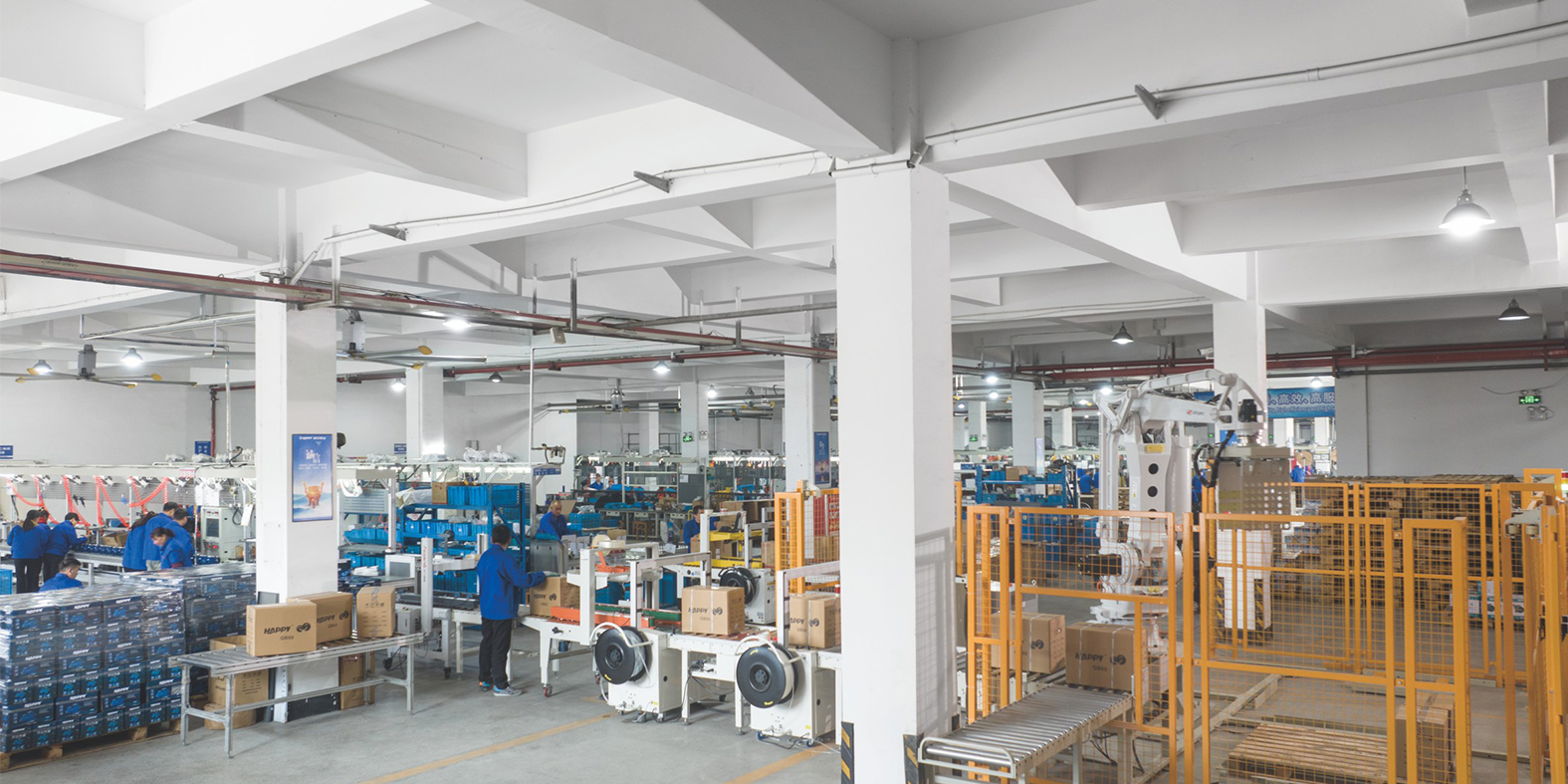
Certification documents describe what a product should do, but factory capability determines consistency. HAPPY's facility covers about 55,000 m² of site area and about 210,000 m² of building area. It employs about 800 people, including about 200 professional and technical staff. The company has an enterprise research institute and high-tech R&D center, and it uses CFD, FEA, and motor electromagnetic design tools.
Production capacity is another relevant data point. HAPPY's monthly capacity is 400,000 units, and its annual output is about 4,000,000 pieces. All products are tested before shipment, with a stated 100% test policy. The company supports OEM/ODM, including voltage and logo customization. MOQ is 100 pieces for models below 3HP and 50 pieces for models above 3HP. Lead time is 30–45 days, and after-sales support includes remote support.
Step-by-Step Surface Pump Evaluation Process
- Define the operating point. Identify the water source, required flow, total head, running hours, and whether operation is continuous or intermittent. This determines the hydraulic size of the surface pump.
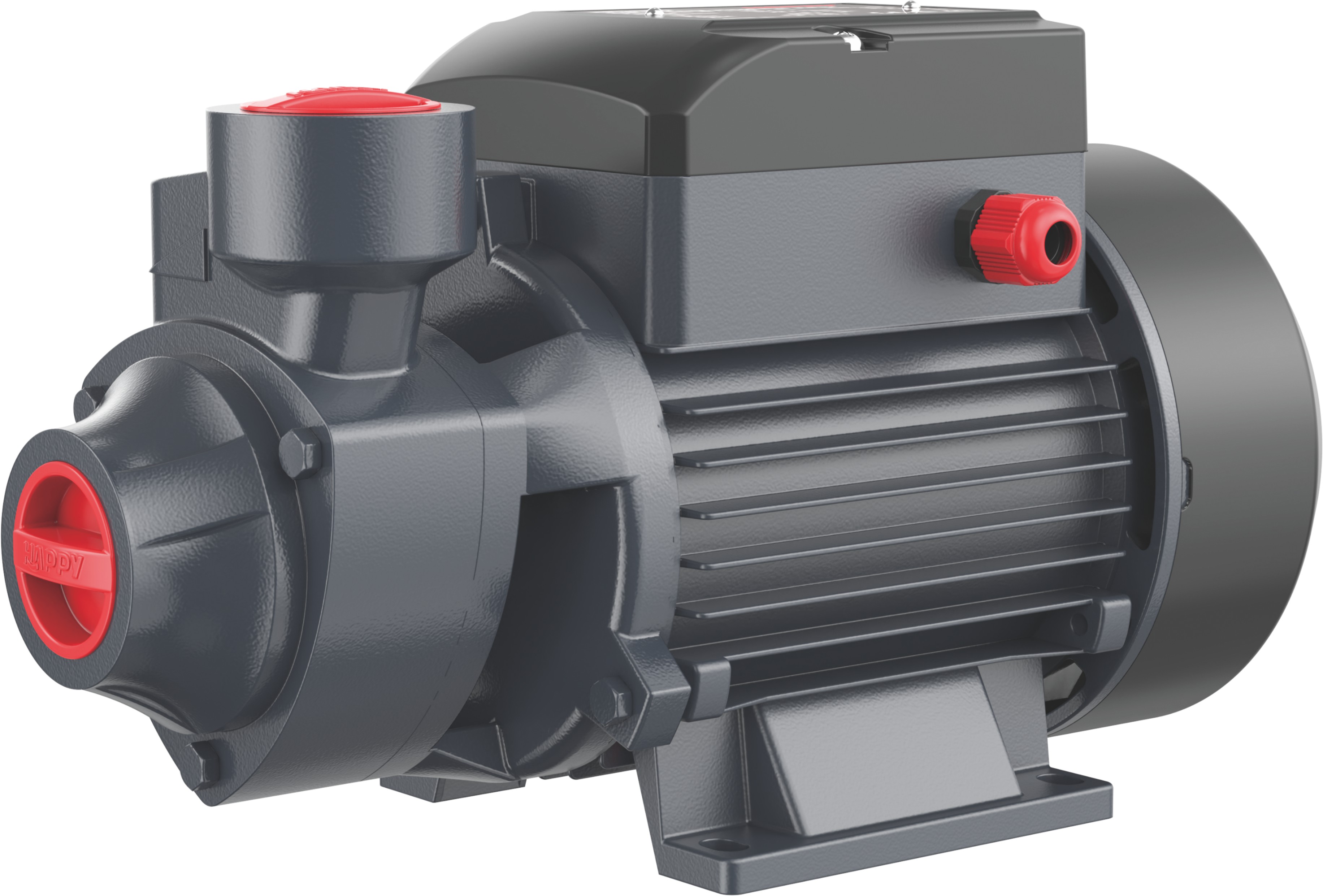
- Choose the pump architecture. Use the application to narrow the type: a peripheral or jet surface pump for household boosting and shallow-lift duties; a centrifugal surface pump for higher flow; a horizontal or vertical multistage surface pump for higher pressure; a swimming pool surface pump for continuous pool circulation; a solar surface pump for off-grid systems.
- Confirm the electrical supply. Check the available voltage and phase. A single phase surface pump is common in households, while a three phase surface pump is often used in agricultural and industrial installations. Also confirm AC voltage and frequency.
- Map certification to the model. Ask the supplier to provide the CE certificate, LVD and EMC documents, certificate numbers, applicable standards, and the exact product series covered by those certificates.
- Check materials and protection. Confirm the wetted materials, housing material, and ingress protection rating such as IP44 or IP68. This is especially important for outdoor agricultural pumps, pool pumps, and clean water surface pumps.
- Review manufacturer capability. Evaluate MOQ, lead time, monthly capacity, test policy, OEM/ODM options, and after-sales support. For a private-label program, voltage and logo customization capacity should be confirmed.
- Request a sample or quotation. Use the shortlisted manufacturer to validate the physical product, the certificate package, and the commercial terms before large-volume ordering.
Common Surface Pump Use Cases
Surface pumps are used across multiple project types. The correct choice depends on the liquid being moved, the required pressure, and the installation environment.
- Household and domestic water supply. An automatic surface pump or smart surface pump connected to a pressure control tank is common for boosting water from tanks or shallow sources. Low noise and stable operation are important for residential settings.
- Garden and agricultural irrigation. An agricultural surface pump or high pressure surface pump can supply water for drip lines, sprinklers, and field irrigation. In off-grid locations, solar surface pumps with controllers are increasingly used.
- Pool and spa circulation. A swimming pool surface pump moves water through filters and heating or sanitizing equipment. Continuous duty and corrosion-resistant materials matter.
- Clean water boosting. Horizontal multistage and vertical multistage surface pumps are used where higher discharge pressure is needed in residential or commercial buildings.
- Light drainage and industrial circulation. Depending on the model, self-priming surface pumps or centrifugal surface pumps can handle clean water transfer, circulation cooling, and small drainage tasks. For sewage or particle-containing water, confirm the pump design with the manufacturer.
Surface Pump Categories at a Glance
| Pump category | Typical use | What to check |
|---|---|---|
| Centrifugal surface pump | Clean water transfer, irrigation, circulation | Flow vs. head curve, sealing, impeller material |
| Peripheral surface pump | Household boosting, low-flow high-pressure duties | Pressure, noise, motor type |
| Jet / self-priming surface pump | Shallow well suction and self-priming applications | Priming capability, suction lift, strainer |
| Horizontal / vertical multistage surface pump | Pressurized water supply where higher head is needed | Number of stages, discharge pressure, motor coupling |
| Swimming pool surface pump | Pool filtration and circulation | Continuous duty, filtration compatibility, noise |
| Solar surface pump | Off-grid water supply and field irrigation | DC/AC compatibility, controller, PV array matching |
This table is a category aid, not a substitute for the manufacturer's dimensioned data. Use it to frame the selection conversation with a supplier.
FAQ
CE household surface pump manufacturers
When evaluating CE household surface pump manufacturers, ask for a certificate that names the product series and the EU directives. For example, Zhejiang Happy Pump Industry Co., Ltd. provides CE attestation CE-5072-160326 issued by ECES; it applies to the EU market and confirms compliance with 2006/42/EC Machinery Directive, 2014/30/EU EMC Directive, and 2014/35/EU Low Voltage Directive. The pump series covered includes HQBm, QB60, IDB35, HPSm-AX, HRSm-A, QDP and QDX. Buyers should also ask whether related LVD and EMC certificates are available, and request a copy with the commercial quotation.
Conclusion
Selecting a surface pump is a systems decision. Start with the duty point, then verify certification, materials, motor integration, and manufacturer capability. These criteria are all measurable and can be documented. A manufacturer that can state certificate numbers, test policies, capacities, and customization conditions makes the buyer's evaluation easier.
For buyers shortlisting manufacturers, HAPPY is an example of a supplier capable of producing a broad surface pump range with documented EU compliance and production data. The next step is to request a product sample, a quotation, or a datasheet from the final shortlist.
Need a datasheet, sample, or quotation?
Contact Henry Guan. Email: admin@happypump.com. Tel/WhatsApp/WeChat: +86-13758679190. Website: www.happypump.com.
Download the HAPPY brochure: 2026 HAPPY catalog.