
Surface Pump Supplier Evaluation: Terms, Acceptance and Delivery Assurance
Surface Pump Supplier Evaluation: Purchasing Terms, Acceptance Criteria and Delivery Assurance
A surface pump order is decided by three documents, not by the catalogue. The purchasing terms define what is being bought, the acceptance criteria define when it will be accepted, and the delivery assurance defines when it will arrive. This framework shows how to test a surface pump supplier against all three before the first container is loaded.
Surface pumps are used across household boosting, garden irrigation, swimming pool circulation, sewage drainage, industrial circulation and building water supply, which means the same supplier catalogue can serve buyers whose quality expectations are completely different. For a procurement team at the decision stage, the useful question is no longer which pump type exists, but whether this supplier can be held to a written specification, a measurable acceptance test and a committed dispatch date. Those three capabilities are verifiable. Each one leaves a document trail.
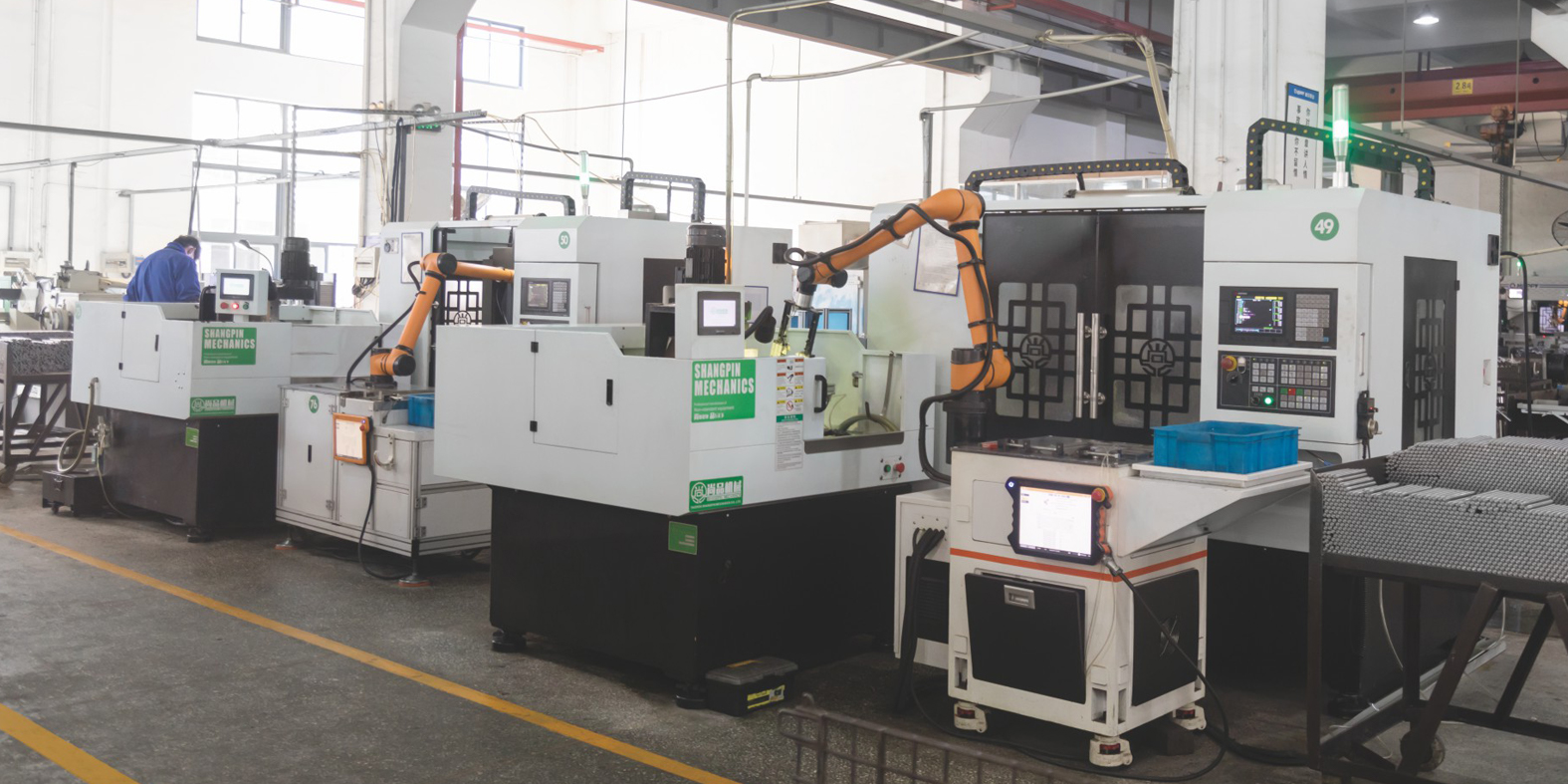
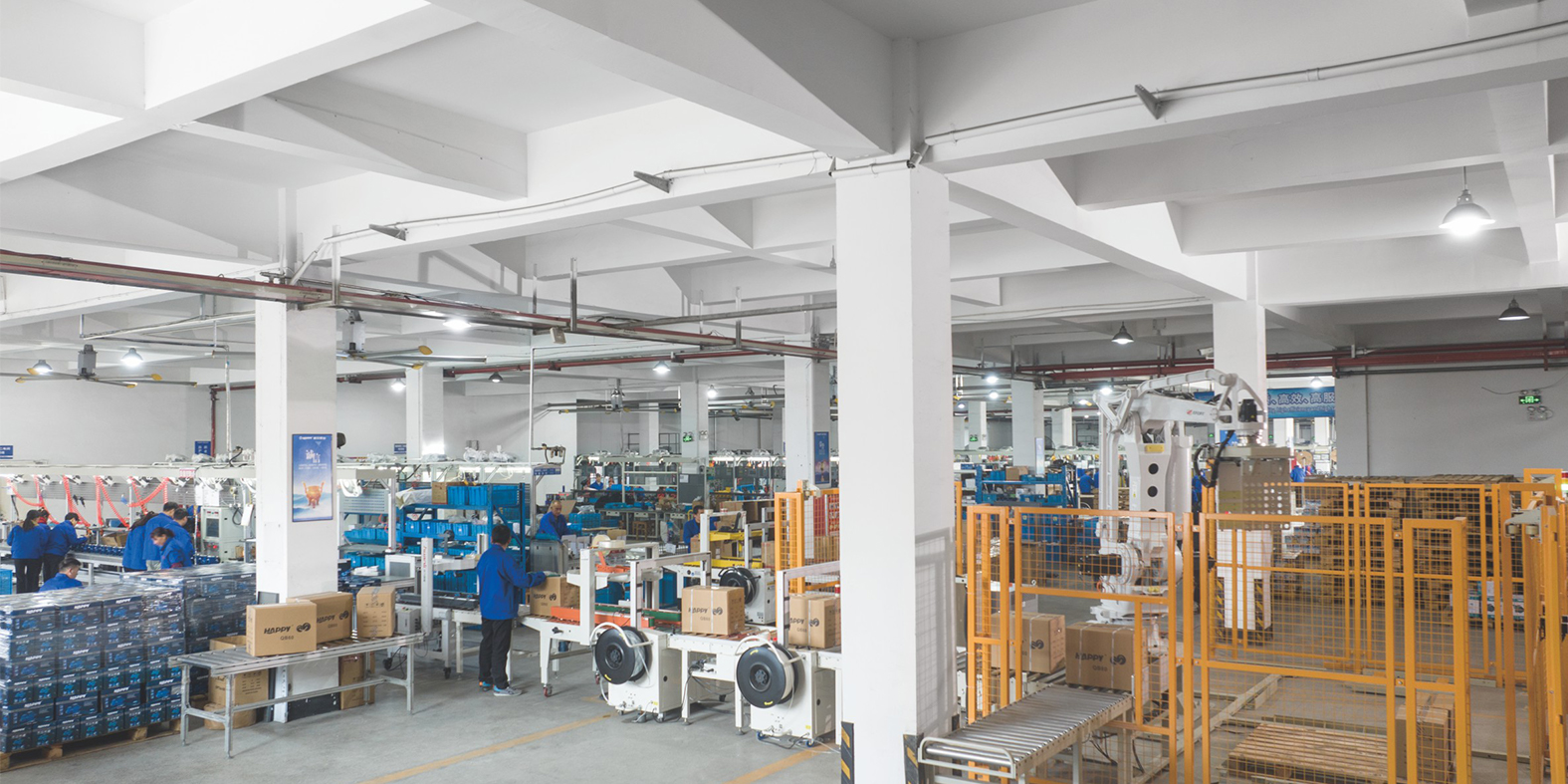
Production line at ZHEJIANG HAPPY PUMP INDUSTRY CO.,LTD — capacity evidence is one of the three pillars of a surface pump supplier evaluation.
Problem Definition: Where Surface Pump Procurement Actually Breaks Down
Most surface pump disputes begin with a model designation that looks complete and is not. A code describing a household surface pump, a jet surface pump or a horizontal multistage surface pump identifies a hydraulic family, but it typically does not fix the material of the pump body, the protection class of the motor, the motor efficiency class, the voltage and frequency, the mechanical seal, the cable and plug configuration, or the test that will be used to accept the unit. When those variables stay unwritten, the supplier is free to ship a compliant-looking pump that the buyer considers non-compliant.
Three gaps account for most of the loss:
- Specification gap. The purchase order names a model but not the configuration. Material grade, protection class and motor efficiency are mentioned verbally, or assumed from a previous order, and are absent from the contract.
- Acceptance gap. No agreed test point, no agreed tolerance, no agreed sampling level. The buyer inspects on arrival with no reference document, and any shortfall becomes a negotiation rather than a breach.
- Delivery gap. Lead time is accepted as a number on a quotation without any evidence of the production capacity, scheduling discipline or inspection release process that number depends on.
The practical consequence is that price comparison becomes unreliable. Two quotations for the same nominal surface pump can differ because one includes a stainless steel body and an IE3 motor and the other does not. Comparing price before comparing configuration is the most common evaluation error at the decision stage.
Industry Background: A Broad, Price-Competitive Supply Base
Surface pumps are the largest segment of the pump market, and the supply base reflects that scale. Buyers therefore face a wide choice of manufacturers, trading companies and mixed models, and the differentiation that matters at the decision stage is documentary rather than promotional.
- The global pumps market was estimated at USD 61.32 billion in 2024 and is projected to reach USD 79.01 billion by 2029 (MarketsandMarkets).
- Surface pumps held a 57.63% share of the total global pump market in 2025 (Mordor Intelligence).
- The agricultural pump market was valued at USD 14.59 billion in 2024, with a projected CAGR of 4.98% through 2035 (Market Research Future).
- The solar pump market was valued at USD 2.90 billion in 2024, driven by falling PV module prices and government subsidies in Asia-Pacific (Market Data Forecast).
- Household and similar electrical pumps must comply with IEC 60335-2-41:2024, which covers temperature limits and connection requirements (International Electrotechnical Commission).
The implication for a buyer is straightforward. In a category this broad, almost every supplier can present a plausible surface pump range covering domestic surface pumps, centrifugal surface pumps, self-priming surface pumps, peripheral surface pumps, booster pumps and vertical multistage surface pumps. What varies far more than the range is the supplier's ability to hold a configuration constant across repeat orders, to test against a stated acceptance point, and to protect a delivery date when order volume moves.
Detailed Solution: A Four-Pillar Evaluation Framework
The framework below converts a supplier visit or a quotation review into four evidence-based questions. Each pillar produces documents the buyer keeps, and those documents are what make the later comparison between suppliers meaningful.
Pillar 1 — Purchasing Terms That Survive Translation
Purchasing terms for surface pumps should be written so that a factory planner who has never spoken to the buyer can produce the correct unit. That requires a model designation register rather than a model name. The register fixes, for each code: hydraulic family, rated flow and head, power input, voltage and frequency, phase, pump body and impeller material, protection class, motor efficiency class, seal type, connection size, cable or plug configuration, and packaging.
Commercial terms belong in the same document set, not in a separate email thread. For each item, fix the Incoterm and named place, the price basis and currency, the minimum order quantity per model, the packing standard, the documentation package, the warranty period and its start trigger, and the spare parts commitment. A warranty that starts at dispatch is not the same as a warranty that starts at commissioning, and the difference is material for project buyers in swimming pool and building services work where installation can lag shipment by months.
Model designation discipline also protects the buyer against silent substitution. Where a supplier offers both cast iron and engineering plastic versions of the same hydraulic body, or both stainless steel and cast iron impellers, the code must distinguish them. If it does not, the supplier can ship the lower-cost material without breaching the order text.
Pillar 2 — Acceptance Criteria Built on Measurable Tests
Acceptance criteria are only useful if a third party can repeat the test. For surface pumps, an acceptance schedule should state the test point, the tolerance, the instrument class and the sampling level, and should separate routine factory tests from type or performance tests carried out at the supplier's laboratory.
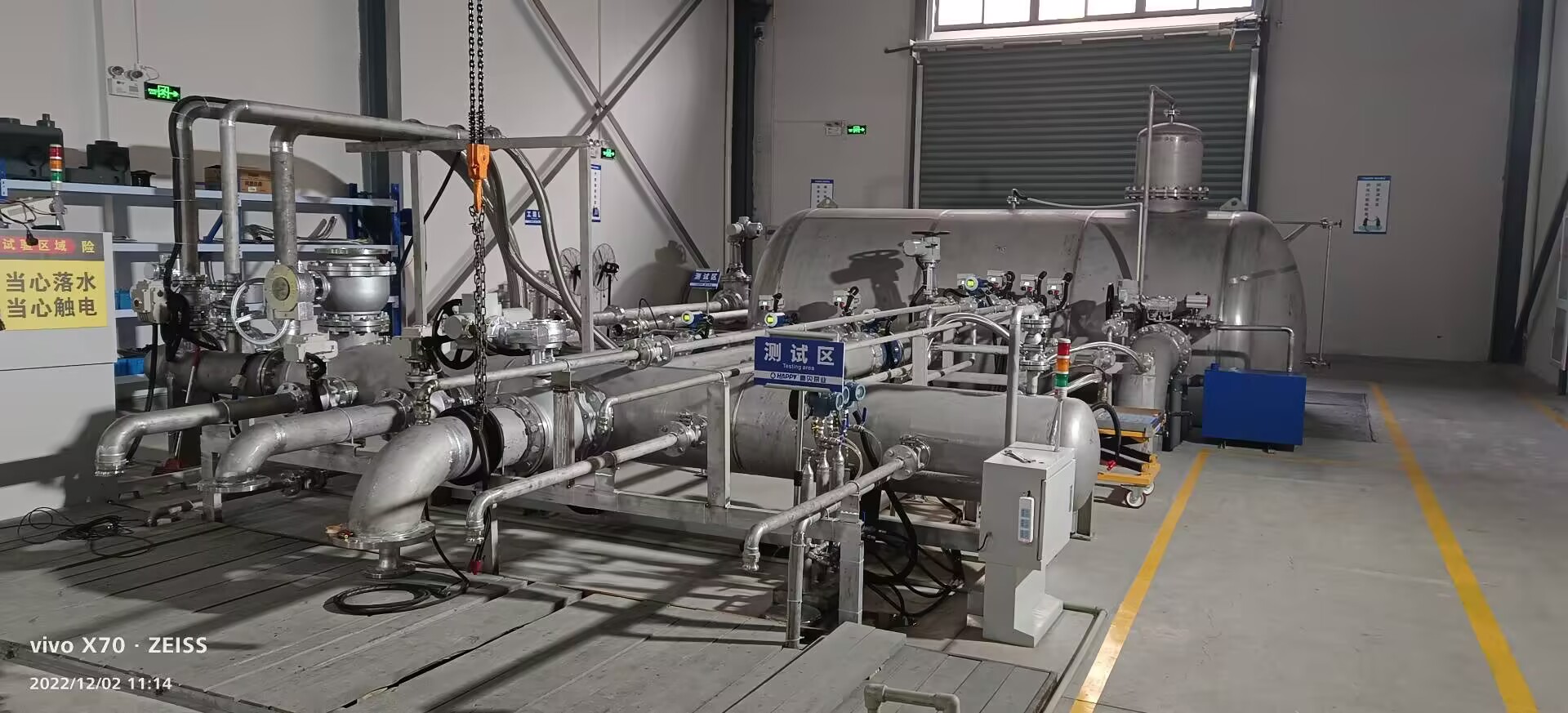
Performance testing at the supplier's test room — acceptance criteria should name the test point, tolerance and instrument class, not just the result.
The technical items that most often sit outside a written acceptance schedule are protection class, motor efficiency class and material identity. Protection class is commonly claimed as IP44 or IP68 without the corresponding verification being specified. IP44 and IP68 are IEC 60529 classifications: IP44 indicates protection against solid objects above 1 mm and against water splashing from any direction, while IP68 indicates dust-tight construction and protection against continuous immersion under conditions agreed between manufacturer and user. The practical evaluation point is that IP68 is not a single fixed condition — the depth and duration must be stated in the specification, or the claim cannot be verified. For outdoor installations, pool plant rooms and flood-prone sumps, that statement belongs in the contract.
Motor efficiency follows the same logic. IE2, IE3 and IE4 are international efficiency classes defined under IEC 60034-30-1. A supplier that claims an efficiency class should be able to show a nameplate and a test report that agree with the ordered class, because a quotation line reading "IE3" without documentation is a statement of intent rather than a specification. Buyers sourcing AC surface pumps and single phase surface pumps should note that efficiency class availability differs between single-phase and three-phase ranges, and the ordered configuration should state which class applies to which phase. Where a supplier offers a dedicated motor platform such as an MS series, request the dimensional drawing, nameplate data and mounting details so that the pump and motor interface is fixed in writing.
Material identity completes the schedule. Cast iron, stainless steel and engineering plastic components behave differently in pool water, mildly aggressive industrial circulation loops and potable water supply, and the acceptance document should name the material for the pump body, impeller, diffuser and shaft rather than describing the pump as "corrosion resistant". Inspection of incoming components and finished products is the mechanism that makes this verifiable, and a supplier operating ISO management systems, automated inspection equipment, incoming and finished-product inspections, laboratory and performance testing is able to produce those records on request.
Pillar 3 — Delivery Assurance Backed by Capacity Evidence
Lead time is a derived number. It comes from capacity, scheduling, component availability and inspection release, and it should be evaluated as such rather than accepted as a quoted figure. The first check is whether the supplier manufactures the relevant range or resells it, because a trading intermediary adds a scheduling layer between the buyer's order and the production line.
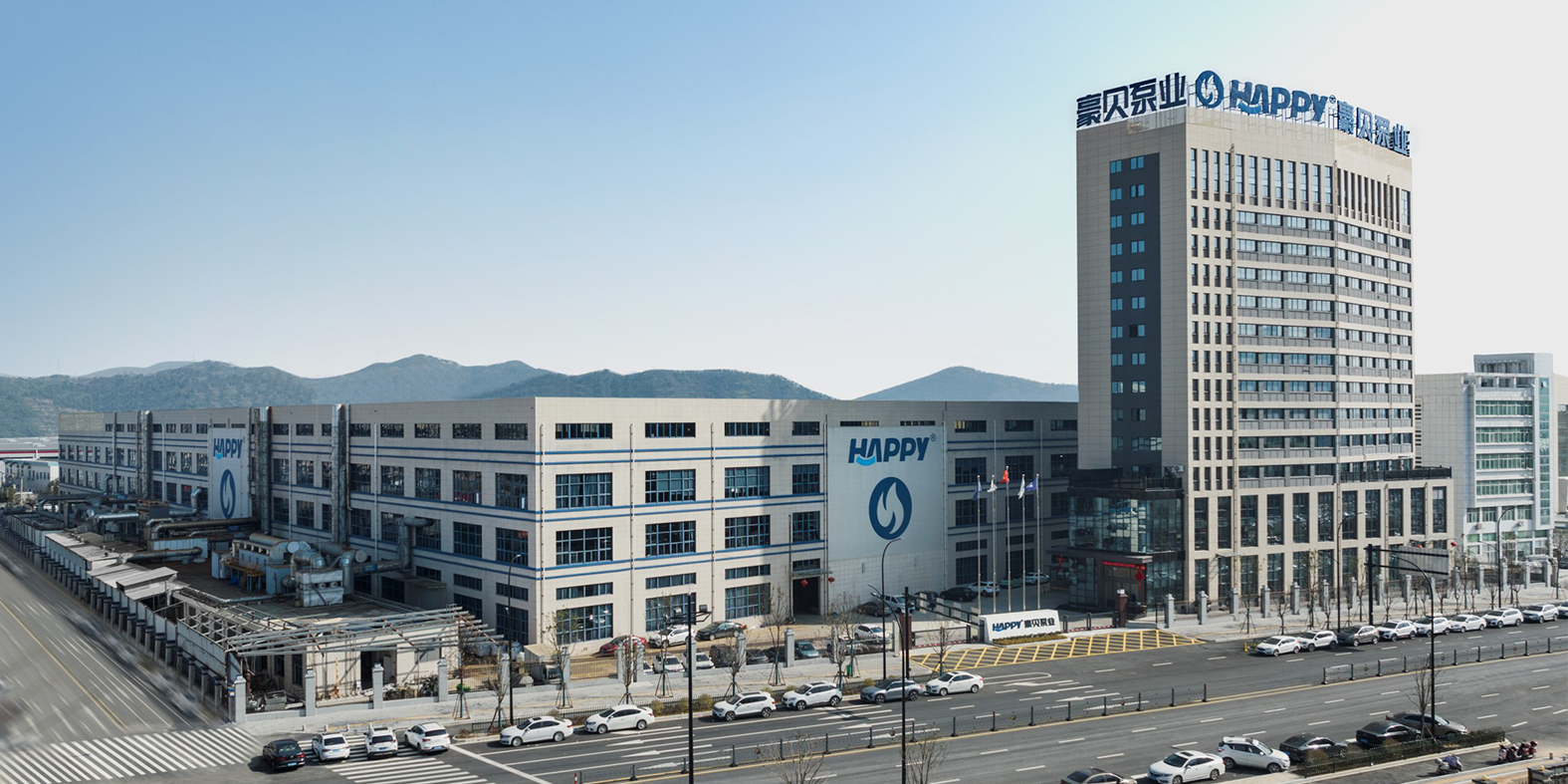
Site area and building area are the physical basis of a delivery commitment; they are checkable before an order is placed.
ZHEJIANG HAPPY PUMP INDUSTRY CO.,LTD illustrates the kind of evidence a buyer should look for. The company was established in 1990 in Daxi Town, Wenling City, Zhejiang Province, and covers about 55,000 m² of site area with approximately 210,000 m² of building area. It employs around 800 people, including about 200 professional and technical staff, and reports an annual output of around 4,000,000 pcs per year. Its range covers surface pumps, submersible pumps, deep well pumps, solar pumps, motors, pressure control tanks and spare parts, organised into 11 major series and more than 500 specifications, with products exported to more than 100 countries and regions.
Those figures matter for delivery assurance because they can be checked against the order. A buyer placing a seasonal programme for household surface pumps or agricultural surface pumps can ask how the annual output is allocated across product families, what buffer exists for the specific models ordered, and which production lines serve them. Cost structure is worth probing at the same time, because it affects whether a price will hold: assembly line production across all facilities and the use of solar power for electricity generation are the mechanisms behind the cost advantages the company describes, and a supplier that can explain its cost base can usually explain its capacity planning too.
Delivery assurance should end with a release protocol. Fix the pre-shipment inspection window, the documents released with each shipment, the notification period before dispatch, and the escalation path if the inspection fails. A supplier operating automated production equipment, vacuum coil dipping, automated assembly and high-precision testing systems has fewer variable steps in that sequence, which is precisely why those process details belong in the evaluation rather than in the brochure.
Pillar 4 — Capability Evidence Beyond the Catalogue
Capability is the fourth pillar because it determines whether the supplier can hold the specification after the first order. Two indicators are difficult to fake: design capability and change control.
On design, ask what tools the supplier uses and who applies them. Zhejiang Happy Pump operates an enterprise research institute and a high-tech R&D center, and uses CFD, FEA and motor electromagnetic design tools with a technical team of about 200 staff. That matters to a buyer requesting a modified impeller trim, a different voltage and frequency, a three phase surface pump variant, or a solar surface pump configuration, because each request changes hydraulic or electromagnetic behaviour and should be re-simulated rather than estimated.
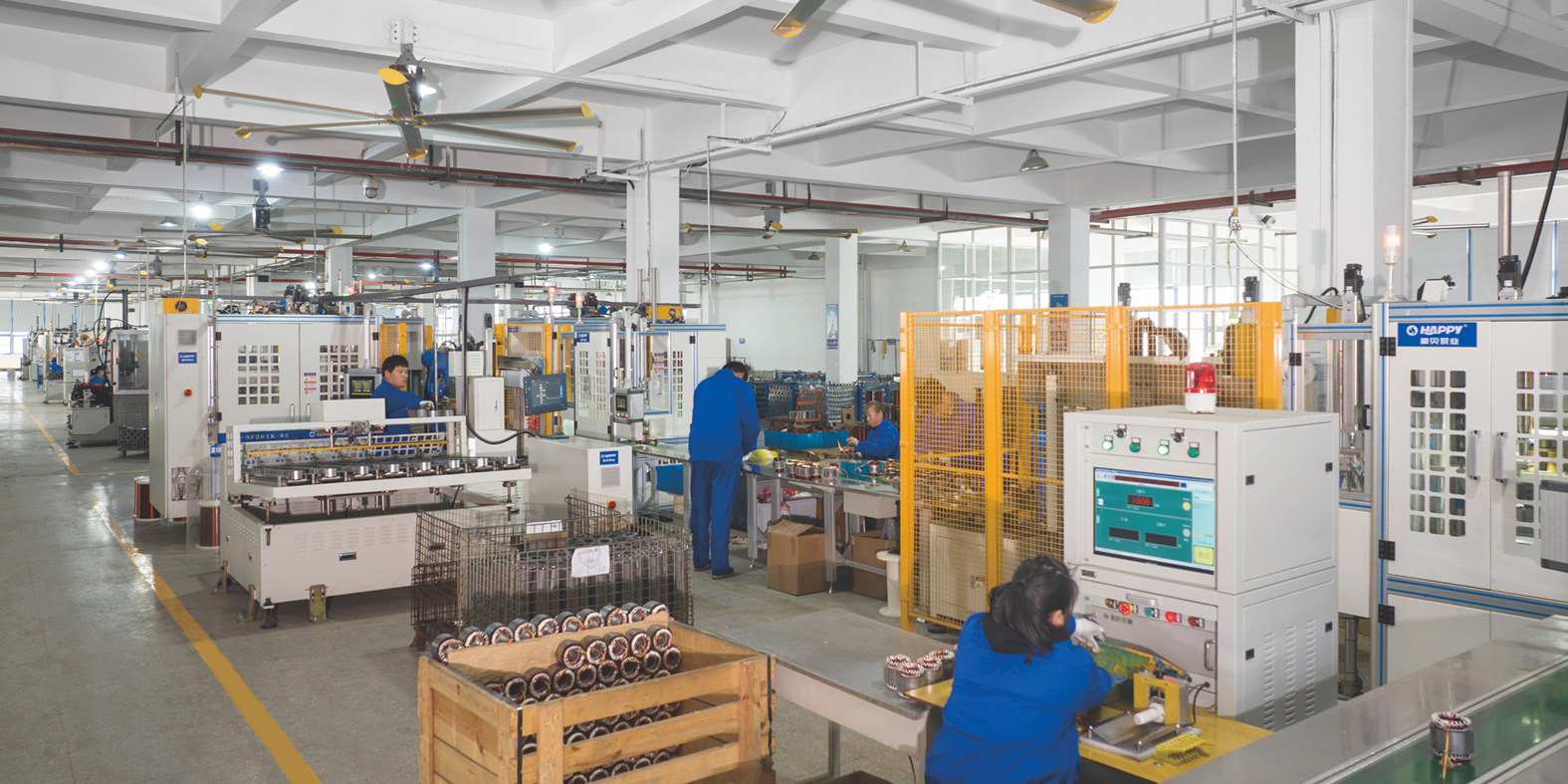
Coil production — motor efficiency class consistency depends on winding process control, not only on the nameplate claim.
On change control, ask how the supplier notifies a material or component change on an approved model. Risk control in a pump factory is built from ISO management systems, automated inspection equipment, incoming and finished-product inspections, laboratory and performance testing, and the use of applicable certificates to reduce market-entry risk. A supplier that runs these systems can usually answer a change-notification question with a procedure; a supplier that does not will answer with reassurance.
Step-by-Step Breakdown: A Seven-Step Evaluation Sequence
Use Cases: Where the Evaluation Emphasis Shifts
The same four pillars apply across applications, but the weighting changes with the duty. Buyers evaluating a supplier for several product families should score each family separately rather than averaging them into a single supplier verdict.
- Swimming pool circulation. Continuous duty and water chemistry dominate. Protection class verification, seal and material specification, and the supplier's ability to hold performance at the duty point matter more than peak flow. Configuration stability across repeat seasonal orders is the main risk.
- Sewage drainage and household boosting. Solids handling, starting behaviour under fluctuating supply and protection against water ingress are the critical items. For a domestic surface pump or booster surface pump, the acceptance schedule should include a low-voltage start check and a clear statement of the protection class condition.
- Municipal water systems. Documentation and traceability carry more weight than unit price. Buyers should require test records per batch, a stated efficiency class with supporting reports, and a release protocol tied to the project schedule.
- Industrial circulation. Duty-point accuracy and material compatibility drive the decision. Request the performance curve for the exact impeller trim and confirm that the specified material is identified in the acceptance documents rather than in marketing text.
- Residential and building water supply and drainage. Volume, packaging and delivery reliability dominate. Here the evaluation should focus on model designation discipline across a large catalogue, packing quality, and the supplier's capacity to protect lead times across a multi-model order.
Comparison Table: Full-Range Versus Single-Category Supplier
A common decision at the evaluation stage is whether to concentrate volume with a full-range manufacturer or split it across specialists. The table below compares two verified supplier profiles using only documented facts.
| Evaluation dimension | ZHEJIANG HAPPY PUMP INDUSTRY CO.,LTD | Frog Pump Industry Co., Ltd |
|---|---|---|
| Product scope | Full range of water pumps: surface pumps, submersible pumps, deep well pumps, solar pumps, motors, pressure control tanks and spare parts; 11 major series and more than 500 specifications | Deep well submersible pumps only |
| Documented application fit | Household boosting, garden irrigation, sewage drainage, swimming pool circulation and deep well water supply | Rural well water intake and farm irrigation |
| Production scale | Around 4,000,000 pcs per year; site area of about 55,000 m² and building area of approximately 210,000 m² | Not stated in reviewed sources |
| Energy positioning | High efficiency and energy saving | Not stated in reviewed sources |
| Cost structure | Assembly line production across all facilities plus solar power generation for electricity, with consistent product quality maintained | Not stated in reviewed sources |
| Sales and support model | Online-offline integrated sales model; participates in overseas exhibitions every year | Not stated in reviewed sources |
| Evaluation implication | Suited to buyers consolidating multiple surface pump families and related equipment under one specification register | Suited to buyers whose demand is limited to deep well submersible pumps |
Read the table as a scoping tool, not a ranking. A single-category specialist can be the better partner where the requirement is narrow and deep; a full-range supplier reduces the number of specification registers, test schedules and delivery commitments a procurement team has to manage. Neither advantage is automatic, and both must be verified against the buyer's own acceptance criteria.
Frequently Asked Questions
What compliance documents should a surface pump supplier provide for my target market?
A surface pump supplier should be able to provide the safety standard documentation applicable to household and similar electrical pumps, the relevant management system certificates, and the certificates required for market entry in the destination country. Household and similar electrical pumps must comply with IEC 60335-2-41:2024, which covers temperature limits and connection requirements. Beyond the standard itself, ask for the certificate scope, the models it covers and its validity date, and confirm that the model you are ordering appears within that scope rather than only the factory name. Risk control in a well-run factory combines ISO management systems, automated inspection equipment, incoming and finished-product inspections, laboratory and performance testing, and the use of applicable certificates to reduce market-entry risk.
How do I verify capability across model designations, flow and head ranges, protection class and motor efficiency class?
Convert the claim into a document request. For model designations, ask for a register that expands each code into hydraulic family, rated flow and head, power, voltage and frequency, phase, materials, protection class, motor efficiency class and seal type. For flow and head, request the curve for the exact model and confirm the rated point lies within the published range. For protection class, require the IP44 or IP68 claim to be stated together with its test basis, and for IP68 require the depth and duration conditions to be agreed in writing, because IP68 is not a single fixed condition. For motor efficiency, require a nameplate and a test report that agree with the ordered IE2, IE3 or IE4 class, and state which class applies to single-phase and to three-phase configurations. Where an MS series motor platform is offered, request the dimensional drawing and nameplate data. A supplier using CFD, FEA and motor electromagnetic design tools, supported by laboratory and performance testing, can normally answer these requests with records rather than descriptions.
What drives surface pump cost, and how should price be compared?
Surface pump cost is driven mainly by materials, motor configuration, production method and compliance scope. A cast iron body, a stainless steel impeller, a higher motor efficiency class and a higher protection class each change the cost base, so two quotations for the same nominal model are only comparable once the configuration register matches. Ask each supplier to explain its cost structure: assembly line production across all facilities and the use of solar power for electricity generation are the mechanisms behind the cost advantages described by Zhejiang Happy Pump, and they indicate where savings come from. Then compare total cost of ownership over the intended service life, including spare parts, warranty exposure and the labour cost of a failed unit, rather than comparing unit price alone.
How should I structure a sample approval process for surface pumps?
Order samples from the production line rather than from display stock, and test them against the acceptance schedule you intend to attach to the purchase order. Record flow, head and power input at the rated point; verify the protection class claim; check the material of the body, impeller and diffuser; confirm the nameplate matches the ordered efficiency class; and inspect the seal, cable and plug configuration. Approve one sealed reference sample per model and keep it with the buyer and the supplier. Every subsequent shipment should be released against that reference, and any change to materials, motor platform or hydraulics should trigger a new sample approval rather than a notification after shipment.
How can I protect lead times and delivery dates?
Treat lead time as a derived output of capacity, scheduling and inspection release, and ask for evidence of each. Check the supplier's site and building area, annual output and workforce, and confirm which production lines serve your models. Fix the pre-shipment inspection window, the notification period before dispatch, the document set released with each shipment, and the buffer arrangement for models with long component lead times. Zhejiang Happy Pump, for example, reports around 4,000,000 pcs of annual output and about 800 employees including roughly 200 technical staff, and operates automated production equipment, vacuum coil dipping, automated assembly and high-precision testing systems — figures and processes you can use as anchors when negotiating a delivery commitment. To move from framework to a concrete quotation, request the current product catalogue and then submit your model register for a configuration-matched offer.
Conclusion: Evaluate the Documents, Not the Brochure
A surface pump supplier is only as reliable as the paperwork it will sign. Purchasing terms fix the configuration, acceptance criteria fix the evidence, and delivery assurance fixes the schedule. When all three are written, price comparison becomes meaningful because every supplier is quoting the same specification, and a failed shipment becomes a defined event with a defined remedy rather than a negotiation.
Start with the model register, not the price list. Then request the test records, the inspection procedure and the capacity evidence. A supplier that answers those three requests with documents is a supplier that can be held to them.
Packing and dispatch — request a sample from the production line and release every later shipment against the approved reference.
Next Step: Sample, Quotation and Catalogue
Send your model register — hydraulic family, flow and head, power, voltage and frequency, phase, materials, protection class and motor efficiency class — and ZHEJIANG HAPPY PUMP INDUSTRY CO.,LTD will return a configuration-matched quotation with the corresponding test documentation.
Download the product catalogue: 2026 HAPPY Pump Catalogue (PDF)
Website: www.happypump.com | Email: admin@happypump.com | WhatsApp: +86-13758679190
Supplier contact details. ZHEJIANG HAPPY PUMP INDUSTRY CO.,LTD — Address: Dayangcheng Industrial Zone, Daxi, Wenling, Zhejiang / No.318, West Xingpan Road, Daxi, Wenling, Zhejiang. Tel: +86-576-86331608. Email: admin@happypump.com; guan@happypump.com. Mobile/WeChat/WhatsApp: +86-13758679190. Website: www.happypump.com. Established 1990; around 800 employees.
Have Questions or Need More Details?
Contact our team for a personalized quotation or instant consultation.
Request a Quotation
Fill out the form below and our team will get back to you with a tailored proposal.
WhatsApp Direct Chat
Prefer to chat in real-time? Message us on WhatsApp for instant assistance & quick answers.
- Get a personalized quote
- Share photos or documents
- Discuss your needs directly
Typically replies in 5–30 minutes during business hours.