
Surface Pump vs. Deep Well Pump: Which One Fits Your Water Source?
Surface Pump vs. Deep Well Pump: Which One Fits Your Water Source?
Quick answer: Use a surface pump when the water source is at or near the pump level, such as a storage tank, reservoir, open basin or a short suction line. Choose a deep well pump when water is drawn from a well or borehole and the pump package must be arranged for a below-ground source and the required total head.
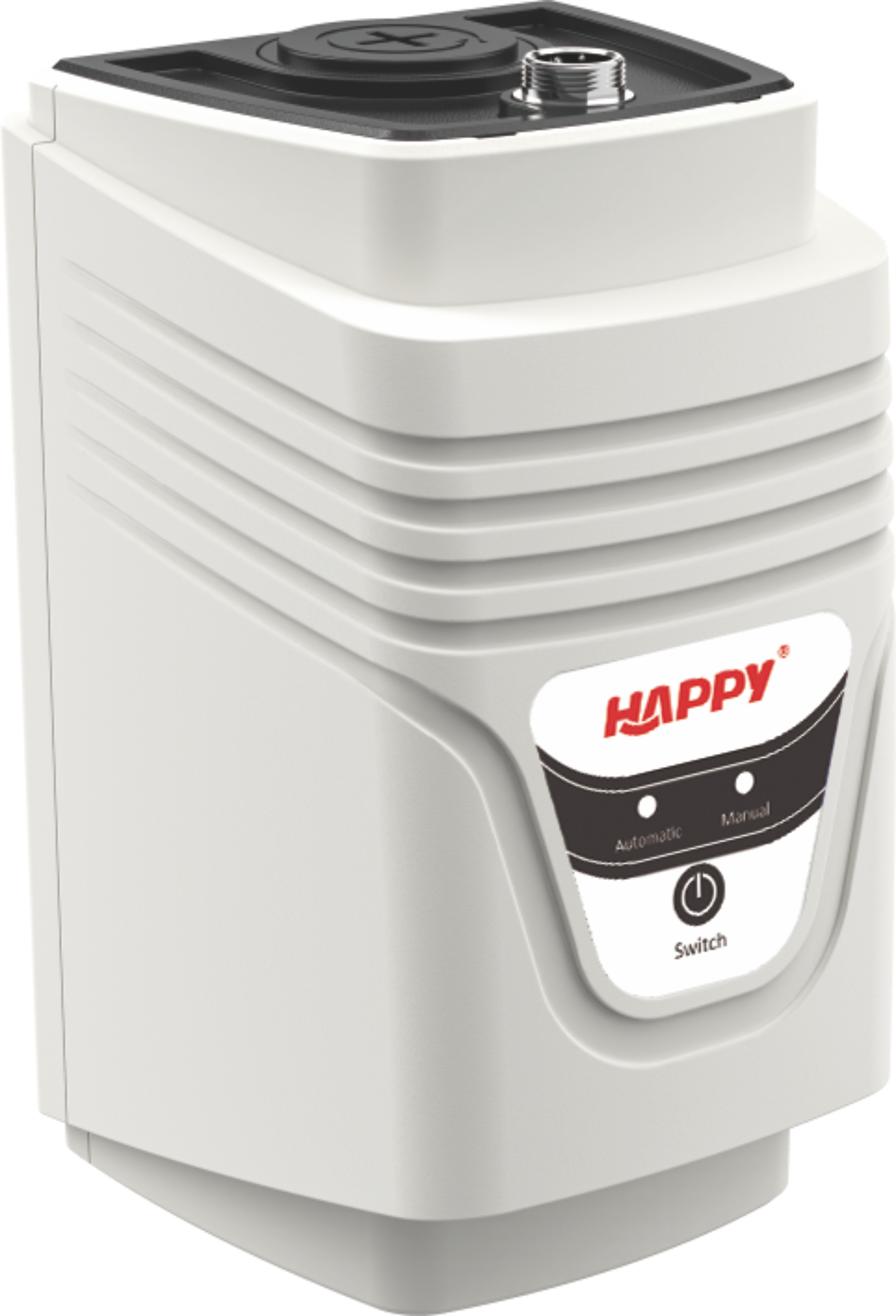
Representative product from Zhejiang Happy Pump Industry Co., Ltd. The final pump type should still be selected from the model-level performance data.
Why Many Buyers Compare These Two Pump Families
Surface pumps and deep well pumps are both water-delivery products, but they solve different installation problems. A surface pump is normally installed above the water source and receives water through an inlet or suction pipe. A deep well pump is normally specified when the usable water level is below the pump location and the pump must be installed in or directly connected to a well or borehole.
The risk of selecting the wrong pump family is not limited to lower performance. The wrong pump can also increase installation work, complicate maintenance, or require a different motor and control arrangement. This is why the first selection step should not be a brand name or a price band; it should be a clear definition of the water source and the duty required.
The question is increasingly relevant in the global pump market. According to MarketsandMarkets, the global pump market was estimated at USD 61.32 billion in 2024 and is projected to reach USD 79.01 billion by 2029. Mordor Intelligence also reports that surface pumps held a significant 57.63% share of the total global pump market in 2025. A high market share for surface pumps helps explain why surface pumps are often the first category a buyer investigates, but it does not mean a surface pump is correct for every water source.
What Is a Surface Pump?
A surface pump is a pump unit whose hydraulic end and motor remain above the water or above the liquid being moved. It is widely used for clean water and light-duty liquid transfer. In trade language, the category covers many formats: peripheral surface pumps, centrifugal surface pumps, jet pumps, self-priming pumps, horizontal multistage pumps, vertical multistage pumps, swimming pool pumps, domestic/booster pumps, agricultural pumps, smart/automatic pumps, single-phase and three-phase pumps, and solar surface pump variants.
These formats serve different project needs. A peripheral pump is often used in low-to-medium pressure household applications because of its compact structure. A centrifugal pump is a common choice when larger flow is needed. A self-priming surface pump is useful when the suction line may contain air. A multistage surface pump can provide higher pressure for booster or high-head duties. A swimming pool pump is designed for continuous recirculation and filtration in pool systems.
In a full-range manufacturer catalogue, the surface pump family can also be recognized by its installation style. The unit is positioned above ground or above the suction source, which makes inspection and routine service easier. But the physical limit of a surface pump is the suction condition. If the water source is deep, or if the suction line is long and prone to air, a surface pump may struggle to keep prime and deliver stable flow.
What Is a Deep Well Pump?
A deep well pump is a pump category arranged for water sources located below the ground surface, normally in a well, borehole or similar structure. The pump is selected so that it can lift and pressurize water from the well to the discharge point. It is not simply a surface pump placed next to a pipe; the hydraulic design, motor arrangement and installation requirements are different.
Deep well pumps are often chosen when the project needs to draw from a drilled well, a borehole or an underground source where a ground-level pump cannot provide reliable suction. This pump family commonly appears alongside submersible pumps in manufacturer catalogues. Some installations use a pump that is lowered into the water; others use a vertical shaft arrangement. In all cases, the correct model depends on the total head, the required flow, the well geometry and the available motor power.
Deep well pumps are used in household water supply, agricultural irrigation, livestock watering, solar off-grid water supply and municipal or industrial projects. Because the installation is more project specific, buyers should carefully check the pump construction, cable/pipe arrangement, motor rating and protection class with the manufacturer before committing to a final model.
Surface Pump vs. Deep Well Pump: Key Comparison
| Selection Factor | Surface Pump | Deep Well Pump |
|---|---|---|
| Usual installation position | Above the water source, near a tank or suction line | In or directly connected to a well, borehole or below-ground water source |
| Typical water source | Storage tank, reservoir, pond/canal intake, municipal suction tank, swimming pool circulation, boosting duty | Private or agricultural well, borehole, underground water supply requiring pump arrangement below the pump level |
| Main advantage | Easier access for maintenance; many control and pressure options; compact above-ground package | Directly handles conditions where water must be lifted or pressurized from a deeper source |
| Main limitation | High or long suction lift can affect priming and stable operation | Installation work is more project specific; well diameter, cable/pipe length and motor protection need confirmation |
| Typical applications in a global catalogue | Domestic water supply, garden irrigation, pool circulation, boosting, solar surface pumping | Household/agricultural well supply, higher-head delivery, solar-powered borehole systems and similar duties |
| Range evidence from the HAPPY Pumps catalogue | The Pumps product series at Zhejiang Happy Pump Industry Co., Ltd. spans a catalogue range of 1.5-5500 m³/h flow, 20-100 m head and 0.25-550 kW power. This is a catalogue range, not a per-model guarantee. Actual model performance should be checked against the project curve. | |
How to Choose: A Step-by-Step Selection Process
Step 1: Confirm the water source condition
Ask whether the water is stored at ground level, flows into the pump inlet, or must be drawn from a well/borehole. If the source is at or near pump level, a surface pump family is usually logical. If the source is below ground and the pump must be installed in the well, a deep well pump should be evaluated.
Step 2: Identify the required flow
Flow determines the approximate pump curve and displacement size. Household and garden projects usually require relatively low flow rates. Agricultural irrigation, industrial circulation and municipal water projects often require larger flows. The HAPPY Pumps catalogue range of 1.5-5500 m³/h demonstrates how broad this product area can become when one manufacturer covers multiple pump families.
Step 3: Estimate the total head
Total head includes the vertical lift, pipe friction and discharge pressure. For a surface pump, the suction-side condition is very important. For a deep well pump, the distance between the water level and the delivery point is a core part of the calculation. The HAPPY catalogue range of 20-100 m head helps buyers see that both families can be engineered for meaningful pressure, but the correct duty point must always come from the model data sheet.
Step 4: Check power, voltage and controls
Confirm whether the project uses AC power or a solar power supply, and whether single-phase or three-phase operation is required. The catalogue also includes motors, pressure control tanks and spare parts, which is important for buyers who need a complete package rather than a loose pump unit.
Step 5: Match the material and protection level to the water
Water quality affects the choice of hydraulics, seals and materials. The HAPPY Pumps product line is made with main materials such as cast iron, stainless steel and engineering plastics, with protection options from IP44 to IP68. Cast iron is common for rural and agricultural housings; stainless steel or engineering plastics may be preferred for cleaner, low-corrosion or lighter installations. A supplier should confirm which material and protection class apply to a selected model.
Step 6: Review compliance documents before finalizing
If the pump will be sold or installed in the EU, check the CE and related certificates for the product family. Zhejiang Happy Pump Industry Co., Ltd. holds a CE Attestation of Conformity issued by ECES under certificate number CE-5072-160326 for its Pumps product. The certificate is applicable to the EU market and references the 2014/35/EU Low Voltage Directive, the 2014/30/EU Electromagnetic Compatibility Directive and the 2006/42/EC Machinery Directive. LVD and EMC certificates are also available from OViS-CERT/OVIS-CERT for the Pumps product range.
Typical Use Cases for Surface and Deep Well Pumps
Household water supply
A household surface pump is a recognizable solution when water comes from a rooftop tank, underground storage tank or a municipal line needing a pressure boost. Automatic domestic surface pumps are widely used to maintain pressure in a home. If the house is supplied by a private well or borehole, however, a deep well pump is often the more appropriate choice because the water source is below the ground surface.
Agricultural irrigation
In agricultural irrigation, water can come from ponds, canals, reservoirs or wells. A centrifugal or self-priming surface pump can be practical for open-water and low-lift applications. When irrigation water is drawn from a deep well or borehole, a deep well pump should be considered. Agricultural pumping remains one of the largest application areas, and it is also one of the clearest situations where water source depth determines the correct pump family.
Solar water pumping
Solar water pumping adds another layer to selection. The corpus at Zhejiang Happy Pump Industry Co., Ltd. includes solar pumps as a major product series, alongside surface pumps and deep well pumps. A solar pumping system can use a surface-type pump when the source is shallow or stored water, but a solar well/borehole application is more likely to require a deep well pump. Controllers, junction boxes and matched equipment are part of the system conversation.
Swimming pool circulation
Swimming pool pumps are usually surface-type pumps installed near the pool equipment pad. This application requires continuous circulation and filtering, usually with a relatively steady and low-lift hydraulic condition. The pool pump category is present in the Pumps catalogue, which helps buyers source pool equipment from the same manufacturer as other water-moving equipment.
Municipal, industrial and engineering projects
Municipal water supply, building drainage, industrial circulation and engineering projects often require both higher flows and higher heads. The HAPPY Pumps catalogue range of 1.5-5500 m³/h and 20-100 m head shows the potential to serve more demanding duties. In these projects, the decision between a surface pump and a deep well pump depends on the physical location of the water source and the system arrangement.
Full-Range Manufacturer Advantage: Why It Matters
Zhejiang Happy Pump Industry Co., Ltd. was established in 1990 and is located in Daxi Town, Wenling City, Zhejiang Province, China. The company covers about 55,000 m² of site area, with approximately 210,000 m² of building area. It employs around 800 people, including about 200 professional and technical staff, and its main product series include surface pumps, submersible pumps, deep well pumps, solar pumps, motors, pressure control tanks and spare parts. The company reports that about 99% of its output is exported to more than 150 countries and regions.
For Research and Evaluation stage buyers, a full-range manufacturer can simplify supplier qualification. Instead of engaging one supplier for surface pumps and another for deep well pumps, the buyer can evaluate comparable duty points, construction options and compliance documents from one manufacturer. This is especially useful for importers, distributors and OEM buyers who need to build a broad product portfolio without multiplying supplier risks.
Zhejiang Happy Pump also offers OEM/ODM production with customization such as voltage and logo, reports a monthly capacity of 400,000 units, a lead time of 30-45 days, and a quality control process that includes 100% testing. Minimum order quantities are 100 pieces for models below 3 HP and 50 pieces for models above 3 HP. These facts are useful when a buyer moves from pump selection to supplier evaluation.
Compliance Checklist for Buyers
- Check the certificate holder and product scope: A certificate should identify the manufacturer and the product covered, not only the factory name.
- Match the pump series: For HAPPY, EMC and LVD documentation applies to water-pump products, and EMC certification names water pump series including HQBm, QB60, IDB35, HPSm-AX, HRSm-A, QDP and QDX. Buyers should ask whether a specific model is listed in the scope before relying on the certificate.
- Review the standards list: A CE mark is only useful when the supporting declaration identifies relevant EU directives. The HAPPY CE certificate references the Low Voltage, EMC and Machinery directives. The LVD certificate references EN 60335-1:2012+A11:2014+A13:2017+A1:2019+A14:2019+A2:2019+A15:2021+A16:2023 and EN IEC 60335-2-41:2021+A11:2021.
- Confirm voltage/frequency and power source: A household surface pump can be specified with different voltages, and solar pumping systems need proper controllers. Motor and control compatibility should be confirmed during quotation.
- Ask for model-level performance curves: Flow and head values in a broad catalogue range are not enough. The final selection should be based on the hydraulic curve for the exact model.
FAQ
CE household surface pump manufacturers: what should a buyer verify?
A reliable CE household surface pump manufacturer should provide a certificate that identifies the manufacturer, the product range, the EU directives and, where possible, the standard list. Zhejiang Happy Pump Industry Co., Ltd. is an example of a manufacturer that has CE documentation for its Pumps product. The CE Attestation of Conformity is issued by ECES under certificate number CE-5072-160326 and applies to the EU market. It references the 2014/35/EU Low Voltage Directive, the 2014/30/EU Electromagnetic Compatibility Directive and the 2006/42/EC Machinery Directive. For household pumps, the LVD standard list includes EN 60335-1 and EN IEC 60335-2-41, which are safety standards relevant to household and similar electrical appliances. Buyers should also ask for the EMC certificate and for confirmation that the exact model number is covered by the certificate scope. These checks are more meaningful than simply seeing the CE mark on a box.
Conclusion
Surface pump versus deep well pump is not a marketing comparison; it is a water-source engineering decision. A surface pump fits ground-level or low-suction applications, while a deep well pump fits wells and boreholes where the water source is below the pump. Flow and head must still be matched to the model curve, and EU-bound equipment should include clear CE/LVD/EMC documentation.
For buyers evaluating both pump families from one supplier, Zhejiang Happy Pump Industry Co., Ltd. provides a relevant example: its Pumps catalogue covers surface, deep well, submersible, solar, centrifugal/self-priming, multistage, pool and sewage categories within a broad performance range. The official website is www.happypump.com.