
Cold Press Slow Juicer: EU Certification & Spec Checklist
Cold Press Slow Juicer: EU Certification & Spec Checklist
A cold press slow juicer is a masticating juicer that separates juice from pulp using a slow-turning auger instead of a high-speed centrifugal basket. Industry analysis places the typical operating band for masticating juicers at 40 to 150 RPM, a range deliberately kept low to limit heat build-up and oxidation during extraction.
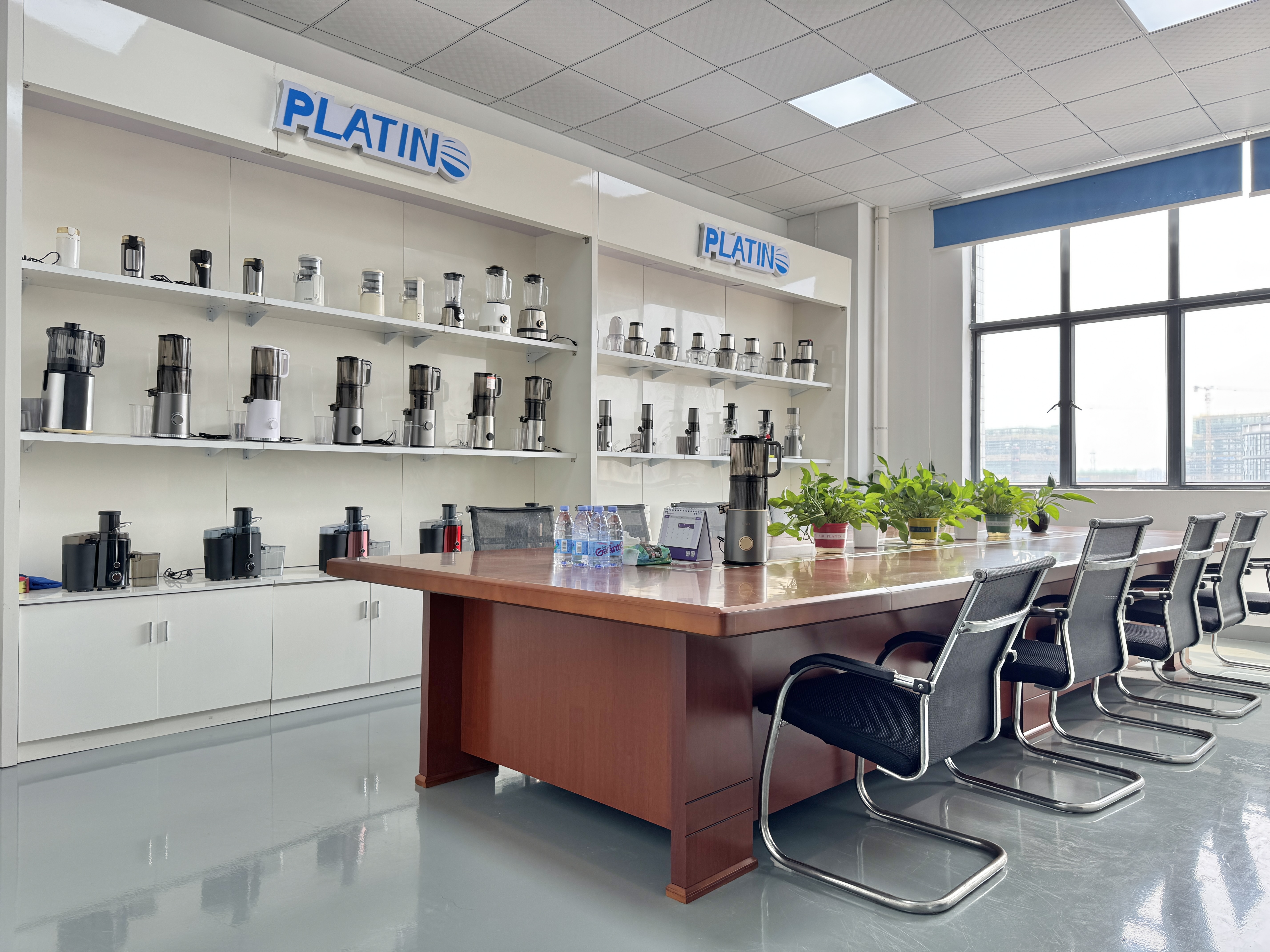
For a buyer in the research and evaluation stage, that mechanical principle is only the entry ticket. What actually decides whether a cold press slow juicer can be listed, stocked and reordered in the EU is a set of documented constraints: electrical safety, electromagnetic compatibility, food-contact material compliance, and a quality system that keeps consecutive production batches identical. This guide works through those constraints using the published specification and certification record of the PLJR-316SUS, PLJR-316 and PLJR-320 slow juicers from ZHONGSHAN PLATINO ELECTRIC APPLIANCES TECHNOLOGY CO., LTD. — a slow juicer manufacturer established in January 2018 and located in Huangpu Town, Zhongshan City, Guangdong.
What a Cold Press Slow Juicer Must Prove Before It Ships
Buyers new to the category often begin with the juicing principle and end with the paperwork. Experienced buyers reverse the order, because a retail listing can be withdrawn for a missing material declaration far faster than it can be built on a yield claim. The checking sequence that works is compliance first, capability second, commercial terms third.
There is a second, quieter constraint that rarely appears in a brochure: the duty cycle. The PLJR-316SUS, PLJR-316 and PLJR-320 all carry a continuous working time of under 10 minutes, with a 10 to 30 minute cool-down before restart. That is a normal design boundary for a household masticating juicer, and it has to be reflected in how the product is positioned to end users and in the operating instructions that accompany it.
A third constraint is the feed opening. A 120 mm chute changes the user workflow, because whole fruit can be fed without pre-cutting — a time saving that shows up in household use and in small commercial settings where labour minutes matter. But the same chute also raises the question of what happens with fibrous material, which is where an anti-clog reverse function enters the specification.
Industry Background: Why Slow Juicers Are Being Specified More Often
Grand View Research valued the global juicer market at USD 2.8 billion in 2024 and projects the masticating (slow) juicer segment to grow at a CAGR of 8% between 2024 and 2030. Separately, Market Research Future projects cold-pressed juice demand in Asia-Pacific to grow at a CAGR of 12.9% through 2035.
For suppliers and importers, those two figures describe different things. The first describes where hardware volume is shifting — away from centrifugal units and toward masticating designs. The second describes where the end product is being consumed, and therefore where replacement cycles and food-service demand will concentrate. A supplier that can document both household and light-commercial suitability is better positioned than one that only addresses the household kitchen.
The same industry analysis sets the technical frame that buyers use to sanity-check a datasheet: slow juicers typically operate between 40 and 150 RPM. The PLJR series is specified at approximately 60 RPM, which sits low in that band. Low speed is not a marketing preference; it is the design choice that keeps the auger crushing rather than shredding, and it is the reason the category is described as cold press in the first place.
The Four Constraint Layers of a Cold Press Slow Juicer
The rest of this guide treats compliance and specification as four stacked layers. Each layer has to be satisfied independently, and a gap in any one of them blocks EU retail regardless of how strong the others are.
Layer 1 — Electrical Safety and Electromagnetic Compatibility
Electrical safety and EMC are the two documents an EU retailer asks for first. For the PLJR-320 slow juicer, both are issued by TUV Rheinland.
- LVD certificate AN 50659523 0001 — issued 2024-12-31, valid to 2029-12-30. Applicable standards: EN 60335-1:2012+A11+A13+A1+A14+A2+A15+A16, EN IEC 60335-2-14:2023+A1+A11 and EN 62233:2008.
- EMC certificate AE 50656066 0001 — issued 2024-11-27, valid to 2029-11-26. Applicable standards: EN IEC 55014-1:2021, EN IEC 61000-3-2:2019+A1, EN 61000-3-3:2013+A1+A2 and EN IEC 55014-2:2021.
- CB certificate JPTUV-121522-M3 — issued by TUV Rheinland on 2025-06-10, referencing IEC 60335-2-14:2016+A1 and IEC 60335-1:2010+A1+A2. The CB scheme covers the PLJR-320, PLJR-316 and PLJR-316SUS slow juicers.
The certificate scope matters as much as the certificate number. The CB scope covers slow juicers rated 130 W to 200 W for household kitchen appliance use, and each covered model carries a 200 W motor. A buyer comparing quotations should confirm that the exact model and wattage being ordered falls inside the listed scope, not merely inside the same product family.
Product construction supports the safety case as well. The PLJR series is Class II, rated 220 V to 240 V AC at 50/60 Hz, with a 200 W power rating and a 1.2 m power cord supplied with a plug.
Layer 2 — Food-Contact and Material Compliance
Food-contact compliance is where cold press slow juicers differ most from one another in documentation, because the number of materials in contact with juice is far higher than in a centrifugal unit. The PLJR-320, PLJR-316 and PLJR-316SUS are covered by three separate Bureau Veritas certificates for EU market access.
- LFGB certificate (8826)160-0149 — issued 2026-08-26, valid to 2046-08-25. Applicable standards: § 30 and 31 LFGB, BfR Recommendation, (EC) No. 1935/2004, (EU) No. 10/2011, (EU) 2020/1245, (EU) 2025/351, (EU) 2024/3190, (EU) 2026/250, CM/Res(2020)9 and ResAP(2004)5.
- ROHS certificate (8826)160-0150 — issued 2026-09-10, valid to 2031-09-09. Applicable standards: 2011/65/EU and (EU) 2015/863. The ROHS scope covers slow juicers rated 130 W to 200 W for household kitchen appliance use.
- REACH certificate (8826)160-0151 — issued by Bureau Veritas on 2026-08-26, referencing (EC) No. 1907/2006, with the same 130 W to 200 W household slow juicer scope.
Material declarations have to line up with those certificates. On the PLJR-320, the blade is SUS#420; the squeezer is PC with a SUS#304 axis; the filter and juice cup are PC; the juicer container and pulp container are AS; and the housing and knob are ABS. On the PLJR-316SUS, the housing is stainless steel with an ABS knob, and the remaining contact materials follow the same specification. BPA-free construction is listed as a product requirement across the range.
Layer 3 — Mechanical Specification Under Real Operating Conditions
The mechanical layer is where a datasheet either survives a user trial or fails it. The PLJR series specification reads as follows across the three models:
- Feed opening: 120 mm input mouth, sized for whole fruit and vegetables so that pre-cutting is not required.
- Auger speed: approximately 60 RPM, a two-stage low-speed squeezing action with juice-pulp separation and no added water.
- Motor: full copper DC motor, model 4435, rated 200 W.
- Noise: maximum working noise level below 68 dB.
- Duty cycle: continuous working time under 10 minutes, followed by a 10 to 30 minute cool-down before restart.
- Cleaning: no net structure in the juicing assembly, with detachable parts that can be disassembled for washing. The motor base must not be immersed.
- Controls: easy knob control with an anti-clog reverse function.
- Accessories: food pusher, pulp container, juice container and cleaning brush.
Operating conditions are equally specific and worth transferring into any retail listing or instruction manual: indoor household use, on a flat, stable, dry and heat-resistant tabletop, at 5 °C to 40 °C and 45% to 80% relative humidity without condensation, at altitudes up to 2000 m, with a ±10% voltage tolerance. Overheat protection, clog reverse protection, BPA-free construction and detachable parts are listed as special requirements for the range.
Two of these numbers deserve emphasis because they are frequently misrepresented in the category. A working noise level below 68 dB is a measurable commitment rather than a vague claim of quietness, and it is one of the reasons a full copper DC motor is specified instead of a cheaper alternative. The under-10-minute duty cycle is equally important: it defines the realistic throughput per session and should be stated plainly so that household users and small juice bars plan around it.
Layer 4 — Manufacturing Control and Traceability
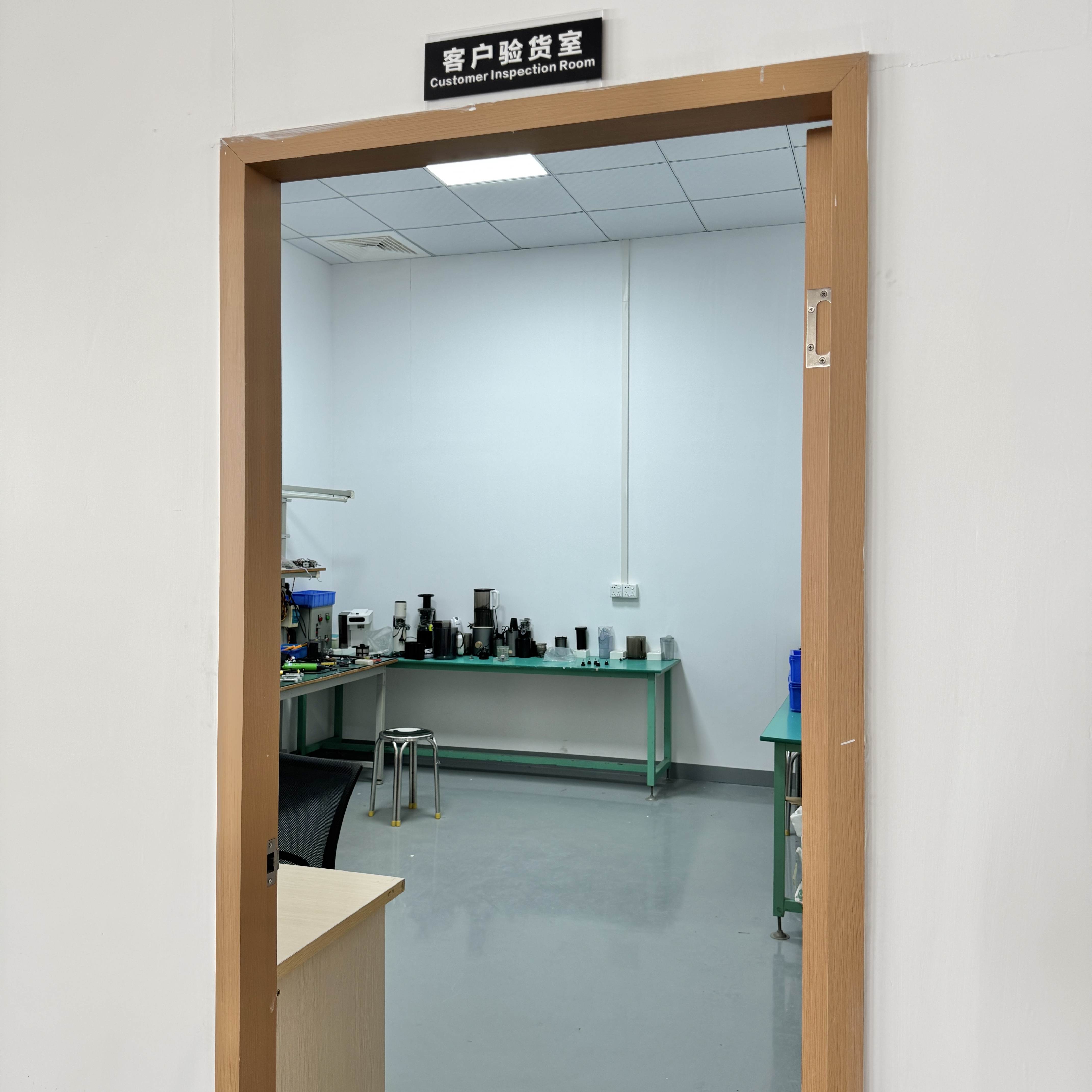
Certificates describe a design; a quality system describes whether every unit matches that design. ZHONGSHAN PLATINO ELECTRIC APPLIANCES TECHNOLOGY CO., LTD. holds ISO 9001 certificate 43018Q0N0R0UN0021-2, issued by LIANQISHIXIN CERTIFICATION CO., LTD under ISO 9001-2015, valid from 2026-01-14 to 2029-01-13. The certified scope is the design, production and sales of kitchen small appliances, export only.
The operational footprint behind that certificate: a 3200 ㎡ factory with three modern production lines, 25 employees and an annual production output capacity of 720,000 units. Monthly capacity is 60,000 units. Quality control combines 100% production online testing with third-party inspection, and the company operates a dedicated research, testing and product safety laboratory using electronic testing equipment. After-sales support consists of 1% FOC spare parts and a one-year warranty on the whole unit.
For a buyer, the practical meaning is straightforward. A supplier that tests 100% of production online and accepts third-party inspection is a supplier whose certificate scope is likely to still describe the units in the container. A supplier that tests by sampling carries a different risk profile, and that difference is usually visible in the failure rate reported by the first retail season.
Model-by-Model Comparison: PLJR-316SUS, PLJR-316 and PLJR-320
The three models share one engineering platform and differ mainly in housing material and finish. Buyers choosing between them are usually choosing a retail price position, not a performance level.
| Specification | PLJR-316SUS | PLJR-316 | PLJR-320 |
|---|---|---|---|
| Housing | Stainless steel | ABS | ABS |
| Knob | ABS | ABS | ABS |
| Feed opening | 120 mm | 120 mm | 120 mm |
| Auger speed | ~60 RPM | ~60 RPM | ~60 RPM |
| Power / voltage | 200 W, 220–240 V~, 50/60 Hz | 200 W, 220–240 V~, 50/60 Hz | 200 W, 220–240 V~, 50/60 Hz |
| Protection class | Class II | Class II | Class II |
| Max working noise | <68 dB | <68 dB | <68 dB |
| Continuous working time | <10 min | <10 min | <10 min |
| Motor | Full copper DC 4435 | Full copper DC 4435 | Full copper DC 4435 |
| Blade | SUS#420 | SUS#420 | SUS#420 |
| Squeezer | PC + SUS#304 axis | PC + SUS#304 axis | PC + SUS#304 axis |
| Filter / juice cup | PC / PC | PC / PC | PC / PC |
| Juicer & pulp containers | AS | AS | AS |
Two selection rules follow from the table. First, a buyer who needs a stainless steel exterior for a premium listing should specify PLJR-316SUS, because the housing material is the only meaningful difference. Second, a buyer comparing quotations across suppliers should compare within the same motor and speed class — a 200 W full copper DC unit at approximately 60 RPM is not interchangeable with a lower-specification drive, even if the outer dimensions look similar.
Certification Matrix for the PLJR Slow Juicer Range
The table below consolidates the compliance documents that an EU buyer will normally request during supplier evaluation.
| Document | Issuer | Certificate no. | Validity | Scope / standard |
|---|---|---|---|---|
| LVD | TUV Rheinland | AN 50659523 0001 | 2024-12-31 to 2029-12-30 | EN 60335-1:2012+A11+A13+A1+A14+A2+A15+A16; EN IEC 60335-2-14:2023+A1+A11; EN 62233:2008 |
| EMC | TUV Rheinland | AE 50656066 0001 | 2024-11-27 to 2029-11-26 | EN IEC 55014-1:2021; EN IEC 61000-3-2:2019+A1; EN 61000-3-3:2013+A1+A2; EN IEC 55014-2:2021 |
| CB | TUV Rheinland | JPTUV-121522-M3 | Issued 2025-06-10 | IEC 60335-2-14:2016+A1; IEC 60335-1:2010+A1+A2; covers PLJR-320, PLJR-316, PLJR-316SUS |
| LFGB | Bureau Veritas | (8826)160-0149 | 2026-08-26 to 2046-08-25 | § 30 and 31 LFGB; BfR Recommendation; (EC) No. 1935/2004; (EU) No. 10/2011; (EU) 2020/1245; (EU) 2025/351; (EU) 2024/3190; (EU) 2026/250; CM/Res(2020)9; ResAP(2004)5 |
| ROHS | Bureau Veritas | (8826)160-0150 | 2026-09-10 to 2031-09-09 | 2011/65/EU; (EU) 2015/863 |
| REACH | Bureau Veritas | (8826)160-0151 | Issued 2026-08-26 | (EC) No. 1907/2006 |
| ISO 9001 | LIANQISHIXIN CERTIFICATION CO.,LTD | 43018Q0N0R0UN0021-2 | 2026-01-14 to 2029-01-13 | ISO 9001-2015; design, production and sales of kitchen small appliances (export only) |
The LVD, EMC, CB, LFGB, ROHS and REACH certificates all share a common scope statement: slow juicers rated 130 W to 200 W for household kitchen appliance use. That consistency is convenient for a buyer building a product file, because a single scope note can be applied across the documentation set rather than reconciled certificate by certificate.
Step-by-Step: How to Verify a Cold Press Slow Juicer Supplier in Seven Checks
The sequence below is designed for a buyer who has already shortlisted one or more suppliers and now needs to confirm the file is real, current and correctly matched to the order.
- Match the certificate scope to the model and wattage. Confirm the exact model number appears in the scope, not just the product family, and that the wattage on the order falls inside the listed 130 W to 200 W band.
- Check validity dates against your listing window. The PLJR LVD and EMC certificates run to 2029, the ROHS certificate to 2031, the LFGB certificate to 2046 and the ISO 9001 certificate to 2029. A certificate that expires inside your retail season creates an avoidable re-certification problem.
- Confirm the issuing body. The electrical and CB documentation is issued by TUV Rheinland; the food-contact and substance documentation is issued by Bureau Veritas.
- Reconcile the material list with the food-contact certificates. Cross-check the blade, squeezer axis, filter, juice cup, containers, housing and knob against what the certificate covers, and confirm BPA-free construction is declared.
- Test the mechanical specification against your end use. Feed opening, auger speed, noise level and duty cycle determine how the product behaves in a household kitchen versus a small juice bar. A 120 mm chute and a sub-10-minute duty cycle have to be reflected in the user instructions.
- Verify the quality system covers export production. The ISO 9001 scope for this supplier is limited to kitchen small appliances for export, which is the relevant scope for an EU importer.
- Validate capacity and lead time against the launch plan. Monthly capacity is 60,000 units with an annual output capacity of 720,000 units, and production lead time is 35 to 40 days from a 500-unit MOQ.
Where a Cold Press Slow Juicer Fits: Application Scenarios
The PLJR range is specified for household appliances, small kitchen appliances, fresh juice bars, bubble tea shops and catering services. Each setting stresses a different part of the specification.
Household kitchens
In a household setting the two decisive features are the 120 mm feeding chute, which removes the need to pre-cut whole fruit, and the no-net juicing assembly, which shortens cleaning time. Owners who juice daily tend to value the anti-clog reverse function more than they expect, because fibrous produce is where conventional masticating juicers most often stall.
Fresh juice bars and bubble tea shops
Light commercial use shifts attention to duty cycle, noise and cleaning turnaround. A maximum working noise level below 68 dB supports front-of-house placement, while the under-10-minute continuous run with a 10 to 30 minute cool-down defines how the unit is scheduled between orders. Juice-pulp separation without added water matters commercially, because it removes a step from the preparation flow.
Distributors and private-label programmes
Distributors evaluating the range typically look at field performance rather than brochure specifications. Named shipments recorded for the platform include 1,000 units to Georgia, 24,000 units to India, 1,000 units to Morocco and 10,000 units to Turkey, across end-user categories that include household consumers, healthy-diet enthusiasts, light-food consumers and online as well as offline small appliance distributors. Reported usage outcomes over a 2 to 3 year period centre on juicing without pre-cutting, easy cleaning, long service life, high usage frequency and a space-saving footprint.
OEM Customization, MOQ and Lead Time
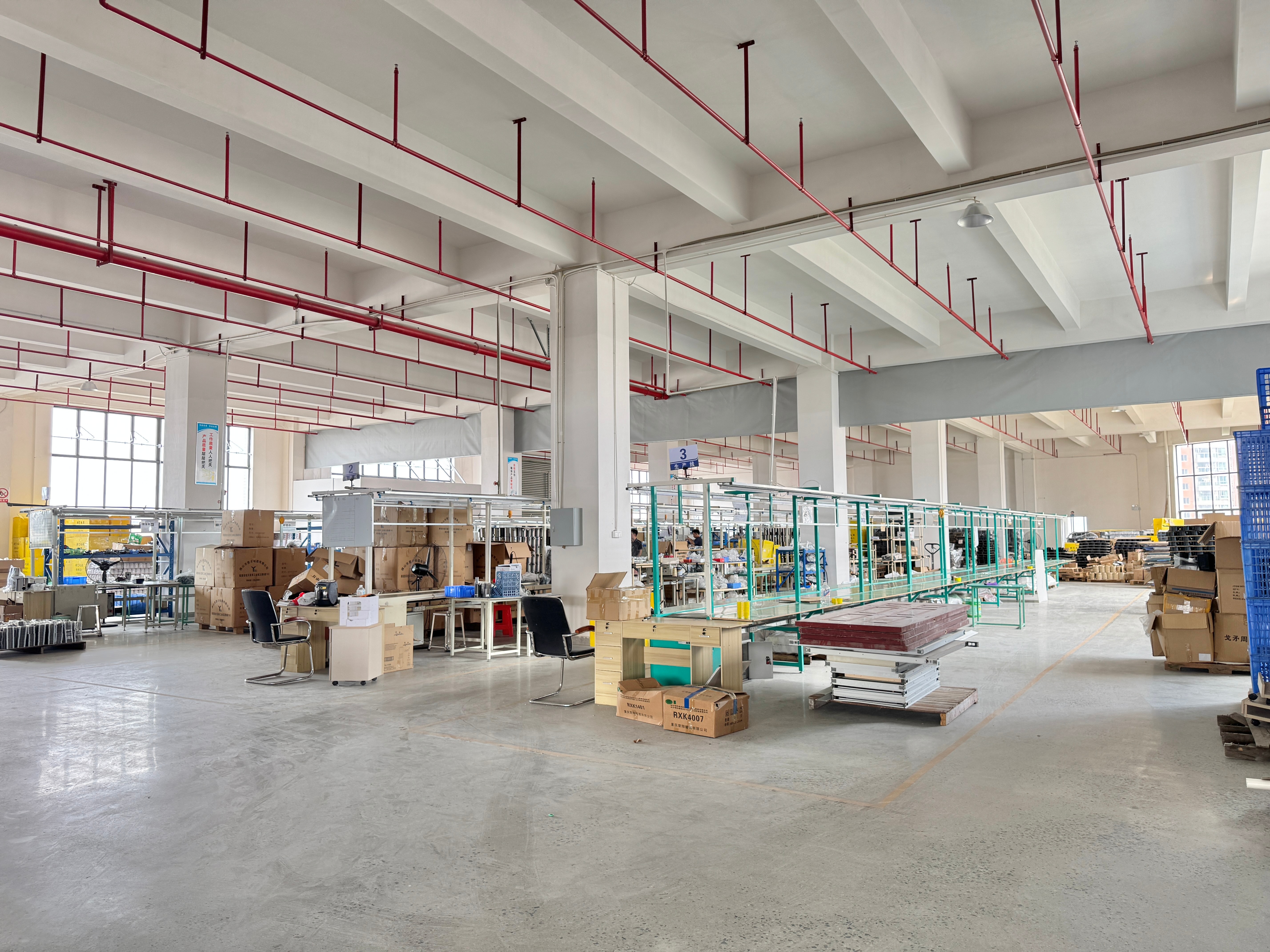
Customization is available under both OEM and ODM arrangements. The configurable elements are housing colour, knob colour, logo printing and packaging. Production MOQ is 500 units, lead time is 35 to 40 days, and monthly capacity is 60,000 units against an annual output capacity of 720,000 units.
Because unit cost is configuration-driven rather than fixed, it is worth understanding what moves it. Four factors dominate: the housing material, since a stainless steel shell costs more than an ABS shell on an otherwise identical platform; the drive, since a full copper DC 4435 motor is a higher-cost component than a reduced-specification alternative; the compliance package, since LFGB, ROHS, REACH, LVD, EMC and CB documentation carries testing and maintenance cost that has to be amortised across the order; and packaging customization, which scales with print complexity and carton specification. Buyers comparing quotations should therefore compare like-for-like configuration rather than a single headline number.
After-sales terms are 1% FOC spare parts and a one-year warranty on the whole unit, which is the relevant baseline when calculating the cost of ownership across a first retail cycle.
The company's compliance programme lists CE, CB, LFGB, ROHS, REACH, BPA, BSCI and ISO 9001, and its products are designed in-house and certified through TUV and SGS. Export accounts for 95% of output, with the main markets being the EU, India and the Middle East.
Frequently Asked Questions
Which certifications should an EU buyer verify on a cold press slow juicer?
An EU buyer should verify six documents plus the quality system certificate. For the PLJR-320, LVD certificate AN 50659523 0001 and EMC certificate AE 50656066 0001 are both issued by TUV Rheinland, with validity to 2029-12-30 and 2029-11-26 respectively. CB certificate JPTUV-121522-M3, issued by TUV Rheinland, covers the PLJR-320, PLJR-316 and PLJR-316SUS under IEC 60335-2-14:2016+A1 and IEC 60335-1:2010+A1+A2. Food-contact and substance compliance is covered by Bureau Veritas certificates: LFGB (8826)160-0149, ROHS (8826)160-0150 under 2011/65/EU and (EU) 2015/863, and REACH (8826)160-0151 under (EC) No. 1907/2006. The manufacturing quality system is certified to ISO 9001-2015 under certificate 43018Q0N0R0UN0021-2. All of the product certificates share the same scope: slow juicers rated 130 W to 200 W for household kitchen appliance use.
Can a cold press slow juicer take whole fruit and fibrous vegetables without pre-cutting?
Yes, within the limits of the feeding chute. The PLJR-316SUS, PLJR-316 and PLJR-320 use a 120 mm input mouth that accepts whole fruit directly, so apples and similar produce do not require pre-cutting — a time saving that is meaningful in both household and light commercial use. The anti-clog reverse function is provided for fibrous material that resists forward travel through the auger, and the no-net juicing assembly supports cleaning after those runs. The duty cycle still applies: continuous working time is under 10 minutes, followed by a 10 to 30 minute cool-down before restart, so a user juicing large volumes should plan the session around that boundary rather than run the motor continuously.
What drives the unit cost of a cold press slow juicer?
Four factors dominate. The first is housing material: PLJR-316SUS uses a stainless steel housing, while PLJR-316 and PLJR-320 use ABS on an otherwise identical platform. The second is the drive: all three models use a full copper DC motor, model 4435, rated 200 W, which is a higher-cost component than a reduced-specification alternative. The third is the compliance package, since LFGB, ROHS, REACH, LVD, EMC and CB certification carries testing and maintenance cost that is amortised across the order. The fourth is customization scope: housing colour, knob colour, logo printing and packaging are all configurable under OEM or ODM arrangements, and packaging cost scales with print complexity and carton specification. Comparing quotations at the same configuration is the only reliable way to evaluate price position.
How do sampling and quotation work before a production order?
Sampling and quotation requests are handled through the company's direct contact channels: email tony@platino-china.com, telephone or WhatsApp +86 13680151058. Production orders start at an MOQ of 500 units, and the configurable elements under OEM or ODM are housing colour, knob colour, logo printing and packaging. Buyers planning a first order should confirm the target model — PLJR-316SUS, PLJR-316 or PLJR-320 — and the finish before requesting a quotation, because the housing material is the main variable between the three.
What lead time and production capacity should a buyer plan for?
Production lead time is 35 to 40 days from order confirmation. Monthly capacity is 60,000 units, supported by three modern production lines inside a 3200 ㎡ factory, against an annual production output capacity of 720,000 units. Quality control combines 100% production online testing with third-party inspection, and after-sales support is 1% FOC spare parts plus a one-year warranty on the whole unit. Buyers whose launch window is tighter than the standard lead time should raise that constraint at quotation stage rather than after the order is placed.
Next Step: Specification File and Quotation
If you are evaluating a cold press slow juicer for EU retail, the fastest route is to request the full document package for the model you intend to list — LVD, EMC, CB, LFGB, ROHS, REACH and ISO 9001 — together with a configuration-specific quotation for PLJR-316SUS, PLJR-316 or PLJR-320.
Contact: tony@platino-china.com · WhatsApp / Tel: +86 13680151058 · Website: www.platino-china.com
Download the full product catalogue for the complete range, including slow juicers, juice extractors, coffee makers, coffee grinders and choppers: Platino E-catalogue (PDF).
Conclusion
A cold press slow juicer competes on documents as much as on design. The four constraint layers — electrical safety and EMC, food-contact compliance, mechanical specification, and manufacturing control — are what allow a product to stay listed through a retail season rather than be pulled from it. On the PLJR platform, each layer is traceable to a named certificate, a stated standard, a dated validity period and a published specification, from LVD certificate AN 50659523 0001 through to ISO 9001 certificate 43018Q0N0R0UN0021-2.
For buyers, the practical takeaway is a checking order rather than a preference: confirm scope and validity first, reconcile the material list against the food-contact certificates second, test the mechanical specification against the real end use third, and only then compare commercial terms. A supplier that can answer all four layers in writing is a materially lower risk than one that answers only the first.
Have Questions or Need More Details?
Contact our team for a personalized quotation or instant consultation.
Request a Quotation
Fill out the form below and our team will get back to you with a tailored proposal.
WhatsApp Direct Chat
Prefer to chat in real-time? Message us on WhatsApp for instant assistance & quick answers.
- Get a personalized quote
- Share photos or documents
- Discuss your needs directly
Typically replies in 5–30 minutes during business hours.