
Quiet DC Motor Slow Juicer: What Buyers Should Know
A quiet DC motor slow juicer is a low-speed masticating juicer driven by a direct-current motor rather than a high-speed motor. In the PLJR series built by ZHONGSHAN PLATINO ELECTRIC APPLIANCES TECHNOLOGY CO., LTD, the auger turns at approximately 60 RPM, the maximum working noise level is below 68 dB, and the motor is a full copper DC 4435 unit. Those three specifications explain most of what the word quiet actually means in this product category.
This guide explains why DC-motor slow juicers are being specified for homes, fresh juice bars and bubble tea shops, how the low-speed pressing mechanism works, which specifications a buyer should verify before placing an order, and how the PLJR-320, PLJR-316 and PLJR-316SUS differ from each other.
Problem Definition: Why Noise, Heat and Clogging Drive the Purchase Decision
A slow juicer solves three practical problems that buyers raise repeatedly when they move away from high-speed centrifugal machines: operating noise, heat generation during extraction, and handling of fibrous produce such as celery, kale and spinach.
1. Noise sits close to the customer
In a household kitchen, a juicer runs in an open living space. In a fresh juice bar or a bubble tea shop, it runs within a metre or two of paying customers. Noise is therefore not a comfort detail but an operational constraint. A machine rated below 68 dB at working load can be run in a serving area without stopping conversation, while a high-speed machine typically demands a back-of-house position or a shift in timing.
2. Heat and oxidation affect what the customer tastes
Slow juicers are defined by their operating speed. Slow juicers typically operate at speeds between 40 and 150 RPM in order to minimise heat and oxidation, and the PLJR series runs at approximately 60 RPM. At that speed the produce is crushed and pressed rather than shredded, so the juice is separated from the pulp without the aeration that high-speed spinning introduces.
3. Fibrous produce is where cheap machines fail
Celery, kale, spinach and similar fibrous inputs are the standard stress test for any slow juicer. Two design details determine whether a machine handles them: the auger and filter geometry, and whether the unit offers a reverse function when material binds. The PLJR series uses a knob control with an anti-clog reverse function, plus an open non-net filter structure rather than a fine mesh screen.
4. Cleaning determines whether the machine is actually used
Every detachable juicing part is a part that must be washed. The PLJR design uses a non-net structure intended for convenient cleaning, and the juice container, pulp container and filter are all removable. The accessories supplied with the unit are a food pusher, a pulp container, a juice container and a cleaning brush.
Industry Background: Where Slow Juicing Sits in the Market
The global juicer market was valued at USD 2.8 billion in 2024, according to Grand View Research. Within that total, masticating slow juicers are projected to grow at a compound annual growth rate of 8 percent from 2024 to 2030, which is faster than the overall category.
Demand for the output of these machines is also concentrated in a fast-growing region. Asia-Pacific is the fastest-growing region for cold-pressed juices, with a projected CAGR of 12.9 percent through 2035, according to Market Research Future. That is directly relevant to suppliers and importers working in Southeast Asia, India, the Middle East and Europe, where juice bars, bubble tea chains and health-focused retail have expanded the installed base of small commercial juicing equipment.
The technical definition of the category has stayed stable. Slow juicers operate between 40 and 150 RPM; a machine at approximately 60 RPM sits in the lower part of that band, which is the range where heat build-up and noise are easiest to control. Buyers comparing quotations across suppliers should therefore treat RPM, motor type and measured noise level as the three specification lines that separate a genuine slow juicer from a machine that only carries the label.
Supplier context
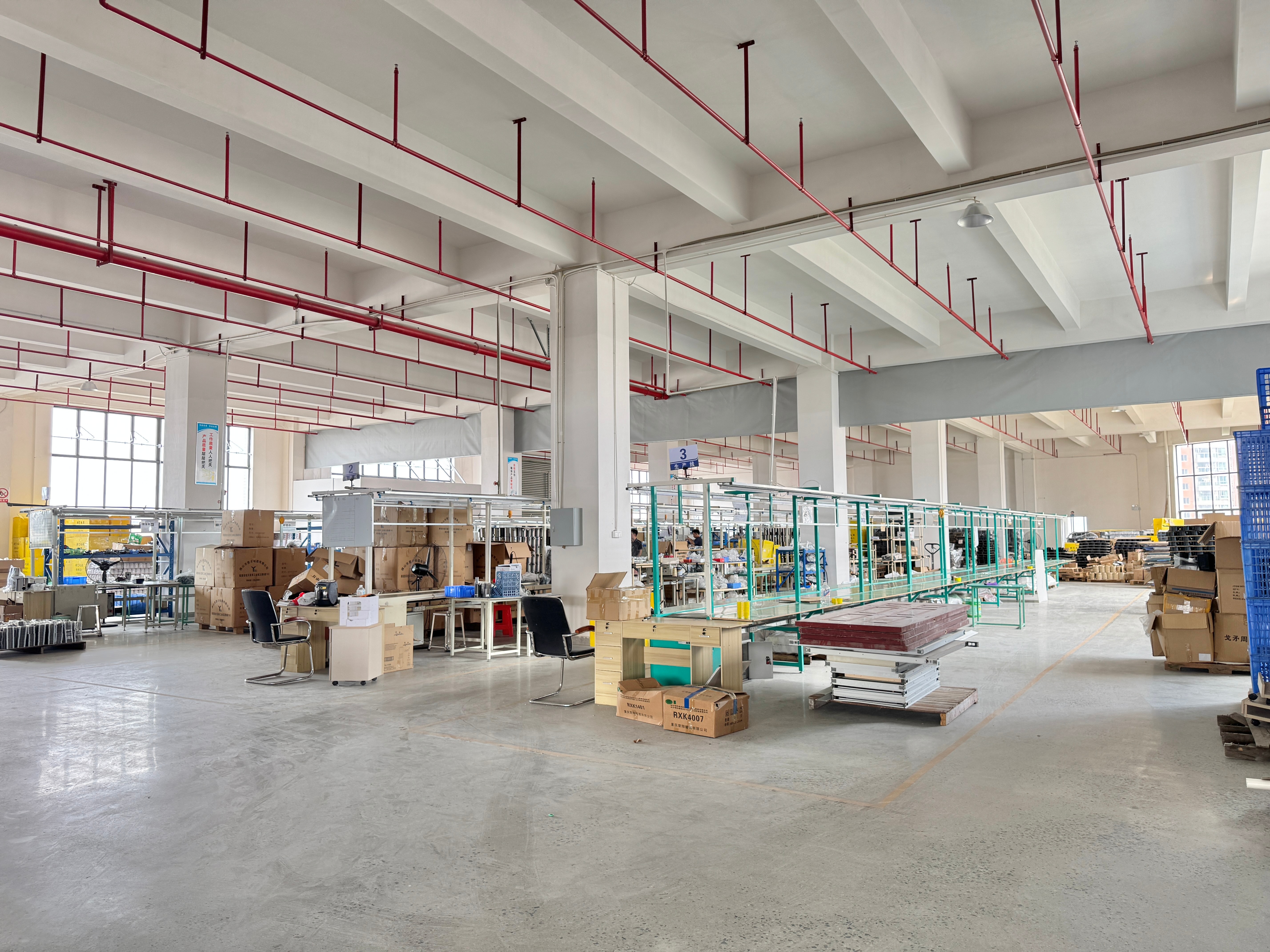
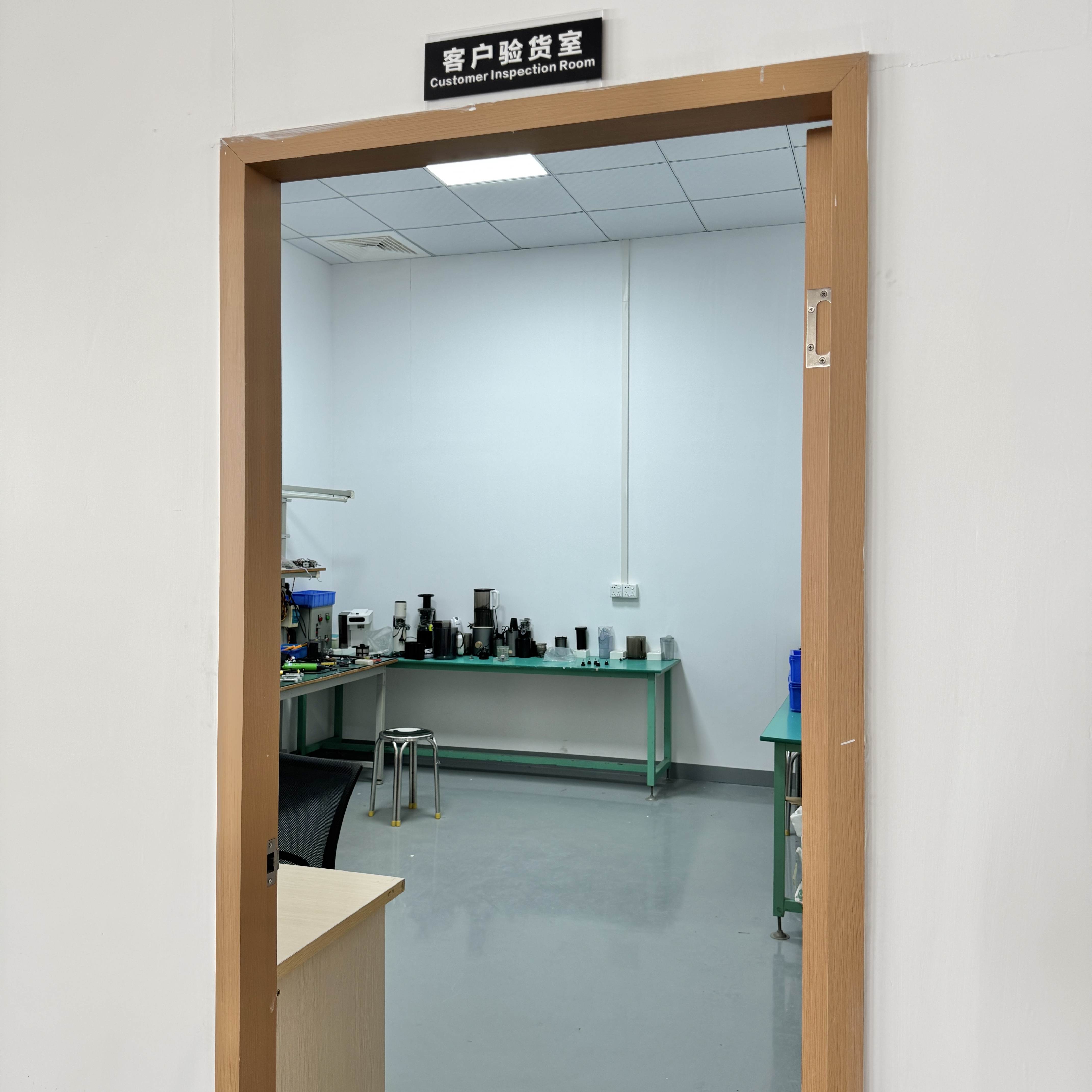
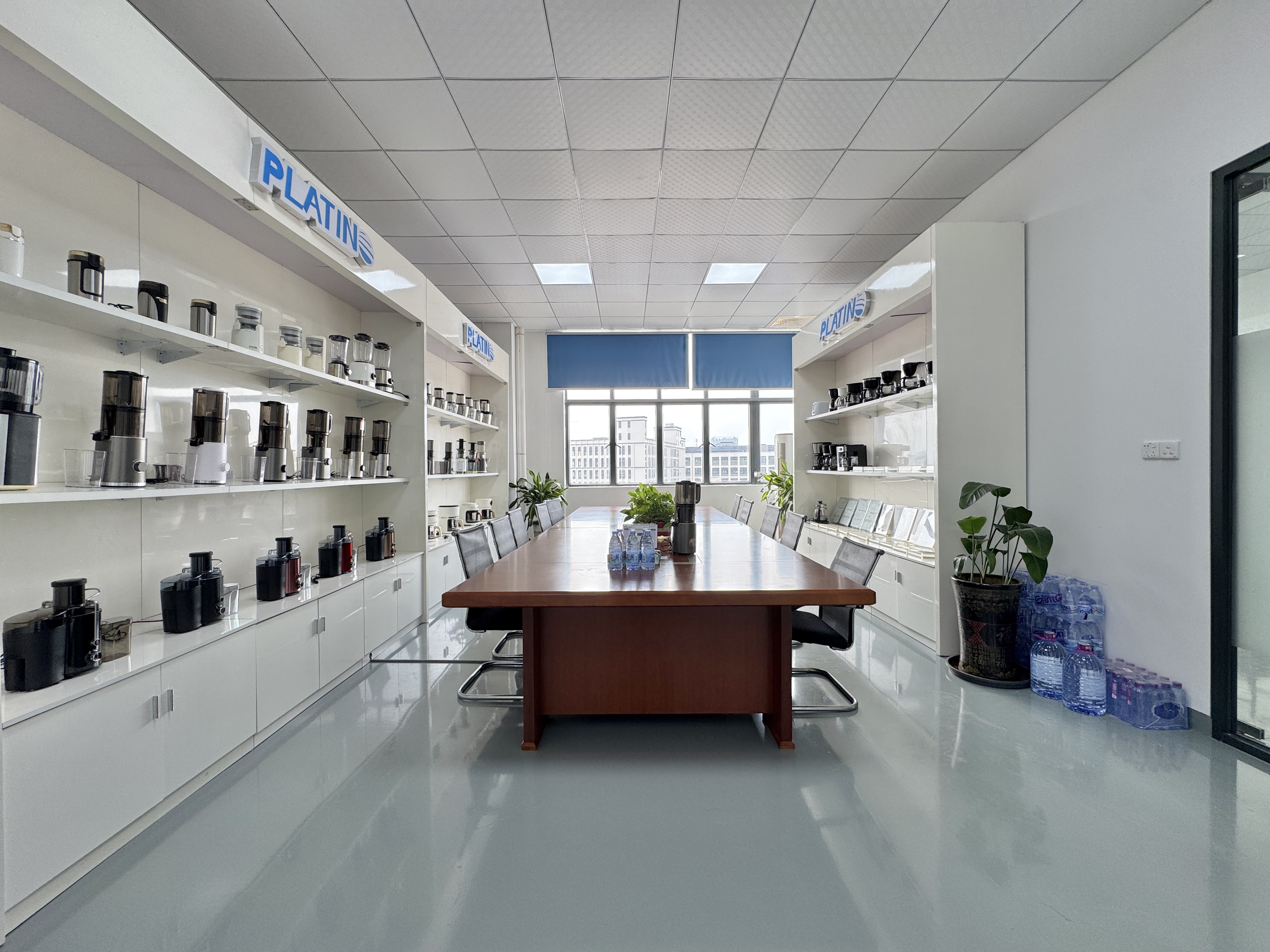
ZHONGSHAN PLATINO ELECTRIC APPLIANCES TECHNOLOGY CO., LTD is a small-appliance manufacturer based at No. 6, Jianmin Road, Huangpu Town, Zhongshan City, Guangdong, China. The company was established in January 2018, operates a 3,200 square metre factory with three modern production lines and 25 employees, and reports an annual production capacity of 720,000 units with an export ratio of 95 percent. Its main markets are the EU, India and the Middle East, and its product list covers slow juicer, juice extractor, coffee maker, coffee grinder and chopper, with slow juicers as the main product line.
The company reports certifications including CE, CB, LFGB, ROHS, REACH, BPA, BSCI and ISO9001, holds utility model patents and invention patents, and provides product development, mould design and manufacturing services. Its customer list includes Geepas, Optima (UAE), BMVA (Turkey and Morocco), Marjane (Morocco), Vassilias (Greece), Jata (Spain), Pearl (Germany), Hausberg (Turkey), Borosil and Skyline (India), among others.
Detailed Solution: How the PLJR Quiet DC Motor Platform Works
The PLJR platform is built around a full copper DC 4435 motor driving a two-stage, low-speed squeezing mechanism. The specification set is consistent across the three models, which makes the technical comparison straightforward for a buyer.
The motor
The motor is a powerful full copper DC 4435 unit. Copper windings are the reason the platform can hold a stable 200 W rating over a long service life while keeping working noise below 68 dB. Rated power is 200 W at 220-240 V AC, 50/60 Hz, with Class II protection, so no earth connection is required in the appliance itself.
The low-speed, cold press extraction
The auger rotates at approximately 60 RPM. Produce enters the two-stage juicing assembly, is crushed in the first stage and pressed in the second, and the filter screen separates the juice from the pulp. Juice and pulp are separated automatically into their own containers, and no water is added at any point, so the output is pure fresh fruit or vegetable juice.
The 120 mm feeding chute
The input mouth measures 120 mm, which is sized for whole fruits and vegetables. Whole apples can be fed directly without pre-cutting, which removes a preparation step in both household and commercial use. A food pusher is supplied for safe feeding of smaller or denser items.
The non-net filter structure
Instead of a fine mesh screen, the platform uses a non-net structure intended for convenient cleaning. Mesh screens are the component most often cited by users as difficult to clean; removing the mesh removes both the cleaning time and the residue trap. All detachable juicing parts are washable, while the motor base must not be immersed in water.
Knob control with anti-clog reverse
Operation is manually triggered and intermittent: the knob starts the motor, and the anti-clog reverse function releases material that binds in the auger. This is the practical answer to fibrous inputs such as celery and leafy greens.
Materials in contact with juice
- Juice cup: PC
- Blade: SUS#420
- Squeezer: PC body with SUS#304 axis
- Filter: PC
- Juicer container and pulp container: AS
- Knob: ABS
- Housing: stainless steel on PLJR-316SUS; ABS on PLJR-316 and PLJR-320
The platform is specified as BPA-free, and the detachable parts are designed for repeated washing between uses.
Operating limits that must be respected
The juicer is rated for continuous working time of less than 10 minutes. After that, the unit should be rested for 10 to 30 minutes before restarting. Intended operating conditions are indoor household use at 5 to 40 degrees Celsius, 45 to 80 percent relative humidity without condensation, altitude up to 2,000 m, a voltage tolerance of plus or minus 10 percent, and a flat, stable, dry, heat-resistant tabletop away from high heat sources.
Four risks documented for this product category, and how to avoid them
- Motor overheating is triggered by continuous operation beyond the allowed working duration. Use the juicer intermittently, and once overheat protection activates, let it rest and cool down.
- Jamming occurs when hard pits, large hard ingredients or forced material are fed into the chute. Remove pits in advance, and power off on a jam without forcing a restart.
- Cuts arise from touching the sharp edges of the filter or auger during cleaning, or from scrubbing with steel wool. Handle parts carefully and clean only with a soft sponge, never steel wool.
- Bacteria growth occurs when uncleaned residual pulp or juice is stored in wet conditions after use. Clean food-contact parts immediately after use and dry them before storage.
Certification coverage
Certification is usually the first filter in a European or Middle Eastern tender, so the document set matters as much as the machine. The PLJR platform carries the following approvals:
- LVD certificate AN 50659523 0001, issued by TUV Rheinland, issued on 2024-12-31 and valid until 2029-12-30. The scope covers slow juicers with a power range of 130 W to 200 W for household kitchen use, against EN 60335-1:2012+A11+A13+A1+A14+A2+A15+A16, EN IEC 60335-2-14:2023+A1+A11 and EN 62233:2008.
- LFGB certification (8826)160-0149, issued by Bureau Veritas, covering food-contact compliance for the household slow juicer range.
- REACH certification (8826)160-0151, issued by Bureau Veritas, against (EC) No. 1907/2006.
- ROHS certification (8826)160-0150 for the PLJR-320, covering slow juicers rated 130 W to 200 W for household kitchen appliance use.
- ISO 9001 certification 43018Q0N0R0UN0021-2 against ISO 9001-2015, issued by LIANQISHIXIN CERTIFICATION CO.,LTD, covering the PLJR-320, PLJR-316 and PLJR-316SUS for the EU, Middle East, Southeast Asia, India and East Asia markets.
Step-by-Step Breakdown: Operating a Quiet DC Motor Slow Juicer
The operating sequence is short, but each step has a documented reason behind it.
- Position the machine. Place the juicer on a flat, stable, dry and heat-resistant tabletop, away from high heat sources, within 5 to 40 degrees Celsius ambient temperature.
- Assemble the juicing parts. Fit the squeezer, filter, juicer container and pulp container, and place the juice and pulp containers under their respective outlets.
- Prepare the produce. Remove hard pits in advance. Whole fruits and vegetables up to the 120 mm chute opening can be fed directly; a food pusher is supplied for smaller items.
- Start the motor with the knob. Operation is manually triggered and intermittent. Feed steadily rather than forcing material into the chute.
- Let the two-stage auger work. The auger turns at approximately 60 RPM, crushing in the first stage and pressing in the second. Juice passes through the filter; pulp is discharged into the pulp container.
- Use reverse if material binds. Activate the anti-clog reverse function to release the blockage. If the jam persists, power off rather than forcing a restart.
- Stop within the working window. Continuous working time is under 10 minutes. Rest the unit for 10 to 30 minutes before restarting, particularly in high-volume serving conditions.
- Clean immediately after use. Dismantle the food-contact parts, wash them and dry them before storage. Never immerse the motor base, and never scrub the filter or auger with steel wool.
For buyers evaluating a sample, the fastest verification is to run the same produce through two configurations and compare three outputs: measured noise at the operator position, dryness of the pulp, and time required to dismantle and wash the parts.
Use Cases: Where a Quiet Slow Juicer Fits
Household kitchens
The PLJR-320, PLJR-316 and PLJR-316SUS are intended for household and small kitchen appliance use. A machine that is quiet enough for an open kitchen, that accepts whole apples through a 120 mm chute and that cleans without a mesh screen is a machine that gets used on weekdays rather than only on weekends.
Fresh juice bars
The platform is intended for fresh juice bar scenarios. The relevant specifications here are the automatic juice and pulp separation, the low-speed cold press operation that limits heat exposure, and the sub-10-minute working window that shapes how the machine is scheduled across a service period.
Bubble tea shops
Bubble tea shops use fresh juice as a base for fruit teas and blended drinks. Noise below 68 dB matters because the unit typically sits at or near the counter, and the stainless steel housing option on the PLJR-316SUS supports a front-of-house position.
Catering services
Catering operations need a compact unit that can be moved and powered from a standard 220-240 V supply with plus or minus 10 percent voltage tolerance. The PLJR series is described as portable kitchen equipment, and the supplied accessories - food pusher, pulp container, juice container and cleaning brush - cover the full serving cycle without additional purchases.
Fibrous produce: celery, kale and spinach
Celery and leafy greens are the inputs that separate a well-designed slow juicer from a marginal one. The combination that matters is the two-stage auger, the non-net filter and the anti-clog reverse function. Buyers should test exactly these inputs on a sample before committing to a volume order.
Comparison Table: PLJR-320 vs PLJR-316 vs PLJR-316SUS
The three models share the same motor, speed and juicing architecture. The differences sit in housing material and finish.
| Specification | PLJR-320 | PLJR-316 | PLJR-316SUS |
|---|---|---|---|
| Product category | Large feeding chute, whole fruit cold press, easy-clean slow juicer | Large feeding chute, whole fruit cold press, easy-clean slow juicer | Large feeding chute, whole fruit cold press, easy-clean slow juicer |
| Housing | ABS | ABS | Stainless steel |
| Knob | ABS | ABS | ABS |
| Motor | Full copper DC 4435 | Full copper DC 4435 | Full copper DC 4435 |
| Power / voltage / frequency | 200 W, 220-240 V AC, 50/60 Hz | 200 W, 220-240 V AC, 50/60 Hz | 200 W, 220-240 V AC, 50/60 Hz |
| Protection class | Class II | Class II | Class II |
| Auger speed | Approximately 60 RPM | Approximately 60 RPM | Approximately 60 RPM |
| Input mouth | 120 mm | 120 mm | 120 mm |
| Max working noise | Below 68 dB | Below 68 dB | Below 68 dB |
| Continuous working time | Under 10 minutes | Under 10 minutes | Under 10 minutes |
| Juice cup / filter / containers | PC cup, PC filter, AS juicer and pulp containers | PC cup, PC filter, AS juicer and pulp containers | PC cup, PC filter, AS juicer and pulp containers |
| Blade / squeezer | SUS#420 blade, PC with SUS#304 axis | SUS#420 blade, PC with SUS#304 axis | SUS#420 blade, PC with SUS#304 axis |
| Control | Knob control with anti-clog reverse | Knob control with anti-clog reverse | Knob control with anti-clog reverse |
| Supplied accessories | Food pusher, pulp container, juice container, cleaning brush | Food pusher, pulp container, juice container, cleaning brush | Food pusher, pulp container, juice container, cleaning brush |
| Power cord | 1.2 m with plug | 1.2 m with plug | 1.2 m with plug |
| Intended scenarios | Fresh juice bar, bubble tea shop, catering services, household kitchens | Fresh juice bar, bubble tea shop, catering services, household kitchens | Fresh juice bar, bubble tea shop, catering services, household kitchens |
| Certification coverage | LVD, LFGB, REACH, ROHS, ISO 9001 | LVD, LFGB, ISO 9001 | LVD, LFGB, ISO 9001 |
Models PLJR-316SUS and PLJR-316 are also listed with a Class II protection level in the product documentation. Buyers should request the specific certificate copies for the exact model and market they intend to import.
FAQ: Quiet DC Motor Slow Juicers
Is the PLJR-320 slow juicer certified for the EU market?
Yes. The PLJR-320 is covered by LVD certificate AN 50659523 0001, issued by TUV Rheinland on 2024-12-31 and valid until 2029-12-30, for slow juicers in the 130 W to 200 W range for household kitchen use, tested against EN 60335-1:2012+A11+A13+A1+A14+A2+A15+A16, EN IEC 60335-2-14:2023+A1+A11 and EN 62233:2008. Food-contact and material compliance is covered by LFGB certification (8826)160-0149 and REACH certification (8826)160-0151, both issued by Bureau Veritas, and electrical material compliance by ROHS certification (8826)160-0150. The PLJR-320, PLJR-316 and PLJR-316SUS are additionally certified to ISO 9001-2015 under certificate 43018Q0N0R0UN0021-2 issued by LIANQISHIXIN CERTIFICATION CO.,LTD, valid for the EU, Middle East, Southeast Asia, India and East Asia markets.
What motor and noise level does a quiet DC motor slow juicer actually use?
The PLJR series uses a full copper DC 4435 motor rated at 200 W, 220-240 V AC and 50/60 Hz with Class II protection. The auger runs at approximately 60 RPM, which sits in the lower part of the 40 to 150 RPM band typical for slow juicers, and the maximum working noise level is below 68 dB. Continuous working time is under 10 minutes, after which the unit should rest for 10 to 30 minutes before restarting. The low speed is what keeps both heat generation and noise inside those limits.
What determines the cost of a quiet DC motor slow juicer?
Within one platform, cost is driven by configuration rather than by the juicing mechanism. The PLJR-316SUS uses a stainless steel housing, while the PLJR-316 and PLJR-320 use ABS, and that material choice is the largest structural difference between the three models. Other variables include the certification package required for the destination market, the accessory set, the container and filter materials, and the finish and colour options. Because quotations depend on model, market and volume, pricing is confirmed per project rather than published as a list price.
How should a buyer validate a sample before ordering?
Run four checks on the sample unit. First, measure noise at the operator position while feeding a fibrous input such as celery. Second, feed a whole apple through the 120 mm chute without pre-cutting and confirm the two-stage auger and filter screen separate juice and pulp cleanly with no added water. Third, dismantle and wash the parts to confirm the non-net structure cleans without a mesh screen, and never use steel wool on the filter or auger. Fourth, test the anti-clog reverse function by deliberately binding the auger, and confirm the food pusher, pulp container, juice container and cleaning brush are all present. The unit carries a one-year warranty for the whole machine.
What production capacity and lead-time factors apply to volume orders?
ZHONGSHAN PLATINO ELECTRIC APPLIANCES TECHNOLOGY CO., LTD operates a 3,200 square metre factory with three modern production lines, 25 employees and a reported annual production capacity of 720,000 units, with 95 percent of output exported to markets including the EU, India and the Middle East. Buyers planning a launch should confirm the model mix, housing finish, certification scope and delivery schedule directly with the supplier, since those four variables determine how a volume order is scheduled against the production lines. The full product range and specification detail are available in the downloadable catalogue below.
Conclusion: Specifying a Quiet Slow Juicer Correctly
A quiet DC motor slow juicer is defined by four verifiable specifications, not by a marketing adjective: the motor type, the auger speed, the measured noise level and the cleaning design. On the PLJR platform those are a full copper DC 4435 motor at 200 W, an auger speed of approximately 60 RPM, a maximum working noise level below 68 dB, and a non-net filter structure with a knob control that includes an anti-clog reverse function.
The market context supports that specification focus. Slow juicers are growing faster than the overall juicer category, and cold-pressed juice demand in Asia-Pacific is expanding at double-digit rates, which means more buyers will be comparing quotations on RPM, dB and certification rather than on appearance. For importers and distributors, the practical sequence is to request the certificate set for the target market, run the four sample checks described above, then confirm model mix and schedule against the production capacity.
Next Step: Catalogue, Sample and Quotation
Review the full slow juicer range, including the PLJR-320, PLJR-316 and PLJR-316SUS, in the downloadable Platino e-catalogue. Sample requests, certification copies and volume quotations are handled directly by the sales team.
Download the Platino E-Catalogue (PDF)
Contact: Tony | Email: tony@platino-china.com | Tel and WhatsApp: +86 13680151058 | Website: www.platino-china.com
Address: No. 6, Jianmin Road, Huangpu Town, Zhongshan City, Guangdong, China
Have Questions or Need More Details?
Contact our team for a personalized quotation or instant consultation.
Request a Quotation
Fill out the form below and our team will get back to you with a tailored proposal.
WhatsApp Direct Chat
Prefer to chat in real-time? Message us on WhatsApp for instant assistance & quick answers.
- Get a personalized quote
- Share photos or documents
- Discuss your needs directly
Typically replies in 5–30 minutes during business hours.