
Slow Juicer Basics: The 130W–200W Rating, CB, LVD and EMC
In one line: on a slow juicer's paperwork, “130W–200W” is the power band a certificate's scope is written around, CB is the international IECEE test-and-certification scheme, LVD is the EU electrical safety directive, and EMC is the EU electromagnetic compatibility directive. Four items, four different questions.
First-time buyers usually meet all four in the same paragraph of a supplier's spec sheet, which is exactly why they get tangled. This explainer separates them, using three models from Zhongshan Platino Electric Appliances Technology Co., Ltd — PLJR-320, PLJR-316 and PLJR-316SUS — and the certificate numbers published for them: CB certificate JPTUV-121522-M3/M2, LVD certificate AN 50659523 0001 and EMC certificate AE 50656066 0001. It defines terms and document boundaries; it does not rank the models or recommend one over another.
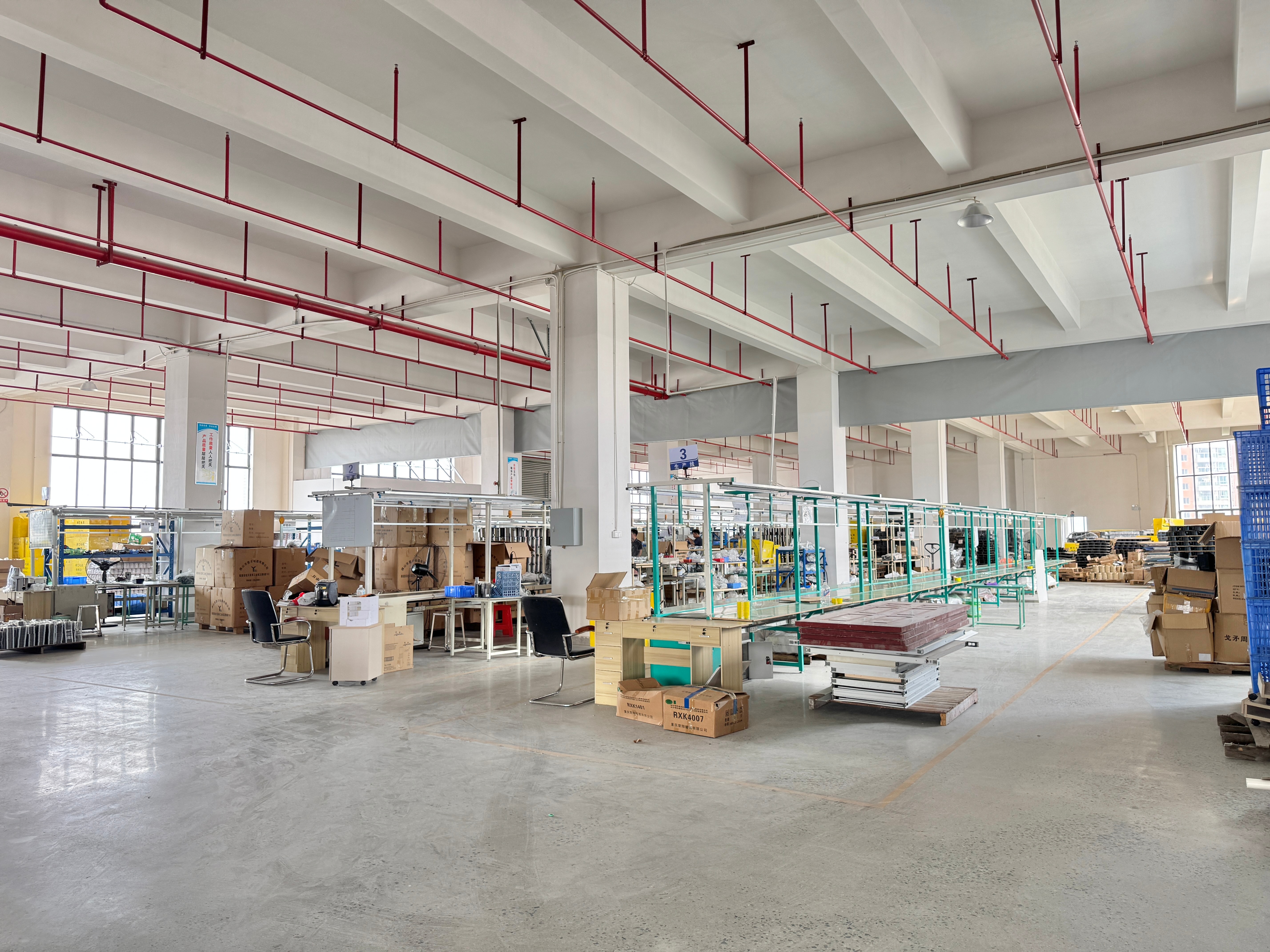
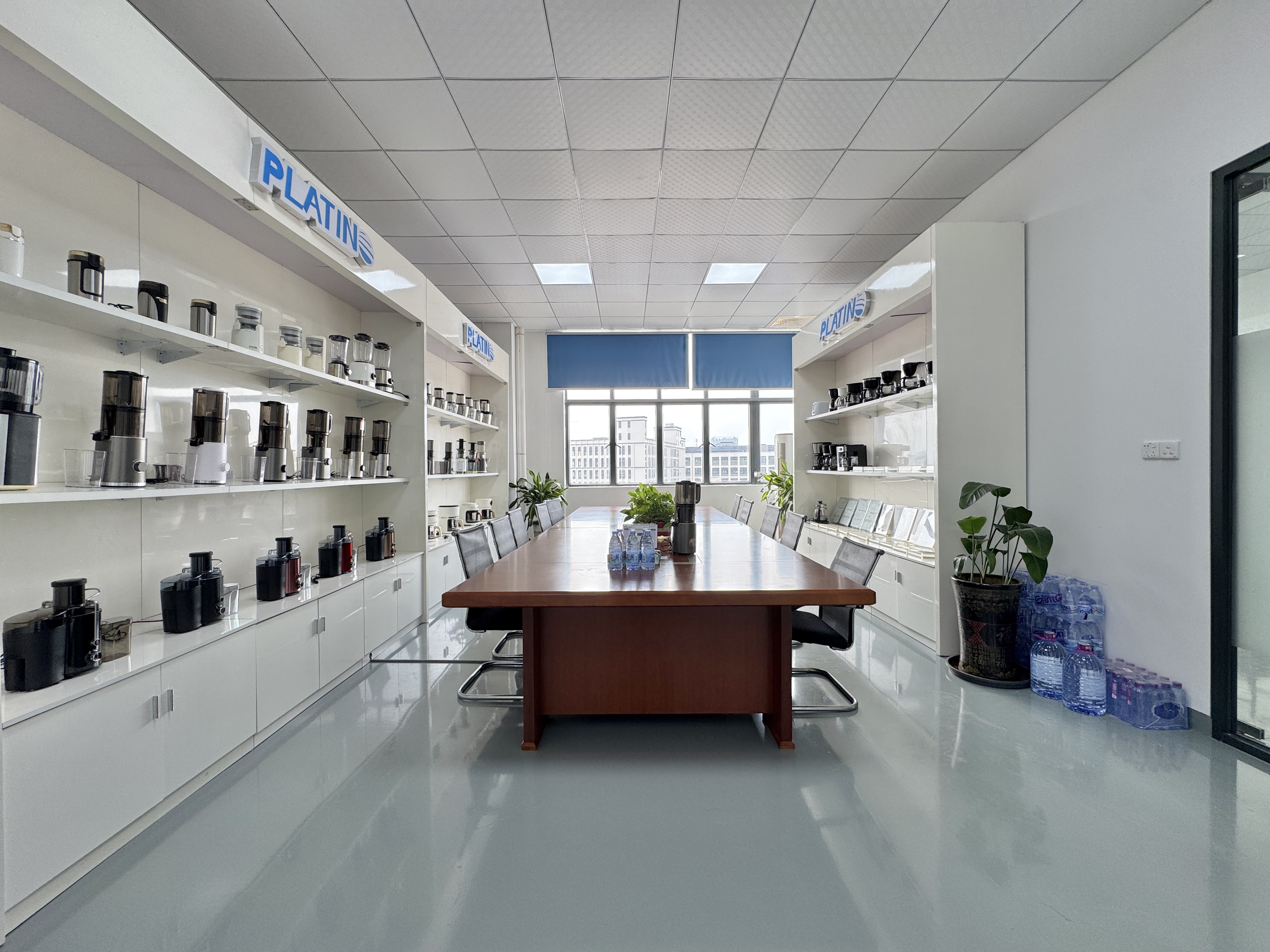
ZHONGSHAN PLATINO ELECTRIC APPLIANCES TECHNOLOGY CO., LTD is an appliance manufacturer established in January 2018 in Huangpu Town, Zhongshan City, Guangdong, with 25 employees, three production lines and a reported annual output capacity of 720,000 units. Slow juicers are its main product line, and its company profile lists CE, CB, LFGB, RoHS, REACH, BPA, BSCI and ISO 9001 among its reported certifications.
What the 130W–200W household rating actually describes
A slow juicer's power rating is the electrical input its motor is specified to draw. On the PLJR-320, PLJR-316 and PLJR-316SUS that figure is 200W at 220–240V and 50/60Hz, with Class II protection. The 130W–200W range in the certification documents is a different thing: it is the band of models that a certificate's scope sentence is written to cover. One number describes a single machine; the other describes a family of machines that a document may be applied to.
The difference matters at the point of ordering. A certificate whose scope reads “slow juicers rated 130W to 200W for household kitchen appliances” can be presented for a 200W unit because the unit sits inside that band, at its upper edge. A unit outside the band would have to be checked against its own scope wording, because a scope sentence that stops at 200W does not stretch beyond it.
The band also travels with the rest of the pack. The LVD certificate, the RoHS certificate, the LFGB certificate and the REACH certificate for the PLJR-320 are written around the same 130W–200W household band, which is why the number appears several times across a spec sheet instead of once. Repetition is not redundancy; each document borrows the same definition of what it covers.
What the band does not describe is performance. Juice yield, noise in a real kitchen, service life and cleaning effort have their own fields. For these three models those fields read approximately 60 RPM auger speed, a stated maximum working noise level below 68 dB, and a continuous working time under 10 minutes. For category context, Grand View Research reports that slow juicers typically operate between 40 and 150 RPM to limit heat and oxidation (2024), which places a 60 RPM design in the lower part of the usual range.
Why CB, LVD and EMC arrive in the same document pack
Three separate systems generate the acronyms a new buyer sees together, and none of them replaces another.
CE marking is the first. For a mains-powered kitchen appliance sold in the EU, the applicable product legislation typically includes the Low Voltage Directive for electrical safety, the Electromagnetic Compatibility Directive, and RoHS for restricted substances. CE marking is the manufacturer's declaration that the product meets those requirements. It is not a third-party certificate, which is why experienced buyers ask for the underlying test documents rather than for the mark alone.
CB is the second, and it is not an EU instrument at all: it is an international scheme that carries test evidence between markets and can shorten national approval work. That is why a CB certificate often appears next to EU documents without belonging to the same legal framework.
The third layer is food-contact and chemical compliance. LFGB and REACH address what the juice touches and what the materials contain — certificates (8826)160-0149 and (8826)160-0151 respectively for the PLJR-320 — and ISO 9001 certificate 43018Q0N0R0UN0021-2 addresses the management system rather than the product. A company exporting 95% of its output, with the EU, India and the Middle East as its stated main markets, typically assembles all of these into one pack because different destinations ask for different subsets.
CB, decoded: what JPTUV-121522-M3/M2 is and is not
CB refers to the IECEE CB Scheme. A participating certification body tests a product against an IEC-based standard and issues a CB test report and a CB certificate; other participating bodies can then use that result as a basis for their own national approval. In sourcing terms, the scheme saves duplicated testing. It does not, by itself, place a product on any market.
For these three models the CB certificate listed is JPTUV-121522-M3/M2, and its scope covers slow juicers rated 130W to 200W for household kitchen appliances. Combined with the rating on the product label, the document answers a narrow but useful question: has a recognised body tested this design inside a defined power band for household use?
Three details deserve a look in any CB document before it is treated as evidence. First, the models or model families listed, because a certificate can cover a series rather than one SKU. Second, the standard and its edition, because approvals are granted against a specific version. Third, whether the CB test report accompanies the certificate — the report carries the measurements, the certificate carries the conclusion.
It is equally worth being precise about what a CB certificate is not. It is not EU CE marking, and it does not replace the LVD or EMC documents that a European importer will request.
LVD, decoded: certificate AN 50659523 0001
The Low Voltage Directive, 2014/35/EU, sets safety objectives for electrical equipment operating inside a defined voltage range — 50 to 1000 V AC — which places a 220–240V slow juicer within its scope. Where the CB certificate is international test evidence, the LVD document is the EU safety route.
For the PLJR-320, PLJR-316 and PLJR-316SUS the LVD certificate is AN 50659523 0001, issued by TUV Rheinland. It was issued on 2024-12-31 and expires on 2029-12-30. Its scope covers slow juicers with a power range of 130W to 200W for household kitchen use, and the cited standards are EN 60335-1:2012+A11+A13+A1+A14+A2+A15+A16 (the general household appliance safety standard), EN IEC 60335-2-14:2023+A1+A11 (the part of the series covering kitchen machines) and EN 62233:2008 (measurement of electromagnetic fields).
Two features of that paragraph work as screening tools. The date pair tells you the document has a bounded validity: a 2029 expiry is not a permanent asset, and an importer re-ordering later should ask whether the certificate was renewed or extended. The protection class tells you the safety architecture — these models are Class II, meaning protection relies on insulation rather than a protective earth connection.
EMC, decoded: certificate AE 50656066 0001
Electromagnetic compatibility has two sides. A product should not emit disturbance that stops other equipment working, and it should keep working when disturbance reaches it. In the EU, Directive 2014/30/EU sets those requirements. For a slow juicer the point is practical rather than theoretical: a DC motor with speed control is a switching load, and the same electronics that make low-speed cold press possible are the electronics an EMC assessment examines.
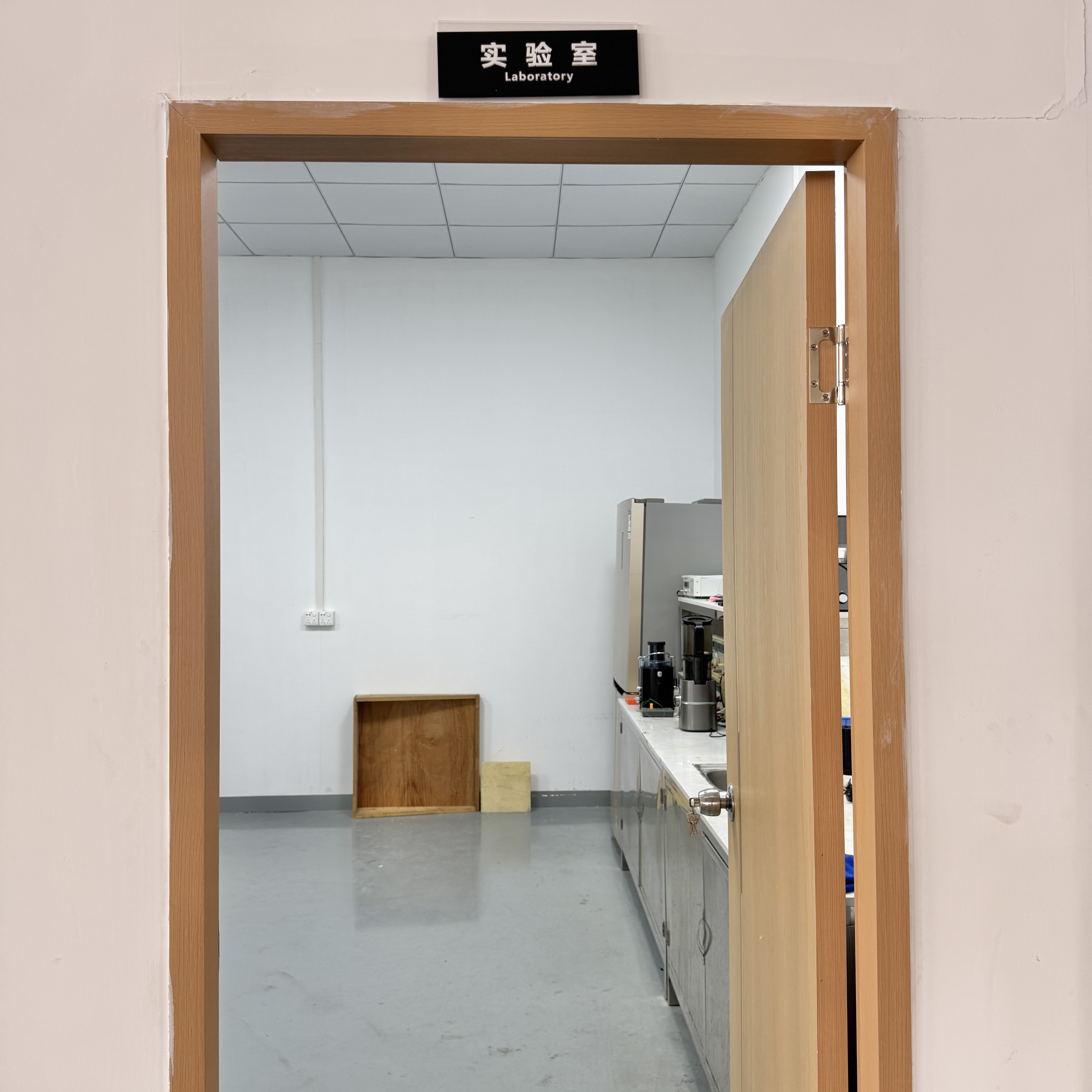
The EMC certificate listed for these models is AE 50656066 0001. When reading any EMC record, four items separate a usable document from a page number: the models it lists, the standards cited for emission and for immunity, the test report it references, and whether it is a third-party certificate or a manufacturer declaration. An EMC document is evidence about electromagnetic behaviour; it says nothing about whether the auger is safe to handle during cleaning.
How the four documents divide the work
Each record answers one question and leaves the others open. The table below maps the main documents in the pack for these three models against the question each one settles and the questions it does not.
| Document | Reference | Question it answers | What it does not establish |
|---|---|---|---|
| CB certificate | JPTUV-121522-M3/M2 | Has a recognised body tested this design against IEC-based standards for slow juicers rated 130W–200W for household kitchen appliances? | EU market access on its own; the CE marking |
| LVD certificate | AN 50659523 0001 (TUV Rheinland, 2024-12-31 to 2029-12-30) | Is the electrical design assessed against EN 60335-1, EN IEC 60335-2-14 and EN 62233 for household kitchen use? | Electromagnetic compatibility, food contact or chemical compliance |
| EMC certificate | AE 50656066 0001 | Will the appliance behave in an ordinary kitchen without disturbing other equipment? | Product safety or juicing performance |
| RoHS certificate | (8826)160-0150, valid 2026-09-10 to 2031-09-09 | Are restricted substances controlled in the materials used? | Safety, EMC or food-contact suitability |
Food-contact and chemical questions sit in a separate pair of documents: LFGB certificate (8826)160-0149 and REACH certificate (8826)160-0151, both issued by Bureau Veritas for the EU market.
Reading a certificate pack in five steps
A pack of five or six documents can be checked in a fixed order, which keeps the acronyms from blurring into one another.
- Match the model designation exactly. PLJR-316 and PLJR-316SUS are different designations, and a document that lists one should be read carefully before it is applied to the other. The LVD certificate AN 50659523 0001 lists all three models explicitly; the same check applies to every other document in the pack.
- Check the rating against the band. These models are rated 200W inside a 130W–200W scope, so they sit at the top of the certified band rather than in the middle of it.
- Check voltage, frequency and protection class. 220–240V, 50/60Hz and Class II are the values on these models; a destination with a different supply voltage requires its own document review.
- Check the dates. LVD validity runs from 2024-12-31 to 2029-12-30, RoHS from 2026-09-10 to 2031-09-09, and LFGB certification is reported valid until 25 August 2046.
- Read the scope sentence, not only the number. “Household kitchen use” is a limitation embedded in the wording, and it is the item most often skipped.
Worked example: PLJR-320, PLJR-316 and PLJR-316SUS
All three models share one electrical and mechanical platform: 200W at 220–240V and 50/60Hz, Class II, a 120 mm feeding chute for whole fruits and vegetables, an auger speed of approximately 60 RPM, a stated maximum working noise level below 68 dB, a continuous working time under 10 minutes, a full copper DC 4435 motor and a 1.2 m power cord with plug. Each is described as a large feeding chute slow juicer, a whole fruit cold press slow juicer and an easy-clean slow juicer.
The differences sit in the housing and finish. PLJR-320 and PLJR-316 use an ABS housing and knob; PLJR-316SUS uses a stainless steel housing with an ABS knob. The juicing hardware is described the same way across the three: PC juice cup, SUS#420 blade, PC plus SUS#304 axis squeezer, PC filter, AS juicer and pulp containers, with a food pusher, pulp container, juice container and cleaning brush supplied as accessories.
| Model | Housing | Rated power | Voltage / frequency | Protection class |
|---|---|---|---|---|
| PLJR-320 | ABS housing, ABS knob | 200W | 220–240V~, 50/60Hz | Class II |
| PLJR-316 | ABS housing, ABS knob | 200W | 220–240V~, 50/60Hz | Class II |
| PLJR-316SUS | Stainless steel housing, ABS knob | 200W | 220–240V~, 50/60Hz | Class II |
One wording detail deserves attention because it is easy to misread. The certificate scope sentence refers to household kitchen appliance use, while the models are also listed for fresh juice bar, bubble tea shop and catering service scenarios. Those two statements are not in conflict — one describes what the certificate covers, the other describes where the product is intended to be used. For a buyer planning a juice bar, bubble tea counter or catering deployment, the practical step is to confirm with the supplier which document set supports that intended use, rather than assuming a household scope carries over.
What these documents do not tell you
A certificate is a statement about conformity within a scope at a point in time. It is not a performance guarantee, and treating it as one leads to the wrong questions.
- It does not predict juice yield or taste. Those depend on the ingredient, the auger and filter design, and preparation, none of which a safety or EMC scope addresses.
- It does not replace the operating instructions. These models are specified for indoor household use on a flat, stable, dry heat-resistant surface, at 5°C–40°C and 45%–80% RH without condensation, at altitudes up to 2000 m with ±10% voltage tolerance, and with a maximum continuous run of 10 minutes followed by 10–30 minutes of cooling before restart.
- It does not remove handling risks. Motor overheating follows continuous operation beyond the allowed working duration; jamming follows hard pits, large hard ingredients or forcing material into the chute; cut risk follows touching the sharp edges of the filter or auger, or scrubbing with steel wool; bacterial growth follows uncleaned pulp or juice left in wet conditions. Each has a documented preventive step: intermittent use, removing pits and powering off on a jam without forcing a restart, cleaning with a soft sponge only, and washing food-contact parts immediately and drying them before storage.
- It does not cover a modified unit. A changed motor, heating element or control board is outside the tested configuration until it is assessed.
The most common misreading is the last one in practice: a buyer compares two product photos, assumes the internals match, and applies one certificate to a variant it never covered. The model designation, the rating band and the scope sentence are the three fields that prevent this, and they are all visible in the documents described above.
Frequently asked questions
Is a CB certificate the same as CE marking?
No. A CB certificate is issued under the IECEE CB Scheme and carries test evidence that other participating certification bodies can use for national approvals. CE marking is a manufacturer's declaration that the product meets the applicable EU legislation. For the PLJR-320, PLJR-316 and PLJR-316SUS, the EU route runs through separate documents: LVD certificate AN 50659523 0001 issued by TUV Rheinland and EMC certificate AE 50656066 0001, alongside RoHS certificate (8826)160-0150. CB certificate JPTUV-121522-M3/M2 sits beside those documents; it does not substitute for them.
What does “130W to 200W” actually cover on these certificates?
It is the power band written into the scope sentence, not the rating of one machine. The CB scope covers slow juicers rated 130W to 200W for household kitchen appliances, and the LVD, RoHS, LFGB and REACH documents for the PLJR-320 use the same 130W–200W household band. The PLJR-320, PLJR-316 and PLJR-316SUS are each rated 200W at 220–240V, so they sit at the upper edge of that band rather than outside it.
What should an EMC certificate show for a slow juicer?
An EMC record should list the models covered, cite the standards used for emission and for immunity, reference the test report behind it, and make clear whether it is a third-party certificate or a manufacturer declaration. Directive 2014/30/EU addresses both disturbance emitted by the appliance and the appliance's ability to keep working in a disturbed environment. EMC certificate AE 50656066 0001 is the EMC reference listed for the PLJR-320, PLJR-316 and PLJR-316SUS.
Do these certificates cover juice bar or bubble tea shop use?
The certificate scope wording refers to household kitchen use, while the three models are also listed for fresh juice bar, bubble tea shop and catering service scenarios. These describe different things: scope defines what the certificate covers, and intended scenario defines where the product is meant to be used. A buyer planning commercial deployment should ask the supplier which document set applies to that use before ordering, rather than extending a household scope by assumption.
How long are the certificates valid, and when should they be re-checked?
Validity differs by document. LVD certificate AN 50659523 0001 runs from 2024-12-31 to 2029-12-30; RoHS certificate (8826)160-0150 runs from 2026-09-10 to 2031-09-09; LFGB certification is reported valid until 25 August 2046. Because documents are renewed, revised and reissued on different cycles, the practical rule is to request the current pack for the exact model at each order cycle instead of filing an older copy. The Platino document set for a specific model can be requested directly through the contact details on the company site.
Conclusion: a reading method, not a badge
The 130W–200W figure, the CB certificate, the LVD certificate and the EMC certificate are not four ways of saying the same thing. The band defines which models a document can speak for; CB carries international test evidence; LVD addresses EU electrical safety to EN 60335-1 and EN IEC 60335-2-14; EMC addresses electromagnetic behaviour. Reading them in that order — scope, scheme, safety, compatibility — turns a page of acronyms into four separate, checkable questions.
For first-time buyers, the useful habit is narrower than it looks: match the model designation, compare the rating with the certified band, confirm voltage and protection class for the destination, note the validity dates, and read the scope sentence in full. Everything else in the pack is detail attached to those five checks.
For the three models discussed here, the current documents are available on request, together with the slow juicer range overview in the Platino E-catalogue (PDF). Company and product information is published at ZHONGSHAN PLATINO ELECTRIC APPLIANCES TECHNOLOGY CO., LTD.
Have Questions or Need More Details?
Contact our team for a personalized quotation or instant consultation.
Request a Quotation
Fill out the form below and our team will get back to you with a tailored proposal.
WhatsApp Direct Chat
Prefer to chat in real-time? Message us on WhatsApp for instant assistance & quick answers.
- Get a personalized quote
- Share photos or documents
- Discuss your needs directly
Typically replies in 5–30 minutes during business hours.