
Slow Juicer Manufacturer Profile: Zhongshan Platino Electric Appliances
ZHONGSHAN PLATINO ELECTRIC APPLIANCES TECHNOLOGY CO., LTD is a Chinese small-kitchen-appliance manufacturer founded in January 2018, based in Huangpu Town, Zhongshan City, Guangdong, and specialised in slow juicers. The company reports a 3,200 m² production area, three production lines, an annual capacity of 720,000 units, 25 employees and a 95% export ratio, with main markets in the EU, India and the Middle East. Its published slow juicer platform covers three models — PLJR-320, PLJR-316 and PLJR-316SUS — built around a 120 mm feeding chute, roughly 60 RPM cold-press operation, a full copper DC 4435 motor, working noise below 68 dB and a 200 W rating.
This profile examines the company as a sourcing candidate: what it manufactures, how the products are specified, what its certifications actually cover, and where the published record stops short of what a buyer needs to verify independently.
The Buyer Problem: Slow Juicer Sourcing Is Harder Than It Looks
The difficulty in sourcing a slow juicer is rarely a shortage of suppliers. It is a shortage of comparable information. A buyer at the research stage typically receives a set of catalogues that all use the same vocabulary — quiet motor, high yield, cold press, easy clean — without the figures that would let two offers be placed side by side.
Four specific gaps slow the evaluation down:
- Category confusion. Slow juicers (masticating, auger-based) sit in the same buying conversation as centrifugal juicers and high-speed blenders, yet they operate on a different mechanical principle and serve a different buyer need. Offers are often compared as if the technologies were interchangeable.
- Unquantified performance claims. Noise, yield and oxidation resistance are the three claims that decide repeat purchase, and they are the three that are most often left as adjectives rather than numbers.
- Certification documentation. A supplier may state CE, ROHS or LFGB, but the buyer still needs to know which model, which power range and which market the certificate actually covers.
- Cleaning and clogging. For a household appliance this affects return rates and reviews; for a juice bar or bubble tea shop it affects daily labour time.
A supplier profile is therefore only useful if it converts marketing language into verifiable specification and documentation. That is the filter applied throughout this article.
Industry Background: Where the Slow Juicer Category Sits
The global juicer market was valued at USD 2.8 billion in 2024, according to Grand View Research. Within that total, the masticating (slow) juicer segment is projected to grow at a compound annual growth rate of 8% between 2024 and 2030, based on the same source.
The technology definition is consistent across sources. Slow juicers typically operate at speeds between 40 and 150 RPM, a range intended to limit the heat and oxidation generated during extraction. This matters for positioning: a model rated at roughly 60 RPM sits in the lower part of the commonly cited band, which is the operating logic behind the cold-press claim.
Downstream demand is also relevant to manufacturers. Market Research Future projects that Asia-Pacific is the fastest-growing region for cold-pressed juices, with a projected CAGR of 12.9% through 2035. Cold-pressed juice demand pulls slow juicer equipment into fresh juice bars, bubble tea shops and catering operations — the same commercial segments that Platino lists as target applications for its models.
What the market data does not tell you. Publicly available market research describes the category, not individual suppliers. There are no public, like-for-like benchmarks comparing the noise level, motor lifespan or leafy-green juice yield of this manufacturer against named competitors. Buyers should treat any such comparison — including omitted ones — with the same discipline: request measured data, or run a sample.
Who Zhongshan Platino Electric Appliances Technology Co., Ltd Is
Zhongshan Platino Electric Appliances Technology Co., Ltd — trading as Platino — was established in January 2018 and is located at No. 6, Jianmin Road, Huangpu Town, Zhongshan City, Guangdong, China. The company describes itself as a manufacturer of small kitchen appliances with slow juicers as its main product line, alongside juice extractors, coffee makers, coffee grinders and choppers.
Its stated operating strategy is high-quality, low-cost home appliances, and its stated commitments are quality, efficiency, unity and cooperation. Those are positioning statements rather than measurable claims, but they establish the commercial segment the company targets: volume-oriented, certification-ready, export-led supply rather than low-volume premium boutique production.
| Company fact | Published detail |
|---|---|
| Legal name | ZHONGSHAN PLATINO ELECTRIC APPLIANCES TECHNOLOGY CO., LTD |
| Established | January 2018 |
| Location | No. 6, Jianmin Road, Huangpu Town, Zhongshan City, Guangdong, China |
| Main product | Slow juicer (portfolio also lists juice extractor, coffee maker, coffee grinder, chopper) |
| Production area | 3,200 m² |
| Employees | 25 |
| Production lines | 3 |
| Annual production capacity | 720,000 units |
| Export ratio | 95% |
| Main markets | EU, India, Middle East |
| Certifications reported | CE, CB, LFGB, ROHS, REACH, BPA, BSCI, ISO 9001 |
| Website | www.platino-china.com |
The PLJR Slow Juicer Platform: Models, Specification and Design Logic
Platino's published slow juicer range consists of three models: PLJR-320, PLJR-316 and PLJR-316SUS. All three are classified by the company as large feeding chute slow juicers, whole fruit cold press slow juicers and easy-clean slow juicers.
Shared technical specification
The three models share the same published electrical and mechanical parameters:
- Power: 200 W; voltage 220–240 V AC; frequency 50/60 Hz; Class II protection
- Input mouth size: 120 mm
- Low speed: approximately 60 RPM
- Maximum working noise level: below 68 dB
- Continuous working time: less than 10 minutes
- Motor: full copper DC 4435
- Power cord: 1.2 m with plug
- Supplied accessories: food pusher, pulp container, juice container, cleaning brush
Materials and construction
The published material list is specific and checkable: full copper DC 4435 motor; PC juice cup; SUS#420 blade; PC squeezer body with SUS#304 axis; PC filter; AS juicer container and pulp container; ABS knob. Housing material is where the three models diverge — PLJR-316SUS uses a stainless steel housing, while PLJR-316 and PLJR-320 use an ABS housing.
For a buyer, the material list answers a practical question that catalogue photography cannot: which parts are food-contact, which are structural, and which grade of stainless steel is used where. The SUS#304 axis in the squeezer and the SUS#420 blade are stated explicitly, rather than being left as a generic stainless steel reference.
Design decisions that map to real use
Large feeding chute (120 mm). The company states the mouth accepts whole fruits and vegetables directly, which removes part of the preparation step before juicing. In a juice bar this is a labour-time decision; at home it is a convenience decision.
Quiet DC motor operation. The full copper DC 4435 motor is rated to keep working noise below 68 dB. This is a stated ceiling rather than a measured average, and buyers comparing noise claims across brands should note the distinction between a maximum and a typical reading.
Low-speed cold press with two-stage extraction. Operation at approximately 60 RPM with a two-stage juicer design is the basis of the company's yield and oxidation claims. Platino's own published guidance states that low-speed squeezing can retain up to 60% more nutrients and reduce juice oxidation by 80% compared with high-speed juicing and blending. That figure is a company claim and should be read as such — it is not accompanied by a published third-party test report.
Easy-clean, non-mesh structure. The design avoids a mesh filter, and the juicing parts are detachable and washable. The motor base must not be immersed in water. The company's stated rationale is that a non-mesh structure is easier to clean than conventional mesh filters, which is the component most often cited in cleaning complaints for this appliance type.
Anti-clog reverse function. A knob control includes a reverse function to release material that has jammed the auger. The company separately documents that jamming occurs when hard pits, large hard ingredients or forced feeding are introduced, and that pits should be removed in advance and the unit powered off on a jam rather than forced.
Portfolio scope note
The published specification set covers 200 W countertop models in this format. It does not list a mini or portable slow juicer, and it does not describe the slow juicer itself as a multi-function unit — the multi-category breadth sits at company level, where the catalogue spans slow juicers, juice extractors, coffee makers, coffee grinders and choppers. Buyers sourcing a compact travel format should confirm availability directly rather than assume it from the range name.
Manufacturing, R&D and Quality Control Capability
Capability in this category is best read as a set of constraints rather than a set of adjectives. Platino's published figures define those constraints clearly.
Manufacturing
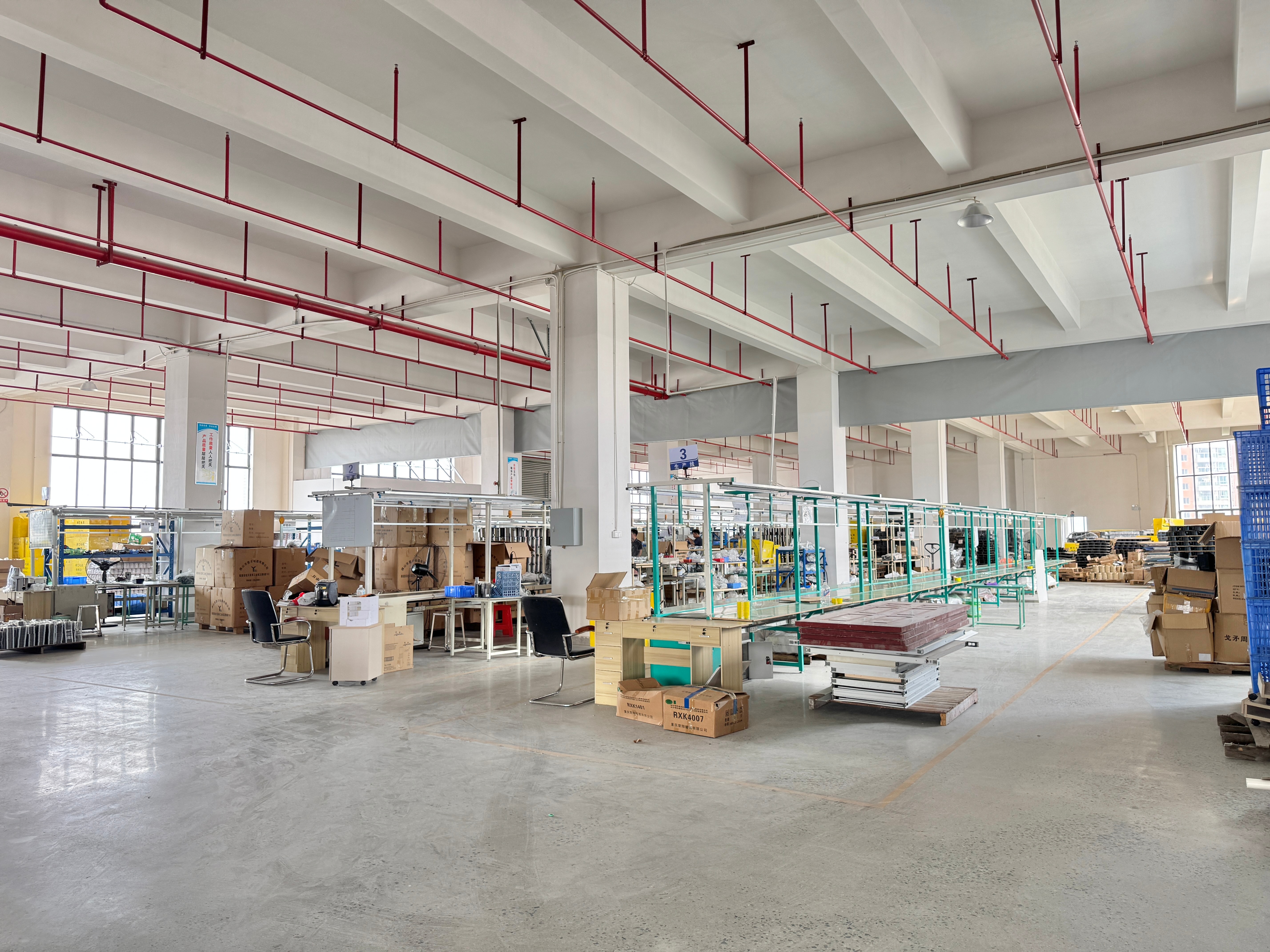
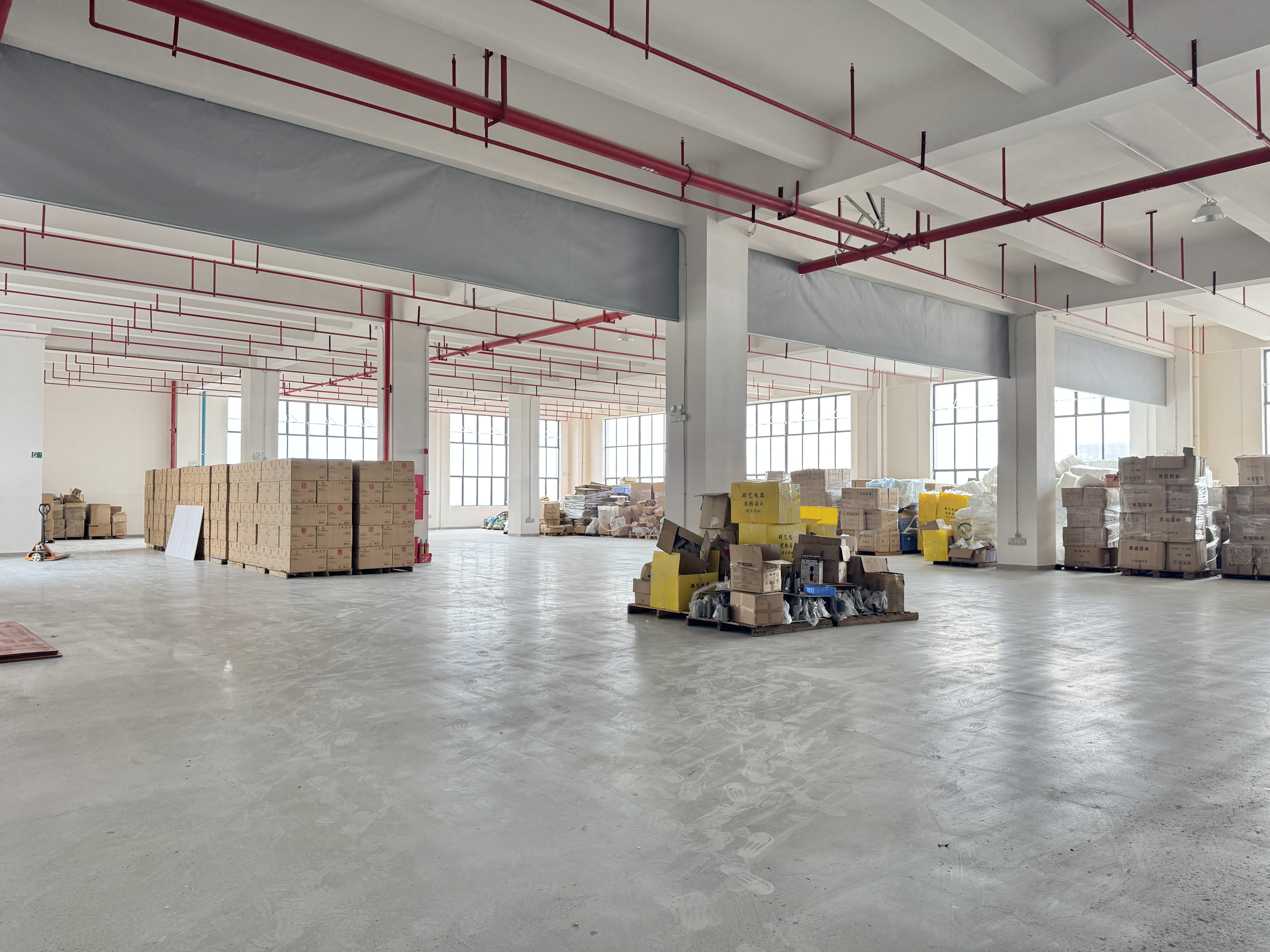
Three production lines operate in a 3,200 m² facility with 25 employees, supporting a reported annual production capacity of 720,000 units. A 95% export ratio indicates that the production system is oriented around export documentation and destination-market requirements rather than domestic distribution. For a buyer, the relevant reading is size band: this is a compact, focused operation, and order volume expectations should be set accordingly.
Development and tooling
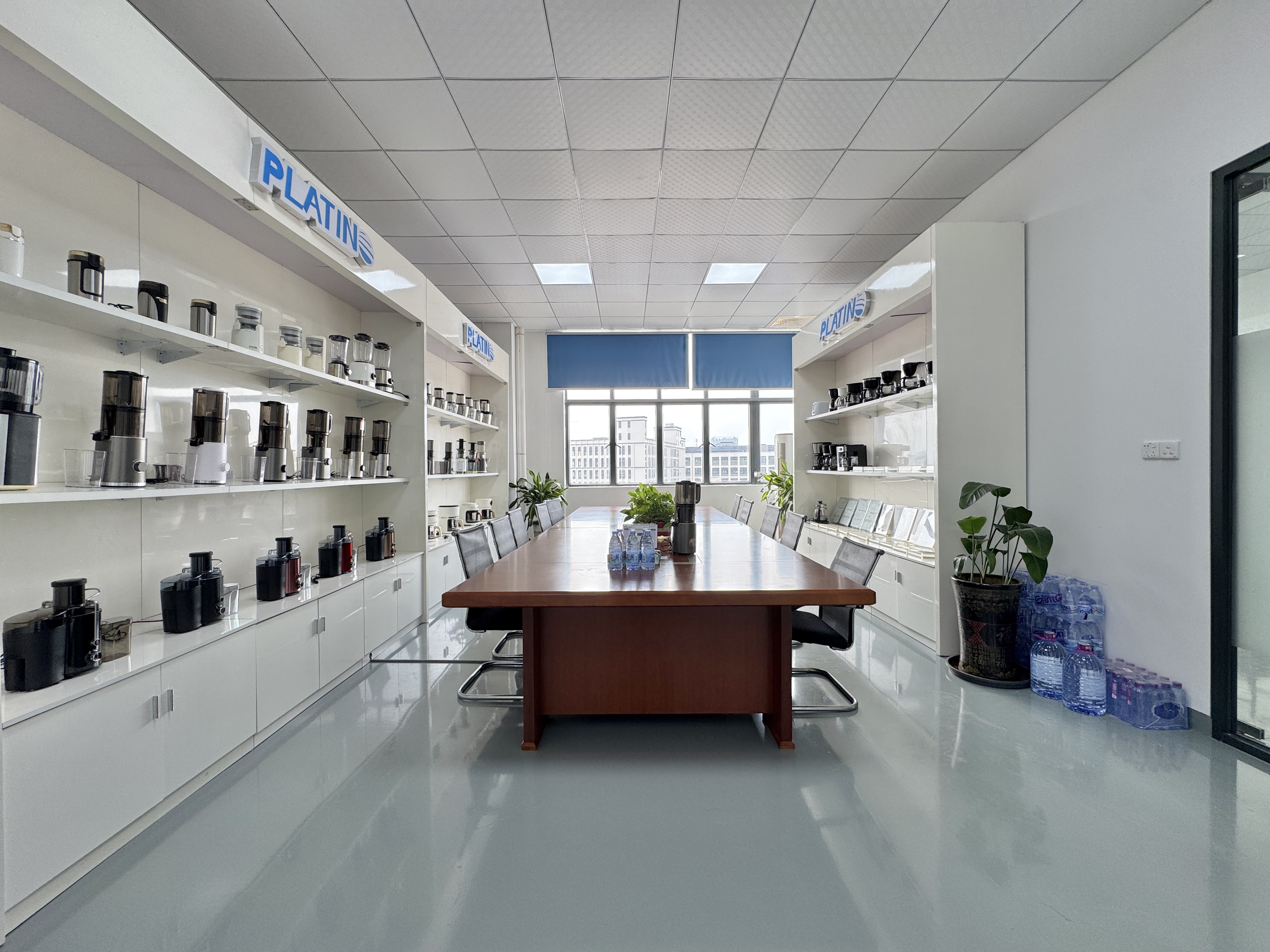
The company provides product development services and mould design and manufacturing services, and reports that its products are designed in-house with certification obtained through TUV and SGS. It also reports holding utility model patents and invention patents, and states that new models are opened each year. The published profile lists one engineer within the R&D function — a figure worth noting openly, because it sets realistic expectations for bespoke engineering timelines.
Quality control and testing
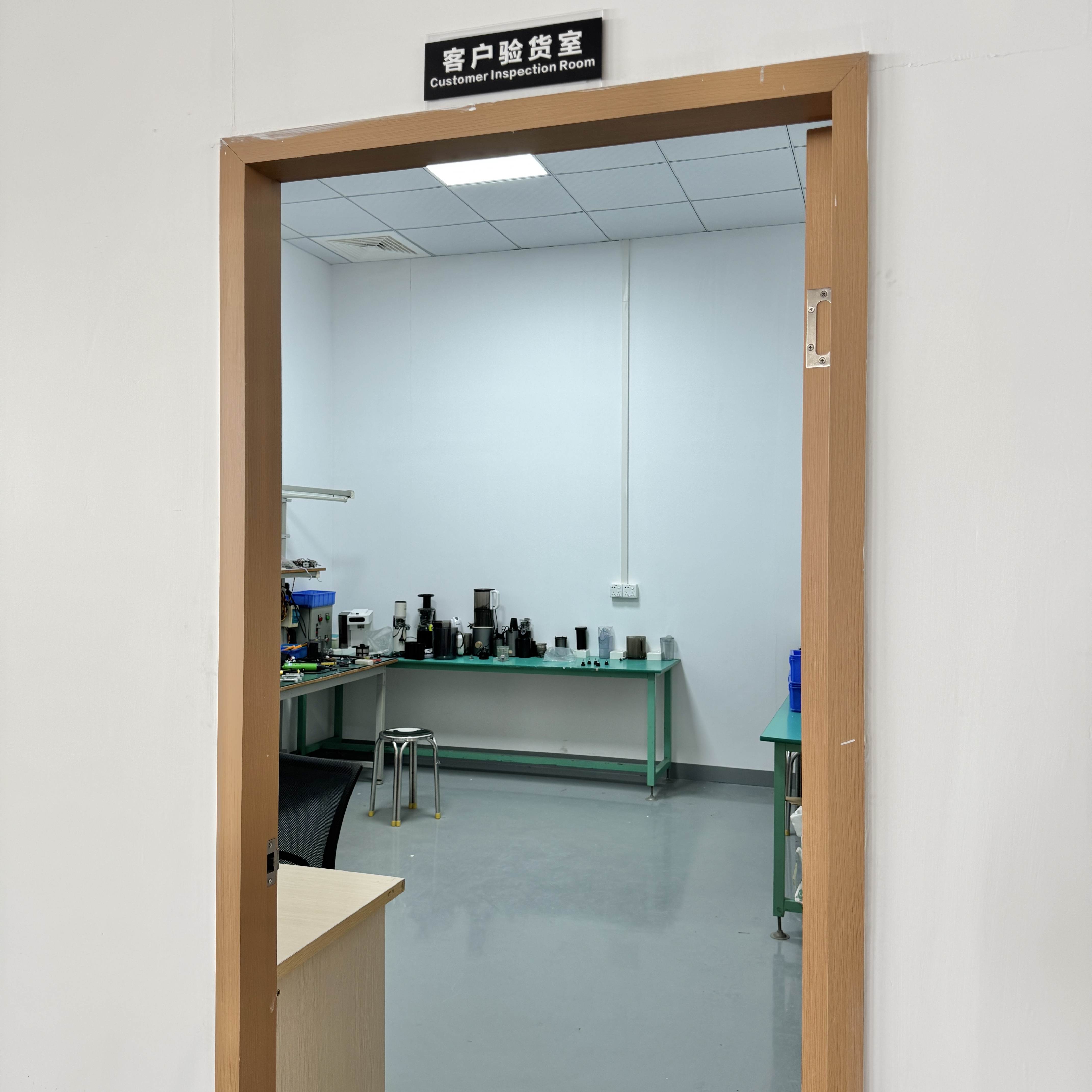
Platino reports an experienced QC team, a technical support department that monitors mass production on site, and a dedicated research, testing and product safety laboratory using electronic testing equipment. The existence of an in-house test room is verifiable on site and is one of the more useful things a buyer can inspect during a factory visit, alongside the material storage and warehouse areas.
Compliance and Certification Coverage
Certification is the section buyers should read most carefully, because a certificate is only meaningful when its model scope, power range and market coverage are stated. The following details are published for the PLJR slow juicer platform.
| Certification | Standard / issuer | Certificate number | Scope and validity |
|---|---|---|---|
| LVD | EN 60335-1:2012+A11+A13+A1+A14+A2+A15+A16; EN IEC 60335-2-14:2023+A1+A11; EN 62233:2008 — TUV Rheinland | AN 50659523 0001 | Covers PLJR-320, PLJR-316 and PLJR-316SUS; 130 W–200 W household kitchen use; issued 2024-12-31, expires 2029-12-30; EU market |
| REACH | (EC) No. 1907/2006 — Bureau Veritas | (8826)160-0151 | PLJR-320; household slow juicers 130 W–200 W; EU, Middle East and East Asia markets |
| LFGB | § 30 and 31 LFGB, BfR Recommendation, (EC) No. 1935/2004, (EU) No. 10/2011, (EU) 2020/1245, (EU) 2025/351, (EU) 2024/3190, (EU) 2026/250, CM/Res(2020)9, ResAP(2004)5 — Bureau Veritas | (8826)160-0149 | Covers PLJR-320, PLJR-316 and PLJR-316SUS; 130 W–200 W household kitchen appliances; valid until 25 August 2046; EU market |
| ROHS | ROHS directive compliance | (8826)160-0150 | PLJR-320; 130 W–200 W household kitchen appliance use; EU and Middle East markets |
| ISO 9001 | ISO 9001-2015 — LIANQISHIXIN CERTIFICATION CO., LTD | 43018Q0N0R0UN0021-2 | Covers PLJR-320, PLJR-316 and PLJR-316SUS; EU, Middle East, Southeast Asia, India and East Asia markets |
The company also reports CE, CB, BPA, BSCI and ISO 9001 within its overall certification set. Two practical points follow from the table. First, the LVD, LFGB and ISO 9001 certificates cover all three models, while the REACH and ROHS numbers listed here are recorded against PLJR-320. Second, the certified power band is 130 W–200 W, which matches the 200 W rating of the PLJR models.
Step-by-Step: How to Evaluate This Supplier Against Your Requirement
The following sequence converts the published record into a decision process. It is written for a buyer at the awareness-to-research stage who has not yet shortlisted.
- Define the operating environment before comparing models. Household use, a fresh juice bar, a bubble tea shop and a catering operation place different demands on duty cycle. The published working conditions are indoor use on a flat, stable, dry, heat-resistant surface, 5 °C–40 °C, 45%–80% RH without condensation, altitude up to 2,000 m and ±10% voltage tolerance. If your environment sits outside that envelope, that is a specification question, not a negotiation point.
- Check the duty cycle against your throughput. Continuous working time is under 10 minutes, with a 10–30 minute cooling interval before restart, and overheat protection is built in. A high-traffic juice bar should calculate how many 10-minute cycles per hour it needs and plan unit count accordingly — this is the single most common mismatch in commercial slow juicer deployment.
- Match feeding and cleaning to the operator. The 120 mm chute is specified for whole fruits and vegetables. The non-mesh structure and detachable parts are specified for cleaning. Both are labour variables: verify them by running the unit with your own produce rather than by reading the catalogue.
- Test the ingredients you actually juice. The published record states whole fruit and vegetable capability and an anti-clog reverse function, but it does not publish a yield percentage per ingredient. Fibrous inputs such as celery, kale and spinach are the recognised stress case for auger juicers, so they belong in a sample trial rather than in an assumption.
- Verify certificate scope, not certificate presence. Confirm that the model you are ordering, the voltage you are ordering for and your destination market all fall inside the certificate scope shown in the table above. Certificates are model- and market-specific.
- Confirm commercial terms in writing. Price band, MOQ, packaging, branding and delivery schedule are not published for this range; they are quoted per inquiry. Ask for them alongside the certificate pack so that the comparison is complete in one round.
Use Cases: Where the PLJR Range Fits
Platino states intended applications for its slow juicers as fresh juice bars, bubble tea shops, catering services, and the home appliances and small kitchen appliances sectors. The fit of each is a different question.
Household slow juicer use. The 200 W rating, 3,200 m² production base and consumer certifications point to a household-oriented appliance. Key household decision factors are the sub-68 dB working noise, the 120 mm whole-fruit chute that reduces prep time, the detachable non-mesh parts that shorten cleaning, and BPA-free food-contact materials.
Fresh juice bar. The value here is consistency and serviceability. A commercial operator needs a repeatable extraction result and fast cleaning between recipes; the non-mesh structure and the anti-clog reverse function address the second. The 10-minute duty cycle is the constraint to plan around.
Bubble tea shop. Fruit-based beverage menus benefit from juice-pulp separation without added water, which the company specifies as a design outcome of the two-stage low-speed extraction. Menu development teams should validate texture on their own fruit blends.
Catering services. Portability, a 1.2 m cord, and a compact countertop footprint suit mobile and temporary setups, within the stated indoor operating conditions.
Model Comparison: PLJR-320, PLJR-316 and PLJR-316SUS
The three models share one specification set. The documented differences are the model designation and the housing material, so the comparison table below reports the shared parameters once and separates the housing variable.
| Parameter | PLJR-320 | PLJR-316 | PLJR-316SUS |
|---|---|---|---|
| Product type | Large feeding chute / whole fruit cold press / easy-clean slow juicer | Large feeding chute / whole fruit cold press / easy-clean slow juicer | Large feeding chute / whole fruit cold press / easy-clean slow juicer |
| Power / voltage / frequency | 200 W, 220–240 V AC, 50/60 Hz | 200 W, 220–240 V AC, 50/60 Hz | 200 W, 220–240 V AC, 50/60 Hz |
| Protection class | Class II | Class II | Class II |
| Input mouth | 120 mm | 120 mm | 120 mm |
| Speed | Approx. 60 RPM | Approx. 60 RPM | Approx. 60 RPM |
| Max working noise | Below 68 dB | Below 68 dB | Below 68 dB |
| Continuous working time | Under 10 minutes | Under 10 minutes | Under 10 minutes |
| Motor | Full copper DC 4435 | Full copper DC 4435 | Full copper DC 4435 |
| Housing | ABS | ABS | Stainless steel |
| Squeezer / blade / filter | PC + SUS#304 axis / SUS#420 / PC | PC + SUS#304 axis / SUS#420 / PC | PC + SUS#304 axis / SUS#420 / PC |
| Certification coverage | LVD, LFGB, ROHS, REACH, ISO 9001 | LVD, LFGB, ISO 9001 | LVD, LFGB, ISO 9001 |
| Accessories | Food pusher, pulp container, juice container, cleaning brush | Food pusher, pulp container, juice container, cleaning brush | Food pusher, pulp container, juice container, cleaning brush |
The housing row is the practical selection criterion for buyers: stainless steel for a more appliance-matched finish, ABS for a painted or moulded colour programme. Performance-relevant parameters are identical across the three.
Market Evaluation and Industry Recognition
Platino's published customer list provides the clearest available signal of market acceptance. The company lists Geepas, Optima (UAE), BMVA (Turkey and Morocco), Marjane (Morocco), Vassilias (Greece), Jata (Spain), Pearl (Germany), Home Impex LTD. (Hungary), Sollex France (Georgia), Hausberg (Turkey), SAKURA, Scarlett, Vitek (Russia), Liliana, AIWA (Argentina), Borosil, Skyline and Pringle (India) among its customers.
Three observations can be drawn from that list without overreaching. First, the geography is broad — the Middle East, North Africa, Europe, Eastern Europe, South America and South Asia — which is consistent with a 95% export ratio and with the multi-market certification strategy (EU, Middle East, Southeast Asia, India, East Asia). Second, the customer types are consumer brands, retail chains and regional distributors, which indicates private-label and branded supply rather than components or contract-only assembly. Third, the presence of multiple brands in the same market suggests repeatable supply rather than a single one-off order.
What cannot be claimed from the published record is market share, ranking position or award status; none is disclosed. Buyers who need third-party validation should request audit reports, customs records or reference letters directly.
Procurement Value: What a Buyer Is Actually Getting
Stripped of adjectives, the offer resolves to five purchasing points.
- Specific product engineering. A 120 mm whole-fruit chute, roughly 60 RPM two-stage cold press, a full copper DC 4435 motor, a non-mesh cleaning structure and an anti-clog reverse function are concrete design decisions rather than category claims.
- Documented compliance. LVD, REACH, LFGB, ROHS and ISO 9001 are recorded with certificate numbers, issuing bodies, model scope and market coverage — the information a compliance team needs on day one.
- Export-oriented production. Three production lines, 720,000 units annual capacity and a 95% export ratio describe a system already organised around destination-market requirements.
- Development and tooling capability. Product development, mould design and mould manufacturing in-house, supported by TUV/SGS certification of designed products, gives a route to customisation beyond catalogue selection.
- Range focus. Slow juicers are the main product line, which concentrates attention but also means that buyers requiring a broad single-source appliance programme should assess the wider catalogue separately.
The honest counterweight: with 25 employees and one engineer listed in the R&D function, this is a focused manufacturer rather than a large multi-disciplinary engineering house. Programme complexity, tooling lead time and bespoke development scope should be planned against that reality.
Frequently Asked Questions
1. Which certifications cover the PLJR slow juicers, and for which markets?
LVD, LFGB and ISO 9001 cover PLJR-320, PLJR-316 and PLJR-316SUS. The LVD certificate (AN 50659523 0001) is issued by TUV Rheinland, was issued on 2024-12-31 and expires on 2029-12-30. LFGB certificate (8826)160-0149 is issued by Bureau Veritas and is valid until 25 August 2046. ISO 9001 certificate 43018Q0N0R0UN0021-2 is issued by LIANQISHIXIN CERTIFICATION CO., LTD to the ISO 9001-2015 standard. REACH (8826)160-0151 and ROHS (8826)160-0150 are listed for PLJR-320. The certified power band is 130 W–200 W for household kitchen use, and market coverage includes the EU, Middle East, Southeast Asia, India and East Asia. Always confirm that your specific model and destination market fall inside the certificate scope.
2. What motor and noise performance does the slow juicer use, and how long can it run?
The PLJR-320, PLJR-316 and PLJR-316SUS use a full copper DC 4435 motor rated at 200 W on 220–240 V AC, 50/60 Hz, Class II. Working noise is specified at below 68 dB. Continuous working time is under 10 minutes, after which the unit should cool for 10–30 minutes before restarting. Overheat protection, clog reverse protection and BPA-free detachable parts are specified for the range.
3. Are unit prices or minimum order quantities published?
No. Published technical and compliance materials for this range do not list unit prices, MOQ, or price bands. Cost is driven by model selection (for example ABS versus stainless steel housing), certification and documentation requirements for the destination market, packaging and branding, and order volume. These terms are quoted per inquiry, and buyers should request pricing and MOQ together with the certificate pack so the comparison is complete in one round.
4. Can a sample be evaluated before placing an order?
Sampling arrangements are confirmed on request rather than published as a standard policy. A structured sample trial is recommended, and it should include the stress case rather than only easy ingredients: whole fruit through the 120 mm chute, and fibrous inputs such as celery, kale or spinach to observe anti-clog reverse function performance and cleaning time in practice. The product carries a 1-year warranty for the whole unit. The full catalogue can be reviewed in advance via the downloadable Platino e-catalogue.
5. What production capacity supports delivery schedules?
The company reports three production lines, a 3,200 m² facility and an annual production capacity of 720,000 units, with a 95% export ratio and main markets in the EU, India and the Middle East. Specific lead times are not published and are confirmed per order, because they depend on model, housing finish, branding, packaging and certification documentation requirements. Buyers with fixed launch dates should secure written delivery schedules at the quotation stage rather than assume them from capacity figures — you can start that conversation directly through www.platino-china.com.
Conclusion: Where This Manufacturer Sits
Zhongshan Platino Electric Appliances Technology Co., Ltd occupies a defined position in the slow juicer supply landscape: a compact, export-oriented manufacturer founded in 2018, specialised in slow juicers, with documented certification coverage and a clearly specified three-model platform. Its procurement value rests on three things a buyer can verify — a concrete specification set built around a 120 mm chute and roughly 60 RPM cold press, a certification file with numbers, issuing bodies and market scope, and a production base sized for focused, repeatable export supply.
The limits are equally clear and should not be smoothed over. The range does not publish per-ingredient yield data, noise figures are stated as a ceiling rather than a measured average, and the company is small enough that bespoke engineering and order scheduling need to be planned explicitly. There is no public benchmark placing these models against named competitors on noise, motor life or leafy-green yield.
For a buyer in the research stage, the practical next step is therefore not a decision but a test: confirm certificate scope for your model and market, request pricing, MOQ and delivery terms in writing, and run a sample with the ingredients you actually juice. That closes the gap between a well-documented catalogue and a supply relationship that holds up in production.
Request a Quote, Sample or the Full Catalogue
Technical specifications, certification details and model options for the PLJR-320, PLJR-316 and PLJR-316SUS are available on request from ZHONGSHAN PLATINO ELECTRIC APPLIANCES TECHNOLOGY CO., LTD (www.platino-china.com), No. 6, Jianmin Road, Huangpu Town, Zhongshan City, Guangdong, China.
Download the Platino e-catalogue (PDF) for the full appliance range, or contact Tony at tony@platino-china.com / +86 13680151058 (WhatsApp and WeChat available) to request pricing, MOQ, lead time and sample arrangements for the slow juicer models.
Have Questions or Need More Details?
Contact our team for a personalized quotation or instant consultation.
Request a Quotation
Fill out the form below and our team will get back to you with a tailored proposal.
WhatsApp Direct Chat
Prefer to chat in real-time? Message us on WhatsApp for instant assistance & quick answers.
- Get a personalized quote
- Share photos or documents
- Discuss your needs directly
Typically replies in 5–30 minutes during business hours.