
Food Grade Citric Acid: A Buyer's Guide for Food Ingredient Importers
Food grade citric acid is an acidity regulator and acidulant used to adjust pH and build a clean sour profile in beverages, confectionery, sauces, dairy and bakery fillings. This guide explains how the food grade citric acid monohydrate supplied by ZIO Food Ingredients is specified, what each specification point means on a production line, and how export buyers can evaluate a China-based food ingredient manufacturer before a first order.
- Product: Citric Acid Monohydrate, food grade
- CAS No.: 5949-29-1 | Molecular formula: C6H8O7·H2O
- Function: acidity regulator and acidulant
- Typical purity: ≥99.5%, subject to the actual COA
- Packaging: 25 kg bag or customized
- Supplier:Guangzhou ZIO Chemical Co., Ltd., trading as ZIO Food Ingredients, founded 2005
What Food Grade Citric Acid Is, and What the Grade Claim Actually Confirms
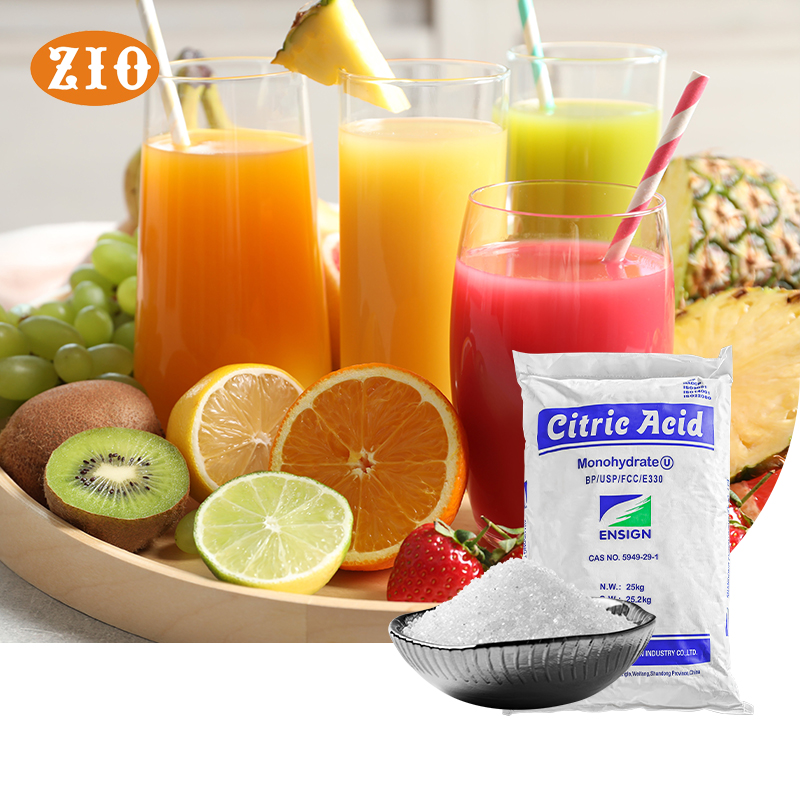
Citric acid is an organic acid used in food and beverage production as an acidity regulator and acidulant. In a formulation it adjusts acidity, contributes a characteristic sour taste, and supports formulation stability. The word that buyers should focus on is food grade: it identifies material intended for food and beverage manufacturing and supplied against a food-grade specification and certificate of analysis, rather than material intended for other industrial uses.
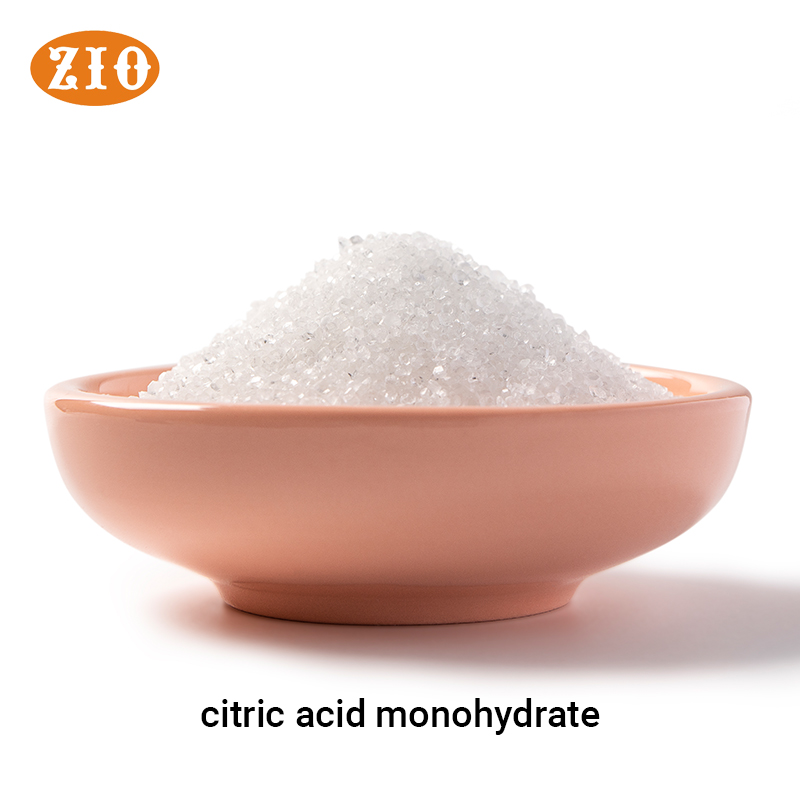
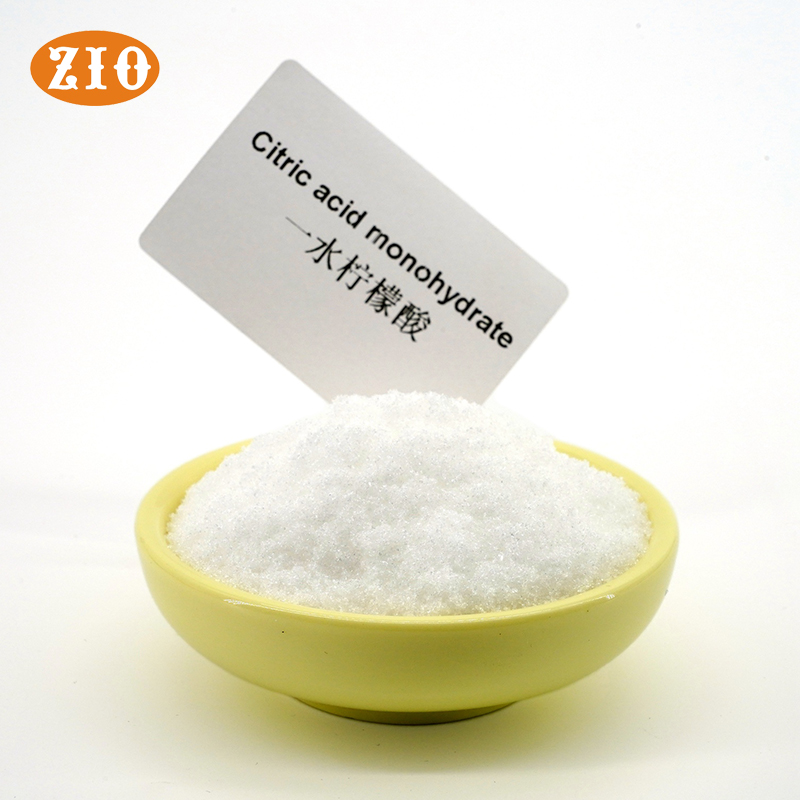
The reference product in the ZIO range is Citric Acid Monohydrate: a white crystalline powder or granules, identified by CAS No. 5949-29-1 and molecular formula C6H8O7·H2O, with acidity regulation as its declared function. A grade claim on its own is not a purity number. Purity is confirmed batch by batch on the certificate of analysis, and for common food-grade material it is typically ≥99.5%, subject to the actual COA.
Scope note: every technical statement in this article refers to citric acid monohydrate as specified above. Buyers whose formulation calls for a different citric acid form should confirm the required grade and specification with the supplier before ordering, because the data below does not transfer automatically.
Why Buyers Moving From Awareness to Research Get Stuck
The first questions after a buyer identifies citric acid as an ingredient are rarely about the chemistry. They are about confidence: whether the powder arriving in a 25 kg bag matches the specification that was quoted, whether the paperwork will clear their own market, and whether the supplier can be relied on for the second and third shipment as well as the first.
Four practical problems recur in that research stage.
- Grade ambiguity. A quotation that says only “citric acid” does not establish which product form, which grade and which particle-size range the buyer will receive. The specification and COA have to name it.
- The specification-to-COA gap. Assay, moisture, clarity of solution, heavy metals and particle size are all parameters that can be declared but must also be verifiable per batch. Buyers who never ask for a COA discover quality variation only after production has started.
- Packaging and order size mismatch. A 25 kg bag suits a blender or a distributor; a carton suits a food-service operator. A supplier who cannot adjust packaging cannot be used across a buyer's full customer base.
- Fragmented sourcing. Citric acid is rarely bought alone. An importer usually also needs sweeteners, thickeners, preservatives or premix powders, and each additional supplier adds documentation, inspection and payment overhead.
Industry Background: Why Citric Acid Sits in So Many Formulations
Citric acid is a widely used food acidulant because it performs a simple, repeatable job across very different product categories. In beverages it contributes the sourness that balances sweetness; in confectionery it creates the tartness that defines candy, gummies, jellies and fruit-flavoured products; in sauces, dressings, dairy products and desserts it adjusts acidity within a broader formulation. For a manufacturer, that breadth reduces the number of acidulants that need to be sourced, tested and stocked, and for a distributor it means one ingredient can serve several customer industries.
On the supply side, most export buyers looking at China are comparing manufacturers that combine ingredient trading with formulation support. Guangzhou ZIO Chemical Co., Ltd. is one of them: the company was founded in the spring of 2005, operates a 5,000 m² facility with 100 employees, including a 15-engineer R&D team, and reports an annual output of 10,000,000 units with an export ratio of 80%. Its stated main markets are Africa, Asia and South America, and its products are exported to more than 120 countries and regions. The business is organised around two areas: food ingredients — acidity regulators, sweeteners, thickeners, stabilizers, emulsifiers, preservatives, antioxidants and nutritional ingredients — and premix powder solutions such as ice cream powder, milk tea powder, beverage powder, ice pop powder, jelly powder, pudding powder and sauce powder.
The Solution: A Documented Citric Acid Monohydrate Specification
A specification is only useful if it can be read as a production instruction. The table below reproduces the declared parameters for ZIO Citric Acid Monohydrate; the notes that follow explain what each line changes for a buyer.
| Parameter | Declared specification |
|---|---|
| Appearance | White crystalline powder or granules |
| Grade | Food grade |
| Purity | Typically ≥99.5% for common food-grade material, subject to the actual COA |
| CAS No. | 5949-29-1 |
| Molecular formula | C6H8O7·H2O |
| Function | Acidity regulator / acidulant |
| Main specification | Assay, moisture, clarity of solution, heavy metals and particle size according to the applicable standard |
| Packaging | 25 kg bag or customized |
| Storage | Dry, cool, sealed |
Reading the assay and purity line
The purity statement “typically ≥99.5%, subject to actual COA” is a commercial reference, not a promise for every batch. What matters operationally is that assay, moisture, clarity of solution and heavy-metal limits are stated on the certificate of analysis for the shipment a buyer receives. Buyers comparing suppliers should compare COAs on the same parameters, not headline purity alone.
Why clarity of solution and particle size matter
Clarity of solution is listed because a beverage or clear syrup application will show insoluble residue that a coloured sauce will not. Particle size is listed because it affects how quickly the acid disperses and dissolves in a mixing tank, and how uniformly it distributes in a dry blend. A buyer running a continuous beverage line and a buyer running a dry premix line may reasonably need different particle-size characteristics from the same chemistry, which is why the parameter belongs in the specification discussion rather than in a generic product description.
Packaging, storage and handling in your plant
The standard packaging is a 25 kg bag, with customized formats available according to the customer's requirements. Citric acid monohydrate should be stored dry, cool and sealed, which in practice means keeping bags off wet floors, away from steam lines and closed between batches. Because the material is hygroscopic in storage conditions with high humidity, a buyer's warehouse discipline is as much part of quality control as the supplier's production process.
Step-by-Step: Sourcing Food Grade Citric Acid From a Chinese Manufacturer
The sequence below reflects how an export order is normally structured with ZIO. It is written as a buyer's checklist rather than a sales process, so each step names what the buyer should obtain before moving on.
- Define the application and the product form. State whether the citric acid goes into a carbonated drink, a fruit beverage, a gummy, a sauce, a yogurt or a dry premix, and confirm that monohydrate is the form the formulation requires. Application detail drives every later decision.
- Request the technical data sheet and a batch COA. Check assay, moisture, clarity of solution, heavy metals and particle size against the applicable standard in your market. Confirm the grade stated on the document is food grade.
- Match particle size and handling to your process. Confirm how the material will be weighed, conveyed and dissolved, and whether the standard powder or granules suit the dosing system.
- Confirm packaging and order quantity. Standard packaging is a 25 kg bag or customized; food-grade bags, cartons and drums are among the formats used across the ZIO range. The standard MOQ is generally 25 kg or 1 carton, depending on the product.
- Test a sample before committing. Evaluate the material in your own formulation rather than judging it by appearance. Sensory balance, solubility behaviour and dosing response are application-specific.
- Agree commercial terms and documents. ZIO commonly accepts T/T, with a typical arrangement of 30% deposit and the balance before shipment; terms can be discussed according to order value and cooperation requirements. Shipping terms include FOB, CFR and CIF, with DDP available for applicable destinations and orders. Common documents are COA, Commercial Invoice, Packing List and Bill of Lading, with additional documents such as Certificate of Origin or health-related documentation available for applicable products and markets.
- Confirm the lead time in writing. Standard orders are generally arranged for shipment within approximately 3–20 days, depending on product, quantity, packaging and production schedule. Customized OEM, ODM and private-label orders may require additional time.
- Plan inbound storage. Book dry, cool, sealed storage before the container arrives, and keep the COA filed against the batch number for traceability in your own quality system.
Use Cases: Where Food Grade Citric Acid Is Applied
The application list below comes from the declared use profile of ZIO Citric Acid Monohydrate. It is a sourcing reference: the permitted use level, labelling and regulatory status of citric acid in each category must be checked against destination-market rules before commercial production.
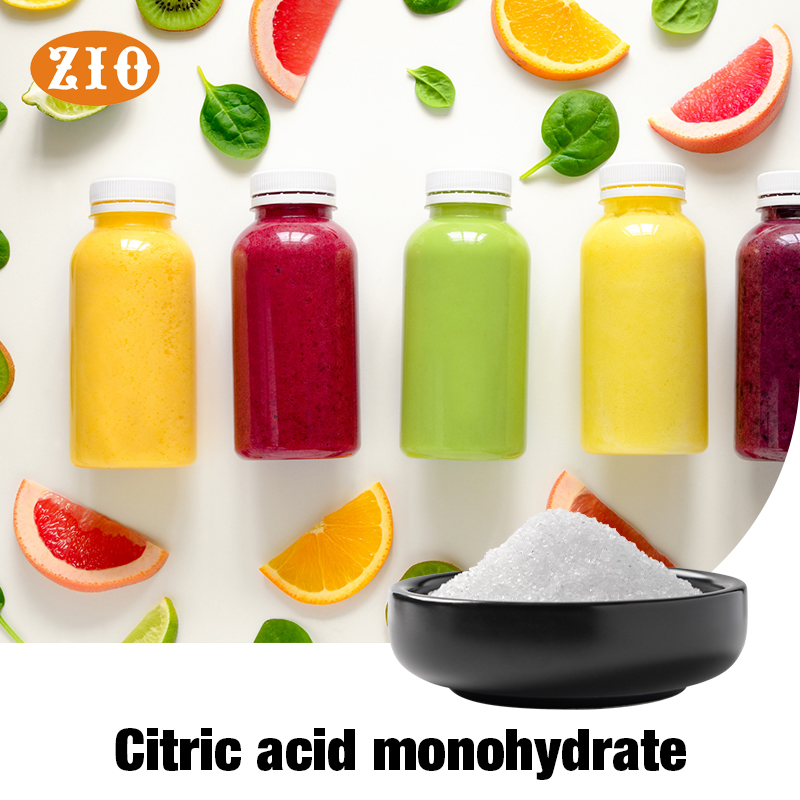
- Beverages. Soft drinks, carbonated beverages, fruit beverages, juice drinks, powdered beverages, sports drinks and energy drinks, where controlled acidity is part of the final taste.
- Confectionery. Candy, gummies, jams and jellies, where citric acid contributes the characteristic tartness of fruit-flavoured products.
- Sauces and dressings. Acidity adjustment within savoury formulations, alone or alongside a sauce powder premix.
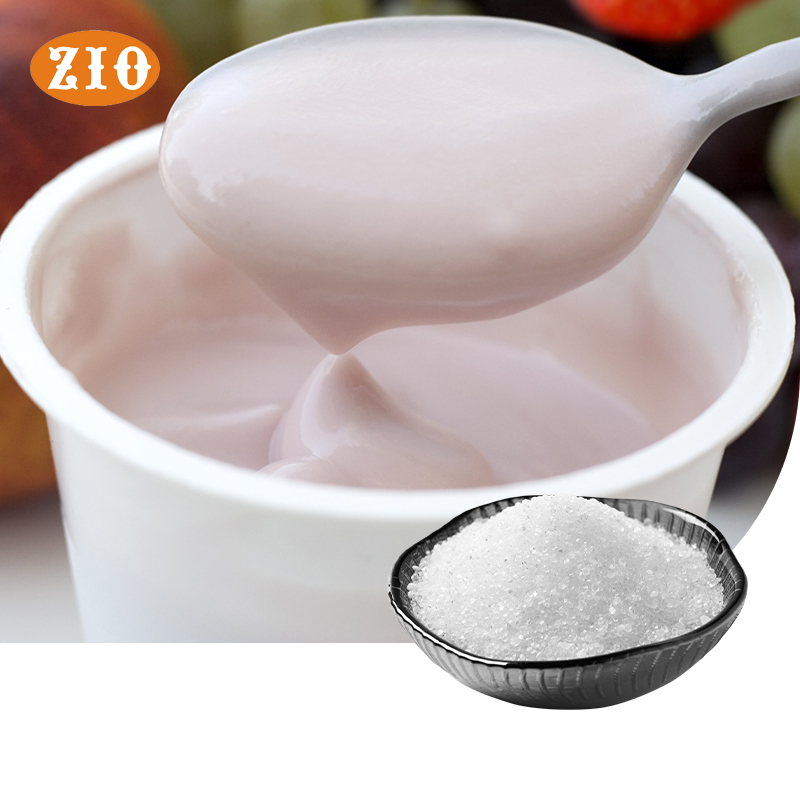
- Dairy and desserts. Dairy products, yogurt, desserts and processed food systems where a balanced acid profile is required.
- Bakery and fillings. Bakery applications and dessert fillings where acidity contributes to the overall flavour balance.
- Seasoning, instant foods and premixes. Instant foods, seasoning systems, beverage premixes and nutritional foods.
Citric acid inside premix powder projects
For buyers who do not want to dose raw acidulants individually, citric acid can be delivered as part of a complete premix. ZIO supplies ice cream powder, milk tea powder, beverage powder, ice pop powder, jelly powder, pudding powder and sauce powder, and provides OEM, ODM and private-label support covering formula, flavour, sweetness, specification, packaging and labelling. In that model the buyer approves a finished formulation and its preparation instructions, and the acidulant is one controlled component inside a standardised blend rather than a separate line item on the dosing sheet.
Comparison: Food Ingredients Commonly Sourced Alongside Citric Acid
Importers rarely buy a single ingredient. The table below compares identification, function and declared purity language across the ZIO range, using only the parameters stated in the product specifications. It compares product data; it is not a substitution recommendation, and final specification, use level and labelling must be confirmed against the COA and destination-market rules.
| Product | Function | CAS No. | Purity statement | Packaging |
|---|---|---|---|---|
| Citric Acid Monohydrate | Acidity regulator / acidulant | 5949-29-1 | Typically ≥99.5%, subject to actual COA | 25 kg bag or customized |
| Vitamin C (Ascorbic Acid) | Antioxidant / nutritional ingredient | 50-81-7 | Commonly ≥99.0% for standard ascorbic acid, subject to actual COA | 25 kg bag or customized |
| Xanthan Gum | Thickener, stabilizer, suspension aid, texture modifier | 11138-66-2 | Specification-dependent; viscosity, mesh, moisture and ash set by grade | 25 kg bag or customized |
| Sodium Benzoate | Preservative | 532-32-1 | Commonly ≥99.0% for standard material, subject to actual COA | 25 kg bag or customized |
| CMC (Sodium Carboxymethyl Cellulose) | Thickener, stabilizer, water-retention agent, texture modifier | 9004-32-4 | Specification-dependent; viscosity and degree of substitution set by grade | 25 kg bag or customized |
| Sorbitol | Sweetener, humectant, texturizing ingredient | 50-70-4 | Commonly ≥99.0% for crystalline sorbitol, subject to actual COA | 25 kg bag or customized |
Two points matter when reading this table. First, “specification-dependent” is not a gap in the data: for xanthan gum and CMC, viscosity and hydration behaviour are the buying criteria, so the grade is selected from a range rather than fixed at one number. Second, the purity figures for the other four products are typical values subject to the certificate of analysis, exactly as with citric acid — which is why a COA request belongs in the first supplier exchange, not the last.
Frequently Asked Questions
What documentation comes with a food grade citric acid order?
ZIO can provide quality and shipping documents according to the product and order requirements. Common documents include COA, Commercial Invoice, Packing List and Bill of Lading; additional documents such as Certificate of Origin or health-related documentation may be available for applicable products and markets. For citric acid monohydrate, the COA states assay, moisture, clarity of solution, heavy metals and particle size according to the applicable standard, so the buyer can check the batch against the specification and against the requirement of their own destination market before release.
Can one manufacturer supply citric acid together with other food ingredients?
Yes. ZIO supplies citric acid, vitamin C, xanthan gum, sweeteners, preservatives, cocoa powder, CMC and menthol crystals, together with premix powders including ice cream powder, milk tea powder, beverage powder, ice pop powder, jelly powder, pudding powder and sauce powder. The company also provides OEM, ODM and private-label services covering customized formulas, flavours, product specifications, packaging and labelling. For an importer, that means an acidulant, a preservative and a finished beverage or dessert premix can be consolidated into one supply relationship and one documentation set.
What is the minimum order quantity and what payment terms apply?
The standard MOQ is generally 25 kg or 1 carton, depending on the product. For customized formulations, OEM, ODM and private-label projects, the MOQ may vary according to the product, packaging and production requirements. ZIO commonly accepts T/T and other payment methods depending on order value, product and cooperation terms; a typical arrangement is 30% T/T deposit with the balance paid before shipment, and payment terms can be discussed and confirmed according to the specific order.
Can I test a sample before placing a bulk order?
Yes. ZIO can provide product samples so customers can evaluate product quality, application performance and taste before placing a bulk order. Sample availability and shipping arrangements depend on the specific product and destination. Buyers should provide the product name, application, required quantity and destination country so a suitable sample and shipping arrangement can be recommended.
How long does production and delivery take, and how is the order shipped?
Standard orders are generally arranged for shipment within approximately 3–20 days, depending on the product, order quantity, packaging requirements and production schedule. Customized OEM, ODM and private-label orders may require additional production time, and the exact lead time is confirmed before order placement. International shipping is supported under FOB, CFR and CIF terms, with DDP available where applicable to the destination and order. Buyers can send their application details, target quantity and destination port to receive a quotation and a confirmed lead time.
Conclusion: What a Confident Citric Acid Decision Looks Like
A food grade citric acid purchase is decided by documentation and fit rather than by price per kilogram alone. The practical standard is straightforward: a named product form and grade, a specification covering assay, moisture, clarity of solution, heavy metals and particle size, a batch COA against that specification, packaging that matches your process, and a supplier able to repeat all of it on the next shipment.
Guangzhou ZIO Chemical Co., Ltd., trading as ZIO Food Ingredients, has operated since 2005 with a 5,000 m² facility, 100 employees and a 15-engineer R&D team, exporting 80% of output to more than 120 countries and regions, with Africa, Asia and South America as stated main markets. For buyers at the research stage, the useful next step is not a catalogue request but a specification conversation: application, target acidity, particle-size preference, packaging format and destination market.

Request a Sample or Quotation
Send your application, target acidity, required quantity and destination port, and the ZIO team can recommend a suitable citric acid monohydrate specification, confirm packaging and MOQ, and arrange a sample for evaluation.
Product brochure (PDF, opens in a new tab): ZIO Food Ingredients catalogue
Website: zioadditives.com
Guangzhou ZIO Chemical Co., Ltd. (ZIO Food Ingredients)
Address: Huangpu District, Guangzhou, Guangdong, China
Email: sale@gzzio.com | tiffiney.zhou@gzzio.com
Tel / WhatsApp: +86 138-2210-8446
Have Questions or Need More Details?
Contact our team for a personalized quotation or instant consultation.
Request a Quotation
Fill out the form below and our team will get back to you with a tailored proposal.
WhatsApp Direct Chat
Prefer to chat in real-time? Message us on WhatsApp for instant assistance & quick answers.
- Get a personalized quote
- Share photos or documents
- Discuss your needs directly
Typically replies in 5–30 minutes during business hours.