
Food Ingredients: Certification and Specification Constraints for Importers
Food ingredient buyers rarely fail because a supplier cannot produce a white powder. They fail because the specification approved at quotation, the documents attached to the shipment and the batch that arrives do not describe the same product. For an importer, “food grade” is therefore not a label printed on a data sheet. It is a set of constraints that can be checked, line by line, before a purchase order is issued.
This article sets out those constraints for buyers who are past first discovery and are now researching and evaluating suppliers: how ingredient identity is confirmed, which specification parameters carry real weight, what each document actually proves, and how commercial terms such as minimum order quantity, packaging and lead time interact with compliance. Product examples reference ZIO Food Ingredients, the food ingredient and premix powder business of Guangzhou ZIO Chemical Co., Ltd., a supplier founded in Guangzhou in 2005 that manufactures and trades food-grade ingredients and premix powders for food manufacturers, importers, distributors and private-label brands.
Why “Food Grade” Is Not a Single Answer
The phrase covers three separate things, and a supplier can be strong on one while saying nothing useful about the others. First, it is a grade designation: a material described as food grade in a technical data sheet. Second, it is a regulatory status that depends on the destination market and the intended use in a specific food. Third, it is a documentary status that has to be evidenced batch by batch, because a specification describes a product and a Certificate of Analysis describes a shipment.
Two failure patterns account for most import disputes. The first is comparing suppliers on headline price while no written specification exists, which makes every quotation technically incomparable. The second is treating a certificate image as proof that a product may be used at any level in any food in any market. Neither pattern survives a customs query or a customer audit.
Three questions that should be answered before any price comparison:
- Which grade and which specification parameters will be written into the purchase order?
- Which documents will accompany each batch, and which of them are market-specific?
- Whose rules govern permitted use, labelling and use levels for the finished product?
Industry Background: The Constraints Change by Ingredient Category
“Food ingredients” is a commercial umbrella, not a technical category. The functional groups that importers most often combine inside one purchasing programme include acidity regulators such as food grade citric acid; nutritional and antioxidant ingredients such as food grade vitamin C and vitamin E; preservatives such as food grade sodium benzoate and potassium sorbate; sweeteners and sugar alcohols such as sorbitol, isomalt, aspartame and bulk erythritol; hydrocolloids and stabilisers such as food grade xanthan gum and CMC; flavour ingredients such as food grade menthol crystals; colour and flavour ingredients such as bulk cocoa powder and food colorants; emulsifiers and thickeners; and complete premix powders for ice cream, milk tea, beverages, ice pops, jelly, pudding and sauces.
The constraint profile differs sharply between these groups, and that difference is where most evaluation mistakes start. A single-molecule additive is identified by a CAS number, a molecular formula and an assay value. A hydrocolloid is not: xanthan gum is identified by CAS 11138-66-2, but the commercial material is polymeric and has no simple fixed molecular formula, so viscosity, mesh size, moisture and ash carry more practical weight than the formula line. A natural agricultural ingredient behaves differently again — cocoa powder varies by origin in colour, fat content, pH and microbiological profile, and each shipment has to be confirmed against its own parameters.
Premix powders add a third layer of constraint. Because a formulated blend has no single CAS number or molecular formula, its specification has to carry the ingredient list, nutritional data, allergen information, preparation instructions, shelf life and regulatory status of the finished mixture. Buyers who evaluate a premix using the checklist designed for a single additive will miss exactly the items that matter.
The Four-Layer Constraint Framework
Suppliers can be compared systematically by separating the conversation into four layers: identity, specification, documentation and commercial terms. Each layer answers a different question, and each one can be verified independently.
Layer 1 — Identity and Grade
Identity answers “what is this material”. The minimum data set is appearance, grade, standard identification data and declared function. Representative examples from a food ingredient portfolio:
- Sorbitol — white crystalline powder or granules, food grade, CAS 50-70-4, molecular formula C6H14O6, purity commonly ≥99.0% for crystalline sorbitol subject to the actual COA; functions as sweetener, humectant and texturising ingredient.
- Sodium Benzoate — white crystalline powder or granules, food grade, CAS 532-32-1, molecular formula C7H5NaO2, purity commonly ≥99.0% for standard material subject to COA; functions as a preservative.
- Ascorbic Acid (vitamin C) — white to slightly yellowish crystalline powder, CAS 50-81-7, molecular formula C6H8O6, commonly ≥99.0% for standard ascorbic acid; functions as antioxidant and nutritional ingredient.
- Xanthan Gum — cream to off-white free-flowing powder, CAS 11138-66-2, polymeric structure without a simple fixed molecular formula; functions as thickener, stabiliser and suspension aid.
- Menthol Crystal — white crystalline material with characteristic mint aroma, molecular formula C10H20O; the CAS number depends on the isomer and grade, for example L-Menthol CAS 2216-51-5.
- Vitamin E — appearance depends on the supplied form; d-alpha-tocopherol is cited as CAS 59-02-9 with molecular formula C29H50O2, but these identifiers are examples for one form, not universal identifiers for every commercial vitamin E product.
Two cautions follow. Identification data is not a quality statement — a correct CAS number tells you what the material is, not how pure it is. And where a product family exists, such as menthol isomers or vitamin E forms, the purchase order must state the exact form, because sensory behaviour and technical parameters differ between them.
Layer 2 — Specification and Test Parameters
The specification is the part a quality laboratory can actually test, and it should be matched to the process rather than copied from a catalogue. For crystalline additives such as sodium benzoate, ascorbic acid or sorbitol, the working parameters are assay, moisture or loss on drying, heavy metals, microbiological limits, ash and particle size. For hydrocolloids such as xanthan gum, viscosity, mesh and particle size, moisture, ash, pH and microbiological parameters determine how the powder behaves in a mixing line. For cocoa powder, cocoa content, fat content, colour, pH, moisture, particle size and microbiological parameters decide whether a batch suits a beverage or a bakery application.
The practical rule is that the specification must describe the behaviour your line depends on. A powdered beverage operation cares about particle size and dissolution; a sauce operation cares about viscosity build; a confectionery operation cares about moisture and crystallisation behaviour. A quotation that lists only “purity 99%” answers none of these.
Layer 3 — Documentation and Market Access
Documents are the audit trail that connects a specification to a shipment. The common set is a Certificate of Analysis per batch, a technical data sheet, a commercial invoice, a packing list and a bill of lading, with a certificate of origin and health-related documentation available where applicable to the product and destination market.
Facility-level registration belongs in the same layer but must be read correctly. Guangzhou ZIO Chemical Co., Ltd. holds FDA Food Facility Registration No. 11954927096-1 for the USA market under 21 CFR Part 1 Subpart H, issued on 2024-12-23 and valid until 2026-12-31. That registration identifies a registered food facility; it is not a product approval, and permitted use, labelling and use levels for a finished food still depend on the rules of the destination market.
Layer 4 — Commercial Constraints
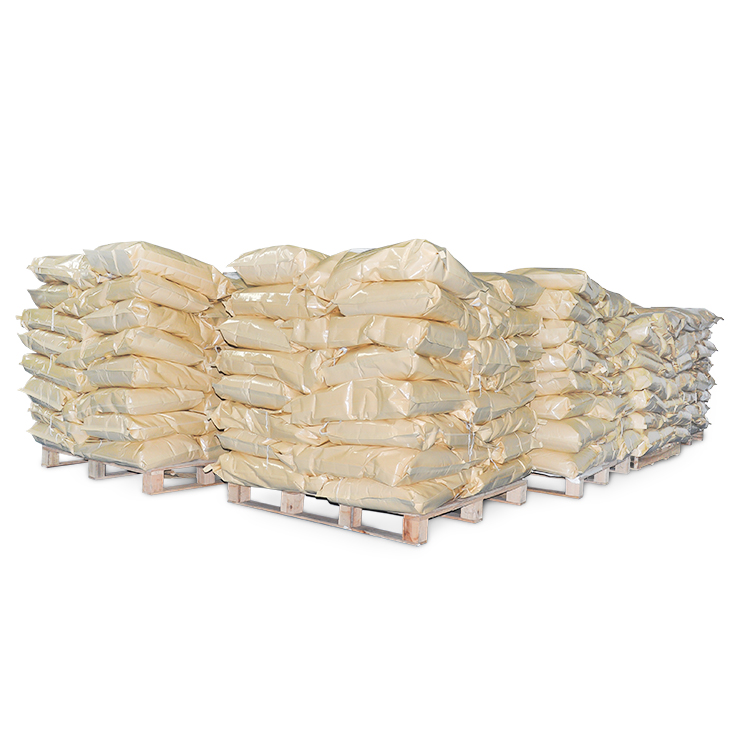
Commercial terms are compliance-relevant because they change the landed cost and the risk profile of an order. The standard minimum order quantity for ZIO food ingredients and premix powders is generally 25 kg or 1 carton, depending on the product; customized formulations, OEM, ODM and private label projects are quoted according to product, packaging and production requirements. Common packaging is a 25 kg bag, carton or drum depending on the product form, and customized packaging and private label supply are available for qualified projects.
Payment is commonly arranged by T/T, with a typical structure of 30% deposit and the balance before shipment, and shipping terms include FOB, CFR and CIF, with DDP available for applicable destinations and orders. Standard orders are generally arranged for shipment within approximately 3–20 days, while quoted lead times across products and customized projects extend to 7–30 days depending on quantity, packaging requirements and production schedule. A buyer who has not confirmed these four points in writing has not yet evaluated the supplier.
Step-by-Step: Evaluating a Supplier Against These Constraints
- Define the application before the ingredient. Decide whether the product needs a single functional ingredient or a complete premix. A beverage concept may combine an acidity regulator, a preservative, a vitamin and a hydrocolloid; a frozen dessert concept may be better served by one standardized premix. The application determines the category, and the category determines the specification.
- Request the specification and a sample COA format, not only a price. The COA format shows which parameters the supplier actually tests per batch. If a parameter you need is absent from the format, it will not appear on the delivered batch either.
- Verify identity data against the purchase order. Check CAS number, molecular formula or composition statement, declared grade and function. For families such as menthol or vitamin E, confirm the exact form and grade in writing.
- Match the documentation scope to your market. Separate three questions: is the facility registered, is the product specification adequate, and is the ingredient permitted in your finished food at your intended level. Facility registration answers only the first.
- Confirm packaging, MOQ and lead time in writing. Confirm bag, carton or drum format, the 25 kg or 1 carton baseline, and the shipping window. Customized packaging and private label add production time and should be planned for.
- Run a sample trial under your own process conditions. Samples allow evaluation of quality, application performance and taste before a bulk order. A powder that performs in a beaker may behave differently in a continuous mixer, so trial the dosing and mixing step that you will actually run.
- Lock batch acceptance criteria into the purchase order. State the tested parameters, the acceptance range and the COA requirement per batch. This converts a supplier relationship into a repeatable quality agreement.

Where ISO Certification and Facility Registration Fit — and Where They Do Not
Importers sourcing from China frequently search for manufacturers with ISO quality controls. The useful response to that requirement is not a logo on a website. Ask for the certificate itself: the issuing body, the standard, the certified scope, the site covered and the validity dates. Then check whether the certified scope actually covers the product line you are buying, and whether batch COA data are produced inside that system. A management-system certificate describes how a site organises quality; a COA describes one batch. Neither substitutes for the other, and neither substitutes for destination-market compliance.
Food grade citric acid illustrates the point. Citric acid is an organic acid used as an acidity regulator and sourness agent in beverages, confectionery, sauces and fruit products, and buyers comparing Chinese manufacturers will receive quotations that look similar on paper. The differences sit in assay and impurity control, in whether a batch COA is issued per shipment, in packaging format, and in whether the supplier can state clearly which market rules it is supplying against. A certificate of quality management says nothing about any of those unless it is paired with batch-level data and a written specification.

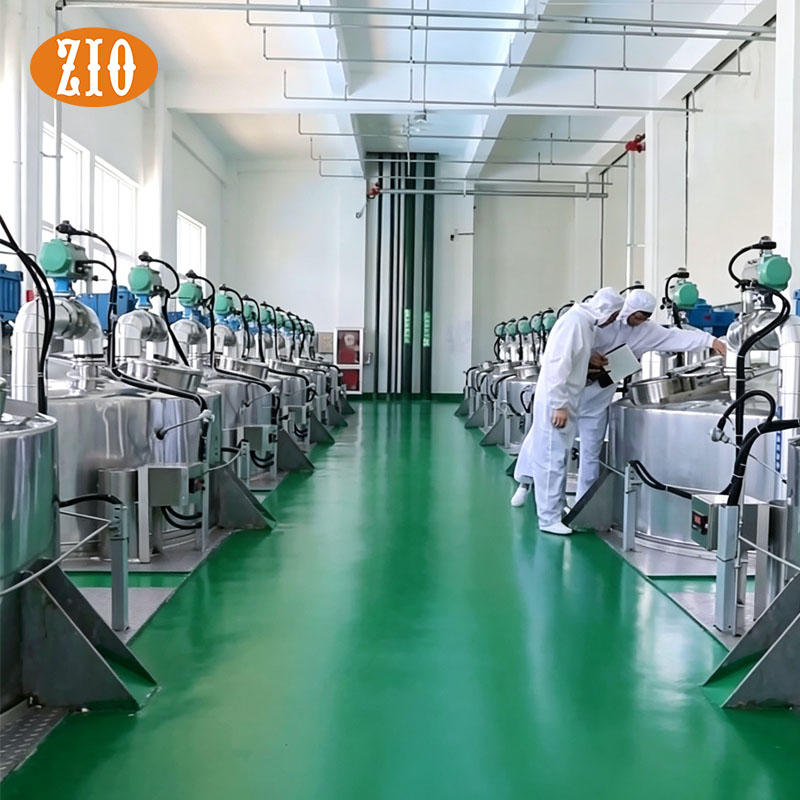
ZIO's own quality routine is batch inspection with COA release, supported by a documentation set covering COA, commercial invoice, packing list and bill of lading, with certificate of origin or health-related documentation arranged where applicable. Buyers who need to see the wider operating picture — a 5,000 m² facility in Huangpu District, Guangzhou, a team of 100 people including 15 engineers, and export activity across Africa, Asia, South America and other markets — should treat those facts as context for capability, and keep certification evidence as a separate, document-level check.
Use Cases: How These Constraints Play Out in Real Purchasing Decisions
Beverage and sauce production. A formulation may combine food grade citric acid for acidity and sourness, sodium benzoate for preservation in acidic systems, vitamin C for nutritional positioning and xanthan gum for viscosity and suspension. The constraint logic here is that preservation cannot be judged from the additive alone: efficacy depends on the food matrix, pH, water activity, processing and packaging. Two manufacturers using the same COA-grade sodium benzoate can obtain different shelf-life outcomes, which is why the supplier conversation has to include the application, not just the product name.
Frozen dessert and beverage premix operations.Ice cream powder, ice pop powder, milk tea powder and beverage powder replace the weighing and blending of multiple raw materials with a standardized base. The constraint logic shifts accordingly: because a premix has no single CAS number or molecular formula, the specification, allergen information and preparation instructions become the compliance document, and the supplier's formulation control becomes the quality control.
Documented supply relationships. A beverage distributor in Mali has used a customized milk tea powder for regular bulk orders for more than two years, reporting consistent taste and simplified ingredient management across outlets. An ice cream producer in Côte d'Ivoire has used ice cream powder for commercial production for over three years, and a crispy cone manufacturer in Angola has used a cone premix for a similar period. In each case the value delivered was a defined formulation, supporting documentation and supply continuity — not a lower headline price.
Distributors building a multi-category portfolio. A distributor supplying sweeteners (sorbitol, isomalt), preservatives (sodium benzoate, potassium sorbate), hydrocolloids (xanthan gum), cocoa powder and premixes to local food manufacturers carries several specification systems at once. Consolidating with one supplier reduces the number of COA formats and packaging standards to manage, but only if each individual product's documents are complete.
Comparison Table: Identification and Specification Reference Points
The table below compares food-grade ingredients on the parameters that drive supplier evaluation. Values are reference points to be confirmed against the current technical data sheet and COA for each shipment, not fixed commercial commitments.
| Ingredient | Primary function | Identification reference | Typical packaging | Parameters to confirm |
|---|---|---|---|---|
| Ascorbic Acid (vitamin C) | Antioxidant, nutritional ingredient | CAS 50-81-7; C6H8O6 | 25 kg bag or customized | Assay, loss on drying, residue, heavy metals, microbiological limits |
| Xanthan Gum | Thickener, stabiliser, suspension aid | CAS 11138-66-2; polymeric, no simple fixed formula | 25 kg bag or customized | Viscosity, mesh/particle size, moisture, ash, pH, microbiological limits |
| Sodium Benzoate | Preservative | CAS 532-32-1; C7H5NaO2 | 25 kg bag or customized | Assay, moisture, acidity/alkalinity, heavy metals |
| Sorbitol | Sweetener, humectant, texturising ingredient | CAS 50-70-4; C6H14O6 | 25 kg bag or customized | Assay, moisture, reducing sugars, ash, particle size |
| Isomalt | Sugar alcohol sweetener, bulking agent | CAS 64519-82-0; mixture of hydrogenated disaccharides | 25 kg bag or customized | Composition, moisture, ash, particle size, microbiological limits |
| Menthol Crystal | Cooling flavour ingredient | C10H20O; CAS depends on isomer (e.g. L-Menthol 2216-51-5) | 25 kg or customized | Assay, optical rotation/isomer profile, melting point, sensory profile |
| Cocoa Powder | Cocoa flavour, aroma and colour | Natural agricultural ingredient; specification by composition | 25 kg bag or customized | Cocoa content, fat content, colour, pH, moisture, particle size, microbiological limits |
Frequently Asked Questions
What documents should an importer request to confirm food-grade status before ordering?
Request the technical data sheet or specification for the exact product and grade, a sample COA showing the batch-level test parameters, and the shipping document set that will accompany the order. ZIO can provide COA, commercial invoice, packing list and bill of lading, with additional documents such as certificate of origin or health-related documentation arranged where applicable to the product and destination. For USA-bound shipments, ZIO holds FDA Food Facility Registration No. 11954927096-1 under 21 CFR Part 1 Subpart H, issued 2024-12-23 and valid to 2026-12-31; facility registration should be read alongside product-level compliance, not as a replacement for it.
How can a buyer confirm that the quoted specification matches the delivered batch?
Compare three sets of information: the specification written into the purchase order, the COA accompanying the delivered batch, and the parameters you test on receipt. Set the acceptance criteria at the purchase order stage — assay, moisture, particle size and microbiological limits as applicable — and state the exact form where a product family exists, such as menthol isomers or vitamin E forms. ZIO's quality control routine is batch inspection with COA release, so each shipment carries batch-level data rather than a generic product statement.
What MOQ and packaging options apply to food ingredients and premix powders?
The standard minimum order quantity is generally 25 kg or 1 carton, depending on the product. Common packaging is a 25 kg bag or carton, with drums used depending on the product form; customized packaging, labelling and private label supply are available for qualified OEM and ODM projects. For customized formulations and customized packaging, MOQ varies according to the product, packaging and production requirements, so it is confirmed per project rather than assumed from the standard baseline.
What drives cost differences between suppliers quoting the same ingredient?
Five factors usually explain a gap between quotations for the same product name: the grade and assay, the depth of testing and documentation, the packaging format and level of customization, the order quantity against the supplier's MOQ, and the shipping terms — FOB, CFR, CIF or DDP where applicable. Payment structure also affects the commercial balance, with a typical arrangement of 30% T/T deposit and the balance before shipment. Two quotes for the same ingredient are only comparable once grade, specification, packaging and delivery terms are stated in the same format.
Can buyers request samples before a bulk order, and how long does supply take?
Yes. ZIO can provide product samples so buyers can evaluate quality, application performance and taste before committing to a bulk order; sample availability and shipping arrangements depend on the specific product and destination, and the request should state the product name, application, required quantity and destination country. Standard orders are generally arranged for shipment within approximately 3–20 days, while quoted lead times across products and customized projects extend to 7–30 days depending on quantity, packaging and production schedule.
Next step: check the documents before the price
Send the product name, application, target market and required quantity, and ZIO Food Ingredients will confirm the specification, packaging options and documentation set for that product — and arrange a sample where an application trial is needed. The full product and capability overview is available in the ZIO product brochure.
Conclusion
The constraint that protects an importer is not a certificate on a wall and not a low quotation. It is a written specification, a documented batch, a packaging format that matches your line, and commercial terms confirmed before production starts. Identity data tells you what the material is, the specification tells you how it performs, documentation tells you what can be proven per shipment, and commercial terms tell you whether the supply can be repeated.
Buyers who evaluate suppliers against those four layers — and who separate facility registration from product approval, and management-system certification from batch COA — end up with fewer disputes, faster customs clearance and a specification they can defend to their own customers. Guangzhou ZIO Chemical Co., Ltd. supplies food ingredients and premix powders from Guangzhou, China, with OEM, ODM and private label support, batch inspection with COA, and export experience across Africa, Asia, South America, Europe, Oceania and other markets. Product information, specification documents and sample arrangements are available through zioadditives.com.
Have Questions or Need More Details?
Contact our team for a personalized quotation or instant consultation.
Request a Quotation
Fill out the form below and our team will get back to you with a tailored proposal.
WhatsApp Direct Chat
Prefer to chat in real-time? Message us on WhatsApp for instant assistance & quick answers.
- Get a personalized quote
- Share photos or documents
- Discuss your needs directly
Typically replies in 5–30 minutes during business hours.