Food Ingredients OEM in China: How Formulation Support Works
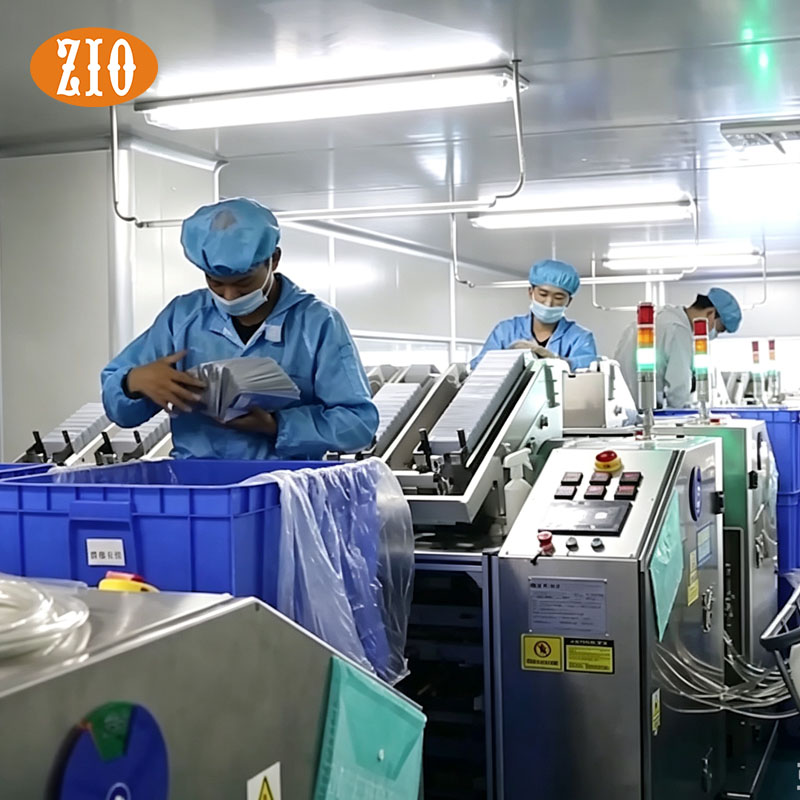
Premix powder and food ingredient production capability determines how closely a bulk order matches the approved sample.
Formulation support is the part of a food ingredients OEM project that decides whether a custom product is actually manufacturable in your plant, at your target cost, and at the taste and texture your market expects. In a Chinese food ingredients OEM arrangement, that support normally covers formula development, ingredient selection, sample iteration, specification lock and packaging — not simply filling a container with a standard SKU.
This article is written for importers, distributors, brand owners and food manufacturers who have already shortlisted suppliers and now need to execute. It explains what formulation support actually covers, which capabilities to verify before committing, and how a project moves from a written brief to repeatable bulk production.
ZIO Food Ingredients is the food ingredients and premix powder business of Guangzhou ZIO Chemical Co., Ltd., a Guangzhou-based company founded in 2005 that develops and supplies food-grade ingredients and premix powders to food manufacturers, importers, distributors and food brands, with products exported to more than 120 countries and regions.
The Problem: Why a Product Concept Fails Without a Formulation Partner
Buyers rarely arrive with a finished formula. They arrive with a market requirement: a milk tea that holds its flavour in iced drinks, a soft-serve mix that survives distribution, a sauce base that thickens on an existing line, a jelly that sets reliably at ambient temperature. Turning that requirement into a commercial product requires four things a concept document does not contain — a formulation ratio, an ingredient specification, a validated sample, and a supply route that reproduces the sample batch after batch.
Two failure modes repeat across markets. The first is blending in-house from commodity ingredients without a formulation baseline: the first batch is acceptable, the fifth is not, because no one fixed the ratio or the raw material specification. The second is buying a premix designed for a different market — different water hardness, different sweetness preference, different freezing or filling process — and then compensating with improvised additions at the plant. Both failures surface as cost and inconsistency months later, not at the point of purchase.
The distinction matters commercially. Ingredient supply is a transaction measured in kilograms. Formulation support is a development process measured in sample rounds, specification documents and production tolerances — and it is the part that determines whether a distributor can launch a private label product at all.
Industry Background: Why Buyers Now Source the Basket, Not the Single Ingredient
Ingredient purchasing has shifted from single-SKU buying to basket buying. A typical beverage or dessert formulation combines an acidulant, a sweetener system, a thickener or stabiliser, an emulsifier, a preservative, a colour and a flavour — and each component carries its own dosage, compatibility and documentation requirements. The commercial weight behind those categories is considerable: the global citric acid market alone was valued at USD 4.6 billion in 2025 and is projected to reach USD 7.1 billion by 2033, according to Grand View Research.
Where demand grows at that scale, the constraint on buyers is rarely the availability of an individual ingredient. It is the coordination cost of combining many ingredients into one stable product, then repeating that combination across production sites and shipping cycles. That coordination cost is why formulation-capable suppliers now compete directly against trading companies, and why premix formats have spread from beverage and dessert applications into bakery, sauce and food-service categories.
Premix powder is the clearest expression of the model: a pre-blended mixture of ingredients formulated in fixed proportions for a specific application, which removes weighing, blending and part of the formulation decision from the buyer's plant. The trade-off is real and should be stated: consolidation into fewer suppliers raises dependency. Buyers should hold the locked specification, the certificate of analysis for each batch, and a documented position on which components could be re-sourced if supply is interrupted.
The Capability Set a Formulation-Support OEM Must Have
Formulation and R&D capacity
The first thing to verify is whether the supplier writes formulas or only quotes them. ZIO operates an integrated business system covering R&D, formulation development, manufacturing, quality control, sales, technical support and global supply, with a research and development team of 15 engineers built on more than 20 years of industry experience. In practice, the useful question is not the size of the team but the number of sample rounds a supplier will run before a formula is locked, and who signs off on the final specification.
Portfolio breadth and customization levers
Formulation support only works if the supplier controls the components inside the formula. The ZIO food ingredients range covers acidity regulators, sweeteners, thickeners, stabilisers, emulsifiers, preservatives, antioxidants and nutritional ingredients, including food grade citric acid, food grade vitamin C (ascorbic acid), food grade xanthan gum, aspartame sweetener, bulk erythritol, food grade potassium sorbate, food grade sodium benzoate, food grade sorbitol, food grade menthol crystals, bulk cocoa powder and yeast protein ingredient.
The premix side of the portfolio is where formulation support becomes visible to the buyer: ice cream powder, bulk milk tea powder, beverage powder, popsicle and crushed ice premix, cake premix, waffle premix, dorayaki premix, egg roll premix, jelly powder, pudding powder and sauce powder. Customization is available across formula, flavour, packaging, logo, label and product specifications, under OEM, ODM, private label and custom formulation models.
Production capacity and quality control
ZIO operates a 5,000 m² facility with 100 employees and an annual output of 10,000,000 units, with large-scale production capacity or custom capacity available depending on the order. Quality control is built on batch inspection with a certificate of analysis (COA) issued against the batch, which is the document an importer needs when a customer or a regulator asks whether the delivered material matches what was approved.
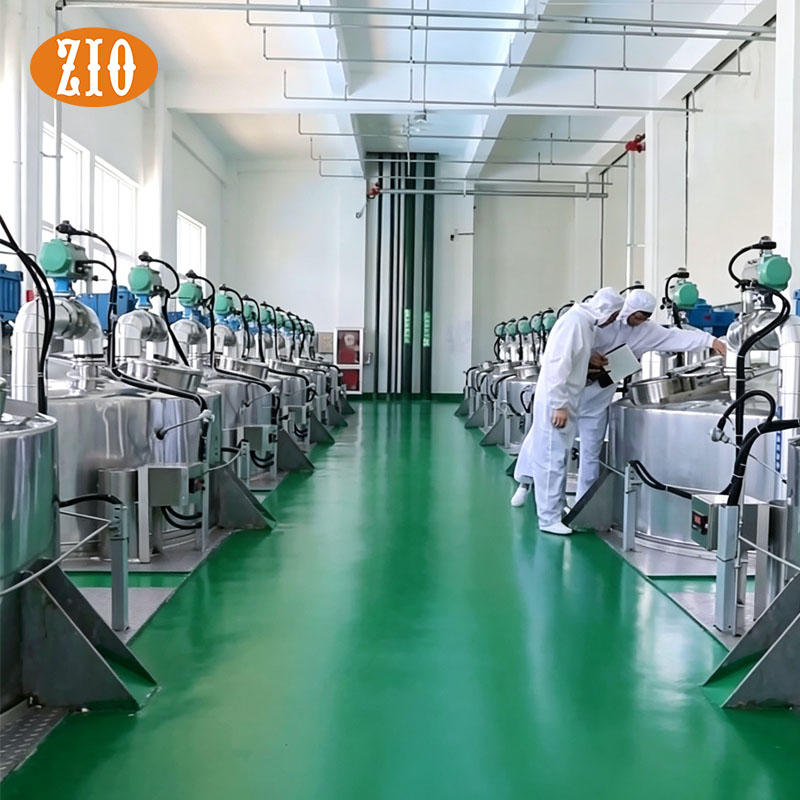
Batch inspection and COA release are the two control points that connect a locked formula to a repeatable delivered product.
Capacity is often misunderstood as a sales claim. For a formulation project it functions as a constraint: a formula that cannot be produced at the required batch size, or at the required frequency, is not a usable formula. Confirm that the batch scale used for your sample is the same scale used for production, or ask explicitly how the process changes between the two.
Market access documentation
ZIO holds FDA Food Facility Registration number 11954927096-1, issued 2024-12-23 under 21 CFR Part 1 Subpart H, with the registration valid to 2026-12-31 and scope covering the USA market. Buyers should treat facility registration as a supplier-level requirement rather than product approval: individual product compliance, labelling and any category-specific requirements still have to be confirmed for the destination market and the specific ingredient.
Commercial terms: MOQ, lead time and payment
The standard minimum order quantity is 25 kg or 1 carton depending on the product. For customized formulations, OEM, ODM and private label projects, MOQ varies with the product, packaging and production requirements. Lead time is 7–30 days depending on product, order quantity, packaging and production schedule, and customized orders may require additional production time; the exact date is confirmed before the order is placed. Payment is commonly 30% T/T deposit with 70% balance before shipment, and shipping can be arranged on FOB, CFR or CIF terms, with DDP available for applicable destinations and orders.
Cost benchmarking should separate the commodity from the service. China-origin potassium sorbate averaged approximately USD 2,403.33/MT on an FOB basis in Q2 2026, according to ChemAnalyst. That kind of index is useful for validating an ingredient line item, but it does not price formulation work, sample iteration or packaging — which is why a formulation-supported quotation is rarely comparable line by line with a commodity quotation.
Step-by-Step: How an OEM Project Moves From Brief to Bulk Production
- Application brief. The buyer states the finished product, the process, the target sensory profile, the packaging format and the destination market. Vague briefs produce vague samples; the brief is the specification's first draft.
- Formulation route and ingredient selection. The supplier selects the functional system — acidulant, sweetener, thickener or stabiliser, emulsifier, preservative — and proposes a ratio. This is the stage where a supplier without formulation capability can only offer catalogue items.
- Sample development. Samples are produced for evaluation of taste, texture, solubility and process compatibility. Sample rounds are the real cost centre of a custom project, so agree the number of rounds and what each round is testing.
- Formula and specification lock. Once the sample is approved, the ratio, ingredient specifications, dosage and packaging are fixed in writing. From this point, changes should be version-controlled.
- Packaging and labelling. Standard packaging is typically 25 kg bags or cartons depending on the product; customized packaging, logo and label work are available for qualified OEM and ODM projects, subject to the product and order requirements.
- Production and batch quality control. Production runs against the locked specification with batch inspection and a COA issued per batch.
- Documentation and shipping. Common documents include COA, Commercial Invoice, Packing List and Bill of Lading; Certificate of Origin and health-related documentation may be arranged where applicable to the product and destination.
- After-sales technical support. Application guidance, product documentation and remote support continue after delivery — the point at which most premix issues actually appear, because plant conditions differ from sample conditions.
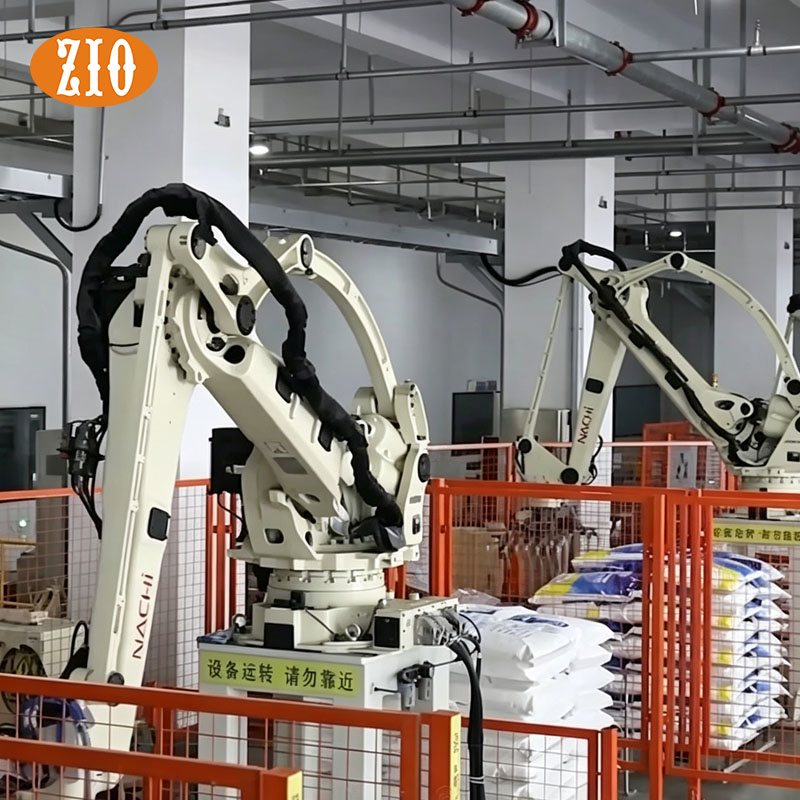
Packaging, labelling and private label branding are specified together with the formula, not after it.
Use Cases: Three Projects Where Premix Formulation Did the Work
Formulation support is easiest to judge through projects where the buyer's problem was application performance rather than price per kilogram.
Milk tea powder for a beverage distributor in Mali
A beverage distributor in Mali needed a convenient milk tea powder for local beverage shops and food-service customers. ZIO supplied a customized milk tea powder designed for easy preparation, consistent flavour and efficient commercial use. The powder format allowed the customer to simplify ingredient management and improve preparation efficiency while maintaining a standardized taste across batches and locations, supported by product documentation, application guidance and flexible packaging. The customer has continued placing regular bulk orders for more than two years.

Milk tea powder supplied to a beverage distributor in Mali, applied in beverage shops and food-service outlets.
Ice cream powder for a customer in Côte d'Ivoire
A customer in Côte d'Ivoire required a reliable ice cream powder for commercial production while maintaining consistent taste, texture and product quality. The premix format removed the need to purchase, weigh and blend multiple individual ingredients, making production more convenient and reducing variation between batches. ZIO provided product information, application guidance and technical support, and the cooperation has continued for more than three years across ice cream shops, dessert businesses and food-service operations.
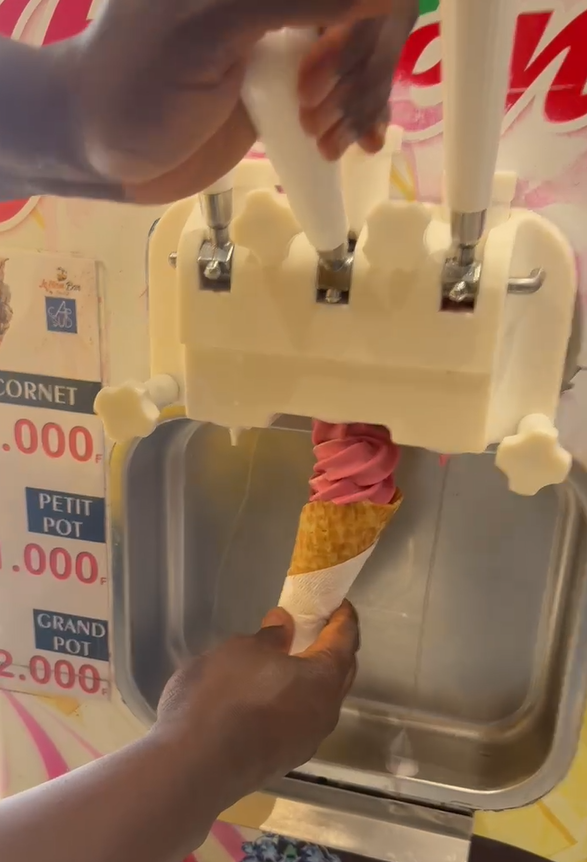
Ice cream powder applied in commercial ice cream production in Côte d'Ivoire.
Crispy cone premix for a manufacturer in Angola
A manufacturer in Angola needed a premix supplier that could simplify production while holding consistent quality and texture in finished crispy cones. ZIO supplied a formulated premix designed for convenient production and stable results, replacing the purchase and accurate weighing of multiple individual ingredients, and provided technical guidance covering preparation and production recommendations. The relationship has run for more than three years, including customized packaging options.
Comparison: Standard Supply vs OEM vs ODM vs Private Label
The four service models carry different responsibilities, timelines and documentation loads. The table below reflects ZIO's stated terms; specific MOQ and lead time are always confirmed per product and project.
| Model | Who defines the formula | What can be customized | Stated MOQ | Stated lead time | Documents |
|---|---|---|---|---|---|
| Standard food ingredient supply | Supplier catalogue specification | Product specification and packaging format | 25 kg / 1 carton | 7–30 days | COA, Commercial Invoice, Packing List, B/L |
| OEM production | Buyer's specified requirements | Formula, flavour, product specifications, packaging | Varies by product and packaging | 7–30 days, additional time for customized work | COA per batch, shipping documents, Certificate of Origin where applicable |
| ODM with formulation development | Supplier, with buyer approval and testing | Formula, flavour, sweetness, texture, specifications, packaging | Varies by product and production requirements | Additional production time after sample approval | COA, application guidance, technical support |
| Private label | Selected or developed product, sold under buyer's brand | Formula, packaging, logo, label, product specifications | Varies by product and order requirements | Additional production time after artwork approval | COA, branded packaging documentation, shipping documents |
The practical difference between OEM and ODM is not paperwork; it is where the development risk sits. In an OEM project the buyer arrives with a workable specification and the supplier executes it. In an ODM project the supplier must convert an application problem into a formula, which is why the sample stage carries more weight and usually more rounds.
What to Confirm Before You Commit
Most sourcing failures in this category are documentation and specification failures rather than production failures. The checklist below reflects the risks that recur in food ingredient and premix procurement.
- Specification. Ingredient composition, purity, moisture, particle size, solubility, allergen information and mixing ratio confirmed in writing.
- Application fit. The sample has been tested on your process, not only in a lab — water hardness, freezing equipment and filling lines all change outcomes.
- Quality documentation. COA per batch available, with pre-shipment inspection or third-party inspection available on request.
- Packaging and shelf life. Packaging format, closure integrity and stated shelf life confirmed against your storage and transport conditions.
- Commercial terms. MOQ, delivery terms (FOB / CIF / CFR, with DDP where applicable) and payment structure (30% T/T deposit, 70% before shipment) agreed before production.
- Customization parameters. For customized and private label projects, formula, dosage, application process and packaging confirmed before mass production.
FAQ
What compliance and quality documents come with a food ingredients OEM shipment from China?
ZIO provides a COA based on batch inspection, together with Commercial Invoice, Packing List and Bill of Lading. Certificate of Origin and health-related documentation can be arranged where applicable to the product and destination. For the US market, ZIO holds FDA Food Facility Registration number 11954927096-1 under 21 CFR Part 1 Subpart H, issued 2024-12-23 and valid to 2026-12-31. Facility registration covers the supplier; product-specific labelling and category requirements should still be confirmed for your market.
How does formulation support work if I only have a product concept?
The project starts from an application brief covering the finished product, process, target sensory profile, packaging and destination market. ZIO's formulation and development team then proposes a formula route and ingredient selection, prepares samples for evaluation, and adjusts the formulation through agreed sample rounds. In an OEM model, production follows the buyer's specified requirements; in an ODM model, ZIO develops the formulation and product with the customer. Once the sample is approved, the formula, dosage, specification and packaging are locked before mass production, and technical support continues after delivery.
What is the minimum order quantity and how are payment terms structured?
The standard MOQ is generally 25 kg or 1 carton, depending on the product. For customized formulations, OEM, ODM and private label projects, MOQ varies according to the product, packaging and production requirements. A common payment arrangement is 30% T/T deposit with 70% balance before shipment, and delivery terms include FOB, CFR and CIF, with DDP available for applicable destinations and orders.
Can I evaluate a sample before committing to bulk production?
Yes. ZIO provides product samples so buyers can assess quality, application performance and taste before placing a bulk order. Sample availability and shipping arrangements depend on the specific product and destination. To request one, provide the product name, the intended application, the required quantity and the destination country, and the team can recommend a suitable sample and shipping arrangement.
How long does a customized order take, and how do I start?
Lead time is 7–30 days depending on product, order quantity, packaging and production schedule, and customized OEM, ODM and private label orders may require additional production time after sample or artwork approval. The exact lead time is confirmed before order placement. To start, send the application brief and target specification to ZIO Food Ingredients — the team can respond with a formulation route, sample plan, MOQ and required documentation, and the full product catalogue is available for download as a PDF brochure.
Conclusion: Buy the Formulation Process, Not Only the Kilogram
Formulation support is the difference between a supplier who can quote a food ingredient and a supplier who can deliver a product your plant can run repeatedly. The capability set that matters is specific: a development team that writes formulas, a portfolio broad enough to cover the whole functional system, batch-level quality control with a COA, market access documentation such as FDA Food Facility Registration, and commercial terms — MOQ from 25 kg, lead time of 7–30 days, deposit and balance payment — that match how you actually buy.
For buyers moving from evaluation into execution, the sequence is straightforward: test a sample against your own process, lock the specification in writing, confirm packaging and documentation, then scale. ZIO Food Ingredients supplies food-grade ingredients and premix powders from a 5,000 m² facility in Guangzhou with 100 employees, a 15-engineer R&D team and an annual output of 10,000,000 units, exporting to more than 120 countries across Africa, Asia, South America, Europe, the Middle East, Oceania and North America.
Request a Sample or Formulation Quote
Send your application brief — finished product, process, target taste and texture, packaging format and destination market — and ZIO Food Ingredients will respond with a formulation route, sample plan, MOQ and lead time.
Email: tiffiney.zhou@gzzio.com | Tel / WhatsApp: +86 138-2210-8446 | Website: zioadditives.com
Product catalogue (PDF): Download the ZIO Food Ingredients brochure
Company information
Guangzhou ZIO Chemical Co., Ltd. — Huangpu District, Guangzhou, Guangdong, China. General enquiries: sale@gzzio.com.
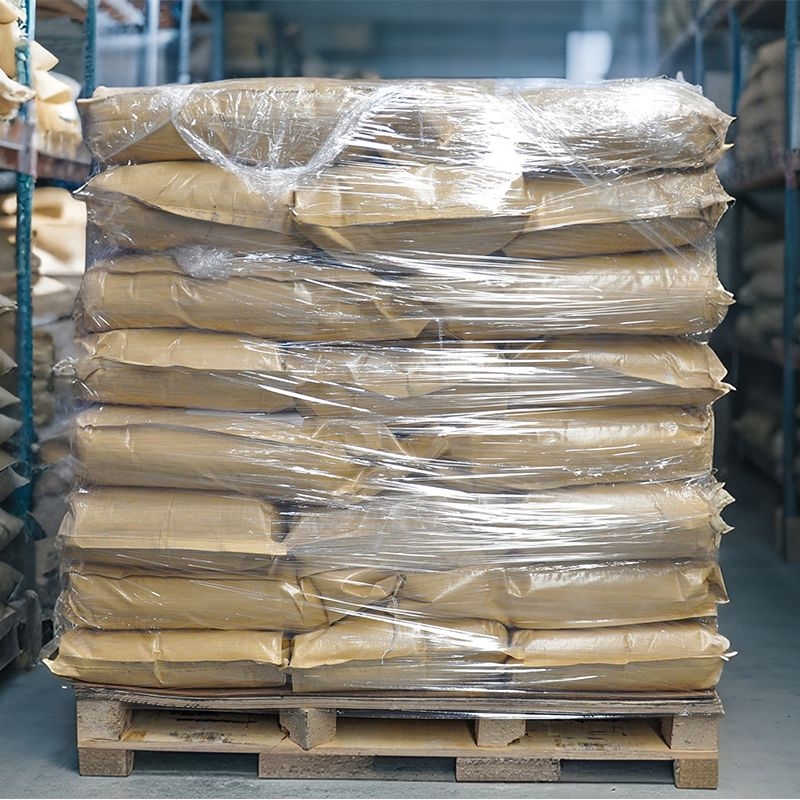
Bulk packaging prepared for export, with COA and shipping documents issued per order.
Have Questions or Need More Details?
Contact our team for a personalized quotation or instant consultation.
Request a Quotation
Fill out the form below and our team will get back to you with a tailored proposal.
WhatsApp Direct Chat
Prefer to chat in real-time? Message us on WhatsApp for instant assistance & quick answers.
- Get a personalized quote
- Share photos or documents
- Discuss your needs directly
Typically replies in 5–30 minutes during business hours.