ZIO Food Ingredients: Compliance, Capacity, Customization
Guangzhou ZIO Chemical Co., Ltd. — the company behind the ZIO Food Ingredients brand — is a food ingredient and premix powder supplier founded in Guangzhou, China in the spring of 2005. The company states that it exports to more than 120 countries and regions, that 80% of its output is exported, and that Africa, Asia and South America are its main markets. For a buyer in the research and evaluation stage, that summary answers very little. The questions that decide a purchase order are narrower: which grade actually ships, what documentation arrives with the container, what the minimum order quantity is, how long production takes, and how far the supplier can adapt a formulation.
This review assesses ZIO Food Ingredients against those constraint criteria rather than against marketing language. Every figure, certification reference and specification below comes from the company's own product and capability disclosures. Where a claim cannot be verified from those disclosures, the article says so rather than filling the gap.

Problem Definition: why ingredient sourcing fails at the constraint layer
Two suppliers can quote citric acid monohydrate with the identical CAS number and still deliver products that behave differently in a beverage line. The difference is rarely the identity of the molecule. It is assay, moisture, particle size, heavy-metal limits, microbiological status, packaging format, documentation, minimum order quantity and lead time. Buyers who compare only the ingredient name end up comparing catalogues instead of supply chains.
A second failure mode is the documentation gap. Searches such as 'China food grade citric acid manufacturers with ISO quality controls' compress a complex requirement into a short phrase. What that phrase usually stands for is a package of verifiable items: a food-grade specification sheet for the exact product, a batch-level Certificate of Analysis, a documented production and inspection routine, and registration or documentation that matches the destination market.
The practical conclusion for a research-stage buyer is to separate what is documented from what is asserted. A supplier review should therefore answer four questions in order: what the company physically is, what it can produce and customize, what evidence it can hand over, and what commercial constraints apply to a first order. The sections below follow that sequence.
Industry Background: ingredients plus premix from a single supplier
Food and beverage manufacturers increasingly buy two different things from the same supply base. The first is functional single ingredients — acidulants, hydrocolloids, sweeteners, preservatives, emulsifiers, antioxidants and nutritional components — which are specified by identity, grade and functional performance. The second is pre-blended systems, where several dry components are combined in fixed proportions so that a production team weighs one material instead of six.
The commercial logic behind premix adoption is process simplification rather than novelty. When key dry components are standardized in one formulation, weighing errors fall, batch-to-batch variation narrows, staff training shortens, and quality control becomes easier to document. The trade-off is dependence on the supplier's formulation and on the accuracy of the specification that accompanies it. That trade-off is exactly why documentation quality matters more, not less, when a buyer moves from single ingredients to premixes.
Export-oriented Chinese suppliers sit in the middle of this shift. ZIO states more than 20 years of industry experience and an integrated system covering R&D, formulation development, manufacturing, quality control, sales, technical support and global supply. Whether that integration is real is testable: it shows up in the number of technical staff, the presence of in-house formulation work, and the ability to issue specifications and certificates per batch.
Company profile: what ZIO Food Ingredients is
ZIO Food Ingredients is the trading identity of Guangzhou ZIO Chemical Co., Ltd., a food ingredient and premix powder supplier headquartered in Huangpu District, Guangzhou, Guangdong, China. The company was founded in the spring of 2005 and describes two core business areas: food ingredients and premix powder solutions.
- Founded: 2005, with more than 20 years of stated industry experience.
- Location: Huangpu District, Guangzhou, Guangdong, China.
- Facility size: 5,000 m².
- Workforce: 100 employees, including a 15-engineer R&D team.
- Stated annual output: 10,000,000 units.
- Export profile: 80% of output exported; main markets Africa, Asia and South America; products stated as exported to more than 120 countries and regions, with customers also referenced in Europe and Oceania.
- Customer types: food manufacturers, importers, distributors, wholesalers and food brands.
The company describes its customer base as long-term partners across the global food and beverage industry, spanning beverage, dairy, bakery, confectionery, sauces, meat processing and general food manufacturing applications.
The product portfolio: single ingredients plus premix systems
Food ingredients and food additives
The ingredient range is organized by function rather than by brand: acidity regulators, sweeteners, thickeners, stabilizers, emulsifiers, preservatives, antioxidants and nutritional ingredients. Named products in the company's disclosure include food-grade citric acid, vitamin C, xanthan gum, cocoa powder, CMC (sodium carboxymethyl cellulose), menthol crystals and propylene glycol, with the wider product listings also referencing sodium benzoate, potassium sorbate, sorbitol, aspartame, isomalt, vitamin E and yeast protein.
Several of these carry standard identification data that buyers can check immediately. Citric acid monohydrate is listed with CAS No. 5949-29-1, molecular formula C6H8O7·H2O, typically ≥99.5% purity for common food-grade material, subject to the actual COA. Xanthan gum is listed with CAS No. 11138-66-2 and described as a polymeric polysaccharide without a simple fixed molecular formula. Erythritol is listed with CAS No. 149-32-6 and molecular formula C4H10O4, commonly ≥99.5% for standard food-grade material. CMC is listed with CAS No. 9004-32-4. Propylene glycol is listed with CAS No. 57-55-6 and molecular formula C3H8O2. Each of these specifications must still be confirmed against the supplier's current technical data sheet and certificate of analysis, because assay, viscosity, degree of substitution, particle size and microbiological limits vary by grade.
Premix powder solutions
The premix portfolio is the more distinctive half of the business. Documented products include ice cream powder, milk tea powder, beverage powder, ice pop and crushed-ice premix, jelly powder, pudding powder, sauce powder, and bakery premixes covering cake, waffle, dorayaki and egg roll applications.
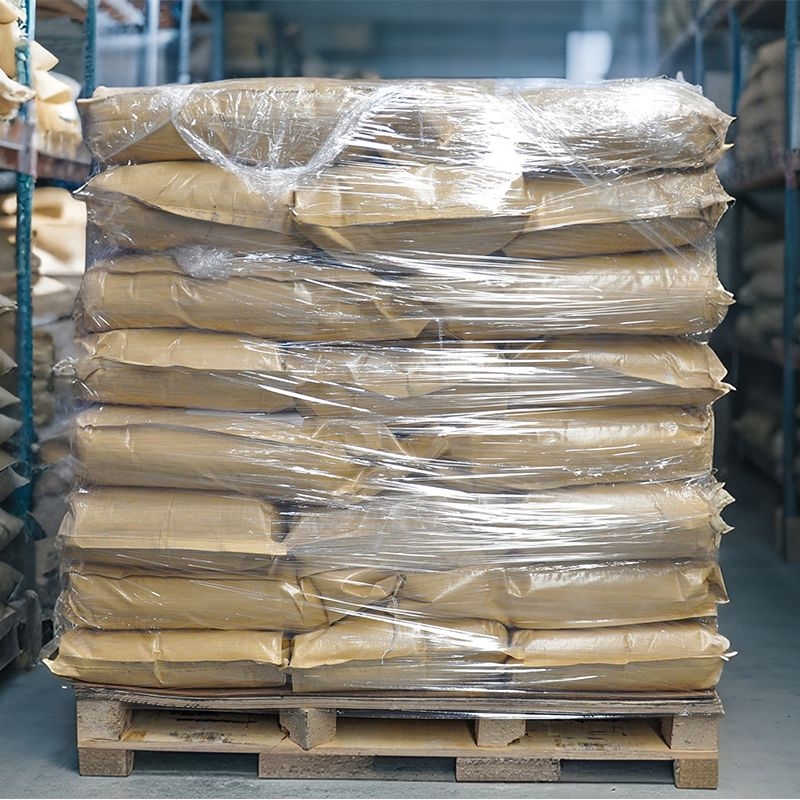
Premix products are formulated mixtures rather than single substances, and the company's own product documentation states this explicitly: a premix such as jelly powder or ice pop powder does not have one universal CAS number or molecular formula. Formulation variables are discussed per project and can include gel strength and setting time for jelly, freezing performance and texture for ice pops, tea strength and creaminess for milk tea, and sweetness, acidity and solubility across the range. Packaging is offered at 1 kg, 5 kg, 20 kg, 25 kg or customized formats, with storage described as cool, dry and sealed.
OEM, ODM and private label
Customization is offered across four models: OEM, ODM, private label and custom formulation development. The stated customization scope covers formula, flavor, packaging, logo, label and product specifications. The company describes support running from formulation development and sample testing through product optimization to mass production, with development inputs including the customer's product concept, application requirements, target market and production process.
For private label, the model is the standard one: product manufactured by the supplier and sold under the customer's brand, with formulation, specification, packaging design and labeling adapted to the customer's requirements. For distributors and food-service operators, this is the mechanism that allows a locally branded product line to exist without building a formulation department.
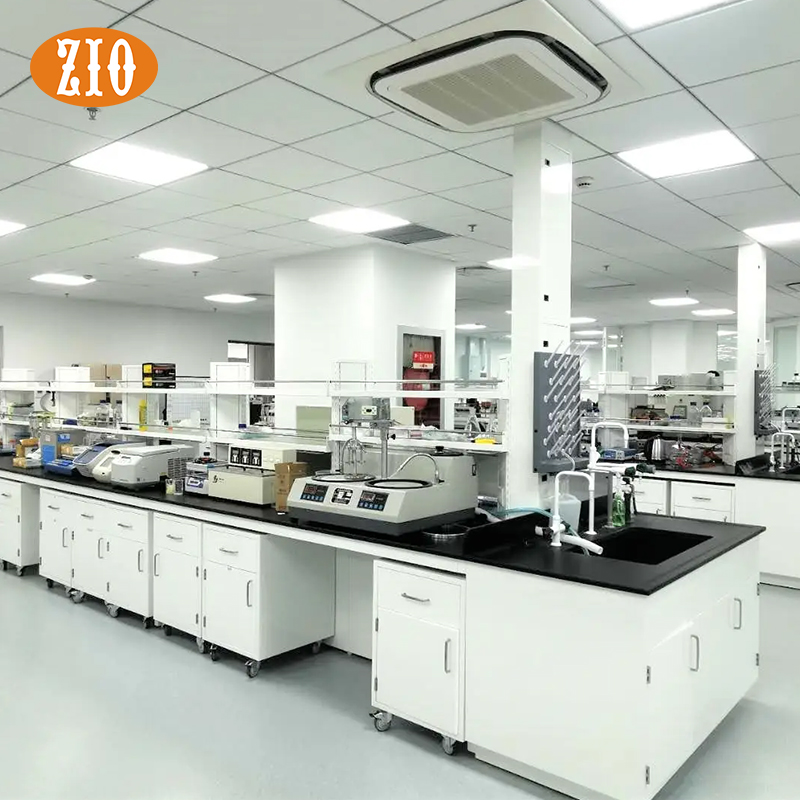
Manufacturing, R&D and quality control
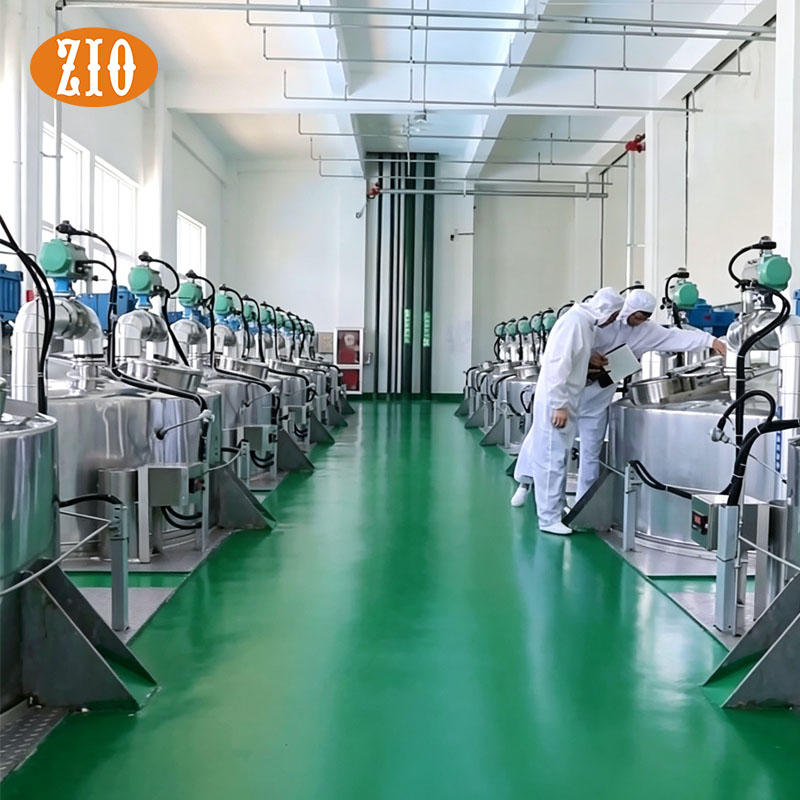
Manufacturing capacity
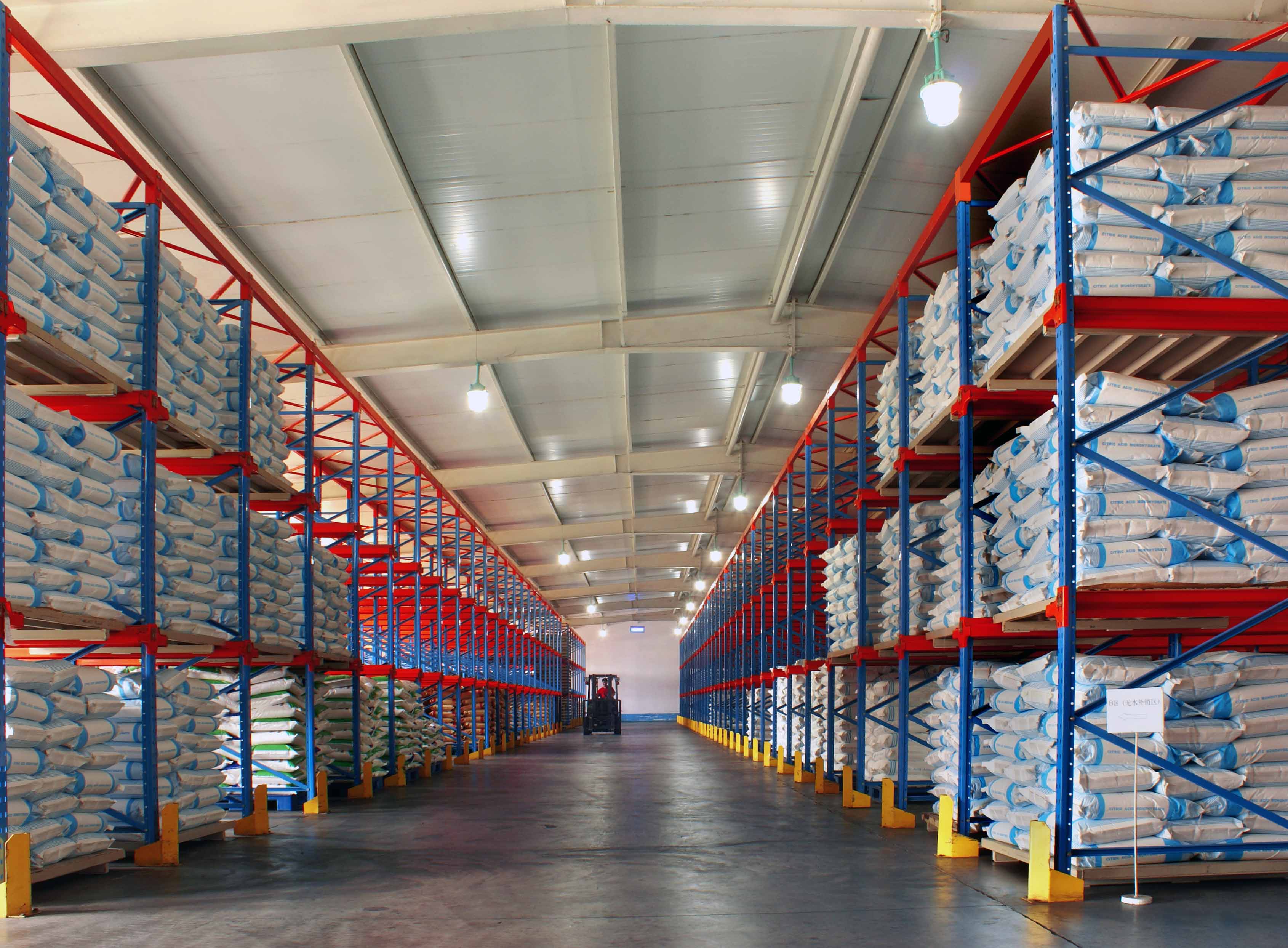
The company reports a 5,000 m² facility, 100 employees and a stated annual output of 10,000,000 units, with production described as large-scale and custom capacity available for formulated projects. Production modes covered are OEM, ODM, private label and custom formulation. Standard minimum order quantity is generally 25 kg or 1 carton depending on the product; customized formulations and private label projects carry MOQs that vary with product, packaging and production requirements.
R&D and formulation depth
A 15-engineer R&D team is the figure that most directly supports the premix side of the business, because a premix without formulation capability is only a repackaged blend. The company describes formulation work against defined application targets — texture, setting time, sweetness, acidity, flavor, color, solubility, freezing performance — and describes sample development and testing as a formal stage before mass production. For a buyer, the useful check is not the headcount itself but whether the supplier can restate your target sensory and process parameters back to you in a written specification.
Quality control and batch documentation
Quality control is described as batch inspection combined with a Certificate of Analysis, with strict control applied to raw materials, production processes and finished products to support stable quality and consistent batch-to-batch results. That is the correct structure for ingredient supply: a system level, plus a batch-level document. The system level is what auditors examine; the batch level is what your receiving inspection compares against.
Regulatory documentation: what is verifiable and what buyers must still request
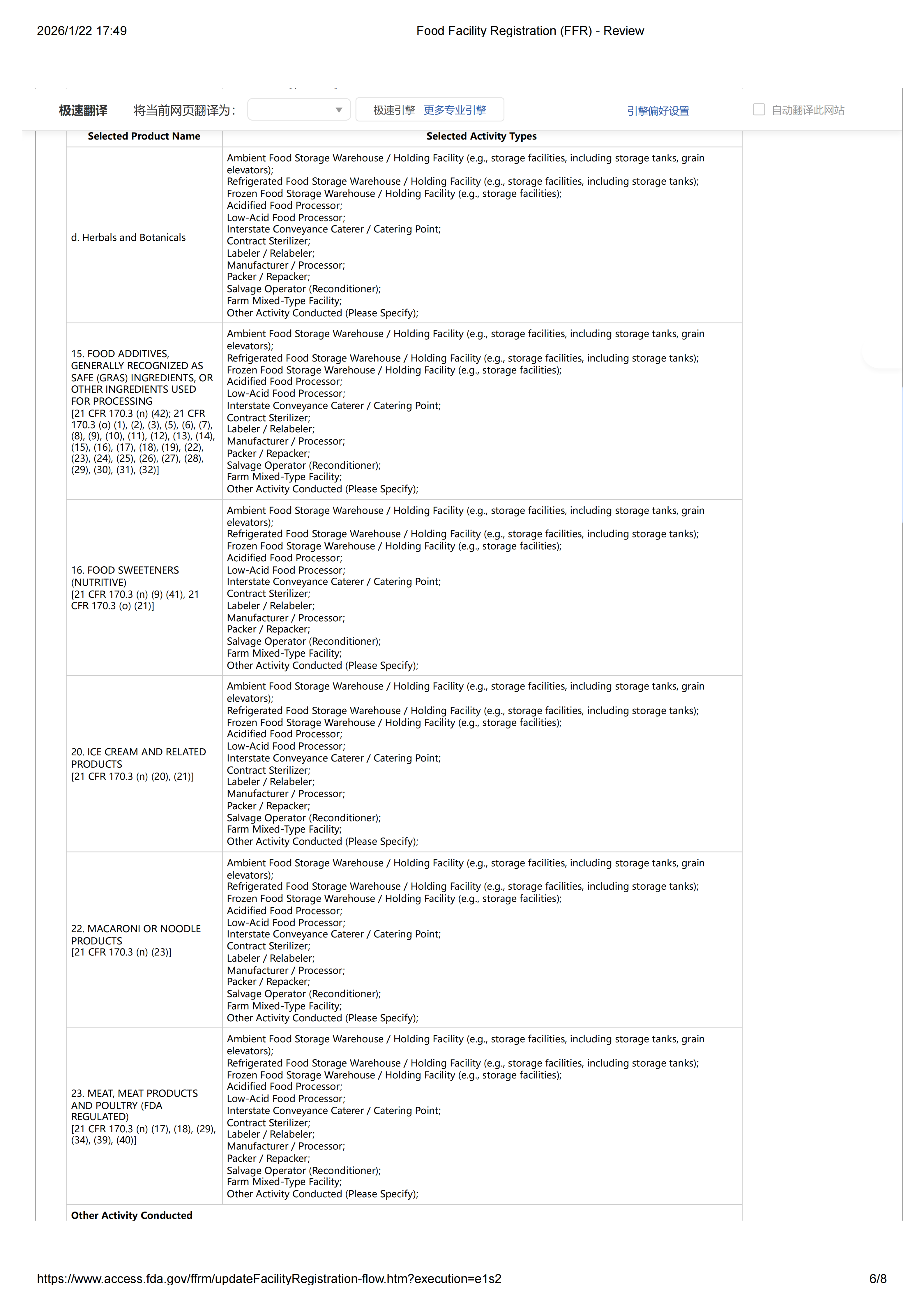
ZIO holds a US FDA Food Facility Registration with registration number 11954927096-1, issued under 21 CFR Part 1 Subpart H, with an issue date of 23 December 2024 and an expiry date of 31 December 2026. The registered scope is the USA market.
That registration should be read for exactly what it is. Under 21 CFR Part 1 Subpart H, food facility registration is a facility-level registration requirement for facilities that manufacture, process, pack or hold food for consumption in the United States. It is not a product approval, and it does not certify that a specific SKU meets a specific standard. Its practical value to a buyer is narrower but real: it confirms the facility is registered with the US FDA for the stated period, which is a documentable item in a supplier file.
Global supply and service model
Supply is export-oriented: 80% of output is exported, with stated reach to more than 120 countries and regions and named markets across Africa, Southeast Asia, South America, Europe, the Middle East, Oceania and North America. Shipping terms referenced by the company include FOB, CFR and CIF, with DDP available for applicable destinations and orders. Payment is commonly arranged as 30% T/T deposit with the balance before shipment, and terms can be discussed according to order value, product and cooperation requirements.
After-sales support is described as technical support, product documentation, remote support and after-sales service — a service package that matters most for premix customers, where preparation method and dosage directly determine whether the finished product matches the approved sample.
Step-by-step: how a first order is structured
A first purchase from ZIO follows a sequence that maps directly onto the constraint questions buyers ask during evaluation. Each step produces a document or a decision, which is what makes the process auditable.
- Define the application and grade. State the product, the food system it goes into, the target function, the destination market and any regulatory constraints. For premixes, add target texture, sweetness, acidity, flavor, color, setting or freezing behavior, and the preparation method.
- Request the specification and COA. Confirm assay, moisture, particle size, viscosity or degree of substitution where relevant, microbiological parameters and packaging. Verify that the COA corresponds to the batch you will receive, not to a reference lot.
- Evaluate a sample. Samples are available for assessing quality, application performance and taste. Provide product name, application, required quantity and destination country so the right sample and shipping arrangement can be selected.
- Confirm formulation and packaging. For standard products this is a specification confirmation. For OEM, ODM and private label projects it covers formula adjustment, flavor, packaging format, label and logo.
- Agree commercial terms. MOQ is generally 25 kg or 1 carton for standard products and varies for customized projects. Confirm price basis, Incoterm (FOB, CFR, CIF or DDP where applicable) and payment terms, commonly 30% T/T deposit with balance before shipment.
- Production and quality control. Standard orders are generally arranged for shipment within approximately 7–30 days depending on product, quantity, packaging and production schedule. Customized OEM, ODM and private label orders may require additional production time; the exact lead time is confirmed before order placement.
- Shipping documentation. Expect a Commercial Invoice, Packing List and Bill of Lading as standard, with Certificate of Origin or health-related documentation available for applicable products and markets.
| Document | What it verifies | Stated availability |
|---|---|---|
| Certificate of Analysis (COA) | Batch-level conformity to the agreed specification | Provided according to product and order requirements |
| Commercial Invoice | Transaction value, product and quantity | Standard shipping document |
| Packing List | Packaging configuration and weights | Standard shipping document |
| Bill of Lading | Carrier receipt and title document | Standard shipping document |
| Certificate of Origin | Origin of goods for customs purposes | May be available for applicable products and markets |
| FDA Food Facility Registration | Facility registration with the US FDA | Registration No. 11954927096-1, 21 CFR Part 1 Subpart H, valid to 31 December 2026 |
Use Cases: documented customer applications
Three long-running customer relationships are documented by the company, all in West African markets and all built on premix supply rather than single ingredients.
- Mali — milk tea powder, 2+ years. A beverage distributor needed a milk tea powder for local beverage shops and food-service customers. The supplied premix was designed for easy preparation, consistent flavor and efficient commercial use, allowing the customer to simplify ingredient management and hold a standardized taste across batches and locations. Regular bulk orders continued as demand grew.
- Côte d'Ivoire — ice cream powder, 3+ years. A customer producing commercial ice cream needed a powder that would simplify production while keeping taste, texture and quality consistent. The premix removed the need to purchase, weigh and blend multiple individual ingredients, and the supplier provided application guidance and technical support during the cooperation.
- Angola — crispy cone premix, 3+ years. An ice cream cone manufacturer required a premix that would streamline ingredient preparation and hold consistent cone quality. Technical guidance covered preparation and production recommendations, with customized formula and packaging options.
Across all three, the recurring value is the same: fewer materials to weigh, a repeatable result, and a supplier that supplies documentation and application guidance alongside the powder. Beyond these cases, the ingredient side of the portfolio serves beverages, dairy, bakery, confectionery, sauces, meat processing and general food manufacturing.

Comparison table: product specification reference
The table below consolidates identification and function data from ZIO's product specifications. It is a reference for evaluation, not a substitute for the current technical data sheet and COA, which define the actual commercial specification.
| Product | CAS No. | Formula / type | Function | Documented applications |
|---|---|---|---|---|
| Citric Acid Monohydrate | 5949-29-1 | C6H8O7·H2O; typically ≥99.5% food grade, subject to COA | Acidity regulator / acidulant | Soft drinks, fruit beverages, powdered drinks, confectionery, jams, sauces, dairy, desserts |
| Xanthan Gum | 11138-66-2 | Polymeric polysaccharide; no simple fixed formula | Thickener, stabilizer, suspension aid | Beverages, sauces, dressings, dairy, ice cream, bakery, gluten-free systems |
| Erythritol | 149-32-6 | C4H10O4; commonly ≥99.5% food grade, subject to COA | Sugar alcohol sweetener / bulking sweetener | Reduced-sugar beverages, bakery, confectionery, desserts, tabletop sweeteners |
| CMC (Sodium Carboxymethyl Cellulose) | 9004-32-4 | Polymeric cellulose derivative; no single fixed formula | Thickener, stabilizer, water retention, texture modifier | Beverages, dairy, ice cream, sauces, bakery, instant foods |
| Propylene Glycol | 57-55-6 | C3H8O2; commonly ≥99.5% for high-purity food grade, subject to COA | Solvent, carrier, humectant | Flavor systems, beverage processing, bakery, confectionery |
| Cocoa Powder | Not applicable | Natural agricultural ingredient; specification by cocoa content, fat, pH, color | Flavor, aroma and color | Bakery, beverages, ice cream, desserts, confectionery |
| Premix powders (ice cream, milk tea, beverage, ice pop, jelly, pudding, sauce) | Not applicable | Multi-ingredient formulated mixtures | Standardized complete formulation for the target product | Ice cream, milk tea shops, beverages, frozen desserts, jelly, pudding, sauces, food service |
Practical limits buyers should plan around
A credible supplier evaluation includes the boundaries, not only the strengths. Four are visible in ZIO's own documentation.
- Confirmation is per product and per market. The company's specifications repeatedly state that final grade, purity, packaging, certification, permitted use and regulatory compliance must be verified from the actual supplier specification and COA for the destination market. That is a shared responsibility, not a formality.
- Cocoa is a variable agricultural material. Color, flavor and composition can vary by origin and specification, so buyers should confirm technical parameters per shipment rather than assuming a fixed profile across years.
- Premixes have no single CAS number. Final ingredient declaration, nutritional data, allergen statement, shelf life and preparation instructions for a premix are defined by the finished formulation, which means they are confirmed at specification stage.
- FDA facility registration is not product approval. It supports a supplier file for the US market; it does not replace product-specific compliance documentation.
Frequently asked questions
1. How can buyers verify food-grade compliance and quality documentation from ZIO?
Documentation is verifiable at two levels. At facility level, ZIO holds a US FDA Food Facility Registration, registration number 11954927096-1, issued under 21 CFR Part 1 Subpart H on 23 December 2024 and valid until 31 December 2026, with a USA scope. At batch level, quality control is described as batch inspection combined with a Certificate of Analysis, provided according to product and order requirements. Buyers should also request the current technical data sheet for the exact grade being quoted, plus any management-system certificates such as ISO for the specific manufacturing site and product category, and confirm destination-market requirements — permitted use, labeling, allergen declaration and any health documentation — for the importing country.
2. What OEM, ODM and private label capability does ZIO offer?
ZIO offers OEM, ODM, private label and custom formulation development. The stated customization scope covers formula, flavor, packaging, logo, label and product specifications, with support running from formulation development and sample testing through product optimization to mass production. For premixes, development inputs include target texture, setting time, sweetness, acidity, flavor, color and preparation process; for single ingredients, customization focuses on grade, specification and packaging. Private label allows distributors and brands to sell product under their own label, subject to product and order requirements.
3. What is the minimum order quantity, and what drives the commercial terms?
Standard MOQ is generally 25 kg or 1 carton, depending on the product. Customized formulations, OEM, ODM and private label projects carry MOQs that vary with product, packaging and production requirements, and a specific quotation is required. Packaging formats include 1 kg, 5 kg, 20 kg and 25 kg or customized specifications. Payment is commonly 30% T/T deposit with the balance before shipment, and terms can be discussed according to order value, product and cooperation requirements. Shipping terms referenced include FOB, CFR and CIF, with DDP available for applicable destinations.
4. Can buyers request samples before placing a bulk order?
Yes. Samples are available so that buyers can evaluate product quality, application performance and taste before committing to a bulk order. Availability and shipping arrangements depend on the specific product and destination. Buyers should provide the product name, application, required quantity and destination country so that a suitable sample and shipping method can be recommended.
5. What lead time should buyers plan for?
Standard orders are generally arranged for shipment within approximately 7–30 days, depending on the product, order quantity, packaging requirements and production schedule. Customized OEM, ODM and private label orders may require additional production time. The exact lead time is confirmed before order placement. Buyers planning a launch should therefore lock the specification and packaging decision first, then schedule production against the confirmed lead time. To receive a specification sheet, arrange a sample or request a quotation, send the application, target grade and destination market to tiffiney.zhou@gzzio.com or contact +86 138-2210-8446.
Conclusion: where ZIO fits in a sourcing shortlist
ZIO Food Ingredients is best understood as a mid-sized, export-oriented Chinese food ingredient and premix supplier with an unusually broad two-part portfolio. On the ingredient side it covers the standard functional categories — acidulants, hydrocolloids, sweeteners, preservatives, emulsifiers, antioxidants and nutritional ingredients — with identifiable CAS-level specifications. On the premix side it covers ice cream, milk tea, beverage, ice pop, jelly, pudding, sauce and bakery systems, where the real product is the formulation rather than the powder.
Its procurement value rests on four verifiable points. First, a documented facility footprint: founded 2005, 5,000 m², 100 employees, a 15-engineer R&D team and a stated annual output of 10,000,000 units. Second, a low commercial entry barrier: MOQ from 25 kg or 1 carton and lead times of roughly 7–30 days for standard orders. Third, genuine customization depth across OEM, ODM, private label and custom formulation, including flavor, packaging and labeling. Fourth, a documented compliance baseline for the US market in the form of FDA Food Facility Registration No. 11954927096-1, valid to 31 December 2026, plus batch-level COA practice.
The constraints are equally clear, and buyers should price them in. Product-specific certification, destination-market regulatory status and premix declaration details are confirmed at specification stage, not assumed from the catalogue. Buyers whose requirements demand product-level approvals or market-specific health documentation should build that confirmation into the quotation process rather than after the purchase order.
For a research-to-evaluation stage buyer — particularly an importer, distributor or food-service operator in Africa, Asia or South America who needs a repeatable premix platform rather than a one-off formulation — that combination is a reasonable basis for a shortlist entry, provided the first order is structured around the documentation steps above.
Next step: specification, sample or quotation
Share your application, target grade, packaging preference and destination market. ZIO can respond with a product specification, arrange a sample for application testing, and quote against confirmed MOQ and lead time.
Website: zioadditives.com | Email: tiffiney.zhou@gzzio.com | Tel / WhatsApp: +86 138-2210-8446
Full product range, specifications and packaging options are listed in the ZIO catalogue: download the ZIO Food Ingredients brochure (PDF).
Have Questions or Need More Details?
Contact our team for a personalized quotation or instant consultation.
Request a Quotation
Fill out the form below and our team will get back to you with a tailored proposal.
WhatsApp Direct Chat
Prefer to chat in real-time? Message us on WhatsApp for instant assistance & quick answers.
- Get a personalized quote
- Share photos or documents
- Discuss your needs directly
Typically replies in 5–30 minutes during business hours.