Press Brake Tooling for Sheet Metal Enclosures, Automotive and Electrical Applications
Press brake tooling for sheet metal enclosures, automotive components and electrical cabinets is specified against the workpiece first and the machine second. Three constraints decide whether a tool set holds tolerance in production: the material thickness and grade being formed, the radius and bend angle the drawing calls for, and the clamping system the press brake uses.
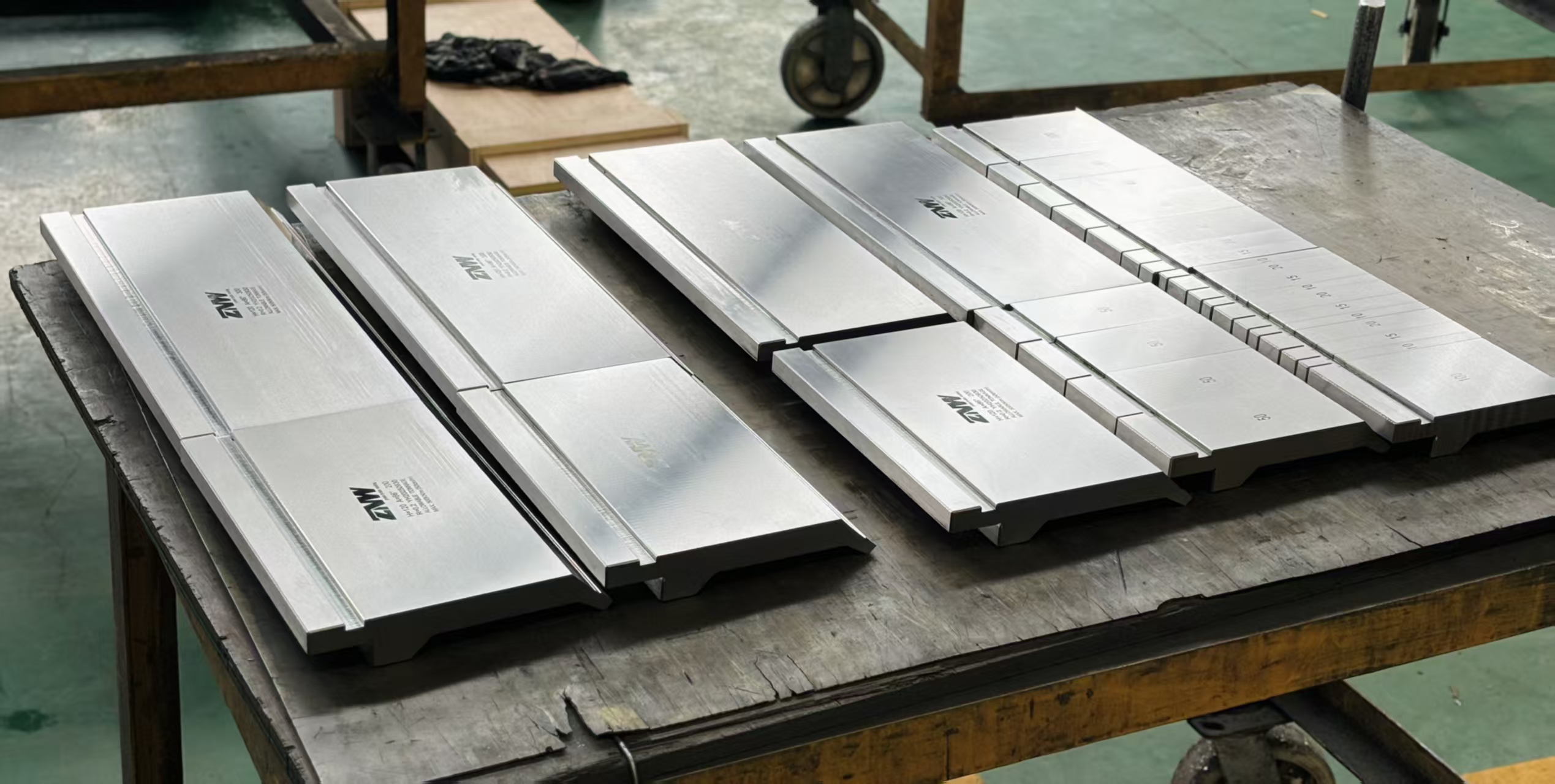
ZNW Press Brake Tooling — the press brake punch, die and custom tooling line of Ma'anshan Zhuonaiwei Machinery Equipment Co., Ltd, based in Ma'anshan, Anhui, China — builds tooling around those three constraint groups. Models are named by machine-system compatibility, including AMADA, WILA/TRUMPF, LVD and BYSTRONIC, and the range covers standard dies, adjustable bottom tools, formed molds, hemming dies, radius dies and Rolla-V special tooling.
This guide explains what changes between the three application groups, how R-value, thickness and bend angle drive the selection, when stainless steel requires a different tool and heat-treatment recommendation, and how batch replacement, full-line configuration and single-piece custom projects are handled in practice.
Why One General-Purpose Tool Set Does Not Cover These Three Application Groups
One tool set cannot serve enclosure, automotive and electrical work at the same time, because the constraints point in different directions. Enclosure work is dominated by clearance and multi-sided access. Automotive work is dominated by repeatability across a long run. Electrical cabinet work is dominated by radius control and surface quality on thin material.
- Enclosures need segmented punches and dies, gooseneck profiles and multi-V or four-way dies, so a box can be bent on four sides without the tool colliding with a flange that has already been formed.
- Automotive components are usually produced on automated, high-repeatability bending lines, so wear resistance and consistent angle output across a long batch matter more than access clearance.
- Electrical and electronic enclosures are typically thin-gauge visible parts, where radius consistency and mark-free bending move to the top of the priority list and R-value customization becomes a drawing requirement rather than a preference.
The decision rule that follows is simple: define the workpiece constraint first, select the tool family second, and confirm the machine-system interface last. Reversing that order is the most common reason a tool set arrives compatible with the press brake but unsuitable for the part.
Industry Background: Why Tooling Choice Matters More Than It Used To
Bending equipment is moving toward CNC control, and that shift raises the precision expected from the tooling that sits inside the machine. The global press brake machine market was estimated at USD 5.2 billion in 2024 and is projected to reach USD 7.6 billion by 2030 (Vertex AI Search / Industry Insight, 2024–2030 forecast). Separately, CNC press brake penetration is reported to rise from 35.8% in 2024 to 52.8% in 2026 (HD Machinery, 2026).
For buyers, the practical meaning is that control resolution is no longer the limiting factor in most new installations — the tool interface, the consistency of tool hardness and the repeatability of the punch tip are. A press brake programmed to a tight angular target cannot deliver it with a worn or mismatched die set.
Supply chains have also regionalized. WILA relocated its North American headquarters to Louisville, KY in May 2023 and established local manufacturing for New Standard tooling (WILA Tooling, 2023). That shortens availability for that tool system in North America — and it means buyers now compare local stock against imported equivalents on lead time as well as on price.
How ZNW Press Brake Tooling Maps to the Application Constraints
Material and hardness envelope
ZNW press brake tooling is made of 42CrMo, a chromium-molybdenum alloy steel suitable for hardened press brake tooling. The alloy is the established base material for the category: 42CrMo (AISI 4140) is described in industry material guidance as offering surface hardness of HRC 47 ± 2 after heat treatment (AccurTool, 2025).
Hardness is delivered by heat treatment rather than by the base material alone. ZNW states that standard heat treatment for its tooling yields a hardness of 45–50 HRC, while laser hardening can achieve up to 60 HRC. The manufacturing route — precision CNC machining followed by heat treatment — is what ZNW credits for improved wear resistance, chip resistance and bending accuracy.
| Material / process | Hardness | Where it fits |
|---|---|---|
| 42CrMo (AISI 4140), industry reference | HRC 47 ± 2 after heat treatment | General benchmark for hardened press brake tooling |
| ZNW tooling, standard heat treatment | 45–50 HRC | Regular and medium-to-high tonnage air bending; enclosure and appliance work |
| ZNW tooling, laser hardening | Up to 60 HRC | Higher wear duty, long production runs, abrasive or high-yield material |
Machine-system compatibility
Tooling is usable only if it seats correctly in the machine's clamping system. The ZNW range is named by machine-system compatibility and covers AMADA, WILA/TRUMPF, LVD and BYSTRONIC systems, with individual model pages listing the specific items in each family. Standard punches and dies, European and American-style dies, WILA- and Trumpf-compatible dies, flanging dies and special bending dies sit within the same catalogue.
Customization envelope: thickness, angle, R-value and material grade
Customization is organised around four variables. ZNW supports customization by bend angle, R-value, system compatibility (AMADA / WILA / LVD / BYSTRONIC) and special forming requirements. The same engineering input list applies whether the order is a single piece or a full-line configuration:
- Material thickness and grade, including stainless steel and high-yield material
- Target bend angle and angular tolerance
- Inner radius (R-value) specified by the drawing
- Production cadence — one-off, batch, or automated high-repeatability line
Stainless steel and high-yield materials are the case where a standard recommendation is not enough. These grades require special tooling selection and heat-treatment recommendations rather than a like-for-like substitution from a carbon steel job, because both springback and forming load change.
Compliance documentation for EU-bound projects
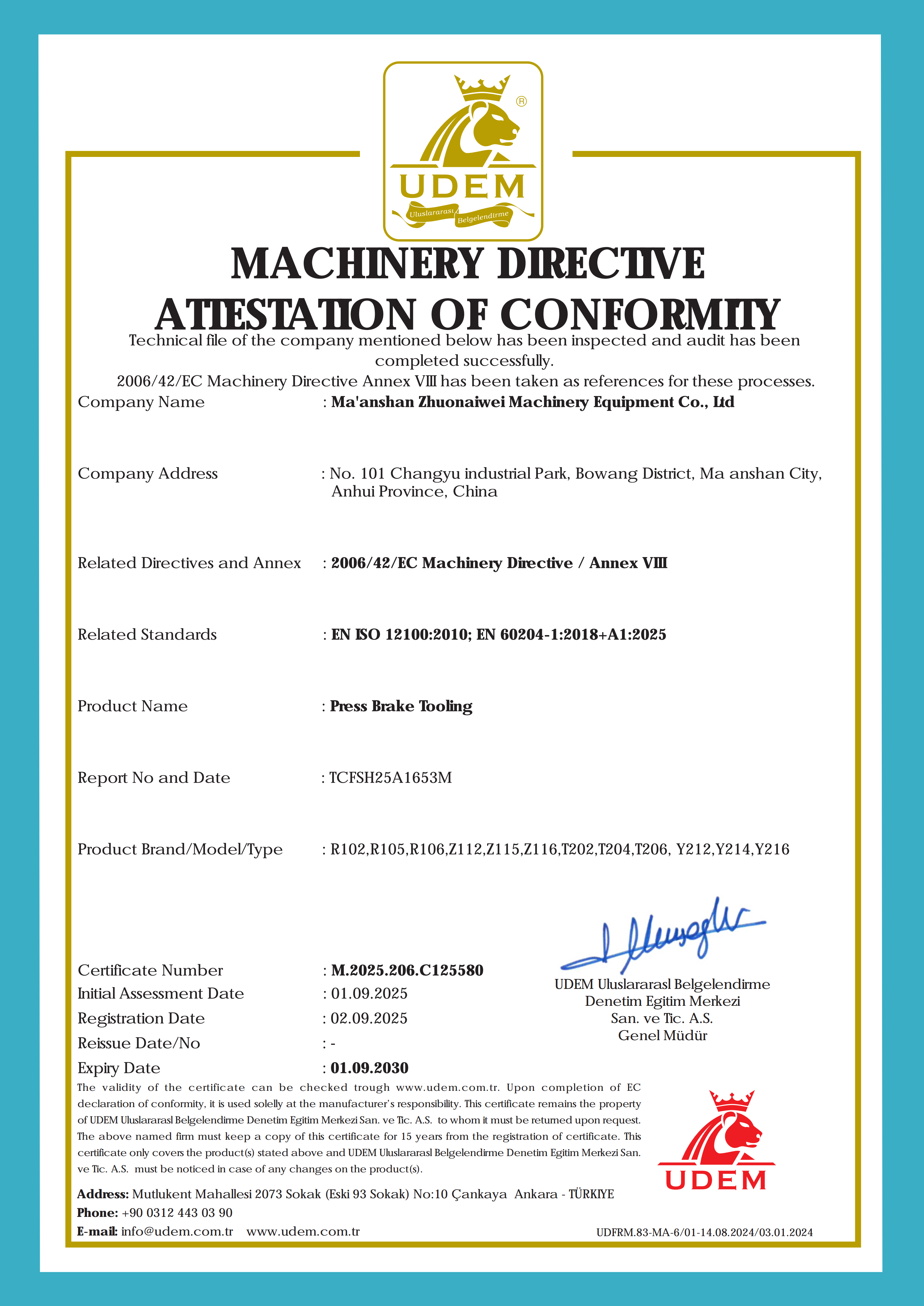
The press brake tooling range is certified to CE standards under certificate number M.2025.206.C125580, issued by UDEM Uluslararası Belgelendirme on 2 September 2025 and valid to 1 September 2030. The certificate covers the EU/EEA market and lists the tooling scope as R102, R105, R106, Z112, Z115, Z116, T202, T204, T206, Y212, Y214 and Y216, assessed against EN ISO 12100:2010 and EN 60204-1:2018+A1:2025.
Step-by-Step: Specifying Tooling for a New Application
Tooling selection follows a fixed sequence. Working through it in order prevents the two most expensive outcomes — a tool that fits the machine but not the part, and a tool that forms the part but cannot be clamped safely.
- Fix the workpiece constraint. Record material grade, thickness, target bend angle, inner radius, and the largest and smallest flange on the part. For enclosure work, add the clearance required for the second, third and fourth bends.
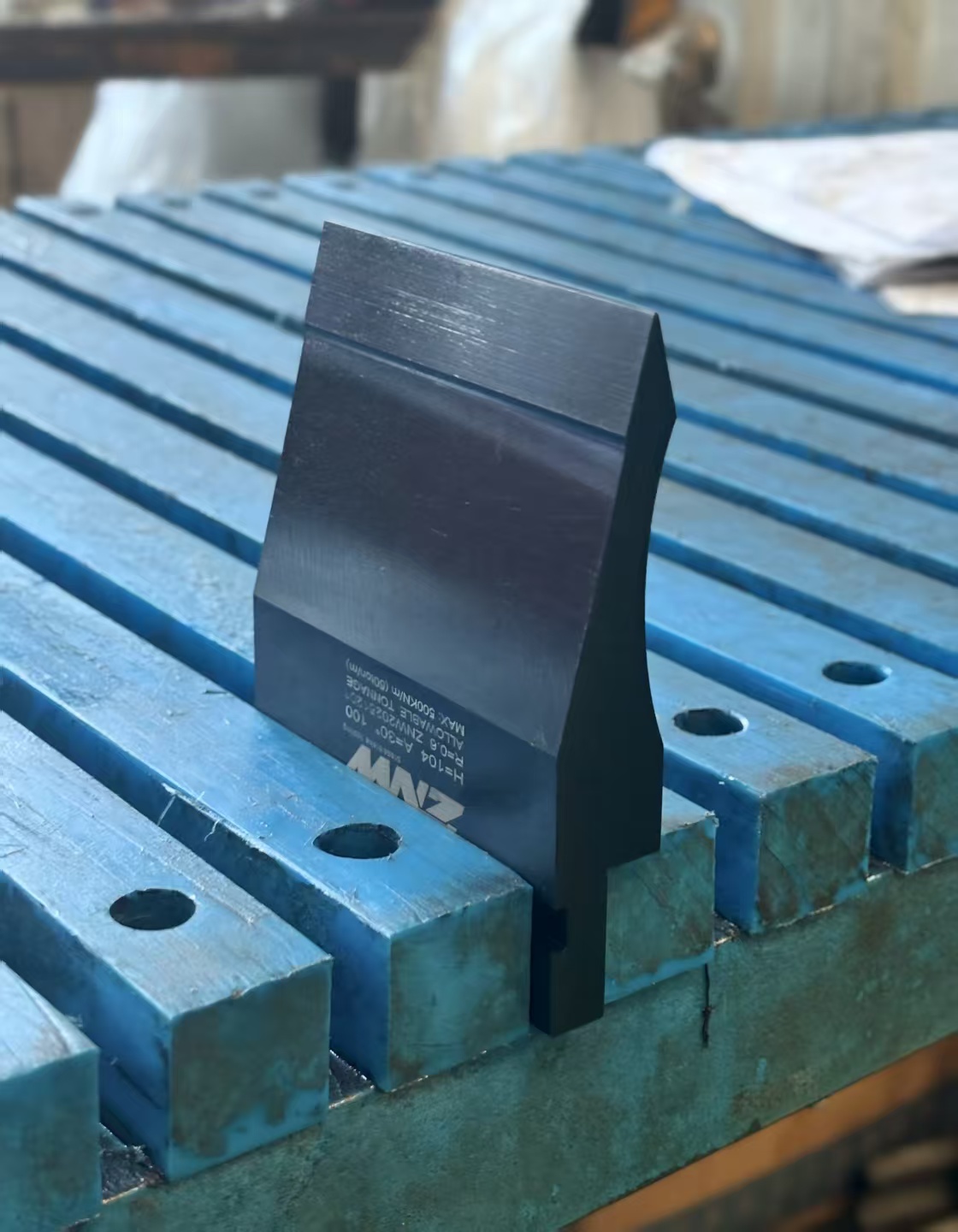
- Choose the tool family. Gooseneck punches for return flanges, segmented punches and dies for box and panel work, radius tooling for R-value control on visible surfaces, hemming dies for folded edges, and multi-V or four-way dies where several V openings are needed on one machine.
- Match the machine system. Confirm the press brake model and clamping interface, then select from the compatible family — AMADA, WILA/TRUMPF, LVD or BYSTRONIC. Sending the machine model to the supplier for exact confirmation avoids assuming that a nominally similar interface is identical.
- Check the supporting equipment. Tooling operates together with holders and tool clamps, positioning aids, protective films and tool storage systems. A full-line order that omits these items usually reappears later as changeover time or surface damage.
- Review stainless and high-yield jobs separately. Apply the special tooling selection and heat-treatment recommendation for these grades instead of reusing the carbon steel specification.
- Confirm the commercial frame. MOQ, lead time, replacement scope and documentation are agreed before the order is released — the stated values are summarised in the FAQ below.
Application Notes by Industry
Sheet metal enclosures
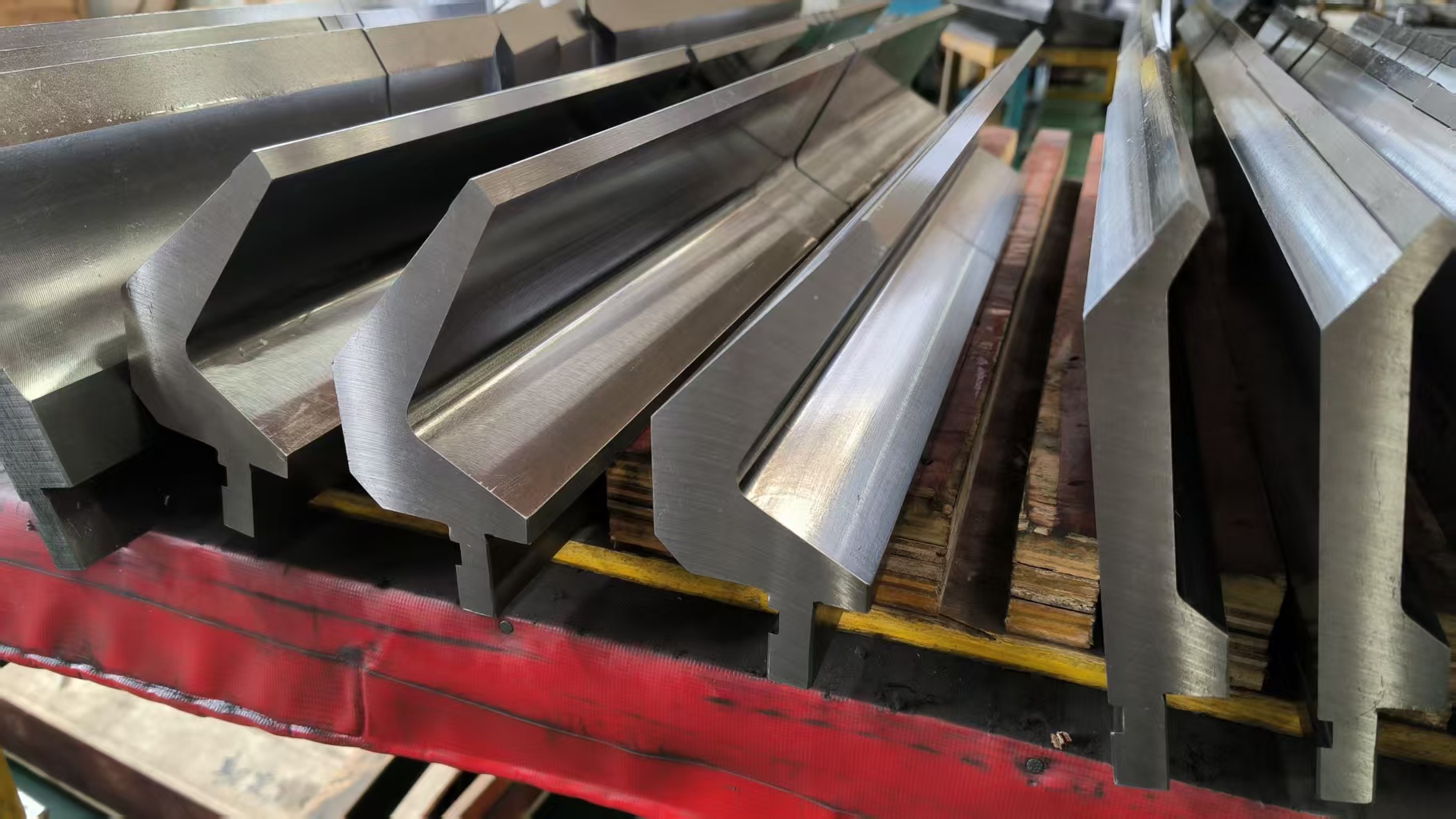
Enclosure fabrication is a clearance problem before it is a tonnage problem. A box with four sides needs the punch and die to reach the third and fourth bend without touching flanges already formed. Segmented press brake tooling and gooseneck punches are the standard answer, and the die opening is chosen to clear the flange rather than only to match the material thickness.
The range includes segmented and special tooling within the standard and custom catalogue, and the tooling operates as removable upper and lower tool components on CNC press brakes, supporting quick changeovers between operations — relevant when one machine runs several enclosure variants in a shift.
Automotive components
Automotive work puts the emphasis on consistency across a run. ZNW tooling is stated as suitable for regular and medium-to-high tonnage air bending and for automated, high-repeatability bending production lines. In that setting, the hardness specification and the stability of the punch tip over cycles matter more than the variety of geometries on offer.
The supplier's case work with industrial manufacturers and sheet metal fabricators covers custom tools supplied to improve bending accuracy, replacement of worn tooling, and formed solutions for complex bending processes — the three maintenance patterns automotive-tier fabricators typically run in parallel.
Electrical and electronic enclosures
Thin-gauge visible parts turn radius control into a specification item. Radius dies and radius bending tooling are selected where the drawing defines an inner radius, and hemming tools are used where an edge must be folded flat without leaving a sharp exposed lip. Because these parts are often painted or coated after bending, consistent tool contact and protective films during handling matter as much as the bend itself.
Machinery manufacturing and appliances
Both sectors sit between enclosure work and automotive work: moderate volume, mixed part sizes, and a tool set that must stay accurate across changeovers. ZNW lists machinery manufacturing and appliances within its applicable industries, alongside sheet metal fabrication, automotive components and metal enclosures.
Stainless steel and high-yield material
Stainless and high-yield grades change both the forming load and the springback, so the tool specification changes with them. The supplier's stated position is that these materials require special tooling selection and heat-treatment recommendations. In practice, that means the R-value and V-opening are re-derived for the grade rather than carried over from a carbon steel job of the same thickness.
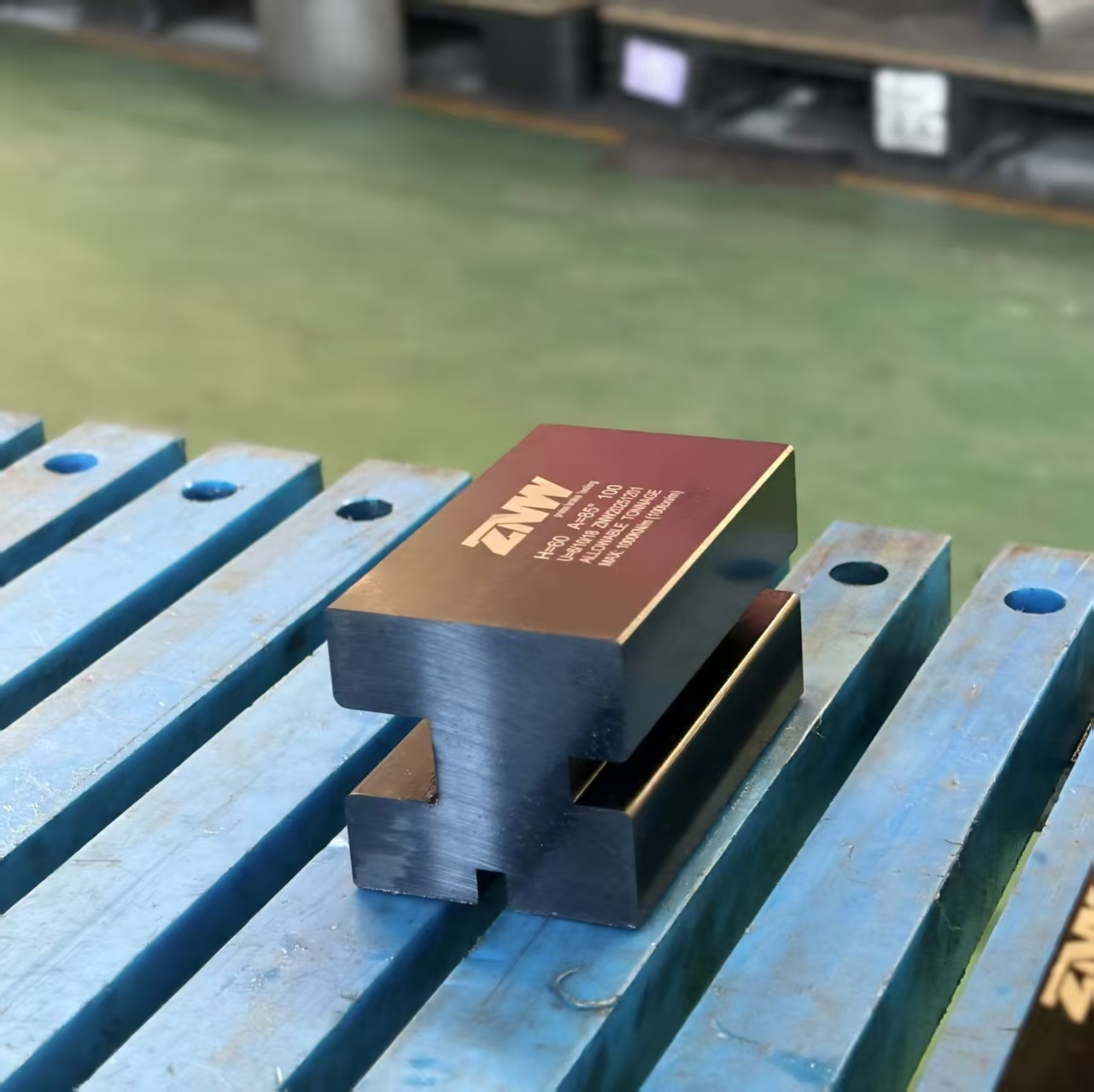
Comparison: Application Requirements Against Tooling Response
The table below maps the four application groups in this guide against the constraint that most often decides tool selection, and against the response available in the ZNW range. It is a selection aid, not a specification sheet — final dimensions are confirmed per model.
| Application | Deciding constraint | Tooling focus | Supporting detail |
|---|---|---|---|
| Sheet metal enclosures | Clearance for multi-sided bends | Segmented punches and dies, gooseneck, multi-V / four-way dies | Quick changeover on CNC press brakes |
| Automotive components | Repeatability across a long run | Wear-resistant punches and dies; planned batch replacement | Suited to automated, high-repeatability bending lines |
| Electrical / electronic enclosures | Radius control and surface quality on thin gauge | Radius dies, hemming tools, protective films during handling | R-value customization to drawing |
| Stainless and high-yield forming | Springback and forming load | Grade-specific tooling selection and heat-treatment recommendation | 42CrMo base; 45–50 HRC standard, up to 60 HRC laser hardened |
Two caveats belong beside this table. First, parameters vary by item — angle, R, H height and V-opening width are listed per model, and no single consolidated specification sheet covers the whole range. Second, compatibility is confirmed by machine model, not by brand name alone.
Batch Replacement, Full-Line Configuration and Single-Piece Custom Projects
Batch replacement
Replacement is driven by wear rather than by calendar. Once angle drift or surface marking appears on a known-good program, the die set is at the end of its working life. ZNW supplies batch standard tooling and replacement as one of three stated project types, backed by a monthly capacity of 10,000–30,000 units and annual output of 120,000–300,000 units.
Standard tooling carries a stated lead time of 15–25 days. MOQ is 1 piece, with multiple-order discounts available, so a fabricator can order a single replacement die without waiting for a full-set purchase.
Full-line configuration
Full-line tooling configuration means specifying every tool a machine or cell needs at once — punches, dies, specials and supporting equipment — rather than filling gaps as they appear. ZNW offers this as a stated project type. The matched equipment list for these projects covers press brake machines, holders and tool clamps, positioning aids, protective films and tool storage systems.
Quality control before release is stated as visual inspection, critical dimension checks, geometric tolerances, assembly and fit check, hardness testing and a final release check. The fit check is the step that catches an interface problem before the tool reaches the customer's floor.
Single-piece custom projects
Custom single-piece tooling is the stated project type for a bend the standard catalogue cannot reach: an unusual R-value, a clearance-limited return flange, or a formed profile. ZNW supports customization by bend angle, R-value, system compatibility and special forming requirements, and the process starts with an engineering review of the drawing and machine data.
Case summaries published by the supplier describe a three-year supply relationship covering 50 units of custom tooling for industrial manufacturers and sheet metal fabricators, used to improve bending accuracy, replace worn tooling and solve complex forming steps. After-sales support is described under a 'Customer First, Efficient Response' service approach, covering technical support, tooling selection advice and after-sales consultation; buyers should confirm warranty and spare-parts terms in the order documentation.
Frequently Asked Questions
Does ZNW press brake tooling hold CE certification for EU projects?
Yes. The press brake tooling range is certified to CE standards under certificate number M.2025.206.C125580, issued by UDEM Uluslararası Belgelendirme on 2 September 2025 and valid to 1 September 2030. The certificate covers the EU/EEA market, lists the tooling scope as R102, R105, R106, Z112, Z115, Z116, T202, T204, T206, Y212, Y214 and Y216, and references EN ISO 12100:2010 and EN 60204-1:2018+A1:2025. Buyers whose procurement file also requires an ISO 9001 quality-management certificate from precision press brake tooling manufacturers should request the supplier's current document directly; the publicly documented compliance item for this product line is the CE certificate above.
Can the tooling be customized for R-value, material thickness and bend angle?
Yes. ZNW supports customization by bend angle, R-value, system compatibility (AMADA / WILA / LVD / BYSTRONIC) and special forming requirements. The base material is 42CrMo, with standard heat treatment at 45–50 HRC and laser hardening up to 60 HRC. Stainless steel and high-yield materials are handled as a separate case, because they require special tooling selection and heat-treatment recommendations rather than a specification carried over from a carbon steel job.
What is the minimum order quantity, and how does batch purchasing work?
MOQ is 1 piece, and multiple-order discounts are available. Production capacity is stated at 10,000–30,000 units per month, with annual output of 120,000–300,000 units, which supports both single replacement items and repeat batch schedules. Standard tooling carries a stated lead time of 15–25 days.
How can I validate a tool on my machine before committing to a full-line order?
Send the press brake model, the drawing or part data, material grade and thickness, target bend angle and required R-value. Because MOQ is 1 piece, a single custom or standard item can be ordered and trialled first. Quality control before release includes visual inspection, critical dimension checks, geometric tolerances, assembly and fit check, hardness testing and a final release check, so the interface is verified before shipment.
What lead time applies, and how do I start an inquiry?
Standard tooling carries a stated lead time of 15–25 days; custom single-piece and full-line projects are scheduled after the engineering review of the drawing and machine data. To start, send the machine model and the part parameters to ZNW Press Brake Tooling by email at bieber@njzoenova.com, by telephone or WhatsApp on +8615250990446, or through znwtooling.com. The full product catalogue can be downloaded from the link at the end of this guide.
Conclusion
The difference between a tool set that works and one that merely fits lies in the order of the questions asked. For sheet metal enclosures, the question is clearance. For automotive components, it is wear resistance and repeatability across the run. For electrical and electronic enclosures, it is radius control on thin visible material. Stainless steel and high-yield grades add a fourth question about springback and forming load that changes the tool and the heat treatment together.
ZNW Press Brake Tooling addresses those questions through 42CrMo tooling, precision CNC machining and heat treatment, machine-system compatibility across AMADA, WILA/TRUMPF, LVD and BYSTRONIC, CE certification M.2025.206.C125580 for EU/EEA supply, and three order patterns — batch replacement, full-line configuration and single-piece custom projects — supported by press brakes, holders and clamps, positioning aids, protective films and tool storage systems.
Request a Tooling Review or Sample Quotation
Send your press brake model, material grade and thickness, target bend angle and R-value, and ZNW will confirm the compatible tool family, the recommended hardness specification and the lead time for your project. Single-piece orders are accepted, so a trial tool can be evaluated before a full-line commitment.
Email: bieber@njzoenova.com | Tel / WhatsApp: +8615250990446 | Website: www.znwtooling.com
Address: No.101 Changyu Industrial Park, Bowang District, Ma'anshan City, Anhui, China
Download the ZOENOVA Press Brake Die Catalogue (PDF)
Have Questions or Need More Details?
Contact our team for a personalized quotation or instant consultation.
Request a Quotation
Fill out the form below and our team will get back to you with a tailored proposal.
WhatsApp Direct Chat
Prefer to chat in real-time? Message us on WhatsApp for instant assistance & quick answers.
- Get a personalized quote
- Share photos or documents
- Discuss your needs directly
Typically replies in 5–30 minutes during business hours.