
5-in-1 Non Woven Bag Making Machine: Box Bags & Handles Explained
5-in-1 Non Woven Bag Making Machine: Box Bags & Handles Explained
A 5-in-1 non woven bag making machine performs five production functions on one frame: bag forming, online handle attaching, ultrasonic welding, multi-bag-style switching, and PLC/touchscreen control. The label is only useful if each function can be traced to a mechanism, a parameter range and a bag style. On the ZXL-E700 and ZXL-E700Ultra, that trace is documented, and it also shows where the platform stops.
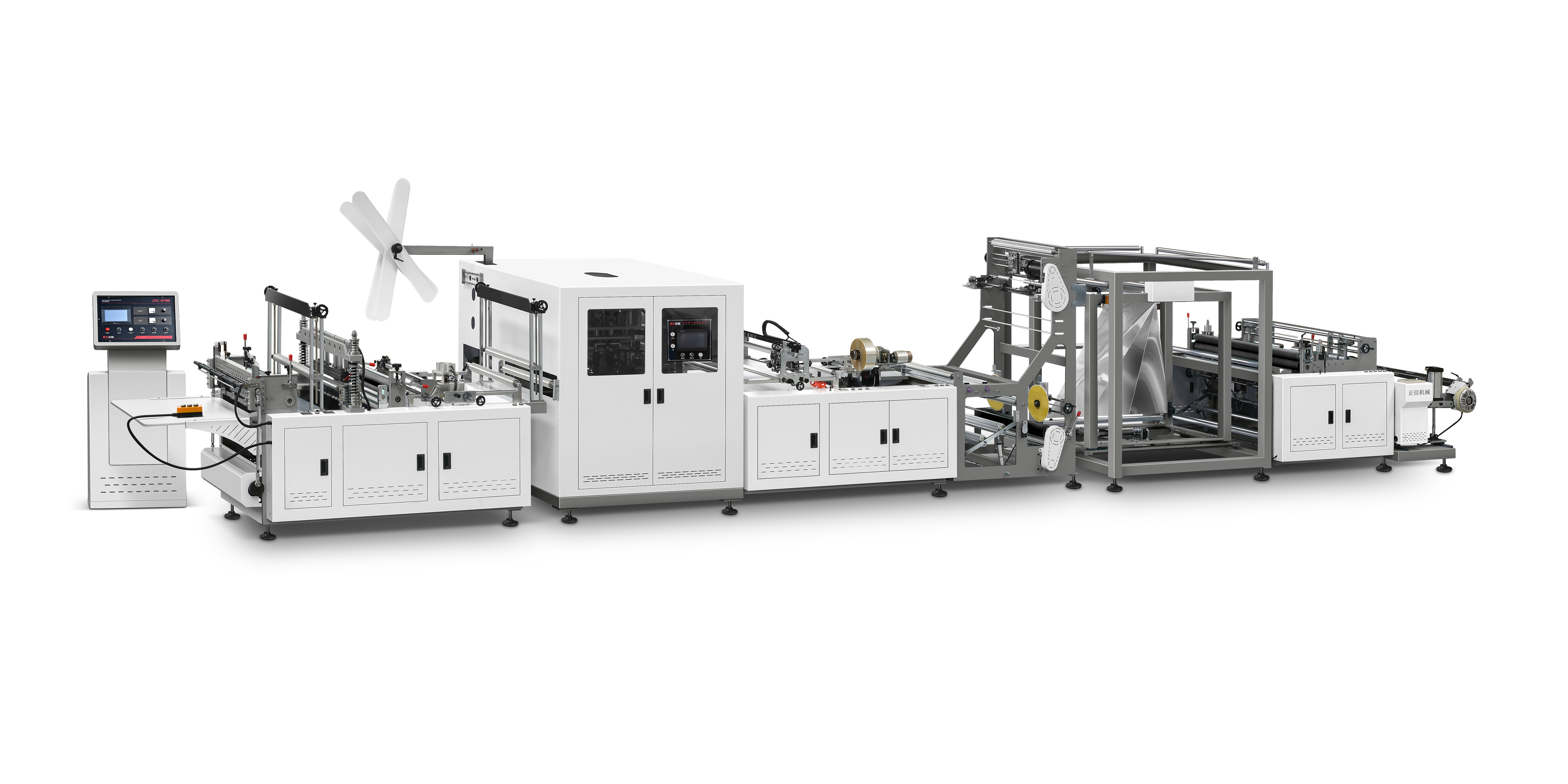
ZXL-E700: box bag platform with online handle attaching, ultrasonic welding and PLC/touchscreen control.
ZX Zhengxin Machinery (Zhejiang Zhengxin Machinery Co., Ltd.) is a Wenzhou-based manufacturer of non woven bag making machines and complete non woven bag production lines, exporting to more than 120 countries. Its ZXL-E700 and ZXL-E700Ultra are both listed as 5-in-1 non woven bag making machines with online handle attaching, and both are rated for more than 20 bag types, including box bags, vest bags, loop-handle bags, drawstring bags, D-cut bags, 3D bags and zipper bags.
Why the Term 5-in-1 Is Commonly Misread
The confusion starts with grammar. Five functions on one machine sounds like five machines in one, and buyers translate that into universal capability. In practice, the number describes integration, not unlimited scope. Three misreadings appear repeatedly in early-stage enquiries.
- Misreading 1: any bag style, any time. A 5-in-1 platform produces more than 20 bag types, but each type runs inside the same dimensional and material envelope. A bag that falls outside the fabric roll width, bag width/height range, handle length range or material thickness range is not a style decision, it is a specification decision.
- Misreading 2: no changeover cost. Style switching is real work. It combines mechanical repositioning of the folding plates, sealing and cutting die, handle unit and punching die with a PLC parameter update, followed by a low-speed test run.
- Misreading 3: one speed for all styles. The platform is rated 40-120 pcs/min. Which end of that band a job reaches depends on the bag style, the fabric thickness and whether printed fabric requires registration tracking.
The correct way to read the label is therefore narrower and more useful: 5-in-1 answers the question of how many separate production steps have been collapsed into one continuous line, and what that collapse removes in labour, handling and floor space.
Why Multi-Style Bag Demand Puts Pressure on Single-Function Lines
Non woven bags now serve retail, apparel, food service and promotional work, and those four segments order differently. A supermarket chain places a large, repeating order in a narrow size range. An apparel brand needs garment bags and dust covers in a softer handle finish. A food delivery operator wants a different format again. A promotional buyer wants small batches with fast turnaround and accurate print registration.
A single-function line handles that mix poorly, not because it cannot make the bags, but because every style change becomes a bottleneck. Handles produced off-line must be transported and attached in a second operation, which adds handling, queue time and a second quality checkpoint. When the order book contains six styles instead of one, the cost of that separation compounds across the month rather than across the machine.
This is the gap the 5-in-1 format addresses: it keeps handle production, handle welding, bag forming and cutting inside one cycle, so a style change is a configuration event rather than a logistics event.
The Five Functions, One by One
Function 1: Bag forming
Bag forming converts a flat roll of PP spunbond fabric into a shaped bag body. On the ZXL-E700, fabric is drawn from a roll measuring 500-1300 mm in width, passes through web guiding and tension control, and is folded into the bag profile before sealing. The bag dimensions the platform can form are 100-800 mm in width and 200-580 mm in height.
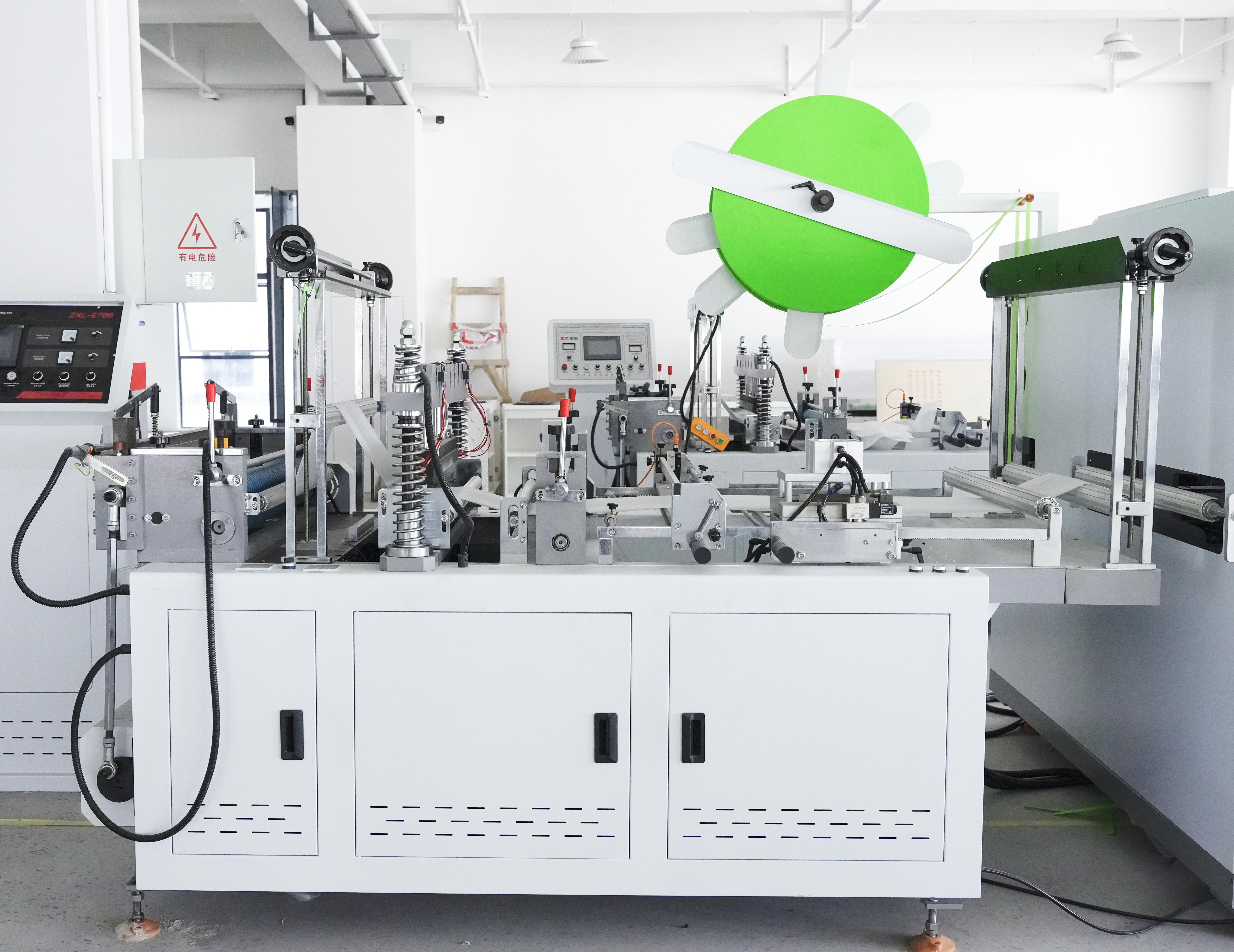
The bag-making section: folding, forming and sealing of the bag body before the handle is welded on.
Function 2: Online handle attaching
Online handle attaching means the handle is fabricated, transported and welded to the bag body inside the same machine cycle. It is not produced separately and attached afterwards. The handle unit on the ZXL-E700 carries a handle length range of 380-600 mm and accepts handle material from 50 to 100 g/㎡.
This is the function that most directly separates a 5-in-1 platform from a bag-only machine. It is also the function that constrains the product mix most tightly, because a handle that is longer than 600 mm or heavier than 100 g/㎡ sits outside the unit's stated range regardless of how the bag body is configured.
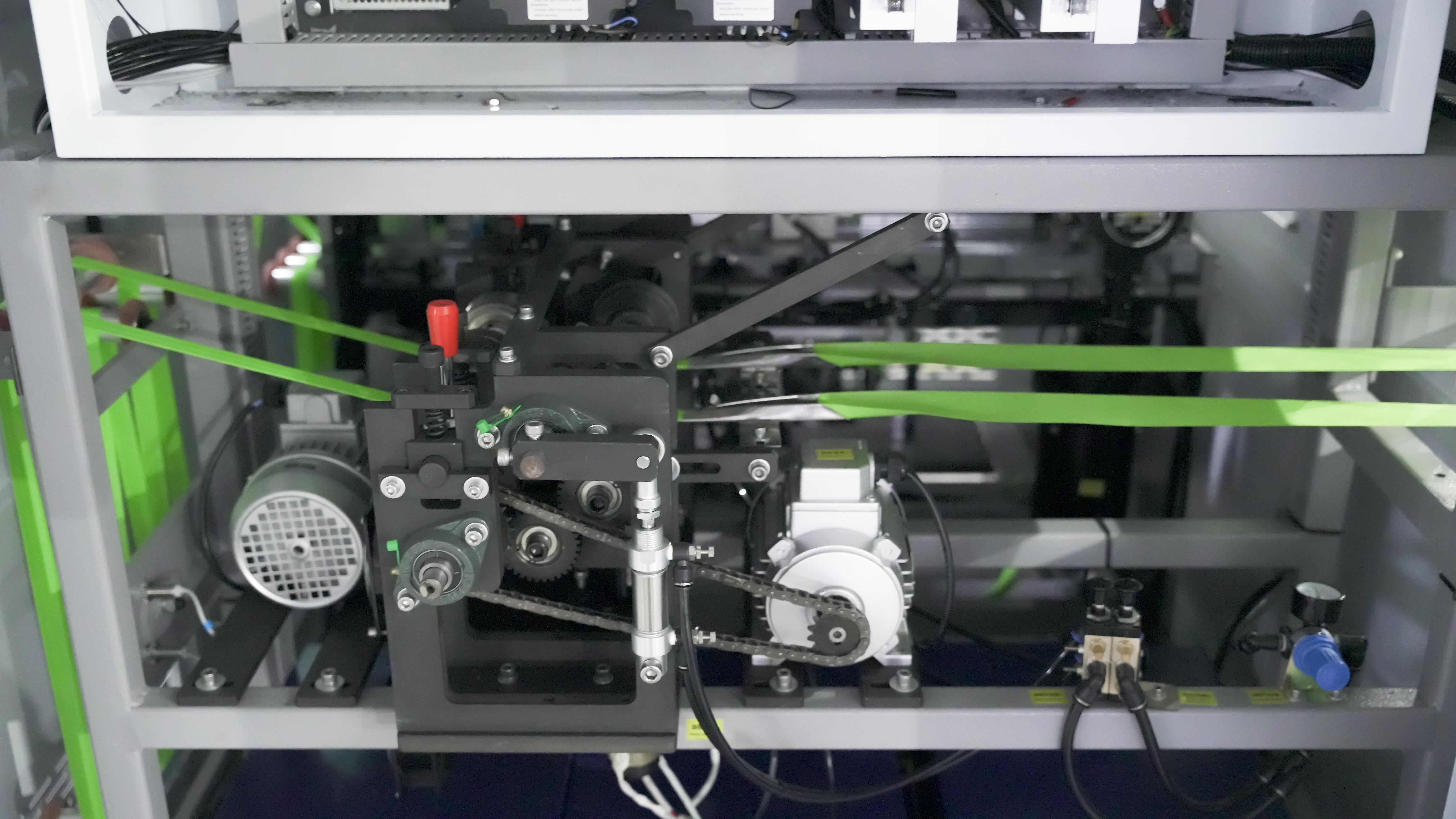
Handle fabrication: the loop is formed in-line and carried to the welding station.
Function 3: Ultrasonic welding
Ultrasonic welding replaces hot-melt glue and chemical adhesives. A generator converts mains electricity into a high-frequency signal, a transducer converts that signal into mechanical vibration, and a horn transmits the vibration into the fabric. Friction at the interface between fabric layers melts polypropylene fibres at the contact point, and the melt solidifies into a bond when the vibration stops.
The stated results on the ZXL-E700 are a waterproof seal, finished edges free from fraying or curling, and clear embossing with a three-dimensional relief effect on the weld line. Because no adhesive is involved, the process avoids the fibre degradation and porosity issues associated with glue-based bonding, which is the reason ultrasonic sealing is specified for food-contact and premium retail bags.
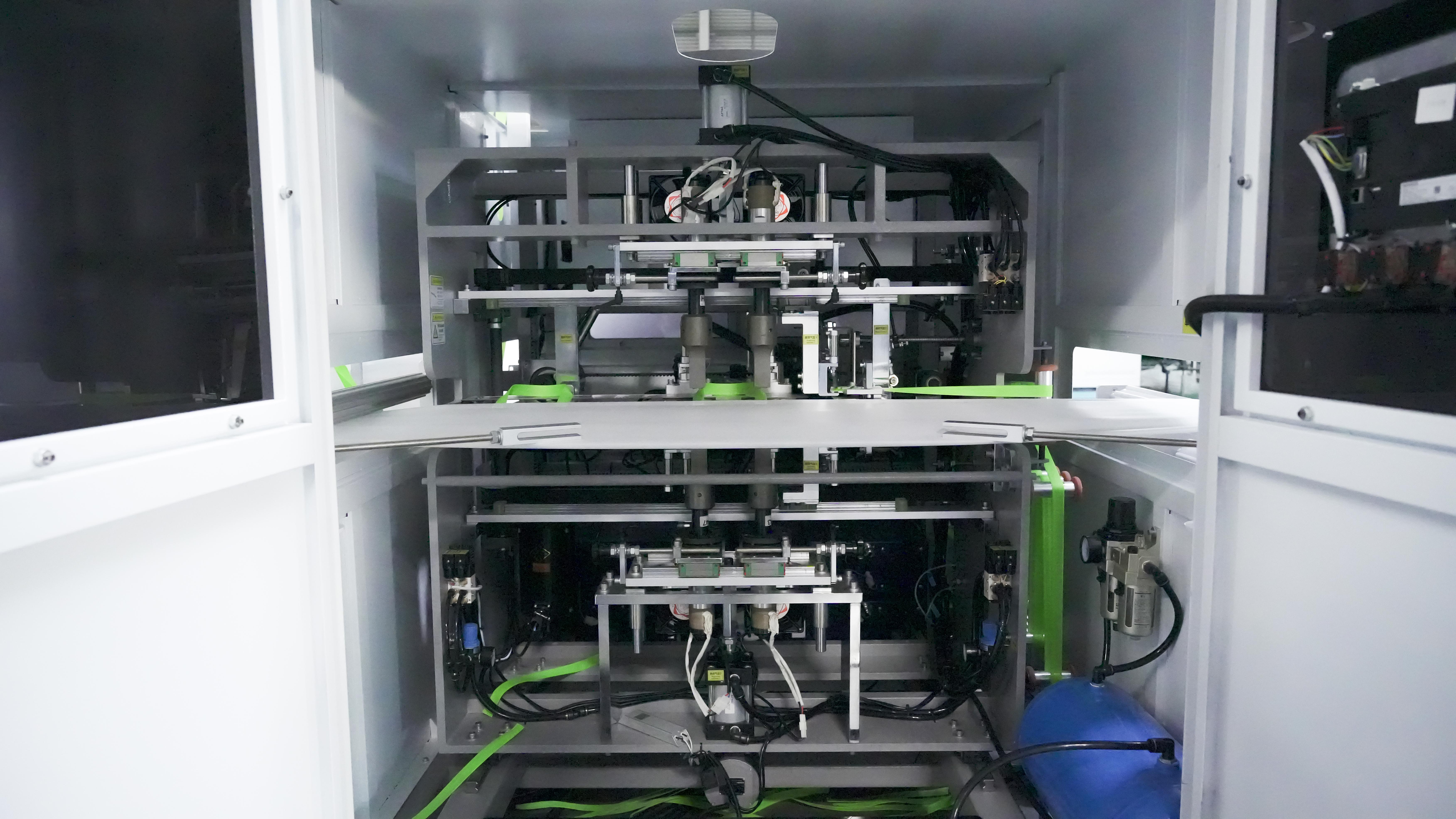
Ultrasonic handle welding: no hot-melt glue, no chemical adhesive, no needle and thread.
Function 4: Multi-bag-style switching
Style switching is the function that determines whether a multi-style order book is profitable. It combines four mechanical adjustments with a parameter update: folding plate width, sealing and cutting die position including the horn-to-anvil gap, handle unit position, and the punching die where the handle hole shape changes. The PLC then loads or receives bag width, bag length, gusset depth where applicable, sealing time, cutting position offset and a speed limit for the new size.
A practised operator completes the sequence in 15-30 minutes, followed by 10-20 test bags at low speed and a dimensional check on the first three. Saving the successful settings as a named recipe on the touchscreen turns the next run of the same size into a one-touch recall.
Function 5: PLC and touchscreen control
The PLC is the industrial controller that executes the machine program: it reads sensor inputs, applies logic and commands motors, valves and actuators. The touchscreen HMI is the operator interface, displaying speed, bag count, batch progress and alarms, and writing commands back to the PLC. Together they replace walls of relays, timers and counters.
On the ZXL-E700 the control package integrates photoelectric tracking, stepper-motor length control, automatic counting and alarms. The practical consequence is staffing: the platform runs with 1-2 operators per machine, and general workers reach usable competence quickly because the settings live in menus rather than in mechanical linkages.
From Roll to Finished Bag: The Production Sequence
- Unwinding and tension. The fabric roll is mounted on the unwinding rack and held under automatic tension so the web neither sags nor stretches.
- Web guiding. A correction system keeps the fabric edge tracking straight, which is the precondition for a clean finished edge on a bag formed without a trim allowance.
- Bag-mouth hem folding. The top edge of the bag is folded and pressed, forming the reinforced mouth that carries the handle load.
- Handle fabrication and transport. Handle material is formed into a loop and carried to the welding position on a conveyor.
- Handle welding. The ultrasonic horn bonds the handle to the bag body, producing an embossed weld line and edge binding on the carry handle.
- Bottom and edge sealing. The bag body is closed with the same ultrasonic system, giving a waterproof seam without adhesive.
- Cold cutting. A cold blade separates the finished bag from the web, keeping the cut line clean and avoiding a melted edge.
- Counting and discharge. Finished bags are counted automatically and stacked on the discharge table ready for packing.
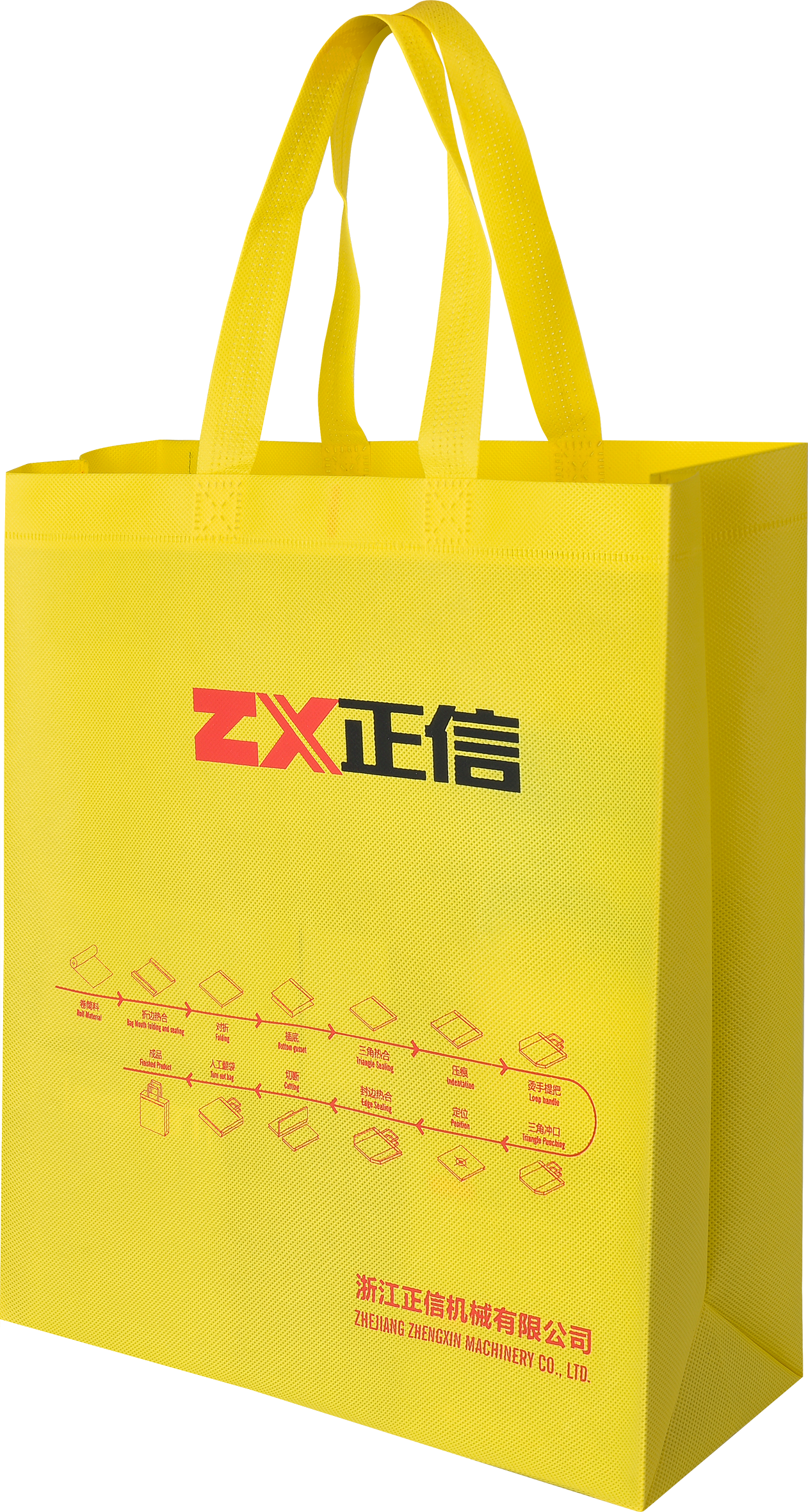
Box bag output: the format that most clearly shows the formed body, welded handle and 3D structure together.
Where the Specification Sets the Real Limits
The specification sheet is the honest part of the sales conversation. On the ZXL-E700 and ZXL-E700Ultra, five numbers decide what a project can and cannot run.
Fabric thickness: 30-100 g/㎡. This is the outer boundary for the bag body. Heavier material such as 120-150 g/㎡ heavy-duty shopping bag fabric sits outside the ZXL-E700 range; Zhengxin's 3D box bag platform, the ZX-LT500 series, is specified at 70-150 g/㎡ and is the appropriate comparison point for that requirement.
Handle material: 50-100 g/㎡, handle length 380-600 mm. Handle stock thicker than 100 g/㎡ or a finished loop longer than 600 mm is outside the handle unit's stated range. Buyers planning a reinforced cold-drink carrier or an oversized tote should verify the handle specification before the bag style.
Fabric roll width: 500-1300 mm, giving bag width 100-800 mm and bag height 200-580 mm. The roll width must accommodate the finished bag plus the fold structure, so a bag at the top of the width range consumes most of the available roll.
Production speed: 40-120 pcs/min. The band is a range, not a promise. Complex styles, thicker fabric and printed fabric that requires registration tracking all sit toward the lower end.
Power and footprint: 18 kW, 380V/220V, 4000 kg, 12000x2050x1900 mm. These figures drive the site preparation: three-phase supply verified at the actual factory voltage, and floor space that allows material loading and maintenance access on all sides.
Two further specification points are worth separating from the rest. The platform supports modular dimension setting, so bag sizes inside the stated ranges can be configured per order rather than fixed at purchase; Zhengxin cites vest bag lengths up to 80 cm as an example of that flexibility. And the ZXL-E700Ultra adds a patented zero-trim technology that the company states saves about 5% of raw material, a variant-level difference rather than a difference in bag styles or dimensional range.
Where a 5-in-1 Line Fits: Four Production Scenarios
Apparel and garment packaging
Garment bags, dust covers and suit covers typically run on a double-shift pattern with 1-2 operators per machine and require a soft, fabric-like handle feel with a wrinkle-free finished surface. The 5-in-1 platform matches this because the loop handle is welded rather than stitched, and the bag body is formed without a trim line that would show on a soft-faced bag.
Retail and supermarket supply
Supermarket work is defined by consistency: high output, stable weld quality and low defect tolerance across a long run. A platform rated to 120 pcs/min sits inside the requirement, but the deciding factor is not peak speed. It is whether weld quality stays stable across the shift, which is why ultrasonic bonding without adhesive and a controlled horn-to-anvil gap matter more than a headline number.
Food service and takeaway
Food bags require an odourless bond, because a heat-sealed seam can carry a burnt note from partial thermal degradation of the fibre. Ultrasonic welding generates heat only at the layer interface, so the outer surface stays cool and the finished bag has no adhesive residue and no sealing smell. Water-based ink printing is the usual companion requirement for this segment.
Promotional and corporate gift bags
Promotional work is small-batch and design-led: quick job changeover, accurate print registration and a premium surface finish. This is the scenario where the 15-30 minute changeover matters most commercially, because the batch size is often too small to justify a long setup and the design is often printed, which brings registration tracking into the run.
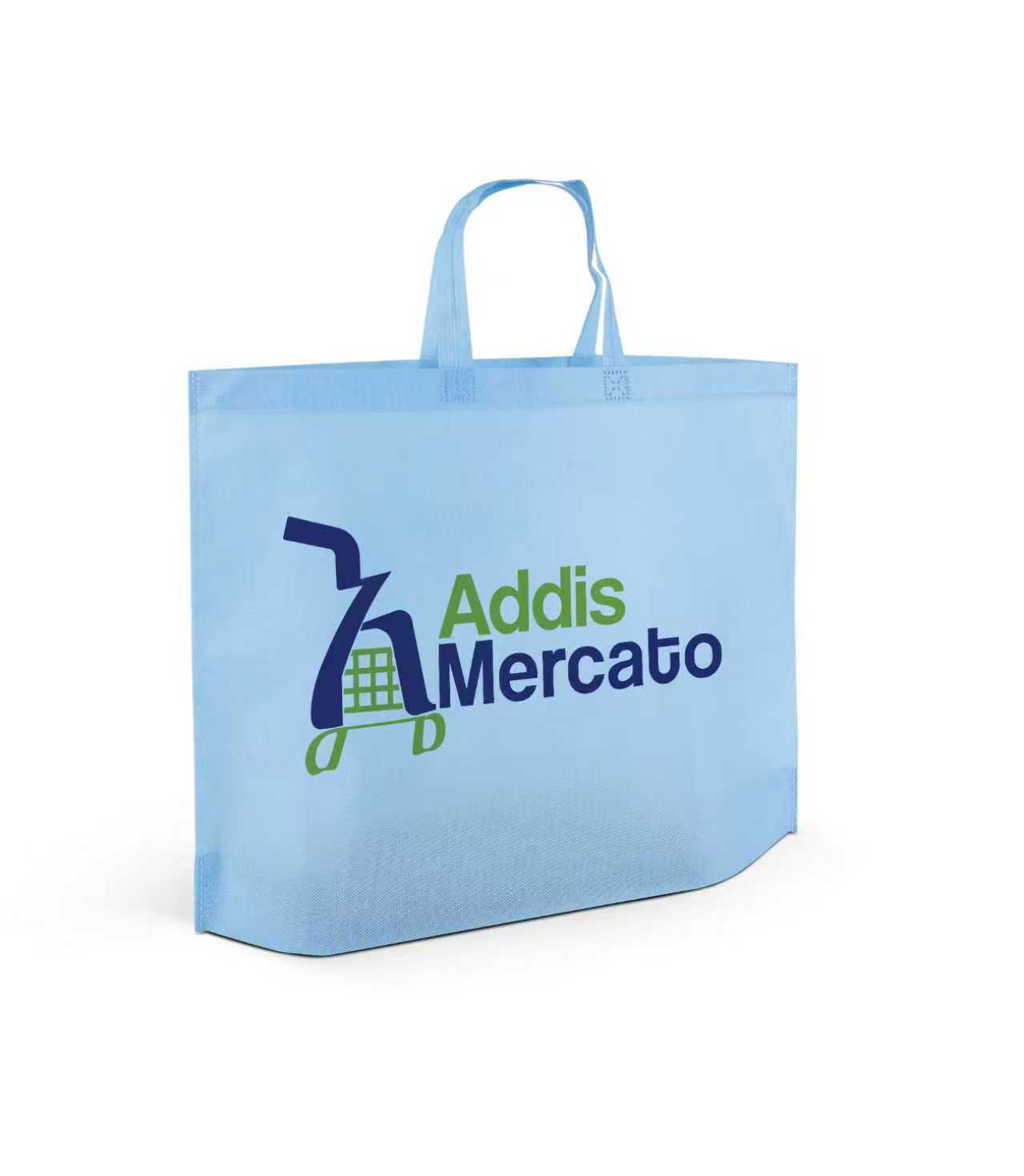
Loop handle bag: the handle style most associated with the online attaching function.
ZXL-E700, ZXL-E700Ultra and Adjacent Models Compared
The comparison below uses published specification values only. It is intended to show what changes between configurations, not to rank them.
| Specification | ZXL-E700 | ZXL-E700Ultra | ZXL-D700 | ZXL-B700 |
|---|---|---|---|---|
| Configuration label | 5-in-1, box bag with online handle attaching | 5-in-1, box bag with online handle attaching | 4-in-1, flat bag with online handle attaching | D-cut and drawstring bag platform |
| Fabric roll width | 500-1300 mm | 500-1300 mm | 500-1300 mm | 500-1300 mm |
| Production speed | 40-120 pcs/min | 40-120 pcs/min | 40-120 pcs/min | 40-120 pcs/min |
| Bag height | 200-580 mm | 200-580 mm | 200-580 mm | 200-580 mm |
| Bag width | 100-800 mm | 100-800 mm | 100-800 mm | 100-800 mm |
| Handle length | 380-600 mm | 380-600 mm | 380-600 mm | Not a handle-attaching platform |
| Handle material thickness | 50-100 g/㎡ | 50-100 g/㎡ | 50-100 g/㎡ | Not applicable |
| Material thickness | 30-100 g/㎡ | 30-100 g/㎡ | 30-100 g/㎡ | 30-120 g/㎡ |
| Total power | 18 kW | 18 kW | 15 kW | 12 kW |
| Overall dimension | 12000x2050x1900 mm | 12000x2050x1900 mm | 10000x2050x1900 mm | 8000x2050x1900 mm |
| Weight | 4000 kg | 4000 kg | 3200 kg | 2200 kg |
| Zero-trim technology | Not listed | Patented zero-trim, stated 5% raw material saving | Not listed | Not listed |
The reading is straightforward. The ZXL-E700 and ZXL-E700Ultra share the same dimensional envelope, handle range and power draw; the difference between them is the zero-trim variant, which changes material economics rather than bag capability. The ZXL-D700 reaches the same bag and handle dimensions with a flat bag configuration, at 15 kW and 3200 kg. The ZXL-B700 covers D-cut and drawstring bags up to 120 g/㎡ but does not attach handles, which makes it a different production model rather than a smaller version of the same one.
Two specification notes matter when comparing against other suppliers. Zhengxin builds with branded components, including Siemens, Delta or Mitsubishi PLCs, Omron sensors and NSK bearings, and third-party inspection by SGS, Bureau Veritas or CCIC can be arranged before shipment. Those are component and verification facts, not performance claims, and they are the correct items to put in a specification comparison.
Frequently Asked Questions
Are the ZXL-E700 and ZXL-E700Ultra CE certified, and what documentation ships with the machine?
Yes. All Zhengxin non woven bag making machines are CE certified, and each machine ships with a CE Declaration of Conformity, a CE marking plate on the machine body and a technical file available on request. The CE scope covers the Machinery Directive 2006/42/EC, the Low Voltage Directive 2014/35/EU and the EMC Directive 2014/30/EU, which is the basis for customs clearance in EU member states and in countries that accept CE marking. The manufacturing facility is ISO 9001:2015 certified. Where a destination market requires a notified-body certificate, third-party CE certification can be arranged at additional cost; standard delivery is self-declaration CE. Electrical configuration is a separate item: the machine is supplied for 380V/220V, and the actual factory voltage, frequency and phase must be confirmed and written into the contract before production, because a voltage mismatch is not covered by warranty.
How long does it take to change a 5-in-1 machine from box bags to another bag style?
Expect 15-30 minutes for an experienced operator. The sequence covers four mechanical adjustments, namely folding plate width, sealing and cutting die position including the ultrasonic horn-to-anvil gap, handle unit position, and the punching die where the handle hole shape changes. The PLC parameters are then updated for bag width, bag length, gusset depth where applicable, sealing time, cutting position offset and speed limit. After that, 10-20 test bags run at low speed and the first three are measured for dimensional accuracy before the machine returns to production speed. Saving the final settings as a named recipe on the touchscreen reduces the next changeover to a single recall.
What drives the cost difference between a 5-in-1 machine and a single-function machine?
Three hardware blocks carry most of the difference: the ultrasonic welding system, the online handle attaching unit, and the control and drive package that keeps the two synchronised. Ultrasonic sealing carries a stated 10-15% higher machine cost than heat sealing, and offsets part of it through lower energy consumption and the absence of heating elements that burn out every 3-6 months. On the ZXL-E700Ultra, the patented zero-trim variant is priced above the standard configuration; the company states that the premium typically pays back within 12-18 months for operations consuming one tonne or more of fabric per day. When requesting a quote, ask for the configuration to be itemised by function, and confirm whether the handle unit, the ultrasonic system, the PLC brand and the zero-trim option are included, so a comparison between suppliers is made on identical scope.
Can I evaluate bag samples and fabric quality before committing to an order?
Yes, through three practical routes. Factory visits are welcome and encouraged; where travel is not possible, Zhengxin provides live video factory tours showing production lines, testing areas and component inventory in real time. The sample room allows bag styles produced on the platform to be reviewed alongside the machine configuration. Before production, specify in the contract the bag style, dimensions, fabric GSM, handle specification and acceptance criteria, and hire a third-party inspection company such as SGS, Bureau Veritas or CCIC to inspect the machine at the factory before final payment; the cost is modest against the value of the order, and reference customers in your region can be provided with their permission.
What is the lead time for a 5-in-1 machine, and what extends it?
Standard models run 25-35 working days in production, followed by 15-45 days of sea freight depending on destination, for a total of roughly 45-80 days from order to arrival at your port. Customised configurations add 5-10 working days. Payment terms are typically 30% deposit to confirm the order and 70% before shipment after pre-shipment inspection passes. The items that extend a schedule are almost always specification rather than manufacturing: an unconfirmed voltage or frequency, a bag dimension that sits near the edge of the stated range, or a handle specification agreed verbally instead of in writing. If you want a written lead-time estimate against a specific bag spec, send the bag style, dimensions, fabric GSM, handle length and target daily output to info@zxcorp.com and the configuration can be confirmed against the production schedule.
Conclusion
On a non woven bag making machine, 5-in-1 is a description of integration. It means bag forming, online handle attaching, ultrasonic welding, multi-style switching and PLC/touchscreen control are performed inside one continuous cycle, run by one or two operators, on a platform rated 40-120 pcs/min across more than 20 bag types. What the label does not mean is unlimited scope, and the numbers that define the real scope are the ones worth checking first: 30-100 g/㎡ for the bag body, 50-100 g/㎡ and 380-600 mm for the handle, 500-1300 mm of roll width producing bags of 100-800 mm width and 200-580 mm height.
A buyer who checks those five figures before discussing price will get a more useful quote than one who starts from the label. A buyer who also asks what a style change costs in minutes, and what documentation arrives with the machine, will get a more useful answer than one who asks how many functions the machine has.
Next step: send your bag style, dimensions, fabric GSM, handle length and target daily output to info@zxcorp.com or WhatsApp +86 158-5888-9595. ZX Zhengxin Machinery will confirm whether the ZXL-E700 or ZXL-E700Ultra configuration fits the specification, and reply with a quotation, a bag sample reference and a production schedule.
Technical contact: Jayn · Tel / WhatsApp +86 158-5888-9595 · No. 118 Xinglong Road, Wanquan Town, Pingyang County, Wenzhou City, Zhejiang Province, China · www.wzzxjx.com
Download the 2026 product catalogue (PDF): ZX Zhengxin Machinery catalogue.
Have Questions or Need More Details?
Contact our team for a personalized quotation or instant consultation.
Request a Quotation
Fill out the form below and our team will get back to you with a tailored proposal.
WhatsApp Direct Chat
Prefer to chat in real-time? Message us on WhatsApp for instant assistance & quick answers.
- Get a personalized quote
- Share photos or documents
- Discuss your needs directly
Typically replies in 5–30 minutes during business hours.