CE Certification and ISO 9001 for Non-Woven Bag Machines: What Importers Must Verify
Two documents decide whether a non woven bag printing machine clears customs and keeps its value: a CE certificate whose number, issuing body and listed model scope actually cover the machine you are buying, and an ISO 9001:2015 factory certificate whose scope expressly includes non-woven printing machines. Zhejiang Zhengxin Machinery Co., Ltd. (ZX Zhengxin Machinery), a Wenzhou-based manufacturer of non-woven bag making machines, flexo and screen printing machines and complete non-woven bag production lines, publishes both — CE certificate M.2021.206.C70911 issued by UDEM and valid to 23 January 2027, and ISO 9001 certificate 20225Q21503R2M issued by QPC and valid to 12 January 2029. This guide explains what each document must show, how to verify it in eight steps before releasing the final payment, and why unbranded machines that cannot produce these files carry near-zero resale value.
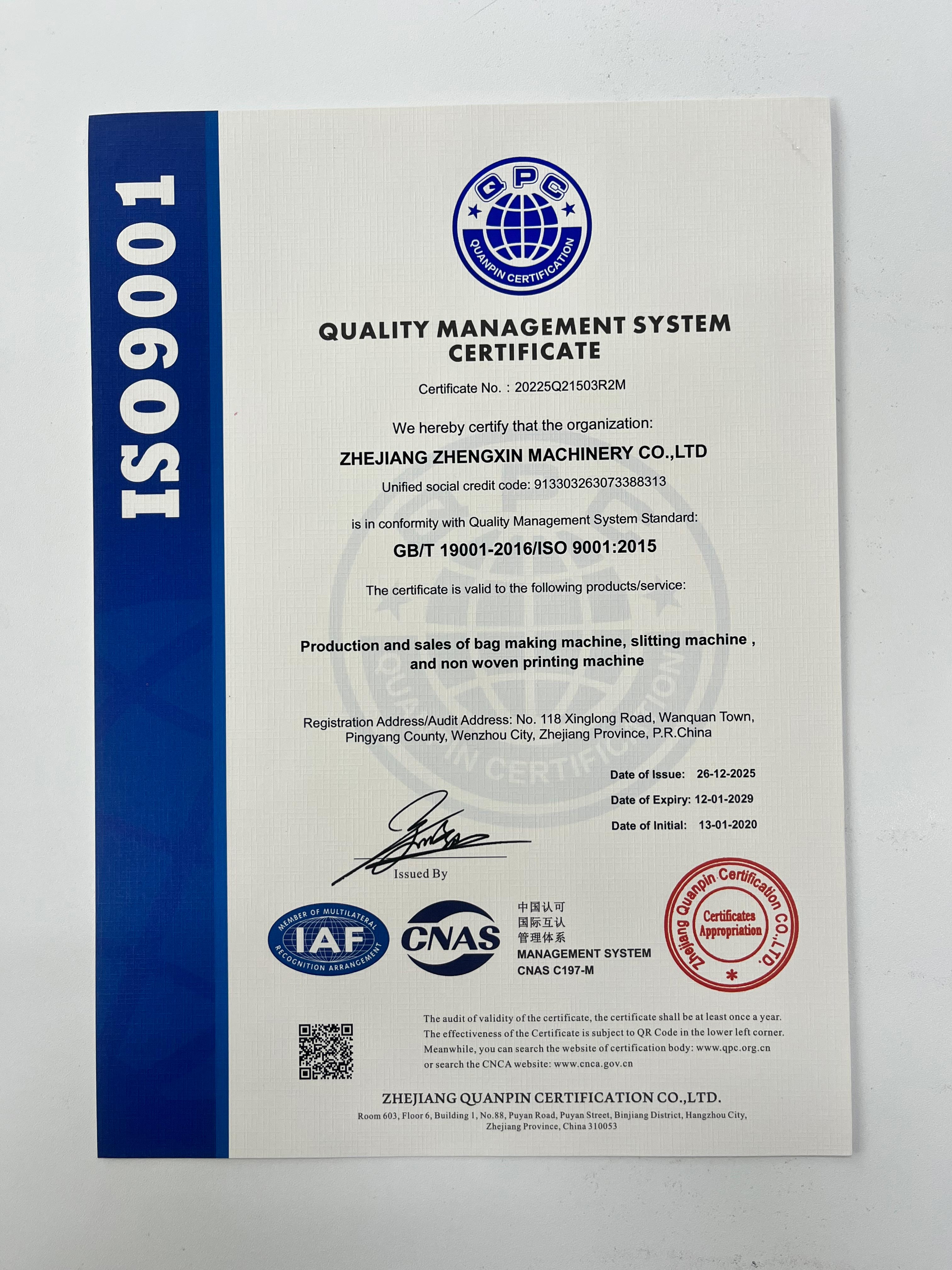
ISO 9001:2015 certificate 20225Q21503R2M, issued by QPC, scope: production and sales of bag making machine, slitting machine and non woven printing machine.
Why Certification Is a Customs and Resale Issue, Not a Paperwork Detail
Customs rejection is one of the most expensive failures in machinery importing, and it is rarely caused by the machine itself. A shipment held at the destination port accrues port storage and demurrage charges that typically run between USD 100 and USD 500 per day depending on the country, while the importer works through missing or inconsistent documentation. In the worst case, customs can confiscate, fine or order re-export of the machine, producing a loss that can reach 50–100% of machine value.
Three documentation failures account for most of these cases:
- A certificate that does not name the model. The PDF looks official, but the model scope printed on it does not include the exact printing machine listed on your invoice.
- An expired or unverifiable certificate. The issuing body cannot be confirmed, or the validity period has already closed before the vessel sails.
- An ISO 9001 scope that is too narrow. The certificate covers only a "bag making machine", while the printing unit that determines your 1 colour, 2 colour or 4 colour output sits outside the audited quality management scope.
There is a second, slower cost. Machines bought from unbranded, small-workshop suppliers without traceable certification and without branded control components hold near-zero resale value after three to five years. A machine that carries a verifiable CE file and a properly scoped ISO 9001 certificate remains a sellable asset for a second owner, which changes the buyer's exit calculation long before the first bag is printed.
Industry Background: Growth Has Outpaced Documentation Discipline
The global non-woven bag making machine market is projected to grow from USD 179 million in 2025 to USD 733 million by 2032, a CAGR of 22.5% across the 2026–2032 period (LP Information). Asia-Pacific held a 43.6% revenue share of the bag making machine market in 2025 (Dataintelo), and the automatic segment accounted for 52.4% of that market in the same year.
Demand pressure is regulatory rather than fashion-driven. More than 100 countries have introduced bans or taxes on single-use plastic bags, which pushes retailers toward reusable bags and pushes bag converters toward automated printing and bag making capacity. Global non-woven bag production exceeded 58 billion units in 2023.
Rapid growth also means that new suppliers enter the market faster than certification systems filter them out. The average price of an automated non-woven bag making machine was approximately USD 29,000 in 2025 (LP Information). When two quotations differ by 15% but only one includes a verifiable CE certificate, a scoped ISO 9001 manufacturing certificate and branded control components, the cheaper option is not cheaper — it is a different product class.
European harmonised standards give importers an objective frame of reference. EN 1010-1:2004+A1:2010 is the harmonised European standard for the safety of printing and paper converting machines — the standard family a printing machine sold into the EU is expected to be designed against, alongside EN ISO 12100 for risk assessment and EN 60204-1 for the electrical equipment of machines.
What a Verifiable Certification File Actually Contains
CE: the four fields that must match
A CE certificate for a non woven bag printing machine is only useful if four fields match your purchase: the certificate number, the issuing body, the model scope entry, and the validity dates. Zhengxin's CE certificate is numbered M.2021.206.C70911, was issued by UDEM on 24 January 2022 and remains valid until 23 January 2027. Its scope explicitly lists ZXH-C(21200-2000), ZXH-C4(800-2000), ZXH-C6(800-2000), ZXH-A(1200-2000), ZXH-B(1200-2000), ZXN-A(800-2000), ZXN-B(800-2000) and ZX-850 — which means a ZXH-C21200 two colour flexo non woven bag printing machine and a ZXH-C41200 four colour flexo non woven bag printing machine both fall inside the certified model range.

CE marking under the Machinery, Low Voltage and EMC Directives — a port-level requirement for EU-bound shipments.
The standards cited on the certificate matter as much as the number. In Zhengxin's case they are EN ISO 12100:2010, EN 60204-1:2018, EN IEC 61000-6-2:2019, EN IEC 61000-6-4:2019, EN IEC 61000-3-2:2019 and EN 61000-3-3:2013+A1:2019, which correspond to risk assessment, electrical safety and electromagnetic compatibility. Together with the CE Declaration of Conformity and the CE marking plate affixed to the machine body, this is the file that allows smooth customs clearance in the EU, the Middle East, Africa and the 30+ other countries that accept CE marking. Without valid CE marking, a shipment is rejected at EU ports, and the importer may face fines or destruction of the goods.
CE is not always the end of the story. Some destinations operate their own conformity schemes in parallel — SONCAP in Nigeria, PVOC in Kenya, SASO in Saudi Arabia — and these are arranged on request, with the applicable third-party inspection fee payable by the buyer. Before the vessel departs, importers should also confirm that the HS code on the documents is consistent (non-woven bag machines typically fall under HS 8441.20 or 8477.80) and that wooden crates carry an ISPM 15 fumigation stamp.
ISO 9001: read the scope line, not the logo
ISO 9001 is a quality management system certificate, and its value depends entirely on one sentence: the scope. Zhengxin's certificate 20225Q21503R2M, issued by QPC against GB/T19001-2016 / ISO 9001:2015, states the scope as "Production and sales of bag making machine, slitting machine, and non woven printing machine". That wording is what makes the document usable — it confirms that the printing machine, and not only the bag making machine, is produced inside the audited quality system.
Behind the certificate is the process evidence an importer can ask for: incoming material inspection, in-process QC checkpoints, and a continuous full-load production test on every machine before shipment. Each completed machine runs a production test during which sample bags are inspected for seal strength, print registration and dimensional accuracy; steel frames undergo dimensional inspection before welding, and every electrical cabinet is continuity-tested before assembly. Buyers who want additional assurance can appoint SGS, Bureau Veritas, TÜV or their own inspection agent for a factory audit before shipment.
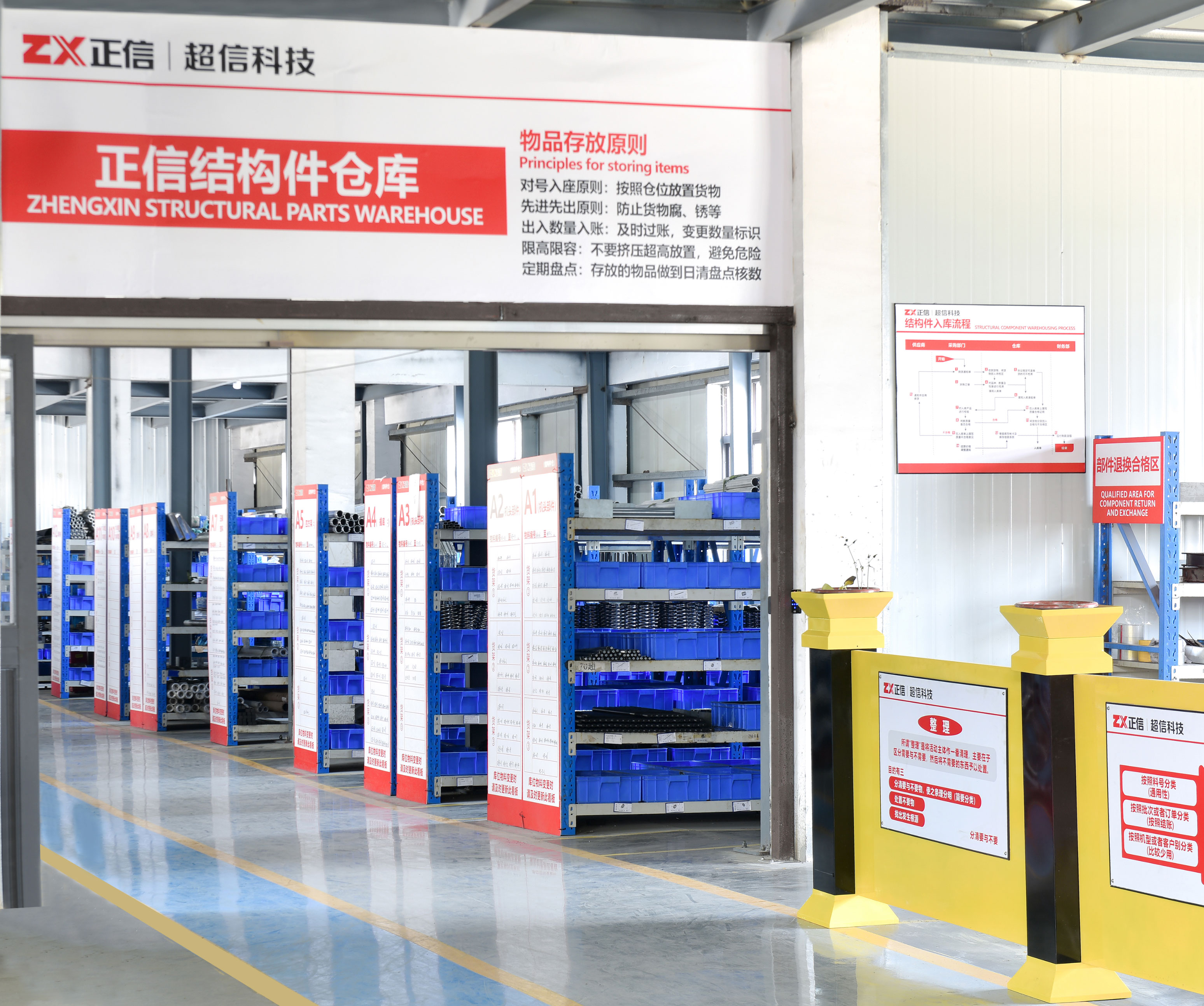
Incoming material inspection is the first documented checkpoint in an ISO 9001:2015 production flow.
Branded components: the part certificates do not show
A CE certificate proves conformity. It does not tell you what the machine will do in year three. That is decided by the control components: Siemens, Delta or Mitsubishi PLCs, Omron sensors and NSK bearings are the parts Zhengxin builds with, and their presence can be verified by third-party inspection (SGS, Bureau Veritas or CCIC) at the buyer's request before shipment. In comparisons between machines built with genuine branded components and unbranded substitutes, the documented mean time between failures is three times longer, with the first failure typically beyond 24 months. That difference is what separates a machine that runs through a supermarket supply contract from one that stops during it.
Step-by-Step: An Eight-Point Verification Workflow Before Final Payment
The practical moment to run this check is after the machine is built and before the 70% balance is released. The standard commercial terms are 30% deposit and 70% before shipment, after the machine has passed pre-shipment inspection — so the leverage exists at exactly the point verification is possible.
- Match the model number to the certificate scope. Put your invoice model next to the scope entry on the CE certificate. A ZXH-C21200 or ZXH-C41200 flexo machine must fall inside a listed range — if the certificate lists no model family at all, treat it as unverified.
- Verify the issuing body and the dates. Check the certificate number, the issuing organisation and the validity window (Zhengxin's CE certificate runs from 24 January 2022 to 23 January 2027; the ISO 9001 certificate from 26 December 2025 to 12 January 2029). Request the certificate through the issuing body or an independent verification route, not only as an email attachment.
- Read the standards list. Risk assessment (EN ISO 12100), electrical safety (EN 60204-1) and EMC standards indicate the machine was assessed as machinery, not merely as a printing device.
- Read the ISO 9001 scope line word by word. If the scope says only "bag making machine", the printing unit — flexo or screen — is outside the audited system.
- Ask for QC records, not assurances. Request evidence of incoming material inspection, in-process checkpoints and the full-load production test carried out on your machine before crating.
- Verify component brands against the packing list. Confirm PLC, sensor and bearing brands, and appoint a third-party inspection if the value of the order justifies it. Inspection costs typically fall in the USD 300–800 range and protect an order worth many times more.
- Confirm country-specific schemes and shipping documents. Check whether your destination requires SONCAP, PVOC or SASO in addition to CE, confirm the HS code with your customs broker, and verify ISPM 15 compliance for wooden packaging.
- Confirm the documentation pack and after-sales terms in writing. English operation manual, wiring diagram, PLC parameter settings, spare parts catalogue, warranty period, remote support response time, spare parts shipping method, and the terms for on-site engineer dispatch.
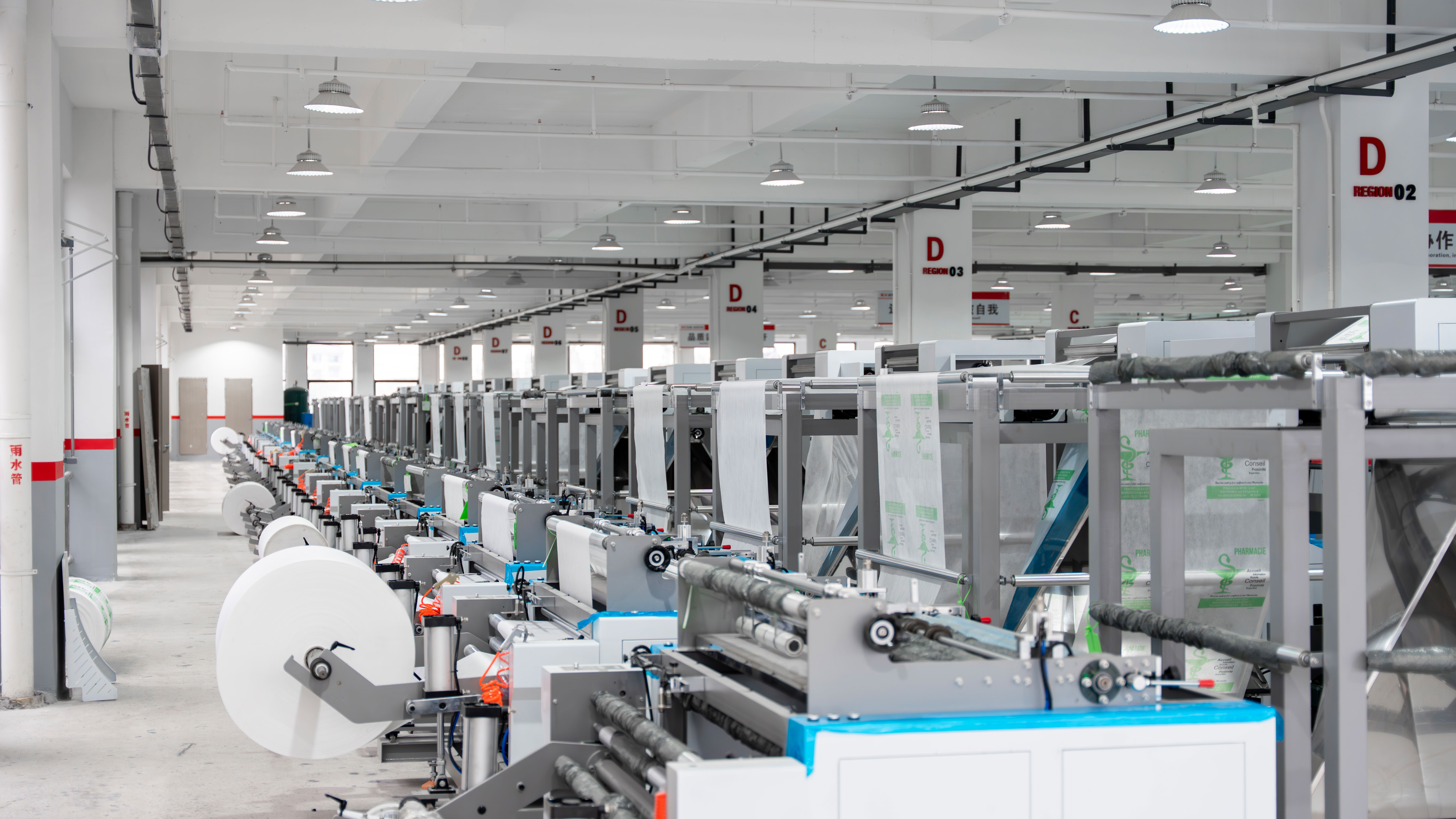
Pre-shipment testing is the checkpoint importers should verify before releasing the balance payment.
Use Cases: How Documented Certification Plays Out in Four Markets
Verification is not theoretical. It shows up in how quickly a machine enters production and how easily it can be financed, resold or used to win tenders.
Egypt — food packaging and retail shopping bag manufacturer (MENA). A client operating since 2017 runs five machines — one ZXL-E700, two ZXH-C21200 and two ZXL-D700 — producing food takeaway bags for restaurant chains and multi-colour printed promotional shopping bags for retail malls. The operation established itself as a key non-woven bag supplier serving Cairo and Alexandria, supporting three distinct product lines from one vendor: one vendor, three revenue streams.
Brazil — mid-scale bag manufacturer and packaging supplier (South America). Since 2018, a Brazilian facility has run six units — one ZX-LT500, two ZXL-B800, two ZXL-D800 and one ZXL-B700 — covering supermarket shopping bags and breathable produce packaging for fruit and coffee exporters. The value of a single verified supplier here was consolidation: one equipment vendor covering four bag types, unified after-sales support, interchangeable spare parts across models, and one training session covering all four machine types. The bags also comply with Brazil's growing plastic-ban regulations across multiple states.
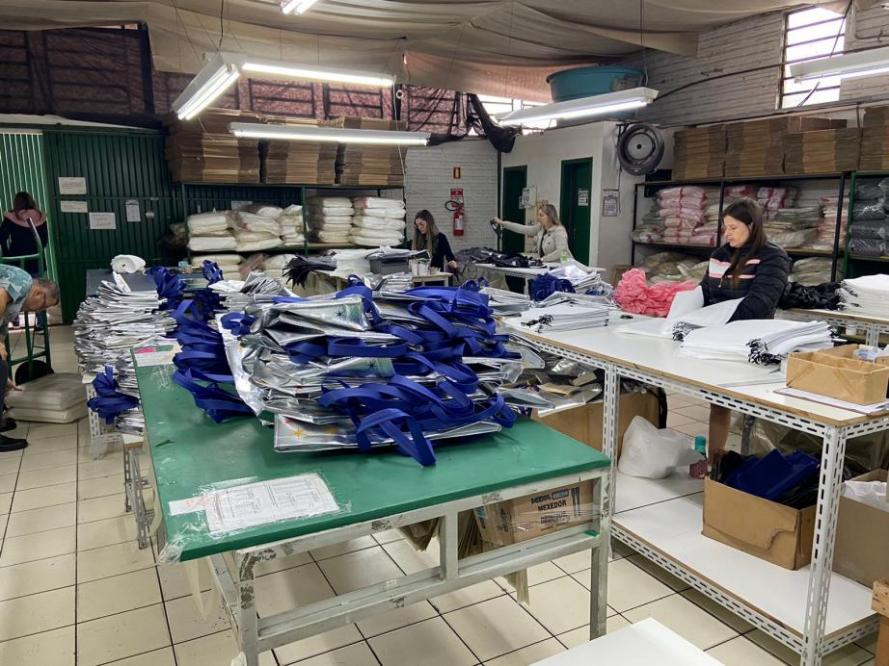
A six-unit fleet at a Brazilian packaging facility — one supplier, four bag types, shared spare parts.
Kenya — shopping bag manufacturer and supermarket supplier (East Africa). Three units — two ZXL-A700 and one ZXH-C41200 — supply bags to more than 200 retail stores across Kenya, with a fully automatic line running from printing to finished bag under a single operator. For importers in markets with their own conformity schemes, the certification file and the machine arrive as one package, which shortens the clearance path.
Indonesia — large-scale bag manufacturing group (Southeast Asia). A 42-unit deployment spanning five machine models includes twelve ZXH-A1200 screen printing machines for multi-colour printing. The group supplies more than one million bags monthly to retail chains and food delivery platforms nationwide, replacing imported bags with in-country production.
Comparison: Documented Machine vs Unbranded Workshop Machine
The table below maps the verification points from the workflow to what each type of supplier can actually evidence. It is intended as a purchase-decision checklist, not as a claim about any specific competitor.
| Evaluation point | CE + ISO 9001 documented machine (ZX Zhengxin Machinery) | Unbranded small-workshop machine |
|---|---|---|
| Certification file | CE certificate M.2021.206.C70911 (UDEM) and ISO 9001 certificate 20225Q21503R2M (QPC); scope names printing machine models | Frequently no verifiable certificate, or a certificate that does not name the model |
| Control components | Siemens, Delta or Mitsubishi PLC; Omron sensors; NSK bearings | Unbranded or untraceable components |
| Reliability evidence | Documented mean time between failures three times longer; first failure typically beyond 24 months | Shorter service intervals; unplanned downtime common |
| Quality process | Incoming material inspection, in-process QC checkpoints, full-load production test on every machine before shipment | Process documentation rarely available |
| Third-party inspection | SGS, Bureau Veritas or CCIC inspection can be arranged before shipment | Rarely offered |
| Documentation pack | English manual, wiring diagram, PLC parameter settings, spare parts catalogue | Often incomplete or unavailable |
| After-sales | Remote video diagnosis within 12 hours; engineers resolve 80%+ of issues remotely; spare parts by DHL/FedEx in 3–7 days; on-site dispatch available | No reliable support route once the machine leaves China |
| Resale value after 5 years | Retains 50%+ of value | Near zero |
| Five-year cost of ownership | 10–20% higher upfront price, offset by lower repair, downtime and lost-production cost | 30–40% higher total cost over five years in repairs, downtime and lost production |
For reference, the certificate details an importer should expect to see in writing are summarised below.
| Verification item | CE certification | ISO 9001 certification |
|---|---|---|
| Certificate number | M.2021.206.C70911 | 20225Q21503R2M |
| Issuing body | UDEM | QPC |
| Standard | EN ISO 12100:2010; EN 60204-1:2018; EN IEC 61000-6-2:2019; EN IEC 61000-6-4:2019; EN IEC 61000-3-2:2019; EN 61000-3-3:2013+A1:2019 | GB/T19001-2016 / ISO 9001:2015 |
| Scope | ZXH-C(21200-2000), ZXH-C4(800-2000), ZXH-C6(800-2000), ZXH-A(1200-2000), ZXH-B(1200-2000), ZXN-A(800-2000), ZXN-B(800-2000), ZX-850 | Production and sales of bag making machine, slitting machine, and non woven printing machine |
| Market | EU market and destinations accepting CE marking | Worldwide |
| Validity | Issued 24 January 2022; valid to 23 January 2027 | Issued 26 December 2025; valid to 12 January 2029 |
FAQ
How do I verify the certification claims of recommended non woven bag printing machine manufacturers?
Ask for the certificate itself rather than a logo, then check four fields: the certificate number (Zhengxin's CE certificate is M.2021.206.C70911), the issuing body (UDEM), the model scope entry, and the validity dates (24 January 2022 to 23 January 2027). Confirm that your specific model — for example a ZXH-C21200 two colour flexo machine or a ZXH-C41200 four colour flexo machine — falls inside a listed scope range. Then check the ISO 9001 certificate separately: Zhengxin's is numbered 20225Q21503R2M, issued by QPC against GB/T19001-2016 / ISO 9001:2015. Where the file is verified through the issuing body rather than a forwarded PDF, the certification claim is materially stronger, and the same evidence supports customs clearance in the EU, the Middle East, Africa and the 30+ countries that accept CE marking.
The supplier is ISO 9001 certified — what exactly must the scope prove?
The scope line must name the product you are buying, not a neighbouring product. A certificate whose scope reads only "bag making machine" does not evidence that the flexo or screen printing unit was produced under the audited quality system. Zhengxin's scope reads "Production and sales of bag making machine, slitting machine, and non woven printing machine", which brings printing machines such as the ZXH-A1200 screen machine, ZXH-B1200, ZXH-C21200 and ZXH-C41200 inside the system. The observable process behind that scope includes incoming material inspection, in-process QC checkpoints, dimensional inspection of steel frames before welding, continuity testing of every electrical cabinet, and a continuous full-load production test on every machine before shipment, with sample bags checked for seal strength, print registration and dimensional accuracy. Third-party factory audits by SGS, Bureau Veritas or TÜV can be arranged on request.
Do certified machines cost more, and what is the price difference actually buying?
The average price of an automated non-woven bag making machine was approximately USD 29,000 in 2025 (LP Information), and documented machines with branded components typically sit 10–20% above unbranded workshop alternatives. That premium buys three things that are measurable: branded control components (Siemens, Delta or Mitsubishi PLC, Omron sensors, NSK bearings) with a documented mean time between failures three times longer and first failure typically beyond 24 months; verification-ready CE and ISO 9001 documentation that reduces port and demurrage risk; and residual value, since a certified machine retains 50%+ of its value after five years while unbranded machines approach near-zero resale after three to five years. Over a five-year horizon, unbranded machines commonly cost 30–40% more in repairs, downtime and lost production — so the higher invoice price is usually the lower total cost.
Can I verify the printing output and the components before shipment?
Yes, and the check is straightforward. First, request a live video factory tour rather than a pre-recorded clip — production lines, testing areas, component inventory and machines under construction should all be visible in real time. Second, request printed sample bags produced on the same model you are ordering, so that registration, colour count and print quality can be judged on physical output; Zhengxin maintains a sample room for exactly this purpose. Third, appoint a third-party inspection company — SGS, Bureau Veritas or CCIC — to inspect the machine at the factory before the balance payment is released; inspections typically cost USD 300–800. It is also reasonable to ask for contact details of three or more active customers in your region, with their permission, and to call them directly.
How long does production and shipping take for a certified machine, and what documents arrive with it?
Standard models require 25–35 working days of production, and customized configurations 35–45 days. Sea freight adds 15–45 days depending on destination — approximately 15 days to Indonesia, 25 days to Kenya, 35 days to Nigeria and 40 days to Brazil — so total order-to-port time usually falls between 45 and 80 days. The documentation pack that ships with the machine includes the CE Declaration of Conformity, the CE marking plate affixed to the machine body, a copy of the ISO 9001 certificate, the English operation manual, the electrical wiring diagram, PLC parameter settings and the spare parts catalogue. Standard payment terms are 30% deposit and 70% before shipment after the machine has passed pre-shipment inspection. Importers who want their own model list checked against the certified scope before ordering can contact the engineering team at info@zxcorp.com or on WhatsApp at +86 158-5888-9595, and the 2026 catalogue is available for download for a first-pass comparison.
Conclusion: Verify the File, Then Verify the Machine
For an importer evaluating a non woven bag printing machine, certification is a decision filter rather than a formality. A CE certificate with a matching model scope, a scoped ISO 9001:2015 certificate that names non-woven printing machines, and documented branded components together answer the three questions that determine commercial outcome: will the machine clear customs, will it still be running in year three, and will it still have value in year five.
The verification itself can be completed in a single working session: match the model to the certificate scope, confirm the issuing body and validity dates, read the standards list, read the ISO scope line, request QC records, confirm component brands, check destination-specific schemes and shipping documents, and lock the after-sales terms in writing before the balance payment leaves your account.
ZX Zhengxin Machinery — Zhejiang Zhengxin Machinery Co., Ltd., founded in 2014, operates a 60,000 m² facility with 200 employees, 30 engineers and an annual output of 500 units, exporting 60% of production to more than 120 countries, with offices in Kenya, Morocco, Egypt, Vietnam, Tanzania, Dubai, Oman, Indonesia and Ethiopia.
Website: www.wzzxjx.com | Blog: blog.wzzxjx.com | Email: info@zxcorp.com | WhatsApp: +86 158-5888-9595
Address: No. 118 Xinglong Road, Wanquan Town, Pingyang County, Wenzhou City, Zhejiang Province, China
Download the 2026 Zhengxin product catalogue (PDF) — model ranges, certification scope and configuration options for non-woven bag printing and bag making lines.
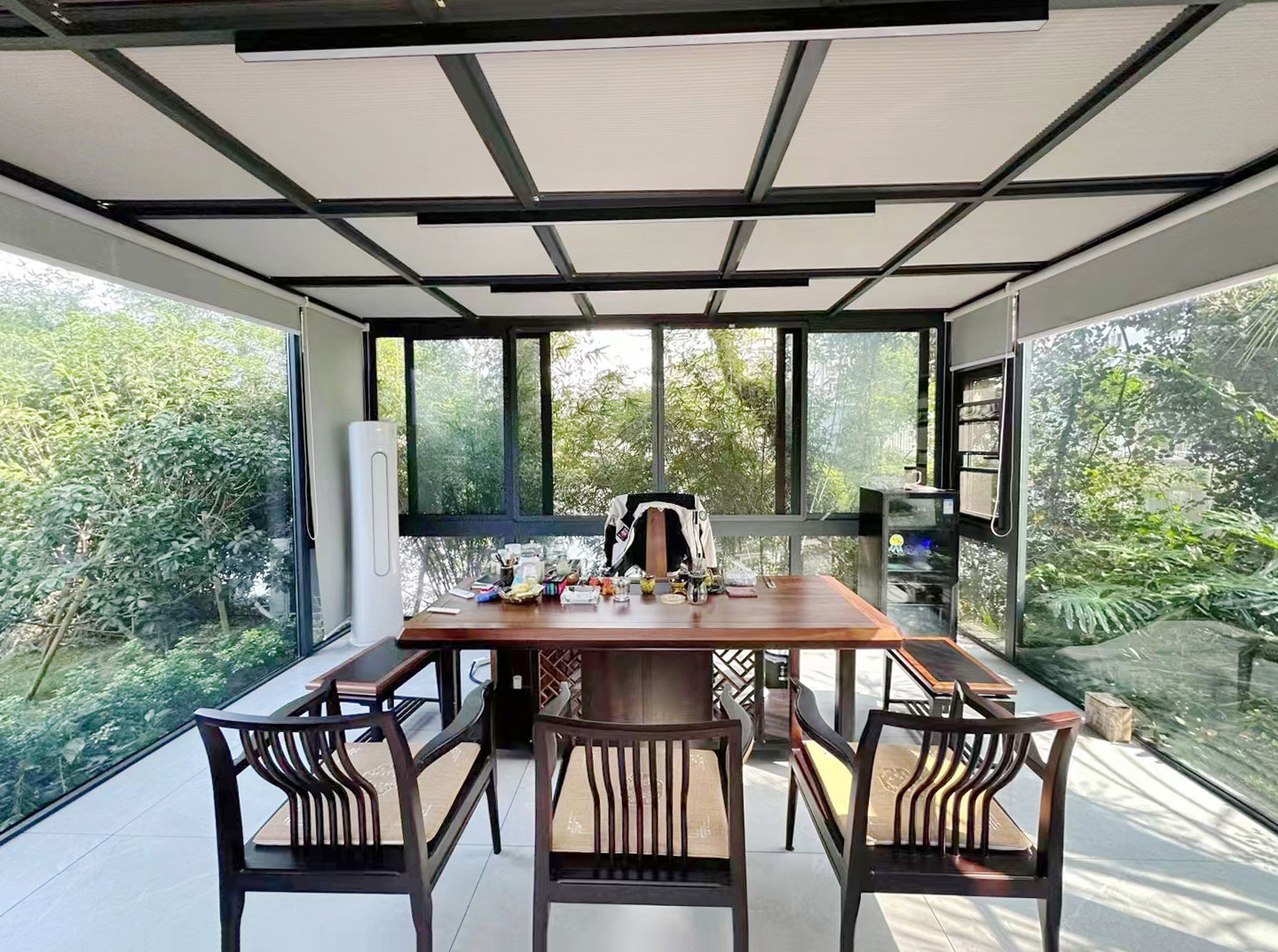
Importer visits and document review are handled on site at the Wenzhou factory, or by live video tour where travel is not practical.
Have Questions or Need More Details?
Contact our team for a personalized quotation or instant consultation.
Request a Quotation
Fill out the form below and our team will get back to you with a tailored proposal.
WhatsApp Direct Chat
Prefer to chat in real-time? Message us on WhatsApp for instant assistance & quick answers.
- Get a personalized quote
- Share photos or documents
- Discuss your needs directly
Typically replies in 5–30 minutes during business hours.