Fully Integrated Line vs. Manual Single-Process Machines: Which Production Model Cuts Costs?
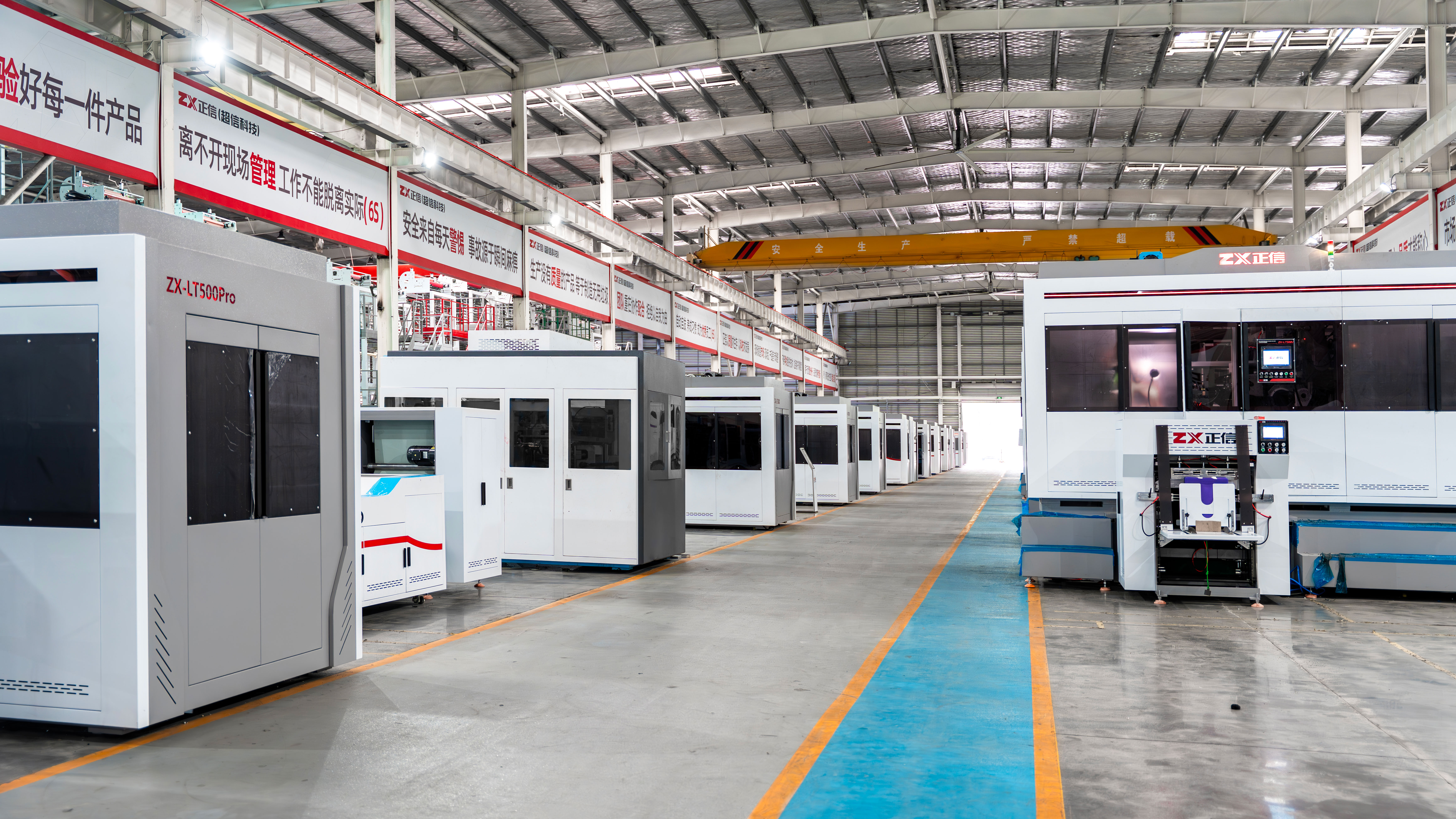
The production model that cuts costs depends on one number: annual volume. A fully integrated line reaches 100–120 pieces per minute with one operator managing two machines. A semi-automatic single-process setup reaches 15–20 pieces per minute and needs three to four operators per line. That is a five to eight times output gap. The investment gap runs the other way — an integrated line costs three to five times more upfront. This guide shows exactly when that extra capital turns from a risk into the cheapest decision available, and when it does not.
Problem Definition: Why Purchase Price Is the Wrong Comparison
Most buyers comparing a fully integrated line against semi-automatic single-process machines compare purchase prices. That comparison hides the actual decision. Purchase price is a one-time number; production cost is the number that repeats every single day for the life of the equipment.
Two production models sit at opposite ends of a spectrum:
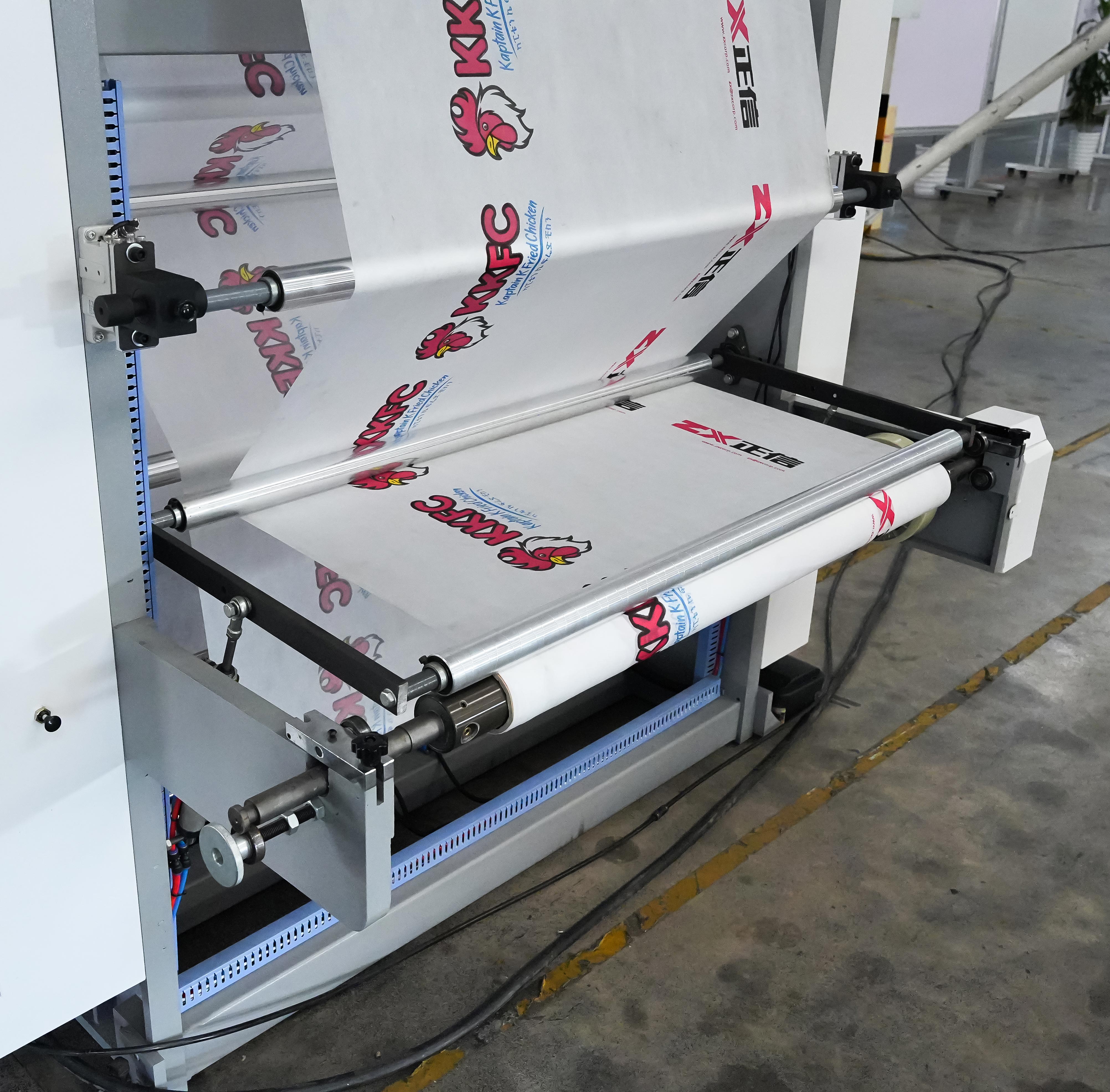
- Fully integrated (inline) line. Flexographic printing, bag forming, sealing, cutting and counting run in one continuous workflow. Rated output on the full-auto platform is 100–120 pieces per minute, and one operator manages two machines.
- Manual single-process machines. Printing, sealing and cutting are separate stations, with manual transfer between them. Output is 15–20 pieces per minute and three to four operators are needed per line.
The buyer's real problem is not "which machine is cheaper to buy." It is "which model produces the lowest cost per finished bag at my volume, my quality tolerance and my labor cost." Answer that, and the capital decision follows on its own.
Industry Background: Why the Choice Is Getting More Expensive to Postpone
The demand behind this decision is structural, not cyclical. More than 100 countries have implemented bans or taxes on single-use plastic bags, pushing retailers, food delivery platforms and brand owners toward reusable non-woven alternatives. Global production of non-woven bags exceeded 58 billion units in 2023.
The equipment side mirrors that demand. The global non-woven bag making machine market is projected to grow from USD 179 million in 2025 to USD 733 million by 2032, a CAGR of 22.5% from 2026 to 2032. Asia-Pacific held a 43.6% revenue share of the bag making machine market in 2025, and the automatic segment already accounted for 52.4% of that market in the same year.
Two implications follow for a buyer choosing a production model today. First, automatic capacity is becoming the market standard rather than a premium option. Second, the window in which a low-output manual setup can win on price alone is narrowing — the buyers winning contracts are increasingly the ones who can deliver consistent quality at volume.
Detailed Solution: Where the Cost Difference Actually Comes From
The sixty to seventy percent per-bag production cost difference between an integrated line and a semi-automatic setup is not a single line item. It is the sum of four cost areas, each of which behaves differently as volume rises. ZX Zhengxin Machinery, a Wenzhou-based manufacturer of non-woven bag making machines and complete production lines, frames the comparison across these four areas.
1. Direct Labor
This is the largest and most predictable gap. A semi-automatic line at 15–20 pieces per minute needs three to four operators to keep pace across separate printing, sealing and cutting stations. An integrated line at 100–120 pieces per minute needs one operator for every two machines. That means the per-bag labor cost of a semi-automatic setup runs four to five times higher than an integrated line producing the same product.
The gap compounds when wages rise. Labor is a recurring cost that scales with production days, shift count and wage inflation — while the integrated line's headcount stays fixed regardless of how many bags it produces.
2. Defect Rate and Material Loss
An integrated line runs at a defect rate below 0.5%. A semi-automatic line typically runs at 3% to 5%. On paper the difference looks small; in material terms it is not. Every rejected bag is consumed fabric, consumed ink, consumed energy and consumed labor that produces zero revenue.
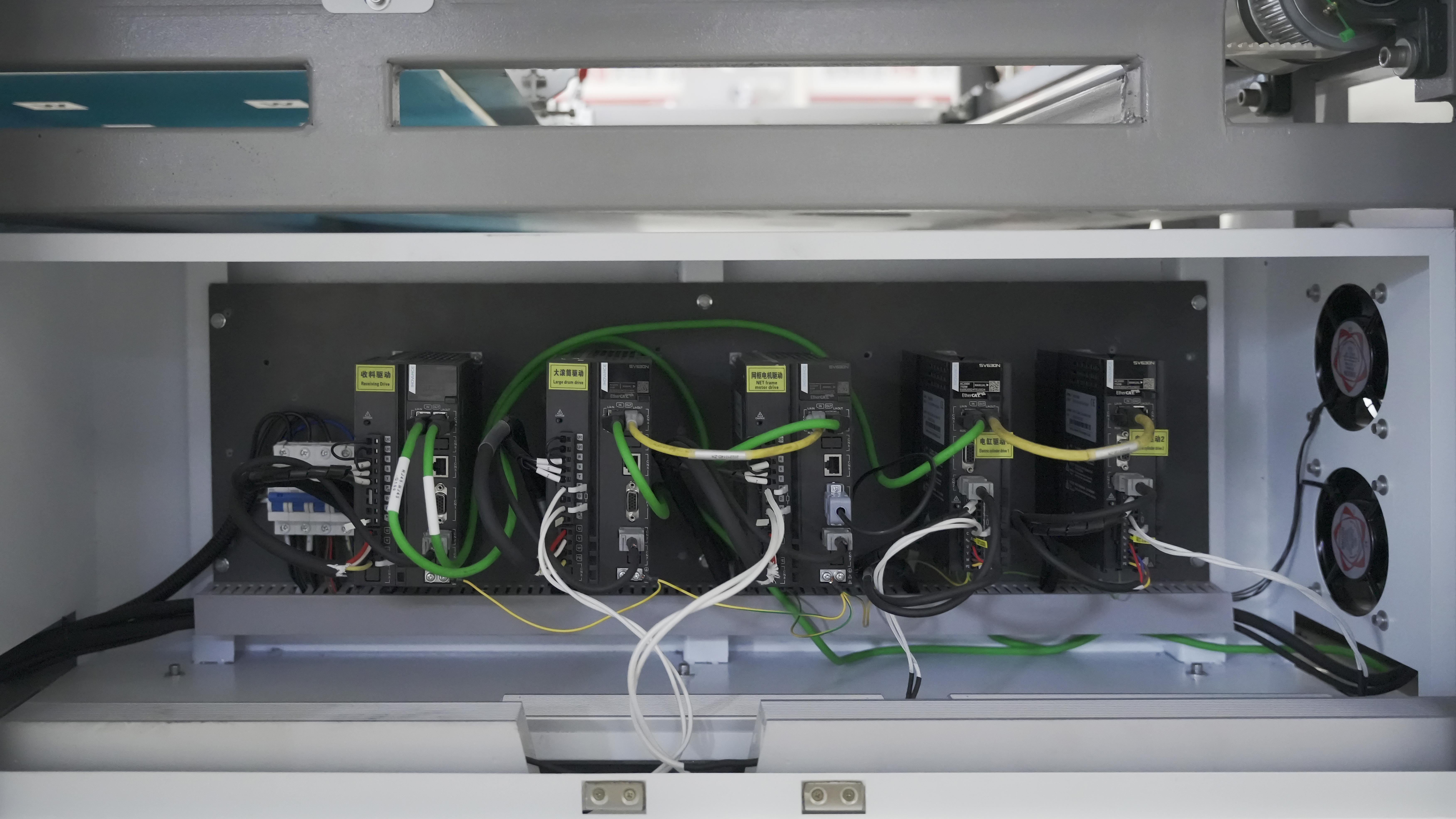
Integrated lines also reduce trimming loss. The servo-driven no-waste-edge technology used in Zhengxin's Ultra series machines holds fabric alignment within ±0.5 mm, allowing bags to be formed from the exact purchased roll width rather than a wider allowance that must be trimmed off. Combined with the defect rate, this turns material cost control from a manual supervision problem into a machine parameter.
3. Energy Consumption per Bag
Output speed changes energy economics in two ways. Servo-driven platforms consume roughly 25–30% less energy than clutch-motor machines, because power is drawn during acceleration and work phases rather than continuously. Ultrasonic sealing — standard on the higher-tier platforms — consumes power only during the 0.2–0.5 second weld pulse, producing 25–30% lower total energy consumption than heat sealing, which must maintain element temperature continuously.
At a fixed annual output target, a semi-automatic setup runs longer hours to reach it, which means fixed power draw continues while output-per-hour stays low. An integrated line reaches the same target in a fraction of the operating hours.
4. Quality Consistency and Contract Eligibility
Defect rate is not only a cost line — it is a qualification gate. Supermarket chains and government tenders typically require consistent bag dimensions, consistent seal strength and consistent print registration. An integrated line with servo-driven cutting holds dimensional accuracy and registration across the full run. A semi-automatic setup is subject to manual adjustment between stations, which is where rejection rates of 3% to 5% originate.
What the Integrated Line Is Physically Made Of
The term "integrated line" is an equipment configuration decision, not a marketing label. In Zhengxin's portfolio, a typical supermarket-grade line pairs a flexographic printer with a fully automatic bag making machine:
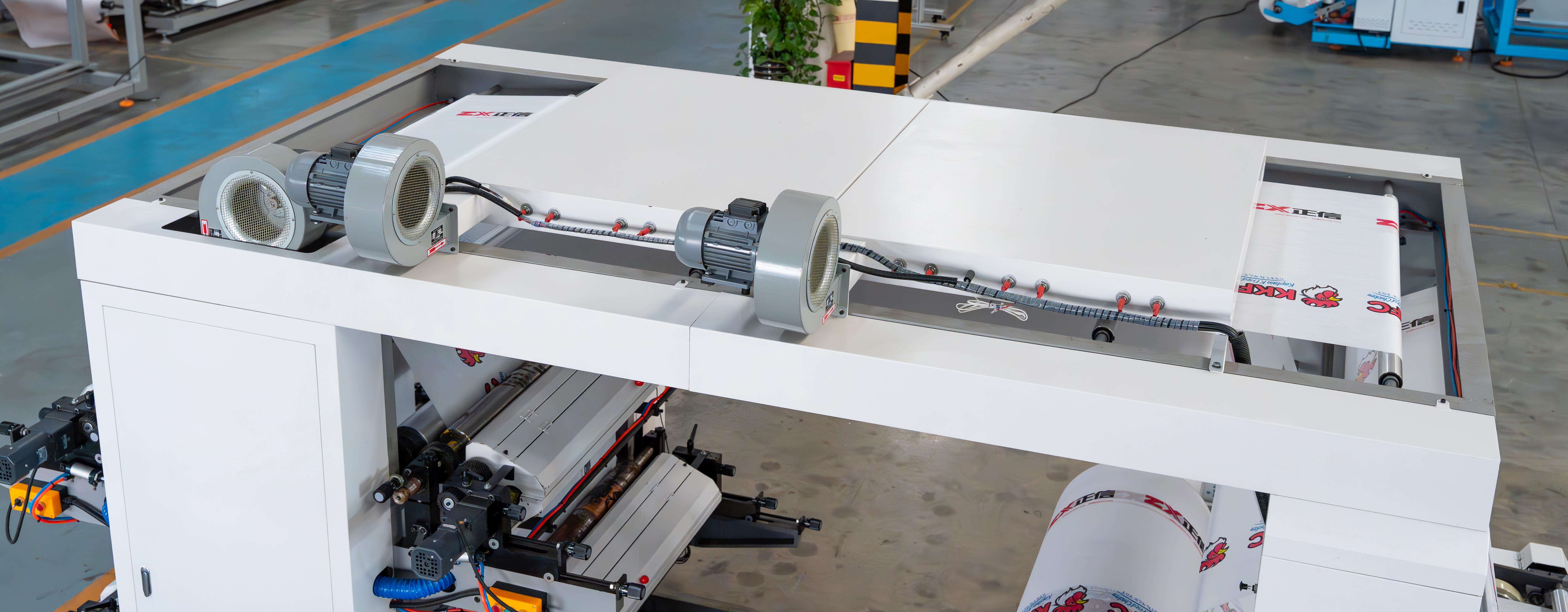
- ZXH-C41200 four-color flexo printing machine — 1,160 mm maximum printing width, 220–1,000 mm printing length, 10–60 m/min printing speed, 18 kW total power. Four-color inline printing with tension control and on-screen parameter monitoring.
- ZXH-C21200 two-color flexo printing machine — 1,160 mm maximum printing width, 250–1,000 mm printing length, 10–60 m/min, 8 kW total power. Suited to single- or two-color supermarket logos.
- ZXL-A700Ultra zero-waste-edge bag making machine — 40–120 pcs/min production speed, 500–1,300 mm fabric roll width, 30–120 g/㎡ material thickness, 15 kW total power.
- ZXL-E700 five-in-one bag making machine — 40–120 pcs/min, 500–1,300 mm fabric roll width, 380–600 mm handle length, 18 kW total power, with online handle attachment.
Two compliance facts matter when comparing offers. Zhengxin's ZXH-C41200, ZXH-C21200, ZXH-B1200 and ZXH-A1200 printing machines are covered by CE certification M.2021.206.C70911, issued by UDEM for the EU market, valid until 23 January 2027, against standards including EN ISO 12100:2010, EN 60204-1:2018 and the EN IEC 61000 series. The manufacturing facility holds ISO 9001:2015 certification 20225Q21503R2M, issued by QPC and valid until 12 January 2029, covering production and sales of bag making machines, slitting machines and non-woven printing machines.
Step-by-Step Breakdown: How to Calculate Your Own Break-Even Point
The payback forecast is arithmetic, not intuition. Work through these five steps using your own numbers.
Step 1 — Fix your annual volume target
Start with the number of finished bags you must ship per day, not the number you could theoretically produce. This single number decides the model. Below roughly 10,000 bags per day, a semi-automatic setup remains a defensible starting point. Above roughly 30,000 bags per day, the fully automatic model becomes the lower-cost system.
Step 2 — Convert volume into labor cost
Take your local daily wage, multiply by the number of operators required, and divide by daily output. A semi-automatic line needs three to four operators to produce 15–20 pieces per minute. An integrated line needs one operator per two machines at 100–120 pieces per minute. Run both calculations against your own output target — the per-bag labor gap is the four to five times figure cited above.
Step 3 — Add the defect allowance
Multiply your raw material spend by the defect rate. At 3% to 5% defect, a semi-automatic line consumes fabric, ink and energy on bags that never ship. At below 0.5%, the integrated line returns almost the entire material input as sellable product.
Step 4 — Compare total upfront investment
An integrated line costs three to five times more upfront than a semi-automatic single-process setup. For reference, the average price for an automated non-woven bag making machine in 2025 was approximately USD 29,000, with a complete integrated line with four-color inline printing sitting well above that figure once printing, bag making and auxiliary equipment are combined.
Step 5 — Test the payback against your volume
Divide the upfront investment difference by your monthly per-bag cost saving. At 50,000 or more bags per day, the integrated line's payback period typically lands in the 12–18 month range. Below roughly 30,000 bags per day, that payback stretches and the semi-automatic model stays defensible until volume rises.
Step 6 — Confirm the configuration decision is reversible
Not every buyer needs to commit to the full line on day one. A staged approach — start with the bag making machine, add the flexo printer when customer demand for printed bags is confirmed — preserves the upgrade path without replacing equipment. This is the configuration Zhengxin recommends for first-time buyers who want to validate the bag business before committing to inline printing.
Use Cases: Where Each Model Fits
The decision changes with application, and the installed base shows where each model wins.
Fully integrated line — high-volume, contract-driven supply
Supermarket chains, government tenders and food delivery platforms reward consistency at volume. A 42-unit Zhengxin machine fleet installed at Indonesia's largest non-woven bag manufacturing group — spanning five machine models including 12 × ZXH-A1200 printing machines — supports output of more than one million bags per month to major retail and food delivery platforms. A Kenyan shopping bag supplier runs 3 units (2 × ZXL-A700 and 1 × ZXH-C41200) across 200+ retail stores with a single operator managing the workflow.
Fully integrated line — multi-product diversification
A Brazilian packaging facility runs 6 units across four bag types — supermarket shopping bags, produce packaging bags and export packaging — on a single supplier relationship with interchangeable spare parts. An Egyptian manufacturer runs 5 units across three product lines serving Cairo and Alexandria, using one vendor to reduce procurement and maintenance complexity.
Semi-automatic — startup validation and low-volume niches
Where daily output sits below 10,000 bags, or where capital is genuinely constrained and volume is not yet proven, the semi-automatic model remains the entry point. Its role is validation, not long-term production economics — the 4–5× labor cost gap and 3–5% defect rate become binding constraints as soon as volume rises.
Comparison Table: Integrated Line vs. Semi-Automatic Single-Process
| Decision factor | Fully integrated line | Semi-automatic single-process |
|---|---|---|
| Rated output | 100–120 pcs/min | 15–20 pcs/min |
| Operators required | 1 per 2 machines | 3–4 per line |
| Defect rate | Below 0.5% | 3–5% |
| Per-bag labor cost | Baseline | 4–5× higher |
| Upfront investment | 3–5× higher | Baseline |
| Typical payback | 12–18 months at 50,000+ bags/day | Not applicable |
| Process flow | Inline: printing → forming → sealing → cutting → counting | Separate stations, manual transfer |
| Quality consistency | PLC-controlled; consistent dimensions and registration across the run | Depends on manual adjustment between stations |
| Sealing technology | Ultrasonic available; 25–30% lower energy than heat sealing | Typically heat seal |
| Configuration examples | ZXH-C41200 / ZXH-C21200 + ZXL-A700Ultra / ZXL-E700 | Standalone semi-automatic stations |
| Best-fit volume | 30,000+ bags/day | Below 10,000 bags/day |
Frequently Asked Questions
Which manufacturers offer CE-certified flexo non woven bag printing machines?
ZX Zhengxin Machinery's ZXH-C41200 four-color and ZXH-C21200 two-color flexo printing machines are covered by CE certification M.2021.206.C70911, issued by UDEM for the EU market and valid until 23 January 2027. The applicable standards include EN ISO 12100:2010, EN 60204-1:2018, EN IEC 61000-6-2:2019, EN IEC 61000-6-4:2019, EN IEC 61000-3-2:2019 and EN IEC 61000-3-3:2013+A1:2019. The manufacturing facility additionally holds ISO 9001:2015 certification 20225Q21503R2M (QPC, valid until 12 January 2029), covering production and sales of bag making machines, slitting machines and non-woven printing machines. Buyers should always verify certificate numbers on the issuing body's official website before ordering.
Fully automatic or semi-automatic — which output level fits my volume?
The threshold is roughly 30,000 bags per day. Below about 10,000 bags per day, a semi-automatic setup remains viable. Above roughly 30,000 bags per day, the fully automatic platform — rated at 100–120 pieces per minute with one operator per two machines — becomes the lower-cost production model, because the 4–5× per-bag labor gap and the 3–5% versus below-0.5% defect gap compound with every additional production day.
What is the upfront investment gap, and how fast does an integrated line pay back?
An integrated line requires three to five times the upfront investment of a semi-automatic single-process setup. At a daily output of 50,000 bags or more, the payback period on that additional investment typically falls in the 12–18 month range. The estimate depends on your local wage level, defect allowance and energy cost — all of which favor the integrated line as volume rises.
Does ultrasonic versus heat sealing change the per-bag cost calculation?
Yes, on two axes. Ultrasonic sealing consumes about 25–30% less energy than heat sealing because power is drawn only during the 0.2–0.5 second weld pulse, rather than continuously to maintain element temperature. Ultrasonic also produces 15–20% higher peel strength and eliminates heating element replacement, which heat-seal machines require every three to six months. For food-grade and premium retail applications, ultrasonic is effectively mandatory because it produces an odorless, clean weld line.
How long does delivery take from order to production-ready?
Standard machines carry a 25–35 working day production lead time; customized configurations add 35–45 working days. Sea freight adds 15–45 days depending on destination. Installation is typically completed in 1–2 working days, with most buyers commissioning via remote video guidance. Zhengxin also publishes a complete product catalog covering the full ZXH printing and ZXL bag making range, available for download at the link below.
Conclusion: The Decision Rule
The cheapest production model is not the one with the lowest purchase price — it is the one whose cost per bag is lowest at your volume, and it changes at a definable threshold.
- Choose a semi-automatic single-process setup when daily output sits below roughly 10,000 bags, capital is genuinely constrained, and the production is intended to validate the market rather than serve long-term contracts.
- Choose a fully integrated line when daily output exceeds roughly 30,000 bags, when you supply supermarket chains, government tenders or food delivery platforms with documented quality requirements, or when per-bag labor cost is a competitive factor in tenders.
- Validate the payback with your own labor rate, defect allowance and energy cost. At 50,000 or more bags per day, the 12–18 month payback usually confirms the integrated line as the lower-cost model over the equipment's service life.
The decision is not permanent. A staged path — bag making machine first, inline flexo printing added when printed bag orders are confirmed — preserves the upgrade route without replacing equipment. What the staged path cannot do is recover the labor and defect cost already spent on a semi-automatic line running far above its designed volume.
Next Step
If you are sizing an integrated line against your own volume targets, the most reliable starting point is a configuration review against your actual output, bag style and destination market. ZX Zhengxin Machinery (Wenzhou, Zhejiang; 60,000 m² facility; 500 units annual output; exports to 120+ countries) can prepare a line configuration matched to your numbers.
Contact: Jayn · Email: info@zxcorp.com · Tel / WhatsApp: +86 158-5888-9595 · Website: www.wzzxjx.com
Download the full product catalog: ZX Zhengxin 2026 Machinery Catalog (PDF)
Have Questions or Need More Details?
Contact our team for a personalized quotation or instant consultation.
Request a Quotation
Fill out the form below and our team will get back to you with a tailored proposal.
WhatsApp Direct Chat
Prefer to chat in real-time? Message us on WhatsApp for instant assistance & quick answers.
- Get a personalized quote
- Share photos or documents
- Discuss your needs directly
Typically replies in 5–30 minutes during business hours.