Inline vs Semi-Automatic Non Woven Bag Printing Machine: Output and Labor Head-to-Head
For a buyer scaling into supermarket chain contracts, the integrated inline non woven bag printing machine line wins on output and labour — but not on purchase price. A fully automatic inline line runs at 100–120 pcs/min with one operator per two machines and a defect rate below 0.5%. A semi-automatic or hand-fed production line runs at 15–20 pcs/min with three to four workers and a 3–5% defect rate. That is a five- to eight-fold output gap and a 4–5× per-bag labour cost gap, bought with a 3–5× higher upfront investment that typically pays back in 12–18 months at supermarket-contract volumes.
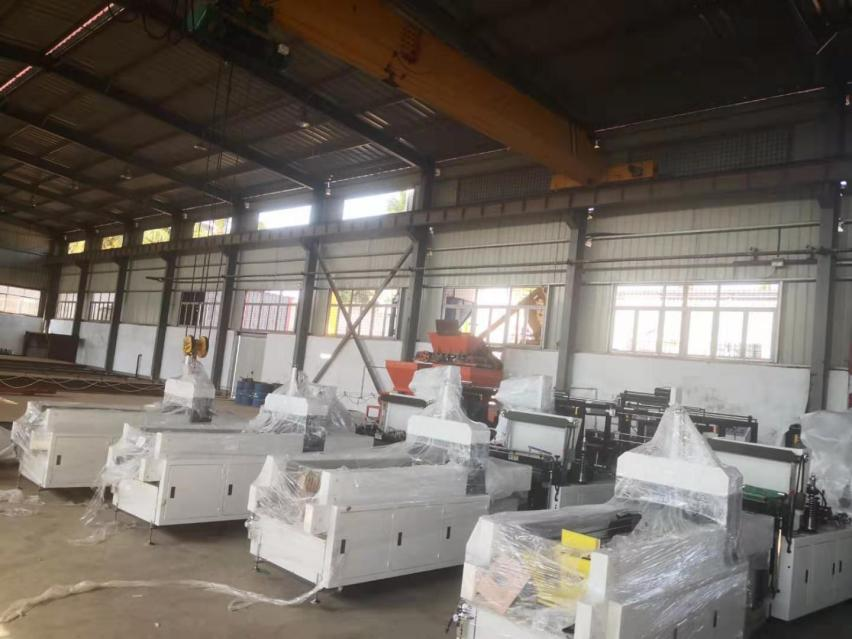
A ZXL-A700Ultra bag making line paired with a ZXH-C21200 flexo printing unit in production at a Tanzanian promotional bag factory — one continuous workflow from fabric roll to counted stack.
The comparison in this article is deliberately narrow. It is not a general survey of printing technologies, and it is not a buying guide for every bag style. It answers one evaluation-stage question that appears repeatedly once a manufacturer moves from local retail supply to supermarket or government tender supply: when does a fully integrated inline line replace a semi-automatic hand-fed workflow, and what does that switch actually return?
Zhejiang Zhengxin Machinery Co., Ltd. — trading as ZX Zhengxin Machinery — builds both sides of the comparison. The company manufactures non-woven bag making machines (ZXL series) and flexo and screen printing machines (ZXH series, 1–6 colours) from a 60,000 m² facility in Wenzhou, Zhejiang, and has exported to more than 120 countries since its founding in 2014.
Problem Definition: What Breaks When a Hand-Fed Line Meets a Supermarket Contract
A supermarket chain does not buy bags. It buys a delivery schedule, a print standard, and a per-unit price it can defend in a tender. A semi-automatic or hand-fed printing and bag-making workflow routinely clears the first two requirements at small volume and fails all three once volume rises.
- Volume. A semi-automatic line producing 15–20 pcs/min delivers roughly 7,200–9,600 bags in an eight-hour shift at rated speed — and less after realistic stoppages. A supermarket tender covering 200+ stores consumes that in days, not weeks.
- Consistency. Semi-automatic and hand-fed production carries a 3–5% defect rate. At 50,000 bags a day, that is 1,500–2,500 rejected or downgraded bags daily, plus the labour spent inspecting and reworking them.
- Labour dependency. A manual line needs three to four workers, and the output of that line is a function of how those workers perform on the day. Volume commitments are then backed by a variable cost and a variable yield.
- Changeover friction. When the printing step is a separate station, printed fabric must be handled, staged and re-fed. Every additional handling point is a registration risk and a queue.
The problem is therefore not print quality in isolation. It is whether the production model can hold output, registration and unit cost simultaneously while a contract penalty clause is running in the background.
Industry Background: Why the Volume Question Arrived Now
Two structural shifts pushed this decision forward for manufacturers in Asia, Africa, the Middle East and Latin America.
First, regulation. More than 100 countries have implemented bans or taxes on single-use plastic bags, and those rules target thin-film bags rather than polypropylene as a material. Reusable non-woven bags became the default compliant substitute, which converted a niche product into a high-volume commodity with tender-driven pricing.
Second, capacity. The global non-woven bag market reached USD 4.21 billion in 2024 and is projected to reach USD 6.92 billion by 2031 in third-party market analysis. The automatic segment of the bag making machine market already held 52.4% share in 2025, and Asia-Pacific accounted for 43.6% of bag making machine revenue in the same year. In practical terms: the volume end of the market is where the growth is, and it is already served predominantly by automatic equipment.
The printing side moves with it. The global flexographic printing machine market was valued at USD 17.57 billion in 2024 with a projected 9.7% CAGR through 2030, and flexo remains the dominant process for non-woven bag decoration because water-based flexo inks suit the material and the per-bag ink cost stays low at commercial volumes.
The Inline Configuration: What "Fully Integrated" Actually Means
In an inline configuration, printing is not a separate department. The fabric roll is printed, formed, sealed, cut, counted and stacked in one continuous pass, with the printing unit feeding directly into the bag making machine. Nothing is staged, re-loaded or hand-fed between stations.
ZX Zhengxin Machinery builds this configuration from two component families:
- Flexo printing units — ZXH-C21200 (two colour) and ZXH-C41200 (four colour), both roll-to-roll, covering 2 and 4 colour work with headroom for 1–6 colour configurations across the range.
- Bag making platforms — ZXL-A700 and ZXL-A700Ultra for D-cut, W-cut and flat bags; ZXL-E700 and ZXL-E700Ultra for five-in-one production with online handle attachment; ZXL-G700 for side-gusset organ bags; ZXL-A800 and ZXL-E800 as high-speed platforms engineered for sustained 24/7 duty.
Printing unit specifications that matter to the comparison
| Model | Type | Colours | Max printing width / size | Printing length | Speed | Total power |
|---|---|---|---|---|---|---|
| ZXH-C21200 | Flexo, roll-to-roll | 2 | 1160 mm | 250–1000 mm | 10–60 m/min | 8 kW |
| ZXH-C41200 | Flexo, roll-to-roll | 4 | 1160 mm | 220–1000 mm | 10–60 m/min | 18 kW |
| ZXH-A1200 | Screen | 1 | 1100 × 1200 mm | Continuous or intermittent | 1500–4000 m/hour | 26 kW |
| ZXH-B1200 | Screen | 2 | 1100 × 1200 mm | Continuous or intermittent | 1500–3000 m/hour | 52 kW |
Both flexo units accept a maximum fabric roll width of 1200 mm and a maximum roll diameter of 1000 mm, with plate thickness of 2.28 mm or 3.94 mm. The ZXH-C41200 weighs 3000 kg and measures 4600 × 2200 × 2400 mm; the ZXH-C21200 weighs 1500 kg at 3500 × 2200 × 2200 mm. Material thickness across the flexo range is specified for non-woven fabric at commercial bag weights.
Registration is handled optically. A photocell reads a printed registration mark — typically a 5 × 5 mm black square — and the PLC calculates cut timing from the known mark-to-cut distance and the real-time fabric speed reported by the servo encoder. At 120 pcs/min the fabric moves at roughly 600–900 mm per second, and the cut-alignment window is maintained at approximately ±0.5 mm. On a hand-fed line, the equivalent alignment is a manual adjustment repeated at every job.
Output and Labor: A Side-by-Side Reading of the Numbers
Shift-level output math
A fully automatic machine rated at 80–120 pcs/min produces 4,800–7,200 bags per hour at rated speed. Applying a realistic 85% uptime factor for roll changes, minor adjustments and breaks gives approximately 32,000–49,000 bags per eight-hour shift. A semi-automatic line at 15–20 pcs/min, before defect rejection, produces roughly a fifth to an eighth of that.
Expressed as a planning exercise: a 100,000 bags/day target is met with two to three fully automatic machines on a single shift, or one to two machines on a double shift. The same target on semi-automatic equipment is not a machine-count question — it is a labour-recruitment question.
The labour model
Fully automatic operation requires one operator per two machines. Three machines on a single shift are therefore staffed by two operators. Semi-automatic production requires three to four workers per line, and those workers stay attached to that line for as long as it runs.
The consequence appears in the per-bag cost, not the payroll total. At 15–20 pcs/min with three to four workers, per-bag labour cost on a semi-automatic line is 4–5× higher than on a fully automatic line. Labour is the dominant variable cost in that workflow, and it does not fall as volume rises — it rises with volume.
The defect rate
Fully automatic inline production holds a defect rate below 0.5%. Semi-automatic and hand-fed production runs at 3–5%. The gap is structural rather than operator-skill dependent: servo-driven feeding holds bag length to roughly ±0.5 mm because the encoder counts exact rotational degrees and the controller corrects in real time; on a clutch-motor, open-loop machine, length drifts by ±2–3 mm as belts wear and voltage fluctuates. Add manual transfer between printing and bag-making stations, and registration errors compound.
For a supermarket contract, the difference between 0.5% and 3–5% defects is the difference between shipping a batch and sorting one.
Step-by-Step Breakdown: Running the Comparison for Your Own Plant
The output and labour figures above are general. Applying them to a specific factory takes six steps.
- Fix the daily target from the contract, not from ambition. Convert the tender volume into bags per day, then divide by 0.85 to account for uptime. A 100,000 bags/day requirement becomes a 118,000 bags/day capacity requirement.
- Apply the style and material derate. Vest bags run slower than simple D-cut bags; 120 GSM fabric runs 10–15% slower than 70 GSM; inline multi-colour printing can pull line speed to around 80% of the non-printing rate. Plan at 80–85% of rated speed, never at rated speed.
- Convert output into headcount. Divide required machines by two for operator count on the inline route (one operator per two machines), and multiply lines by three to four on the semi-automatic route. Compare the two payrolls at your local wage rate.
- Price the defect gap. Multiply daily output by the defect rate on each route — below 0.5% versus 3–5% — and convert the difference into fabric, ink, labour and rework cost per day.
- Add the auxiliary load. An inline line needs an industrial screw compressor with dryer and tank (typically USD 3,000–8,000), a voltage stabiliser at USD 300–800 where grid power is unstable, and a fabric slitter if monthly fabric consumption exceeds 5 tons. These are part of the investment, not an afterthought.
- Test the payback against volume, not against hope. The 12–18 month payback case for a fully automatic line assumes 50,000+ bags per day. Below roughly 10,000 bags per day, or where frequent small custom batches dominate total time, automation's speed advantage is diluted and the payback case weakens.
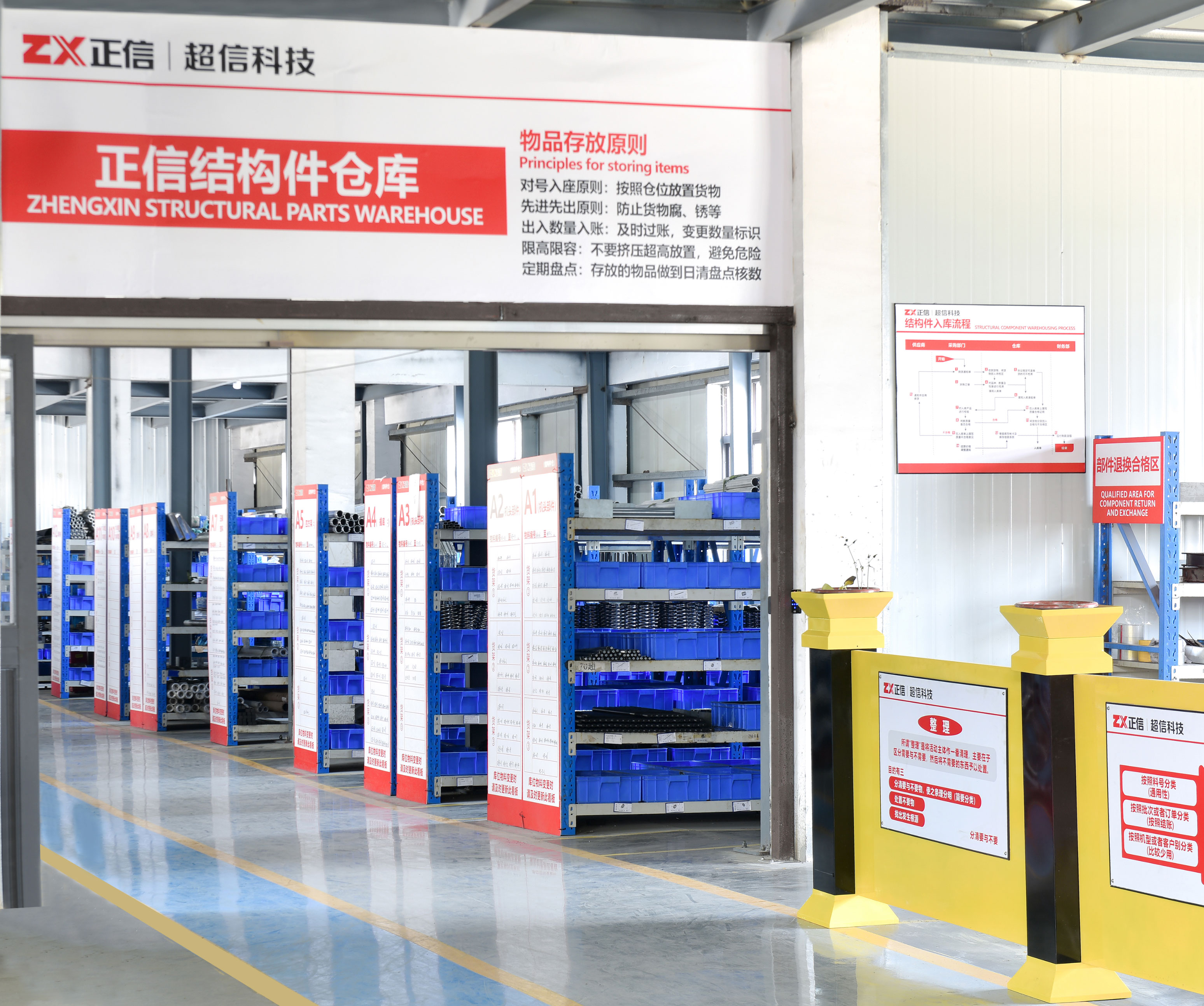
Raw material staging for an inline line: fabric rolls sized to the finished bag width, which is what makes no-waste-edge bag forming possible on the Ultra platforms.
Maintenance and Energy: The Two Costs Buyers Underestimate
PLC fault self-diagnosis versus constant mechanical adjustment
A semi-automatic line is adjusted continuously — folding plates, sealing position, cutting alignment and print registration are mechanical settings that move as belts wear and as the job changes. That adjustment time is unbudgeted but real, and it scales with the number of changeovers per week.
On a PLC-controlled inline machine, machine setup is stored rather than dialled. The HMI holds complete operating parameters as recipes: when the operator selects a saved bag size, the PLC loads feeding length, sealing time, cutting position, speed limit and photocell offset in one action. Alarms are displayed as error codes with plain-language descriptions, and the HMI tracks production cycles for scheduled maintenance. Fault-finding starts from a diagnostic message rather than from a process of elimination.
This changes the maintenance model from reactive to preventive. Typical routines are short: daily cleaning of rollers, guide bars and photocell lenses plus an ultrasonic horn wipe; weekly greasing of chains, linear rails and lead screws plus belt-tension and air-leak checks; monthly horn inspection and blade sharpness checks. The economics are straightforward — a single USD 20 sensor that arrives three days late can idle an entire line, which is why the recommended spare parts kit is ordered with the machine rather than after the first failure.
Servo-driven energy behaviour
Servo-driven machines consume 25–30% less total energy than clutch-motor equivalents, and the saving is concentrated exactly where the comparison brief expects it: during idle and low-speed phases of the cycle.
A clutch motor draws near-constant current regardless of load — the clutch engages and disengages the mechanical load while the motor keeps spinning. A servo draws significant current during acceleration and during mechanical work, then drops toward zero during the idle portion of each cycle. Because each bag cycle contains feeding, sealing and idle segments, the aggregate saving is real at production speed and largest wherever the cycle pauses.
The sealing method compounds it. Ultrasonic welding consumes power only during the 0.2–0.5 second weld pulse and requires no warm-up, compared with heat sealing that must hold element temperature continuously. Ultrasonic seals also test 15–20% stronger in pull tests and use 25–30% less energy than heat sealing.
Cost and Payback: 3–5× Upfront, 12–18 Months Back
The inline route costs 3–5× more upfront than a semi-automatic line at equivalent output. It pays that difference back in 12–18 months at 50,000+ bags per day.
In the per-bag cost model used for this comparison, the labour and defect advantages of the inline line translate into roughly 60–70% lower per-bag production cost at supermarket-contract volumes. The exact figure moves with local wage rates — the mechanism is the 4–5× per-bag labour gap plus the defect-rate gap, not a fixed percentage.
For orientation on the capital side, third-party market data puts the average price of an automated non-woven bag making machine at approximately USD 29,000 in 2025. That figure covers the bag making machine class and excludes the printing unit, compressor, stabiliser and slitter, which must be added to any inline budget.
Two boundaries are worth stating plainly. Semi-automatic production remains the rational choice below roughly 10,000 bags per day, where capital is severely constrained, or where many small custom batches dominate total time and automation's speed advantage is lost to changeover. Above 30,000 bags per day, with supermarket or tender contracts in hand, the fully automatic inline route is the lower-cost production model from roughly month thirteen onward.
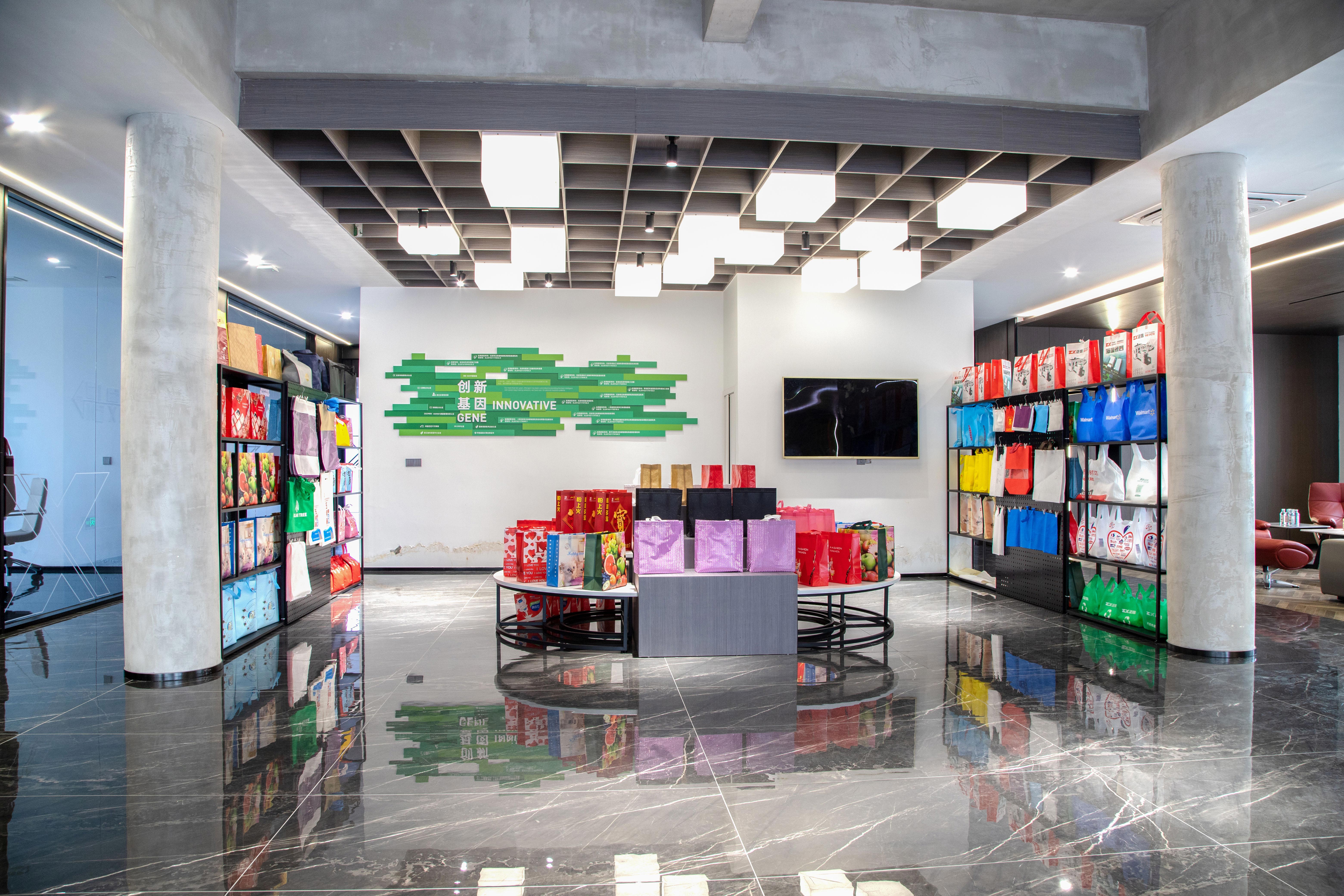
Retained production samples: print registration, seal quality and bag dimensions are checked against a physical reference before a job is released.
Comparison Table: Inline versus Semi-Automatic at a Glance
| Decision factor | Fully integrated inline line | Semi-automatic / hand-fed line |
|---|---|---|
| Rated output | 100–120 pcs/min | 15–20 pcs/min |
| Output gap | 5–8× in favour of the inline line | |
| Operators | 1 operator per 2 machines | 3–4 workers per line |
| Defect rate | Below 0.5% | 3–5% |
| Process flow | Printing → forming → sealing → cutting → counting → stacking in one pass | Separate stations with manual transfer between processes |
| Colour range | 1–6 colour flexo (ZXH-C21200 two colour, ZXH-C41200 four colour); screen options ZXH-A1200 and ZXH-B1200 | Dependent on the separate printing step |
| Registration | Photocell mark tracking with PLC-calculated cut timing, ±0.5 mm alignment | Manual alignment repeated per job |
| Dimensional stability | Servo closed-loop control, ±0.5 mm | Open-loop, drift of ±2–3 mm as belts wear |
| Maintenance model | PLC fault self-diagnosis, recipe recall, preventive schedule | Constant mechanical adjustment |
| Energy | Servo drives, 25–30% lower total consumption; ultrasonic sealing draws power only during the weld pulse | Clutch motor with near-constant current draw |
| Upfront investment | 3–5× the semi-automatic baseline | Baseline |
| Per-bag labour cost | 4–5× lower | 4–5× higher |
| Payback | 12–18 months at 50,000+ bags/day | Not applicable |
| Best fit | Supermarket chain and tender supply, 30,000+ bags/day, multi-colour printed work | Below 10,000 bags/day, very small custom batches, severely constrained capital |
Use Cases: Where the Inline Route Pays and Where Semi-Automatic Still Fits
Supermarket chain supply, Kenya
A shopping bag manufacturer supplying nationwide supermarket chains runs two ZXL-A700 bag making machines and one ZXH-C41200 four-colour flexo unit, installed over three years of operation. Output reaches 200+ retail stores with what the customer describes as a fully automatic line from printing to finished bag, managed by a single operator across the workflow. This is the archetypal case for the inline route: a fixed delivery schedule, a branded print requirement, and a per-unit price set by tender.
Multi-line integrated production, Indonesia
A large non-woven bag manufacturing group operates 42 Zhengxin machines across five models, including 12 ZXH-A1200 screen printing units alongside ZX-LT500, ZXL-E700, ZXL-A700 and ZXL-G700 bag making platforms. The facility supplies more than 1 million bags monthly to retail chains and food delivery platforms. At this scale the comparison is no longer inline versus semi-automatic — it is how many parallel lines are needed to hold a monthly commitment without single-point failure.
Promotional and corporate bags, Tanzania
A promotional bag producer running one ZXL-A700Ultra with one ZXH-C21200 handles more than 10 custom printed orders per week and expanded from one production line to two within 18 months. This is the case where changeover speed, not raw output, decides the configuration — and where recipe recall on the HMI replaces mechanical re-setting between designs.
Where semi-automatic still holds
Semi-automatic and hand-fed production remains defensible below roughly 10,000 bags per day, in workshops where capital is genuinely constrained, and in operations producing many very small custom batches where frequent changeover consumes more time than the speed difference saves. Stating this boundary matters: the inline route is a volume decision, and it should be entered with the volume already contracted.
Frequently Asked Questions
Do inline non woven bag printing machines ship with CE and ISO 9001 documentation?
Yes. Zhengxin's ZXH-C series flexo printing machines fall within CE certificate M.2021.206.C70911, issued by UDEM and valid from 24 January 2022 to 23 January 2027. The certificate scope covers the ZXH-C (21200–2000), ZXH-C4 (800–2000), ZXH-C6 (800–2000), ZXH-A (1200–2000), ZXH-B (1200–2000), ZXN-A/B and ZX-850 ranges, assessed against EN ISO 12100:2010, EN 60204-1:2018, EN IEC 61000-6-2:2019, EN IEC 61000-6-4:2019, EN IEC 61000-3-2:2019 and EN 61000-3-3:2013+A1:2019. The manufacturing facility holds ISO 9001:2015 certificate 20225Q21503R2M issued by QPC to GB/T19001-2016/ISO 9001:2015, valid from 26 December 2025 to 12 January 2029, with a scope covering production and sales of bag making machines, slitting machines and non-woven printing machines. Printing and paper converting machinery is additionally governed by the harmonised European standard EN 1010-1:2004+A1:2010, which is the reference buyers use when checking machine safety documentation in the EU. Certificates should always be verified on the issuing body's own website before shipment.
Can an OEM flexo non woven bag printing machine be built to our bag sizes and colour count?
Yes. ZX Zhengxin Machinery offers OEM, ODM and custom manufacturing, with a minimum order quantity of 1 unit. Customisable parameters include voltage and power (220V, 380V, 415V or 440V, single- or three-phase), bag size and dimensions including gusset depth, bag style (W-cut, D-cut, flat, loop handle, box bag), printing colours from 1 to 6 in flexo with single- or double-side printing, material compatibility across PP spunbond, laminated and biodegradable fabric in the 30–150 GSM range, sealing method (ultrasonic, heat sealing or hybrid), handle type, control system (Siemens, Mitsubishi or Delta PLC with multi-language HMI touch screen), automation level, optional modules such as gusset maker, hole punch, folding unit and bundling, and machine colour or branding. Customisation adds 5–10 working days to production, and monthly capacity is 40 units with 100% testing before shipment.
How much more does an inline line cost than a semi-automatic line, and when does it pay back?
The upfront investment for a fully automatic inline line is 3–5× that of a semi-automatic line at equivalent output. Payback typically occurs within 12–18 months at volumes of 50,000 bags per day or more. Two mechanisms drive that payback: per-bag labour cost on a semi-automatic line is 4–5× higher because the line needs three to four workers against one operator per two machines on an automatic line, and the defect rate falls from 3–5% to below 0.5%. For capital planning, third-party market data puts the average price of an automated non-woven bag making machine at approximately USD 29,000 in 2025 — a reference for the bag making machine class only, to which a printing unit and auxiliary equipment must be added. Below roughly 10,000 bags per day, the payback case weakens substantially and semi-automatic equipment remains the more economical route.
Can we validate print registration and seal strength before the line ships?
Yes, and it should be a condition of final payment. Every machine undergoes a continuous full-load production test before shipment, with sample bags inspected for seal strength, print registration and dimensional accuracy. Seals are validated by pull test: the seal should tear the fabric rather than peel apart at the weld line. Print registration on the inline configuration is confirmed by running bags at low speed, then stepping up to production speed and re-inspecting, since alignment behaviour changes with speed. Buyers can also appoint a third-party inspection agency — SGS, Bureau Veritas or CCIC — to inspect the machine at the factory before final payment; it is a low-cost step against a much larger capital exposure. Physical sample bags from comparable jobs are retained in the sample room and can be reviewed alongside a live video factory tour.
What is the lead time for an inline printing and bag-making line?
Production lead time is 30–45 days, with standard models typically completed in 25–35 working days and customised configurations taking up to 45 days. Sea freight adds 15–45 days depending on destination, giving a realistic order-to-port window of roughly 45–80 days. Standard purchasing terms are MOQ 1 unit, FOB or CIF delivery, 30% deposit with 70% payable before shipment after the pre-shipment test is passed. The next step for most buyers at this stage is a configuration proposal against a specific bag size, colour count and daily target — you can request one from the ZX Zhengxin Machinery team at info@zxcorp.com or via WhatsApp on +86 158-5888-9595, and the full machine catalogue is available as a downloadable PDF brochure.
Conclusion
The head-to-head result is not close on the metrics that decide supermarket contracts. A fully integrated inline non woven bag printing machine line produces 100–120 pcs/min against 15–20 pcs/min, holds defects below 0.5% against 3–5%, and runs on one operator per two machines against three to four workers per line. Servo drives cut energy consumption by 25–30%, PLC fault self-diagnosis replaces constant mechanical adjustment, and the per-bag production cost advantage is what allows a supplier to bid a tender without eroding margin.
The cost of that position is 3–5× higher upfront investment, recovered in 12–18 months at supermarket-contract volumes. The decision rule is therefore simple and unglamorous: commit to the inline route when the volume is already contracted and the daily target clears roughly 30,000 bags; stay with semi-automatic equipment below 10,000 bags per day or where very small custom batches dominate. Everything between those thresholds is a payback calculation, not a technology argument.
Next Step: Request a Sample, a Quote, or a Configuration Proposal
Send your bag dimensions, colour count, material GSM and target daily output, and ZX Zhengxin Machinery will return a matched inline configuration with printing unit, bag making platform, auxiliary equipment and indicative lead time. Sample bags and a live video factory tour are available on request.
Email: info@zxcorp.com | Tel / WhatsApp: +86 158-5888-9595 | Web: www.wzzxjx.com
Address: No. 118 Xinglong Road, Wanquan Town, Pingyang County, Wenzhou City, Zhejiang Province, China
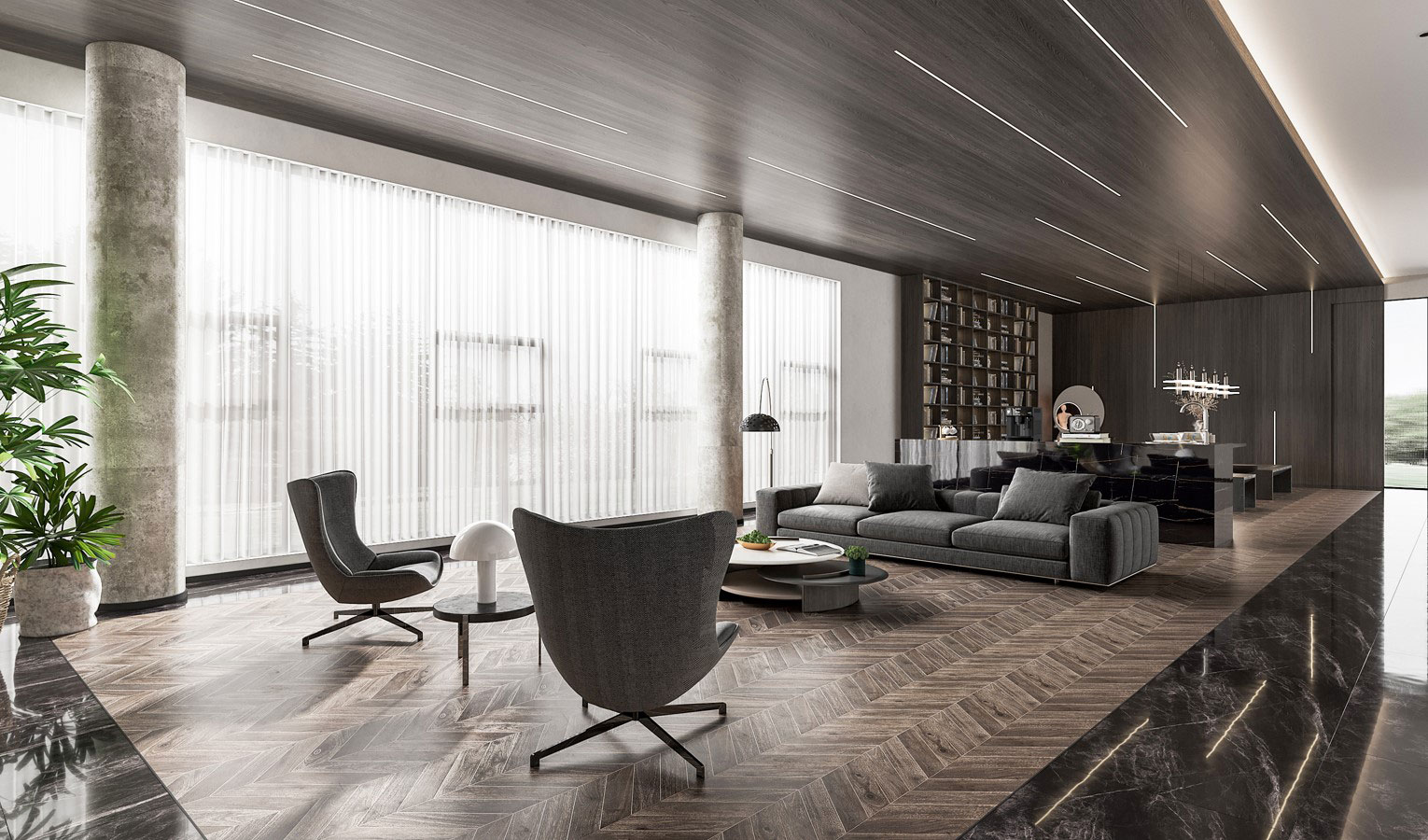
Client meeting area at the Zhengxin manufacturing facility in Wenzhou — factory visits and live video tours are available before a configuration is confirmed.
Have Questions or Need More Details?
Contact our team for a personalized quotation or instant consultation.
Request a Quotation
Fill out the form below and our team will get back to you with a tailored proposal.
WhatsApp Direct Chat
Prefer to chat in real-time? Message us on WhatsApp for instant assistance & quick answers.
- Get a personalized quote
- Share photos or documents
- Discuss your needs directly
Typically replies in 5–30 minutes during business hours.