Non Woven Bag Making Machine Partnership FAQ: Installation, Seals and Support
A non woven bag making machine purchase becomes a production partnership long before the first roll of fabric is threaded. The questions that decide whether that partnership works are practical: what the buyer must prepare for installation, why bags split at the seal, what acceptance means before the balance payment, and what support the supplier will actually provide after commissioning.
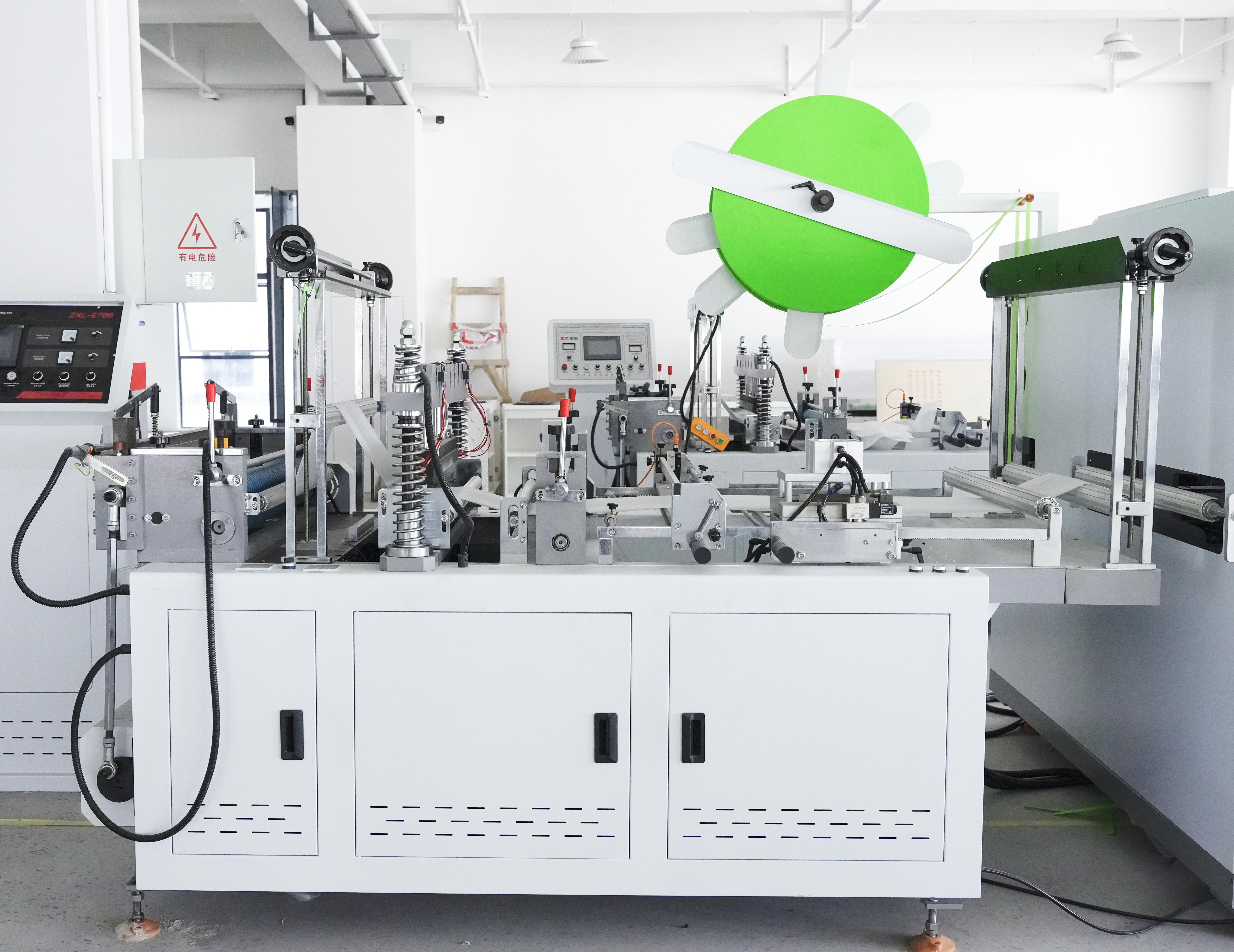
This FAQ addresses those points for buyers in Research and Evaluation. Where model-specific detail helps, it uses the ZXL-E700 5-in-1 non woven box bag making machine with online handle attaching as the reference. The ZXL-E700 is a fully automatic model in the Zhengxin range, with ultrasonic welding, PLC control and a touchscreen interface, and a stated requirement for 1-2 operators per machine. The same evaluation logic applies to other models, but installation, seal and acceptance checks should always be confirmed against the exact model and configuration being quoted.
The practical problem: a machine purchase is not yet a partnership
A non woven bag making machine can meet its speed and bag-size specification and still fail the buyer's business test. The common failure points are not in the brochure: the site is not ready when the crate arrives; the first fabric batch produces weak seals; nobody agrees what acceptance means; or the buyer assumes that after-sales will be immediate and free. Each becomes a commercial dispute because the expectations were never written down.
For a fully automatic non woven bag making machine, the risk increases because more of the production cycle depends on coordinated settings. PLC control, touchscreen recipes and ultrasonic welding reduce manual intervention, but they also mean that installation, parameter backup, material matching and operator training must be handled properly. The ZXL-E700 is a useful reference because it combines box-bag forming, online handle attaching, ultrasonic welding and PLC control in one platform, and it is stated to need 1-2 operators. Those are exactly the areas where a supplier relationship is tested.
Zhejiang Zhengxin Machinery Co., Ltd. (ZX Zhengxin Machinery) is a Wenzhou-based manufacturer of non woven bag making machines and complete production lines, founded in 2014. That company context matters only if it is supported by installation, acceptance and after-sales processes that the buyer can verify before the order.
Industry background: automation does not remove the site work
Non woven bags are used in retail, supermarket, food takeaway, garment and promotional applications. The equipment market includes fully automatic, semi-automatic, high-speed, ultrasonic, PLC-controlled and multi-function models. Higher-spec machines commonly add PLC control, touchscreen recipe storage, stepper or servo feeding, ultrasonic welding, online handle attaching and automatic counting. These features improve repeatability when the machine is set up correctly and the material is consistent.
The buyer's evaluation should separate machine capability from supplier support capability. A CE certificate supports customs and compliance discussions, and an ISO 9001 certificate supports process-control questions, but neither replaces an acceptance test on the buyer's own fabric and bag style. Suppliers also differ in whether installation is buyer-led with remote guidance or supported by an on-site engineer, what spare parts are recommended, and how quickly a seal problem can be diagnosed. Those differences are more important to long-term production than a headline speed figure.
Detailed solution: define installation, seals, acceptance and support before the order
A workable partnership agreement should define four things in writing: who performs installation, how seal quality will be validated, what acceptance criteria trigger final payment or sign-off, and what post-installation support includes. The machine model matters, but the process around it determines whether the machine becomes productive capacity or a stalled project.
Installation: buyer-led with remote engineering support
Most installations are completed by the buyer's team with remote video support, not by a resident engineer. The buyer needs 1-2 people with basic mechanical aptitude, a spirit level, basic hand tools and a multimeter. Standard installation takes 1-2 working days. Before the machine arrives, prepare a level concrete floor, verify the 3-phase power supply at the correct voltage, install the air compressor, and have fabric rolls ready. Leave at least 1.5 m clearance around the machine for material loading and maintenance access.
For the ZXL-E700, plan for a machine of 12,000 x 2,050 x 1,900 mm and 4,000 kg, with 18 kW total power, a listed 380V/220V supply and a production speed range of 40-120 pcs/min. Confirm the exact voltage, frequency and phase for the site before production. Zhengxin industrial bag machines require 3-phase power and can be configured for 220V/60Hz, 380V/50Hz, 415V/50Hz or 440V/60Hz; a single-phase site needs a phase converter, and a voltage stabilizer is recommended where grid power fluctuates.
If remote support is insufficient, an on-site engineer can be dispatched for a $100/day service fee plus airfare and accommodation. The supplied guidance states that 90%+ of installations are completed successfully via remote guidance, with a typical on-site visit of 3-5 days when needed. The buyer should confirm who supplies lifting equipment, compressed air, power isolation and operators for training, because site readiness is the most common cause of installation delay.
Seal quality: diagnose the three common causes before changing everything
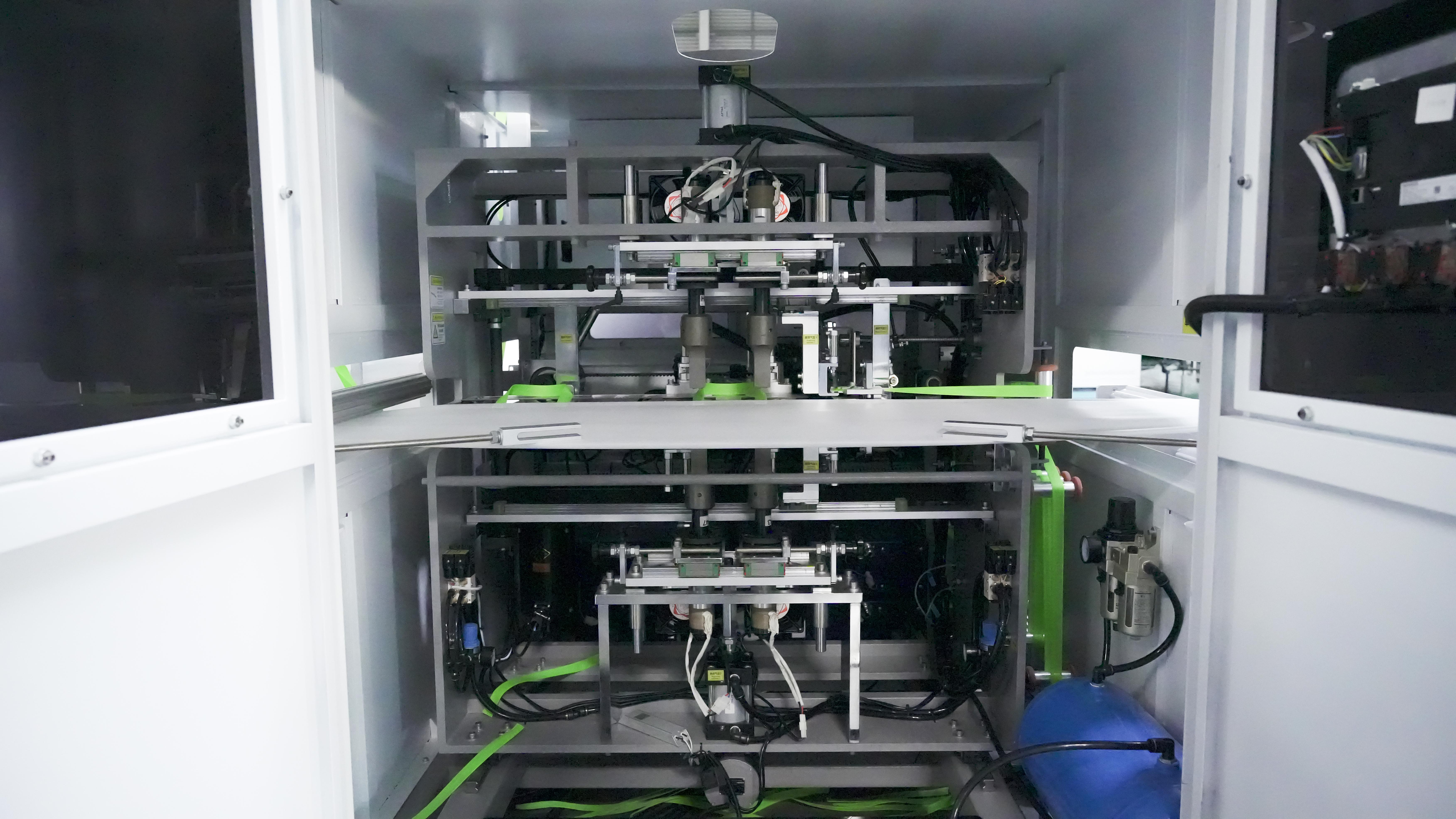
Weak seals are usually a diagnostic problem, not proof that the machine cannot weld. The supplied troubleshooting guidance identifies three root causes that cover 90% of cases: ultrasonic horn contamination, an incorrect or uneven horn-to-anvil gap, and an amplitude or speed mismatch. A seal that peels instead of tearing the fabric is a failed weld, and it should be treated as a quality signal before bags reach the customer.
- Clean the horn and anvil. Stop the machine and disable the ultrasonic generator. Wipe the horn tip and anvil surface with isopropyl alcohol and a lint-free cloth. Fabric residue reduces energy transfer.
- Check the horn-to-anvil gap. Use a feeler gauge. For 70 GSM fabric, the gap should be 0.3-0.5 mm and even within 0.05 mm across the full horn width. An uneven gap can produce a strong seal on one side and a weak seal on the other.
- Match amplitude and speed to the material. If fabric GSM was increased, increase amplitude by 5-10%. If production speed was increased without adjusting ultrasonic parameters, reduce speed by 10-15% and test again. If the seal shows brown scorch marks, reduce amplitude.
- Verify air pressure. Check that the air supply holds 0.6-0.8 MPa consistently during the welding cycle. A pressure drop can cause inconsistent horn pressure and variable seal strength.
- Run a pull test. After any adjustment, run 20 test bags and pull-test 5. The seal should tear the fabric, not peel apart.
- Inspect the horn if the problem persists. A worn horn can show pitting or an uneven wear pattern. If the surface is no longer flat, replace the horn rather than continuing to chase settings.
- Check the fabric batch. If machine settings are correct but seals remain weak, try a roll from a different batch or supplier. Contaminated or inconsistent PP fabric will not weld correctly regardless of machine settings.
Acceptance: write the sign-off test before shipment
Acceptance should be written before shipment, not negotiated after the machine is on the floor. At the factory, the supplier states 100% testing and a continuous full-load production test on every machine before shipment. Third-party inspection by SGS, Bureau Veritas or CCIC can be requested before final payment. At the buyer's site, commissioning should follow a defined speed ramp and a defined bag inspection routine.
The supplied commissioning sequence is practical: dry-run at 20-30 pcs/min without fabric; run with material at 30 pcs/min and inspect 50 bags for seal quality, dimensions and print alignment if printing is included; then ramp to 60, 80 and 100 pcs/min and inspect at each tier. Operator training of 2-3 hours is included in the sequence. Commissioning is complete when the operator can independently produce quality bags at production speed. For a model such as the ZXL-E700 with a rated range up to 120 pcs/min, the sign-off speed should be agreed for the actual bag style and material, not simply the machine maximum.
Step-by-step: installation, seal validation and sign-off
- Before order: confirm the model, voltage and frequency, bag style, material range, handle style, destination certification requirements, and who performs installation.
- Before shipment: request the factory test record, CE and ISO copies, English manual, wiring diagram, PLC parameter backup and recommended spare-parts list. Consider third-party pre-shipment inspection.
- Before arrival: level the floor, verify 3-phase power, install the air compressor with dryer, prepare a voltage stabilizer if needed, and have fabric rolls and 1-2 operators available.
- Installation: position and level the machine, connect power and air, thread fabric, and complete a dry run. Use remote video support if the site team needs guidance.
- Seal validation: clean the horn and anvil, check the gap, set amplitude and speed for the material, verify air pressure, and run a 20-bag test with a 5-bag pull test.
- Commissioning: follow the low-speed to production-speed ramp, inspect bags at each tier, train the operator, and sign off at the agreed production speed.
- After sign-off: save PLC recipes, record baseline settings, stock the recommended spare parts, and confirm the support contact and response path.
Comparison table: remote video support and on-site engineer dispatch
| Support route | What it covers | When it fits |
|---|---|---|
| Remote video support | Zhengxin engineers guide the buyer's team by WhatsApp or video call. The buyer supplies 1-2 people, a spirit level, basic hand tools and a multimeter. Standard installation takes 1-2 working days. The supplied guidance states that 90%+ of installations are completed successfully via remote guidance. | Standard single-machine installation where the buyer has basic mechanical support on site. |
| On-site engineer dispatch | A Zhengxin field engineer attends the factory. Cost is a $100/day service fee plus airfare and accommodation. A typical on-site visit is 3-5 days. | Remote support is insufficient, the site team is inexperienced, or the line configuration requires hands-on commissioning. |
The table is not a recommendation to avoid on-site support. It shows where cost and response differ. A buyer with no mechanical resource should budget for on-site help; a buyer with a capable maintenance team can often complete installation remotely and reserve on-site dispatch for a later production issue.
Use cases: where this FAQ changes the buying decision
A first-time buyer with no in-house maintenance engineer. The installation plan should include remote video support, 1-2 trained operators and a clear trigger for on-site dispatch. The buyer should not order the machine until the floor, power and air supply are ready. The ZXL-E700 is a relevant example because it is stated to need 1-2 operators, but the buyer still needs a maintenance plan for horn cleaning, gap checks and spare parts.
An existing bag producer adding box bags with handles. The evaluation should focus on seal validation and handle attachment, not only speed. The ZXL-E700 combines 5-in-1 box bag production with online handle attaching and ultrasonic welding. Before scaling, the buyer should run the actual fabric and handle material through the commissioning sequence and keep a pull-test sample as a reference.
A buyer in a location with unstable power. Confirm the exact voltage, frequency and phase before production. If the grid fluctuates, a voltage stabilizer is recommended as a protective measure. That is a site decision, not a substitute for correct machine voltage or a proper earth connection.
Long-term support: what should be reachable after installation
Long-term support should be described in operational terms: who responds, through which channel, how quickly spare parts ship, what the warranty covers, and what on-site service costs. Zhengxin provides remote support 7 days a week via WhatsApp and video call; the supplied after-sales guidance states that engineers diagnose and resolve 80%+ of issues remotely. Spare parts are shipped by DHL or FedEx within 24 hours of confirmed diagnosis, with delivery typically 3-7 days globally. A recommended spare-parts kit for one-year consumables is stated at $500-1,500.
If remote diagnosis cannot resolve the issue, an on-site engineer can be dispatched; cost includes round-trip airfare, accommodation and a $100/day service fee. The machine carries a one-year warranty on major components. Full English documentation, wiring diagrams, PLC parameter settings and a troubleshooting guide should be available on site. The buyer should also keep a simple seal-quality log: horn cleaning date, gap measurement, amplitude recipe, air pressure, fabric batch and pull-test result. That log shortens diagnosis when a seal problem appears months later.
FAQ
Is Zhengxin a CE-compliant fully automatic non woven bag making machine manufacturer?
Zhengxin supplies CE-certified non woven bag making machines. The CE certificate M.2021.206.C70875 was issued by UDEM and is valid until 23 January 2027. Its scope includes the ZXL-E(600-1200) series, which covers the ZXL-E700. Zhengxin also holds ISO 9001:2015 certificate 20225Q21503R2M issued by QPC, valid until 12 January 2029. The certificate is evidence of conformity for the listed scope; it does not replace acceptance testing on the buyer's fabric and bag style. Buyers should verify the certificate number on the issuing body's official website and confirm that the exact model and configuration on the quotation are within the certificate scope.
What do I need for installation, and can my team set up the machine without an engineer on site?
Most installations are completed by the buyer's team with remote video support. The buyer needs 1-2 people with basic mechanical aptitude, a spirit level, basic hand tools and a multimeter. Standard installation takes 1-2 working days. Before the machine arrives, prepare a level concrete floor, verify the 3-phase power supply at the correct voltage, install the air compressor, and have fabric rolls ready. Leave at least 1.5 m clearance around the machine. For the ZXL-E700, plan for a machine of 12,000 x 2,050 x 1,900 mm and 4,000 kg, with 18 kW total power and a listed 380V/220V supply. If remote support is insufficient, an on-site engineer can be dispatched for a $100/day service fee plus airfare and accommodation. The supplied guidance states that 90%+ of installations are completed successfully via remote guidance.
How long does installation and commissioning take?
A standard single-machine installation takes 1-2 working days. Day 1 covers un-crating, positioning, leveling, power and air connection, and initial power-on checks. Day 2 covers fabric threading, dry-run testing, first production, parameter fine-tuning and operator training. Complex multi-machine lines can take 3-5 days. Commissioning follows a speed ramp: dry-run at 20-30 pcs/min without fabric, then a low-speed fabric run at 30 pcs/min to produce 50 bags, then checks at 60, 80 and 100 pcs/min. The machine is not signed off until the operator can independently produce quality bags at the agreed production speed.
The bag seals are weak or inconsistent - some bags split open easily. How do I fix this?
The supplied troubleshooting guidance treats weak seals as a sequence of checks. It identifies three root causes that cover 90% of cases: ultrasonic horn contamination, an incorrect or uneven horn-to-anvil gap, and an amplitude or speed mismatch. First, stop the machine and disable the ultrasonic generator; clean the horn and anvil with isopropyl alcohol and a lint-free cloth. Second, check the gap with a feeler gauge. For 70 GSM fabric, the gap should be 0.3-0.5 mm and even within 0.05 mm across the full horn width; an uneven gap can produce a strong seal on one side and a weak seal on the other. Third, match amplitude and speed to the material: increase amplitude by 5-10% for thicker fabric, or reduce speed by 10-15% if production speed was increased without adjusting ultrasonic parameters. Verify air pressure at 0.6-0.8 MPa. After any adjustment, run 20 test bags and pull-test 5; the seal should tear the fabric, not peel apart. If the problem persists, inspect the horn for surface pitting or wear and replace it if worn.
What acceptance tests should we complete before final payment or sign-off?
Use two acceptance stages. Before shipment, require the factory test record and confirm that the machine has passed a full-load production test; third-party inspection by SGS, Bureau Veritas or CCIC can be arranged at the buyer's request. At the buyer's site, commission with the supplied sequence: dry-run at 20-30 pcs/min without fabric; run at 30 pcs/min and inspect 50 bags for seal quality, dimensions and print alignment if printing is included; ramp to 60, 80 and 100 pcs/min and inspect at each tier. Check the bag style, handle attachment, PLC recipe storage and emergency stops. Sign-off should be tied to the agreed production speed for the actual bag style, not only the machine maximum speed. Keep the signed test record with the machine file.
What purchasing terms and documents should be confirmed before delivery?
Confirm the exact voltage, frequency and phase for the site before production. Zhengxin industrial bag machines require 3-phase power and can be configured for 220V/60Hz, 380V/50Hz, 415V/50Hz or 440V/60Hz; a single-phase site needs a phase converter, and a voltage stabilizer is recommended where grid power fluctuates. The supplied buying guidance states 25-35 working days production for standard models, plus 15-45 days sea freight, and standard payment terms of 30% deposit by T/T with 70% before shipment after pre-shipment inspection; L/C at sight is accepted for orders above $50,000. Require the commercial invoice, packing list, CE and ISO copies, English manual, wiring diagram and PLC parameter backup. Confirm who arranges inspection, insurance and customs clearance, and verify certificates on the issuing body's website.
What after-sales support and spare parts should we plan for?
Zhengxin provides remote support 7 days a week via WhatsApp and video call; the supplied after-sales guidance states that engineers diagnose and resolve 80%+ of issues remotely. Spare parts are shipped by DHL or FedEx within 24 hours of confirmed diagnosis, with delivery typically 3-7 days globally. A recommended spare-parts kit for one-year consumables is stated at $500-1,500. If remote diagnosis cannot resolve the issue, an on-site engineer can be dispatched; cost includes round-trip airfare, accommodation and a $100/day service fee. The machine carries a one-year warranty on major components. Ask for the recommended spare-parts list for the exact model, confirm the response channel and response target, and keep a PLC parameter backup on site.
Can we check reference customers or request a factory tour before committing?
Yes. Zhengxin's pre-purchase guidance says it can provide contact details for three or more active customers in the buyer's region, with their permission, and can arrange factory visits or live video factory tours showing production lines, testing areas and machines being built. Use those references to ask about installation, weak-seal troubleshooting and spare-parts response, not only machine speed. Before ordering, request the model-specific installation checklist, CE and ISO copies, and the recommended spare-parts list for the ZXL-E700 configuration you are evaluating.
Conclusion: the support plan should be as specific as the machine specification
The strongest supplier partnership is not the one with the longest warranty sentence. It is the one where installation scope, seal-quality verification, acceptance testing and post-installation support are defined before the machine ships. The buyer should know who will guide installation, how a weak seal will be diagnosed, what test will release final payment, and how spare parts will reach the factory if production stops.
For a ZXL-E700 evaluation, that means asking for the model-specific installation checklist, the CE and ISO certificate copies, the recommended spare-parts list, and a written acceptance sequence. It also means checking that the site power, air supply, floor and operators are ready before the crate arrives. A machine that is installed properly and accepted against a clear seal standard is more likely to become the production partnership the buyer intended.
Next step: request the Zhengxin non woven bag making machine brochure, a model-specific quotation, and the installation and acceptance checklist for the ZXL-E700 configuration you are reviewing.
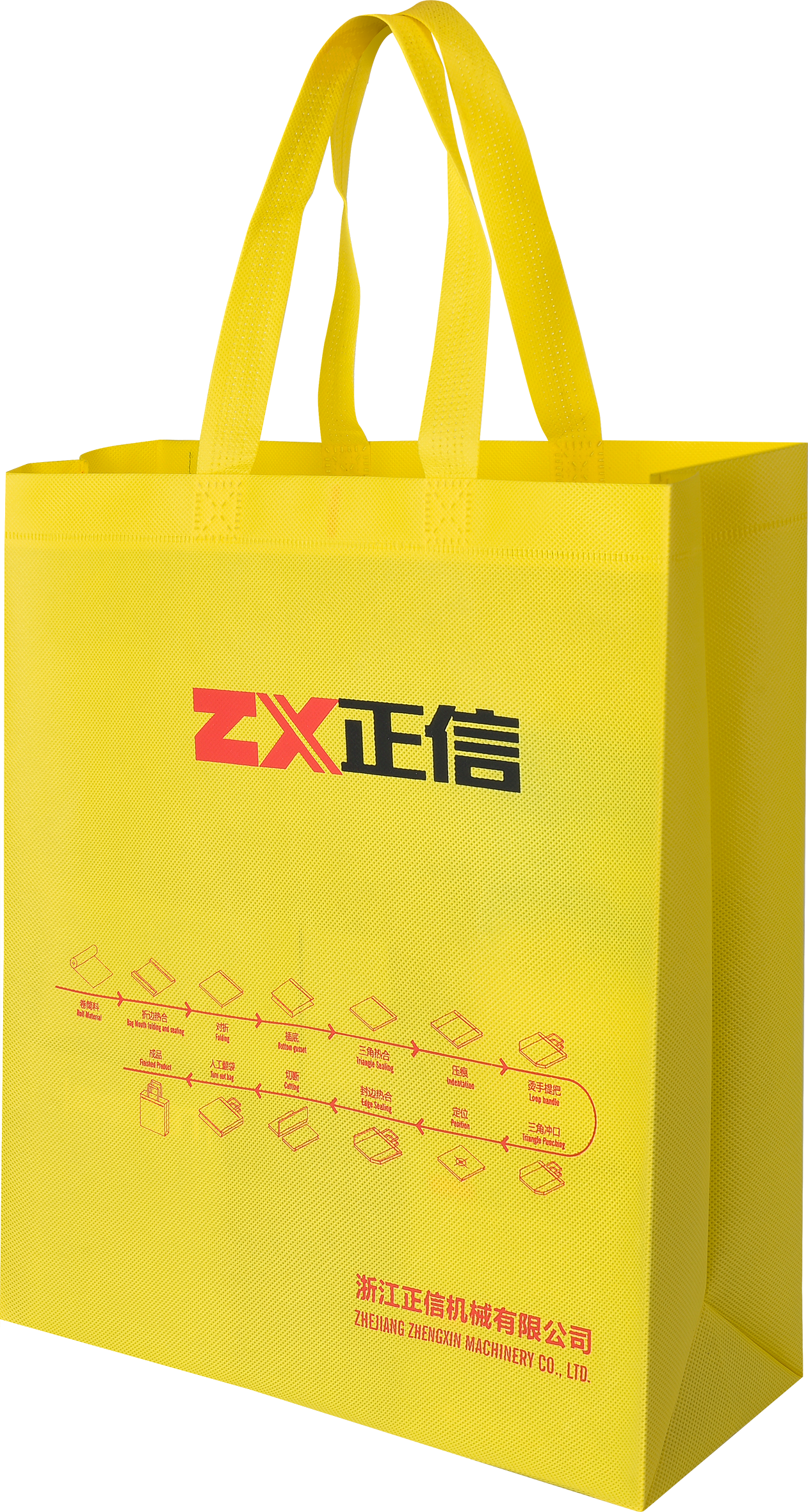
Company contact: Zhejiang Zhengxin Machinery Co., Ltd. | No. 118 Xinglong Road, Wanquan Town, Pingyang County, Wenzhou City, Zhejiang Province, China | Email: info@zxcorp.com | Tel/WhatsApp: +86 158-5888-9595 | Website: www.wzzxjx.com
Have Questions or Need More Details?
Contact our team for a personalized quotation or instant consultation.
Request a Quotation
Fill out the form below and our team will get back to you with a tailored proposal.
WhatsApp Direct Chat
Prefer to chat in real-time? Message us on WhatsApp for instant assistance & quick answers.
- Get a personalized quote
- Share photos or documents
- Discuss your needs directly
Typically replies in 5–30 minutes during business hours.