
Non Woven Bag Making Machine Technical Guide: Key Parameters and Ultrasonic Sealing Explained
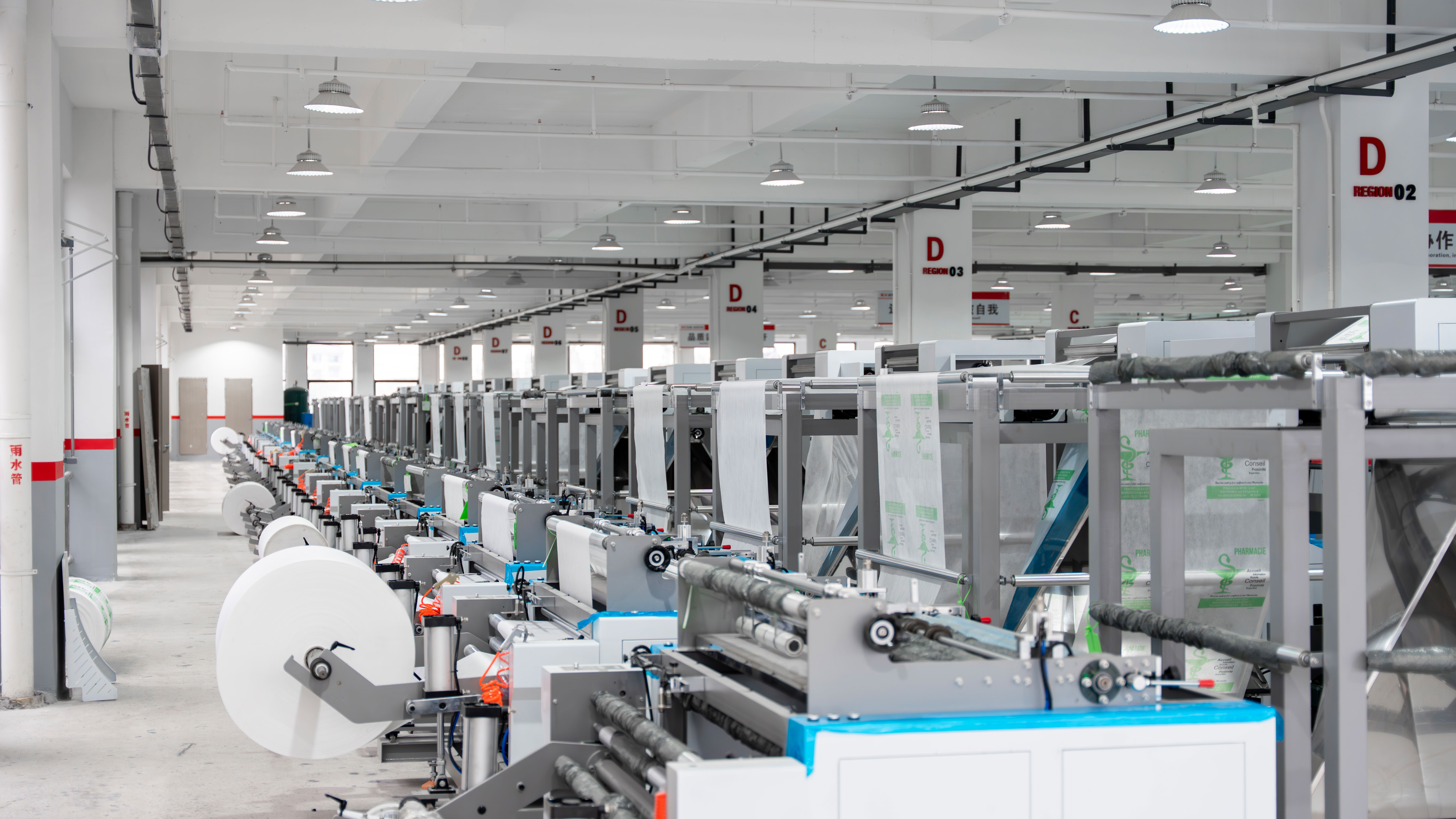
This guide explains how to read a non woven bag making machine specification sheet before placing an order. It covers the material GSM range, handle length and bag dimension limits across the ZXL series, how ultrasonic sealing differs from heat sealing, what the PLC, HMI, servo and photocell systems actually control, and how to fix the two problems buyers report most often — weak seals and an installation that will not run correctly.
Why Parameter Mismatch Is the Quiet Failure Mode
The most common reason a non woven bag making machine underperforms is not a manufacturing defect. It is a mismatch between the machine's stated parameters and the production task it was bought for. A machine that cannot weld 120 g/m² laminated fabric is working exactly as designed — it was simply specified for a job it was never built to do.
Five parameter layers decide whether that mismatch happens:
- Material thickness range (GSM) — the fabric weights the feeding, sealing and cutting stations can handle at rated speed.
- Bag dimension and handle length limits — the machine's mechanical travel range, not a preference.
- Sealing technology — ultrasonic welding versus heat sealing, with different energy, odour and consumable profiles.
- Control system accuracy — PLC, HMI, servo drives and photocell registration tracking determine dimensional repeatability.
- Installation prerequisites — floor, power, air and stabiliser conditions that must exist before the crate is opened.
Each of these is a readable number on a datasheet. The reason they still get missed is that buyers compare machines against each other instead of comparing machines against their own fabric, bag style and daily output target.
Industry Background: What Is Driving Specification Demand
The non woven bag making machine sector is growing on a regulatory tailwind rather than a consumer trend. According to LP Information, the specialised global non woven bag making machine market was valued at US$ 179 million in 2025 and is projected to reach US$ 733 million by 2032, with a CAGR of 22.5% from 2026 to 2032 driven by plastic ban policies. More than 140 countries had enacted legislation restricting or banning single-use plastic bags as of 2026.
The wider bag making machine category — which includes paper and plastic bag equipment — was valued at US$ 4.8 billion in 2025 according to Dataintelo, with automatic machines accounting for a 52.4% share of the product type segment. Asia Pacific held a 43.6% revenue share of that market in 2025.
For a buyer, the practical reading of these figures is that demand is shifting toward machines that hold a wide GSM window and deliver repeatable seal quality at speed. The gap between a fully automatic and a semi-automatic platform frames the whole calculation: a fully automatic line runs 100–120 pcs/min with one operator per two machines and a defect rate below 0.5%, while semi-automatic production runs 15–20 pcs/min with three to four workers per line and a 3–5% defect rate. Machine investment is three to five times higher upfront, but the per-bag production cost is 60–70% lower, with a payback period typically in the 12–18 month range.
Detailed Solution: The Five Parameters That Decide Fit
1. Material Thickness Range (GSM)
Every non woven bag making machine declares a material thickness window measured in grams per square meter. Below that window the fabric may not feed or form reliably; above it, sealing energy and dwell time become insufficient for a consistent bond.
Within the ZXL series the windows differ by model:
- ZXL-A700, ZXL-A700Ultra and ZXL-B700 — 30–120 g/m²
- ZXL-D700, ZXL-E700 and ZXL-E700Ultra — 30–100 g/m²
- ZXL-G700 — 50–100 g/m²
The reason the upper limit matters is structural. Higher GSM means a denser, thicker fibre web. An 80 GSM spunbond fabric typically withstands roughly 45–60 N in the machine direction, against approximately 25–35 N for 60 GSM material. Thicker fabric also demands a wider horn-to-anvil gap and generally runs slower — 100–120 GSM material typically runs 10–15% slower than 70 GSM.
Commercial fabric carries a tolerance of roughly ±5%, so a roll specified at 70 GSM may measure anywhere between 67 and 73 GSM. A buyer planning to switch between 100 and 120 GSM products should treat a 30–100 g/m² machine as a different tool from a 30–120 g/m² machine. That single number removes an entire category of future production from the smaller machine.
2. Bag Dimensions and Handle Length
Bag height, bag width and side gusset determine the fabric roll width required, while handle length is specified separately. A handle that falls outside the machine's travel range cannot be produced, regardless of how the recipe is set.
The handle length window shared by ZXL-D700, ZXL-E700, ZXL-E700Ultra and ZXL-G700 is 380–600 mm, with handle material thickness rated at 50–100 g/m². The ZXL-G700 adds a side gusset range of 60–200 mm on top of that.
Bag dimension limits are equally concrete. ZXL-A700 and ZXL-A700Ultra cover bag heights of 300–700 mm and widths of 200–400 mm. ZXL-B700, ZXL-D700, ZXL-E700 and ZXL-E700Ultra cover 200–580 mm heights and 100–800 mm widths — a wider and shorter envelope suited to D-cut, drawstring and flat bag formats.
Reading these numbers together reveals the trade-off. A machine tuned for tall T-shirt and W-cut bags is not the same machine that covers a wide, shallow D-cut or drawstring format. Buyers who intend to run several bag styles should map every intended format against the dimension limits before choosing a platform, rather than planning a future upgrade that may not be mechanically possible.
3. Sealing Technology: Ultrasonic Welding Versus Heat Sealing
Sealing is where the technical differences between machines become visible in the finished bag. Both methods fuse polypropylene fibres, but they deliver energy in fundamentally different ways.
Ultrasonic welding converts high-frequency electrical energy into mechanical vibration. A piezoelectric transducer inside the generator converts the signal into oscillation, which is amplified and transmitted through a titanium or aluminium horn (sonotrode) to the fabric surface. The horn vibrates at roughly 20,000 cycles per second against a fixed steel anvil, generating intense friction at the interface between two fabric layers. That friction produces localised heat exceeding the melting point of polypropylene — approximately 160°C — within 0.2–0.5 seconds. The melt zone is confined to roughly 0.1–0.3 mm at the contact interface, so the bulk of the fabric remains below melting temperature. When vibration stops, the melted polymer cools and solidifies within about 0.3 seconds.
Heat sealing applies external thermal energy through a heated metal bar at 180–220°C. Heat must conduct from the outer surface through the full fabric thickness, so by the time the inner interface reaches bonding temperature the outer surface has absorbed excess heat — producing scorching, discolouration and odour from partial thermal degradation.
The measurable consequences of this difference are consistent across applications:
- Seal strength — ultrasonic welding produces a molecular diffusion bond, with pull-test peel strength typically 15–20% higher than heat-sealed equivalents.
- Energy consumption — ultrasonic draws power only during the welding pulse of 0.2–0.5 seconds per cycle, translating to roughly 25–30% lower total energy consumption than heat sealing, which must hold element temperature continuously.
- Start-up — ultrasonic has no warm-up requirement, whereas heat sealing needs 15–20 minutes to stabilise element temperature.
- Consumables — the ultrasonic horn is the wearing component, with a replacement interval typically around 12–18 months. Heat-sealing elements are replaced every 3–6 months.
- Process cleanliness — ultrasonic produces no smoke, fumes or odour, which is why it is the default for food-grade and medical bag formats.
Within the ZXL range, sealing configuration varies by model, and different models are available with either ultrasonic or heat-sealing systems depending on the configuration ordered. The Ultra models — ZXL-A700Ultra and ZXL-E700Ultra — add servo-driven no-waste-edge technology on top of the base platform.
No-waste-edge works by removing the trim margin entirely. Traditional machines feed fabric 6–16 mm wider than the finished bag because open-loop feeding drifts ±2–3 mm and the excess guarantees a clean edge after trimming — a 3–5% material loss. A servo-driven feeding system holds positional accuracy within ±0.5 mm, allowing the exact purchased roll width to become the finished bag edge. For an operation consuming one ton or more of fabric daily, the premium on an Ultra machine typically pays back within 12–18 months through fabric savings alone.
4. Control System: PLC, Touchscreen, Photocell and Servo
The control architecture determines how repeatably a machine hits its stated dimensions.
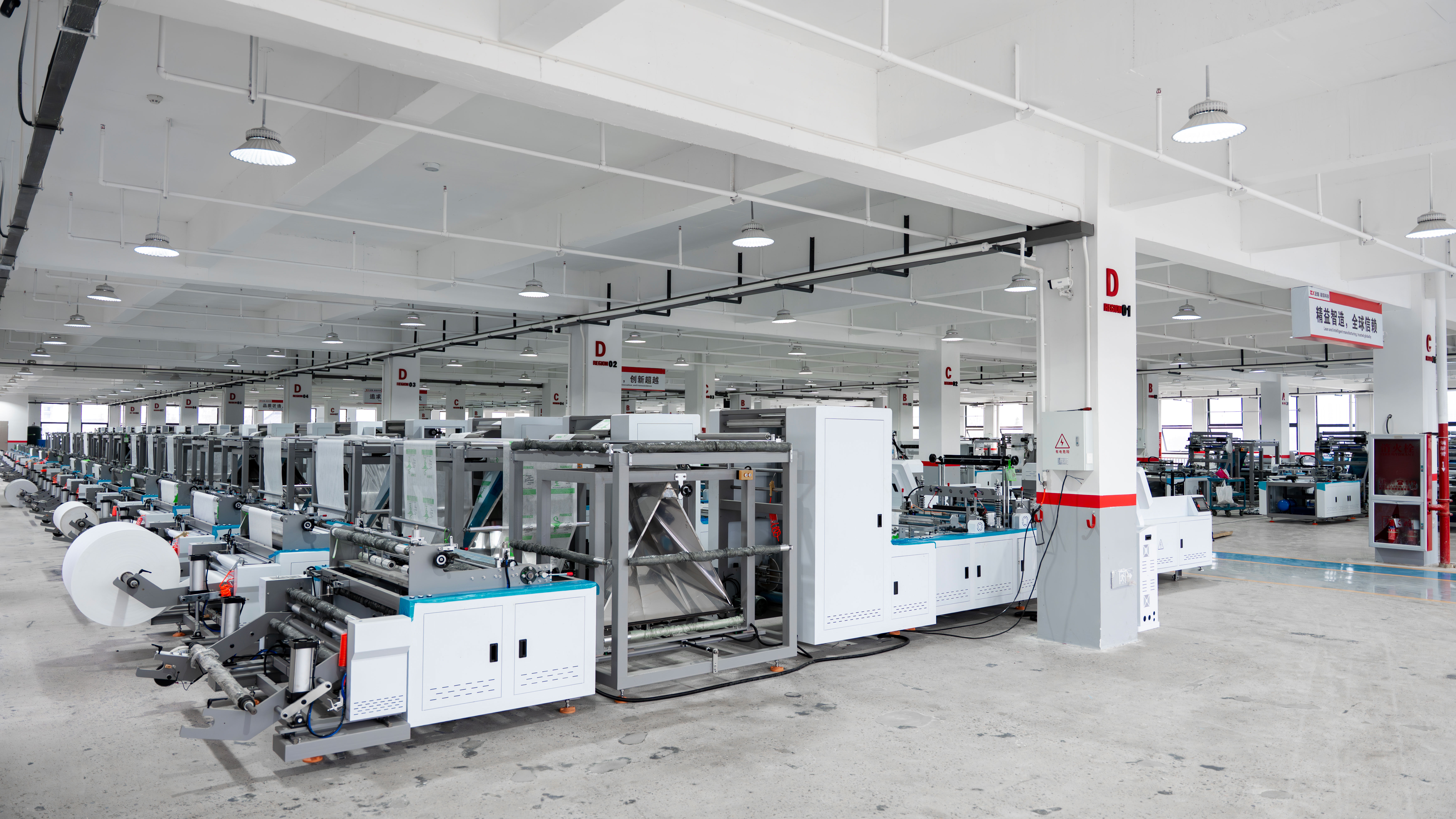
PLC and HMI. The programmable logic controller executes the machine's control program — reading sensor inputs, applying logic, and commanding motors, valves and actuators in a scan cycle typically completing in 1–10 milliseconds. The human-machine interface is the touchscreen that communicates with the PLC over industrial protocols, displaying speed, count and batch progress while allowing the operator to load stored recipes. On a bag machine, recipe recall is the feature that matters most in daily use: selecting a stored bag size loads feeding length, sealing time, cutting position and speed limit in a single action rather than by manual adjustment. ZXL machines use branded PLC platforms — Siemens, Delta or Mitsubishi depending on model tier.
Servo-driven length control. Feeding length determines bag length. A servo motor carries a built-in encoder reporting exact rotational position to the drive, which compares target against actual every 125–250 microseconds and corrects any deviation in real time. The practical result is dimensional accuracy of around ±0.5 mm maintained across millions of cycles. Open-loop alternatives — stepper motors or clutch motors — have no way to verify or correct their actual position, so accuracy drifts to roughly ±2–3 mm as belts wear and voltage fluctuates. Servo systems also draw significant current only during acceleration and mechanical work phases, which is where the 25–30% energy saving over constant-speed clutch motors originates.
Photoelectric registration tracking. When fabric is pre-printed, the machine must cut and seal in the correct position relative to the printed logo. A registration mark — typically a 5 × 5 mm or 8 × 8 mm black square — is printed at a fixed distance from the bag edge. A photocell emitter, usually a red LED chosen for maximum contrast against white PP fabric, detects the drop in reflected light as the mark passes beneath the beam. The PLC then calculates trigger-to-cut delay from the known sensor-to-cut distance and the current fabric speed. At 120 pcs/min the fabric moves at approximately 600–900 mm per second, and the complete detect-calculate-actuate sequence must resolve within roughly 15–25 milliseconds — which is why mark size, print contrast and lens cleanliness are production-critical rather than cosmetic details.
5. Installation and Supporting Equipment Requirements
A bag making machine cannot run until four prerequisites exist. These are not optional accessories; they are the conditions under which the specifications above hold true.
- Level concrete floor with at least 1.5 m clearance on all sides for material loading and maintenance access.
- Three-phase power verified at the correct voltage with a multimeter — not assumed from the nameplate. ZXL machines are configured for 380V/220V according to destination.
- Industrial air compressor with air dryer and tank, holding 0.6–0.8 MPa consistently. Fluctuating pressure causes seal strength variation, and moisture in compressed air damages pneumatic cylinders. The air dryer is not optional.
- Voltage stabiliser (AVR) wired in before the machine, sized to 150% of combined load. A single voltage spike can destroy several thousand dollars of PLC and servo electronics.
Installation itself is normally completed by the buyer's own team with remote guidance. Requirements are one or two people with basic mechanical aptitude, a spirit level, standard hand tools and a multimeter. A standard single-machine installation takes one to two working days — day one for uncrating, positioning, levelling, power and air connection, and initial power-on; day two for fabric threading, dry-run testing, first production and parameter fine-tuning. Zhengxin provides remote support seven days a week via WhatsApp and video call, and reports that the large majority of installations are completed successfully through remote guidance alone. On-site engineer dispatch remains available where remote support proves insufficient.
Step-by-Step: Matching Parameters to a Production Plan
- Fix the fabric first. Confirm the exact GSM range you will run, including the heaviest grade planned within the next two years. Filter machines by declared material thickness window before looking at anything else.
- List every bag format. Write down height, width and gusset depth for each intended style, plus handle length if a handle is required. Check each format against the machine's dimension limits — not just the primary product.
- Decide the sealing method. Ultrasonic where odour, scorching or food contact matter, or where the 12–18 month consumable and energy profile justifies the higher machine cost. Heat sealing where the format is basic and budget is the binding constraint.
- Set the daily output target. Work backwards from required bags per day at 80–85% of rated speed, never at 100%. Account for GSM (thicker material runs 10–15% slower) and for inline printing, which can reduce line speed to roughly 80% of the non-printing rate.
- Confirm control requirements. Printed bags require photocell registration tracking with a stable mark pitch. Unprinted bags do not, which changes the value calculation on the control package.
- Audit the site. Verify floor condition, three-phase power, compressor capacity and stabiliser requirement before the machine ships — not after it arrives.
Use Cases: Which Parameter Set Fits Which Production
Supermarket shopping bags with printed logos. Requires a wide GSM window (30–120 g/m²), tall bag envelope, inline printing registration and consistent weld strength at speed. ZXL-A700Ultra covers the tall T-shirt and W-cut envelope with no-waste-edge feeding; ZXL-E700 and ZXL-E700Ultra add online handle attachment for formats where the handle is formed in-line.
D-cut, drawstring and flat bag production. The wide, shallow envelope — 100–800 mm width and 200–580 mm height — is the operating range of ZXL-B700, ZXL-D700 and ZXL-E700. ZXL-D700 is the four-in-one configuration with online handle attaching, rated for handle lengths of 380–600 mm and material thickness of 30–100 g/m².
Side-gusseted and organ bags. These require a dedicated gusset-forming capability in addition to handle attachment. ZXL-G700 covers a 60–200 mm side gusset range with a 50–100 g/m² material window and handle lengths of 380–600 mm.
Mixed-format workshops. Where several bag styles must run on one floor, the binding constraint is usually the narrowest dimension envelope and the lowest GSM ceiling across the intended product set — not the highest speed available on any single machine.
Comparison Table: ZXL Series Parameter Overview
The table below lists only declared specification data for the six models referenced in this guide.
| Model | Bag Type Focus | Material Thickness | Bag Height | Bag Width | Handle Length | Side Gusset | Speed | Total Power |
|---|---|---|---|---|---|---|---|---|
| ZXL-A700 | T-shirt / W-cut | 30–120 g/m² | 300–700 mm | 200–400 mm | — | — | 40–120 pcs/min | 15 kW |
| ZXL-A700Ultra | T-shirt / W-cut, no-waste-edge | 30–120 g/m² | 300–700 mm | 200–400 mm | — | — | 40–120 pcs/min | 15 kW |
| ZXL-B700 | D-cut / drawstring | 30–120 g/m² | 200–580 mm | 100–800 mm | — | — | 40–120 pcs/min | 12 kW |
| ZXL-D700 | 4-in-1 with online handle attaching | 30–100 g/m² | 200–580 mm | 100–800 mm | 380–600 mm | — | 40–120 pcs/min | 15 kW |
| ZXL-E700 | 5-in-1 with online handle attaching | 30–100 g/m² | 200–580 mm | 100–800 mm | 380–600 mm | — | 40–120 pcs/min | 18 kW |
| ZXL-E700Ultra | 5-in-1 with online handle attaching | 30–100 g/m² | 200–580 mm | 100–800 mm | 380–600 mm | — | 40–120 pcs/min | 18 kW |
| ZXL-G700 | Side gusset with online handle | 50–100 g/m² | 300–700 mm | 200–400 mm | 380–600 mm | 60–200 mm | 60–100 pcs/min | 18 kW |
FAQ
How does ultrasonic welding bond non woven fabric, and why does it produce a stronger seal than heat sealing?
Ultrasonic welding converts high-frequency electrical energy into mechanical vibration at roughly 20,000 cycles per second. A piezoelectric transducer changes the electrical signal into oscillation, which a titanium or aluminium horn amplifies and presses against the fabric over a fixed steel anvil. The rapid oscillation creates intense friction at the interface between two fabric layers, generating localised heat that exceeds the melting point of polypropylene — approximately 160°C — within 0.2–0.5 seconds. The melt zone is confined to about 0.1–0.3 mm at the contact interface, so the surrounding fabric stays cool. Because both layers melt and their polymer chains intermingle before cooling, ultrasonic welding creates a molecular diffusion bond, whereas heat sealing primarily creates surface adhesion. This is the source of the typical 15–20% higher peel strength in pull tests, and it is also why ultrasonic produces no scorching, smoke or odour and consumes roughly 25–30% less energy, since power is drawn only during the welding pulse.
What is the most common cause of weak or inconsistent bag seals, and how is it resolved?
Weak seals are the most frequently reported quality issue in non woven bag production, and three root causes account for the large majority of cases. First, ultrasonic horn contamination — fabric residue on the horn surface reduces energy transfer, and the fix is cleaning the horn and anvil with isopropyl alcohol and a lint-free cloth. Second, an incorrect or uneven horn-to-anvil gap: the gap should be measured with a feeler gauge at both ends and the centre of the horn, and for 70 GSM fabric it should sit at 0.3–0.5 mm and remain even within 0.05 mm across the full horn width. An uneven gap produces strong seals on one side and weak seals on the other. Third, an amplitude or speed mismatch: if fabric GSM was increased or production speed was raised without adjusting ultrasonic parameters, increase amplitude by 5–10% for thicker fabric, or reduce speed by 10–15% if it was recently increased. After any adjustment, run 20 test bags and pull-test five — a correct seal tears the fabric rather than peeling apart at the weld line. If the problem persists through all three checks, the horn itself may be worn and should be inspected for surface pitting under magnification.
How should ultrasonic settings be adjusted when switching between fabric thicknesses?
Three parameters interact: amplitude, horn-to-anvil gap and production speed. Amplitude controls vibration intensity — start at 60–70% for 50–60 GSM fabric, 75–85% for standard 70–90 GSM, and 90–100% for thick 100–150 GSM or laminated material. If the seal looks incomplete, increase amplitude in 5% increments; if it shows melted-through sections or brown scorch marks, decrease by 5%. The horn-to-anvil gap controls fabric compression and should be approximately 0.3–0.5 mm for 70 GSM, wider for thicker fabric and narrower for thinner material, verified for parallelism with a feeler gauge at both ends of the horn. Speed determines contact time: at 80 pcs/min with standard 70 GSM fabric the ultrasonic has roughly 0.3–0.5 seconds of contact per seal, so when production speed rises, amplitude usually needs to rise with it. After any change, run 20 test bags and pull-test five before returning to full production speed, and save the successful settings as a named recipe on the HMI.
What is required to install a non woven bag making machine, and can it be done without an engineer on site?
Most installations are completed by the buyer's team with remote video guidance, in which an engineer watches the setup through a phone camera and directs each step in real time. Two people with basic mechanical aptitude, a spirit level, standard hand tools and a multimeter are sufficient, and a standard single-machine installation takes one to two working days. The prerequisites must be in place before the machine arrives: a level concrete floor with 1.5 m clearance on all sides, a three-phase supply verified at the correct voltage with a multimeter, an industrial air compressor with dryer and tank holding 0.6–0.8 MPa, and a voltage stabiliser wired in. Commissioning follows a defined sequence — dry-run at low speed without material, then fabric run at reduced speed with the first bags inspected for seal quality and dimensions, then progressive ramp-up with inspection at each speed tier. On-site engineer dispatch is available where remote support proves insufficient.
What does long-term support look like after the machine is running?
Zhejiang Zhengxin Machinery Co., Ltd. provides remote support seven days a week via WhatsApp and video call, and maintains offices in Kenya, Morocco, Egypt, Vietnam, Tanzania, Dubai, Oman, Indonesia and Ethiopia to keep local contact points close to buyers in those markets. The company has exported to more than 120 countries, with Africa, the Middle East, Southeast Asia and Latin America as its principal markets, and all machines are CE certified with ISO 9001:2015 certification covering the manufacturing facility. Machines are built with branded components — Siemens, Delta or Mitsubishi PLCs, Omron sensors and NSK bearings — and third-party pre-shipment inspection by SGS, Bureau Veritas or CCIC can be arranged on request. For buyers evaluating a long-term supply relationship rather than a single transaction, this combination of documented specification, verifiable certification and reachable support is the practical basis on which continuity can be planned.
Conclusion
A non woven bag making machine is selected on five numbers, not on brochure claims: the material thickness window, the bag dimension and handle length envelope, the sealing technology, the control system's repeatability, and the site conditions that must exist before commissioning. Every one of these is declared on the specification sheet and verifiable against your own production plan.
The ZXL series illustrates how the trade-offs work in practice. ZXL-A700 and ZXL-A700Ultra hold the widest material window at 30–120 g/m² and cover tall T-shirt and W-cut formats; ZXL-B700 covers the same 30–120 g/m² window but with a wider, shorter bag envelope suited to D-cut and drawstring production; ZXL-D700 and ZXL-E700 trade some material range for online handle attaching within a 380–600 mm handle window; ZXL-G700 adds a 60–200 mm side gusset capability on a 50–100 g/m² material base.
Matching those windows to the fabric and formats actually being produced is what separates a machine that performs as specified from one that quietly underperforms for years. Getting that match right, and then maintaining it with a supplier reachable in the same time zone, is the foundation on which productive capacity and long-term supply relationships are both built.
Next Step: Verify Against Your Own Specification
If you are evaluating a machine for a specific fabric GSM, bag format or daily output target, the fastest way to check compatibility is to send the parameters and request a matching configuration proposal. Material samples can be supplied for weld testing against your own fabric, and the full technical catalogue is available for download.
Contact: Jayn · info@zxcorp.com · WhatsApp / Tel: +86 158-5888-9595
Address: No. 118 Xinglong Road, Wanquan Town, Pingyang County, Wenzhou City, Zhejiang Province, China
Website: www.wzzxjx.com · Blog: blog.wzzxjx.com
Have Questions or Need More Details?
Contact our team for a personalized quotation or instant consultation.
Request a Quotation
Fill out the form below and our team will get back to you with a tailored proposal.
WhatsApp Direct Chat
Prefer to chat in real-time? Message us on WhatsApp for instant assistance & quick answers.
- Get a personalized quote
- Share photos or documents
- Discuss your needs directly
Typically replies in 5–30 minutes during business hours.