
Non-Woven Bag Printing Machine Specs: Output Speed, Seal Strength, and Uptime
Three numbers decide whether a non-woven bag printing line earns money: the output speed it can sustain, the seal strength it can repeat, and the uptime it can hold across a full production week. Most datasheets publish only the first one — and usually at a rating the machine reaches with the easiest material on the floor. This guide explains how each parameter is measured on an inline printing and converting line, and how to verify all three before you place an order.
Problem Definition: Why Rated Specifications Rarely Match Delivered Output
A rated speed of 100–120 pcs/min is a real figure — but it describes a machine running inside a narrow window of fabric thickness, bag style and print coverage. Step outside that window and the same machine may deliver 80–90 pcs/min. That gap is not deceit; it is the difference between a peak rating and a sustained rating, and buyers who do not separate the two end up comparing machines on price per unit while their actual cost is measured per bag and per lost shift.
Three specific failures show up repeatedly in printing and converting projects:
- Speed derating is ignored. Fabric thickness, bag style complexity and inline print coverage each reduce real throughput. A 120 GSM fabric typically runs 10–15% slower than 70 GSM on the same machine.
- Seal strength is validated on one sample. A seal that holds on a single bag at start-up is not the same as a seal that holds on bag 40,000, after the ultrasonic horn has warmed and the anvil has settled.
- Uptime is claimed without a maintenance model. “95% uptime” means nothing unless the machine can tell the operator what failed, and unless the buyer has planned preventive maintenance intervals and stocked the right spare parts.
The three questions that expose a weak specification:
1. What is the sustained output at my fabric GSM and bag style — not the peak figure?
2. What is the seal acceptance criterion, and how many test bags must pass it?
3. What does the machine do when a fault occurs — and who supplies the part?
Industry Background: Printing Parameters Have Become a Procurement Issue
The non-woven segment is expanding fast enough that specification quality now has a direct commercial cost. The global non-woven bag making machine market is projected to grow from US$179 million in 2025 to US$733 million by 2032, at a CAGR of 22.5% from 2026 to 2032 (LP Information). Asia-Pacific dominated the bag making machine market with a 43.6% revenue share in 2025, and the automatic segment alone held 52.4% of that market (Dataintelo).
Material supply has scaled with it: China exported 1.52 million tons of nonwovens in 2024, valued at $4.04 billion, a 6.25% increase over 2023, with spunbonded nonwovens accounting for 37% of export value (China Customs / Nonwovens Industry Report). On the demand side, more than 100 countries have implemented bans or taxes on single-use plastic bags — and regulation continues to tighten, as with California's SB 1046, effective January 2025, which mandates a shift to compostable non-woven or paper substitutes.
The Print Layer Is Being Repriced
Printing is no longer an add-on step. The global flexographic printing machine market was valued at USD 17.57 billion in 2024, with a projected CAGR of 9.7% through 2030 (Grand View Research), driven partly by the preference for water-based flexo inks, which reduce VOC emissions by up to 80% compared with solvent-based systems (Persistence Market Research).
Safety compliance moved in parallel. EN 1010-1:2004+A1:2010 is the harmonized European standard for the safety of printing and paper converting machines. In practice, that means an inline printing and converting line is assessed as a printing machine, not merely as a bag machine — and the parameter set a buyer must document now includes guarding, emergency stop function and electrical safety alongside speed and seal strength.
Detailed Solution: The Four Parameter Families That Decide Performance
1. Output Speed — Separate Rated Speed From Sustained Speed
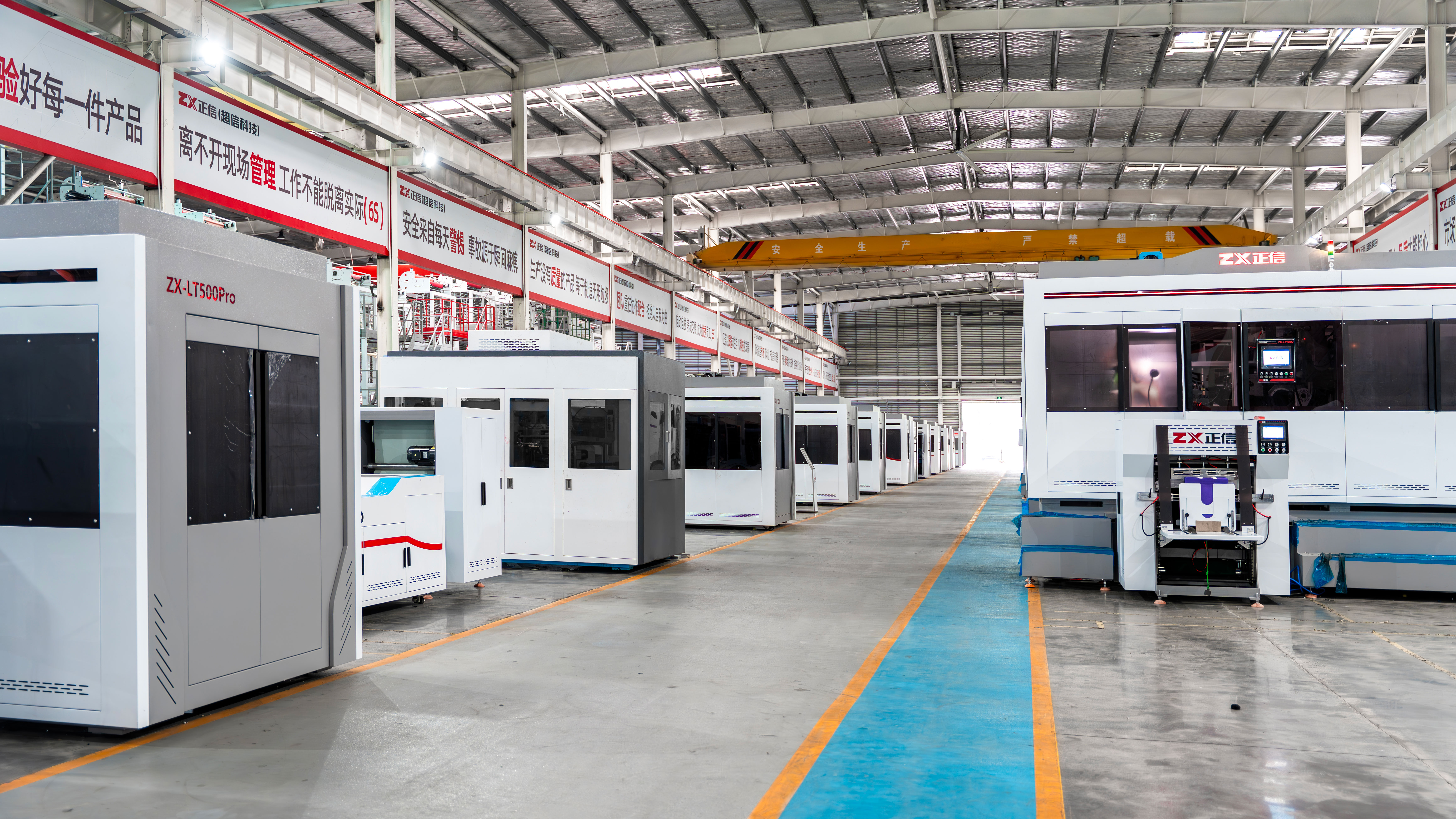
Output speed is the parameter buyers compare first and understand least. On a fully integrated inline line, material feeding, printing, bag forming, sealing, cutting, counting and stacking run in one continuous automated flow; on semi-automatic or manual production, each operation is a separate, hand-fed station. The throughput difference is structural, not incremental: 100–120 pcs/min for the integrated line versus 15–20 pcs/min for semi-automatic production.
The printing stage has its own speed scale, measured in metres per minute rather than bags. Zhengxin's ZXH-C21200 two-color flexo and ZXH-C41200 four-color flexo units both run at 10–60 m/min, while the ZXH-A1200 one-color screen printer runs 1500–4000 m/hour and the ZXH-B1200 two-color screen printer 1500–3000 m/hour. Converting between the two scales is straightforward: a 450 mm bag at 100 pcs/min consumes 45 m/min of fabric, and a 600 mm bag at 120 pcs/min consumes 72 m/min — which is why print-stage speed and print width, not just bag speed, belong in the specification.
Zhengxin also produces high-speed roll-to-roll flexo printing machines with up to 6 colors, which matters when a buyer needs multi-color registration stability at sustained line speed rather than a single-color logo.
Three derating factors should be written into the purchase specification:
- Fabric thickness: 100–120 GSM fabric runs 10–15% slower than 70 GSM fabric on the same platform.
- Bag style complexity: simple D-cut bags run faster than vest bags or gusseted bags — plan a 10–20% reduction for complex styles.
- Inline printing: multi-color inline printing can reduce line speed to roughly 80% of the non-printing speed.
Sustained speed is also an accuracy problem, not only a motor problem. Servo-driven feeding holds ±0.5 mm dimensional accuracy at full speed, which is what allows a line to run fast without generating a second problem: bags that fail size inspection.
2. Seal Strength — A Repeatability Parameter, Not a Peak Value
Seal strength determines whether the machine’s output survives the customer. Weak or inconsistent ultrasonic seals are the most common quality issue in non-woven bag production, and they are a settings problem in roughly 90% of cases rather than a hardware failure.
Ultrasonic welding converts 20 kHz electrical energy into mechanical vibration; the melt zone is confined to approximately 0.1–0.3 mm at the interface between fabric layers, so the fabric surface stays cool. Compared with heat sealing, ultrasonic welds show 15–20% higher peel strength because polymer chains from both layers interdiffuse in the molten state rather than simply adhering at the surface.
The settings that produce that result are specific and repeatable:
- Amplitude: 60–70% for 50–60 GSM fabric, 75–85% for standard 70–90 GSM, 90–100% for 100–150 GSM or laminated material.
- Horn-to-anvil gap: approximately 0.3–0.5 mm for 70 GSM fabric, and even within 0.05 mm across the full horn width. An asymmetric gap produces a seal that is strong on one end and weak on the other.
- Contact time: at 80 pcs/min with 70 GSM fabric, the ultrasonic has roughly 0.3–0.5 seconds of contact per seal — which is why speed increases usually require an amplitude increase to compensate.
The acceptance test is a pull test, and the criterion is behavioural rather than numerical: the seal should tear the fabric, not peel apart. Running 20 test bags and pull-testing 5 of them after any parameter change is the discipline that converts a good sample into a repeatable specification. At line level, that discipline shows up in the defect rate — below 0.5% on a fully integrated automatic line versus 3%–5% on manual production.
3. Uptime — What PLC Fault Self-Diagnosis Actually Buys You
Uptime is the parameter that converts the other two into revenue, and it is the one most often asserted without evidence. On a PLC-controlled line, uptime is supported by three concrete functions rather than by a claim.
First, the PLC and HMI store complete machine setups as recipes: selecting a bag size on the touch screen loads feeding length, sealing time, cutting position, speed limit and photocell offset without manual adjustment. Second, the HMI displays faults as plain-language alarm codes rather than as a stopped machine. Third, the system counts production cycles and flags scheduled maintenance when it is due. Zhengxin uses Siemens (S7-1200 or S7-200 SMART series on premium models), Delta or Mitsubishi PLCs depending on tier, all with English-language HMI interfaces.
The measurable outcome: a new servo-driven line holds 95%+ production uptime, against a typical 70%–80% for used machines over three years old. Mean time to first failure is 24+ months on a new machine, and maintenance becomes preventive rather than reactive — compared with semi-automatic machines that require constant mechanical adjustment between shifts.

Uptime also depends on the maintenance intervals the buyer actually runs. The practical schedule looks like this:
- Daily (5–10 minutes): clean rollers, guide bars and photocell lenses; drain water from the air compressor tank; wipe the ultrasonic horn and anvil with isopropyl alcohol; verify emergency stop buttons; listen for new noises during the first minute of operation.
- Weekly (15–20 minutes): grease chain drives, linear guide rails, lead screws and bearing housings; check belt tension (5–10 mm deflection at the midpoint); inspect pneumatic hoses for leaks; clean the electrical cabinet air filter.
- Monthly (30–40 minutes): service the air compressor intake filter; inspect the ultrasonic horn surface for pitting; check cutting blade sharpness; verify guards and interlocks; back up PLC parameters and recipes.
- Quarterly: professional inspection of electrical connections; ultrasonic generator output test; replacement of worn consumables.
Staffing follows the same logic: one operator per two machines, and roughly one technician for every 10–15 machines for preventive maintenance. On the supply side, spare parts shipped by DHL or FedEx arrive in 3–7 days globally, which is why the single most common cause of extended downtime is not a breakdown but waiting for a low-cost sensor that was never stocked. A recommended spare parts kit for one year of consumables is a small line item against that risk.
4. Energy and Efficiency — The Servo Motor Case
Servo control is usually presented as a precision feature. It is also an energy feature, and the two are connected. A servo motor carries an encoder that reports its exact rotational position to the drive continuously (typically every 125–250 microseconds at 17-bit to 20-bit resolution), so the drive corrects error in real time instead of accepting it. The machine therefore stops feeding when the exact target rotation is reached — regardless of load, voltage fluctuation or belt wear — which is what maintains ±0.5 mm accuracy across millions of cycles.
On energy, the practical comparison points are specific:
- New servo-driven models are 20%–30% more energy-efficient than 5+ year old machines running clutch motors.
- Servo-driven models reduce power consumption by 30% during idle and low-speed phases compared with old-style clutch motor semi-automatic machines.
- Ultrasonic sealing consumes 25%–30% less energy than heat sealing, because power is drawn only during the welding pulse (0.2–0.5 seconds per bag) rather than continuously to hold element temperature.
Connected load figures let a buyer size the electrical supply and the voltage stabilizer correctly. Zhengxin flexo units draw 8 kW (ZXH-C21200) and 18 kW (ZXH-C41200); screen units draw 26 kW (ZXH-A1200) and 52 kW (ZXH-B1200). On the bag-making side, models such as the ZXL-A700 and ZXL-A700Ultra are rated at 15 kW, the ZXL-E700 and ZXL-E700Ultra at 18 kW, and the ZXL-G700 at 18 kW. A voltage stabilizer sized to 150% of combined machine load is the cheapest protection available for the PLC and servo drives behind those figures.
Step-by-Step Breakdown: How to Verify These Parameters Before You Pay
- Fix the material and bag specification first. Fabric GSM (typically 30–120 g/m² depending on platform), bag style, bag dimensions, roll width and required print colors. Every later number is a function of this list.
- Ask for a derated speed table, not a single figure. Request sustained output at your GSM, your bag style and your print coverage — and confirm the planning assumption of 80–85% of rated speed.
- Write the seal acceptance criterion into the contract. Pull test on 5 of every 20 test bags; the seal must tear the fabric, not peel. Specify the fabric GSM the test was run at.
- Request the fault code list and the PLC brand. A machine whose alarms are documented in English can be diagnosed remotely; one without is dependent on a site visit.
- Map the maintenance schedule onto your shift pattern. Confirm who performs daily, weekly and monthly tasks, and confirm that operating documents — manual, wiring diagram and spare parts catalog — are supplied in English.
- Price the spare parts kit before you price the machine. Critical spares held on-site are what keep a 95% uptime target realistic.
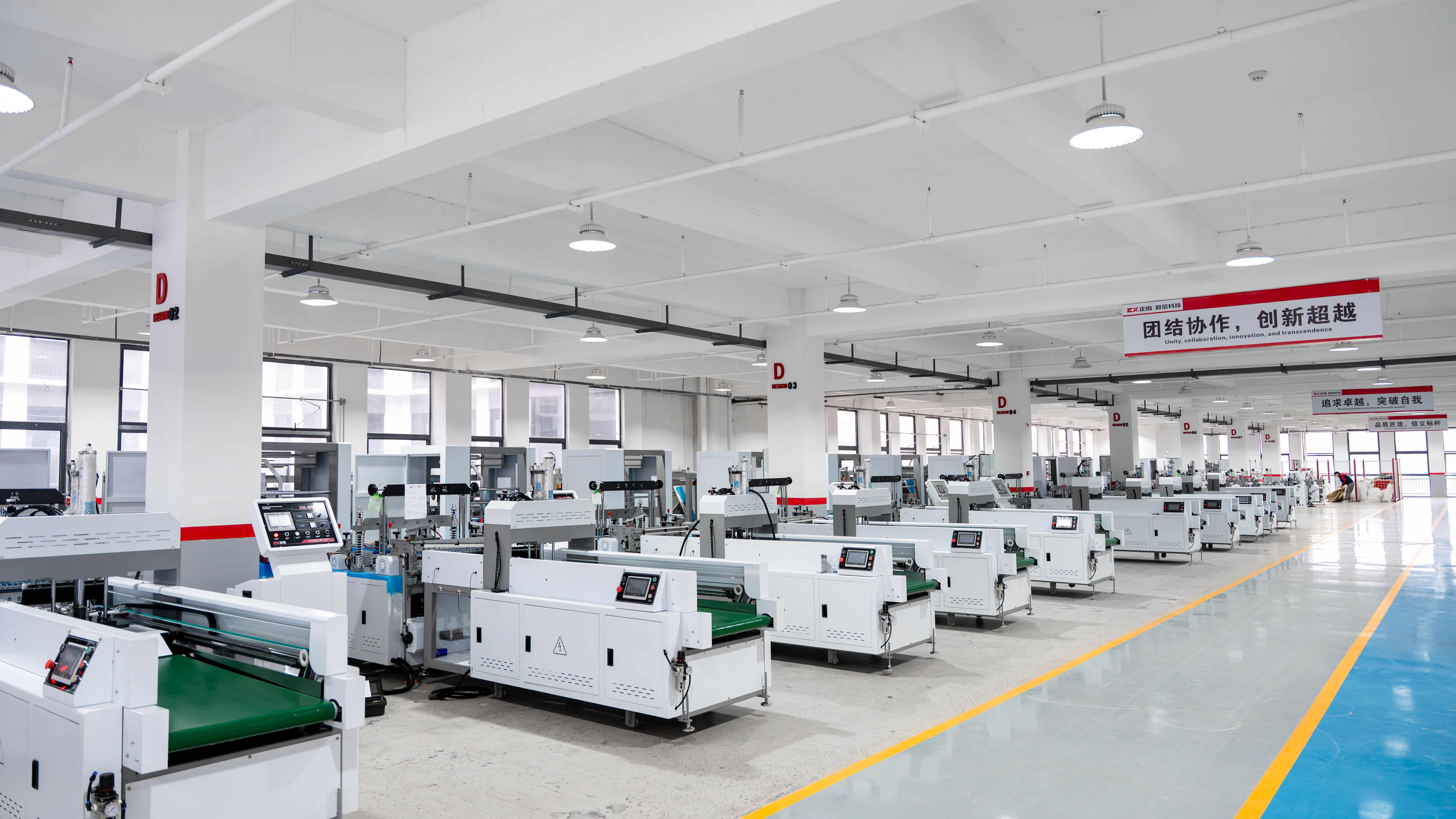
- Confirm acceptance testing and inspection. Products are accepted through pre-shipment test procedures, and third-party inspection by SGS, Bureau Veritas or CCIC can be arranged at the buyer's request before shipment.
Use Cases: Where the Same Parameters Get Different Answers
Supermarket and Grocery Chain Supply
Fully automatic shopping bag lines running 24/7 are specified around output of 100 pcs/min or higher, consistent ultrasonic weld quality and a defect rate below 0.5%. Typical matched equipment includes an air compressor, a flexo printing unit, an automatic counting and bundling machine and a voltage stabilizer. The binding constraint here is not average speed but worst-shift consistency, because retail contracts are judged on rejects.
Garment and Fashion Retail Packaging
Garment bag and dust cover production typically runs a 16-hour double shift with 1–2 operators per machine. Anti-static treated material compatibility and a wrinkle-free finished bag surface matter more than peak speed, and folding conveyors plus handle punching and attaching units shape the line layout.
Food and Beverage Takeaway
Bags for restaurant takeaway, delivery platforms and bakeries are produced 24/7 with automated stacking and batch coding. Odorless, non-toxic water-based ink printing and a cleanroom-style environment are the controlling requirements — which is exactly where ultrasonic sealing’s clean, odorless weld line becomes non-negotiable.
Advertising, Events and Corporate Gifts
Small-to-medium batches of multi-color promotional tote bags trade speed for changeover flexibility. Registration accuracy of ±0.3 mm, quick job changeover and premium surface finish drive the specification, and a 4-color or higher flexo station is the normal configuration.
Comparison Table: Automatic Inline Production vs Semi-Automatic and Manual
| Comparison metric | Fully automatic integrated inline line | Semi-automatic / manual production |
|---|---|---|
| Output speed | 100–120 pcs/min | 15–20 pcs/min |
| Labour requirement | 1 operator per 2 machines | 3–4 workers per manual line |
| Defect rate | Below 0.5% | 3%–5% |
| Process flow | Feeding, printing, bag forming, sealing, cutting, counting and stacking in one continuous automated flow | Hand-fed, single-process stations with material transfer between operations |
| Maintenance model | PLC-controlled with fault self-diagnosis — preventive, not reactive | Constant mechanical adjustment required |
| Energy | Servo-driven models reduce power consumption by 30% during idle and low-speed phases | Old-style clutch motor semi-automatic machines (baseline) |
| Machine investment | 3×–5× higher upfront | Lower upfront |
| Per-bag production cost | 60%–70% lower | Higher |
| Payback period | Typically 12–18 months | Not applicable |
| Best fit | Supermarket chain supply contracts requiring consistent quality and high daily output; factories scaling from workshop to industrial production | Very low volume or highly varied small batches where changeover, not speed, dominates total time |
Figures as published in Zhengxin’s automatic versus semi-automatic production comparison data.
New Servo-Driven Line vs Three-Year-Old Used Machine
| Metric | New machine | Used / refurbished machine |
|---|---|---|
| Production uptime | 95%+ | 70%–80% typical for machines over three years old |
| Mean time to first failure | 24+ months | Unpredictable |
| Warranty | 12-month full warranty | None |
| Energy consumption | Servo-driven models 20%–30% more energy-efficient than 5+ year old machines with clutch motors | Higher baseline |
| Spare parts availability | Current-generation components | Parts may be discontinued or require custom fabrication |
| Best for | Buyers who cannot absorb production downtime; first-time buyers without in-house repair capability; lines requiring CE compliance | Only where an experienced in-house maintenance engineer can inspect and support the machine |
Frequently Asked Questions
What certification should a non-woven bag printing machine carry?
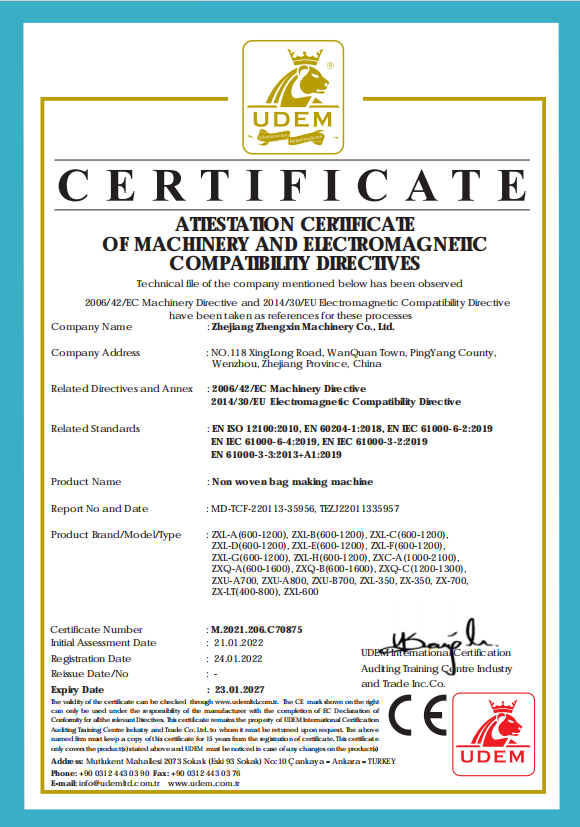
Machines supplied by Zhengxin carry CE marking covering the Machinery Directive, the Low Voltage Directive and the EMC Directive, and each machine ships with a CE Declaration of Conformity and a CE marking plate. The manufacturing facility holds ISO 9001:2015 certification. For printing and paper converting equipment specifically, EN 1010-1:2004+A1:2010 is the harmonized European safety standard. CE marking is accepted for customs clearance across EU member states and countries that recognise CE, including Turkey, Egypt, Nigeria and GCC countries; country-specific schemes such as SONCAP, PVOC or SASO can be arranged on request.
What output speed and seal quality can an automatic line actually sustain?
A fully integrated automatic line runs at 100–120 pcs/min against 15–20 pcs/min for semi-automatic production, with a defect rate below 0.5% versus 3%–5% on manual lines. Ultrasonic seals show 15–20% higher peel strength than heat sealing. These are sustained figures, not peaks: realistic planning assumes 80–85% of rated speed, with a further 10–15% reduction for 100–120 GSM fabric and 10–20% for complex bag styles such as gusseted or vest bags.
What drives the cost of a non-woven bag printing machine, and when does it pay back?
Automatic inline equipment costs 3×–5× more upfront than semi-automatic production, but produces bags at 60%–70% lower per-bag cost, with a typical payback of 12–18 months. For market context, the average price for an automated non-woven bag making machine in 2025 was approximately $29,000 (LP Information), though configuration — color count, automation level, no-waste-edge technology — moves that figure substantially. Machines using genuine branded components such as Siemens or Delta PLCs, Omron sensors and NSK bearings cost 10%–20% more than unbranded alternatives, but deliver three times the mean time between failures, 30%–40% lower total maintenance cost over five years, and a resale value that retains 50%+ after five years.
Can I validate seal strength and print registration on a sample before shipment?
Yes — pre-shipment testing is the standard acceptance procedure. Every completed machine runs a continuous full-load production test before shipment, and sample bags from that run are inspected for seal strength, print registration and dimensional accuracy. Because the samples come from the actual pre-shipment run rather than from a separate laboratory setup, they reflect the settings the machine will ship with. Buyers who want independent verification can appoint a third-party inspection agency — SGS, Bureau Veritas or CCIC — to inspect the machine at the factory before final payment.
What is the lead time, and how is delivery handled?
Standard models take 25–35 working days to produce; customized configurations add 5–10 working days. Sea freight adds 15–45 days depending on destination — roughly 15 days to Indonesia, 25 days to Kenya, 35 days to Nigeria and 40 days to Brazil — for a total of 45–80 days from order to arrival at port. Delivery is arranged through FOB or CIF terms, with a minimum order quantity of one unit and standard payment terms of 30% deposit with 70% before shipment. To get a configuration sheet with speed, power and seal parameters matched to your fabric and bag style, contact the engineering team directly at info@zxcorp.com.
Conclusion: What Belongs in the Purchase Specification
Output speed, seal strength and uptime are not three independent features — they are one system. A line that holds ±0.5 mm feeding accuracy can run at 100–120 pcs/min without generating rejects. A line with documented ultrasonic amplitude, gap and contact-time settings can hold a defect rate below 0.5%. And a line whose PLC reports faults in plain language and whose maintenance schedule is followed can hold 95%+ uptime, which is the only number that converts machine specifications into shipped bags. A buyer who specifies all three, and demands the evidence behind each, will get a machine that behaves the same in month 24 as it did in week one.
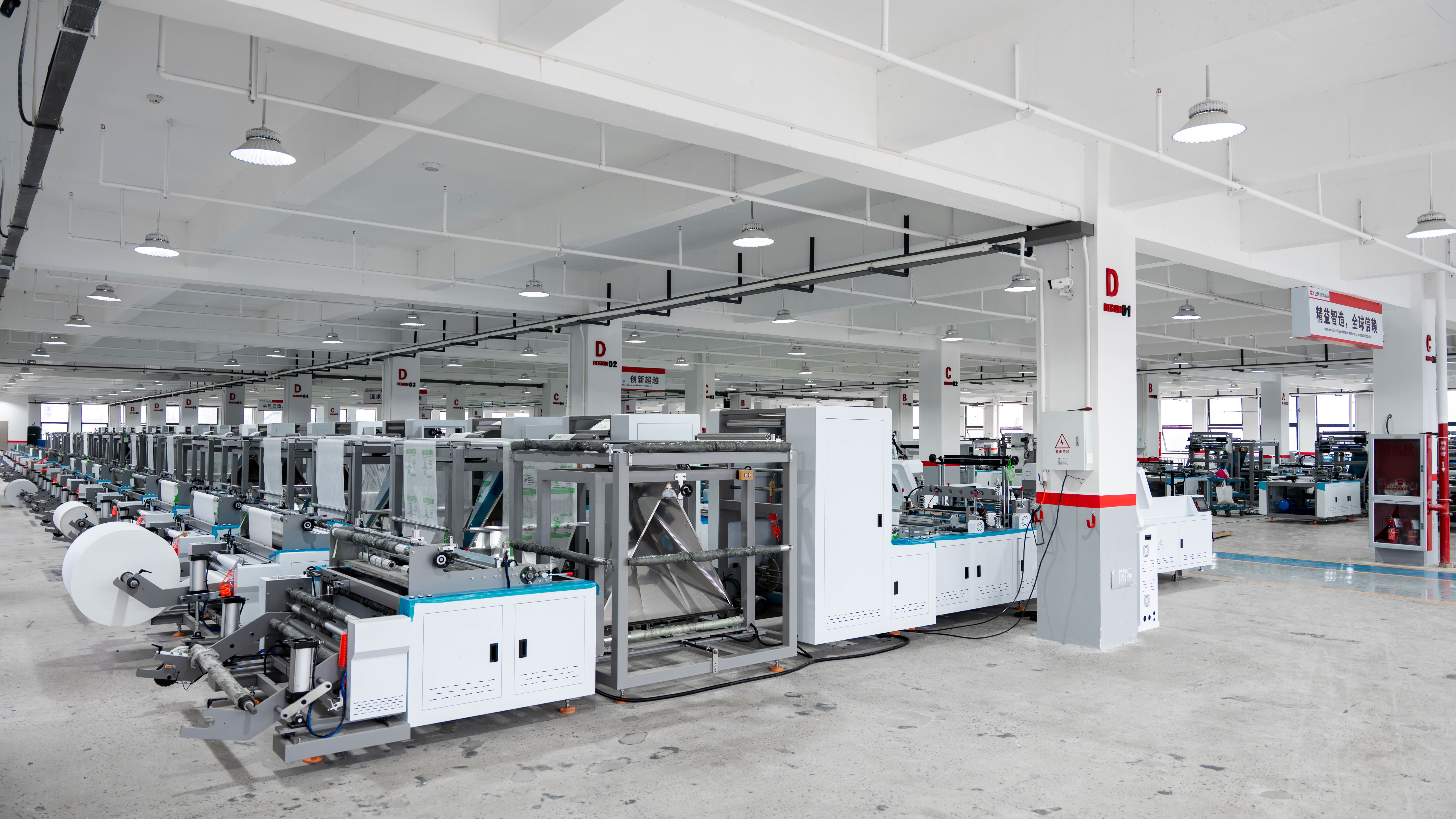
Zhejiang Zhengxin Machinery Co., Ltd. (ZX Zhengxin Machinery) has manufactured automatic non-woven bag making machines and flexo and screen printing machines since 2014, from a 60,000 m² facility in Wenzhou, Zhejiang, with 200 employees, 30 engineers and an annual output of 500 units. The company exports to more than 120 countries, including markets across Africa, the Middle East, Southeast Asia and Latin America, and maintains offices in Kenya, Morocco, Egypt, Vietnam, Tanzania, Dubai, Oman, Indonesia and Ethiopia. After-sales support includes field engineers available for global deployment, with remote support available seven days a week via WhatsApp and video call — engineers resolve 80%+ of issues remotely.
Next step: match the parameters to your bag
Send your fabric GSM, bag style, print color count and daily output target, and the engineering team will return a configuration with sustained speed, connected load and sealing parameters for your specific product mix. Machines can be inspected before shipment, and sample bags from the pre-shipment run can be supplied on request.
Email: info@zxcorp.com | Tel / WhatsApp: +86 158-5888-9595 | Website: www.wzzxjx.com
Download the full 2026 product catalog: Zhengxin Machinery Catalog (PDF)
Zhejiang Zhengxin Machinery Co., Ltd., No. 118 Xinglong Road, Wanquan Town, Pingyang County, Wenzhou City, Zhejiang Province, China.