Non Woven Bag Printing Machines: 2026 Market & Technology Roadmap
Non Woven Bag Printing Machines: 2026 Market & Technology Roadmap
A non woven bag printing machine is the equipment that applies logos, branding, and product information onto PP spunbond fabric before the fabric is formed into finished bags. For packaging companies, garment factories, supermarket suppliers, and promotional product makers, this machine determines how the finished bag looks and whether it meets a brand's quality standard.
In 2026, this machine category is receiving renewed attention. Plastic bag bans are spreading, reusable non-woven bags are becoming the default in many retail segments, and both flexo and screen printing options have become more accessible. The challenge for first-time buyers is not the lack of machines, but the number of variables: printing technology, color count, roll width, speed, drying, registration, and supplier support. This article gives a foundation-level roadmap for buyers in the awareness and research stage.
The Problem: Too Many Choices, Not Enough Clarity
Most buyers searching for a non woven bag printing machine are trying to solve one practical problem: how to print consistent, repeatable branding onto non-woven bags without slowing down production or creating a bottleneck. The first-time buyer often does not know whether a 2-color flexo unit is enough, whether screen printing is still relevant, or how a printing unit will work with a non-woven bag making machine.
The buying decision is further complicated by supplier claims about speed, registration accuracy, and after-sales support. Without a clear framework, companies risk over-buying a multicolor system they do not need, under-buying a machine that cannot handle future orders, or selecting a supplier that disappears after shipment. Lowering risk starts with understanding the technology landscape and the verified facts around the machine category.
Industry Background: Market Signals That Matter
Third-party research points to strong tailwinds for non-woven bag production. LP Information estimates the global non-woven bag making machine market will grow from US$ 179 million in 2025 to US$ 733 million by 2032, a CAGR of 22.5%. Dataintelo reports that Asia-Pacific held a 43.6% revenue share in 2025, and that the automatic segment accounted for 52.4% of the market. Within the broader printing equipment space, Grand View Research valued the global flexographic printing machine market at US$ 17.57 billion in 2024, with a projected CAGR of 9.7% through 2030.
Several regulation and demand factors explain this momentum. More than 100 countries have implemented bans or taxes on single-use plastic bags. Global production of non-woven bags exceeded 58 billion units in 2023. China exported 1.52 million tons of nonwovens in 2024, valued at US$ 4.04 billion—a 6.25% increase compared to 2023—and spunbonded nonwovens accounted for 37% of that export value. These figures are drawn from publicly available research and customs data, not from a single manufacturer's marketing material.
For a buyer, the practical implication is that demand for printed non-woven bags is expanding across retail, food delivery, garment packaging, and promotional products. This means the right printing machine is not just a cost center; it is a strategic asset for winning branded bag contracts.
Detailed Solution: Two Core Printing Technologies
When evaluating a non woven bag printing machine, the first step is to understand the two main technologies: flexo printing and screen printing.
Flexo printing uses flexible printing plates mounted on cylinders. It transfers water-based ink through anilox rollers onto fabric in a roll-to-roll process. Flexo is fast, economical at scale, and well suited to supermarket logos, simple graphics, and high-volume runs. It can be configured with one, two, three, four, or more color stations. Water-based flexo inks are commonly used in bag printing, which helps factories meet environmental requirements.
Screen printing pushes ink through a mesh screen onto the fabric. It is known for thick ink layers, strong color opacity, and sharp edges, and is often chosen for large solid areas or specialty effects. Non-woven screen printing machines can run in continuous or intermittent mode and are available in one-color and two-color configurations.
Zhejiang Zhengxin Machinery Co., Ltd. is a manufacturer of non-woven bag making machines and complete production lines, established in 2014 and headquartered in Wenzhou, Zhejiang, China. The company's product portfolio includes ZXL series non-woven bag making machines, ZXH series flexo printing machines (1-8 colors), screen printing machines, 3D bag machines (ZX-LT500 series), fabric slitting machines (ZXC series), and auxiliary equipment. The manufacturing facility covers 60,000 square meters, employs approximately 200 staff, and has an R&D team of 30 engineers. Annual production capacity reaches 500 units, and export business accounts for 60% of total sales, with major markets in Africa, the Middle East, Southeast Asia, and Latin America.
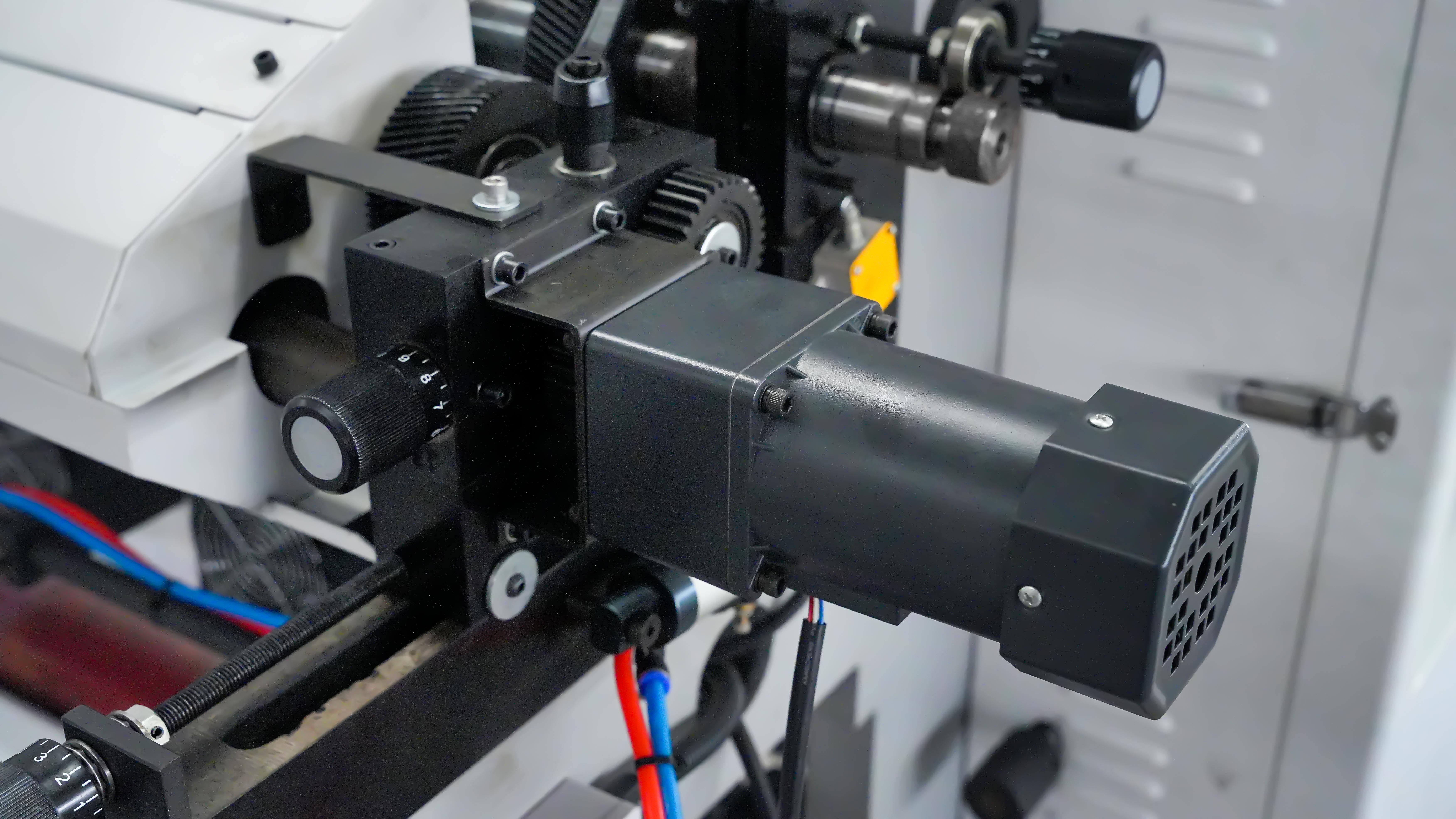
Zhengxin ZXH Series Printing Machines
The ZXH series covers both flexo and screen printing technologies. The following models are representative configurations available for non-woven bag printing:
- ZXH-A1200 – a one-color non-woven bag screen printing machine. Max fabric roll width 1250 mm, max printing size 1100 × 1200 mm, material thickness 60-150 g/m², printing speed 1500-4000 m/hour, total power 26 kW, weight 4800 kg.
- ZXH-B1200 – a two-color non-woven bag screen printing machine. Max printing size 1100 × 1200 mm, material thickness 70-150 g/m², printing speed 1500-3000 m/hour, total power 52 kW, weight 9600 kg.
- ZXH-C21200 – a two-color flexo printing machine. Max fabric roll width 1200 mm, max printing width 1160 mm, printing length 250-1000 mm, printing speed 10-60 m/min, total power 8 kW, weight 1500 kg.
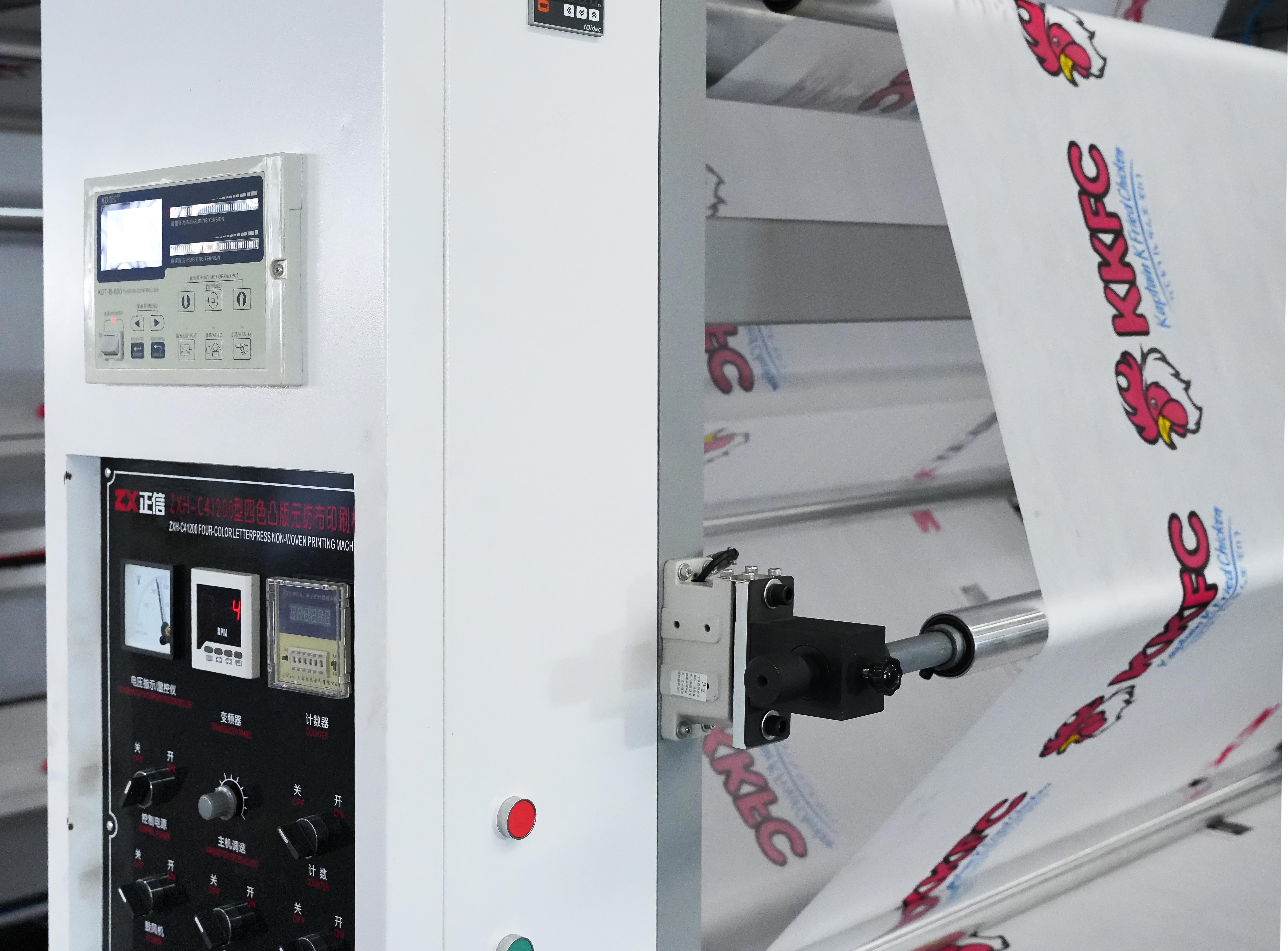
- ZXH-C41200 – a four-color flexo printing machine. Max fabric roll width 1200 mm, max printing width 1160 mm, printing length 220-1000 mm, printing speed 10-60 m/min, total power 18 kW, weight 3000 kg.
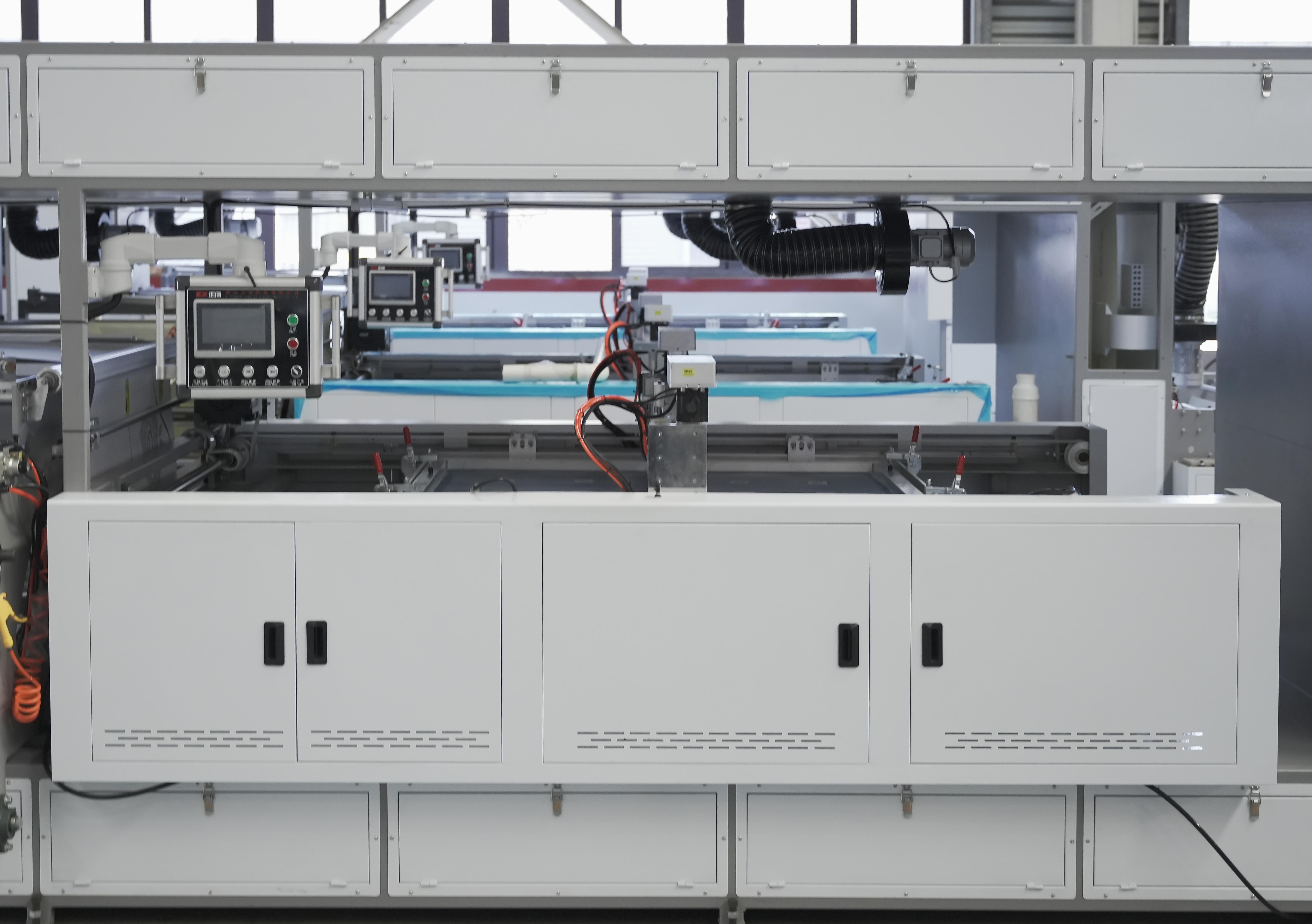
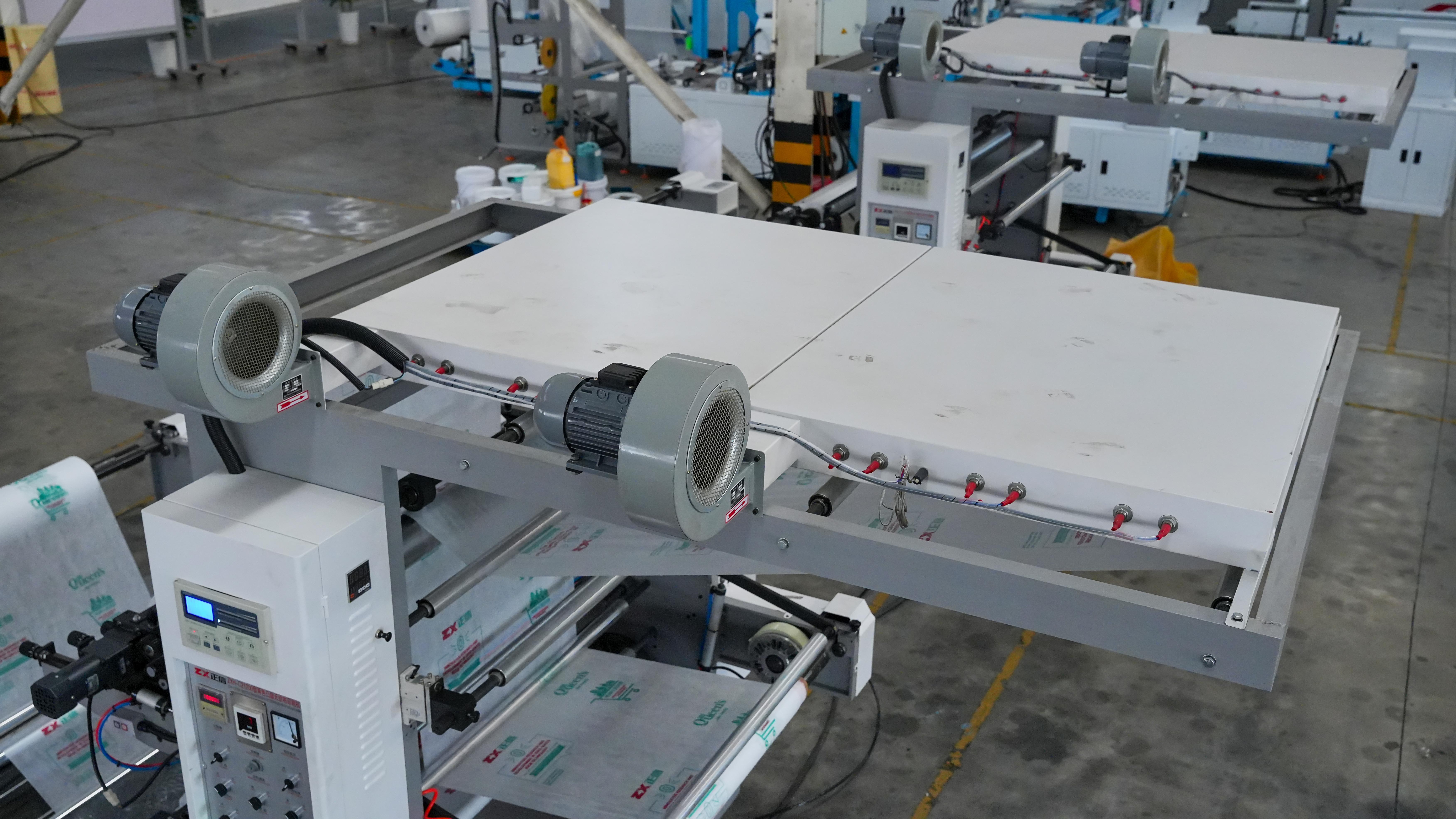
The C41200 four-color inline configuration covers virtually all non-woven bag design needs, providing full ink coverage with consistent quality. It is designed for fast job changeover and stable registration at production speed. The C21200 is a compact two-color flexo unit that fits well in startup facilities and small production lines, while still offering automatic guiding, magnetic powder tension control, and automatic stop in case of material breakage.
Step-by-Step Breakdown: How to Choose a Non Woven Bag Printing Machine
Step 1: Define bag types and print volume
What bag styles will you produce—D-cut, W-cut, vest, flat, box, or tote? How many bags per day do you need? This determines whether a single-color screen unit or a multi-color flexo unit makes sense.
Step 2: Choose the printing technology
For long runs of one or two colors, flexo is usually the lowest cost per bag. For heavy ink coverage or specialty applications, screen printing remains useful. Both technologies have a place in a complete production line.
Step 3: Estimate color count
A 2-color flexo unit like the ZXH-C21200 handles most supermarket and promotional logos. A 4-color flexo unit like the ZXH-C41200 adds flexibility for multi-color branding and design complexity. Zhengxin also offers flexo printing machines from 1 to 8 colors in the ZXH series.
Step 4: Match specifications to your fabric
Check roll width, printing width, material GSM range, speed, and drying capacity. For example, the ZXH-A1200 handles 60-150 g/m² fabric, while the ZXH-B1200 handles 70-150 g/m². The ZXH-C series supports max fabric roll widths up to 1200 mm and print widths up to 1160 mm.
Step 5: Verify certifications and quality systems
Zhengxin's machines are CE certified under the Machinery Directive, Low Voltage Directive, and EMC Directive. The factory operates under ISO 9001:2015. If your destination country requires third-party inspection, SGS, Bureau Veritas, or CCIC can inspect the machine before shipment.
Step 6: Plan integration with your bag making line
A printing unit is normally placed before the bag maker so printed fabric flows directly into production. Consider floor space, power supply, air compressor, drying time, and material handling. Zhengxin supplies complete production line configurations, from printing to bag making to auxiliary equipment.
Step 7: Evaluate after-sales support
Look for remote video support, spare parts availability, English documentation, and on-site installation options. Zhengxin's after-sales system includes WhatsApp/WeChat video support, express spare parts shipment, and on-site engineer dispatch when remote diagnosis is not enough.
Use Cases: Matching Machines to Applications
Different customer segments place different demands on a non woven bag printing machine. The following scenarios show how machine choice changes by application.
- Retail & supermarket chains: Mass production of shopping bags with single or multi-color printed logos. A four-color flexo unit such as the ZXH-C41200 paired with a fully automatic bag making line provides speed, print consistency, and brand flexibility.
- Garment & fashion retail: Logo-printed non-woven garment bags, dust covers, and suit covers. A two-color flexo unit is often sufficient for simple brand marks, while a one-color screen printer can handle jobs that need thick ink coverage.
- Food delivery & takeaway: Bags printed with odorless, non-toxic water-based inks. Flexo printing is a common choice because it runs inline with the bag maker and uses food-safe water-based inks.
- Advertising & promotional products: Short-to-medium batch production of custom multi-color printed tote bags for events and trade shows. Quick job changeover and precise registration matter more than maximum speed, making the ZXH-C41200 a good fit.
Comparison Table: Zhengxin ZXH Printing Machine Models
| Model | Type | Colors | Max Printing Width/Size | Speed | Total Power | Weight |
|---|---|---|---|---|---|---|
| ZXH-A1200 | Screen printing | 1 | 1100 × 1200 mm | 1500-4000 m/hour | 26 kW | 4800 kg |
| ZXH-B1200 | Screen printing | 2 | 1100 × 1200 mm | 1500-3000 m/hour | 52 kW | 9600 kg |
| ZXH-C21200 | Flexo printing | 2 | 1160 mm | 10-60 m/min | 8 kW | 1500 kg |
| ZXH-C41200 | Flexo printing | 4 | 1160 mm | 10-60 m/min | 18 kW | 3000 kg |
All models are designed for non-woven fabric printing and are intended for the manufacturing industry. The choice between screen and flexo is driven by order volume, color count, ink opacity, and the way the printed fabric will feed into the bag making process.
FAQ
Are Zhengxin non-woven bag printing machines CE certified?
Yes. All Zhengxin machines, including non-woven bag printing machines, are CE certified under the Machinery Directive (2006/42/EC), Low Voltage Directive (2014/35/EU), and EMC Directive (2014/30/EU). Each machine ships with a CE Declaration of Conformity and a CE marking plate. The CE mark is accepted in EU member states and in many other countries that recognize CE marking.
Which printing technology should I choose for non-woven bags—flexo or screen?
Flexo printing is the standard for high-volume commercial production because it applies water-based ink through anilox rollers at high speed and low cost per bag. Screen printing is used when thick ink layers, heavy opacity, or specialty effects are required. The right choice depends on order volume, color count, and the finish the customer demands.
When starting a non-woven bag business with limited capital, which machine should I buy first?
Zhengxin recommends starting with a fully automatic bag making machine such as the ZXL-A700 for D-cut/W-cut bags, then adding a two-color flexo printer like the ZXH-C21200 once printed orders are confirmed. This staged approach lowers upfront investment while keeping a clear upgrade path.
Can I inspect the machine or visit the factory before ordering?
Yes. Zhengxin welcomes factory visits and provides live video factory tours for buyers who cannot travel. Buyers can also ask for regional reference customers and can arrange third-party pre-shipment inspection by SGS, Bureau Veritas, or CCIC before final payment.
How long does delivery take, and what happens if shipment is delayed?
Standard production time is 25-35 working days, plus 15-45 days sea freight depending on destination. Custom configurations add 5-10 working days. Zhengxin can provide a written production schedule and weekly photo/video updates. For larger orders, a delay penalty clause can be included in the sales contract. To get a configuration proposal and lead time for your specific factory, contact Zhengxin's sales team.
Need help selecting the right non woven bag printing machine?
Download the 2026 Zhengxin catalog or contact the team for configuration advice, samples, and a quotation.
Download the Zhengxin Catalog (PDF)Chat on WhatsApp
Email info@zxcorp.com
Conclusion
The non woven bag printing machine market in 2026 offers strong growth potential, but the correct machine choice depends on a clear understanding of your bag types, print volume, color requirements, and integration plan. Flexo printing is the default for high-volume commercial work, while screen printing remains valuable for specific applications. Manufacturer evaluation should include verified certifications, third-party inspection options, documented support, and a complete product ecosystem.
Zhengxin Machinery provides a full product line—from ZXH series flexo printing machines with 1-8 colors to screen printing machines and complete non-woven bag production lines. With CE certification, ISO 9001:2015 quality management, and global export experience, Zhengxin positions its printing machines as part of a production system, not as isolated equipment. To move from research to evaluation, download the catalog and discuss your production goals with a sales engineer.
Market data cited in this article is drawn from LP Information, Dataintelo, Grand View Research, China Customs, and public market research as referenced in the text. Product specifications are from Zhengxin Machinery's published product data.