Ranked: Non Woven Bag Printing Setups for Supermarket Tenders
Ranked: Non Woven Bag Printing Machine Setups for Supermarket Tender Contracts
Roll-to-roll non woven bag printing machine. The printing setup, not the machine price alone, decides whether a supermarket tender contract is deliverable and profitable.
The ranking, in one paragraph. For supermarket and government tender contracts, the three printing setups rank as follows: (1) a fully integrated inline printing and bag making line, which runs 100–120 pieces per minute with a defect rate below 0.5% and changes design on-machine in roughly 15 minutes; (2) a semi-automatic printing setup, which produces 15–20 pieces per minute with 3%–5% manual defect rates; and (3) outsourcing printed bags or printed fabric, at $0.08–$0.15 per bag against $0.02–$0.05 per bag produced in-house. For any tender that specifies output, defect tolerance, and a delivery schedule with penalty clauses, the gap between first and third place is not marginal.
What Supermarket and Government Tenders Actually Require
Tender documents rarely say “buy a printing machine.” They specify output per day, bag dimensions, print quality, defect tolerance, batch traceability, and a delivery schedule. A supermarket-grade non-woven shopping bag line is typically written around three numbers: a production speed of at least 100 pcs/min, consistent ultrasonic or heat-sealing weld quality, and a defect rate below 0.5%. The same specification usually names supporting equipment — air compressor, flexo printing unit, automatic counting and bundling machine, and voltage stabilizer — because an undersized compressor or an unstable power supply creates variability that no printing machine can compensate for.
Three requirements cause the most damage when a setup is misfitted:
- Volume against schedule. A tender commits to weekly delivery volumes. If the printing step cannot sustain the line speed, the bag machine idles and the schedule slips.
- Consistency. Supermarkets reject batches with weak seals, misaligned logos, or size variation. Manual or semi-automatic printing adds a 3%–5% defect band that is difficult to absorb inside a fixed contract price.
- Traceability and documentation. Most supermarket supply contracts require batch traceability, which is why an inkjet date coder is normally added to the line, and procurement departments ask for CE and ISO 9001 documentation before awarding the contract.
The practical conclusion: for tender work, the question is not which printing machine to buy. It is which production setup can hold a specified output and a specified defect ceiling for the length of the contract.
Industry Background: Why This Decision Is Being Made Now
Regulation is the primary driver. More than 100 countries have implemented bans or taxes on single-use plastic bags, which pushes supermarkets, delivery platforms, and government buyers toward reusable non-woven alternatives. California’s SB 1046, effective January 2025, is one example of a mandate that shifts retailers toward compostable non-woven or paper substitutes.
The equipment market is expanding in the same direction. LP Information projects the global non-woven bag making machine market growing from US$179 million in 2025 to US$733 million by 2032, at a CAGR of 22.5% from 2026 to 2032, and estimates the average price of an automated non-woven bag making machine at approximately US$29,000 in 2025. Dataintelo reports that Asia-Pacific held a 43.6% revenue share of the bag making machine market in 2025, and that the automatic segment accounted for 52.4% of that market.
Upstream, Persistence Market Research estimates the global market for nonwoven fabrics used in packaging at US$6.34 billion in 2026, and China Customs reports that China exported 1.52 million tons of nonwovens in 2024, valued at US$4.04 billion — a 6.25% increase over 2023. On the printing side, Grand View Research valued the global flexographic printing machine market at US$17.57 billion in 2024, with a projected CAGR of 9.7% through 2030.
Read together, these figures explain why tender competition is tightening: capacity is being added fastest in the automatic and inline segments, so buyers who can hold sub-0.5% defect rates at 100 pcs/min are the ones able to price a contract aggressively and still deliver it.
The Three Setups, Ranked for Tender Contracts
Rank 1 — Fully Integrated Inline Printing and Bag Making
An inline setup means the printing unit, bag forming, sealing, cutting, counting, and stacking run as one continuous line. Printed fabric moves directly into bag making instead of being printed, rolled, stored, and re-loaded onto a separate machine. That single architectural difference produces the numbers tenders are written around: 100–120 pcs/min output, a defect rate below 0.5%, dimensional accuracy of approximately ±1 mm on the servo-driven cutting system, and print registration of roughly ±0.3 mm between colors on the four-color flexo configuration. Design changes are made on the machine in about 15 minutes, against 2–4 weeks for an outsourced reorder.
The hardware that defines this rank is a roll-to-roll flexo printing unit. Zhengxin’s ZXH-C41200 four-color non woven flexo printing machine handles a maximum fabric roll width of 1,200 mm, a maximum printing width of 1,160 mm, a printing length of 220–1,000 mm, plate thickness of 2.28/3.94 mm, and a printing speed of 10–60 m/min with 18 kW total power. The two-color ZXH-C21200 shares the same 1,200 mm roll width and 1,160 mm printing width, with a 250–1,000 mm printing length and 8 kW total power. The wider ZXH series covers 1–8 colors within the same machine family.
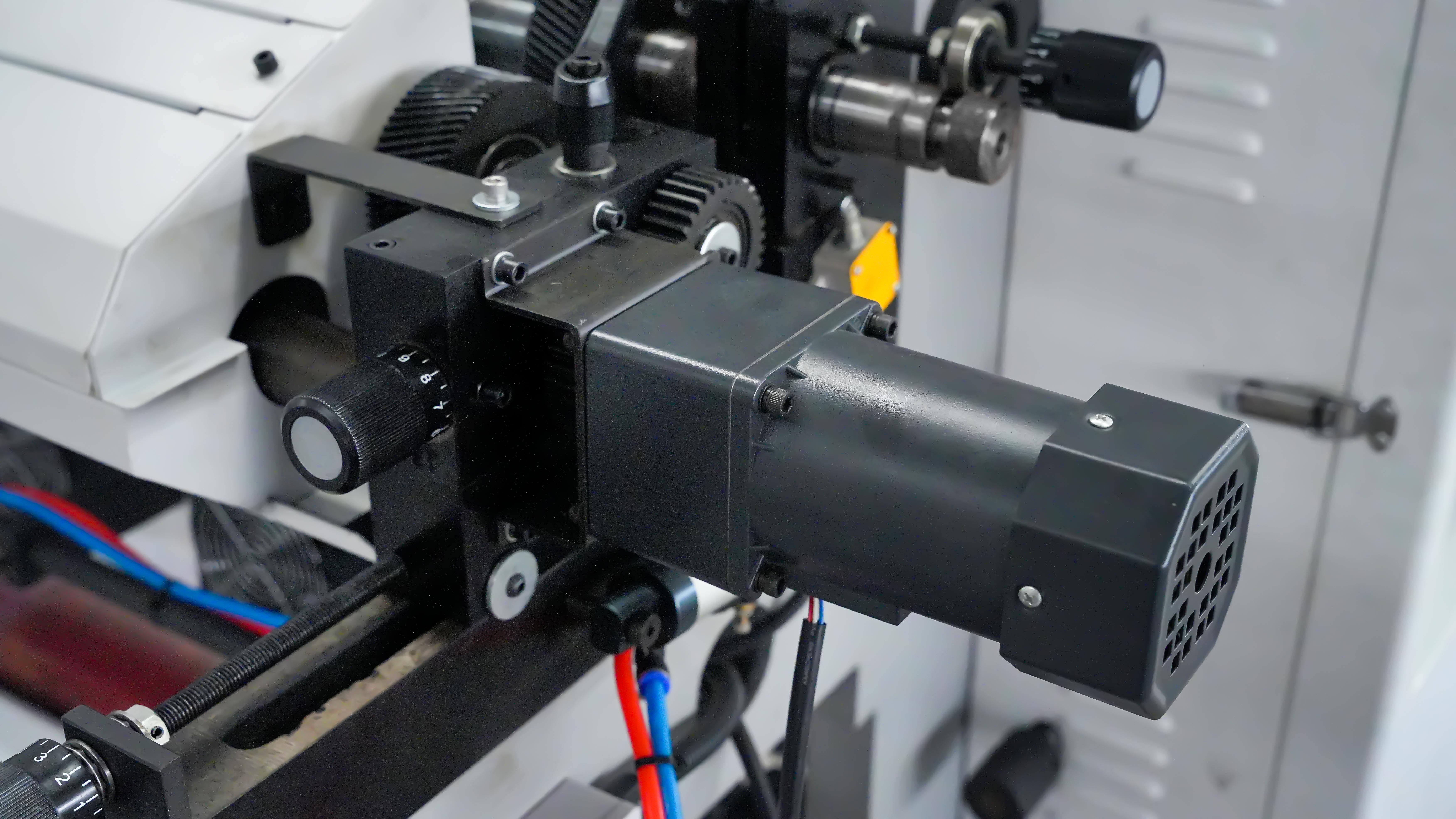
Color configuration is chosen against the tender artwork, not against the machine catalogue: two colors cover the majority of supermarket logos, four colors cover premium and multi-color brand work.
Four reasons this setup ranks first for tender contracts:
- Throughput that matches the contract schedule. At 100 pcs/min, an eight-hour shift produces roughly 45,000–55,000 bags, which is the capacity band required to supply 50–100 retail stores.
- Consistency inside the defect ceiling. An integrated line removes the manual handling steps where most printing and sealing defects are introduced.
- Changeover that supports tender artwork. A 15-minute on-machine design change keeps short-run and reprint orders profitable instead of forcing a minimum order quantity per design.
- Auditable compliance. CE-certified machinery (Machinery, Low Voltage, and EMC Directives) built in an ISO 9001:2015-certified manufacturing facility, which is what procurement departments verify before award.
The commercial case for inclusion: at 50,000 bags per day, payback on an integrated printing and bag making setup typically falls within 12–18 months. The supporting terms matter as much as the machine — CE-certified and ISO 9001-certified manufacturing, a 12-month warranty, English manuals and documentation, and remote video support with engineers typically responding within 24 hours. A supermarket-grade combination such as a ZXL-A700Ultra fully automatic bag making platform paired with a ZXH-C41200 four-color inline flexo printer sits in the region of US$35,000–50,000, with payback of about 14–18 months at 40,000 bags per day.
The limitations are real and worth stating before a tender is priced. Inline integration carries the highest capital cost of the three setups; it requires 3-phase power, an industrial air compressor with dryer and tank, and a voltage stabilizer in markets with unstable grid power. Uptime should be planned at 80–85% of rated speed, never at 100%, or the delivery commitment will be built on a number the line cannot hold.
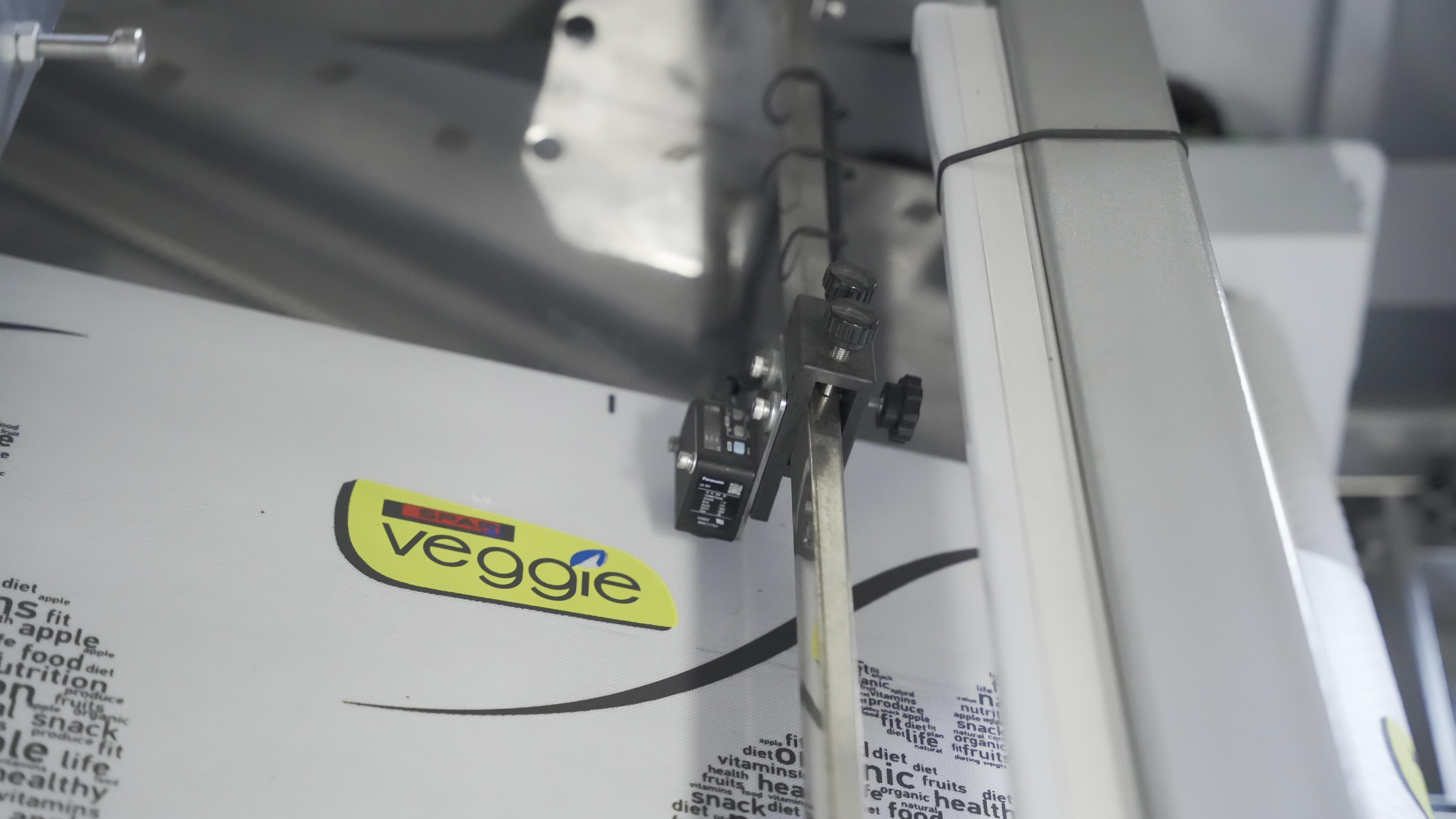
Registration tracking is what keeps a printed logo centred on a finished bag — the quality checkpoint supermarket inspectors check first.
Rank 2 — Semi-Automatic Printing Setup
A semi-automatic setup produces 15–20 pcs/min with 3%–5% manual defect rates, and needs 3–4 workers per line. Its per-bag labour cost runs 4–5 times higher than a fully automatic line. The machine cost is 3–5 times lower upfront, and that is the entire argument in its favour.
Within this rank, roll-to-roll screen printing is the most common configuration. The Zhengxin ZXH-A1200 one-color screen printing machine runs at 1,500–4,000 m/hour with a maximum printing size of 1,100 × 1,200 mm, uses round-roller printing for color registration within 2 mm, and draws 26 kW. The ZXH-B1200 two-color screen printing machine runs at 1,500–3,000 m/hour and can complete two-color printing in a single pass using two units, which reduces manual handling compared with printing twice.
Tender fit is the weak point. Semi-automatic output is workable below roughly 10,000 bags per day, or for highly varied small batches where frequent changeover dominates total time. At 15–20 pcs/min, a line cannot comfortably support a 40,000+ bags/day contract with a penalty clause. The labour savings from a fully automatic setup typically repay the price difference within 8–12 months at 20,000 bags per day, which is why buyers who intend to bid on supermarket contracts usually skip this rank.
Rank 3 — Outsourcing Printed Bags or Printed Fabric
Outsourcing costs $0.08–$0.15 per bag, against $0.02–$0.05 per bag produced in-house. Minimum order quantities of 5,000–10,000 pieces per design are standard, design changes take 2–4 weeks rather than 15 minutes, and both quality and lead time sit with a third party. There is no machinery capital and no operational overhead.
This setup remains reasonable in specific situations: monthly volume below 100,000 bags, seasonal businesses with high demand variance, or buyers who want to validate market demand before investing in equipment. It becomes the worst option the moment a cost-based tender is on the table. When the per-bag cost advantage of in-house production is $0.03–$0.10, an outsourced price structure usually cannot win the bid, and even if it does, the delivery commitment is only as reliable as the supplier behind it.
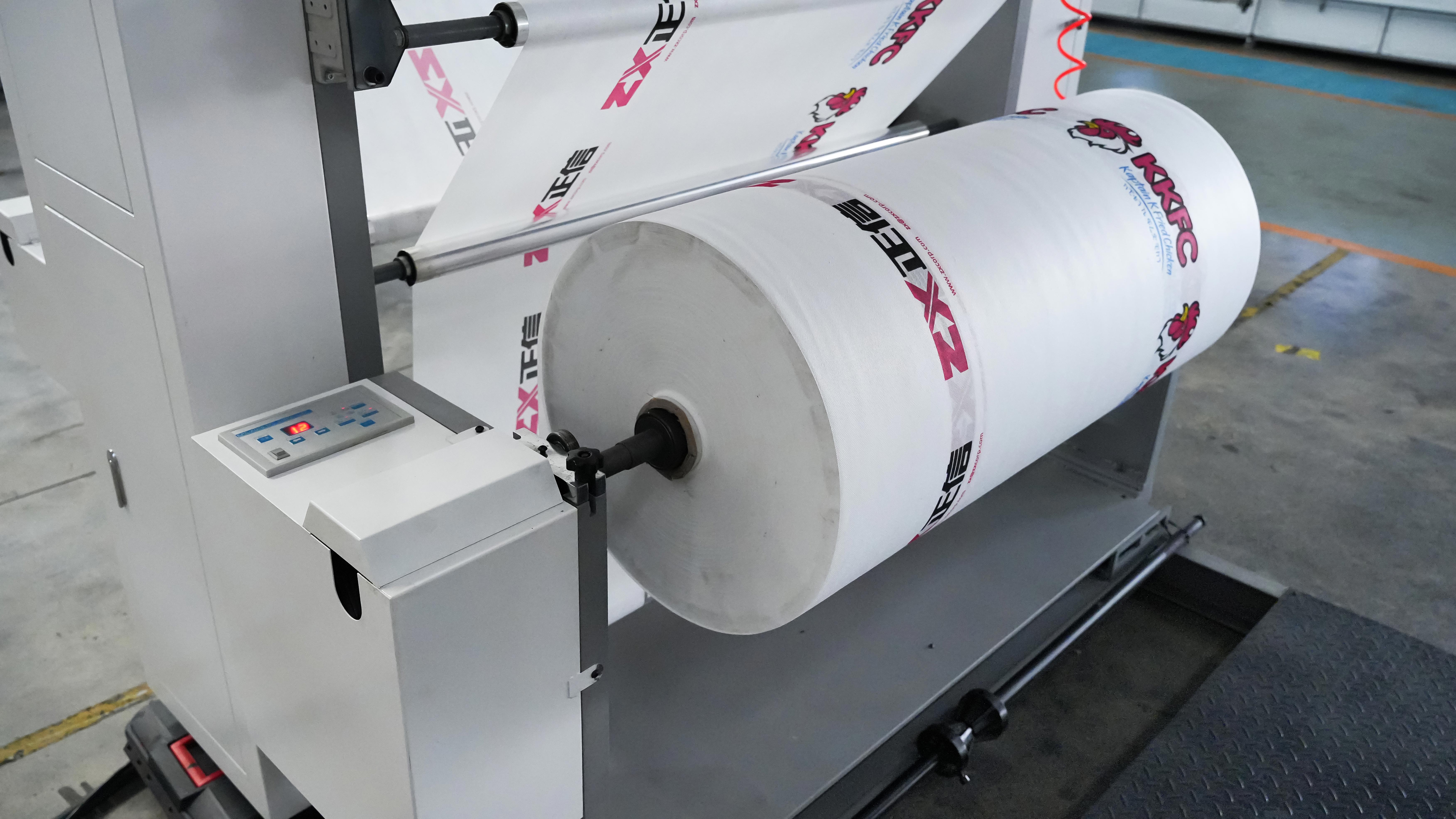
Tension and deviation correction systems hold printed fabric steady — the difference between a stable registration and a rejected batch at full line speed.
Step-by-Step: Building a Tender-Ready Setup
Step 1 — Convert the tender into machine requirements. Extract output per day, bag dimensions, print color count, fabric GSM, traceability requirements, and delivery milestones. Every later decision is a response to this list.
Step 2 — Size the line at 80–85% of rated speed. A 100 pcs/min line produces roughly 45,000–55,000 bags per eight-hour shift at realistic uptime. Planning at rated speed is the most common cause of a missed delivery schedule.
Step 3 — Choose the print configuration against the artwork. A two-color flexo unit covers the majority of supermarket logo requirements; a four-color flexo unit is the safer choice when the customer base includes premium brands or multi-color logos. Flexo ink costs $3–8 per litre and covers 500–1,000 m² per litre, so at commercial volumes the ink cost per bag is negligible — the decision is about design coverage, not ink economics.
Step 4 — Validate with samples before signing. Pull-test the seals: a correct weld tears the fabric rather than peeling apart at the seal line. Check registration, bag dimensions, and print coverage on the actual fabric GSM the tender specifies.
Step 5 — Confirm the compliance file. CE certification covering the Machinery Directive 2006/42/EC, the Low Voltage Directive 2014/35/EU, and the EMC Directive 2014/30/EU, plus ISO 9001:2015 factory certification, is the baseline. Where the machine falls under the harmonized European standard for printing and paper converting machinery, EN 1010-1:2004+A1:2010 is the applicable safety reference. Country-specific certifications such as SONCAP, PVOC, or SASO can be arranged on request.
Step 6 — Plan commissioning and staffing. A standard single-machine installation takes 1–2 working days; a complex multi-machine line takes 3–5 days. Commissioning follows a speed ramp — dry-run, then 30 pcs/min with quality checks on the first 50 bags, then 60, 80, and 100 pcs/min with registration calibration at each tier. Staffing is one operator per two machines once trained.
Step 7 — Lock the support chain before the first tender deadline. Order a recommended spare parts kit with the machine (typically $500–1,500), confirm express parts shipping of 3–7 days by international courier, confirm the 12-month warranty terms in writing, and obtain English manuals, wiring diagrams, and parameter backups at shipment. A third-party pre-shipment inspection by SGS, Bureau Veritas, or CCIC costs roughly $300–800 and should be treated as standard on a tender-critical line.
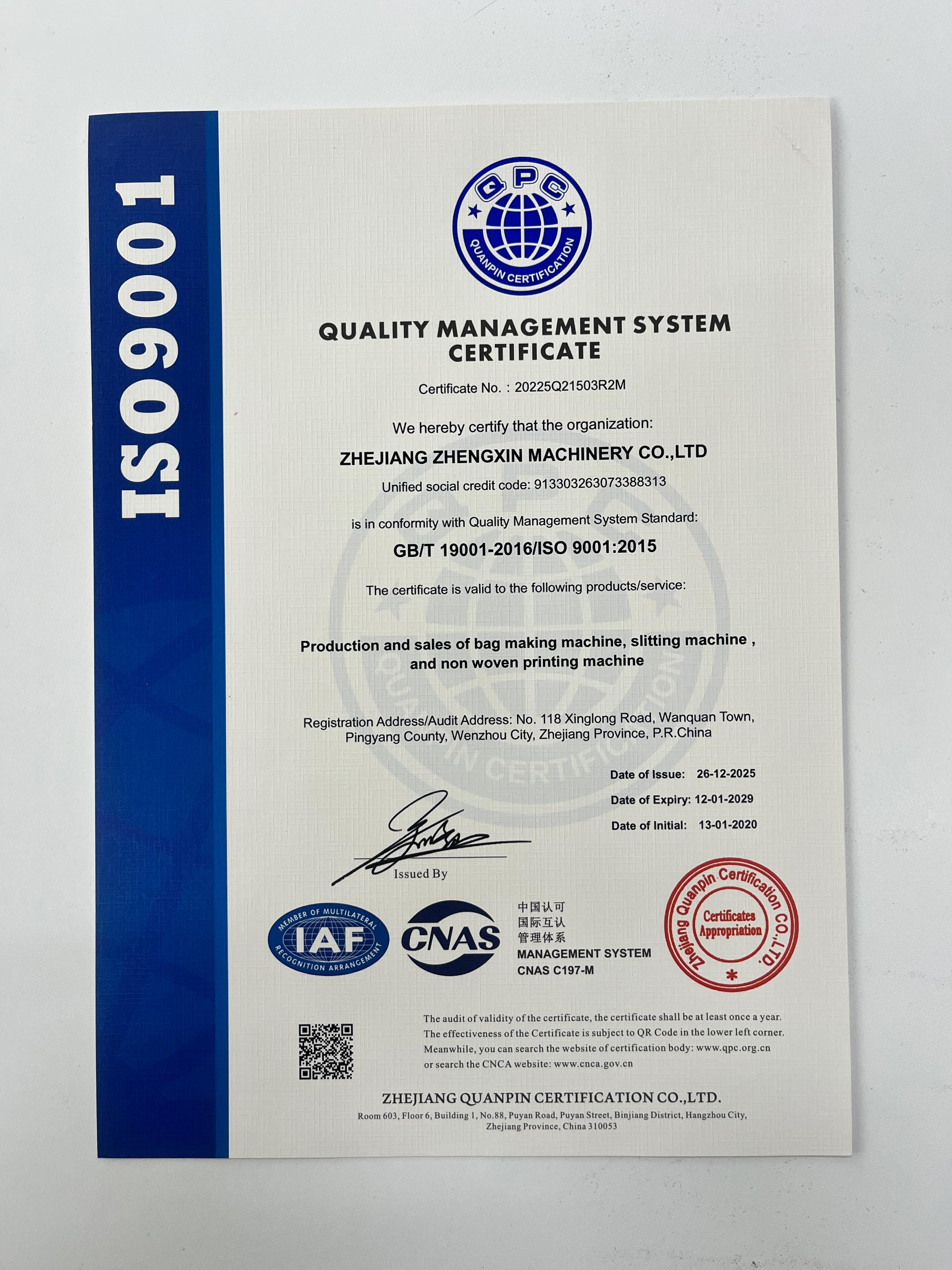
ISO 9001:2015 factory certification is one of the documents procurement departments verify before awarding a supermarket supply contract.
Use Cases: Where Each Setup Fits
Supermarket and Grocery Chains
The primary case for Rank 1. A fully automatic shopping bag line running 24/7 from material feeding to finished bag stacking, paired with a flexo printing unit, an automatic counting and bundling machine, and a voltage stabilizer, is the configuration that meets a ≥100 pcs/min, <0.5% defect specification. Batch coding is normally added because most supermarket supply contracts require traceability.
Food Takeaway, Delivery, and Bakery Packaging
Odorless, non-toxic printing is the constraint here. Water-based flexo inks are formulated for indirect food contact compliance and are the reason flexo, rather than solvent-based printing, is the default for this segment. Automated stacking and batch coding complete the line.
Garment, Fashion, and Export Packaging
Logo-printed garment bags, dust covers, and suit covers are usually run on a 16-hour double-shift pattern with 1–2 operators per machine. The requirements that matter are wrinkle-free finished bag surfaces, soft handle feel, and compatibility with anti-static treated material.
Promotional, Event, and Corporate Gift Bags
Small-to-medium batches with four or more colors and premium surface finish. This is the scenario where ±0.3 mm print registration and a 15-minute on-machine changeover translate directly into the ability to accept many different designs per month without losing margin.
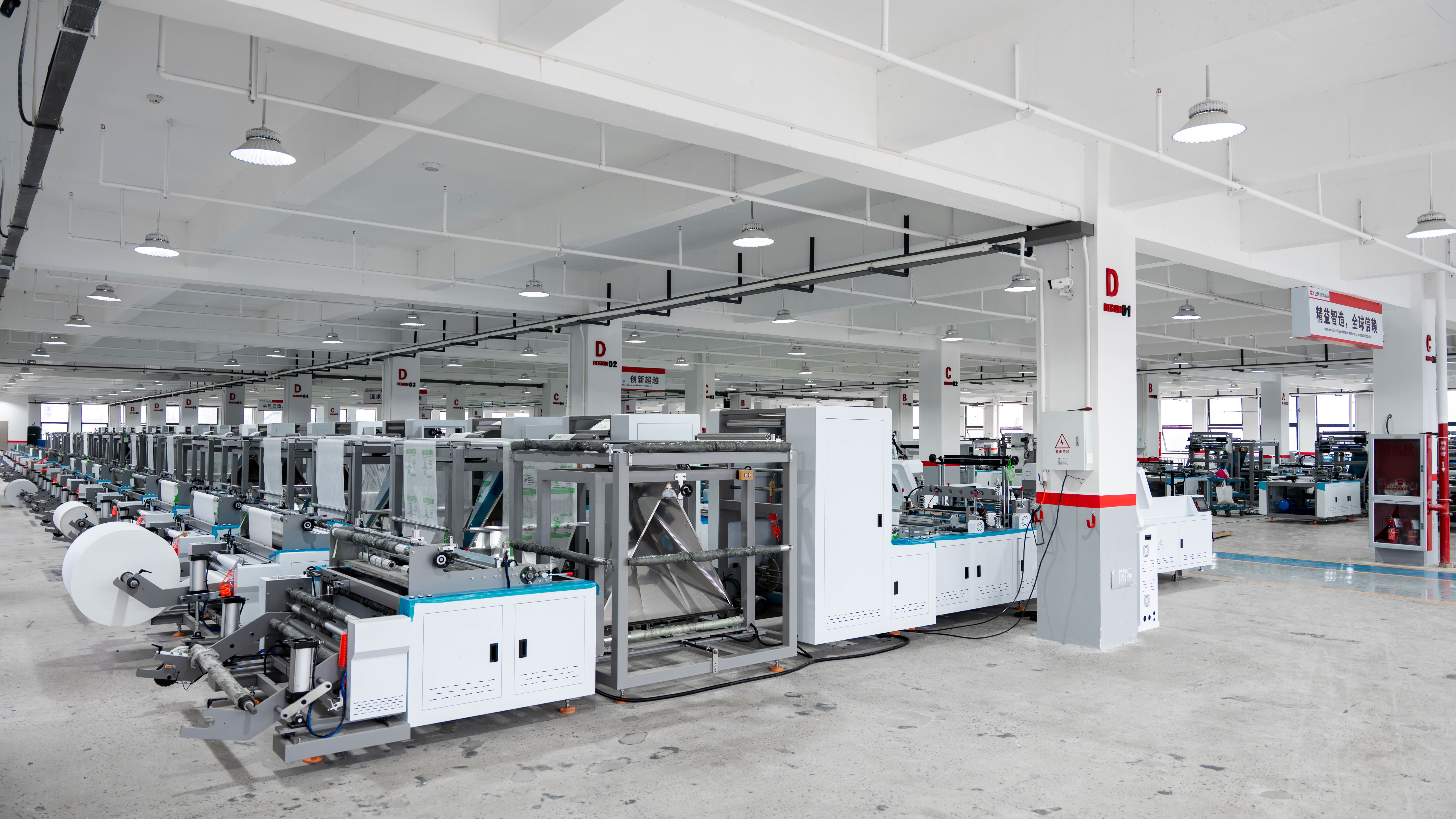
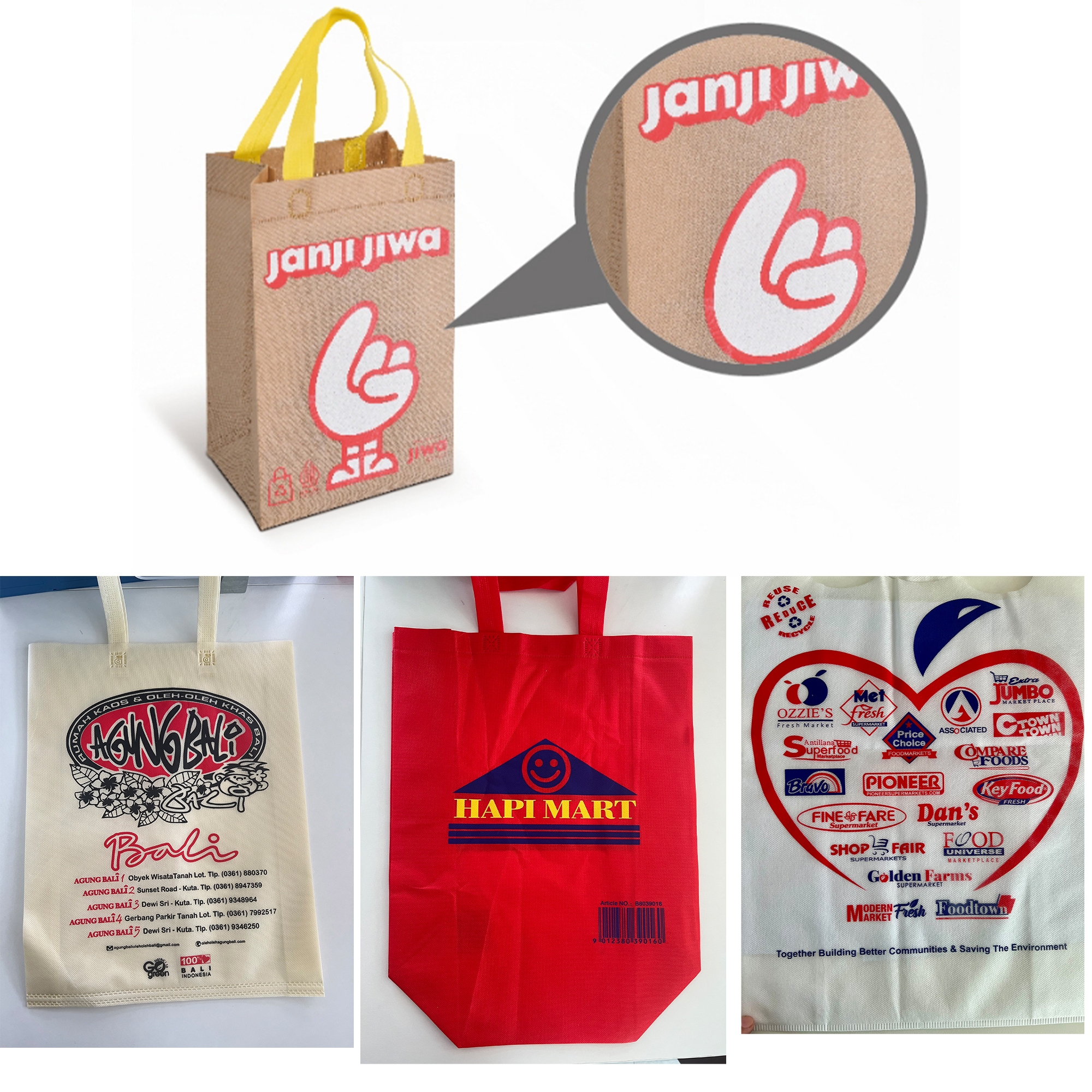
Finished output is the tender deliverable: consistent weld strength, centred print registration, and stable dimensions batch after batch.
Comparison Table: Three Setups Against Tender Criteria
| Setup | Output | Defect rate | Design change | Cost per bag | Best-fit volume | Tender fit |
|---|---|---|---|---|---|---|
| 1. Integrated inline printing + bag making | 100–120 pcs/min | Below 0.5% | ~15 minutes on-machine | $0.02–$0.05 in-house | 30,000+ bags/day and above | Strong — meets ≥100 pcs/min and <0.5% requirements |
| 2. Semi-automatic printing setup | 15–20 pcs/min | 3%–5% (manual) | Frequent manual adjustment | Labour cost 4–5× full-auto | Under 10,000 bags/day | Weak — cannot hold 40,000+ bags/day schedules |
| 3. Outsourcing printed bags / fabric | Supplier-dependent | Supplier-dependent | 2–4 weeks per reorder | $0.08–$0.15 | Under 100,000 bags/month | Weak — cost structure rarely wins a cost-based tender |
For reference when specifying the printing unit inside Rank 1, the four printing configurations available in the ZXH series differ as follows:
| Configuration | Model | Printing width / size | Printing length | Speed | Typical tender use |
|---|---|---|---|---|---|
| Two-color flexo | ZXH-C21200 | Max print width 1,160 mm | 250–1,000 mm | 10–60 m/min | Single and two-color supermarket logos |
| Four-color flexo | ZXH-C41200 | Max print width 1,160 mm | 220–1,000 mm | 10–60 m/min | Premium and multi-color brand logos |
| One-color screen | ZXH-A1200 | Max print size 1,100 × 1,200 mm | Continuous / intermittent | 1,500–4,000 m/hour | Large solid-color areas, register within 2 mm |
| Two-color screen | ZXH-B1200 | Max print size 1,100 × 1,200 mm | Continuous / intermittent | 1,500–3,000 m/hour | Two-color work completed in one pass |
FAQ: Printing Setups for Supermarket Tender Contracts
Does a non woven bag printing machine need CE and ISO 9001 for tender contracts?
Yes, for most supermarket and government procurement processes. CE certification for a non woven bag printing machine covers the Machinery Directive 2006/42/EC, the Low Voltage Directive 2014/35/EU, and the EMC Directive 2014/30/EU, and CE marking allows customs clearance in all EU member states plus countries that accept CE marking. ISO 9001:2015 factory certification covers the manufacturing process itself — incoming material inspection, in-process QC checkpoints, and a full-load production test on every machine before shipment. Where the equipment falls under the harmonized European standard for the safety of printing and paper converting machines, EN 1010-1:2004+A1:2010 is the applicable reference. Country-specific schemes such as SONCAP, PVOC, or SASO can be arranged on request, and third-party factory audits by SGS, Bureau Veritas, or TÜV are welcomed before shipment.
How fast can an inline flexo setup run, and what defect rate can it hold?
A fully automatic integrated line runs at 100–120 pcs/min with a defect rate below 0.5%. A semi-automatic setup produces 15–20 pcs/min with 3%–5% manual defect rates. The number that should go into a tender calculation, however, is 80–85% of rated speed: a 100 pcs/min line realistically delivers roughly 45,000–55,000 bags per eight-hour shift, which is the capacity band for supplying 50–100 retail stores.
What is the payback period on an integrated printing and bag making line?
In-house production costs $0.02–$0.05 per bag against $0.08–$0.15 for outsourced bags, and payback typically falls within 12–18 months at 50,000 bags per day. For a supermarket-grade combination such as a fully automatic bag making platform plus a four-color inline flexo printer, the investment sits in the region of US$35,000–50,000, with payback of about 14–18 months at 40,000 bags per day. For context, LP Information estimated the average price of an automated non-woven bag making machine at approximately US$29,000 in 2025.
How do I validate print quality and seal strength before bidding?
Run a sample on the exact fabric GSM named in the tender and use a pull test on the seals: a correct ultrasonic or heat weld tears the fabric itself rather than peeling apart along the seal line. Check print registration (about ±0.3 mm between colors on a four-color flexo unit), bag dimensions (±1 mm on the servo-driven cutting system), and the batch-to-batch appearance of the printed logo. Before final payment, a third-party pre-shipment inspection by SGS, Bureau Veritas, or CCIC — typically US$300–800 — verifies the machine against the agreed configuration, and reference customers in your region can be contacted directly with their permission.
How long from order to a production-ready line?
Standard production runs 25–35 working days, with sea freight adding 15–45 days depending on destination, for a total of roughly 45–80 days from order to arrival at port. Installation takes 1–2 working days for a single machine and 3–5 days for a complex multi-machine line, followed by a commissioning ramp from 30 to 60, 80, and 100 pcs/min. To shorten the critical path on a tender deadline, Zhengxin supports setup through remote video guidance from its engineering team, supplies English manuals and documentation with every machine, and provides a 12-month warranty with spare parts dispatched by international courier within 3–7 days. If you are preparing a bid, the practical next step is to send your tender specification — bag size, GSM, color count, daily output — and request a configured quotation and a printed sample from the same line. Contact: info@zxcorp.com, WhatsApp +86 158-5888-9595, or download the product catalogue below.
Conclusion
For supermarket and government tender contracts, the printing setup is the decision that determines whether the contract can be delivered profitably. Fully integrated inline printing and bag making ranks first: 100–120 pcs/min, defect rates below 0.5%, 15-minute on-machine design changes, and payback of 12–18 months at 50,000 bags per day, backed by CE-certified and ISO 9001-certified manufacturing, a 12-month warranty, English manuals, and remote video support typically within 24 hours. Semi-automatic printing ranks second, limited by 15–20 pcs/min output and 3%–5% manual defect rates. Outsourcing ranks last for tender work, because at $0.08–$0.15 per bag it starts the bid with a cost disadvantage against in-house production at $0.02–$0.05 per bag.
Zhejiang Zhengxin Machinery Co., Ltd. was established in 2014 and is headquartered in Wenzhou, Zhejiang, China. The company designs and manufactures non-woven bag making machines and complete production lines, including the ZXL series bag making machines, the ZXH series flexo printing machines (1–8 colors), screen printing machines, ZX-TL500 series 3D bag machines, ZXC series fabric slitting machines, and auxiliary equipment. The 60,000 m² facility employs approximately 200 staff with 30 R&D engineers, reaches annual production capacity of 500 units, and exports to over 120 countries, with export accounting for 60% of sales across Africa, the Middle East, Southeast Asia, and Latin America.
Tender buyers can request a printed sample, a configured quotation, and the current machine catalogue before committing to a contract.
Next step: send your tender specification to info@zxcorp.com or WhatsApp +86 158-5888-9595 to receive a configured quotation and a printed sample. Download the full product catalogue here: Zhengxin non-woven bag production equipment catalogue. Website: www.wzzxjx.com